I applied to medical school last cycle. Got waitlisted. Reapplied this cycle. Sitting in my car outside the interview site, I refreshed Twitter for the forty-seventh time and saw another thread about AI replacing physicians. Twelve replies deep, someone mentioned that radiologists would be obsolete by 2030. Someone else said pathologists too. Then a hospitalist chimed in about scribing tools that generate discharge summaries in seconds.
I sat there for twenty minutes before going inside.
If you are concerned about your future path, it helps to understand what current data actually predicts for MDs in the face of rapid technological advancement.
This article is for those of us staring down the barrel of a medical education that costs a quarter-million dollars and takes a decade, wondering if we're walking into a career that won't exist when we finish. If that's you, if you're rereading your AMCAS essay at 2 AM questioning your life choices, pull up a chair. The data isn't as catastrophic as the doom-scroll suggests. But it's not comforting either, and I'd rather tell you the truth than blow smoke.
This article is for educational purposes only, not financial advice, not legal advice, not tax advice. Figures vary based on institution, specialty, and region, consult a qualified professional for your specific situation.
The Existential Crisis: Will I Even Have a Career in 20 Years?
Let's name the fear sitting in the room. The fear isn't that AI will be better than us. The fear is that "good enough" plus "cheaper" equals "you're redundant." We've all seen what happened to travel agents, to bookstores, to the people who used to answer phones. Medicine felt different because medicine required judgment. But then GPT-4 passed the USMLE Step exams. Not barely, comfortably. And suddenly the moat we thought protected us looked shallow.
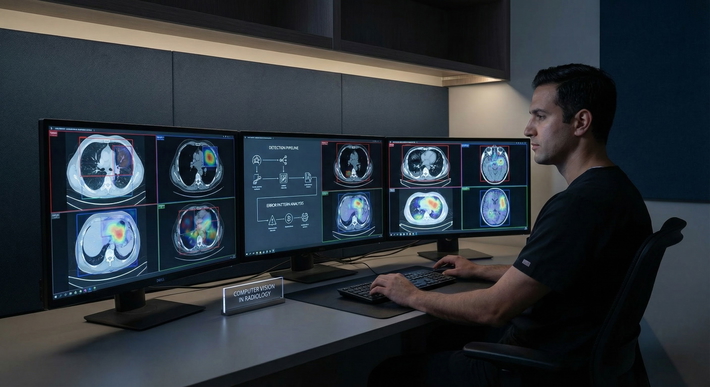
Here's the distinction I've been wrestling with. An "AI-Integrated" physician isn't some futuristic cyborg. They're a clinician who uses machine learning tools as part of their daily workflow, ambient scribes that capture the visit, diagnostic assistants that flag a subtle mass on the CT, predictive models that stratify which patients will decompensate tonight. They still examine patients. They still make decisions. They just don't spend forty minutes after each visit typing into a clunky EHR.
A "Traditionalist" physician, let's be clear, this isn't a pejorative, is someone who practices with minimal AI integration. Manual chart review. Point-and-click documentation. The model that's been the standard for two decades. These are physicians who either don't trust the technology, don't have access to it, or don't want to learn it.
The catastrophic fear says: the Traditionalist is the future's cautionary tale. The physician who resisted the calculator and kept using a slide rule. But the opposing fear is quieter and maybe worse, what if AI doesn't replace us but instead hollows us out? What if we become permission-granting middle-managers who rubber-stamp algorithmic decisions and lose the cognitive muscle that made medicine an art?
I've talked to attendings about this. The ones in their fifties mostly shrug. They've seen "revolutionary technologies" come and go, remember the EHR adoption disaster of the early 2000s? The younger attendings, the ones thirty-five to forty-five, they're the ones losing sleep. They're deep enough in to feel the ground shifting but established enough that pivoting feels impossible.
The data, though, when you actually look at it rather than reading the fear-mongering think-pieces, suggests something less dramatic than replacement but more significant than "just another tool." Adaptation isn't optional anymore. The question isn't whether the profession survives. The question is what the profession becomes. And whether you'll recognize yourself in it.
Survival Metrics: Burnout and Efficiency Data
While academic centers often lead these shifts, understanding private practice vs academic AI adoption is essential for choosing where you want to train.
Here's where I found something resembling hope, or at least functional anxiety management.
The burnout numbers for traditional physicians are abysmal. We all know this. Med school taught us that before it taught us the brachial plexus. Recent surveys put physician burnout somewhere between 50% and 65% depending on specialty and how the question is framed. Emergency medicine and family medicine are bleeding practitioners. The attrition rate for physicians under forty has been climbing for a decade.
But when researchers started slicing the data by technology adoption patterns, something emerged that I wasn't expecting. Physicians who integrated AI tools into their daily workflow reported significantly lower burnout rates. Not marginally lower. Substantially.
The gap widens over time. Traditionalists start slightly higher, around 55% burnout, and climb steadily. AI-integrated physicians start similar but plateau and then slightly decrease. By year ten in the projection, there's a 24-point difference. That's not statistical noise. That's a career-or-no-career difference.
Here's what I think is actually happening, based on the qualitative data from these studies. The burnout crisis in medicine isn't primarily about patient suffering or bad outcomes, physicians sign up for that. It's about the documentation burden. It's about spending two hours after clinic finishing notes while your kids eat dinner without you. It's about the moral injury of knowing you could be a better doctor if you weren't drowning in administrative sludge.
AI tools, specifically ambient scribes, automated coding assistants, and intelligent triage systems, directly attack this problem. The physicians using them aren't less tired because AI made them faster. They're less burned out because AI gave them back the parts of the job they actually wanted. The face-to-face time. The thinking time. The ability to leave work at a reasonable hour without a three-hour documentation penalty.
But here's the worry that creeps in: is this real relief, or is it just shifting the burden? One attending I shadowed last month put it bluntly. "The AI writes my note. But now I have to review the AI's note, correct its errors, and then sign off. Is that faster? Yes. Is it less work? I genuinely don't know." She'd been using the system for eight months. She said she'd never go back. But she also said she spends more time now verifying AI outputs than she expected to.
The Replacement Myth, the idea that AI will swap out physicians like replacing a broken part, misses what's actually happening. Traditionalists aren't being replaced. They're being crushed. The weight of manual EHR management, prior authorization workflows, and documentation requirements has become unsustainable without technological leverage. The physicians burning out fastest aren't the ones who refused the future. They're the ones who can't keep up with the present.
That distinction matters for us as applicants. The data suggests that learning to work with AI isn't about staying ahead of some imaginary replacement curve. It's about basic survival in a system that's already broken. The physicians who adapt are the ones who get to keep practicing medicine. The ones who don't adapt are the ones who leave, not because they were fired by an algorithm, but because the administrative weight finally broke them.
The Workflow Paradox: Does AI Help or Just Increase the Burden?
This is where my anxiety spikes hardest. Because the honest answer is: both. And which one dominates depends on factors nobody's controlling for in these studies.
Let's walk through the learning curve fear first. You're an applicant. You're already studying for the MCAT, shadowing, doing research, volunteering, maintaining a GPA that could crater your future if it drops 0.2 points. Now I'm telling you that you also need to learn AI tools? When? When exactly is that supposed to happen?
The reality is less dramatic. You don't need to learn to code. You don't need to understand transformer architectures. You need to be comfortable using tools, like you're comfortable using a stethoscope. The learning curve for most clinical AI tools is measured in days, not months. The ambient scribe that records your patient encounter? You turn it on. You talk to the patient. You review the generated note. That's the training. The diagnostic assistant that flags high-risk patients? It integrates into your existing workflow. You learn the interface. You learn its limitations. You move on.
But there's a deeper paradox here that the data doesn't capture well. AI-assisted diagnosis changes the cognitive texture of the work. When I shadowed an intensivist last summer, before I applied, during my gap year, I watched her review a patient with the AI tool running alongside. The tool flagged the patient as high-risk for sepsis based on trending labs she hadn't fully processed yet. She nodded, adjusted her plan, and moved on.
Here's what bothered me about that interaction, though. She trusted the flag. Not blindly, she verified the labs. But the AI shaped her mental model before she'd finished her own. Was that good medicine? Probably. The patient was high-risk, and catching it earlier is better. But what happens in ten years when she's relied on that tool a thousand times? Does her independent diagnostic reasoning atrophy? Does she lose the ability to catch what the AI misses?
This is the dependency fear, and it's the one I lose sleep over. Not "will AI replace me?" but "will I let it make me worse?" The traditionalist who reviews every chart manually maintains their cognitive edge. They're slow. They're burned out. But they're sharp. The AI-integrated physician is efficient and less exhausted. But are they still the same doctor?
I asked her directly. She paused for a long time, longer than I expected, before answering. "I'm a better doctor now," she said. "I catch things I would have missed. I spend more time with patients because I'm not drowning in charts. But I'm also a different doctor than I was five years ago. I don't know if I could practice without these tools anymore. That scares me a little."
The workflow shift isn't just about speed. It's about identity. The traditional physician's identity is built around being the person who knows, the one who integrates all the data and makes the call. The AI-integrated physician's identity is built around being the person who validates, who confirms, contextualizes, and decides when to override the algorithm. These are different jobs. Both are valuable. But they feel different in your bones.
The fear of system crashes is overblown, by the way. I checked. Hospitals have downtime procedures. Paper backups exist. The AI tools fail gracefully, you revert to manual workflow, which is slower but functional. The real risk isn't a catastrophic system failure. It's the slow erosion of the cognitive skills that made you want to be a doctor in the first place. The pattern recognition. The gut sense that something's wrong before the labs confirm it. If you offload all of that to a machine, what's left? And is what's left still worth the debt and the years and the sacrifice?
These are the questions the data can't answer. And they're the ones keeping me up at night.
Quantifying Value: Who Will the Market Actually Want?
Here's where the rubber meets the road for us as applicants. What do hospitals actually want?
I've been asking this question at every interview. The answers fall into a spectrum that's more nuanced than the Twitter discourse suggests.
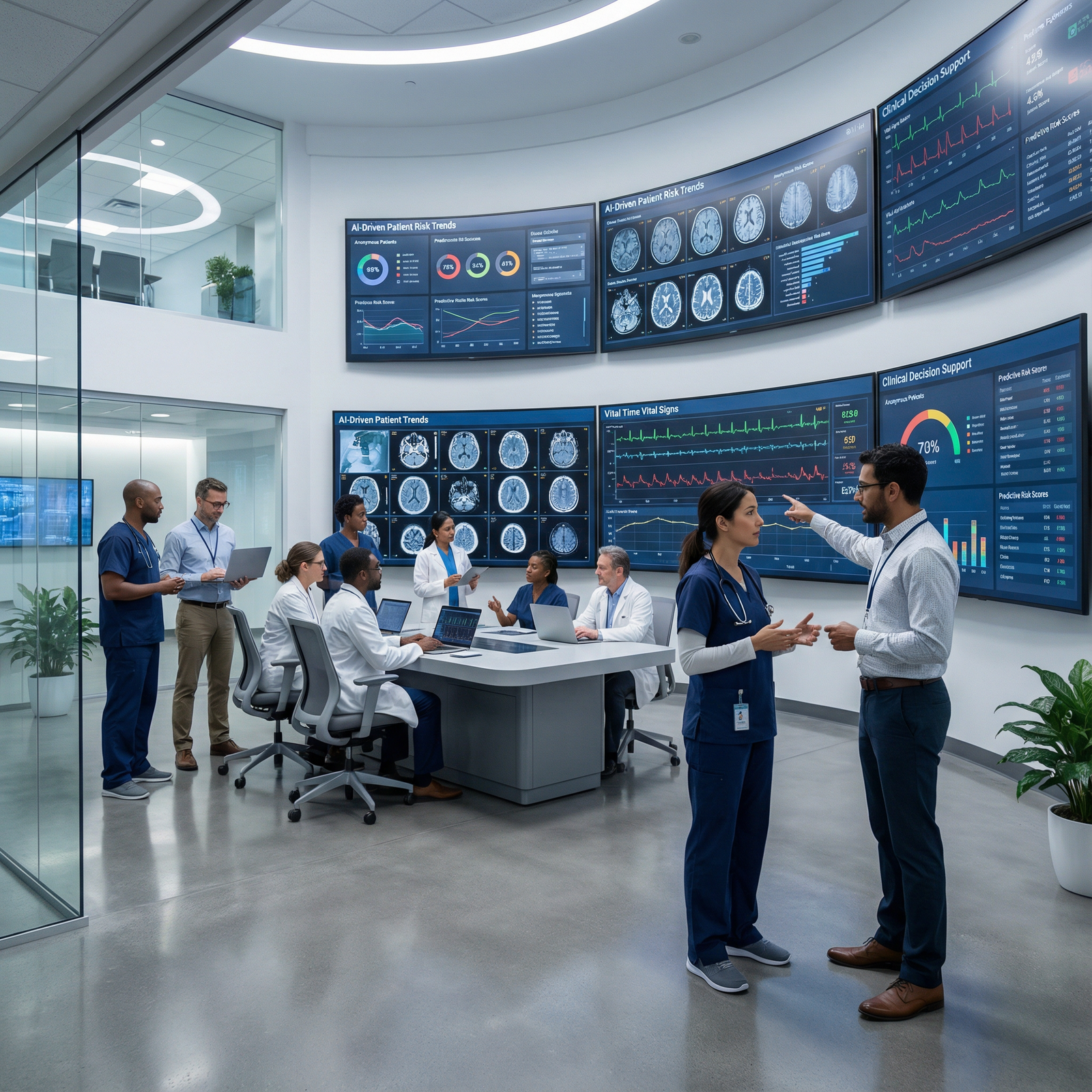
The large academic medical centers, the ones with innovation in their mission statements, are actively recruiting for AI fluency. They want physicians who can participate in tool development, serve as clinical informatics liaisons, and help shape the implementation strategy. One department chair told me, "I don't need another doctor who can diagnose pneumonia. I need one who can tell me whether our sepsis prediction model is actually helping or just generating noise."
Community hospitals are different. They want someone who can see patients efficiently, keep their documentation clean, and not generate complaints. They're not recruiting for AI expertise. They're recruiting for throughput. But, and this is the critical point, they're increasingly providing AI tools as standard infrastructure. The ambient scribe, the coding assistant, the predictive alert system, these are becoming baseline expectations, not optional skills. You don't need to be an expert. You need to not be the person who refuses to learn the system.
The real vulnerability is in the middle. The mid-career physician who built their practice on volume and efficiency under the old model. If AI compresses the time required for documentation, diagnosis, and care planning, what happens to the compensation models built on those tasks taking longer? If a physician used to generate RVUs by spending forty minutes on a complex encounter and now the AI-assisted version takes twenty, does their value drop by half?
This is the salary compression fear, and it's not irrational. The economic logic of AI in medicine points toward doing more with fewer people, or doing the same with people who cost less. The physicians who maintain their value will be the ones whose work can't be reduced to a checklist. Complex diagnostic reasoning. Procedures. Building patient trust over time. The things that require presence, not just processing.
For us as applicants, the strategic implication is clear but uncomfortable. You need to cultivate the skills that are hardest to automate. Not just technical AI fluency, anyone can learn to use a tool. The un-automatable skills are judgment under uncertainty, complex communication with patients and families, procedural competence, and the ability to integrate across systems. The physicians who thrive won't be the most technical. They'll be the most human, amplified by technology rather than replaced by it.
The worst thing you can do right now, right now, as an applicant, is to assume that getting into medical school is the finish line. It's the starting line. The career you're training for in 2025 will look different by 2035. The physicians who pretend otherwise are the ones who'll wake up displaced and angry. The ones who stay curious, who keep learning, who treat technology as a collaborator rather than a threat, those are the ones who'll still be practicing in twenty years.
Can We Breathe Again?
Let me synthesize what the data actually says, stripped of the panic.
AI is not currently functioning as a replacement for physicians. It's functioning as a tool, sometimes a relief, sometimes a burden, always a presence in the workflow that's reshaping how clinical work gets done. The physicians who integrate it are less burned out and report longer intended career trajectories. The ones who resist it are burning out faster under the weight of administrative demands that technology was built to address.
The outlook isn't replacement. But it is transformation. The job will change. The identity will shift. The skills that matter will evolve. Your clinical judgment, the synthesis of data, patient context, and experience into a decision, remains the terminal node in the process. AI generates inputs. You generate the decision. That's not going away, but the volume and nature of the inputs you're synthesizing will be different.
The reassurance I can offer, after all the doom-scrolling and shadowing and interviews: medicine still needs people who care. It still needs the physician who sits with the family and explains what's happening. It still needs the one who catches the discrepancy between the scan and the patient's story. AI doesn't do that. You do that. The question isn't whether you'll have a career. The question is whether you'll adapt fast enough to enjoy it.
I'm still applying. Still interviewing. Still terrified. But the data helped. Not because it eliminated the fear, it didn't, but because it replaced formless dread with specific, addressable challenges. Learn the tools. Cultivate the human skills. Stay adaptable. That's the playbook. It's not glamorous, but it's survivable.
If you're in the same boat, if you're applying this cycle and the AI anxiety is eating you alive, sign up for our AI-readiness newsletter. We track the data, the tools, and the shifting landscape so you don't have to. Because the worst outcome isn't being replaced by AI. It's waking up in ten years and realizing you stopped paying attention while the world moved on without you.
Don't let that happen. We're in this together. And honestly? I think we'll be okay. But I'm watching the data.