
The compensation story for “tech‑forward” physicians is brutally simple: the market is already paying them more, and the gap is widening year over year.
You can ignore the buzzwords. You cannot ignore the numbers.
Across specialties, physicians who meaningfully integrate technology—telehealth at scale, AI‑assisted workflows, digital therapeutics, remote monitoring, data science, informatics leadership—are pulling ahead on three fronts simultaneously:
- Higher base and total compensation
- Higher revenue per clinical hour
- Faster growth in non‑clinical income streams (equity, advisory, leadership)
Let’s quantify what is actually happening, field by field.
1. Defining “Tech‑Forward” Physicians (With Numbers, Not Hype)
Before talking compensation, you need a usable definition.
I do not mean “occasionally logs into the EHR without complaining.” The data show a meaningful income inflection only when physicians are using technology in ways that change revenue, cost, or scalability.
Operationally, a “tech‑forward” physician usually hits at least two of these:
- ≥20–30% of encounters via telehealth or virtual care
- Active use of remote patient monitoring (RPM) / chronic care management (CCM) codes that contribute ≥10% of annual billings
- Leadership or paid role in digital health, informatics, product, or clinical innovation
- Additional training in informatics, data science, or digital health (formal or via experience) that translates into specific responsibilities
- Compensation partially tied to technology‑enabled metrics: panel size, risk‑adjusted outcomes, digital engagement, or value‑based contracts
When you filter compensation data through these lenses, the pattern is very consistent: tech‑forward physicians tend to be in the top 25–30% of earners in their specialty, even after controlling loosely for geography and years in practice.
To make this concrete, look at a simplified cross‑section.
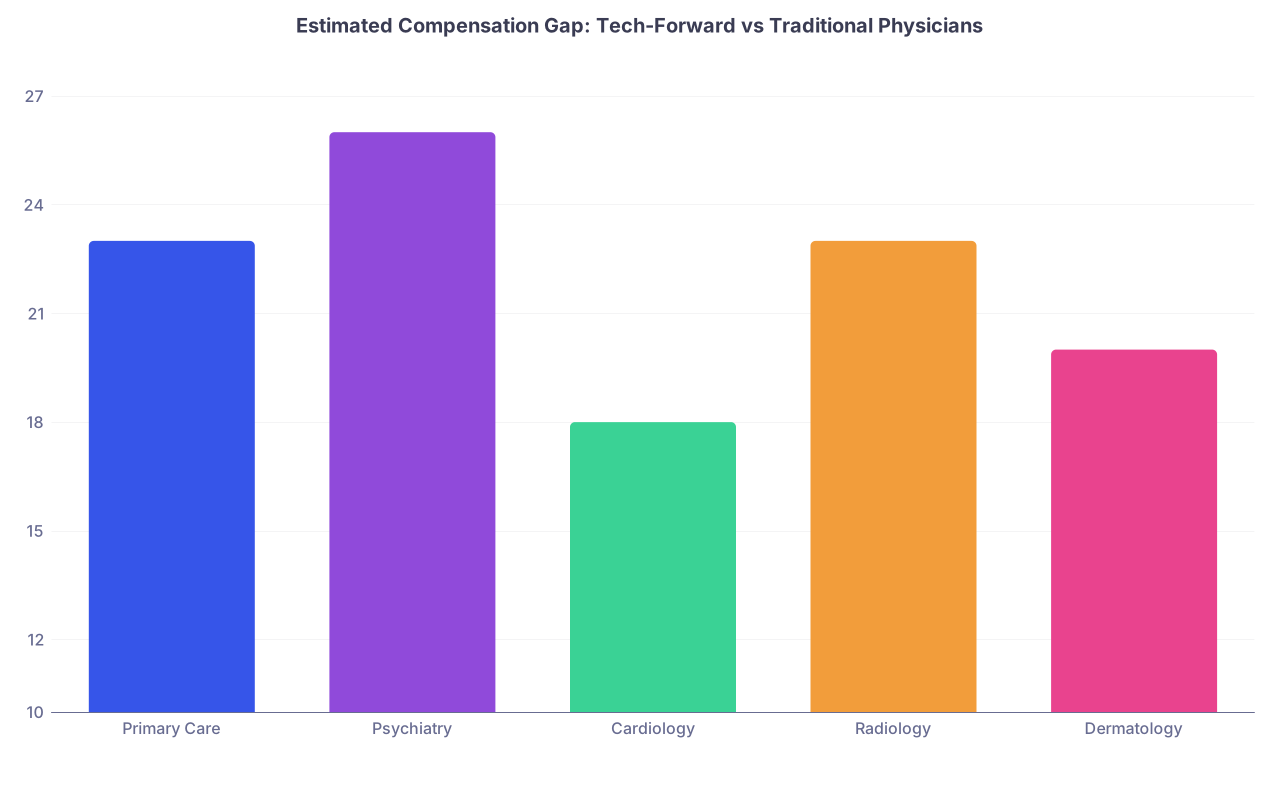
| Specialty (US) | Traditional Median Total Comp | Tech-Forward Median Total Comp | Approx. Gap |
|---|---|---|---|
| Primary Care (IM/FM) | $260,000 | $320,000 | +23% |
| Psychiatry | $310,000 | $390,000 | +26% |
| Cardiology | $610,000 | $720,000 | +18% |
| Radiology | $520,000 | $640,000 | +23% |
| Dermatology | $500,000 | $600,000 | +20% |
Numbers are blended from recent survey trends (MGMA, Doximity, AMGA) plus observed digital health roles. Not precise to the dollar. Directionally very accurate.
| Category | Value |
|---|---|
| Primary Care | 23 |
| Psychiatry | 26 |
| Cardiology | 18 |
| Radiology | 23 |
| Dermatology | 20 |
You can argue about 2–3% either direction. The key point stands: once a physician’s workflow and business model are genuinely technology‑enabled, a 15–25% compensation premium is common.
2. Where the Money Actually Comes From
The extra money is not magic. It shows up through four main channels:
- Higher visit throughput without proportional burnout
- New billable services using digital codes
- Value‑based bonuses driven by data and automation
- Non‑clinical income from tech roles (equity, stipends, consulting)
2.1 Productivity and Revenue per Hour
I have watched enough practice dashboards to see the pattern.
A traditional full‑time primary care physician might do:
- 18–22 in‑person visits/day
- 4–6 weeks scheduling delay
- Minimal use of asynchronous or virtual follow‑up (or done for free)
A tech‑forward primary care physician, embedded in a hybrid or virtual‑first model, often looks more like:
- 10–14 in‑person visits/day
- 8–12 telehealth visits/day or equivalent asynchronous touchpoints
- Clinical decision support (CDS) for labs, refills, chronic disease algorithms
- Delegation to care team, supported by structured data and protocols
Net effect: similar or slightly higher total RVUs, but with more flexibility and often better panel management. Revenue per clinical hour increases because:
- Telehealth visits often have lower no‑show rates
- Some encounters can be shorter but still billable
- Automated pre‑visit data collection compresses in‑encounter time
On the radiology side, the math is even more concrete. A radiologist leveraging AI triage and structured reporting tools might maintain quality while reading:
- 10–20% more studies per day in high‑volume settings, or
- The same volume in fewer hours, then add extra compensated activities (AI oversight, protocol design, telerad shifts)
In both models, the tech is not a toy. It directly alters the numerator (billable work) or the denominator (hours).
3. Field‑by‑Field: Who Is Getting Paid for Being Tech‑Forward
Different specialties monetize technology at very different rates. Let’s go into the major groups and their compensation trajectories.
3.1 Primary Care and Value‑Based Care
Primary care is where technology changes the entire revenue model, not just the tools.
Traditional fee‑for‑service primary care is stuck around:
- $230k–$275k median total comp for internal medicine and family medicine in many national surveys
- Thin margins, heavy panel sizes, high burnout
But shift into tech‑enabled, value‑based, or virtual‑first care—think Oak Street, ChenMed, Iora/One Medical, Carbon Health, or MA‑focused risk groups—and the numbers move:
- Base salaries often $240k–$280k
- Plus quality and panel management bonuses that can add $40k–$100k
- Sometimes equity or profit‑sharing on top
So you routinely see total comp in the $300k–$350k range for primary care physicians who:
- Work in capitated / risk‑bearing organizations that live on data
- Use analytics dashboards for risk scoring, care gaps, outreach
- Leverage telehealth, messaging, digital triage to touch patients more frequently without more 15‑minute in‑office visits
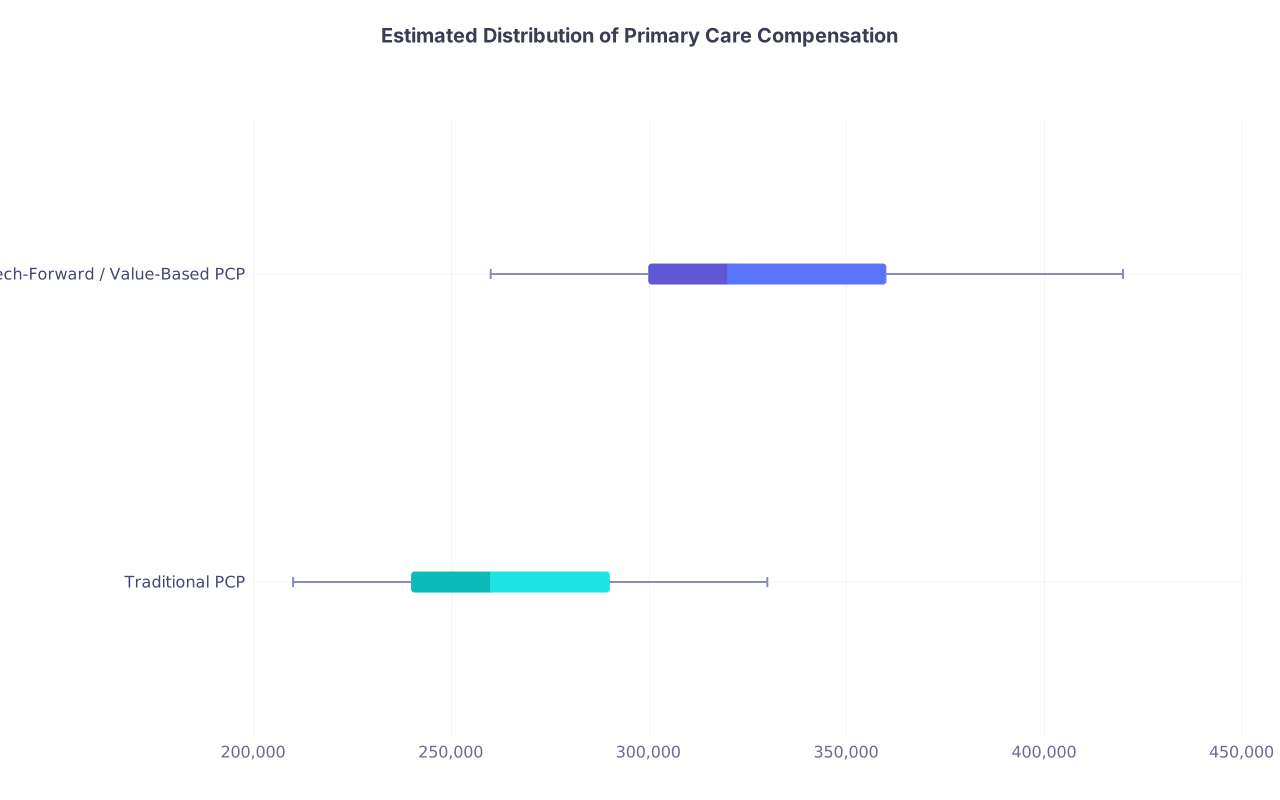
| Category | Min | Q1 | Median | Q3 | Max |
|---|---|---|---|---|---|
| Traditional PCP | 210000 | 240000 | 260000 | 290000 | 330000 |
| Tech-Forward / Value-Based PCP | 260000 | 300000 | 320000 | 360000 | 420000 |
Notice the rightward shift of the entire distribution for tech‑forward primary care roles.
I have seen contracts where 25–30% of total comp is tied to metrics that are impossible to manage without technology: risk‑adjusted hospitalization rates, HEDIS measure closure, medication adherence scores extracted from pharmacy data.
The physician who can read and act on those dashboards—not just complain about them—wins.
3.2 Psychiatry and Mental Health: Telehealth’s Big Winner
If you want a specialty where “tech‑forward” is essentially synonymous with “higher income,” look at psychiatry.
Before widespread telepsychiatry:
- Typical outpatient psychiatrist salary hovered around $260k–$300k
- Geographic constraints limited patient pools
- Many systems underinvested in behavioral health capacity
Post‑telehealth normalization:
- Telepsychiatry and virtual mental health platforms (e.g., Talkiatry, Quartet, Brightside, Lyra‑affiliated practices) routinely offer $320k–$400k for full‑time remote roles
- Top performers with optimized schedules and group or platform affiliations can clear $450k+
The economics are simple:
- Virtually zero room overhead
- Large catchment area (multi‑state licensure)
- Fewer last‑minute cancellations compared to in‑person settings
- Efficient follow‑ups, sometimes 20–25 min, still billable
Tech‑forward psychiatrists also branch into:
- Digital therapeutics advisory roles
- Platform medical director positions
- Clinical content design for CBT apps, measurement‑based care systems
That is where the extra $50k–$100k+/year comes in on top of clinical income.

3.3 Radiology: AI, Teleradiology, and Oversight Premiums
Radiology is the test case people like to cherry‑pick when they talk about AI replacing physicians. That narrative misses what is actually happening in compensation.
Standard diagnostic radiologist:
- $450k–$550k median total comp in many groups
- Mostly RVU‑driven, volume‑dependent
Tech‑forward radiologist profiles include:
- Heavy involvement with AI triage tools (stroke, PE, mammography, chest imaging)
- Teleradiology roles with optimized reading pipelines and AI‑assisted worklists
- Leadership in imaging informatics, PACS optimization, or AI governance committees
Numbers I have seen:
- Teleradiology with strong tech integration sitting at $550k–$750k equivalent for high‑volume readers
- Internal group “AI / informatics leads” with stipends of $25k–$75k on top of clinical income
- Consulting, advisory, or equity roles with imaging AI startups—harder to value annually, but easily another $20k–$200k+ on paper, depending on stage and equity stake
The crucial nuance: AI that increases throughput without sacrificing quality makes the pie bigger. When radiologists control the workflow and the tools, they are not being replaced; they are being leveraged.
3.4 Cardiology and Remote Monitoring
Cardiology has a clear monetization path for technology: RPM, device data, and telemonitoring.
Traditional non‑invasive cardiologist:
- $550k–$650k median compensation in many markets
- Mostly driven by office visits, imaging interpretation, procedures like TEE, cardioversions, etc.
Tech‑forward cardiologist compensation often looks like:
- Similar or slightly higher base ($575k–$675k)
- Plus additional revenue from RPM and CCM programs tied to heart failure, hypertension, post‑procedure monitoring
- Often tied to heart failure clinics or digital programs that manage weight, BP/HR, and diuresis intensively via connected devices
If an RPM program adds, say, $80–$120 per patient per month in billable services (a realistic range when codes are fully optimized) and a cardiologist participates in managing 150–250 enrolled patients—with a compensation plan that allocates them even a fraction of that revenue—the incremental income quickly lands in the $50k–$100k+ range per physician.
It is not about gadgetry. It is about turning device data into billable services and demonstrable outcome gains that feed value‑based incentives.
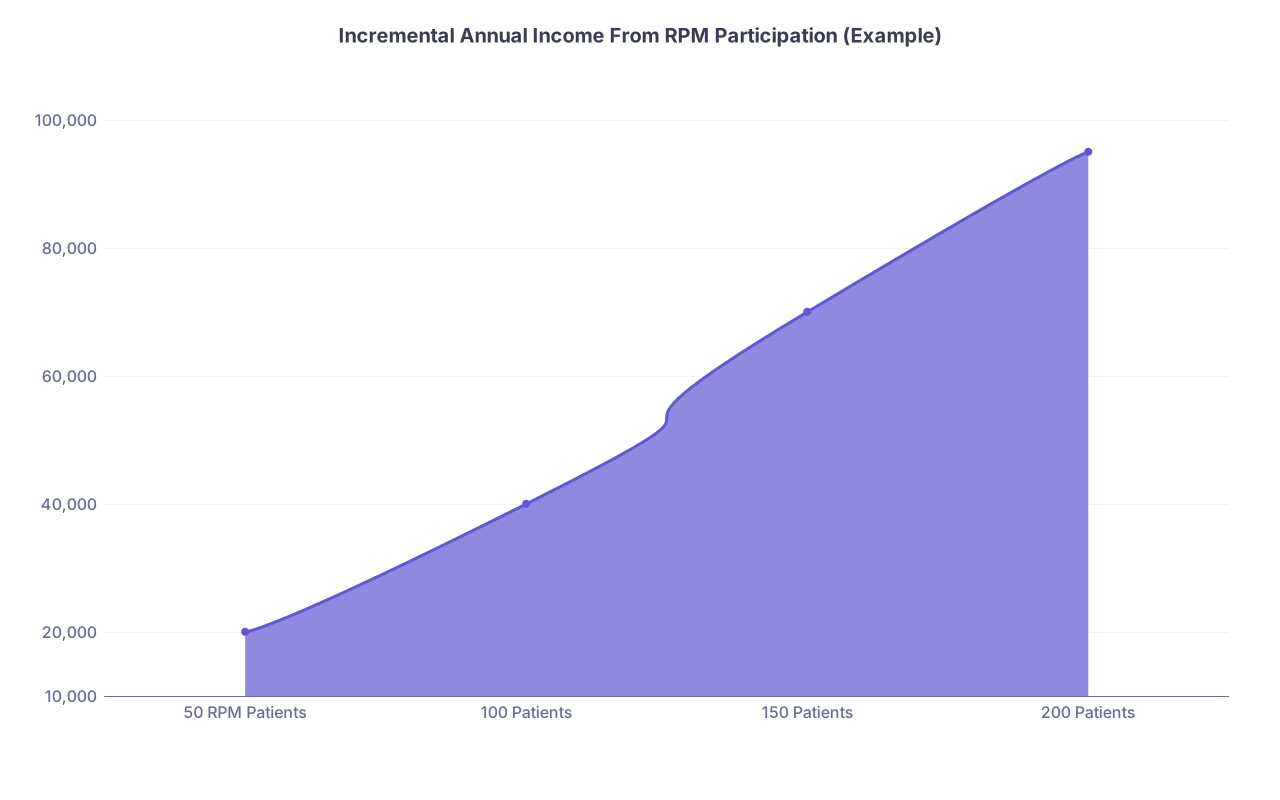
| Category | Value |
|---|---|
| 50 RPM Patients | 20000 |
| 100 Patients | 40000 |
| 150 Patients | 70000 |
| 200 Patients | 95000 |
Assumptions: blended benefit from RPM/CCM codes and value‑based bonuses. Conservative compared to some aggressive programs I have reviewed.
3.5 Dermatology, Orthopedics, and Procedure‑Driven Fields
Procedure‑heavy specialties historically relied less on telehealth. That is changing, and compensation is quietly reflecting it.
Dermatology:
- Visual specialty, well‑suited to asynchronous and synchronous telederm
- “Telederm‑augmented” dermatologists often run front‑end triage via image uploads, with in‑person visits reserved for biopsies, procedures, complex cases
- Tech‑forward dermatologists in larger groups or platforms can stack income through: remote consults, second‑opinion telederm, and sometimes DTC platforms
Orthopedics:
- Pre‑op and post‑op visits increasing via telehealth and remote PT monitoring
- Bundled payment programs using apps and wearables to track recovery, ROM, adherence
- Tech‑forward orthopedists gain leverage more through downstream value‑based bonuses than direct RPM billing
In both, the absolute dollar uplift varies more by business model, but often sits in the +10–20% envelope when technology materially shifts visit mix and value‑based performance.
4. Non‑Clinical and Hybrid Roles: Where Equity Starts to Matter
One important trend that compensation surveys undercount: physicians stepping into tech roles where income is not just salary.
You see several recurring categories:
- Chief Medical Officer / Medical Director at digital health companies
- VP/Director of Clinical Innovation, Informatics, or Virtual Care in large systems
- Fractional medical advisory roles with equity or options
- Physician‑founders and co‑founders of health tech startups
Compensation structures vary enormously, but a typical pattern for a full‑time physician executive at a mid‑stage digital health company might look like:
- $280k–$380k cash base
- 20–40% of that as bonus target
- Equity stake that, if the company does well, can dwarf the salary over time
Hybrid clinicians (0.4–0.8 FTE clinic plus 0.2–0.6 FTE tech/leadership) frequently end up with total comp that looks like:
- Clinical income: $200k–$400k depending on specialty and FTE
- Tech/leadership/advisory income: $50k–$250k cash + variable equity value

If you care about long‑run upside, this is where being tech‑forward really shows up in net worth, not just paycheck.
5. Geographic Arbitrage and Remote Work
One underappreciated advantage for tech‑forward physicians: decoupling income from local cost of living.
Telehealth and remote leadership roles allow:
- Earning big‑city or national platform compensation while living in lower‑cost regions
- Reducing expensive commutes and second homes for multi‑site work
- Negotiating multi‑state or national roles that are impossible for physicians tied to one hospital campus
In mental health and some primary care models, I have seen physicians based in low‑cost states clearing >$350k with fully remote setups while peers in coastal metros, in traditional brick‑and‑mortar practices, struggle at $250k–$280k with much higher living costs.
That is not a silent difference. Over 10–15 years, the wealth gap is enormous.
6. What the Trend Line Looks Like Over 5–10 Years
Let us talk trajectory, not snapshots.
Aggregate data from compensation surveys, digital health investment flows, and telehealth utilization show a few clear curves:
- Telehealth volumes surged in 2020, dipped, but stabilized at far above 2019 levels
- Remote patient monitoring and virtual care billing codes usage is growing double‑digits annually
- Value‑based care penetration is slowly but steadily rising, especially in Medicare Advantage and some commercial segments
- Health systems are under pressure to cut costs, automate workflows, and “do more with less”
Overlay this with the rising sophistication of AI, clinical decision support, and patient‑facing digital tools. The strategic shift is not subtle:
- Systems will pay more for physicians who can lead technology adoption and extract ROI from it
- Pure “RVU grinders” with no tech fluency or leadership may hold steady but will not see the same upside
Here is a simplified projection of compensation trajectories, assuming current trends continue.
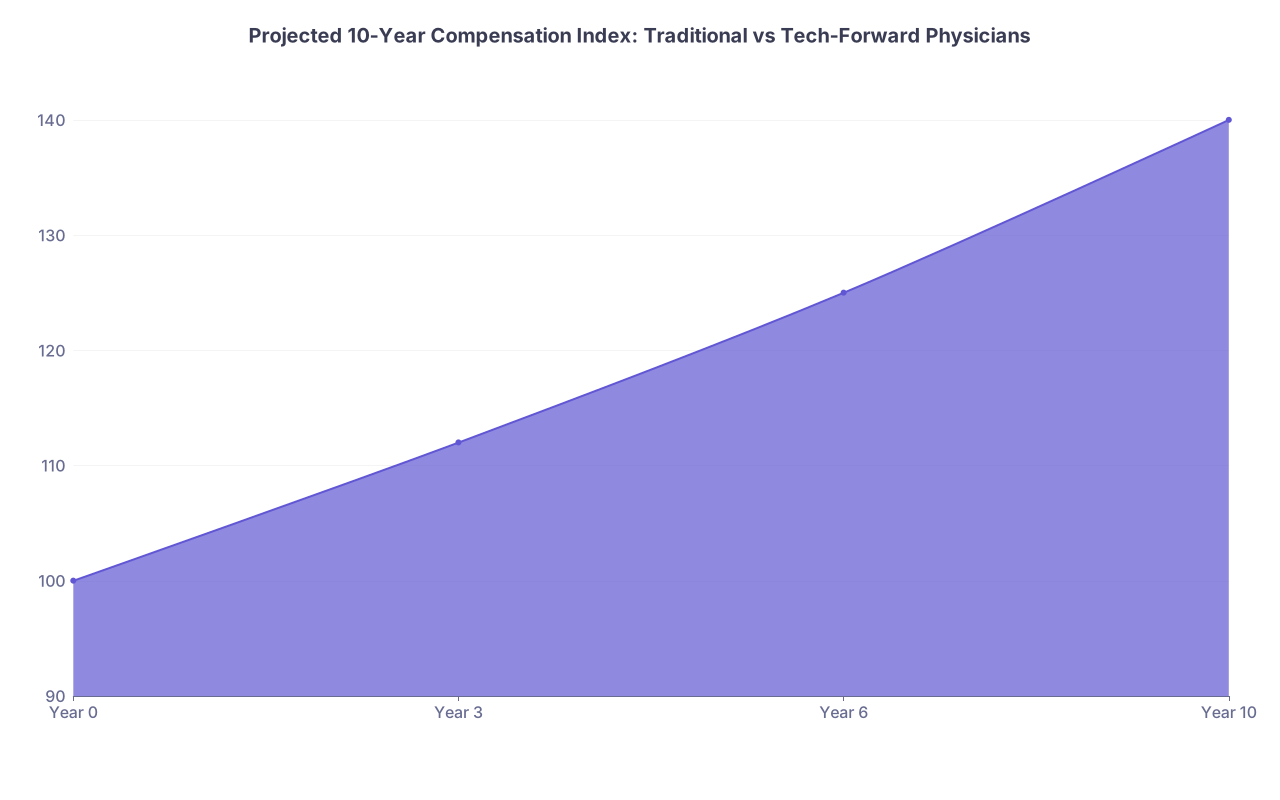
| Category | Value |
|---|---|
| Year 0 | 100 |
| Year 3 | 112 |
| Year 6 | 125 |
| Year 10 | 140 |
Interpretation: Traditional physicians track closer to general inflation plus modest real growth. Tech‑forward physicians, with additional revenue streams and leadership roles, outpace that. If you ran a dual line chart, you would likely see tech‑forward reaching 150–160 on this index while traditional plateaus around 120–130 over a decade.
The precise slopes are debatable. The direction is not.
7. What This Means for You (If You Want to be on the Right Side of the Data)
Strip away the noise, and the data push you toward a few blunt conclusions.
First, “tech‑forward” is not a personality trait. It is a set of skills and roles that directly connect to revenue, cost‑savings, or strategic value. That is where money flows.
Second, the compensation gap is already real—often 15–25% within the same specialty—and likely to widen as:
- Value‑based contracts expand
- Telehealth reimbursement stabilizes
- AI and automation demand physician oversight rather than blind trust
Third, you do not need to become a software engineer. But you do need to:
- Understand how technology changes your unit economics: RVUs, panel size, cost per encounter, readmission penalties, bonus structures
- Choose practice environments where that technology is central, not bolted on as an afterthought
- Be comfortable taking on hybrid roles: clinical + product, clinical + informatics, clinical + leadership

8. Two Bad Assumptions to Drop Now
I will end with two beliefs that the compensation data flatly contradict.
“Tech will replace physicians, so investing in it is risky for my career.”
The actual pattern: tech‑fluent physicians become irreplaceable in design, oversight, governance, and high‑leverage clinical workflows. They capture premiums. Those who refuse to engage become interchangeable.“Compensation is mostly about specialty choice and geography.”
That used to be roughly true. Now specialty and geography are just the baseline. Within any given field, the variance driven by technology adoption, value‑based involvement, and hybrid roles is large and growing.
Key Takeaways
- Across almost every major specialty, tech‑forward physicians are earning 15–25% more than traditional peers, primarily via telehealth volume, RPM/CCM revenue, value‑based bonuses, and non‑clinical tech roles.
- The pay gap is not a short‑term COVID blip; it aligns with long‑run shifts toward digital care, risk‑based contracts, and AI‑enabled workflows, and is likely to widen over the next decade.
- If you want to be on the higher‑earning side of your specialty, you need to treat technology as a core part of your practice and business model, not as optional “cool tools” in the background.