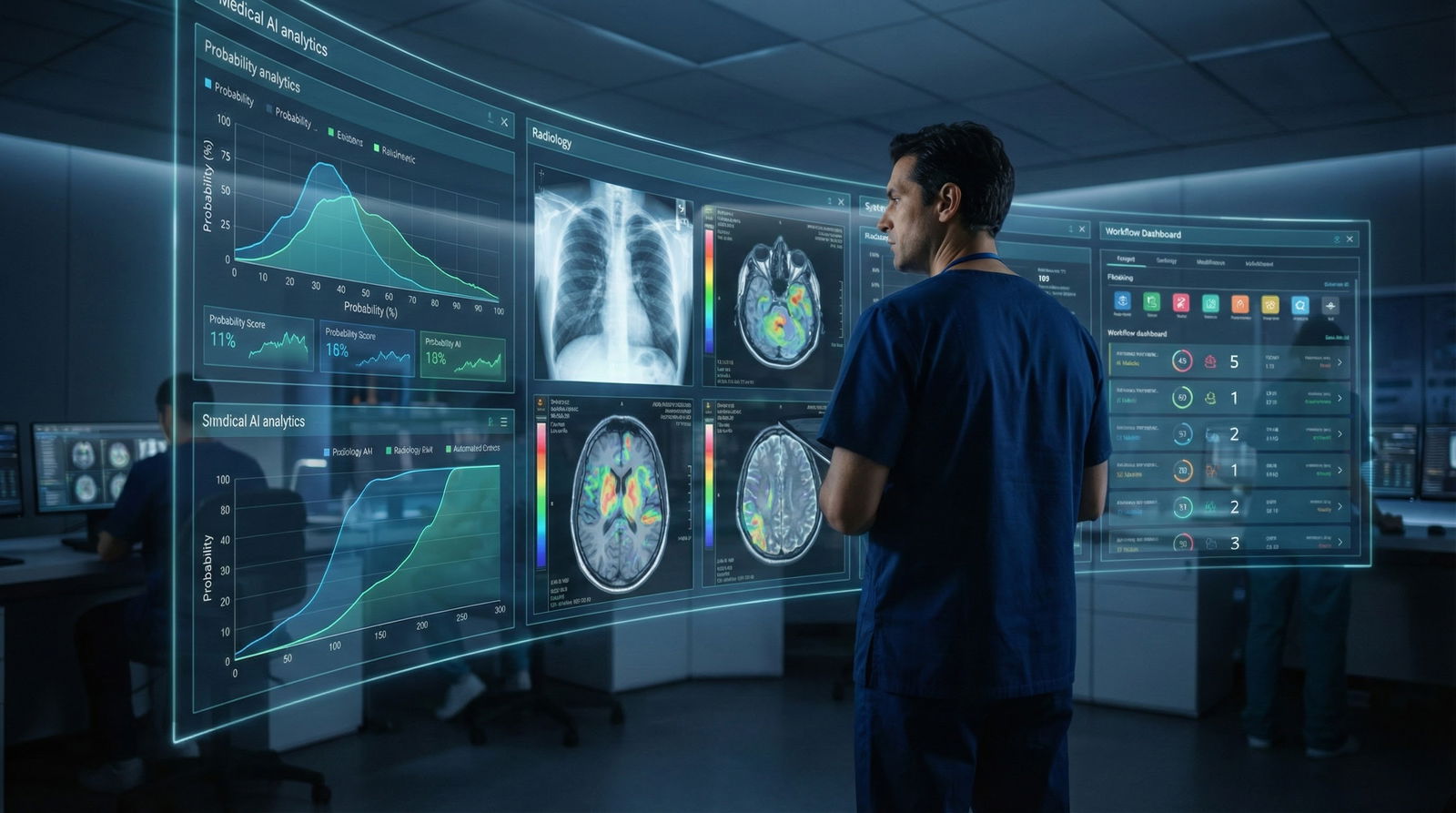
The common belief that “doctors are safe from automation” is wrong. Some specialties are far more exposed than others, and the data is already pointing to who is on the front line.
I am going to be blunt: if a large portion of your work is pattern recognition on digital data (images, signals, structured lab values) with low emotional complexity and predictable workflows, you are sitting closer to the automation blast radius than colleagues doing nuanced longitudinal care, negotiation, and hands-on procedures.
Let us quantify that.
How to measure “automation exposure” in specialties
Before ranking anything, we need a framework. Otherwise this turns into hand‑waving.
I use four core dimensions, each scored roughly 1–10, then combined into a composite “Automation Exposure Score” (AES):
Digitization of core tasks
How much of the specialty’s day‑to‑day work already lives in digital form?
Radiology images: 10. ICU vitals streams: 9. Hands-on physical exams only partially captured in notes: much lower.Task structure and repeatability
Do clinicians repeatedly solve well‑defined problems with clear inputs and outputs?
Reading chest X‑rays with standard report templates is highly structured. Complex goals-of-care conversations with families are not.Evidence of current AI performance
Are there peer‑reviewed models or commercial tools that match or exceed average clinician performance on core tasks?
This is not about hype. I look at AUROC, sensitivity/specificity, or error rates versus human benchmarks.Regulatory and workflow friction
How hard is it (technically, legally, culturally) to embed automation into real workflows?
Quiet decision support in the background is easier than full autonomy in high‑risk surgery.
For a very rough composite, I weight them:
- Digitization: 30%
- Structure/repeatability: 30%
- AI performance evidence: 25%
- Regulatory/workflow friction (reverse‑scored): 15%
This is not a formal published index; it is a practical way to line up what we already see in the literature and in real hospitals.
High‑exposure specialties: where the algorithms are already strong
These specialties have three things in common: data is digital, tasks are repetitive, and models have strong published performance.
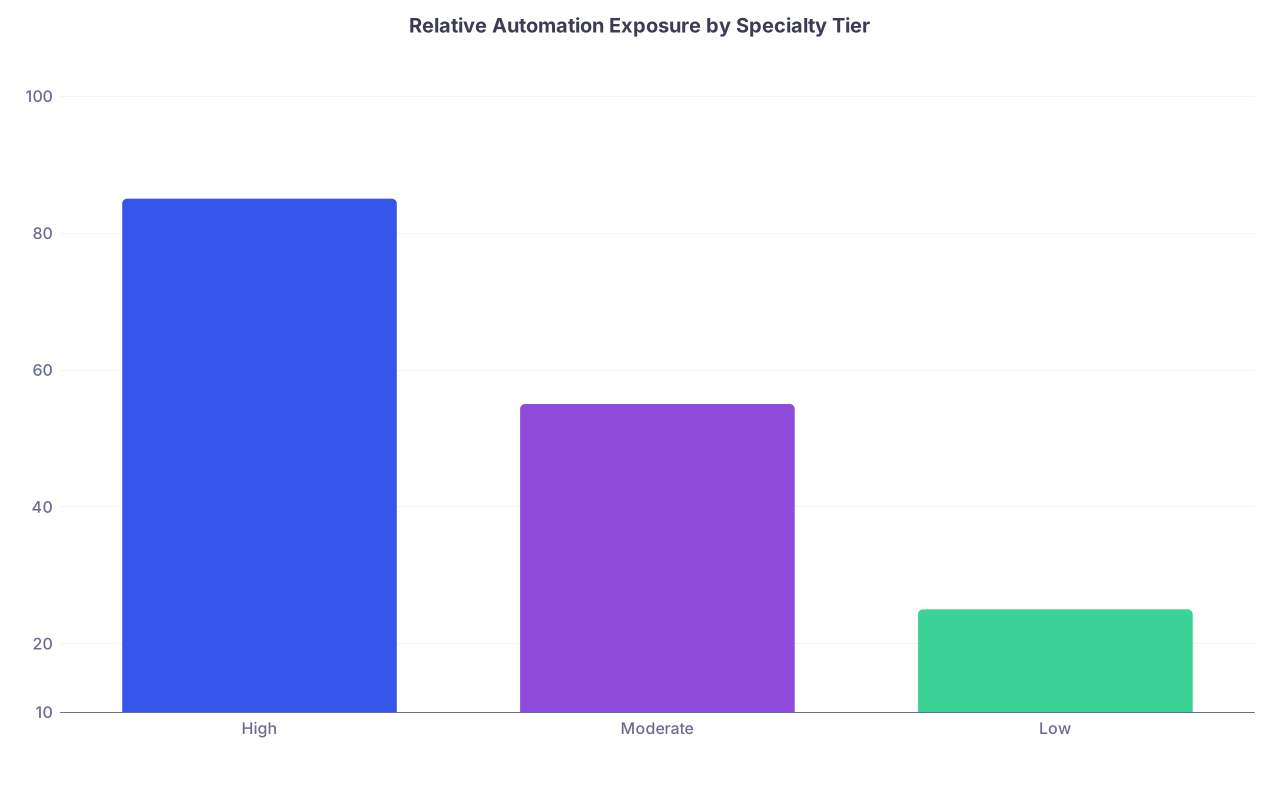
| Category | Value |
|---|---|
| High | 85 |
| Moderate | 55 |
| Low | 25 |
1. Radiology – the poster child of automatable work
Radiology is the canonical example, and the numbers back that up.
Across multiple subfields:
Image interpretation models
- Chest X‑ray: AUROC in the 0.90–0.95 range for many pathologies.
- Mammography: several FDA‑cleared tools with sensitivity comparable to or better than average radiologists, sometimes at lower false‑positive rates.
- CT-based detection (pulmonary nodules, intracranial hemorrhage, PE): multiple tools with performance strong enough that health systems deploy them as triage aids.
Workload characteristics
- A typical radiologist may read 50–100 CTs or 100–200 X‑rays in a shift.
- Each case is a digital object, similar formatting, standard views, structured reporting templates.
If we score Radiology on the four dimensions:
- Digitization: 10/10
- Structure/repeatability: 9/10
- AI performance evidence: 9/10
- Regulatory/workflow friction (reverse‑scored): maybe 6/10 (because we already have FDA approvals and PACS integration)
Composite AES comes out very high, in the 85–90/100 range.
So does that mean “no more radiologists”? No. It means:
- Automation will likely eat the bottom 30–50% of low‑complexity reads (screening exams, straightforward negatives).
- Radiologists will be pushed toward:
- Complex multimodality cases
- Procedural radiology (IR, biopsies, drains)
- Consultative roles, protocoling, and QA
The data shows something already visible in large systems: AI tools for stroke CT prioritization, pneumothorax flags, fracture detection, etc., are not theoretical. They are in production. Radiology is at the top of the exposure ranking.
2. Pathology – the slide scanner’s best friend
Pathology has lagged radiology in digitization but is catching up rapidly with whole-slide imaging.
Digital pathology adoption
- Historically, glass slides sat under microscopes.
- Now, high‑volume centers increasingly use slide scanners, generating gigapixel images suitable for machine learning.
AI performance examples
- Prostate biopsy grading: AI models match or outperform generalist pathologists in Gleason grading, with high concordance with expert panels.
- Lymph node metastasis detection in breast cancer: some challenge datasets show AI sensitivity exceeding individual pathologists, especially for micrometastases.
Task structure is similar to radiology: look at a digital image, categorize patterns, produce a report. Variability and nuance exist, but structurally, it is very friendly to automation.
Scores (approximate):
- Digitization (growing fast): 8/10 now, heading higher
- Structure/repeatability: 8/10
- AI performance evidence: 8/10
- Regulatory/workflow friction (still nontrivial, but falling): 5–6/10 reverse‑scored
Composite AES: ~80/100.
In practice, you are more likely to see:
- AI pre‑screening slides, flagging suspicious regions
- Automated counts (mitotic figures, immunostaining)
- Decision support for grading and margin assessment
Again, not full replacement, but a plausible 30–40% compression of “routine” cognitive workload over time.
3. Ophthalmology (especially imaging‑heavy niches)
Ophthalmology looks more resistant at first glance because of procedural work, but the data says imaging components are highly exposed.
Key cases:
Diabetic retinopathy screening
- FDA‑approved autonomous AI systems can diagnose DR from fundus photographs without a human in the loop.
- Performance: sensitivities and specificities in the 85–95% range in deployment studies, adequate for screening.
Other imaging
- OCT analysis for macular disease, glaucoma risk prediction from fundus photos, etc., all show strong model performance.
But ophthalmologists do more than image reading: surgeries, intravitreal injections, slit‑lamp examinations. Those are far harder to automate.
So I separate:
- Imaging / screening components – high exposure
- Procedural / clinic care – low to moderate exposure
A blended AES might be ~65–70/100, with internal variance.
4. Dermatology – telederm and lesion classification
Dermatology is often cited in automation conversations because of skin lesion classifiers.
Image classifiers
- Multiple studies show AI models performing at or above average dermatologist accuracy in distinguishing benign vs malignant lesions on curated images.
Caveats
- Real-world photos are noisy (lighting, angle, skin tone diversity, non‑standardized acquisition).
- Many diagnoses rely on palpation, history, distribution patterns, and non-photographic clues.
Still, the teledermatology + smartphone camera ecosystem is trending toward heavy automation at the triage and screening level.
Scores:
- Digitization (photos, dermoscopy): 7/10
- Structure/repeatability: 7/10
- AI performance evidence: 7–8/10
- Workflow friction (patients can take photos themselves; low friction for first‑line triage): 7/10 reverse‑scored
Composite AES: around 70–75/100, but heavily skewed toward simple lesion assessment, not complex derm or inpatient consults.
Moderate‑exposure specialties: decision-heavy, data‑rich, but still very human
Several “cognitive” specialties sit in the middle. High potential for decision support and partial automation, but a long way from full replacement.
5. Emergency Medicine – triage and risk scoring
Emergency medicine is noisy, chaotic, and high‑stakes. That usually screams “hard to automate”. But when you break it down into micro‑tasks, some portions are very automatable.
Where AI is already decent:
Triage and risk prediction
- Sepsis risk scores, deterioration prediction from vital signs and lab trends, ED revisit risk models.
- Performance often beats traditional scoring systems (e.g., NEWS, qSOFA) with higher AUROC.
Imaging within the ED
- AI for head CT bleeding, cervical spine fractures, and chest imaging flows straight into ED decision-making. These tools affect EM even if built for radiology.
Key limitations:
- Huge variety of presentations
- Need for rapid improvisation, physical assessment, and negotiation with patients and families
- Workflow unpredictability (overcrowding, limited beds, resource constraints)
Scores:
- Digitization: 7/10 (lots of vitals, labs, notes, imaging)
- Structure/repeatability: 6/10 (chest pain/rule‑out ACS is structured; bizarre presentations are not)
- AI evidence: 6–7/10 for pockets (triage, risk models)
- Workflow friction: 5/10 reverse‑scored (EDs are messy, integration is hard)
Composite AES: ~55–60/100. Expect strong decision support and triage automation, not automated emergency physicians.
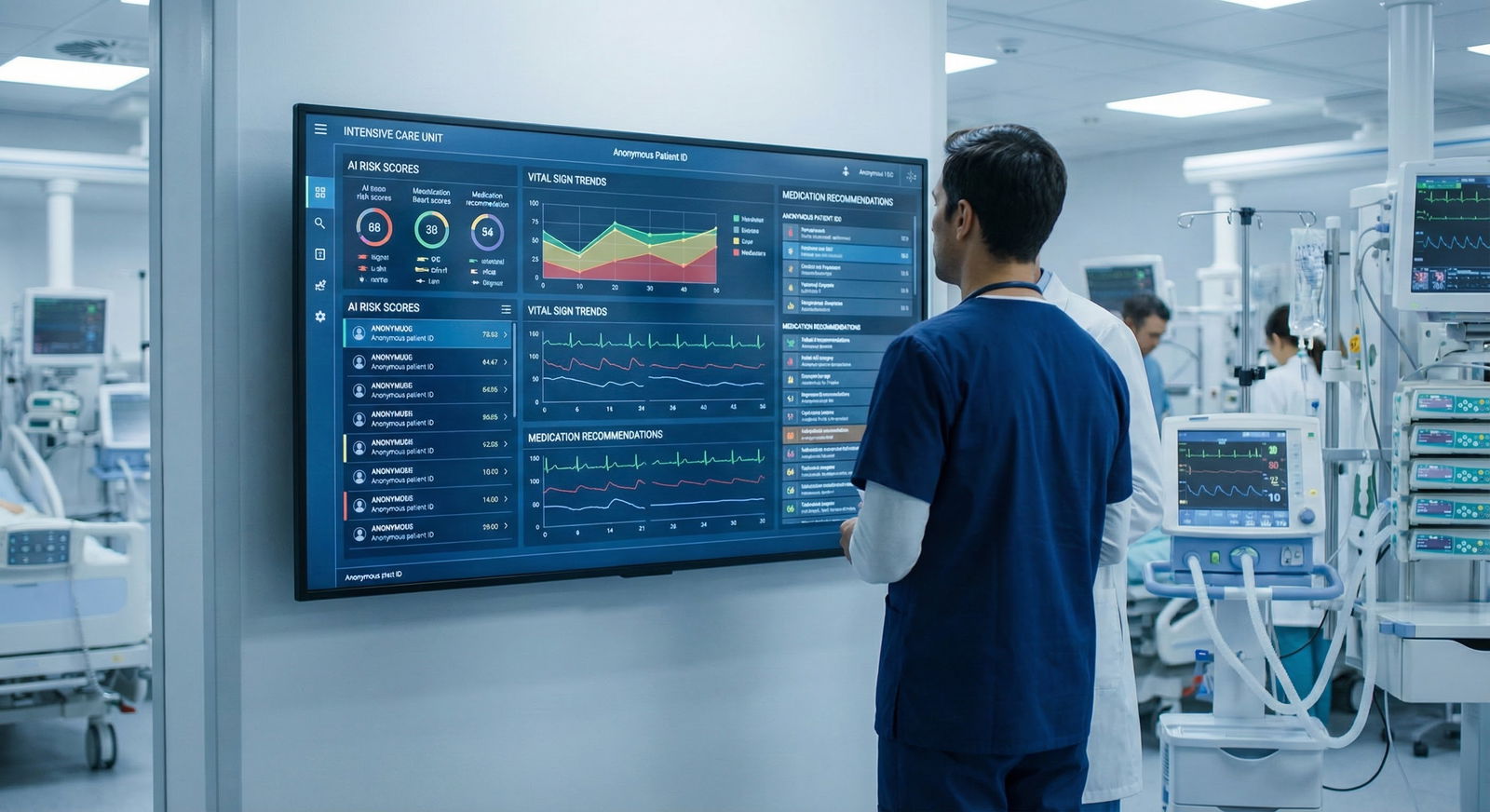
6. Intensive Care / Hospital Medicine – prediction engines everywhere
ICUs are essentially data firehoses:
- Vitals streams at high frequency
- Continuous labs, medications, ventilator settings, fluid balances
- Clear high‑stakes endpoints: mortality, ventilation, AKI, readmissions
AI models already target:
- Predicting sepsis, ARDS, decompensation
- Optimizing ventilator settings
- Early warning scores that beat traditional tools numerically
From a data analyst perspective, this is fertile ground:
- High signal density, well‑defined outcomes, large datasets collected automatically.
But full task automation? Much less realistic:
- Complex trade‑offs (comfort vs aggressiveness, family preferences, goals of care)
- Multi‑organ failure with constantly shifting constraints
- Interdisciplinary inputs (nephrology, ID, surgery consults)
Scores:
- Digitization: 9/10
- Structure/repeatability: 7/10
- AI evidence: 7/10
- Workflow friction: 4–5/10 reverse‑scored (integration issues, liability concerns)
Composite AES: ~60–65/100, concentrated in prediction and early warning tools that shape decisions but do not replace the physician.
7. Cardiology – imaging plus risk models
Cardiology is a mixed portfolio.
High‑exposure pockets:
Imaging: Echo analysis, CT angiography, MRI segmentation. Many tools can:
- Automatically calculate EF
- Detect wall motion abnormalities
- Quantify plaque burden
Risk prediction:
- Models predicting MACE, HF outcomes, readmissions.
- Often outperform legacy scores (e.g., TIMI, CHADS2) when trained on large EHR datasets.
Lower‑exposure elements:
- Procedures: Cath lab interventions, device implants, complex EP procedures.
- Longitudinal clinic care and behavior change conversations.
Overall AES: ~55–60/100, with imaging subsets closer to radiology in exposure and interventional cardiology much lower.
Low‑exposure specialties: complexity, touch, and negotiation as insulation
Some specialties are structurally harder to automate. Not impossible, but trajectory and current evidence show much lower vulnerability.
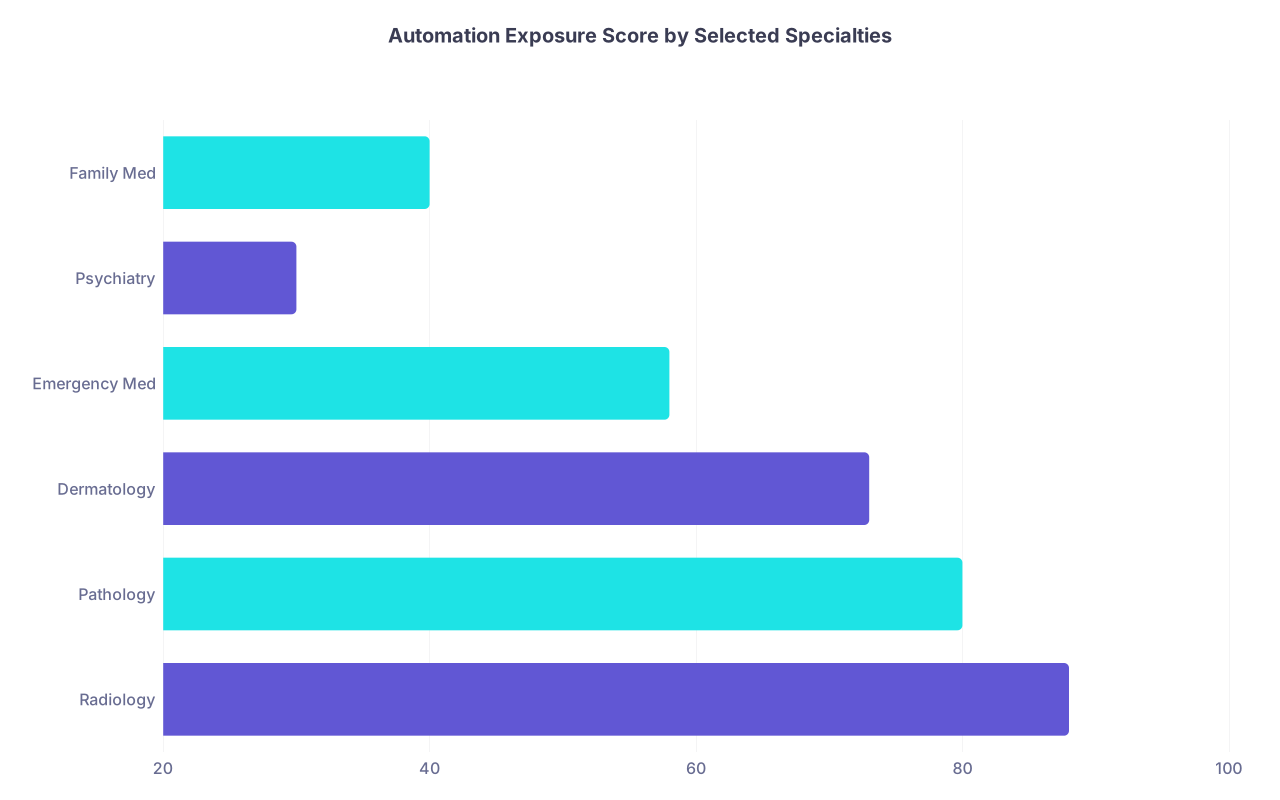
| Category | Value |
|---|---|
| Radiology | 88 |
| Pathology | 80 |
| Dermatology | 73 |
| Emergency Med | 58 |
| Psychiatry | 30 |
| Family Med | 40 |
8. Psychiatry – language is digital, but nuance is in the gaps
From a modeling standpoint, psychiatry looks appealing:
- Conversations can be recorded and transcribed.
- Standardized rating scales exist (PHQ‑9, GAD‑7, HAM‑D).
- Large text corpora could feed NLP models.
In reality, two big frictions:
Ground truth is fuzzy.
There is no MRI “label” for depression severity. Diagnoses and treatment responses are noisy, subjective, and heavily context‑dependent.The therapeutic relationship matters.
A large portion of effectiveness in psychotherapy is alliance, trust, and perceived empathy. That is not a trivial optimization problem.
We already see:
- Chatbot‑based CBT tools
- Automated screening from text or voice sentiment analysis
These can offload some routine follow‑up and early screening, but replacement of psychiatrists is far off.
Scores:
- Digitization: 6–7/10 (notes, telepsychiatry recordings, text)
- Structure/repeatability: 3–4/10 (sessions are less templated)
- AI evidence: 3–4/10 (mostly early-stage, niche)
- Workflow friction: moderate
Composite AES: roughly 25–35/100. More augmentation than substitution.
9. Family Medicine / General Internal Medicine – messy reality as protection
Primary care looks like a simple diagnosis game from the outside. You run enough Bayesian reasoning and guidelines, and you are done. The data does not support that fantasy.
What really happens:
- Multimorbidity: a patient with HF, CKD, DM, depression, chronic pain, and social stressors walks in. Guidelines conflict. Trade‑offs everywhere.
- Unstructured presentations: “I am tired”, “I just do not feel right.” Little structured data, lots of ambiguity.
- Strong emphasis on trust, persuasion, and coordination: getting someone to accept statins or therapy is not a pure information problem.
AI will absolutely help:
- Preventive care reminders
- Risk calculators (ASCVD, fracture, cancer risk) on steroids
- Automated chart review and documentation helpers
But the core function—integrating messy subjective input, social context, and medical knowledge into a plan the patient can actually follow—remains human‑heavy.
Scores:
- Digitization: 7/10 (EHR data, labs, but much key info lives in narrative text and the patient’s home life)
- Structure/repeatability: 4–5/10
- AI evidence: 4–5/10
- Workflow friction: high
Composite AES: ~35–45/100.
10. Surgery and procedural specialties – robots help, but they do not lead
People often overestimate robot autonomy because of flashy videos. The data on actual surgical robotics is far more boring:
- Current systems (e.g., da Vinci) are teleoperated tools, not autonomous agents.
- Suturing, dissection, and complex intraoperative decisions are guided by the surgeon’s real‑time judgment.
Where automation is strong:
- Pre‑op planning: image segmentation, 3D reconstructions, risk stratification.
- Intraop support: image overlay, instrument tracking, recognition of anatomy.
- Post‑op: complication predictions, clinical decision support.
But:
- Tissue handling and adaptability to unexpected bleeding or anatomy variants is brutally difficult to automate.
- Liability, regulation, and patient comfort with “robot did my surgery alone” are huge barriers.
Procedural dermatology, OB/GYN surgery, orthopedics, neurosurgery—all share similar protection. High augmentation; low full‑task replacement.
Composite AES for most surgical fields: ~30–45/100, depending on reliance on imaging vs hands-on judgment.
Side‑by‑side ranking: a data‑driven snapshot
Here is a synthesized ranking using the approximate Automation Exposure Scores we just walked through. Treat the numbers as order‑of‑magnitude signals, not precise measurements.
| Specialty | Automation Exposure Score (0–100) | Exposure Tier |
|---|---|---|
| Radiology | 85–90 | Very High |
| Pathology | 78–82 | Very High |
| Dermatology | 70–75 | High |
| Ophthalmology | 65–70 | High |
| ICU / Hospital Med | 60–65 | Moderate–High |
| Cardiology | 55–60 | Moderate–High |
| Emergency Medicine | 55–60 | Moderate–High |
| Family / Gen Med | 35–45 | Low–Moderate |
| Surgery (most) | 30–45 | Low–Moderate |
| Psychiatry | 25–35 | Low |
This is not exhaustive. Subspecialties (IR vs diagnostic radiology, pediatric vs adult EM, EP vs general cardiology) will move within these ranges. But the shape of the ranking is directionally correct.
What actually gets automated: tasks, not titles
The most common conceptual error I see from students and residents is thinking “Will AI replace radiologists?” instead of “Which tasks in radiology are most automatable?”
That distinction matters.
Across specialties, the data shows early and strongest automation in:
Screening and triage
- DR screening in primary care
- CT triage for stroke or trauma
- Telederm sorting lesions into “urgent / non‑urgent / benign”
Measurement and quantification
- Ejection fraction, ventricular volumes
- Tumor sizing and segmentation
- Lab trend–based risk scores (e.g., AKI risk from creatinine trajectories)
Documentation and coding helpers
- Note generation from conversation transcripts
- Auto‑coding of diagnoses and procedures
- Suggesting order sets based on common patterns
These map heavily onto specialties with high AES, but they also penetrate lower‑exposure areas as background utilities.
From a career standpoint, the relevant question is: How much of my chosen specialty’s work is composed of those automatable micro‑tasks? And how quickly are they shifting to machines?
How to use this data when choosing a specialty

| Step | Description |
|---|---|
| Step 1 | Start - Choosing Specialty |
| Step 2 | Focus on complex cases and procedures |
| Step 3 | Focus on relationship and coordination |
| Step 4 | Develop AI literacy and QA skills |
| Step 5 | Integrate decision support tools |
| Step 6 | Stay competitive in high exposure fields |
| Step 7 | High AES specialty? |
If you are a medical student or resident, you are probably not selecting specialty purely on automation risk. Nor should you. But ignoring it entirely is also naive.
Three concrete ways to use the ranking:
Differentiate within high‑exposure specialties
In radiology or pathology:- Move up the complexity ladder (oncologic imaging, complex IR, transplant pathology).
- Become the person who understands AI tools deeply: how they fail, how to QA them, how to integrate them.
- Lean into cross‑disciplinary roles (tumor boards, multidisciplinary clinics) where interpretation plus clinical context is valued.
Design your career defensively in moderate‑exposure fields
In EM, ICU, cardiology:- Expect prediction models and triage tools to be everywhere.
- Your comparative advantage will be:
- Rapid prioritization under uncertainty
- Communication under pressure
- System‑level thinking (bed management, escalation decisions)
- Learn to treat AI output as another vital sign, not gospel.
Do not get complacent in low‑exposure specialties
Psychiatry or primary care is insulated in the near term, not invulnerable forever.- Expect “digital front doors”: bots doing intake, screening, and low‑level counseling.
- If you build skill in collaborative care models, integration with tech tools, and population health, you stay at the center of the ecosystem.
The data points to a simple but uncomfortable conclusion: no specialty is truly “safe.” The distribution is about where the first and strongest impacts land.
The bigger structural shift: from diagnostic monopoly to orchestration
The traditional physician monopoly sat on three pillars:
- Information access
- Pattern recognition and diagnosis
- Authority to act
AI and automation are attacking the second pillar hardest. Pattern recognition on digital data is precisely what machines are good at.
Radiology and pathology are the early test cases. Dermatology images, ophthalmology scans, and risk scores in the ICU are close behind. Over time, more of the decision stack in every specialty will get pre‑computed by machines.
What remains—across almost all specialties—is:
- Integrating conflicting recommendations
- Negotiating plans under social, financial, and personal constraints
- Taking responsibility in ambiguous, morally charged situations
That is orchestration, not just diagnosis.
The specialties with the highest automation exposure scores are not doomed; they are being redefined. If you understand the data, you can shape your role toward tasks that are:
- Less repetitive
- Less purely digital
- More relational, cross‑disciplinary, and judgment‑heavy
The models will keep getting better. The exposure ranking will shift. But with a clear picture of where the algorithms are already strong, you are better positioned to design a career that sits above the automation layer rather than beneath it.
With that foundation, the next step is understanding what skills—statistical literacy, basic ML concepts, clinical informatics—you should actually learn to stay relevant. That is the next chapter in the future of healthcare, and it is arriving faster than most training programs are willing to admit.