
If you're taking a gap year before residency, here's the blunt truth: program directors do not care that you “did volunteering.” They care what that volunteering proves about you.
Educational disclaimer: This article discusses residency application strategy and may reference paid gap-year tradeoffs or income-related realities in passing, but it is for educational purposes only and is not financial, legal, or tax advice. For personal financial or legal decisions, consult a qualified professional.
That’s the frame. Not hours. Not optics. Not how many bullet points you can cram into ERAS. PDs are looking for evidence that you’re mature, reliable, service-oriented, and capable of showing up for people when nobody is grading you. A gap year can help your application. It can also expose fluff fast.
What Program Directors Actually Look for in Gap Year Volunteering
The strongest volunteer work answers questions PDs already have in their heads:
- Can this person be trusted?
- Do they follow through?
- Are they actually motivated by service, or just decorating a weak application?
- Can they work with patients, staff, and teams without becoming a burden?
- Did they grow during the gap year, or just stay busy?
That’s what matters.
I've seen applicants make the same mistake over and over: they treat volunteering like a checkbox. They list six short experiences, each with vague language like “supported community outreach efforts” or “assisted clinic staff.” Sounds nice. Means nothing. PDs have read thousands of applications. They can smell empty calories.
What stands out is sustained commitment. If you volunteered at a free clinic every Tuesday evening for 10 months, learned the workflow, built trust with staff, and took on real responsibility, that says something. If you helped run patient intake, coordinated follow-up calls, translated for families, or trained newer volunteers, even better. Now your volunteering shows reliability, communication, initiative, and teamwork. That's useful signal.
Patient-facing roles also carry more weight than purely symbolic ones. Not because every role has to be clinical, but because proximity to actual people matters. Service that puts you in contact with patients, families, caregivers, or vulnerable community members gives PDs better evidence of your interpersonal skills and your tolerance for the unglamorous parts of care. The waiting. The repetition. The discomfort. The fact that people are messy.
Leadership matters too, but only if it’s real. “Volunteer coordinator” means something if you scheduled shifts, solved no-show problems, improved onboarding, or built a process that lasted after you left. It means very little if it was a title floating above the same low-responsibility tasks.
Work with underserved communities tends to stand out because it reveals something deeper than résumé maintenance. Free clinics, mobile health units, refugee health support, street medicine outreach, food insecurity programs tied to health systems, harm reduction work, crisis hotlines, hospice. These roles show you can serve where the need is greatest and the gratitude is not always immediate. That’s real medicine-adjacent maturity.
And then there’s reflection. Underrated, but crucial. PDs don’t just want to know what you did. They want to know what you learned and whether you can make meaning out of it without sounding fake. If your takeaway is “this experience confirmed my passion for helping others,” you’ve said almost nothing. If you can explain how the work changed your understanding of continuity, trust, access, grief, systems barriers, or your own limitations, now we’re getting somewhere.
Here’s the simplest way to think about it: good gap year volunteering is not impressive because it exists. It’s impressive because it demonstrates character under ordinary conditions. No grades. No applause. Just repeated service.
That’s exactly why PDs respect it when it’s done well.
The Gap Year Volunteer Experiences That Carry the Most Weight
Not all volunteering is equal. Some roles genuinely strengthen an application. Others are filler. Here’s the hierarchy I’d use.
First tier: sustained clinical volunteering. This includes free clinics, community health centers, emergency department volunteer roles with actual responsibility, patient navigation, care coordination, clinic intake, discharge support, and language-concordant patient assistance. These experiences matter because they put you in real systems with real patients and real team dynamics. You learn how care actually moves. You also give PDs something concrete to picture.
Second tier: longitudinal service with underserved populations. Think refugee resettlement health support, homeless outreach tied to medical care, food pantry programs embedded in clinics, mobile blood pressure or diabetes screening, street medicine, reproductive health access work, or community-based chronic disease education. This stands out because it shows commitment, humility, and understanding of health beyond the hospital walls.
Third tier: hospice and palliative volunteering. This is a sleeper hit. Done consistently, it says a lot about your comfort with vulnerability, silence, grief, and presence. Hospice work is not flashy. That’s exactly why it carries weight. It’s hard to fake maturity in that setting.
Fourth tier: crisis support and public health outreach. Crisis text lines, sexual assault response programs, vaccine outreach, harm reduction education, overdose prevention, maternal-child public health programs, or infectious disease prevention work can all be excellent if they’re structured and longitudinal. Especially if you were trained, supervised, and accountable.
Fifth tier: structured leadership within a service role. This can be valuable, but only if it sits on top of actual service. Running volunteers for a clinic, creating a follow-up system, building a workflow, mentoring new team members, coordinating outreach logistics. Good. Leading a committee that mostly made slides. Not good.
Now the part applicants don’t always want to hear: consistency beats prestige. Every time.
A famous nonprofit with your name attached for three weekends is weaker than a modest neighborhood clinic where you showed up every week for a year. PDs would rather see one meaningful lane pursued deeply than a scatterplot of random altruism.
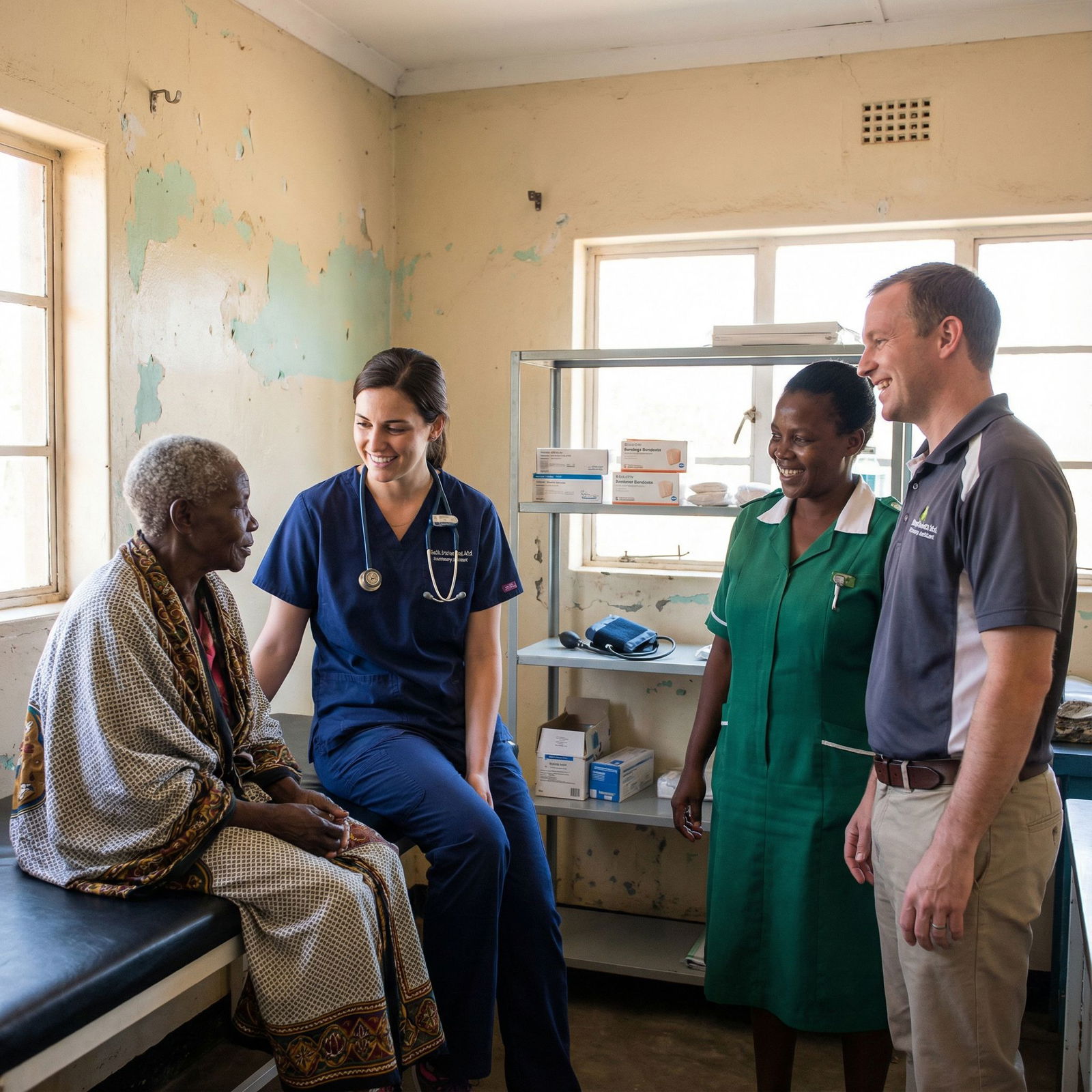
Here’s a practical ranking framework:
Highest value
- Weekly free clinic or community clinic work
- Longitudinal outreach with underserved patients
- Hospice or palliative care volunteering
- Crisis response with formal training and supervision
- Public health programs with repeated field involvement
Moderate value
- Hospital volunteering with limited but steady patient contact
- Health education outreach without direct clinical interaction
- Volunteer leadership tied to actual operations
Low value
- One-day health fairs only
- Sporadic event staffing
- Roles chosen purely because they’re easy to list
- Activities with no continuity, no responsibility, and no story
The common thread in high-value experiences is simple: they create trust. Staff trust you. Patients recognize you. You become part of a system instead of a visitor passing through for optics.
That’s what PDs notice.
How to Choose Volunteer Work That Helps Your Residency Application
Don’t choose a volunteer role by asking, “What looks best?” Ask four better questions.
1. Is it authentic for me?
If you hate the setting, don’t force it just because it sounds noble. You do not need to cosplay as a future saint. You need a role where you can show up consistently and stay engaged long enough to matter.
2. Can I commit for at least 6 months?
If the answer is no, the value drops. Longitudinal involvement is the whole game. A short burst can help a little, but it won’t carry much weight unless the role is unusually substantial.
3. Does it involve real responsibility?
Look for accountability. A shift people are counting on you to cover. A patient-facing task. A workflow you help maintain. A population you get to know over time. Avoid roles where you mostly stand around waiting to be useful.
4. Is it feasible during the rest of my gap year?
This matters more than people admit. If you’re also doing research, earning income, taking Step 3, caring for family, or moving cities, pick something sustainable. PDs respect consistency. They do not reward burnout theater.
Here’s the cleanest decision rule: choose one or two roles that are authentic, longitudinal, medicine-adjacent, and realistically doable. That’s enough. More than enough, actually.
A few bad choices to avoid:
- Collecting unrelated activities. This makes you look unfocused.
- Chasing hours instead of impact. Nobody is impressed by a giant number with no substance behind it.
- Choosing a role with zero ownership. If you’re replaceable every minute and learned nothing, it won’t help much.
- Volunteering only because you think a specialty wants it. Forced interest reads as forced interest.
- Ignoring reflection. If you can’t explain why the experience mattered, the application value is cut in half.
A smart gap year is not a maximalist project. It’s a coherent one.
How to Talk About Gap Year Volunteering in Applications and Interviews
Once you’ve done the work, your job is to present it clearly. Not dramatically. Clearly.
In ERAS, strong descriptions usually include five things:
- The setting: where you served
- Your role: what you actually did
- Your responsibility: what depended on you
- Your impact: what changed because you were there
- Your insight: what you learned
That structure works because it turns fluff into evidence.
Weak version:
“Volunteered at a community clinic serving underserved populations.”
Better version:
“Volunteered weekly at a free community clinic for 9 months, assisting with patient intake, visit flow, and follow-up coordination for uninsured adults. Over time I became a consistent point person for Spanish-speaking families and helped orient new volunteers. The experience sharpened my understanding of continuity, access barriers, and the importance of reliable team communication.”
That’s stronger because I can actually see you in it.
Interviews are the same. If someone asks, “What did you do during your gap year?” don’t get defensive. Don’t over-explain. And don’t recite your CV like a hostage note.
Use this framework:
1. Why the gap year happened
Be straightforward.
2. What you chose to do intentionally
Show agency.
3. What you learned that made you better prepared for residency
That’s the payoff.
Example:
“I took the gap year after graduation to strengthen a few parts of my application, but I wanted it to be more than a waiting period. I committed to weekly volunteer work at a free clinic and stayed there throughout the year. That consistency taught me a lot about how trust is built in care settings, especially for patients who’ve had fragmented access to healthcare. It also reminded me that being dependable is a clinical skill, not just a personality trait.”
That answer works because it’s honest and mature. No excuses. No self-pity. No fake heroism.

Common interview prompts you should prepare for:
- Why did you choose that volunteer role?
- What was difficult about the experience?
- What did you learn about yourself?
- How did this gap year prepare you for residency?
- Tell me about a memorable patient or family interaction.
- What would your volunteer supervisor say about you?
If you can answer those with specifics, you’re in good shape.
Bottom Line: What to Prioritize If You Still Have Time Before Applying
Here’s the answer you’re looking for.
If you still have time before applying, prioritize:
- Consistent service
- Patient-facing or community-facing responsibility
- Longitudinal commitment
- Work with underserved populations
- Real reflection on what you learned
- Evidence that you function well on a team
And deprioritize:
- Prestige
- Random one-off events
- Padding your hours
- Titles without substance
- Volunteer work you can’t explain with any depth
Your next steps are simple:
- Pick one or two strong roles.
- Commit long enough that people come to rely on you.
- Keep a record of what you actually did, improved, or learned.
- Ask for a letter only if a supervisor truly knows your work.
- Build a tight, honest narrative for ERAS and interviews.
That’s it. Not glamorous. Very effective.
Key takeaways
- Program directors care more about sustained, meaningful service than about piling up random volunteer hours.
- The strongest gap year volunteering shows reliability, empathy, initiative, and a real commitment to serving others.
If your volunteering makes a PD think, “This person shows up, handles responsibility, and understands service,” then your gap year did its job.