

You are here
It is July 1st. You just finished medical school. No pager, no 4 a.m. pre-rounds. Just…quiet. You are taking a gap year before residency, and ERAS for next cycle opens in roughly 11 months.
Your fears are predictable:
- “If I do not do something impressive, programs will think I could not match.”
- “If I do too much random stuff, they will think I am not serious.”
- “What exactly should I have done by when?”
You need a calendar, not vibes. Quarter by quarter, what should be finished, in progress, or locked down so that by the time ERAS opens and interview season hits, you look focused, productive, and ready?
Let us walk through your gap year Q1–Q4, with explicit milestones and checklists.
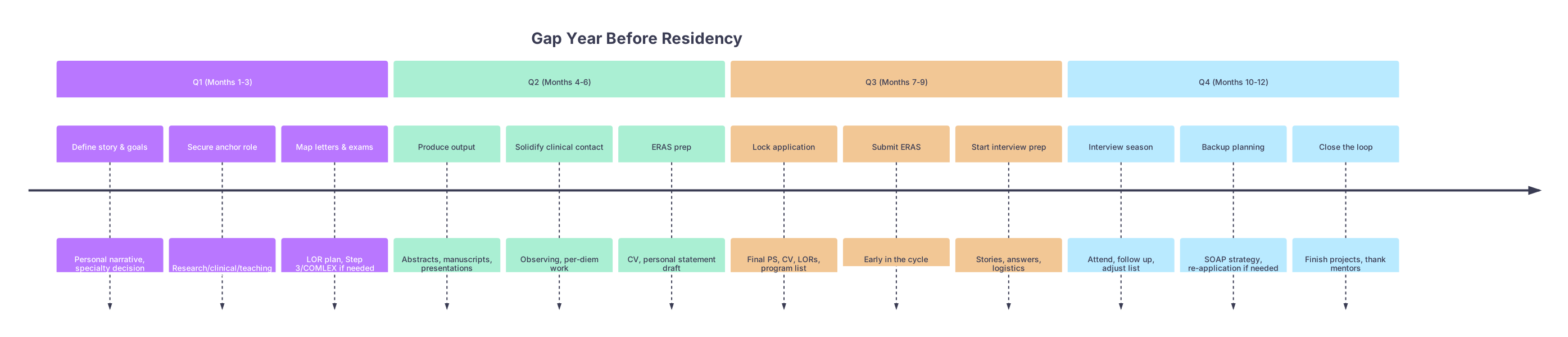
| Period | Event |
|---|---|
| Q1 (Months 1-3) - Define story & goals | Personal narrative, specialty decision |
| Q1 (Months 1-3) - Secure anchor role | Research/clinical/teaching job |
| Q1 (Months 1-3) - Map letters & exams | LOR plan, Step 3/COMLEX if needed |
| Q2 (Months 4-6) - Produce output | Abstracts, manuscripts, presentations |
| Q2 (Months 4-6) - Solidify clinical contact | Observing, per-diem work |
| Q2 (Months 4-6) - ERAS prep | CV, personal statement draft |
| Q3 (Months 7-9) - Lock application | Final PS, CV, LORs, program list |
| Q3 (Months 7-9) - Submit ERAS | Early in the cycle |
| Q3 (Months 7-9) - Start interview prep | Stories, answers, logistics |
| Q4 (Months 10-12) - Interview season | Attend, follow up, adjust list |
| Q4 (Months 10-12) - Backup planning | SOAP strategy, re-application if needed |
| Q4 (Months 10-12) - Close the loop | Finish projects, thank mentors |
Q1 (Months 1–3): Define your story and secure your anchor
At this point you should stop drifting and commit to a direction. Q1 is about identity and structure. Not prestige. Clarity.
Month 1: Decide who you are on paper
By the end of Month 1 you should:
Lock your specialty (or narrow to 1–2)
- If you are still between two fields (say IM vs Neuro, FM vs Psych), you have maybe 4–6 weeks to resolve it, not six months.
- Talk to:
- 2–3 attendings in each target field.
- At least one PD or APD if you can swing it (email your med school’s affiliated hospitals).
- Ask bluntly: “If I spend a gap year doing X, how would that read to you as a PD in your specialty?”
Write a one-paragraph gap year narrative
- This is not the final personal statement. It is your headline.
- Example:
“I am applying to Internal Medicine with an interest in cardiology. During my gap year I am working as a clinical research coordinator in heart failure, maintaining clinical exposure via per-diem work as a medical assistant, and completing several quality improvement projects focused on transitions of care.”
- If you cannot write a coherent paragraph that ties your gap year to your specialty, something is off.
Clarify your weaknesses Make an honest inventory:
- Board scores: below average for your specialty? No Step 2 yet?
- Clinical grades: honors vs passes; any red flags.
- Gaps: no research, limited leadership, thin clinical exposure in chosen specialty. Pick 1–2 weaknesses to directly address. Not 5. You do not have that kind of time.
Month 2: Secure your anchor position
By the end of Month 2 you should have your primary role nailed down and started or have firm start dates. This is the “anchor” that makes your gap year look intentional.
Common anchor roles:
| Role Type | Best For | Red Flag if… |
|---|---|---|
| Research Coordinator | Competitive / academic fields | No abstracts or output |
| Clinical Assistant/MA | Primary care, IM, EM, Psych | No real patient exposure |
| Teaching / Tutoring | MedEd-focused, Peds, Psych | Nothing else in your field |
| QI / Admin Fellow | IM, surgery, hospital-based | Vague duties, no deliverable |
At this point you should:
- Have a formal position (offer letter, schedule, supervisor).
- Hospital-based research coordinator
- Full-time scribe in ED or specialty clinic
- Clinical trials assistant
- Med school teaching fellow
- Confirm a “talk-about-able” project with your supervisor.
- “I am collecting data for an ongoing registry” is okay.
- “We are designing a prospective QI initiative that will be submitted to [X meeting]” is better.
If by the end of Month 2 you are still “sending applications” and “waiting to hear back,” you are behind. At that point, you start accepting less ideal but still defensible roles rather than sitting idle.
Month 3: Set up your letters and exams
Letters and exams are long-lead items. You start now, or you panic in Q3.
By the end of Month 3 you should have:
Letter of recommendation (LOR) map
- Aim for:
- 1–2 letters from your home med school or prior clinical rotations.
- 1–2 letters from gap-year supervisors (research PI, clinical boss).
- Explicitly talk to potential writers:
- “I plan to apply this fall in [specialty]. Would you feel comfortable writing a strong letter for me if this year goes well?”
- If they hedge or sound lukewarm, that is a “no.” Move on.
- Aim for:
Step 2 / Step 3 / COMLEX strategy
- If you still owe Step 2/COMLEX Level 2: schedule it by the end of Q2 at the latest.
- For competitive specialties or if you had score issues:
- Seriously consider Step 3/COMLEX Level 3 during the gap year.
- This becomes a talking point: “I stayed clinically engaged and passed Step 3 while working full-time.”
- By end of Month 3: exam date penciled in, study resources chosen, weekly schedule blocked.
Professional cleanup
- Update:
- CV (med school → present, with gap year role added).
- LinkedIn (yes, PDs and faculty look).
- Professional email, voicemail, signature with:
- Name, degree
- Current role
- Contact info
- Update:
At this point you should have: a chosen specialty, a clear anchor job started, and a concrete plan for letters and exams. If any of those are missing, that becomes your top priority for the next 2–3 weeks.
Q2 (Months 4–6): Create output and build application content
Q2 is where you turn “I have a job” into “I have things to show for it.” You move from setup to production.
Month 4: Generate something you can put on ERAS
By end of Month 4 you should have at least one concrete work product either drafted or clearly in progress.
Targets:
- Research/QI roles
- Abstract in draft form.
- Data collection for a project with a realistic conference submission timeline.
- Your name on a poster or paper in-progress (not fantasy, actual plan with your PI).
- Clinical roles
- Defined responsibility upgrade: training new scribes, writing a clinic protocol, participating in a QI initiative.
- Teaching roles
- Documented teaching hours.
- Feedback from learners.
- Co-leading a course, OSCE sessions, or board review.
You are not chasing ten publications. You are chasing 1–3 credible, finished, talkable items.
Month 5: Draft the skeleton of ERAS content
This is when you begin building your application, quietly, in the background.
By the end of Month 5 you should have:
ERAS experience list draft
- Every role from med school and gap year:
- Position, dates, supervisor
- Bullet-style impact statements (quantify when possible).
- Example:
- “Enrolled and followed 85+ patients in a heart failure readmission study; coordinated weekly MDT meetings and implemented a discharge checklist that reduced 30-day readmissions by 12% over 6 months.”
- Every role from med school and gap year:
Personal statement version 0.5
- Not polished. But:
- Specialty-specific.
- Integrates your gap year clearly (“This year I chose to step back before residency to deepen…”).
- If your gap year followed a previous failed match, you must own that here:
- Brief, factual explanation.
- Clear demonstration of what changed: scores, clinical exposure, maturity, focus.
- Not polished. But:
Program “tiers” and draft list
- Roughly:
- Reach programs.
- Realistic programs.
- Safety programs.
- Use your med school’s match list and honest mentors, not Reddit fantasies.
- Roughly:
Month 6: Tighten clinical and exam readiness
At this point you should look and feel like someone who could start residency next month without falling apart.
By the end of Month 6:
Your clinical skills are not rusting
- You either:
- Work directly with patients (MA, scribe with heavy charting, clinical assistant).
- Or, if in a pure research role, you:
- Volunteer in a clinic once per week, or
- Arrange regular shadowing in your target specialty.
- You should be regularly:
- Reviewing labs.
- Writing or reading notes.
- Observing management decisions. If you have gone three months without touching a chart or seeing a real patient, fix that now.
- You either:
Your planned exam is booked and study is underway
- Concrete weekly plan:
- X number of UWorld questions per week.
- Review schedule.
- By end of Month 6:
- At least 50–60% of your qbank completed if your test is in Month 8–9.
- Concrete weekly plan:
Check-in with mentors
- Short meetings or emails:
- “Here is what I have done in six months.”
- “Here is my plan for Q3.”
- Ask:
- “From a PD perspective, am I missing anything obvious?”
- Short meetings or emails:
At this point you should have: ongoing projects with clear deliverables, a working ERAS skeleton, and active steps to stay clinically and academically sharp.
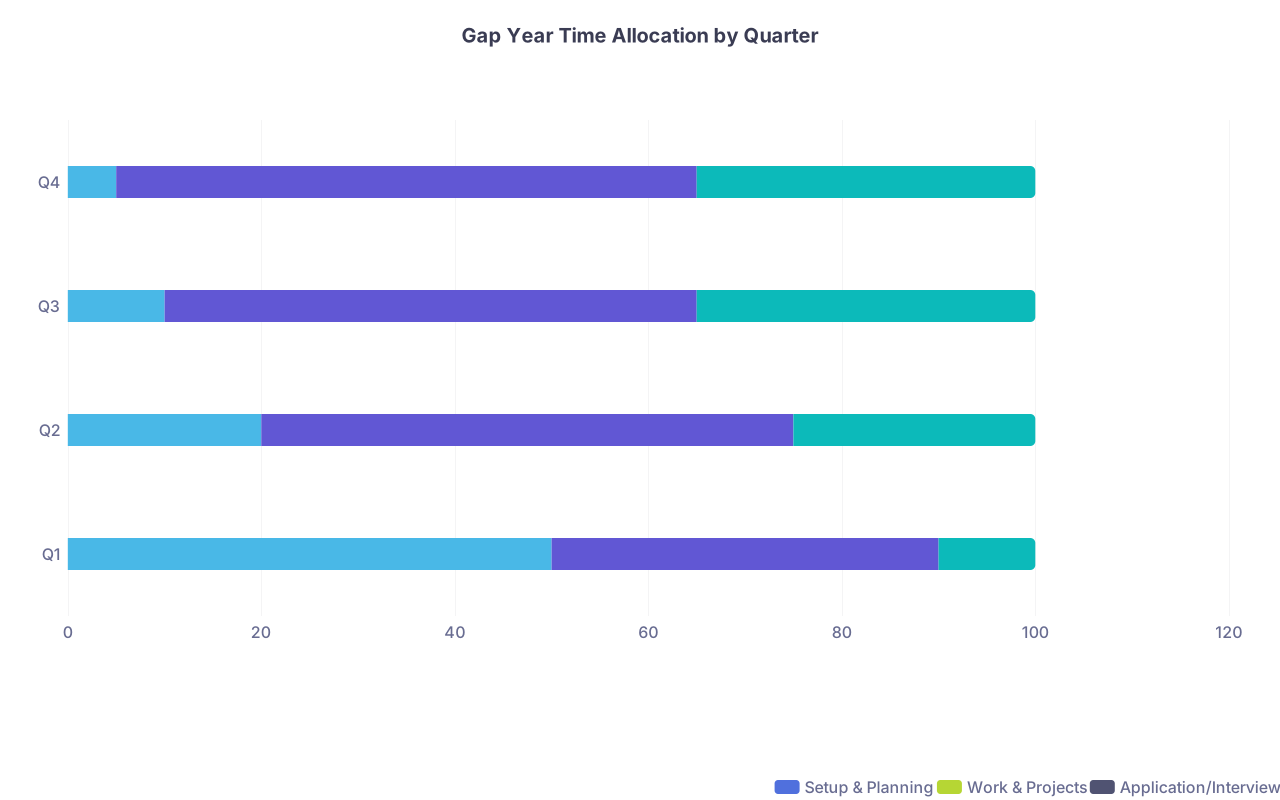
| Category | Setup & Planning | Work & Projects | Application/Interviews |
|---|---|---|---|
| Q1 | 50 | 40 | 10 |
| Q2 | 20 | 55 | 25 |
| Q3 | 10 | 55 | 35 |
| Q4 | 5 | 60 | 35 |
Q3 (Months 7–9): Lock the application and submit early
Q3 is for execution. No more theoretical planning. Milestones here are non-negotiable because ERAS does not care how “busy” you are.
Month 7: Finalize documents and confirm letters
At this point you should be closing loops, not opening new ones.
By the end of Month 7:
Personal statement = final or very close
- Clear, specialty-focused.
- Gap year integrated as:
- Intentional.
- Productive.
- Aligned with your future in the field.
- If you previously failed to match:
- Two–three sentences of honest context.
- Majority of the statement about growth, not excuses.
All letters requested, writers reminded
- Each writer:
- Knows your specialty.
- Has your updated CV + PS draft.
- Explicit timeline:
- “ERAS opens [date], I plan to submit within the first week. Would you be able to upload your letter by then?”
- Each writer:
ERAS activities and experiences polished
- Wording tightened.
- Redundancies removed.
- Leadership, initiative, and impact highlighted. Not chores.
Month 8: Submit ERAS early
This is where people who “were not ready” sabotage themselves. You are not doing that.
By the time ERAS opens (typically September but check current year) and within the first 3–5 days of submissions opening, you should:
Submit ERAS
- Program list finalized enough to submit.
- You can add programs later, but do not wait weeks to send the first batch.
USMLE/COMLEX status clear
- Step 2 / COMLEX Level 2 scores reported if at all possible.
- If you took Step 3:
- Score released or timed to release during interview invite season.
Gap year status on the application
- Job title accurate.
- Dates up to “Present.”
- Brief descriptions of ongoing work and projects.
By end of Month 8, your application should be in and you should be pivoting to interview prep, not rewriting personal statements.
Month 9: Interview preparation and early responses
You will start to see the pattern: some interviews come early, some late, some not at all. You cannot control that. You can control how prepared you are.
By the end of Month 9, you should have:
Standard answers drilled
- “Tell me about yourself” → 60–90 second polished story.
- “Why this specialty?”
- “Why did you take a gap year, and what did you do with it?”
- “Tell me about a patient / project from your gap year.”
Gap year story that is sharp, not defensive
- If you took a gap year voluntarily:
- Emphasize reflection, focused skill-building, and fit.
- If you previously did not match:
- Own it directly: “My last cycle was not successful. Since then, I have…”
- Then move fast to concrete changes: scores, clinical exposure, performance feedback, maturity.
- If you took a gap year voluntarily:
Logistics ready
- Professional interview clothes sorted.
- Camera, microphone, background fixed for virtual interviews.
- Travel budget and plan if any in-person interviews.
At this point you should have: a submitted, coherent application; active or pending interview invites; and a confident, consistent gap year narrative.

Q4 (Months 10–12): Interview season, rank list, and backup plan
Q4 is where your earlier choices either pay off or expose gaps. You are juggling interviews, ongoing work, and mental bandwidth.
Month 10: Heavy interview period and ongoing work
At this point you should be fully in “two-track mode” – performing at your job and performing in interviews.
By the end of Month 10:
You are still doing your gap year job well
- No sudden drop-off or absenteeism.
- You keep producing:
- Manuscripts, abstracts, clinic metrics, teaching sessions.
- Why this matters: programs often call your current supervisor informally. If your performance slid the second interviews started, that will get back to them.
You are tracking interviews and impressions
- Simple spreadsheet:
- Program
- Interview date
- Vibe/fit notes
- Strengths/concerns This will matter when you build your rank list.
- Simple spreadsheet:
You keep updating mentors
- “Here is who has invited me so far.”
- “Here is how I am thinking about ranking these places.” Sometimes they will quietly call people for you. You want that.
Month 11: Rank list and contingency planning
This is when the fantasy that “it will all just work out” needs to die. You plan for the match you want and the match you fear.
By the end of Month 11 you should have:
A draft rank list that is realistic
- Rough tiers:
- Programs where you felt truly at home.
- Good fits.
- Would-not-thrill-you but solid training.
- You are ranking based on:
- Fit.
- Training quality.
- Geography and support system. Not just reputation points from SDN.
- Rough tiers:
Explicit backup strategy if you do not match
- Decide now:
- Will you SOAP?
- Will you reapply next year if SOAP does not work?
- If reapplication is on the table:
- Identify what you would change next year: different specialty, extra exams, more clinical, different research.
- Decide now:
Talk through your rank list with 1–2 trusted advisors
- Not 15 people. Not Reddit.
- People who:
- Know your file.
- Understand the match data. If your entire list is reach programs and you have major red flags, expect them to tell you it is dangerous. Listen.
Month 12: Finish strong and close the loop
At this point you should be tying off your gap year story. How you end this year matters for both the match and your own reputation.
By the end of Month 12:
Deliver on your gap year promises
- Submit that manuscript or abstract.
- Finish that QI project and present locally.
- Wrap teaching responsibilities cleanly. This is what separates “busy year” from “productive year.”
Leave well
- Written handoff for whoever takes over your role.
- Formal thanks to supervisors and mentors.
- Ask for ongoing contact:
- “If programs call you after rank lists, I would appreciate your support.” People remember who left them in chaos and who left them organized.
Personal reset before residency
- Yes, you are allowed to rest.
- Take 1–2 weeks fully off if your budget and responsibilities allow.
- You are about to hit intern year. You will not see a real vacation again for a while.

Quarterly Milestones Snapshot
Here is how the gap year should look if you are on track.
| Quarter | Core Goal | You Should Have… |
|---|---|---|
| Q1 | Direction & structure | Specialty chosen, anchor job, exam plan |
| Q2 | Output & application content | Projects in motion, PS & CV draft |
| Q3 | Application execution | ERAS submitted early, interview prep done |
| Q4 | Interviews & closing the loop | Rank list, backup plan, projects finished |

Bottom line: What you must not miss
Three points to keep straight:
- By the end of Q1, you need a clear specialty, a real job, and an exam plan. Wandering past Month 3 without those is how gap years turn into red flags.
- By the end of Q3, your ERAS must be in and coherent, with your gap year framed as intentional, productive, and directly aligned with your target field.
- Throughout Q4, you keep doing the work that you claimed you were doing, interview honestly about your year, and leave your role in better shape than you found it.
Hit those milestones, and your gap year reads as strategy, not damage control.


