Introduction: Why Gap Year Internships Matter More Than Ever
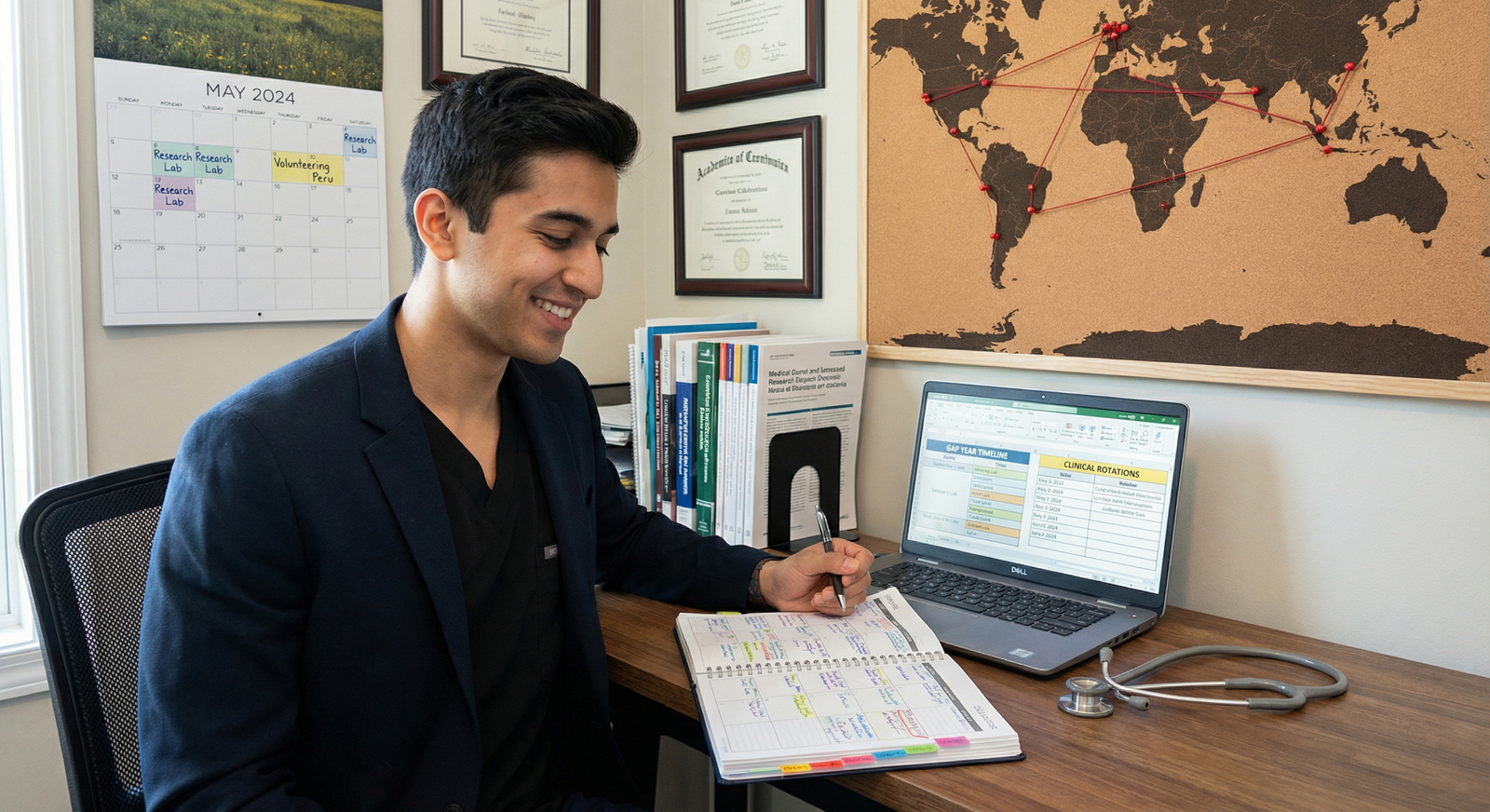
Residency applications grow more competitive each year, and program directors are increasingly looking beyond board scores and class rank. Strategic applicants are responding by using a Gap Year not as “time off,” but as a targeted period for Professional Growth—building skills, generating meaningful experiences, and clarifying their future medical career path.
Among the most powerful ways to use that year are Gap Year Internships. When planned deliberately, they can:
- Strengthen your residency application with concrete achievements
- Fill in academic or experiential gaps in your timeline
- Demonstrate maturity, initiative, and resilience
- Help you stand out in interviews and personal statements
Whether you are:
- A pre-med planning time between undergrad and medical school,
- A medical student considering a research or chief year, or
- A recent graduate taking a year before applying or reapplying to residency,
understanding how to design and leverage a gap year internship can significantly change your trajectory.
This guide will walk through the value of gap year internships, types of experiences that impress residency programs, common pitfalls and how to avoid them, and practical steps to secure positions that truly move your application forward.
Understanding the Gap Year in the Context of a Medical Career
What Is a Gap Year in Medicine?
In medicine, a Gap Year typically means:
- A year between undergraduate and medical school
- A year between medical school and residency
- A year during medical school (e.g., research year, MPH, MBA, or dedicated scholarly year)
The key distinction: a strong gap year is not a “pause” in your medical journey; it is a purposeful bridge that:
- Builds skills you did not have time for during a packed curriculum
- Allows you to explore or confirm specialty interests
- Addresses weaknesses (e.g., low scores, limited research, lack of clinical exposure)
- Creates a more compelling overall narrative for your long-term medical career
Residency program directors routinely see gap years. What they care about is how you use them.
Why Internships During a Gap Year Carry So Much Weight
A well-chosen Gap Year Internship can demonstrate qualities that residency programs highly value:
Skill Development
- Clinical skills (history taking, documentation, procedural exposure)
- Communication and teamwork
- Data analysis, research methodology, or quality improvement
- Leadership, teaching, or project management
Professional Network Building
- Mentors who understand your work ethic and potential
- Future collaborators for research or quality projects
- Faculty who can write specific, detailed letters of recommendation
Evidence of Commitment to Medicine
- Taking initiative to improve yourself rather than waiting passively
- Showing sustained interest in a specialty or patient population
- Demonstrating resilience after setbacks (e.g., exam failures, unmatched cycle)
Bridging Academic or Personal Gaps
- If you have low exam scores, a failed Step attempt, or leaves of absence, an impactful internship can:
- Provide clear growth and improvement over time
- Give you experiences to discuss in interviews that reframe your narrative in a positive light
- If you have low exam scores, a failed Step attempt, or leaves of absence, an impactful internship can:
The bottom line: residency programs are not looking for perfection; they are looking for applicants who grow, reflect, and contribute. A Gap Year Internship is one of the best ways to show this.

How Gap Year Internships Strengthen Residency Applications
1. Enhancing Your CV With Targeted Experiences
Residency selection committees skim hundreds of CVs. They are drawn to applications that show:
- Progressive responsibility
- Clear alignment with a specialty or focus area
- Concrete accomplishments, not just participation
Well-structured Gap Year Internships can add:
Clinical Exposure and Hands-On Skills
Examples of clinical-facing internships or roles:
- Clinical research coordinator in an academic department
- Medical scribe in emergency medicine, internal medicine, or surgical specialties
- Intern in community health clinics or global health projects
- Quality improvement or patient safety intern in a hospital
Impact on your residency application:
- Demonstrates comfort in clinical environments
- Provides stories for your personal statement and interviews
- Builds practical skills in EMR use, patient communication, and workflow
Example CV bullet:
- “Served as clinical research coordinator in a cardiology clinic, enrolling >120 patients in a heart failure registry, conducting chart reviews, and contributing to two abstracts presented at national conferences.”
Research Productivity and Academic Output
For competitive or academic specialties (e.g., dermatology, radiology, orthopedics, surgery), Research Internships can be particularly valuable.
You might:
- Support ongoing clinical trials or retrospective studies
- Perform data collection and analysis
- Contribute to abstracts, posters, or manuscripts
- Learn how to design a study and navigate IRB processes
Residency programs notice:
- Publications in PubMed-indexed journals
- Presentations at regional, national, or international conferences
- Evidence of sustained scholarly productivity
Tip: Even one well-completed project with clear outcomes is more valuable than being “involved in” five projects that never finish.
Community Engagement and Service
Community-facing internships demonstrate your commitment to patient-centered care and health equity:
- Working in free clinics, mobile health units, harm reduction programs
- Public health internships with local health departments or NGOs
- School-based health initiatives or preventive care campaigns
These experiences:
- Show alignment with institutional missions focused on underserved care
- Provide powerful narratives about empathy, cultural humility, and advocacy
- Can set you apart for programs emphasizing primary care, family medicine, pediatrics, or community-focused specialties
2. Creating Memorable Stories That Differentiate You
Residency programs see many applications with similar metrics. What they remember are stories—moments that reveal who you are.
Gap year internships often provide those memorable experiences.
Example 1: From Volunteer to Advocate
Imagine a medical graduate who spends their gap year as a care coordinator in a community clinic serving refugees:
- They navigate language barriers, limited insurance, and complex social determinants of health.
- They help design a workflow to connect new patients to social services and legal aid.
- They later write about a specific patient encounter that changed how they think about advocacy and trauma-informed care.
In the application:
- Personal statement: illustrates growth, empathy, and systemic understanding.
- Interview: they discuss how this experience shaped their decision to pursue family medicine with a focus on immigrant health.
Example 2: Turning a Setback into Strength
A student who failed Step 1 decides to take a structured gap year focused on:
- A formal research internship in internal medicine
- A part-time MCAT/Step tutoring role, reinforcing their academic discipline
- Intensive test preparation with documented improvement in practice exams
On paper:
- The failure is still there—but so is a narrative of resilience.
- Their new experiences show increased maturity, organization, and insight.
Program directors are far more likely to consider this applicant if they see clear, sustained growth and well-used time.
3. Generating Strong, Specific Letters of Recommendation
Letters of recommendation are critical in Residency Applications, especially when they provide insight beyond grades and scores.
Gap Year Internships create ideal conditions for:
- Longitudinal relationships with mentors and supervisors
- Observation of your work ethic, professionalism, and growth
- Opportunities to lead parts of a project, clinic initiative, or teaching effort
A strong letter might mention:
- “They independently managed data collection for our NICU outcomes study and proposed a more efficient workflow that reduced errors by 20%.”
- “Patients frequently commented on their ability to explain complex concepts clearly and empathetically.”
- “Despite facing academic setbacks, they demonstrated exceptional perseverance and a consistent upward trajectory.”
To maximize this benefit:
- Be reliable and proactive from day one.
- Ask for feedback and act on it.
- Before requesting a letter, provide your mentor with an updated CV, draft personal statement, and key points you hope they can speak to.
Common Challenges in Gap Year Internships—and How to Overcome Them
Financial Considerations and Practical Realities
Many interns face financial constraints, especially if positions are unpaid or low-paid.
Strategies to manage this:
Budgeting realistically
- Estimate cost of living, transportation, exams, and application fees.
- Consider part-time work (e.g., tutoring, scribing, telehealth support) alongside your internship if feasible.
Seeking Funding
- Apply for:
- Institutional stipends or student research scholarships
- Grants for global health or public health work
- Fellowships for post-baccalaureate or postdoctoral research
- Some hospitals and academic departments offer paid full-time research coordinator or project manager roles—these can serve as hybrid internship + job positions.
- Apply for:
Choosing Location Strategically
- Consider staying with family or in lower-cost cities if possible.
- Remote or hybrid opportunities can cut commuting and relocation costs.
Finding the Right Fit for Your Goals
Not all internships are equally valuable for your residency goals.
Reflect on:
- Which specialty (or specialties) you are considering
- Your current deficits (e.g., lack of US clinical experience, no research, limited leadership)
- The type of environment that energizes you (academic, community, global, tech/innovation)
Then prioritize internships that:
- Offer mentorship from faculty in your target specialty
- Provide a realistic chance at tangible output (publication, poster, QI project, leadership role)
- Align with the values and mission of the programs you might apply to
Red flags:
- Vague role descriptions with minimal structure
- No clear supervisor or mentor
- “Internships” that seem to be primarily unpaid administrative work with no growth potential
Practical Strategies to Secure High-Yield Gap Year Internships
Start Early and Plan Backward from Your Application Timeline
Ideally, start exploring gap year options 9–12 months before you plan to begin:
- For a gap year before residency:
- Identify when you will take USMLE/COMLEX exams
- Map out ERAS application deadlines and interview season
- Determine how your internship will overlap with studying and application tasks
Action steps:
- Talk to recent graduates, residents, and advisors about programs or positions they recommend.
- Regularly check:
- Academic department websites (research coordinator postings)
- University career portals
- National organizations (e.g., NIH, CDC, WHO, foundations)
- Specialty-specific societies for fellowship or pre-residency programs
Network Intentionally and Professionally
Networking is not about asking for favors; it is about building relationships.
You can:
Email faculty whose work interests you, attaching your CV and a brief, focused message:
- Who you are
- What you’re seeking (e.g., “1-year full-time research position in cardiology starting July”)
- Why you are interested in their work specifically
- How you can add value
Ask:
- Your school’s Office of Student Affairs or Career Services for leads
- Residents and fellows for recommendations within their departments
- Former preceptors if they know of opportunities locally or nationally
Use LinkedIn or professional platforms:
- Update your profile to highlight medical training and interests
- Join groups for pre-meds, medical students, and early-career physicians
- Reach out respectfully to people holding positions you aspire to and ask for brief informational calls
Craft Applications That Show Fit and Initiative
Tailor Your CV and Resume
- Emphasize:
- Relevant clinical rotations, research, or volunteer work
- Skills that align with the role (data analysis, language skills, teaching, leadership)
- Use strong action verbs and quantify your impact when possible.
Write Targeted Cover Letters or Statements of Interest
- Avoid generic paragraphs.
- Address:
- Why this specific internship or lab
- How your background prepares you to contribute
- What you hope to learn and how it ties into your long-term medical career
Prepare for Interviews
- Be ready to discuss:
- Your motivations for a gap year
- How you respond to setbacks or unfamiliar challenges
- Examples of teamwork and conflict resolution
- Your time management and ability to handle responsibility
Programs want interns who are coachable, dependable, and curious, not just impressive on paper.
Stay Open to Non-Traditional but High-Value Experiences
Not every impactful Gap Year Internship looks like a traditional hospital role.
Consider:
Health tech or digital health internships
- Work with startups on telemedicine platforms, clinical decision support, or AI in healthcare.
- Demonstrates innovation and adaptability—attractive to many residency programs.
Public health or policy fellowships
- Work with city or state health departments, advocacy groups, or think tanks.
- Particularly relevant if you are interested in population health, preventive medicine, or academic leadership.
Global health or NGO positions
- If well-structured and ethically designed, these can deepen your understanding of global disparities, resource-limited care, and cross-cultural communication.
The common denominator: the experience should deepen your insight into healthcare and help you grow as a future physician.

Making the Most of Your Gap Year Internship Once You Start
Securing the internship is only the first step. How you perform and grow during the year will determine its impact on your residency application.
Set Clear Goals Early
Within the first few weeks:
- Clarify expectations with your supervisor.
- Ask:
- What would success look like in this role?
- Are there opportunities to take ownership of specific projects?
- What are realistic goals for outputs (poster, paper, QI project, new workflow)?
Set personal goals too, such as:
- “Submit at least one abstract to a national conference.”
- “Lead a teaching session for pre-meds or junior students.”
- “Develop stronger statistical analysis skills using R or SPSS.”
Document Your Work as You Go
Keep a running log of:
- Projects you worked on and your specific contributions
- Skills you learned (software, procedures, protocols)
- Feedback you received and how you acted on it
- Any metrics or outcomes you helped improve
This will make it much easier to:
- Update your CV for ERAS
- Draft detailed and authentic personal statements
- Provide bullet points to mentors writing your letters
Reflect Regularly on Your Career Direction
One of the biggest benefits of a gap year is clarity.
Ask yourself:
- Do I enjoy this specialty’s day-to-day work?
- Do I prefer academic, community, or hybrid environments?
- Which tasks energize me—teaching, direct patient care, research, systems-level work?
Use these reflections to refine your residency program list, your personal statement, and how you answer “Why this specialty?” in interviews.
Conclusion: Turning a Gap Year into a Launchpad for Residency Success
A Gap Year is not a detour from your medical journey—it can be a powerful accelerator when used well. Thoughtfully chosen Gap Year Internships can:
- Strengthen every part of your Residency Application
- Demonstrate resilience, initiative, and maturity
- Provide concrete achievements and stories that interviewers remember
- Clarify your professional identity and long-term medical career goals
If you approach your gap year with intention—aligning experiences with your goals, proactively seeking mentorship, and reflecting on your growth—you won’t just “fill time” before residency. You will enter the Match as a more capable, confident, and compelling candidate.
Frequently Asked Questions About Gap Year Internships Before Residency
1. Will taking a gap year hurt my chances in residency applications?
A well-used gap year almost never hurts—and often helps—your chances. Program directors mainly worry about unexplained or unproductive time. If your Gap Year Internships show clear Professional Growth, contributions, and alignment with your career goals, they will typically be seen as an asset, not a liability. The key is to be able to clearly articulate your reasons and what you gained.
2. How do I choose the right type of gap year internship for my goals?
Start by identifying:
- Your target specialty (or top 2–3 if undecided)
- Gaps in your current application (clinical exposure, research, leadership, US experience, etc.)
- Practical constraints (location, finances, visa status)
Then prioritize internships that:
- Address those gaps directly
- Offer strong mentorship and potential for tangible outcomes
- Are realistic in terms of your resources and timeline
Talking with advisors, residents in your field of interest, and recent applicants can help you vet specific opportunities.
3. Can I get funding or paid positions for my gap year internship?
Yes. While some internships are unpaid, there are many paid options:
- Full-time clinical research coordinator roles
- Scribing positions in EDs or clinics
- Public health fellowships or government internships
- Industry roles (e.g., medical affairs, health tech)
Additionally, look for:
- Institutional research grants or stipends
- Global health or public health scholarships
- Specialty society-funded fellowships
Apply early and broadly, and do not hesitate to ask potential mentors about available funding.
4. How should I showcase my gap year internship in my residency application?
You can highlight your internship across multiple components:
- ERAS CV: List your role with clear, outcome-focused bullet points.
- Personal Statement: Share one or two specific stories that shaped your motivations or growth.
- Supplemental Essays: Use internship experiences to answer questions about adversity, leadership, or meaningful experiences.
- Interviews: Be ready to discuss what you did, what you learned, and how it informed your career goals.
- Letters of Recommendation: Ask supervisors who know your work well to emphasize your contributions, reliability, and trajectory.
5. Is it too late to plan a gap year if I’m already close to graduation?
It may not be too late, but you will need to be strategic and proactive:
- Discuss options with your dean’s office or advisors as early as possible.
- Consider shorter but intensive internships or positions starting soon after graduation.
- Look for rolling-hire research or clinical roles that do not depend on a strict annual cycle.
- Even a 6–9 month focused experience can significantly bolster your application if you use it well.
With clear goals and deliberate planning, a gap year can transform from a source of anxiety into a powerful tool for your residency match and long-term medical career.