
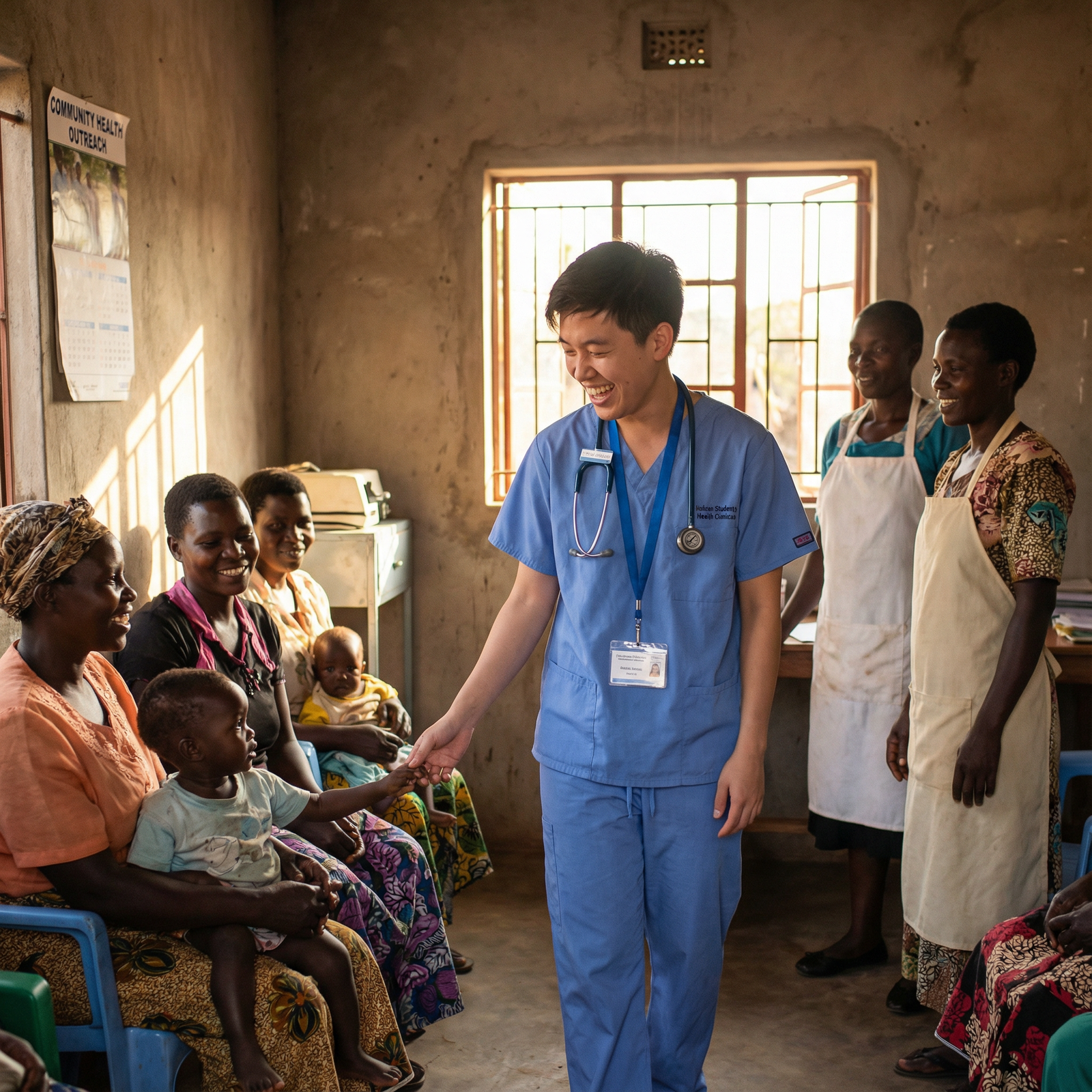
The global health gap year is wildly oversold for most non‑primary care applicants.
Not useless. Not evil. Just heavily romanticized and routinely misapplied, especially by people aiming for competitive, non–primary care specialties who think “global health” will magically offset a mediocre application.
Let me be blunt: a global health gap year can help a non–primary care applicant. But not in the way people think. And not nearly as often as the Instagram posts suggest.
If you are eyeing ortho, derm, radiology, anesthesia, ENT, ophtho, EM, or surgical subspecialties and are considering a year “doing global health” before residency, you need a cold shower of reality before you book the one‑way ticket.
What programs actually value vs what applicants fantasize
There’s a recurring pattern in conversations I’ve had with applicants:
“My Step 2 is a 236, no home program in ortho, but I’m doing a global health year in Central America. That should really make me stand out, right?”
You can almost hear PDs rolling their eyes from space.
Residency selection—especially outside primary care—is still driven by a short, boring list of priorities:
- Board scores (Step 2 now, especially for competitive fields)
- Clinical performance and letters (MS3/4 rotations, sub‑Is, away electives)
- Evidence of specialty commitment (research, electives, mentorship, interest statement)
- Professionalism and reliability (no red flags, consistent story)
Global health, for most programs, falls into the “nice but not decisive” column. It is an enhancer, not a foundation.
So when does a gap year in global health actually move the needle?
Let’s separate the fantasy from the parts that genuinely help.
The data: who really benefits from “global health”?
Here’s what we actually see from studies and program director surveys, not marketing brochures.
NRMP Program Director Surveys consistently rank “global health”–style experiences way below:
- USMLE/COMLEX scores
- Clerkship grades
- Letters
- Specialty‑specific research
- Class rank / AOA
Publications and research productivity do show up over and over as valued—even in surgical and competitive fields.
Programs with explicit global health tracks (e.g., global surgery, global EM, global health fellowships) care much more about this domain—but still rarely at the expense of basic metrics.
In other words: global health experiences get traction when they are:
- Integrated with legitimate scholarly work, and
- Directly relevant to the specialty’s global footprint or existing track.
Random “service trips” with no research, no long‑term partnership, and no clear scholarly output? Those mostly look like voluntourism with better lighting.
If you want to see how PD priorities stack up in practice:
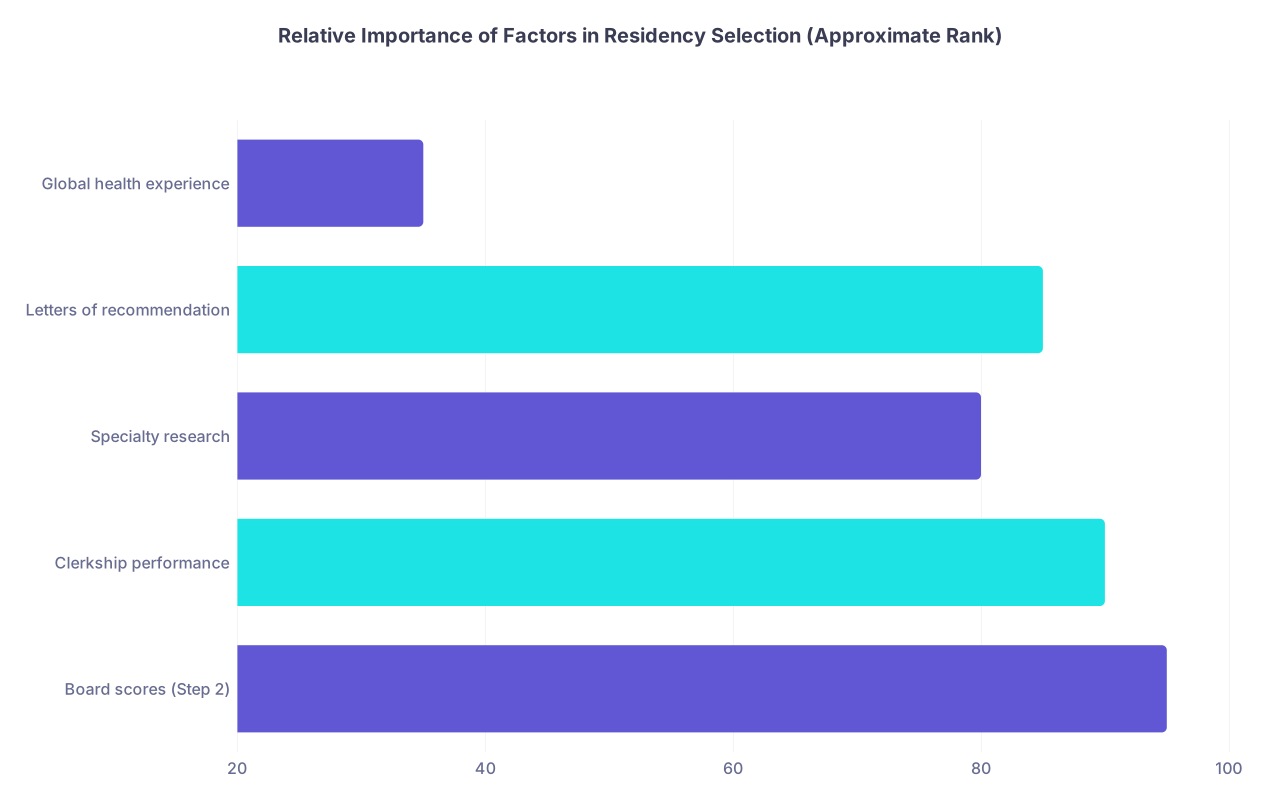
| Category | Value |
|---|---|
| Board scores (Step 2) | 95 |
| Clerkship performance | 90 |
| Specialty research | 80 |
| Letters of recommendation | 85 |
| Global health experience | 35 |
This is approximate, not a literal NRMP figure, but it reflects the order of magnitude difference. Global health is not in the same league as your core metrics.
Where a global health gap year does help non‑primary care applicants
There are essentially four situations where I’ve seen this work well for non‑primary care people.
1. You’re plugging a glaring hole with structured, research‑heavy global work
If you’re weak in research and targeting specialties that pretend to be purely clinical but secretly love first‑author PubMed IDs—ortho, ENT, EM, even anesthesia—then a properly designed global health research year can help.
Key word: properly.
That means:
- You’re embedded in an existing lab, center, or global health program at your home institution or a major university.
- You have a PI who actually publishes, ideally in your specialty or related fields (global surgery outcomes, trauma systems, imaging access, radiation oncology in LMICs, etc.).
- There’s a clear plan:
- X manuscripts submitted
- Y abstracts/posters
- Z presentations
- Your work is methodologically serious (registries, implementation science, outcomes research, health systems) rather than “I did a one‑time chart review on 40 patients and then disappeared.”
For example:
A neurosurgery‑aspiring student spending a year with a global neurosurgery group working on traumatic brain injury operative outcomes across LMIC hospitals, generating a couple of solid publications and meeting heavy‑hitter mentors. That actually helps.
2. You’re explicitly applying to programs with global tracks or identity
Some specialties are formally building “global” into their branding:
- Global surgery tracks in general surgery, neurosurgery, ortho, ENT
- Global EM programs
- Anesthesia programs tied to global perioperative partnerships
Those programs actually care that you know the difference between short‑term missions and long‑term systems building. They want people who have:
- Lived abroad for more than a 2‑week “experience”
- Dealt with limited resources, infrastructure constraints, and local regulations
- Worked with local partners in ongoing collaborations, not one‑off “surgical camps”
If you can sit in an interview and talk fluently about task‑shifting models, supply chain issues, mortality tracking, and ethical questions around visiting specialists, you sound like someone they can plug into their existing work.
Here, a global health gap year isn’t window dressing. It’s domain‑specific experience.
Where a global health gap year does not fix the problem
The biggest myth: “Global health will compensate for weak numbers.”
It will not. Not for ortho, derm, rads, ophtho, anesthesia, ENT, or competitive fellowships down the line. You might get a few more “interesting” looks in interviews. You will not be rescued.
Let’s walk through the common bad assumptions.
Myth 1: “This will make me stand out from all the other applicants”
A lot of people have done global health work now. It’s not 2003 anymore.
You’re not the only one who:
- Spent a month in rural Kenya
- Helped design a screening program
- Did a project on trauma or imaging capacity
Program directors have seen dozens of personal statements that say, “My experience working in a small village clinic opened my eyes to health disparities.” Most of them blur together.
You stand out if:
- Your work is sustained and longitudinal (year‑long, multi‑visit, or multi‑phase project).
- You can point to concrete outcomes: “We increased screening completion rates from 30% to 68% over 9 months using X intervention.”
- You produced actual scholarly output that shows rigor, not vibes.
Otherwise, your “unique” story reads like everyone else’s global postcard.
Myth 2: “They’ll overlook my Step 2 score because I care about underserved populations”
No. They will not.
Programs almost never trade board score cutoffs for “passion” outside primary care fields. Even within primary care, there is a limit.
I’ve watched people with 225–235 Step 2, shooting for competitive surgical specialties, burn a year abroad then come back and… not match. Not because the year was bad. Because the numbers never changed and they lost a year they could have spent strengthening what actually mattered more:
- Higher Step 2 (if still possible)
- A slam‑dunk sub‑I at a place that loves to recruit its rotators
- More targeted specialty research at home with local attendings writing letters
Myth 3: “PDs will see that I’m mature, adaptable, and resilient”
Maybe. But you know what also signals maturity, adaptability, and resilience?
- Crushing your sub‑internships
- Taking on genuine responsibility in your home hospital
- Showing up consistently, working well with teams, and building a track record people will vouch for in writing
You do not need a passport stamp to prove you can handle chaos and limited resources. Most tertiary hospitals give you that already.
The big risk no one talks about: skill and context drift
A year away from U.S. clinical systems is not neutral.
You forget things. You lose sharpness in documentation, EMR, billing logic, guideline‑based management. You fall behind your classmates in pattern recognition for bread‑and‑butter U.S. pathology because what you see abroad is skewed in different directions.
There is also a contextual mismatch problem.
In a low‑resource clinic:
- Physical exam is king because imaging is scarce.
- Labs are slow, selective, or nonexistent.
- Management pathways adapt to medication shortages, infrastructure constraints, follow‑up uncertainty.
Those are valuable perspectives, but they do not directly translate to being faster at reading CTs, more precise in your laparoscopic technique, or better at anesthesia physiology.
Where people get into trouble is when they come back with:
- Rusty clinical reasoning in guideline‑dense contexts
- Weaker letters that say, “They did good work in a very different system,” which doesn’t reassure PDs about their ability to function on day one of residency in the U.S.
- A personal narrative that has drifted away from specialty‑specific focus into vague “I care about equity” territory, without a clear through‑line to why they want to do radiology or ophthalmology or urology.
This is fixable if you’re intentional. But it is not automatic.
What actually makes a global health gap year “worth it” for non‑primary care
Strip away the marketing. Here’s the threshold where I start saying, “Yes, this is probably a good idea” for non‑primary care people:
| Situation | Global Year Value |
|---|---|
| Strong Step 2, decent grades, but no research and aiming for competitive field | Can be high value if research-focused and mentored |
| Already decent research, want global-track programs in your specialty | Strong positive if tied to those programs’ work |
| Weak scores hoping global health will override metrics | Low value; unlikely to change match outcome |
| Undecided between primary care and specialty | Risky; can dilute narrative and delay clarity |
| Burnout, using global year as escape from med school stress | Personally valid, but career payoff is unpredictable |
Notice the pattern: it’s worth it when it is laser‑aligned with:
- Your specialty
- Your long‑term academic or systems‑focused interests
- Clear deliverables (publications, presentations, structured outcomes)
It’s not worth it as a vibe‑based, “I like to travel and help people” sabbatical that you’re trying to retroactively spin into a career move.
Designing a global health year that actually helps your match
If you’re still leaning toward it, design it like a project, not a vacation.

| Step | Description |
|---|---|
| Step 1 | Start: Considering Gap Year |
| Step 2 | Clarify Specialty First |
| Step 3 | Identify Global Programs in Specialty |
| Step 4 | Add Structured Research Plan |
| Step 5 | Secure Mentor & Site |
| Step 6 | Define Deliverables: Pubs, Abstracts |
| Step 7 | Confirm Funding & Logistics |
| Step 8 | Integrate Into Personal Statement & Narrative |
| Step 9 | Target Specialty Defined? |
| Step 10 | Research Component? |
Ask hard questions before you commit:
- Who is my primary mentor, and how many first‑author papers do their students usually get in a year?
- How is this directly connected to my specialty? If I say “I want to go into ortho,” can I draw a straight line from this work to global orthopedic care, trauma systems, or MSK disability?
- What concrete products will exist 12–18 months from now that a PD will see? Not what’s “in progress.”
- Which programs actually care about this enough to mention it on their websites or have existing global tracks?
And one more: Am I doing this because it aligns with my career, or am I doing this because I’m lost, burned out, or trying to outrun my Step score?
If it’s the second group, you can still do the year—but don’t lie to yourself about its career impact.
The ethics angle you cannot ignore
There’s also a quiet, ugly truth: a lot of “global health” in medical training has been glorified short‑term mission tourism with questionable ethics.
Non‑primary care people are particularly prone to this because surgical/technical skills are seductive. I’ve heard versions of:
“We got to do so many more procedures there than at home.”
That’s not automatically good. It raises questions:
- Would you be allowed to perform that procedure unsupervised in your home institution?
- Is the host site getting sustained benefit—training, infrastructure, data systems—or just a parade of learners getting their “experience”?
- Are local clinicians leading the work, or are you and your team essentially playing hero for a few weeks or months?
Program directors in 2026 are more attuned to this than PDs in 2010. Many now explicitly look for whether you understand:
- Power dynamics
- Sustainability
- Capacity building vs extraction
If your global health story sounds like “We flew in, did dozens of surgeries, and left,” without any acknowledgement of these issues, don’t be surprised if someone in an interview quietly marks you as naive.
When you might be better off not taking a global year
Here’s the contrarian take no one selling global health opportunities wants to say: for many non‑primary care applicants, you’re better off staying home and doing:
- A research year at your own institution tightly integrated with your department of interest.
- Multiple away rotations in your specialty, especially at places that love to recruit their rotators.
- A focused plan to improve your Step 2 score (if timing allows) and crush your sub‑Is.
You build deeper local relationships. You get letters from people PDs actually know personally. You show sustained commitment to the specialty in the exact context you’ll be training in.
For most derm, rads, ophtho, ortho, ENT, and neurosurgery applicants with borderline applications, this is the higher‑yield path, even if it’s less glamorous and less Instagrammable.
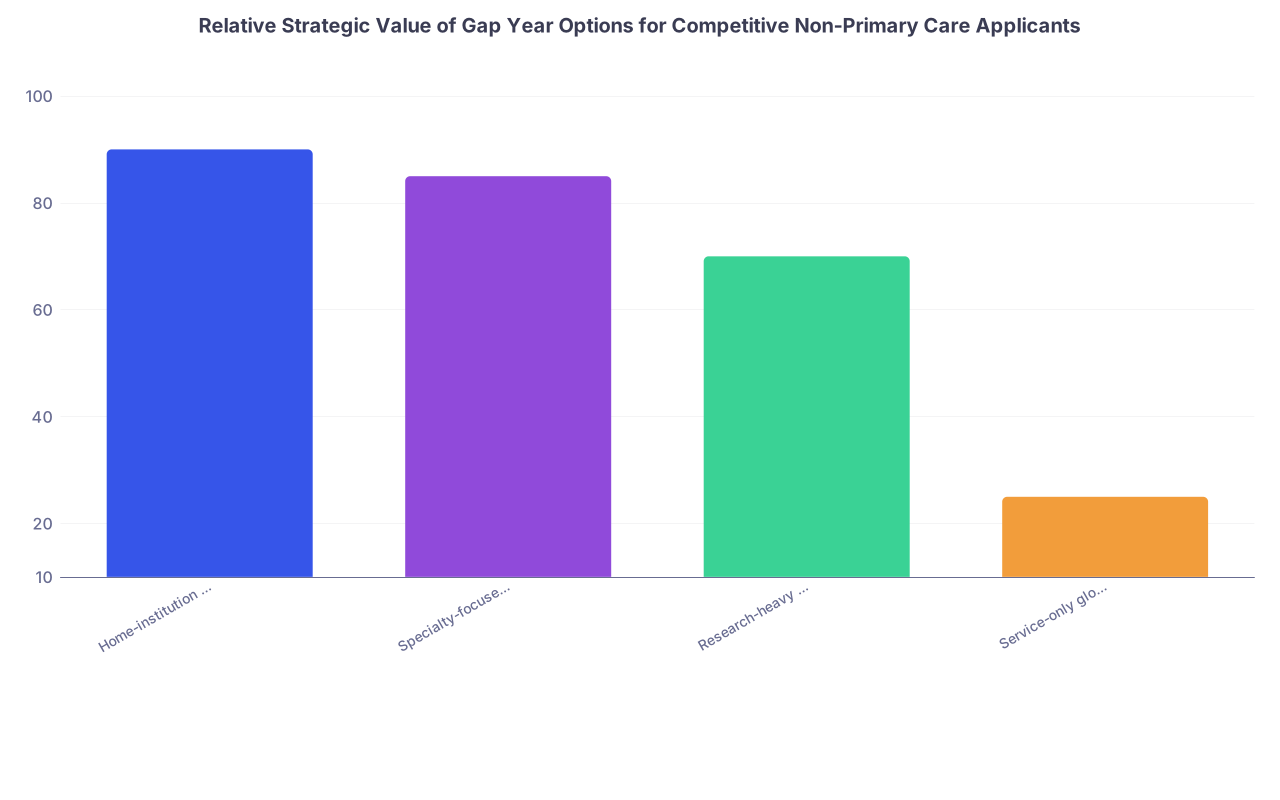
| Category | Value |
|---|---|
| Home-institution specialty research | 90 |
| Specialty-focused away rotations | 85 |
| Research-heavy global health year | 70 |
| Service-only global health year | 25 |
Again, these are conceptual values—but the ranking pattern is real.
The bottom line
A global health gap year can help a non‑primary care applicant, but not as a magic bullet, and not on its own.
It helps when it’s:
- Research‑rich
- Specialty‑aligned
- Mentored and structured
- Converting into concrete output and coherent narrative
It does almost nothing for you when it’s:
- A loosely supervised “service” sabbatical
- An attempt to wallpaper over weak core metrics
- Ethically naive and disconnected from your long‑term specialty
If you want to do global health because you genuinely care about it, and you’re ready to treat it with the same rigor you’d give a research fellowship, then it can be one of the most meaningful and strategically useful years of your career—even as a future orthopedic surgeon or anesthesiologist.
If you’re doing it because you’re scared, stuck, or chasing a story you think PDs want to hear, then you’re not planning a strategic move. You’re just delaying the moment you have to face the real shape of your application.
Years from now, you won’t remember the exact wording of your “global health” paragraph in ERAS; you’ll remember whether that year actually moved you toward the kind of physician you were trying to become—or whether it was just an expensive detour with great photos and weak returns.


