

The last 90 days before ERAS opens will make or break your application. Not your entire CV. Not your Step scores. The execution in this window. That’s where strong applicants quietly pull ahead while everyone else says, “I’ll get to it next week.”
You’re in a gap year. That’s a gift and a trap. More time, fewer built-in deadlines. So I’ll give you the deadlines.
Here’s your 90-day, crunch-time, no-excuses checklist—month by month, week by week, and what you should be doing almost day by day as ERAS approaches.
Big Picture: 90 Days Out – What Has To Be Locked In
At 90 days before ERAS submission (assume target: mid‑September submission, adjust dates accordingly), you should be thinking in four lanes:
- Application content (CV, personal statement, program list)
- Letters of recommendation
- Exams and credentials (USMLE/COMLEX, ECFMG if IMG)
- Logistics and professionalism (email, phone, photo, tech, finances)
If any of those are chaos at Day 0, you’re in trouble. So we walk it forward.
To anchor you, here’s a simple timeline view.
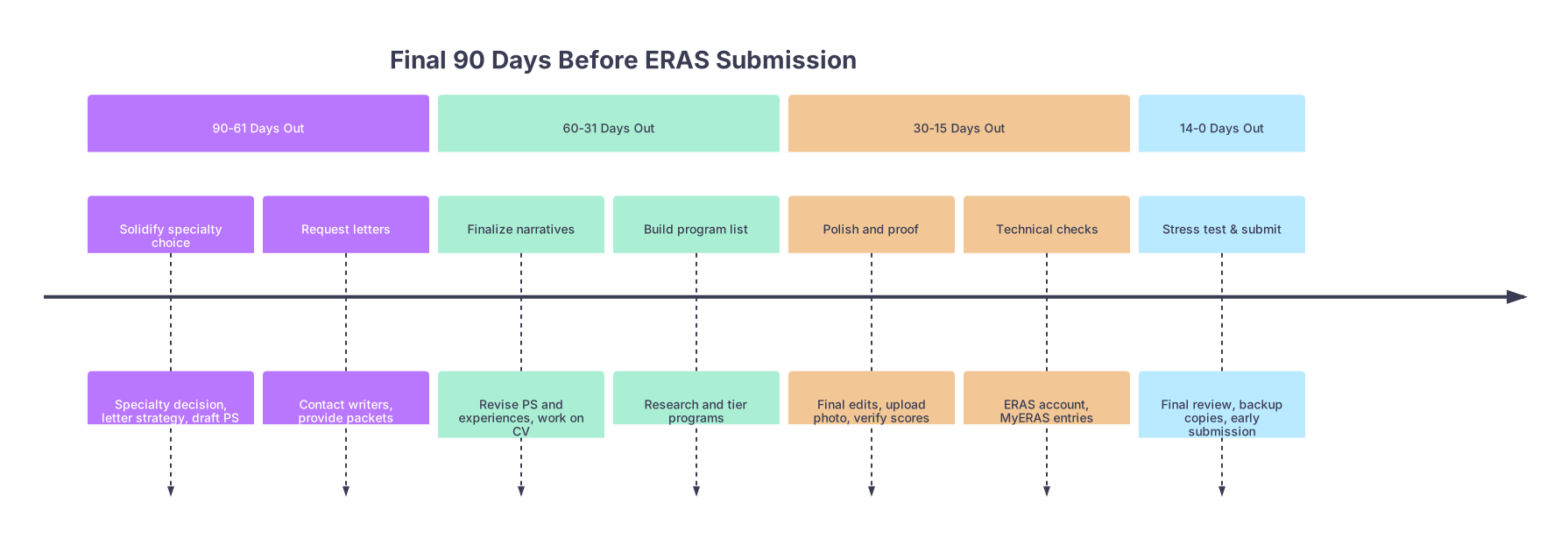
| Period | Event |
|---|---|
| 90-61 Days Out - Solidify specialty choice | Specialty decision, letter strategy, draft PS |
| 90-61 Days Out - Request letters | Contact writers, provide packets |
| 60-31 Days Out - Finalize narratives | Revise PS and experiences, work on CV |
| 60-31 Days Out - Build program list | Research and tier programs |
| 30-15 Days Out - Polish and proof | Final edits, upload photo, verify scores |
| 30-15 Days Out - Technical checks | ERAS account, MyERAS entries |
| 14-0 Days Out - Stress test & submit | Final review, backup copies, early submission |
Days 90–61 Before ERAS: Lock Your Strategy and Get Letters Moving
At this point you should not still be “kinda deciding” your specialty. If you are, you have about a week to commit.
Week 1 (Around Day 90–84): Decide and Declare Your Specialty Strategy
By this week you should:
- Choose your primary specialty, for real.
- Decide if you’re dual applying (e.g., IM + Neuro, FM + Psych).
If you’re still hedging, pick the one you’d rank #1 if both accepted.
Concrete actions this week:
Audit your stats and profile
- Step 1: Pass? Good. If not, that’s a structural problem, not a 90‑day one.
- Step 2 CK: Score in hand or exact test date booked.
- Count your:
- US LORs vs home-country letters (if IMG)
- US clinical experience months
- Research productivity (papers, posters, nothing—own it)
Set a realistic program count
- Competitive specialty (Derm, Ortho, ENT, etc.): You already know this is not a 90‑day game; you should have been in motion a year ago.
- Middle competitiveness (IM, EM, Anesthesia, Psych, OB/Gyn): Target ~60–80 programs if you’re average, more if you’re weaker.
- Less competitive (FM, Peds, Path): 30–50 often sufficient for solid candidates.
| Specialty Tier | Strong Applicant | Average Applicant | Weaker/Red Flags |
|---|---|---|---|
| Highly Competitive | 60–80 | 80–120 | 120+ |
| Moderately Competitive | 40–60 | 60–80 | 80–100 |
| Less Competitive | 25–40 | 40–60 | 60–80 |
- Draft your core personal statement
- One primary statement per specialty.
- Do not chase perfection yet. Get 650–750 words on the page.
- Focus on:
- 1–2 real clinical moments
- Why this specialty fits you
- How your gap year plugs into your story (not just “I needed a break”)
Week 2 (Day 83–77): Start the LOR Machinery
If at this point you haven’t requested letters, you’re late. Not dead. But late.
This week, you should:
- Identify 3–4 strongest potential writers in your specialty (and 1 backup).
- Email them with:
- Your CV
- Draft personal statement (even if rough)
- Brief bullet list of specific cases or projects you did with them
- Clear deadline: 4–5 weeks from now, not “whenever.”
Give them something like:
- “I’m applying to Internal Medicine in this upcoming ERAS cycle and would be honored if you could write a strong letter of recommendation on my behalf. ERAS opens for letter uploads on [date]; would you be able to submit by [deadline about 30–40 days later]?”
You should also:
- Decide if you need a chair’s letter and how to get it (many IM, Psych, and some others expect this).
- For IMGs: prioritize U.S. attendings who can comment on your clinical performance in a U.S. setting.
Days 60–31 Before ERAS: Build Content and Program List
At this point you should have your skeleton: specialty chosen, letters requested, first PS draft done. Now we start tightening.
Week 5–4 (Day 60–47): Experience Sections and CV Reality Check
Your ERAS “Experience” section is underrated. This is where a lot of gap‑year applicants either shine or look like they vanished.
This week, you should:
List every relevant role you’ve had
- Clinical jobs: scribe, MA, research coordinator, hospitalist assistant.
- Research: labs, QI projects, registries.
- Volunteer work: free clinic, telehealth triage, community outreach.
- Teaching/tutoring: Step tutoring, MCAT tutor, TA roles.
Turn each into clean ERAS entries:
- Title: precise and honest.
- Organization: spelled correctly, no acronyms only.
- Description: 3–6 bullet‑style sentences; concrete tasks, not fluff.
- Dates: month and year accurate. Gaps >3 months? You’d better be able to explain them.
Tighten your gap year narrative
- If you’ve been doing research:
- Include outcomes: “Abstract accepted to ATS 2024,” “Manuscript in revision.”
- If you’ve been working clinically:
- Show increasing responsibility: training others, managing workflows, etc.
- If it’s been messy (visa issues, family, etc.):
- Make it coherent in 1–2 sentences in PS or interviews, but do not write a sob story in ERAS descriptions.
- If you’ve been doing research:
Week 3–2 of This Block (Day 46–31): Program List Deep Dive
By the end of this block, you should have a working program list. Not perfect. But 80% there.
Actions:
- Create a spreadsheet with columns:
- Program name
- City/state
- Community vs academic
- Minimum scores / filters (from program websites or reports)
- Past IMGs (if you’re IMG)
- Visa sponsorship (J‑1, H‑1B)
- Red flag friendliness (if you’ve got fails/gaps)
- Personal notes (“loved PD talk on YouTube,” “strong global health,” etc.)
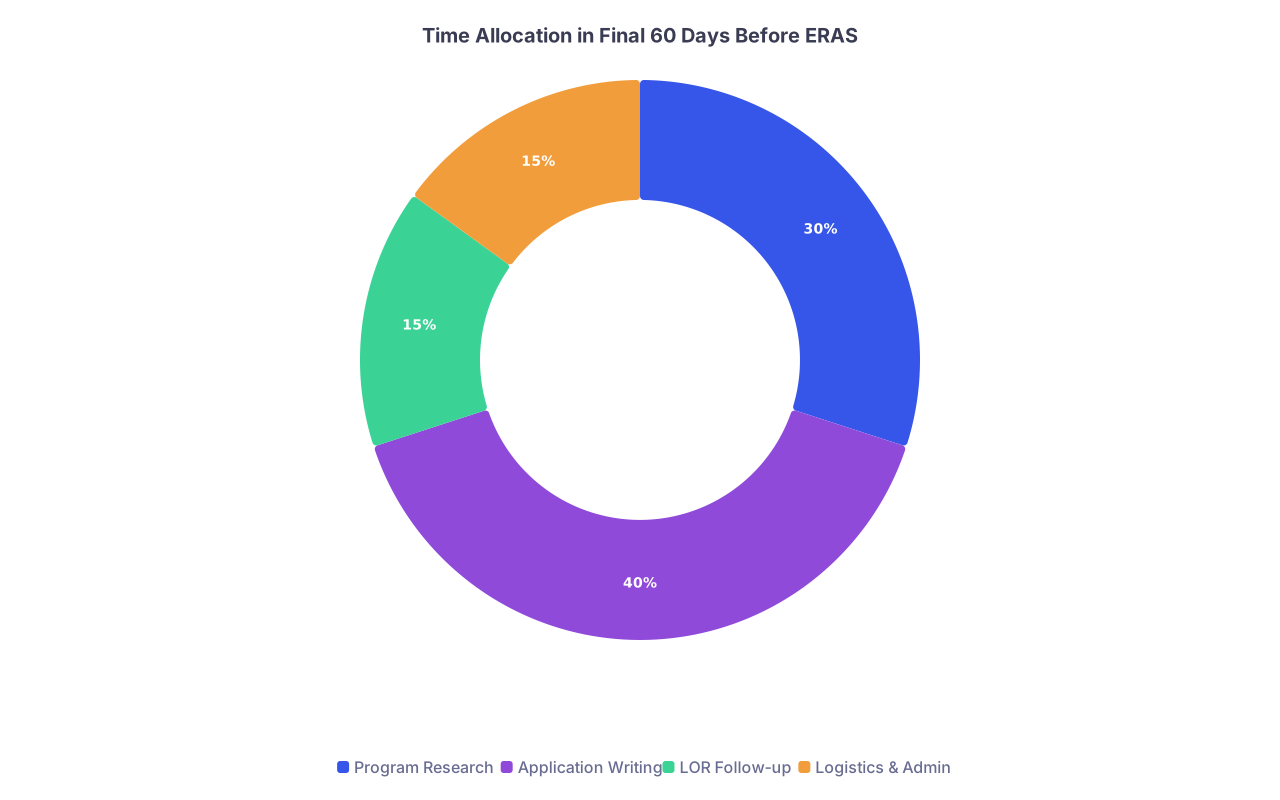
| Category | Value |
|---|---|
| Program Research | 30 |
| Application Writing | 40 |
| LOR Follow-up | 15 |
| Logistics & Admin | 15 |
- Tier programs:
- Reach: you’re below their typical stats but not absurd.
- Target: you match or slightly exceed their usual range.
- Safety: you’re clearly above their average.
You should be:
- Adjusting count by your risk level (IMG, gap years, Step 2 borderline).
- Marking “hard no” programs (strong statements against IMGs, strict year of grad cutoffs).
This is boring work. This is also the part that separates 8 interviews from 18.
Days 30–15 Before ERAS: Polish, Proof, and Plug Holes
At this point you should have:
- Final or near-final PS.
- Program list ~90% done.
- Experience entries entered in ERAS, even if unpolished.
- LOR writers confirmed.
Now you switch from building to refining.
Week 9–8 (Day 30–22): Final Pass on All Written Content
This is your writing bootcamp week.
You should:
Finalize your primary personal statement
- Cut clichés: “ever since I was a child,” “I always knew I wanted to be a doctor,” “I am passionate about…”
- Add specificity:
- Names of services: “CCU,” “inpatient psych,” “L&D nights.”
- Brief micro‑scenes: A resident’s exact words, a specific patient with one key detail.
- Address gap year in 2–3 sentences:
- What you did.
- What you learned.
- How it prepared you for residency.
Create any second specialty statements
- If dual applying, do not copy‑paste with a few word swaps.
- Each specialty PS should clearly name the field early and show why you actually fit it.
Clean up ERAS experiences
- Fix typos and grammar.
- Make descriptions parallel enough to feel intentional but not robotic.
- Remove filler like “I gained insight into…” unless you’re saying what insight and how.
Have at least one brutally honest person read your PS and ERAS entries:
- Preferably someone who has actually sat on a residency selection committee or at least a senior resident who screens applications.
- Not your mother. Not your college roommate.
Week 8–7 (Day 21–15): Photo, Credentials, and LOR Follow‑up
This is the “unsexy but critical” week.
You should:
- Get a professional‑ish ERAS photo done
- Neutral background.
- Business attire.
- Good lighting, no car selfies, no graduation caps, no stethoscope glamour shots.
- Check ERAS photo size requirements and crop accordingly.

Verify all exam scores and status
- Confirm Step 1/2 CK/COMLEX reported correctly.
- For IMGs:
- Check ECFMG status and any pending documents.
- If Step 2 CK result is pending close to ERAS:
- Decide (with an advisor) whether to submit early without it or wait a bit to include it. For many borderline applicants, a good Step 2 can help; a mediocre one may hurt.
Ping letter writers (politely)
- If it’s been ~3–4 weeks since your initial request:
- Short, respectful reminder email with:
- “Just checking in as ERAS season is approaching…”
- Reattach CV and PS.
- Restate your target upload date.
- Short, respectful reminder email with:
- If it’s been ~3–4 weeks since your initial request:
Typical reality: at least one letter will be late. Plan for that. Make sure ERAS is set up so that when they upload, you can slot the right letter to the right specialty.
Final 14 Days Before Submission: Stress Test and Lock It
At this point you should not be writing new paragraphs. You should be testing the system.
Days 14–8 Before ERAS: Full Application “Mock Run”
You’re treating this like a high‑stakes simulation.
This week, you should:
Go line‑by‑line through every ERAS section
- Personal information: Legal name, contact info, citizenship status correct.
- Email: Use a simple, professional address that you actually check.
- Phone number: Working voicemail, greeting not ridiculous.
- Experience entries: No placeholders, no half‑finished descriptions.
- Licensure/exams: No missing attempts, no misleading omissions.
Check your program list inside ERAS
- Confirm all the programs from your spreadsheet are actually selected.
- Confirm specialty filter is correct (easy to misclick and apply to the wrong track).
- Cross‑check:
- Visa needs vs program sponsorship.
- Year of graduation cutoffs vs your grad year.
Save and export backups
- Keep:
- A PDF or screenshots of your final ERAS entries.
- All personal statements.
- Your program spreadsheet.
- If ERAS glitches (it happens) you don’t want to be guessing what you wrote.
- Keep:
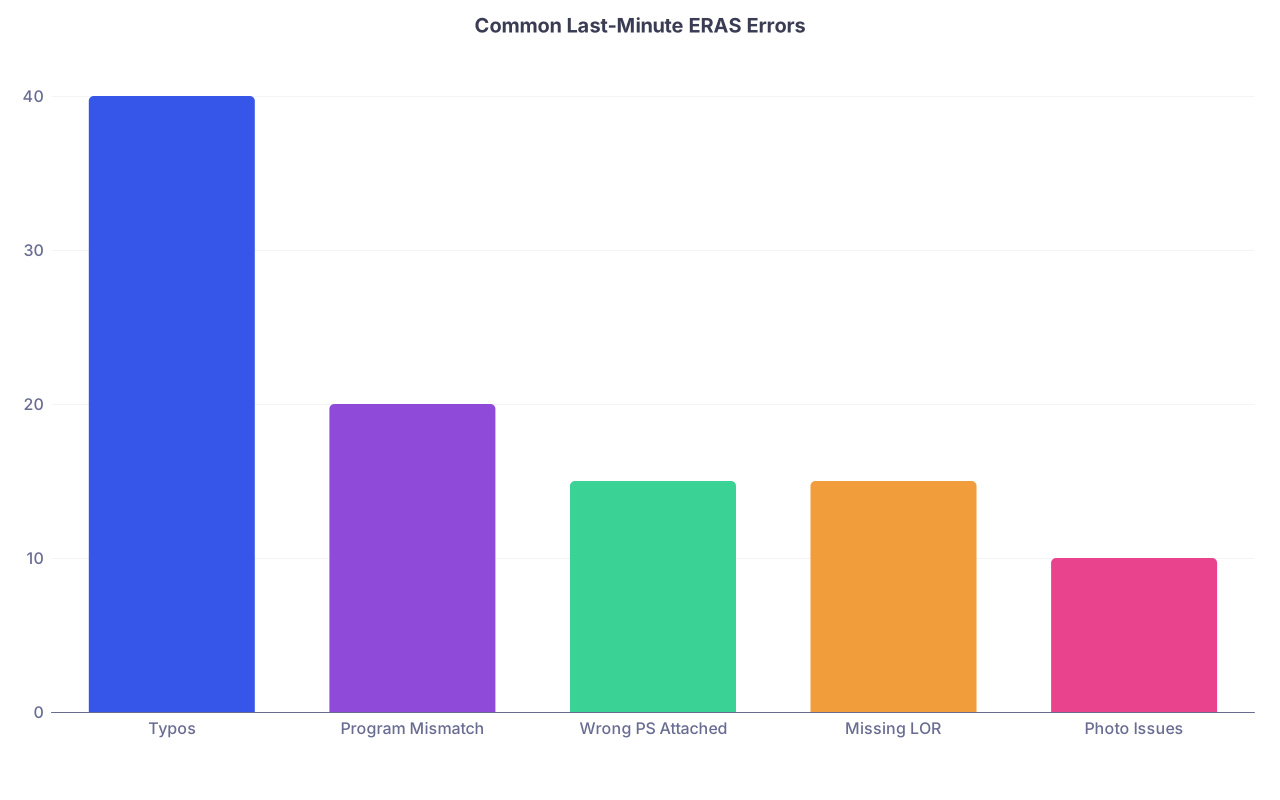
| Category | Value |
|---|---|
| Typos | 40 |
| Program Mismatch | 20 |
| Wrong PS Attached | 15 |
| Missing LOR | 15 |
| Photo Issues | 10 |
Days 7–3 Before ERAS: Targeted Fixes and Final Decisions
This is decision time, not creation time.
You should:
Resolve any lingering dilemmas
- Dual applying or not?
- Keeping that stretch program tier or reallocating money to more realistic ones?
- Attaching a still‑pending manuscript or not? (You can list “submitted” or “in revision,” just don’t lie.)
Confirm letter assignments
- For each program / specialty:
- Are the correct 3–4 letters assigned?
- Chair’s letter where required?
- No inappropriate specialty crossovers (e.g., an EM letter anchored to a Psych‑only application unless it clearly speaks to general qualities).
- For each program / specialty:
Do a ruthless typo sweep
- Read your PS and top 10 experience entries out loud.
- You’ll catch awkward phrasing and small errors more easily that way.
- Fix them now. Not after you’ve submitted.

Submission Week and Day 0: How to Actually Hit “Submit”
Let me be clear: submitting on the first possible hour does not transform a weak application into a strong one. But submitting in the first wave (first 24–72 hours) makes sense. You look organized, and your file is ready when programs start screening.
48–24 Hours Before Submission
You should:
- Confirm:
- Application fees and your payment method (no declined card drama).
- Internet access is reliable at your chosen submission time.
- Sleep. Seriously. Fried brains make dumb errors.
- Decide your exact submission window:
- Some people like early morning.
- Some prefer midday after one more read. Fine. Pick one.
Day 0 Morning: Final 60-Minute Checklist
Right before you submit, run this quickly:
Personal Data Check
- Name, email, phone, address, citizenship, DOB correct.
Specialty and Program Check
- All intended programs listed.
- No accidental applications to prelim-only if you need categorical (and vice versa).
Attachment Check
- Correct PS attached to each specialty.
- Photo uploaded and looks normal.
- LORs assigned appropriately.
Preview
- Use the ERAS preview function and scroll like you’re a PD seeing it for the first time.
- If you wouldn’t hire this version of you, adjust and then submit.
Then submit. Do not hover for three days rewriting sentences. At some point, you’re just rearranging deck chairs.

| Step | Description |
|---|---|
| Step 1 | Log into ERAS |
| Step 2 | Confirm personal info |
| Step 3 | Check program list |
| Step 4 | Verify PS and LOR assignments |
| Step 5 | Preview full application |
| Step 6 | Fix targeted issues |
| Step 7 | Submit ERAS |
| Step 8 | Save confirmation & log off |
| Step 9 | Any major errors? |
After Submission: Those First 1–2 Weeks
You’re not done. You’re just in a different phase.
In the 1–2 weeks after ERAS submission, you should:
- Monitor email and ERAS for:
- Application receipt confirmations.
- Missing document notices.
- Update programs only if substantive changes occur:
- New publication accepted.
- Step 2 score released (and it’s clearly helpful).
- Start light interview prep:
- 2–3 mock interviews.
- Review your own application so you don’t contradict yourself on details.

Quick Reality Check: What Matters Most in These 90 Days
Let me be blunt. In the final 90 days before ERAS:
- You are not going to reinvent your CV.
- You can radically improve how your story is told.
- You must avoid unforced errors: wrong PS, wrong program choices, missing letters.
If you compress all of this into the last two weeks, you will miss things. I’ve seen it every year—great candidates tank parts of their cycle because they treated ERAS like a form, not a campaign.
Key Takeaways
- By 60 days out, your specialty decision, letter strategy, and first PS draft should already be in motion; 30 days out is for refining, not starting.
- The quiet work—program list research, experience descriptions, correct letter assignments—often matters more than one more line on your CV.
- Treat submission like a scheduled procedure: rehearse, check your instruments (documents), and then execute cleanly in the first wave, without last‑minute chaos.


