

The most dangerous thing you can do in a gap year is “see how it goes.”
You are either running a disciplined 12‑month project that ends with a strong ERAS submission… or you are drifting, losing momentum, and explaining away weak applications in your personal statement. There is no middle ground.
I am going to walk you month‑by‑month through a full gap year whose primary purpose is: match into residency. Every part of this is anchored to a calendar. At each point, you will know: what you should already have done, what you must do now, and what is safe to push.
This roadmap assumes:
- You graduate / finish prior attempt at the Match in May–June (Year 0)
- You apply to residency in September (Year 1) of your gap year
- You start residency in July (Year 2)
Adjust by a month or two based on your school’s schedule, but keep the relative order.
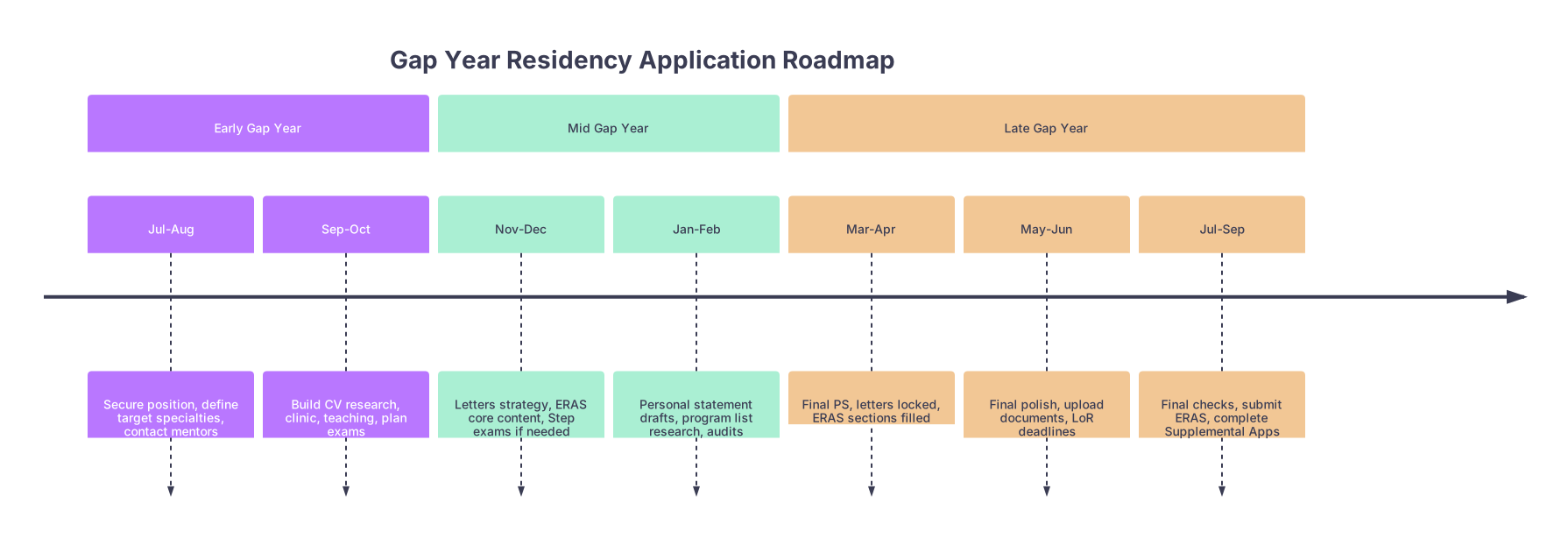
Big Picture: Your 12‑Month Gap Year at a Glance
| Period | Event |
|---|---|
| Early Gap Year - Jul-Aug | Secure position, define target specialties, contact mentors |
| Early Gap Year - Sep-Oct | Build CV research, clinic, teaching, plan exams |
| Mid Gap Year - Nov-Dec | Letters strategy, ERAS core content, Step exams if needed |
| Mid Gap Year - Jan-Feb | Personal statement drafts, program list research, audits |
| Late Gap Year - Mar-Apr | Final PS, letters locked, ERAS sections filled |
| Late Gap Year - May-Jun | Final polish, upload documents, LoR deadlines |
| Late Gap Year - Jul-Sep | Final checks, submit ERAS, complete Supplemental Apps |
At any point you should be able to say: “I am in Month X, therefore my focus is Y and Z.” If you cannot, you are behind.
Months 1–2: Stabilize Your Life and Build the Foundation (July–August)
At this point you should stop thinking like a student. You are an applicant in a 12‑month campaign.
1. Lock in your primary gap‑year role
By the end of July, you should have one main position secured, not three half‑baked ones.
Typical options:
- Research fellow / research assistant in a department related to your target specialty
- Clinical fellow / observer / assistant role (often unpaid, especially for IMGs)
- Hospitalist scribe or similar clinically adjacent job
- Teaching position (adjunct, MCAT/USMLE tutor) if you already have strong clinical exposure
If you are reading this in July and still sending vague “any opportunities?” emails, you are late.
Do this Week 1–2:
- Identify 5–10 institutions and specific departments that match your specialty goals
- Find actual people: program directors, research directors, faculty with ongoing projects
- Send targeted emails with:
- 3–4 sentence intro (school, graduation year, specialty interest)
- 2–3 sentence summary of your prior experience
- 1–2 concrete ways you could contribute (data collection, chart review, QI work)
- Your CV attached
Your subject lines should not be “Opportunity Inquiry.” Use something like:
“Graduating MS4 seeking 1‑yr research role in [Cardiology] – [1 pub, 2 abstracts]”
By end of Month 2 (August):
- You are physically in your role
- You have computer access, EMR training scheduled (if relevant), and at least one active project or clinic schedule
If not, your Match year just got harder.
2. Decide your specialty (for real)
No more “maybe pediatrics, maybe EM, maybe derm.” You can technically apply to two fields, but your gap year trajectory should be optimized around one primary target.
By mid‑August:
- Choose your primary specialty
- Decide if you need a backup specialty (e.g., IM as backup to cards‑leaning prelim, FM as backup to EM, etc.)
- Identify 1–2 geographic priorities (home state, major metro areas, or broad “anywhere” if you are less competitive)
Write this down and stop revisiting it every week.
3. Quick competitiveness audit
You cannot plan your year if you do not know your starting point.
| Metric | Strong | Borderline | High-Risk |
|---|---|---|---|
| Step 1 (P/F) | Pass on first | Pass on retake | Fail or no score |
| Step 2 CK | ≥ 245 | 230–244 | < 230 or no score |
| Publications | ≥ 2 pubs | Abstracts only | None |
| Clinical Grades | Honors in core | Mostly Pass | Remediations |
| Gaps/Red Flags | None | 1 minor issue | Multiple issues |
By end of August, you should have:
- A blunt assessment of where you land in that table
- A written list of what the gap year must fix:
- “Need US clinical experience”
- “Need US letters in Internal Medicine”
- “Need 2 Step 2 CK points above specialty’s mean”
- “Need at least 1 manuscript submitted”
Months 3–4: Build CV and Visibility (September–October)
At this point you should not be “settling in.” You should be executing.
1. Set specific output goals in your role
By early September, sit down with your PI or supervisor. Ask directly:
“I would like to apply in [Specialty] next September. What is realistic for me to complete in 9–10 months?”
You want:
- 2–3 discrete projects with timelines
- A sense of what could produce:
- 1–2 abstracts or posters
- 1 manuscript submission
- 1 concrete QI project
Do NOT just “help with whatever comes up.” That is how you end the year with three half‑finished databases and nothing on your CV.
2. Start tracking clinical / research hours properly
Open a spreadsheet. Today. Track:
- Dates
- Type of activity (clinic, OR, data collection, teaching)
- Supervising physician
- Brief description
By end of October, you should have a clean log you can translate into:
- ERAS Experiences entries
- Talking points for interviews
- Documentation for any observership / externship certificates
3. Early mentor check‑ins
By end of September, identify:
- 1 senior mentor in your chosen specialty (ideally faculty at your current site)
- 1 secondary mentor (could be from med school, previous rotation, or another institution)
You need:
- One big‑picture person who will help shape your application strategy
- One logistics person who will give tactical advice (how many programs, which tier, etc.)
Schedule a 30–45 minute meeting in October. Your agenda:
- Show them your competitiveness snapshot
- Outline what you are doing this year
- Ask bluntly: “If I keep this pace and hit these goals, how realistic is a match in [Specialty] for me?”
Write down their answer. Adjust your expectations and workload accordingly.
Months 5–6: Letters, Exams, and ERAS Skeleton (November–December)
By this point you should be in a rhythm. Now you start building the actual application frame.
1. Letter of recommendation strategy
By mid‑November, your letter map should be almost complete.
For most specialties you want:
- 3–4 strong specialty letters
- 1 flexible “character / research / dean” type letter if needed
At this point, you should:
- Identify specific attendings who have:
- Seen you consistently in clinic / OR / rounds OR
- Supervised you in a research or QI project with meaningful contribution
- Ask them in person or on Zoom:
- “Would you feel comfortable writing a strong letter of recommendation for my application to [Specialty] next cycle?”
If they hesitate or sound lukewarm, you do not want that letter.
Ideal timeline:
- November–December: they agree, you provide:
- Updated CV
- Brief “brag sheet” with specific stories and accomplishments
- Target specialty and your goals
- March–May: they actually write and upload the letter
2. Step 2 CK and other exams
If your Step 2 CK is already taken and solid (≥ specialty mean), good. Move on. If not, this is non‑negotiable.
By late December, you should:
- Have your exam date booked (ideally Jan–March)
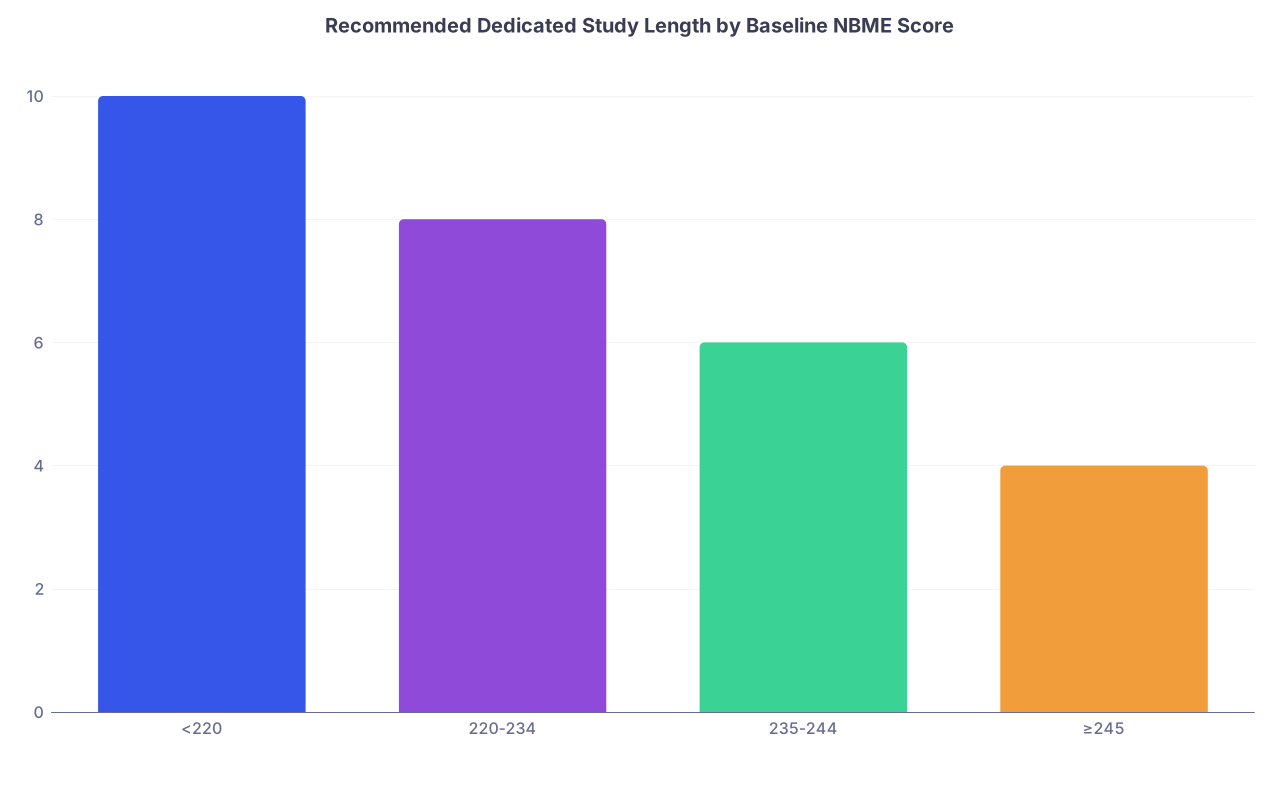
- Have a 6–8 week dedicated plan that fits around your job
Rough rule:
- If your current NBME/UWSA practice scores are:
- Below 220 → delay exam, increase dedicated time
- 220–235 → focused, high-yield push
- 235+ → maintain, refine weak areas, accept slight score volatility
| Category | Value |
|---|---|
| <220 | 10 |
| 220-234 | 8 |
| 235-244 | 6 |
| ≥245 | 4 |
Do not push this exam into late spring unless you have absolutely no choice. Programs will want scores in hand before offering interviews, especially in competitive fields.
3. Build the ERAS “skeleton” early
By December, you should have:
- A first‑pass list of:
- Work / Research / Volunteer entries
- Awards and honors
- Teaching roles
- A Google Doc with:
- Bullet point descriptions under each experience
- Rough idea which ones will be “Most Meaningful”
You are not wordsmithing yet. You are inventorying.
Months 7–8: Personal Statement and Program Research (January–February)
This is where most people procrastinate. You will not.
1. Personal statement version 0.1
By mid‑January, you should have an ugly first draft. Not a brainstorm. An actual draft.
Process:
- Block out a 3–4 hour session
- Write a full statement without editing:
- Why this specialty
- Core 1–2 clinical or life stories that shaped that interest
- What you bring to a residency team
- What you want long‑term
By end of February, you want:
- Version 1.0 for your primary specialty
- If you have a backup specialty, at least a skeleton with different framing
Do not ask 10 people for feedback. That is how you end up with a generic committee‑written mess. Pick:
- 1 mentor in the specialty
- 1 peer who actually writes well (you know who they are)
- Maybe 1 program‑adjacent person (chief resident, faculty)
2. Program list scaffolding
By late February, you should not be guessing where you might apply.
Do this:
- Pull last 2–3 years of NRMP data for your specialty
- Identify:
- Your target “band” (community vs university, highly competitive vs mid‑range)
- Your realistic number of applications (often 40–80 for moderate competitiveness; 80–120+ for IMGs/competitive specialties)
Build a spreadsheet with:
- Program name, city, state
- Type (university, community, hybrid)
- USMD/IMG friendliness
- Minimum score / cutoffs if known
- Number of residents per year
- “Pros/Cons” column
By end of Month 8, you should:
- Have at least 50–70% of a draft list that could become your final one with minor edits
- Know which programs might value your specific background (research heavy, underserved focus, etc.)
Months 9–10: ERAS Content, Letters Finalized (March–April)
At this point you should be turning your life into application paragraphs.
1. Experiences section – real writing begins
By end of March, you should:
- Take your ERAS skeleton doc
- Turn every experience into:
- 1 concise description sentence
- 2–3 bullet “Responsibilities / Accomplishments” sentences
You are aiming for:
- Specificity: “Abstract accepted at ACC 2025” not “Presented research at conferences”
- Outcomes: “Improved follow‑up rate from 58% to 81%” not “Worked on QI project”
By April, identify your 3 Most Meaningful:
- Usually: 1 clinical, 1 research/academic, 1 leadership/teaching or longitudinal service
- Expand these thoughtfully with narrative and reflection, not fluff
2. Lock in letters and give deadlines
By early April, you should:
- Confirm with each letter writer:
- That they still plan to write
- That they have your updated CV and PS draft
- That they know your target timeline
Give them a clear deadline:
- “ERAS opens in June; I would be very grateful if the letter could be uploaded by June 15.”
By end of April, you should:
- Know if anyone is ghosting you
- Have time to pivot and find a replacement if needed
3. Close the loop on research / projects
By this stage, you need to turn “ongoing” into “submitted” wherever possible.
By end of April:
- Push hard to:
- Finalize at least one abstract/poster submission
- Have at least one manuscript either submitted or in final draft
- Get your name concretely attached to something that will survive beyond your year
You do not need publications in print. “Manuscript submitted to [Journal]” is acceptable and infinitely better than “large database project in progress.”
Months 11–12: Final Assembly, ERAS and Submission (May–June Before ERAS, then July–September)
By now, nothing should be starting from scratch. You are assembling and polishing.
1. May–June: ERAS filling and document upload
By June 1:
- Your personal statement should be at version 3.0 – stable, only minor wording tweaks
- All ERAS experiences should be drafted in spreadsheet / document form
When ERAS opens (typically early June):
- Immediately:
- Create / update your AAMC account
- Start transferring content from your drafts into ERAS
- Upload your photo (get a professional one taken in May if you have not already)
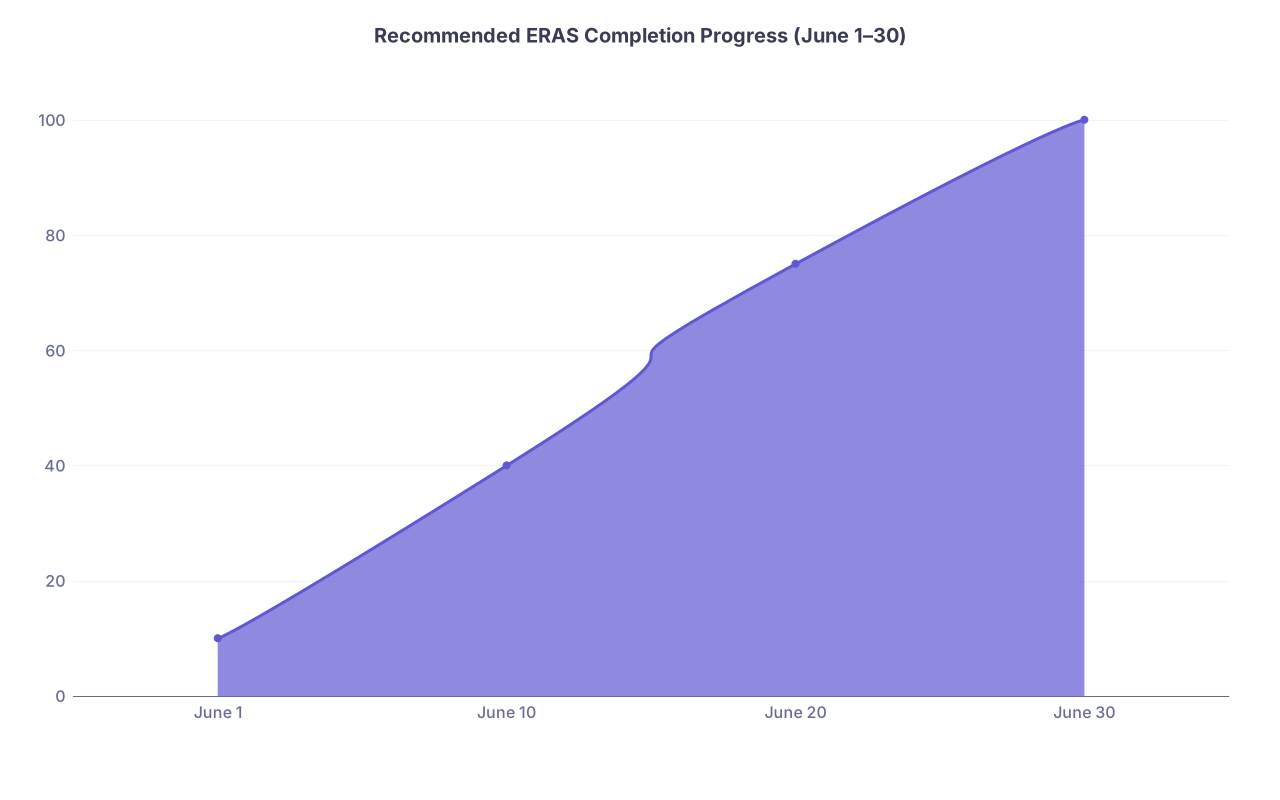
By June 30, you should:
- Have every section of ERAS filled:
- Personal information
- Medical education
- Work / Research / Volunteer
- Publications / Presentations
- Licensure / Exams
- Only minor proofreading edits left
| Category | Value |
|---|---|
| June 1 | 10 |
| June 10 | 40 |
| June 20 | 75 |
| June 30 | 100 |
2. Letters and MSPE status
By mid‑June:
- Check ERAS to see which letters have been uploaded
- Politely remind any late writers (one email, one brief in‑person/Zoom nudge)
Your target:
- All critical letters uploaded by July 15
- MSPE will come from your school automatically; just confirm they have your updated contact details if needed
3. July–August: Final polish and specialty‑specific extras
During July:
- Re‑read your entire application out loud once. Yes, the whole thing. You will catch awkward phrasing and typos.
- Tighten:
- Redundant verbs (“assisted,” “helped”)
- Vague phrases (“various projects,” “numerous patients”)
- Overused adjectives (“passionate,” “unique,” “incredibly”)
If your specialty uses:
- ERAS Supplemental Application
- Signaling
- Geographic preferences
Then by early August:
- You should have:
- Your list of signaled programs finalized
- Clear rationale for any geographic / preference choices
- Drafted any additional short answers required
4. Final program list and submission timing
By mid‑August, your program list should be final or very close.
Reasonable distributions:
- If you are a solid but not stellar applicant:
- 20–30 “reach” programs
- 30–50 “target” programs
- 10–20 “safety” or more IMG‑friendly / community programs
By September 1–10:
- Double‑check:
- All programs appear as expected
- No obvious missing regions (unless intentional)
- You have not accidentally added a program in a place you refuse to live
Target submission:
- Submit your ERAS the day the system starts transmitting to programs (usually mid‑September) or within 24–48 hours of that date.
- Submitting days or weeks later because you are “revising one more sentence” is a bad trade.
Micro‑Timeline: The Last 30 Days Before ERAS Submission
This is where people panic. You will not, because you have a checklist.

| Step | Description |
|---|---|
| Step 1 | 30 Days Out |
| Step 2 | Lock personal statement |
| Step 3 | Proofread ERAS entries |
| Step 4 | Confirm LoRs received |
| Step 5 | Finalize program list |
| Step 6 | Submit ERAS on opening transmission day |
30 days out (mid‑August):
- Personal statement frozen except for typos
- ERAS filled completely in draft form
- LoR status checked; send last reminders
- Program list 90% final
14 days out:
- Full application read‑through by:
- You
- One trusted reader (not 6)
- Fix:
- Typos
- Inconsistent dates
- Repetitive descriptions
7 days out:
- Final check:
- Photo present
- USMLE/COMLEX scores released and correctly listed
- All LoRs assigned to correct programs
- Back up your entire written content in a separate document (in case of tech issues)
ERAS transmission day:
- Log in early
- Confirm everything once more without making “creative” last‑minute changes
- Submit. Then walk away from your computer.
Do Not Forget the Rest of Your Life
You are not a machine. During this year you also need to avoid burning out before interviews:
Built‑in guardrails:
- One weekend day mostly off every week
- One non‑medical thing you maintain (gym, instrument, language, whatever)
- One friend or family member who can tell you when you are spiraling
Gap years that destroy you do not produce better applications. They just produce bitter interns.
3 Things To Remember From This Entire Roadmap
- By the end of Month 2, your role and specialty choice should be fixed. Everything else in the year depends on that.
- By the end of Month 8, your personal statement, letters plan, and program spreadsheet should exist in real, editable form—not in your head.
- By June–July, ERAS should be 80–90% done so September is a formality, not a crisis.
Run your gap year like a structured project, not a vague “time off,” and your ERAS submission will look like it.


