

The single biggest mistake people make in a gap year is building a job that clashes with interview season. You are not “too valuable” to be spared; if your work schedule fights your interviews, your interviews will win—and your job will suffer.
You need a timeline and a structure, not vibes.
Below I’m going to walk you from 6 months before ERAS through Match Week, with concrete guidance on how to shape your work schedule at each point so you can actually attend interviews, keep income flowing, and not burn every bridge behind you.
Big-Picture Timeline: Work vs Interview Season
Let’s get the skeleton in place first.
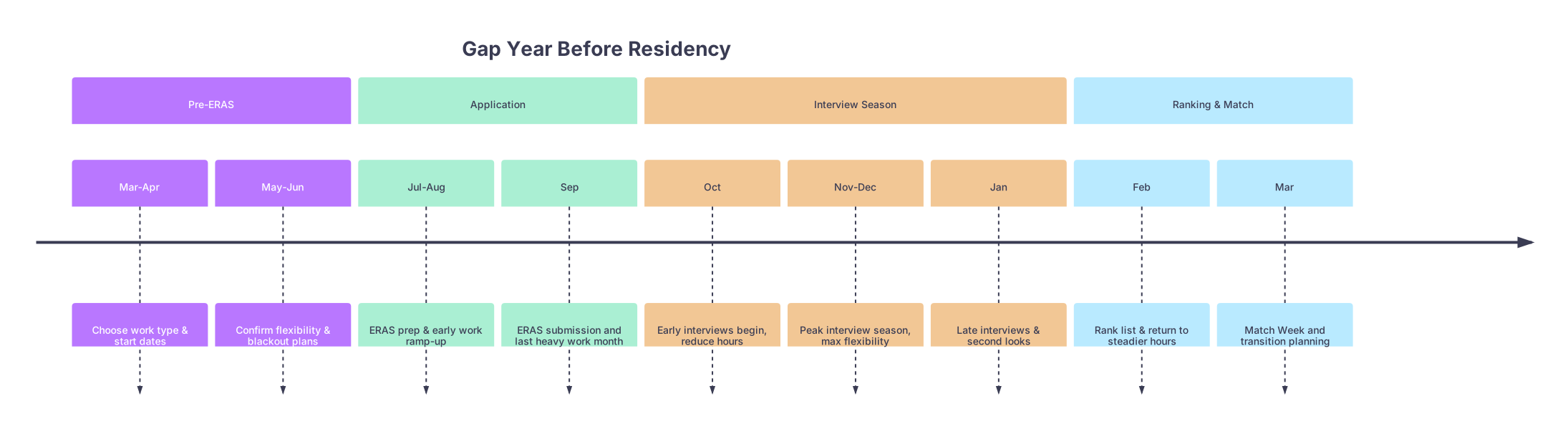
| Period | Event |
|---|---|
| Pre-ERAS - Mar-Apr | Choose work type & start dates |
| Pre-ERAS - May-Jun | Confirm flexibility & blackout plans |
| Application - Jul-Aug | ERAS prep & early work ramp-up |
| Application - Sep | ERAS submission and last heavy work month |
| Interview Season - Oct | Early interviews begin, reduce hours |
| Interview Season - Nov-Dec | Peak interview season, max flexibility |
| Interview Season - Jan | Late interviews & second looks |
| Ranking & Match - Feb | Rank list & return to steadier hours |
| Ranking & Match - Mar | Match Week and transition planning |
At this point you should understand: the job must fit the calendar, not the other way around.
Step 1: 4–6 Months Before ERAS — Choose the Right Kind of Work
If you’re reading this in March–April before your ERAS cycle, this is when you design your year. Not in September when invites start and you’re trying to negotiate last-minute swaps with a pissed-off manager.
Decide your work type by month 1 of your gap year
Here’s the blunt truth: some jobs are compatible with interviews; some are not. Stop pretending you can “make it work” with a rigid 50–60 hour onsite schedule. You can’t. Or you’ll pay for it with missed interviews.
Pick from these lanes:
| Work Type | Flexibility for Interviews | Income Level | Stress Level |
|---|---|---|---|
| Per-diem clinical work | High | Medium-High | Medium |
| Part-time scribe/MA | Medium | Low-Medium | Medium |
| Full-time research (flex PI) | Medium-High | Medium | Low-Medium |
| Nonclinical remote (tutoring, editing) | Very High | Variable | Low-Medium |
| Rigid full-time clinical | Low | High | High |
At this point you should:
- Decide whether interviews or maximum income are your priority. Pretending it’s both usually means you fail at one.
- Aim for 30–36 hours/week max from October–January. If you sign up for 40+ with strict coverage, you’ll be that person constantly begging coworkers for swaps.
By 3–4 months before ERAS (May–June)
You should have:
- A shortlist of 2–3 job types:
- Per-diem ED tech or nursing assistant
- Hourly clinical research assistant
- Remote content work (MCAT/USMLE tutoring, question writing, remote scribing)
- A clear discussion with each potential employer about:
- Expected schedule from October–January
- How much time off at short notice is tolerated
- Whether you can cluster hours on certain days
Do not skip that last one. I’ve seen too many people accept “We’re generally flexible” and discover in November that “flexible” meant “you can switch from nights to evenings, but no dropping shifts.”
At this stage, you should favor:
- Per-diem or PRN roles
- Clearly defined part-time roles (e.g., 0.6 FTE)
- Positions with remote or hybrid options
And you should avoid:
- Rotating shift hospital jobs requiring fixed FTE without coverage partners
- Anything with a long training period where you “owe” them 12+ months
- Jobs that say “time off in the fall is extremely limited” (this is code for “you will not see daylight, or your interviews”)
Step 2: 1–2 Months Before ERAS — Lock in a Schedule Template
By July–August before application submission, the job should be running, and you’re finalizing a baseline weekly structure that can later flex for interviews.
Build your “default” work week
Create a default template that you use as your negotiation anchor:
Example template for October–January:
- Mon – OFF (hold for travel/interviews)
- Tue – Work 8–10 hours
- Wed – Work 8–10 hours
- Thu – Work 8–10 hours
- Fri – Flexible: half day or off
- Sat/Sun – Optional/prn shifts for extra cash
This does three smart things:
- Leaves Monday clean for travel + interview days (very common day).
- Concentrates your hours midweek, where interviews are slightly less dense.
- Builds in a buffer day (Friday) to convert to time off when interview season peaks.
At this point you should:
- Have a written summary you can hand to your supervisor:
- “From October–January I expect to need 6–10 weekdays off total for residency interviews. I’d like to keep my core shifts on Tue–Thu whenever possible.”
- Confirm:
- How far in advance you must request days off (2 weeks? 4 weeks?)
- Whether unpaid leave is acceptable
- Whether they allow swaps or require formal PTO
You’re not asking permission to interview. You’re clarifying the rules so you can exploit every allowed lever later without drama.
Step 3: Early Application Season (September) — Front-load Work, Protect Your Future Self
Once ERAS opens and you submit in September, you’re in the “quiet before the storm.” This is when smart people bank hours and money before interviews hit.
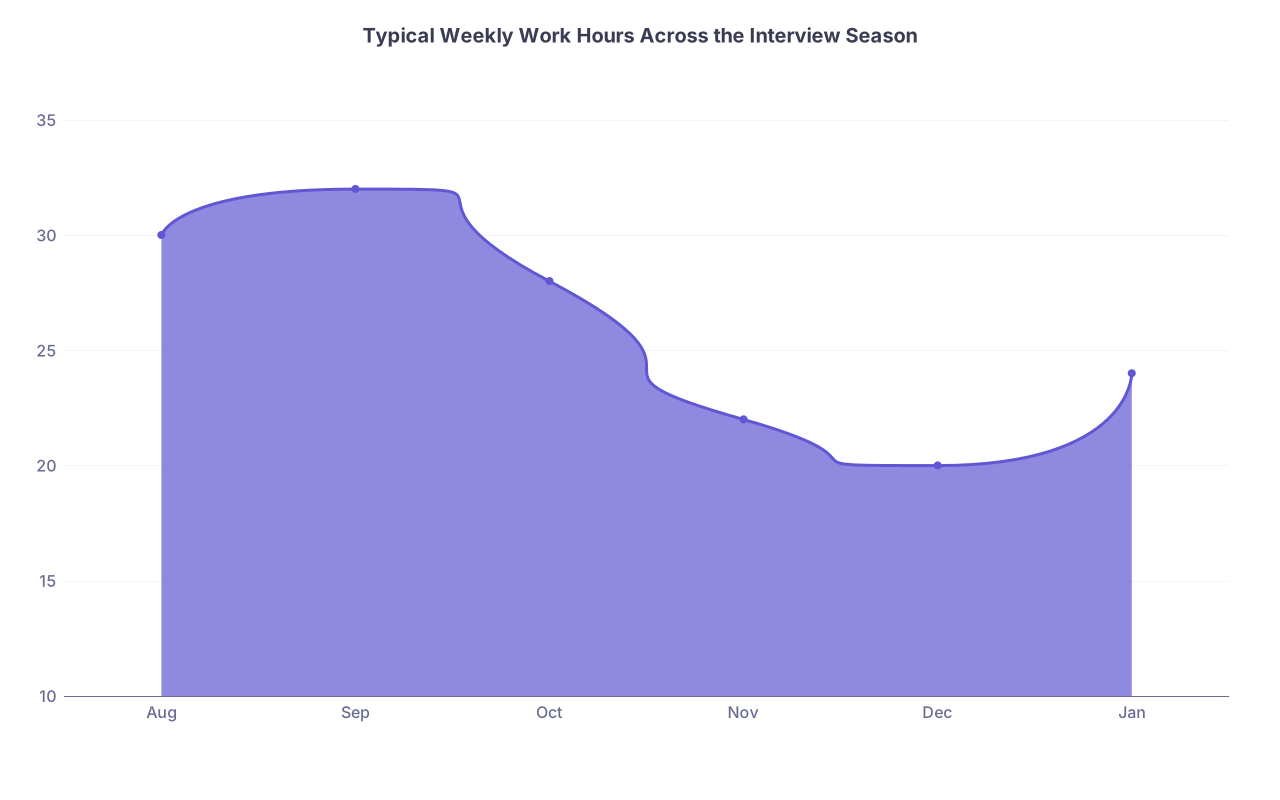
| Category | Value |
|---|---|
| Aug | 30 |
| Sep | 32 |
| Oct | 28 |
| Nov | 22 |
| Dec | 20 |
| Jan | 24 |
At this point (September) you should:
- Aim for your heaviest month of work:
- 32–36 hours/week if part-time
- Extra weekend shifts if per-diem
- Knock out:
- Any mandatory trainings
- Annual competencies
- Longer projects requiring continuity
Why? Because from mid-October onward, your attention and energy will fragment. Every invite email will punch a hole in your week. You want your job responsibilities as “maintenance-only” as possible.
Also, this is when you:
- Tell your supervisor: “Interview invitations usually come 1–3 weeks before the date. I will give as much advance notice as possible, but there will be some short-notice requests.”
- Create a draft list of 'priority programs' where you’ll move heaven and earth to attend interviews, and a secondary list you might cancel if your schedule implodes.
Step 4: Peak Interview Season Month-by-Month Plan (Oct–Jan)
This is the meat of it. Here’s exactly how your work schedule should evolve.
October — Transition Month
At this point you should start reducing your dependence on a perfect schedule. Assume chaos.
Your goals for October:
- Target work hours: 24–30 hours/week
- Keep at least 1–2 weekdays totally open whenever possible
- Start scheduling:
- Appointments
- Personal travel
- Required in-person meetings
on non-peak interview days (Fridays are often a bit quieter than Mon–Thu, though not always)
Operational strategy:
- When a program offers multiple date options:
- Choose days that fit your existing template first.
- Avoid scheduling more than 2 interviews/week if you’re working at all. You will be useless by week 3 otherwise.
- Talk with scheduler/manager every 1–2 weeks:
- “My interview schedule for the next two weeks looks like X; I’ll be out these days but can add a half-day here if needed.”
Think of October as your test month to see which boundaries hold and which are fantasy.
November–December — Full Interview Mode
This is where people burn out or piss off their employers. You’re going to avoid both by planning now.
At this point (early November) you should:
- Decide which of these modes you’re in:
- Mode A: Max Interview Flexibility
- You expect 15–20+ interviews
- Income is helpful but not critical
- Mode B: Balanced
- You expect 8–15 interviews
- You need steady but not full income
- Mode C: Income-Protective
- You have limited invites
- You can’t afford long unpaid gaps
- Mode A: Max Interview Flexibility
Then structure accordingly.
Mode A: Max Interview Flexibility
- Target work: 0–16 hours/week
- Best for: strong applicants with lots of invites, or those with savings/financial support
- Schedule approach:
- Ask for formal reduction or unpaid leave for 4–8 weeks
- Keep:
- 1 short weekly shift, or
- Only weekend shifts
- Protect Mon–Thu as free as possible
This is what I’ve seen most high-interview applicants end up doing in reality, after unsuccessfully trying to hold 24–30 hours/week and collapsing.
Mode B: Balanced
- Target work: 16–24 hours/week
- Schedule approach:
- 2–3 shorter shifts (5–8 hours) clustered on non-interview heavy days (often Tue–Thu)
- Keep at least 2 interview-capable days per week totally open
- Avoid back-to-back: shift → travel → interview next morning, unless it’s truly local
Mode C: Income-Protective
- Target work: 24–32 hours/week
- Schedule approach:
- Accept that you may decline marginal programs if they refuse to schedule on your off days
- Still keep 1–2 days emergency-flexible per week (even if unpaid)
Non-negotiables for all modes:
- Do not schedule overnight shifts the night before an interview, no matter how tempting the differential is.
- Block out at least half a day after virtual interviews; you’ll be drained and useless at work.
January — Late Interviews & Decompression
January is usually lighter but can hold:
- Straggler interviews
- Cancellations/reschedules
- Second looks (less common now, but some programs still push them informally)
At this point you should:
- Gradually ramp hours back toward 24–32/week, if money matters.
- Explicitly tell your supervisor:
- “My interviews are winding down. I’m available for more stable scheduling in February and March.”
Step 5: Weekly and Daily Structure During Interview Season
Month plans are nice; your life happens on the week and day level.
Your Ideal Interview-Season Week (Sample)

Let’s say you’re in Balanced Mode (16–24 hours/week) and expect a moderate number of interviews.
Sample template (adjust days to your reality):
- Mon – Interview or travel day (no work booked)
- Tue – Work 8 hours
- Wed – Flexible: either interview or 4–6 hours work
- Thu – Work 8 hours
- Fri – Backup interview day / half-day work only
- Sat–Sun – Free or optional PRN shifts
At this point you should:
- Look 3–4 weeks ahead every Sunday and:
- Pencil in likely interview days (even before official invites) based on common patterns in your specialty.
- Identify which work shifts are non-negotiable vs movable.
Your Interview Day Structure
For a virtual interview, your day should not include work. I’ve watched people try to squeeze in a 4-hour shift after a 6-hour Zoom interview block; they are glassy-eyed and mistake-prone.
Standard virtual interview flow:
- Night before
- No late shift. Light prep, tech check, sleep.
- Morning
- 60–90 min buffer before start
- Interview block
- 4–6 hours (sometimes with breaks)
- After
- 1–2 hours decompression + quick reflection notes
For an in-person interview:
- Day -1: Half day of work at most, and only if local and low-stress.
- Day 0 (travel): No work.
- Day 1 (interview): Obviously no work.
Your job can flex. Your interview cannot.
Step 6: How to Talk to Your Employer (Scripts & Timing)
Most conflicts aren’t about “evil employers.” They’re about fuzzy expectations. Fix that early.
3–4 Months Before Interviews (July–August)
At this point you should have the conversation:
You:
“I’m applying for residency this fall. Interview season runs roughly from late October through January. I’ll still be committed to working here, but I’ll need some flexibility those months, especially on weekdays for interviews.”
Then be specific:
- “I anticipate needing 1–2 days off most weeks between late October and December.”
- “I’d like to cluster my shifts on Tue–Thu as much as possible so I can keep other days free for interview scheduling.”
4–6 Weeks Before Interviews (September)
Follow-up:
You:
“Interviews will likely start in a month or so. Can we look at my October and November schedules with the goal of keeping Mondays and some Fridays open? I’ll tell you as early as possible when specific dates come in.”
During Peak Season
You should:
- Batch your schedule requests:
- Every time you get 2–3 new interviews, send one consolidated email with all upcoming changes.
- Offer compensation:
- “I can add an extra Sunday this month if I take off that Wednesday for an interview.”
If your employer flat-out refuses any flexibility in October–January despite months of notice, that’s not a good fit for an applicant year. At that point you should seriously consider whether a short-term reduction, a per-diem transition, or even a job change is necessary.
Step 7: Financial and Energy Guardrails
You’re not just protecting your calendar. You’re protecting your body and your brain.
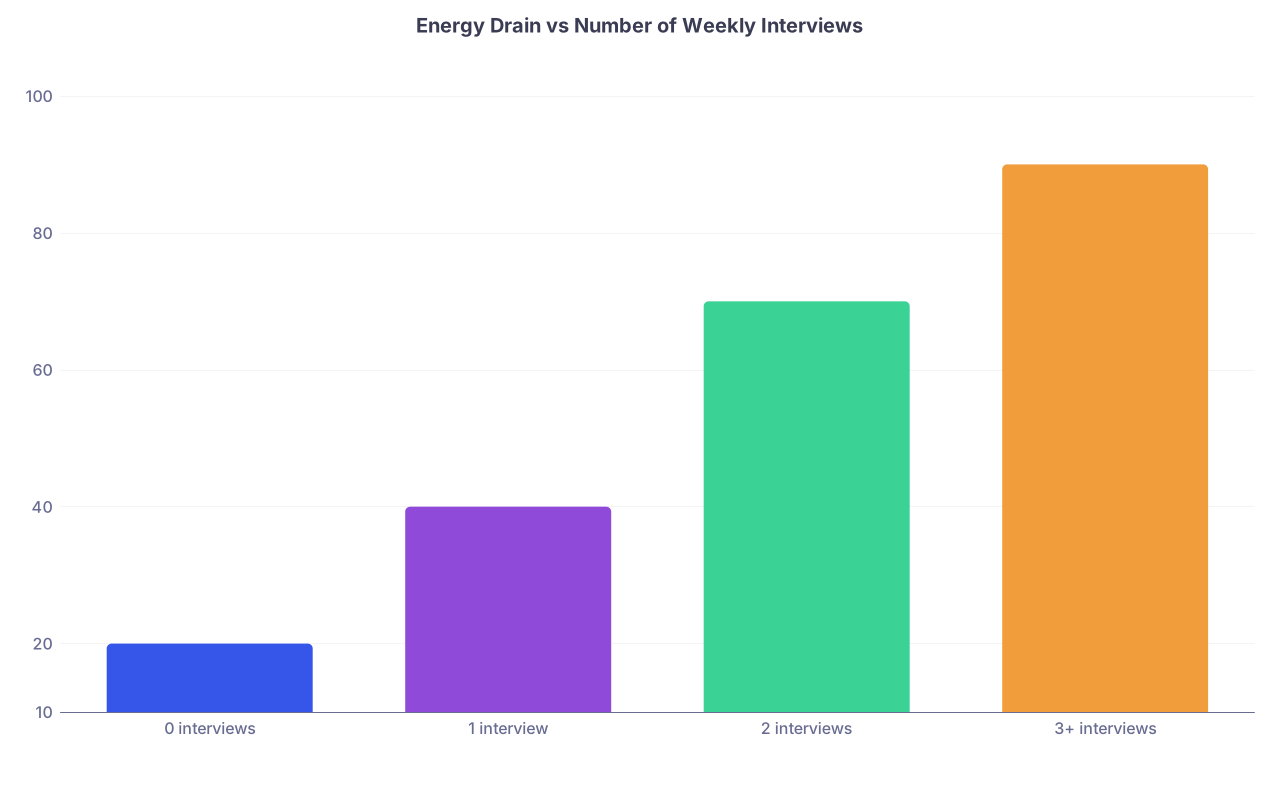
| Category | Value |
|---|---|
| 0 interviews | 20 |
| 1 interview | 40 |
| 2 interviews | 70 |
| 3+ interviews | 90 |
Rough energy tax (subjective, but realistic):
- 1 interview/week: mild disruption. Feels like adding a 10–12 hour shift.
- 2 interviews/week: high disruption. Your work focus will suffer.
- 3+ interviews/week: unsustainable with any serious job unless it’s extremely flexible or very low intensity.
At this point you should:
- Set hard caps:
- “If I cross 2 interviews next week, I drop one shift.”
- Build a minimum money plan:
- Know exactly how many hours/month you must work to pay bills.
- Then treat everything else as flexible.
Step 8: February–Match Week — Ramp Back Up and Transition
Once you hit February, interviews are mostly over.
At this point you should:
- Talk to your employer:
- “My interviews are complete, and I’ll be more available through June. Can we increase my hours to X/week?”
- Set a new template:
- Return to 28–36 hours/week if desired.
- Block Match Week (mid-March):
- You don’t need the whole week off, but:
- Try to keep Match Day non-clinical or light.
- Be ready to adjust if you don’t match and need to scramble/SOAP.
- You don’t need the whole week off, but:
Your final months before residency are for:
- Saving money
- Tying up workplace projects
- Getting references and leaving on good terms
Do not relax so much that you forget: you’re about to move and start intern year. You’ll want that goodwill and maybe that paycheck up until June.
Two Tracking Tools You Should Actually Use
No fancy apps. Two things:
A single master calendar
- Color-code:
- Work shifts
- Interviews
- Travel
- Look at it weekly and monthly.
- Color-code:
An interview + work log
- Quick note after each interview:
- Program, date, gut feeling (good/mid/bad), any schedule pain it caused.
- Helps you make smarter choices when two programs compete for the same day.
- Quick note after each interview:

Final Snapshot: A Sample Month During Peak Season
Let’s put this all together with a concrete example for November in Balanced Mode:
- Work: part-time research assistant, mostly remote, 20 hours/week target
- Interviews: expecting 2/week, mix of virtual and in-person
Week 1
- Mon: Virtual interview A (no work)
- Tue: 6 hours remote work
- Wed: 4 hours work + light prep for next interview
- Thu: Virtual interview B (no work)
- Fri: 4 hours work, admin tasks
- Sat/Sun: Off
Week 2
- Mon: Travel to city X
- Tue: In-person interview C
- Wed: Travel back, off
- Thu: 8 hours work
- Fri: 4 hours work
- Sat/Sun: Optional extra shift (skip if tired)
Week 3
- Mon: Interview D
- Tue: 6 hours work
- Wed: 4 hours work
- Thu: 6 hours work
- Fri: Off (buffer, errands)
Week 4
- One interview, same basic pattern, add a weekend shift if money’s tight.
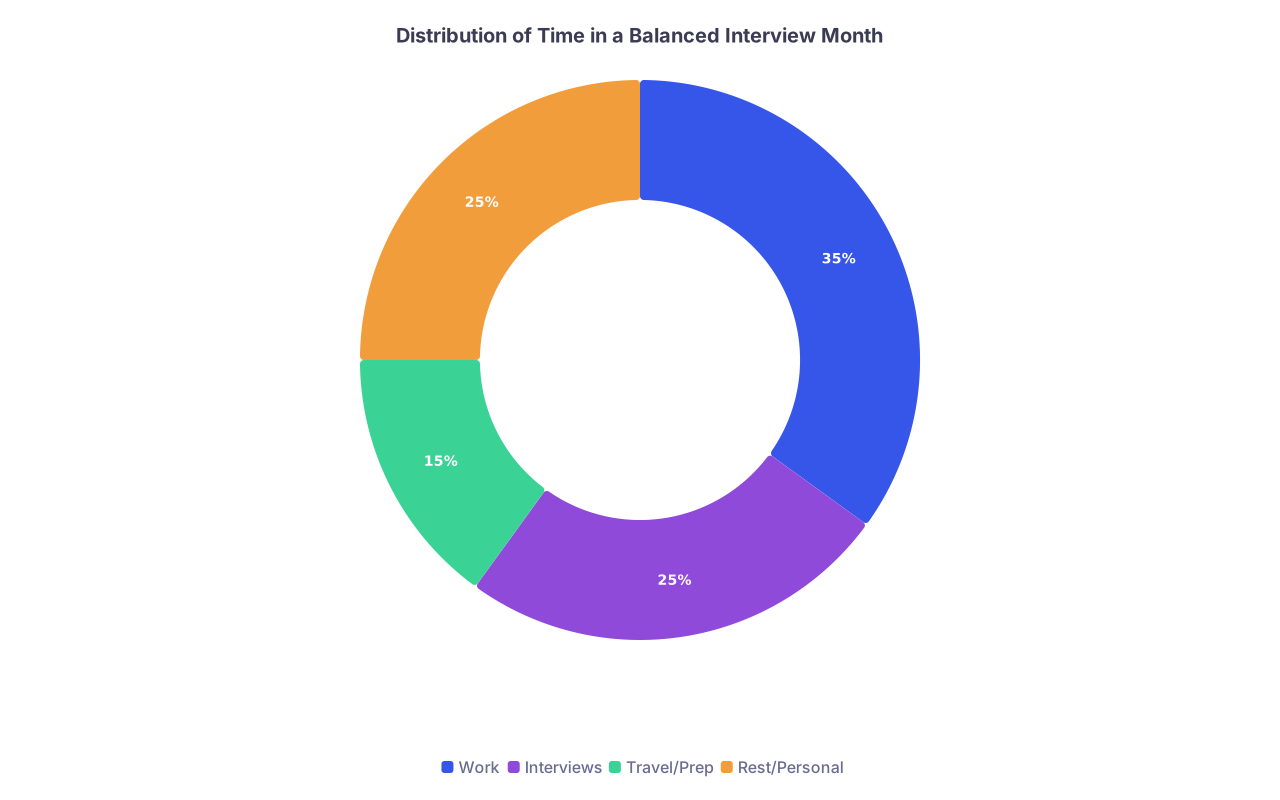
| Category | Value |
|---|---|
| Work | 35 |
| Interviews | 25 |
| Travel/Prep | 15 |
| Rest/Personal | 25 |
Notice: there’s rhythm. There’s breathing room. You’re not trying to be a full-time employee and a full-time applicant at the same time.
Key Takeaways
- Design your job around interview season, not the other way around—if it is not flexible from October to January, it is the wrong job for a gap year.
- Use clear templates: a default weekly schedule, explicit modes (max-flex, balanced, income-protective), and month-by-month hour targets so you know when to ramp up or down.
- Talk early and concretely with your employer, then adjust aggressively once invites start; protect interview days first, then fill in work, not the reverse.


