

The biggest mistake during a pre-residency gap year is drifting through your weeks with “I’ll study when I’m off” as your only plan. That’s how you end up tired, underpaid, and with a flat CV.
Let’s fix that with a concrete, hour-by-hour week template.
You’re in the gap year before residency. You need:
- Enough income to not panic about money.
- Enough focused effort to strengthen your residency application.
- Enough rest so you don’t crawl into intern year already burned out.
We’ll walk through:
- The structure of a “model” week for someone working clinically (scribe/MA/hospitalist extender/locums PA/tele-scribe, etc.).
- Variations for day-shift vs. night-shift vs. part-time research jobs.
- What you should be doing each month in the Match cycle while using this weekly template.
Step 1: Lock in Your Weekly Anchors (Income vs. CV)
At this point you should be very clear on your “primary identity” for the gap year:
- Income-first (you need money; you’ll build CV around it).
- CV-first (you’re funded / supported; you can take lower-paid academic or research work).
Your weekly template depends on this split.
Decide Your Weekly Work Load
Most pre-residency gap year jobs cluster like this:
| Role Type | Hours/Week | Typical Shifts | Income Focus | CV Value |
|---|---|---|---|---|
| Full-time scribe | 36–40 | 3–4 x 10–12 hr | Medium | Medium |
| Research assistant | 32–40 | 4–5 x 8–9 hr | Low–Medium | High |
| Hospitalist extender | 36–48 | 3–4 x 12 hr | High | High |
| MA/clinic assistant | 32–40 | 4–5 x 8–9 hr | Medium | Medium |
| Tutoring/teaching | 10–20 | 2–4 x 3–5 hr | Low–Medium | Low–Med |
At this stage:
- If you’re working ≥ 4 shifts of 10–12 hours → your week must be ruthlessly structured or your CV work dies.
- If you’re working ≤ 30 hours → you have no excuse not to build a strong application profile.
Decide now:
- Total shifts per week.
- Preferred “off days” (where you’ll cluster your heavy CV work).
Step 2: The Core Week Template (Day-Shift Clinical Job)
Let’s set a “base model”: full-time clinical work, mostly day shifts (7a–7p or 8a–6p), rotating weekdays and some weekends. Adjust from there.
At this point you should pick:
- 2 “deep work” half-days per week for high-value CV tasks.
- 3–5 micro-blocks for lighter but still meaningful work (emails, reading, small edits).
Weekly Overview: Time Allocation
Here’s roughly where your waking hours should go in a sane gap year week:
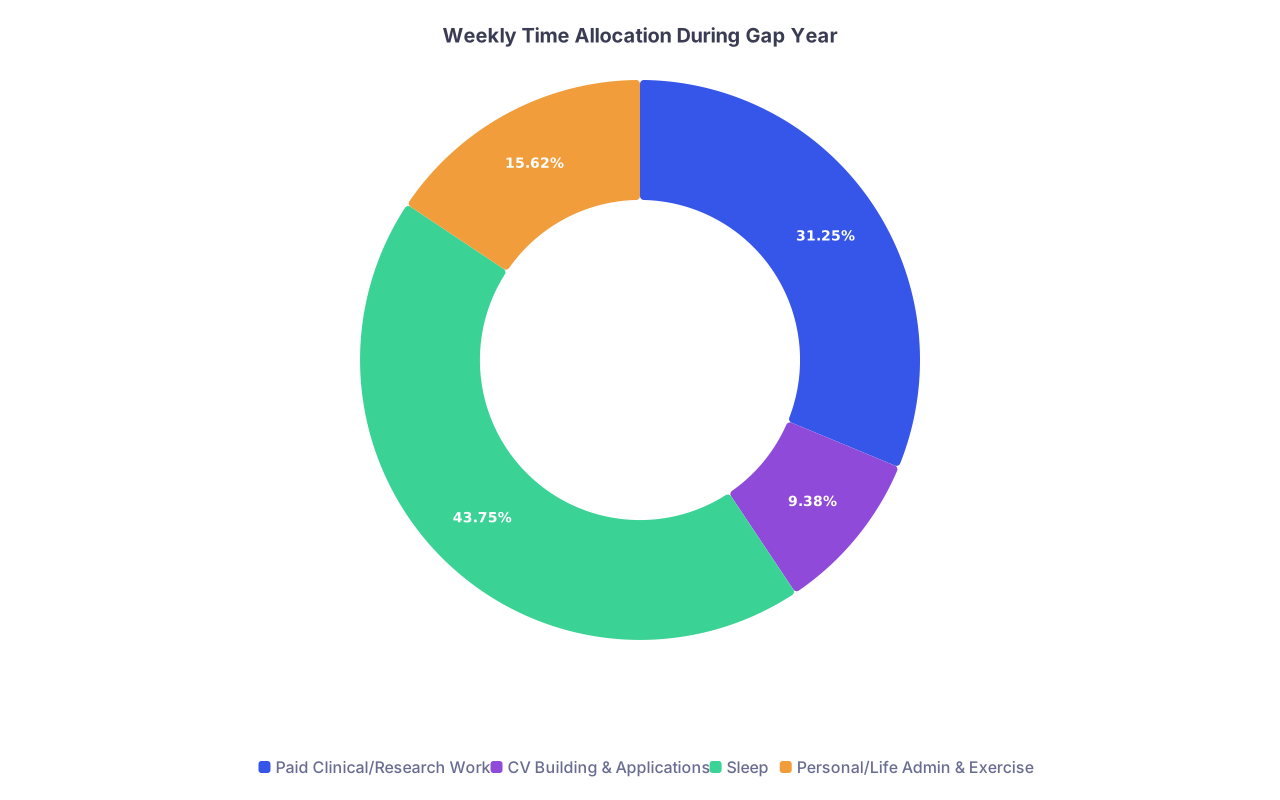
| Category | Value |
|---|---|
| Paid Clinical/Research Work | 40 |
| CV Building & Applications | 12 |
| Sleep | 56 |
| Personal/Life Admin & Exercise | 20 |
That’s a 40-hour job, 8–12 hours of CV work, and the rest sleep/life. Very doable if you stop telling yourself you’ll “do it later.”
Step 3: A Concrete Week-in-the-Life (Standard Day-Shift)
Assume:
- 3 clinical shifts (Tue/Thu/Sat, 7a–7p).
- Goal: 10–12 hours of CV/application work.
- Specialty: moderately competitive (IM, Peds, Psych, EM). If you’re going for Derm/Ortho/ENT, increase your research/output blocks by ~50%.
Monday – CV Heavy Day
At this point you should front-load the week with the hardest mental work.
Morning (8:00–12:00) – Deep CV Block
- 8:00–8:30 – Review weekly goals:
- 1 tangible output (submitted abstract, revised personal statement, new section of ERAS).
- 1 networking action (email, Zoom, coffee, conference submission).
- 8:30–10:30 – Project Work:
- Editing a manuscript, analyzing data, or drafting a personal statement/secondary essays.
- No email, no phone. Headphones on.
- 10:30–10:45 – Short walk / snack.
- 10:45–12:00 – Application Logistics:
- Update ERAS experiences descriptions.
- Log procedures / patient encounters if you’re in a clinical extender role.
- Track program list in a spreadsheet.
Afternoon (13:00–16:00) – Admin + Light Study
- 13:00–14:00 – Program research:
- 3–5 programs: note specific strengths, tracks, faculty.
- Jot 1–2 bullets for each that you can use in future emails or interviews.
- 14:00–16:00 – Board review / specialty reading:
- 2 hours of targeted learning (e.g., IM boards style Qs, high-yield topics).
- This keeps you clinically sharp and gives you something intelligent to say on interviews: “I’ve been staying current by…”
Evening – Personal Time
- Protect it. You need at least one evening totally off.
Tuesday – Long Clinical Shift
You’re working 7:00–19:00.
Pre-shift (5:30–6:30) – Micro Block (Optional)
- 20–30 minutes:
- Skim one article in your specialty.
- Draft 2–3 bullet points on a patient case from last week that might be teachable “interview stories.”
- Do not try to write essays at 5:30 a.m. That’s how you burn out.
Post-shift (19:30–21:00) – Recovery + Maintenance
- 19:30–20:00 – Food + decompress.
- 20:00–20:30 – Application micro-task:
- Answer 1–2 emails.
- Update a spreadsheet.
- Move one task from “stuck” to “done.”
- 20:30 onward – Sleep wind-down.
If you’re dragging, drop the micro-task. No heroics on heavy clinical days.
Wednesday – Mixed CV and Life Admin
At this point you should use your mid-week off day strategically: half for your future, half for not falling apart.
Morning (8:30–11:30) – Deep CV Block #2 Rotate focus based on where you are in the cycle:
- Pre-ERAS open: research output, data analysis, building relationships.
- Early ERAS season: perfecting personal statement and experiences.
- Post-submission: interview prep and targeted program outreach.
Example block:
- 8:30–9:00 – Review project board (Trello/Notion/Google Sheets).
- 9:00–11:00 – Research/application output:
- Write first draft of a case report.
- Clean dataset and run basic stats.
- Draft a tailored email to a PI or program director.
- 11:00–11:30 – Document everything:
- Update CV with new tasks, submissions, responsibilities.
Afternoon (13:00–16:00) – Life Admin
- Groceries, laundry, exercise, appointments.
- 30–45 min of “low-brain” CV work:
- Formatting CV.
- Updating a publication tracking sheet.
- Filing conference deadlines.
Thursday – Clinical Shift #2
Same pattern as Tuesday.
Pre-shift (optional 20–30 min)
- Review an Anki deck, board-style Qs, or quick article.
Post-shift (quick 20–30 min)
- Log any notable cases that might matter for:
- Interviews.
- Letters (you’ll remind attendings later, and this detail helps).
- Future QI/Case reports (“We had three DKA admits this month; maybe we should…”).
Friday – Networking + Applications Day
By this point in the week, you should have:
- 2 deep work sessions done.
- 2–3 shifts either finished or with one more coming on the weekend.
Friday is for humans and logistics.
Morning (9:00–11:30) – People & Programs
- 9:00–9:45 – Networking:
- Send 1–2 emails:
- Prior attendings / mentors: update + ask for advice or an introduction.
- Potential research collaborators.
- Reply to any program emails promptly (shows reliability).
- Send 1–2 emails:
- 9:45–11:30 – Program-specific tasks:
- Tailor a short paragraph for programs you’re likely to email later (“I’m especially drawn to your X track…”).
- Maintain your rank list “notes” document as you learn about programs.
Afternoon (13:30–16:00) – Interview / Personal Branding Work Rotation based on timeline:
- Before interviews:
- Outline personal statement anecdotes.
- Refine ERAS experience descriptions (try to finish 2–3).
- During interview season:
- Practice answers to 3–5 common questions out loud, record yourself once a week.
- Review your own CV so you actually remember what you did.
Saturday – Clinical Shift #3
Standard shift, low expectations beyond work + survival.
Tiny habit:
- On a break, jot 1–2 lines about any interesting teaching moments, tough conversations, or system issues you saw. These become excellent interview material, QI ideas, or M&M discussions later.
Sunday – Reset + Light Academic
By this point you should not try to be a superhero. But you do need to stop the week from just… blurring.
Morning (9:00–11:00) – Weekly Review
- List:
- What moved your application forward this week?
- What you’ll accomplish next week (name the specific outputs).
- Quick check:
- Are your letters sorted?
- Are any deadlines coming up (ERAS, conferences, Step scores, visas)?
Afternoon – Rest + Optional Reading
- A couple hours of truly off time.
- Optional: 30–60 min reading in your specialty, no notes, just curiosity.
Step 4: Night-Shift Variant
If you’re on nights (e.g., 19:00–7:00), your anchors move, but the principles don’t.
At this stage you should protect TWO real “daytime deep work” slots per week when you’re rested.
Example 4-night week (Sun–Wed nights)
- Mon 8:00–11:00 – You’re tired but can still do:
- Light admin: emails, small ERAS edits.
- Tue 15:00–18:00 – After good sleep:
- Deep CV block: research, writing, letters organizing.
- Thu 10:00–13:00 – You’re off nights now:
- Second deep CV block.
- Fri 14:00–16:00 – Networking + application tasks.
- Sat/Sun – Recovery + 1–2 micro blocks (30–45 min each).
Core rule for nights:
- Never schedule cognitively heavy tasks within 2 hours of finishing a night shift. You’re not building a heroic narrative; you’re building a CV that requires your brain actually functioning.
Step 5: Month-by-Month Focus Across the Application Cycle
The same weekly skeleton works all year, but what fills your deep-work blocks changes by month.
Dec–Feb (Early Gap Year, Pre-ERAS Open)
At this point you should be:
- Locking down your gap-year role.
- Showing you can produce something, not just show up.
Weekly deep work focus:
- 1–2 research/project sessions.
- Start a draft “career vision” doc that will evolve into your personal statement.
- Identify 1–2 mentors who actually know you this year.
Mar–Apr (Building Output)
Weekly:
- Push at least one project toward submission:
- Case report, poster, small QI.
- Strengthen one “spike” in your CV:
- Teaching? Add tutoring, TA work, or structured teaching in your clinic role.
- Leadership? Take on a defined responsibility that someone can write about.
Your week template stays the same; content of Monday/Wednesday deep blocks is heavily research/output.
May–Jun (ERAS Preparation)
At this stage you should:
- Convert your “career vision” doc into real personal statement drafts.
- Build the program spreadsheet.
Weekly:
- One deep session → personal statement + experiences.
- One deep session → program research + contacting mentors for feedback.
- Friday block → letters:
- Confirm who’s writing.
- Provide CV and bullet points.
- Set clear deadlines.
Jul–Aug (ERAS Opens / Submission Window)
Your deep blocks now tilt:
- Monday Deep Block:
- Finalize ERAS sections, refine personal statement.
- Wednesday Deep Block:
- Double-check program list, tailor anything that needs tailoring.
- Friday Block:
- Touch base with letter writers, track missing items.
You still work your clinical shifts, but those 8–10 structured ERAS hours make the difference between a polished app and a frantic, typo-filled mess.
Sep–Oct (Application Sent, Waiting and Prepping)
Don’t waste this phase scrolling your email.
Weekly:
- One deep block → interview prep:
- Practice answers, refine stories based on recent cases.
- One block → continued productivity:
- Finish ongoing research.
- Submit posters/abstracts (you can still send updates to programs later).
- Micro blocks → targeted program communications as appropriate.
Nov–Jan (Interview Season)
At this point you should accept that interview days are your job.
Weekly structure might flex:
- 1–2 days fully lost to interviews + travel (or Zoom).
- Your remaining deep block:
- Prepping for next week’s interviews.
- Sending thank-you emails.
- Clinical shifts:
- Compress on non-interview weeks.
- Don’t overbook; exhaustion shows on screen.
Step 6: Non-Negotiables to Protect Each Week
You can improvise, but not on these.
- Two 2–3 hour deep work blocks
- Name them. Protect them. Treat them like a shift you can’t skip.
- One weekly review
- 30–60 minutes to adjust your plan, not just react.
- Sleep
- 7+ hours on most nights. Not negotiable if you want to sound coherent to PDs.
Visual: Your Week at a Glance
Here’s how a balanced gap-year week often ends up split between priorities:
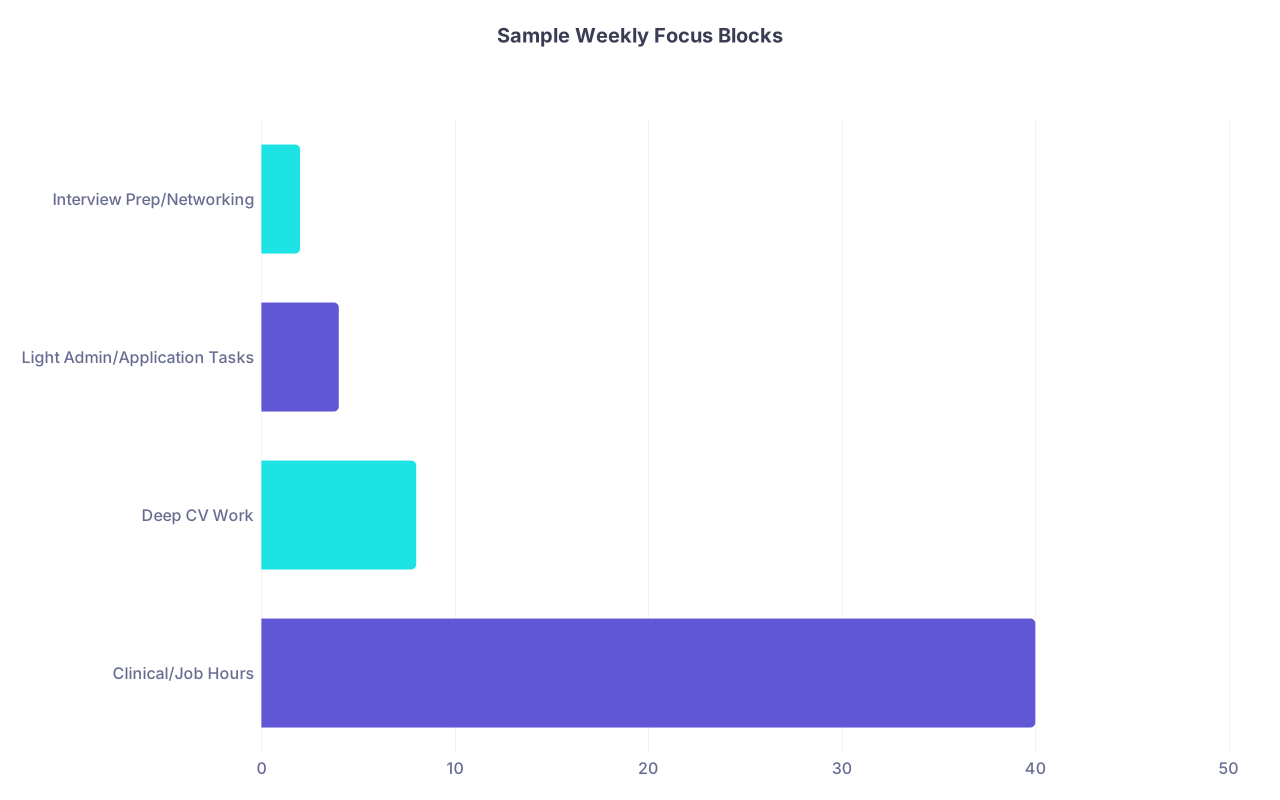
| Category | Value |
|---|---|
| Clinical/Job Hours | 40 |
| Deep CV Work | 8 |
| Light Admin/Application Tasks | 4 |
| Interview Prep/Networking | 2 |
If your “Deep CV Work” line is consistently at 0–2 hours, you’re not in a gap year. You’re just working with a delayed Match.
Step 7: Putting It All Together – A Simple Timeline View
Here’s the whole structure as a quick timeline of how you’re using weeks across the year:
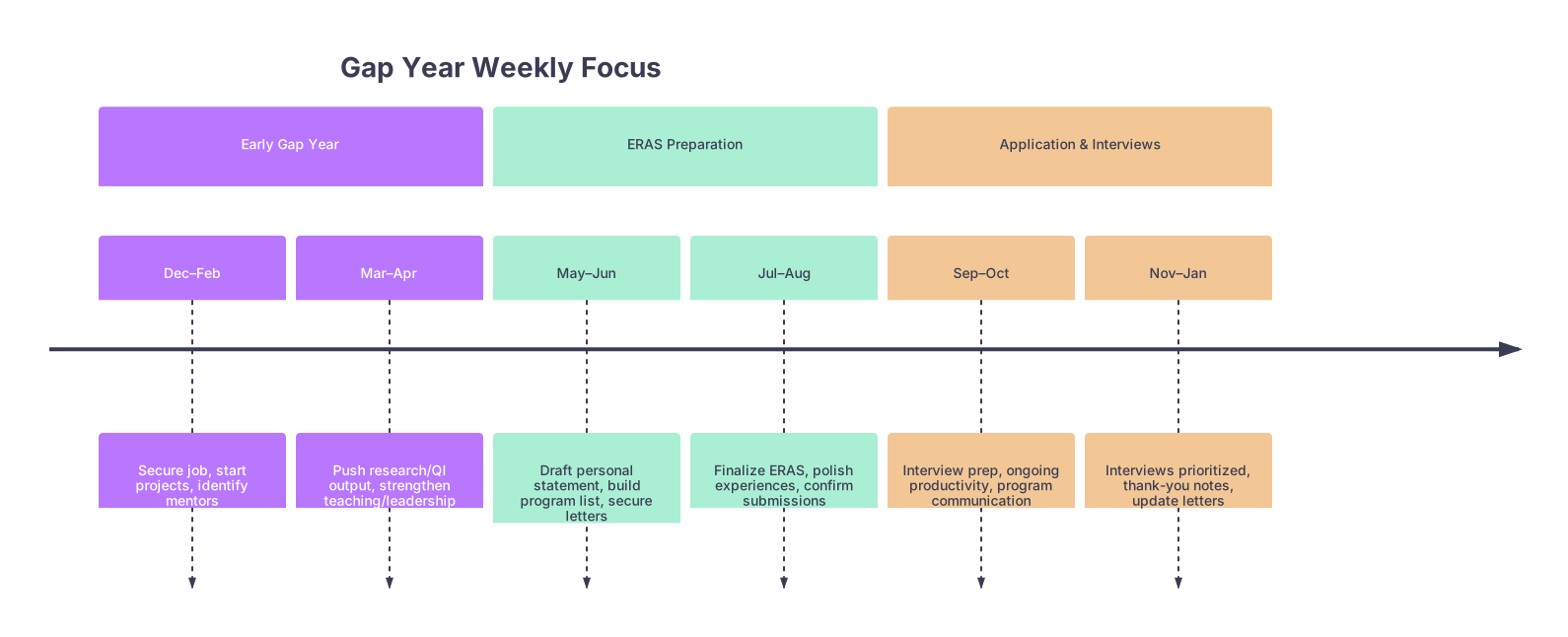
| Period | Event |
|---|---|
| Early Gap Year - Dec–Feb | Secure job, start projects, identify mentors |
| Early Gap Year - Mar–Apr | Push research/QI output, strengthen teaching/leadership |
| ERAS Preparation - May–Jun | Draft personal statement, build program list, secure letters |
| ERAS Preparation - Jul–Aug | Finalize ERAS, polish experiences, confirm submissions |
| Application & Interviews - Sep–Oct | Interview prep, ongoing productivity, program communication |
| Application & Interviews - Nov–Jan | Interviews prioritized, thank-you notes, update letters |
Each of those phases still uses the same week skeleton you just saw; only the content changes.
Key Takeaways
- Your gap year success lives or dies at the weekly level. Three clinical shifts + two deep CV blocks + one weekly review is the core template.
- Do not rely on vague intentions. Put specific tasks in specific time blocks, especially on your off days.
- Income and CV building are not enemies if you set hard boundaries: work days for income and survival, protected off-day blocks for the future you’re actually trying to match into.


