

Understanding a Leave of Absence in Medical School and Residency
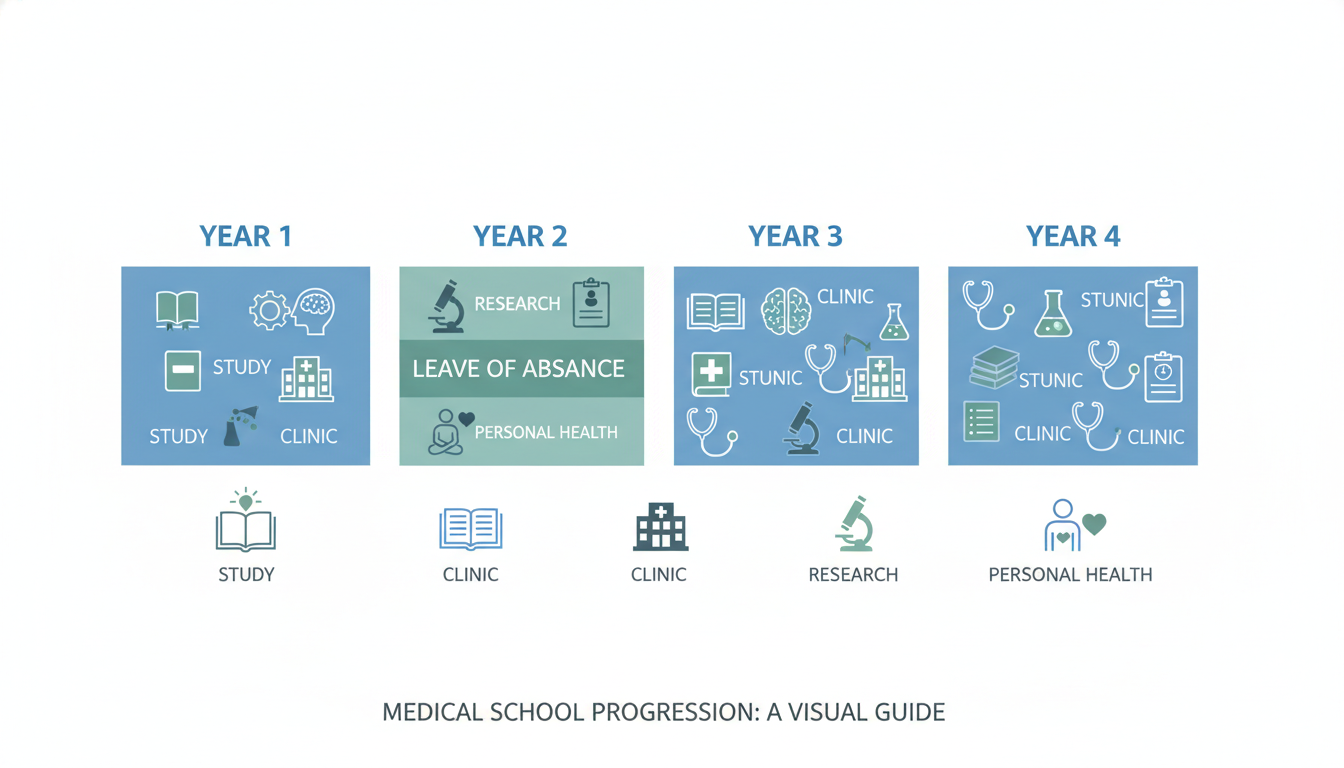
Taking a break from medical training is far more common than many applicants realize. Whether due to health issues, family responsibilities, personal growth, or academic challenges, a leave of absence (LOA) can be a necessary—and sometimes transformative—part of your journey to becoming a physician.
However, when it comes time to apply for residency, the idea of explaining LOA on ERAS, during interviews, or in supplemental statements can feel intimidating. Many applicants worry that a leave of absence in medical school will automatically hurt their chances or be viewed negatively.
In reality, program directors are less concerned with the fact that you took time off and more interested in:
- The context surrounding your leave
- What you did during that time
- How you grew from the experience
- How well you can communicate it professionally and honestly
This guide will walk you through exactly how to think about, prepare for, and articulate your leave of absence explanation—clearly and confidently.
1. What Counts as a Leave of Absence in Medical Training?
A leave of absence typically refers to any formally approved period when you are not actively enrolled in the standard curriculum or training. This can occur during:
- Undergraduate medical education (MD/DO)
- Postgraduate training (internship/residency/fellowship)
- Transitional periods (e.g., prelim year before advanced residency)
Common forms of leave include:
- Medical leave – Physical illness, surgery, chronic conditions, pregnancy complications, mental health treatment (e.g., depression, anxiety, burnout).
- Personal/family leave – Caregiving for a sick family member, family crisis, bereavement, relocation, parenting responsibilities.
- Academic remediation leave – Time off to remediate coursework or exams (e.g., Step 1/COMLEX failure, significant academic gaps).
- Research or dual-degree leave – Pursuing an MPH, MBA, PhD, or intensive research year.
- Administrative or disciplinary leave – Related to professionalism concerns, policy violations, or academic integrity issues.
Each type of leave is interpreted differently. For example:
- A research year or MPH is often seen as a positive, especially if aligned with your specialty goals.
- Medical or mental health LOA is generally neutral and increasingly accepted—especially when communicated maturely.
- Disciplinary or professionalism LOA raises the most concern and requires particularly careful, direct explanation.
How LOA Appears in Your Application
Your leave of absence may appear in:
- Your medical school transcript (sometimes with start/end dates or type of leave)
- Your MSPE/Dean’s Letter, which often explains gaps in training
- The ERAS application, especially if dates of education don’t align neatly
- Interview questions, when program directors ask about gaps, leaves, or “anything else we should know about your academic record”
The goal is not to hide your leave of absence—but to own the narrative and present it as part of your professional development.
2. Why You Took Time Off: Clarifying Your Own Story
Before you can explain your leave of absence to others, you need a solid, honest understanding of it yourself. Many applicants struggle here—they either minimize their challenges or over-disclose personal details.
Start by answering these questions for yourself:
- What was the main reason for my leave of absence?
- Health? Family? Academics? Personal growth? Burnout? Crisis?
- What made a leave necessary or appropriate at that time?
- Severity of symptoms, safety concerns, competing responsibilities, institutional requirements.
- What did I do during my time off?
- Treatment, recovery, caregiving, research, work, volunteering, introspection.
- How did I prepare to return?
- Follow-up care, academic planning, skills refreshers, stepwise reintegration.
- How am I functioning now compared to then?
- Stability, insight, coping strategies, support systems, work performance.
This reflection does two things:
- It helps you see your LOA as part of a growth arc, not a permanent stain.
- It allows you to distill your experience into a coherent narrative that residency programs can understand.
Example: Clarifying the Story
Vague internal story:
“I burned out and everything fell apart. I just left.”Clear, growth-oriented story:
“During my second year, I developed worsening depression and anxiety that interfered with my academic performance and functioning. In collaboration with my school, I took a structured medical leave, entered treatment, and focused on recovery. Over several months, I engaged in therapy, started appropriate medication management, and developed sustainable study and self-care habits. When I returned, I passed all remaining coursework and clinical rotations and have continued in regular follow-up care.”
Notice how the second version is:
- Specific but not graphic
- Focused on actions taken and recovery
- Framed around insight and responsibility
This mindset will guide how you explain your leave in writing and in person.
3. How Programs View a Leave of Absence
When evaluating applicants who took time off medical training, program directors usually focus on three questions:
- Is this applicant likely to complete residency successfully and on time?
- Has the underlying issue been addressed or stabilized?
- Does this person demonstrate maturity, insight, and professionalism in explaining their LOA?
A leave of absence medical school entry does not automatically disqualify you. What matters is the pattern and the current trajectory.
Factors That Reassure Program Directors
- Clear resolution or management of the original issue
- For example, ongoing treatment with good functioning, or completed family responsibilities with stable current support.
- Strong performance after returning
- Passing all subsequent courses and exams on first attempt
- Solid clinical evaluations and strong letters of recommendation
- Consistent story across documents
- Your personal statement, MSPE, and interview answers align.
- Professional tone
- No blaming, defensiveness, or evasiveness—just straightforward explanation and accountability.
Potential Red Flags (and How to Address Them)
Multiple LOAs or extended time to degree
- Mitigate by clearly explaining each period, showing improved stability, and highlighting recent sustained success.
LOA related to professionalism or misconduct
- Be honest but concise about the nature of the issue, explain what you learned, and show evidence of changed behavior and strong evaluations since then.
Unclear or evasive explanations
- Programs may assume the worst when details are opaque. You can protect your privacy and be specific:
- “For health reasons” is vague.
- “I took a medical leave to address a mental health condition that is now well-managed through ongoing care” is more reassuring, without oversharing.
- Programs may assume the worst when details are opaque. You can protect your privacy and be specific:
Ongoing instability
- If your challenges are very recent or still in flux, work closely with mentors to decide timing and how to present your situation authentically.
4. Writing an Effective Leave of Absence Explanation
You may address your leave of absence in several written components:
- ERAS application (“Education” or “Additional Information” sections)
- Personal statement
- Supplemental statement or “significant experiences” description
- Institutional statements (if your school offers one)
You do not need to write about your LOA everywhere. Often, choosing one primary place for a clear, concise explanation is best—then answering questions consistently during interviews.
Core Principles for Written Explanations
Be honest.
Do not mislabel the type of leave or invent alternate explanations. Inconsistencies can be damaging.Be concise.
Most explanations can be conveyed in 3–6 sentences.Protect your privacy.
You control the level of detail. You do not need to share diagnoses or deeply personal experiences to be credible.Focus on resolution and growth.
Emphasize what changed, what you learned, and how you’re now functioning.Align with your school’s description.
If your MSPE mentions your LOA, avoid conflicts in wording or emphasis.
A Simple 4-Sentence Framework
You can structure your explanation of LOA like this:
- Context: When and in what stage of training the LOA occurred.
- Cause (brief): General category—medical, family, academic, research, etc.
- Action: What you did during that time to address the situation.
- Outcome/Growth: How you returned to training and how you are functioning now.
Sample Phrasing for Different Types of LOA
Medical/Mental Health LOA
“I took a medical leave of absence from January to August of my second year of medical school to address a health condition that was significantly impacting my functioning. During this time, I worked closely with my healthcare providers, engaged in treatment, and developed sustainable strategies to support my wellbeing. I returned to school with my care plan in place and have since successfully completed all subsequent coursework and clinical rotations without further interruption. This experience deepened my empathy for patients navigating illness and reinforced the importance of seeking help early.”
Family/Personal LOA
“During my third year, I took a personal leave of absence to provide full-time care for an immediate family member experiencing a serious medical crisis. Over the course of nine months, I coordinated medical appointments, helped manage rehabilitation, and supported complex decision-making. Once my family member stabilized and alternative support was in place, I returned to clerkships and completed the remainder of my medical training on schedule. This period strengthened my sense of responsibility, resilience, and appreciation for the challenges families face within the healthcare system.”
Academic/Remediation LOA
“In my second year, I struggled with the volume and pace of coursework and ultimately required a leave of absence to remediate foundational content and re-take Step 1. Working with academic support services, I developed more effective study strategies, addressed test anxiety, and created a structured learning plan. I successfully passed Step 1 on my second attempt and completed subsequent clinical rotations with strong evaluations. This experience taught me how to identify problems early, seek help appropriately, and adapt my learning approach—skills I bring with me into residency.”
Research/Enrichment LOA
“Between my third and fourth years of medical school, I took a planned one-year leave of absence to complete an NIH-funded research fellowship in health services outcomes. During this year, I conducted a project on care transitions for older adults, resulting in two abstracts and one first-author manuscript. This experience strengthened my skills in critical appraisal, data interpretation, and scholarly communication, and confirmed my interest in contributing to academic medicine within [chosen specialty].”

5. Discussing Your Leave of Absence in Interviews
Program directors and faculty may ask about your leave of absence directly, or they may ask more open-ended questions:
- “Can you walk me through any gaps or deviations in your training timeline?”
- “Is there anything in your academic record you’d like to explain?”
- “I see you took time away from medical school. Tell me more about that.”
Your goal is to respond calmly, clearly, and confidently—without sounding rehearsed or defensive.
A Three-Part Verbal Answer Structure
- Brief Description of the Situation
- One or two sentences about when and why, at a high level.
- What You Did About It
- Focus on treatment, action steps, or productive use of time.
- What You Learned / How You Function Now
- Emphasize stability, insight, and how it shapes your approach to medicine.
Example Interview Responses
Mental Health LOA
“During my second year, I took a medical leave of absence to address a mental health condition that had begun to significantly affect my performance and wellbeing. I worked with my healthcare team, started appropriate treatment, and focused on building sustainable habits around sleep, exercise, and stress management. Since returning, I’ve completed all of my clinical rotations and exams without interruption, and I continue to engage in regular follow-up care. The experience really increased my empathy for patients with mental health challenges and taught me the value of proactively seeking support.”
Academic/Step Exam LOA
“In my pre-clinical years, I realized my study strategies weren’t effective for the volume and complexity of material, and I ultimately needed a leave of absence to remediate coursework and prepare to re-take Step 1. I worked closely with my school’s learning specialists, changed how I approach high-yield material, and addressed test anxiety with a structured plan. Since then, I’ve passed all subsequent exams on the first attempt and received strong clinical evaluations. This experience helped me develop resilience and a more deliberate approach to learning that I expect will serve me well in residency.”
Tips for Strong In-Person Explanations
Practice out loud.
Rehearse with a mentor, advisor, or friend until you can speak fluidly but not robotically.Stay matter-of-fact.
Avoid sounding apologetic or ashamed. Frame it as one important chapter in your training, not your entire identity.Set boundaries if needed.
If asked for details that feel too personal:
“I’d prefer not to go into specific medical details, but I’m happy to talk about how I addressed it and how I’m doing now.”Maintain consistency.
Your interview explanation should match what you’ve written elsewhere.Watch your nonverbals.
Calm tone, steady eye contact, and a composed posture convey confidence and credibility.
6. Strategic Considerations and Practical Steps
Beyond crafting your explanation, there are practical steps you can take to support a successful residency application after a leave of absence.
1. Work Closely with School Leadership
- Meet with your Dean of Student Affairs, academic advisor, or LOA coordinator.
- Review how your leave of absence will be described in your MSPE.
- Ensure your timeline on ERAS matches institutional records.
- Ask for feedback on your planned written explanation.
2. Leverage Strong Letters of Recommendation
Letters that directly or indirectly address your performance after your LOA can be very reassuring:
- Ask attendings who worked with you later in training, especially if they can mention your reliability, resilience, or growth.
- If you’re comfortable, you may allow trusted letter writers to reference your LOA in a positive, contextual way:
- E.g., “After returning from a medical leave, [Name] consistently demonstrated maturity, reliability, and strong clinical performance on our service.”
3. Highlight Post-LOA Achievements
In your CV, personal statement, and interviews, emphasize:
- Recent clinical performance
- Leadership roles, teaching, or quality improvement participation
- Research, presentations, or publications
- Any longitudinal commitments that demonstrate stability and follow-through
The more you can show a strong, sustained trajectory after your LOA, the less weight the leave itself will carry.
4. Be Thoughtful About Specialty Choice and Program List
While most specialties now regularly train residents who have taken a leave of absence, competitiveness varies.
- Highly competitive specialties may apply more scrutiny to any application irregularities.
- You may consider a balanced list of programs that includes places known to value holistic review and nontraditional paths.
- Talk with mentors in your chosen specialty who can give you honest feedback about how your LOA is likely to be viewed.
5. Take Care of Yourself During Application Season
Discussing your leave of absence repeatedly can resurface stress or self-doubt.
- Maintain your mental health and medical care.
- Use peer support or counseling resources if needed.
- Remember: sharing this part of your story is a professional task, not a confession.
Frequently Asked Questions (FAQ)
1. Will a leave of absence in medical school ruin my chances of matching?
No. Many residents and attendings had time off medical training at some point. What matters more than the LOA itself is:
- The reason and context for your leave
- Whether the underlying issue has been addressed or stabilized
- Your performance after returning (grades, clinical evaluations, exams)
- How clearly and professionally you explain your LOA
Applicants with leaves of absence successfully match every year, including into competitive specialties, especially when they demonstrate a strong upward trajectory.
2. Do I have to disclose my diagnosis when explaining my LOA?
No. You are not required to disclose specific medical or psychiatric diagnoses in your ERAS application or interviews. A general description is sufficient, such as:
- “For health reasons” or
- “To address a medical/mental health condition that is now well-managed”
Focus on how you addressed the issue and how you are functioning now, not on private clinical details.
3. Should I write about my LOA in my personal statement?
It depends. It may be helpful to address your LOA in your personal statement if:
- It was a major turning point that directly shaped your career goals or values.
- Your MSPE clearly references it, and you want to provide your own contextual framing.
- You can tie it meaningfully to your motivation for the specialty, without centering the entire essay on your LOA.
If your LOA is well-explained elsewhere (e.g., in a designated “additional information” section) and not central to your specialty narrative, you may choose to keep your personal statement focused on other aspects of your journey.
4. How long is too long for a leave of absence?
There is no single cutoff. Programs look at:
- The total length of time away
- The reason (e.g., a one-year research fellowship vs. multiple unsupervised years away)
- How you have used the intervening time
- Your recent clinical activity and readiness for residency
Longer leaves, especially those exceeding one year, require clearer explanations and stronger evidence of current readiness. If you’ve been away from clinical settings for several years, consider seeking updated clinical experiences or sub-internships to demonstrate current skills.
A leave of absence is one chapter in your training—not the whole story. When you approach explaining LOA with clarity, honesty, and a focus on growth, you give programs exactly what they need: confidence in your readiness to move forward and become a capable, resilient resident physician.


