

Myth vs Reality: Do You Need a ‘Big-Name’ Lab for a Productive Gap Year?
What actually happens when you spend a gap year in a no-name community hospital lab instead of a famous university research powerhouse—do residency programs quietly downgrade you for life?
Let me be blunt: the obsession with “big-name lab or bust” is one of the more persistent and lazy myths in the residency application world. It’s also an excellent way to paralyze yourself into doing nothing while you refresh your inbox for an email from “Harvard” that never comes.
You do not need a big-name lab to have a productive, residency-boosting gap year. You need output, ownership, and a story that makes sense. Brand is a multiplier, not a substitute.
Let’s dismantle the myth properly.
What Residency Programs Actually Care About (Not Your Lab’s Logo)
Residents love to tell each other that “programs only care if you did research at [insert elite institution].” That’s not what the data—or actual PDs—say.
When program directors talk about research in NRMP surveys and in real meetings, they’re usually looking at a few concrete things:
Do you have scholarly output?
Publications, abstracts, posters, QI projects, clinical projects. Not “I attended lab meetings for a year.”Can you show sustained engagement?
More than a 6-week summer fling. They want to see you can start something and push it across the finish line (or at least near it).Does someone credible say, “This person is the real deal”?
Strong letters. Clear examples of your initiative, independence, and resilience.Does your path make sense for your specialty, background, and career story?
Gap year + research + specialty interest should hang together in a coherent way.
Nowhere on that list: “Must be from a top-10 NIH-funded institution with a famous PI.” Is prestige helpful? Yes. Is it mandatory? No.
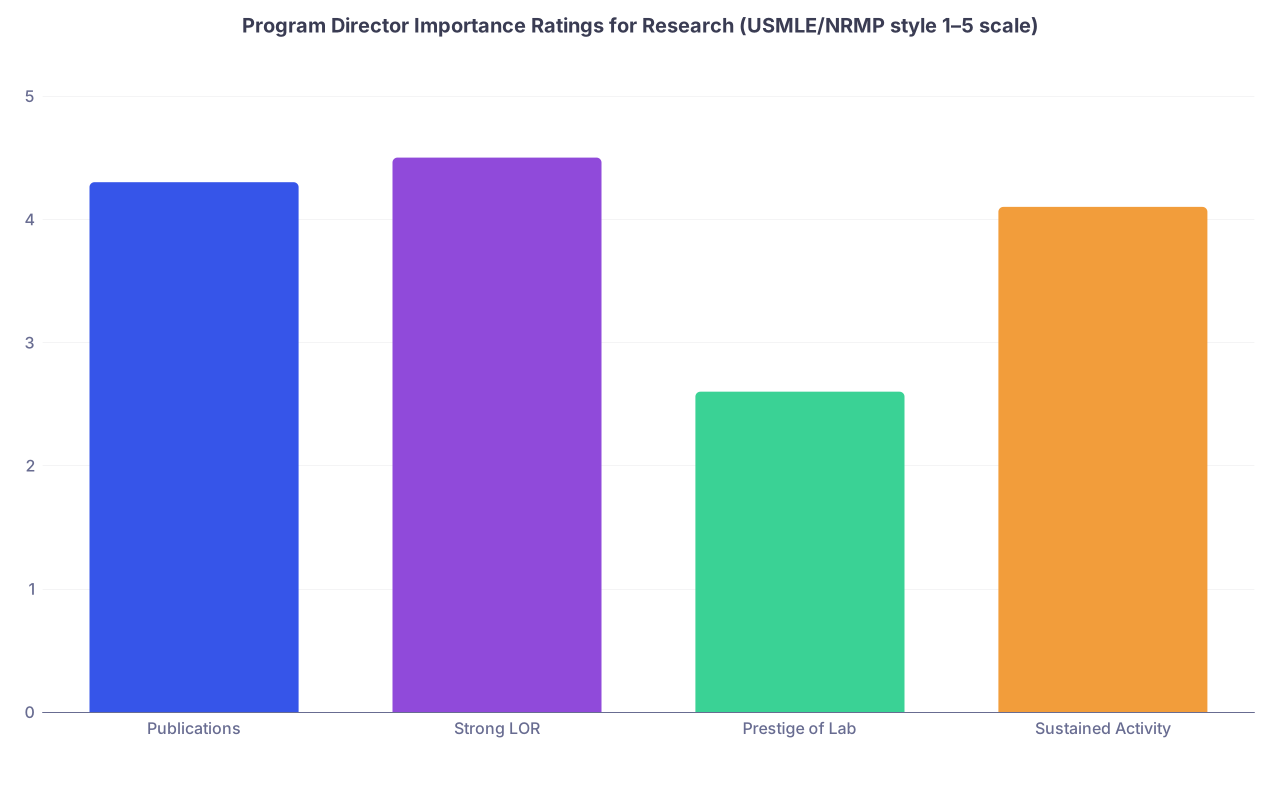
| Category | Value |
|---|---|
| Publications | 4.3 |
| Strong LOR | 4.5 |
| Prestige of Lab | 2.6 |
| Sustained Activity | 4.1 |
Prestige matters some, mostly as a signal. It’s not the main dish.
The Myth of the Magical Big-Name Lab
Here’s the fantasy I keep hearing:
“If I can just get into a top lab at [Harvard/UCSF/Stanford], everything else will work itself out—tons of papers, amazing letters, guaranteed interview invites.”
Reality is less glamorous.
I’ve watched plenty of students land high-profile research fellow roles and then:
- Spend a year doing chart review and data cleaning for projects where their name is one of 18 authors, in the middle.
- Get ghosted on manuscripts because the postdoc or fellow above them graduates, and the project dies halfway.
- End up with one poster, no first-author anything, and a lukewarm “they showed up” letter from a PI who barely knows them.
On the flip side, I’ve seen:
- A student at a small community program land first-author QI work that turned into a publication plus a regional podium talk.
- Someone at a VA hospital drive a simple, focused retrospective study that became two papers and three posters, with a PI who actually took the time to mentor them.
- A DO student at a mid-tier place run a multi-site chart review coordinated by email and Zoom, which looked very impressive on their CV because they actually owned it.
Big name ≠ big value. Often, big name = big bureaucracy + low ownership.
What Actually Makes a Gap Year “Productive”
Productive to a residency program means: your application is meaningfully stronger at the end of that year than it was at the start.
That usually comes from four things:
Concrete output
Not “I learned a lot about research methods.” I mean:- First- or second-author papers (even case reports or small retrospectives are fine).
- Abstracts and posters at specialty conferences.
- Quality improvement interventions that changed something measurable: readmissions, LOS, follow-up rates.
Clear ownership
Programs love to see:- “Designed the protocol, performed data collection, did primary analysis.”
- “Led weekly team meetings and coordinated with three sites.”
- “Wrote first draft of the manuscript.”
Even if your work is from a small hospital, those phrases carry serious weight.
Specific, detailed letters
A letter from a mid-tier hospital PI that says:- “She independently identified a research question, wrote the IRB, and drove the project to acceptance at [specialty]’s main annual meeting…”
is far more powerful than:
- “He worked in my lab at [famous institution]. He is bright and hardworking. I recommend him highly.”
The first letter tells a story. The second is wallpaper.
A coherent narrative
When you explain your gap year in your personal statement or interviews, you want something like:- “I took this gap year to strengthen my research foundation in cardiology and explore outcomes work. Over the year I led X, contributed to Y, and confirmed that I want a career where I can pair clinical work with outcomes research.”
Not:
- “I didn’t match, so I found…a thing…in a lab somewhere. I’m not really sure what we studied.”
Comparing Big-Name vs “Regular” Labs: The Non-Sugarcoated Version
Let’s strip away the marketing and compare what you actually get.
| Factor | Big-Name Lab | Community/Non-Flagship Lab |
|---|---|---|
| Prestige signal | High | Low–moderate |
| Access to huge datasets | Often | Variable |
| Number of middle-author papers | Often higher | Lower but possible |
| Chance for 1st-author | Sometimes (harder) | Often easier |
| PI time/attention | Limited | Often more |
| Bureaucracy | High | Lower |
Notice what’s missing? There’s no column that says: “Automatically match into derm if at Harvard.” Because that column doesn’t exist.

Where Big-Name Labs Actually Help (And Where They Don’t)
I’m not going to pretend prestige is meaningless. That’s just a different flavor of myth.
Here’s where big-name labs do help:
Brand recognition in competitive specialties
For derm, plastics, ortho, ENT, rad onc—some committees will perk up when they see “research fellow at MGH Dermatology.” It lowers their uncertainty about your exposure to high-level work.Networking and pipeline effect
Big departments feed their fellows into their own residencies and their friends’ programs. They can email PDs directly. “We’ve had good experiences with people from Dr. X’s lab” is real.Access to high-impact journals and big trials
You’re more likely to get onto NEJM/JAMA-level stuff if you’re at one of the hubs running those trials, even if it’s as paper #6.
Where big-name labs don’t fix your problems:
- They don’t magically turn a weak Step 2 score into a non-issue.
- They don’t guarantee strong letters if you’re passive and invisible.
- They don’t guarantee first-author work; in some labs, the ladder above you is crowded.
The Hidden Advantages of “Non-Prestige” Labs
Let’s flip the question: what can a smaller or “no-name” lab give you that a megacenter might not?
Room to lead
Fewer fellows, fewer postdocs = more space for you to design and drive your own project.Direct PI relationship
In a smaller shop, you’re more likely to have the PI know you by name, remember cases you worked on, and write a letter that sounds like a human who actually met you.Less competition for credit
You might get first author on a modest but complete project instead of 5th author on a monster project that took 3 years and 14 people.
Concrete example I’ve seen more than once:
- Student A at big-name university: 1 year, 1 poster, 1 middle-author paper in review, generic letter.
- Student B at mid-tier community academic center: 1 year, 2 first-author case reports, 1 first-author retrospective paper, podium talk at a regional meeting, glowing letter.
Guess which CV sometimes “reads” better to programs who actually look at details instead of logos.
How Programs Actually Evaluate Your Research Year
Let’s talk about how this plays out in residency selection meetings.
On paper review, a PD or faculty member sees:
- Your total number of pubs/abstracts/posters
- A rough glance: “Any first-authors? Anything in the specialty? Any recognizable journals?”
Then they look for:
- LOR authors they recognize (not just institutions—names)
- Trajectory: Did your productivity increase with the gap year or is it the same story as MS2?
On interview day, they’ll ask things like:
- “Tell me about a project you led.”
- “What was the most challenging part of your research year?”
- “If I called your PI right now, what would they say about you as a collaborator?”
If your answers are concrete—IRB hurdles you handled, messy data you cleaned up, revisions you helped respond to—you look strong, regardless of whether the building outside your lab said “Big Ivy Medical Center” or “County Medical Center Research Office.”
If You Don’t Match and You’re Planning a Gap Year
This is where the big-name myth becomes especially toxic. The idea that “if I don’t get a famous lab, the year is wasted” pushes people into doing…nothing for 6–9 months while they hold out for some unicorn position.
That’s how you end up reapplying with a nearly identical CV plus one half-finished project.
Here’s the honest, better play:
- If you can get a high-yield position at a big-name program quickly, and the mentor is actually invested in you, take it.
- If that’s not materializing, stop waiting. A smaller lab where you can start a project now is almost always better than the fantasy of a perfect big-name opportunity that never comes.
And yes, for some specialties (derm, plastics), brand helps more. But the people who match those spots from non-elite places almost always share one trait: clear, tangible, explainable work product.

| Step | Description |
|---|---|
| Step 1 | Need Gap Year Research |
| Step 2 | Take It and Secure Projects Early |
| Step 3 | Join and Start 1-2 Ownable Projects |
| Step 4 | Cold Email Targeted PIs with Specific Proposals |
| Step 5 | Choose First Realistic Option With Clear Role |
| Step 6 | Big-Name Offer with Strong Mentor? |
| Step 7 | Local/Smaller Lab with Project Ownership? |
How to Make a “Non-Big-Name” Year Look Very Strong
If you’re in a smaller setting, you have to be more deliberate. But you can absolutely come out ahead.
Focus on:
- Depth, not just scatter: Better to have 1–2 first-author pieces you know intimately than 7 vague “I helped collect data” things.
- Visibility: Present at local/regional conferences, not just big national ones. Chairs and PDs actually show up to those.
- Letters early: Treat your mentor like a future letter writer from day one—talk about goals, ask for feedback, show progress.
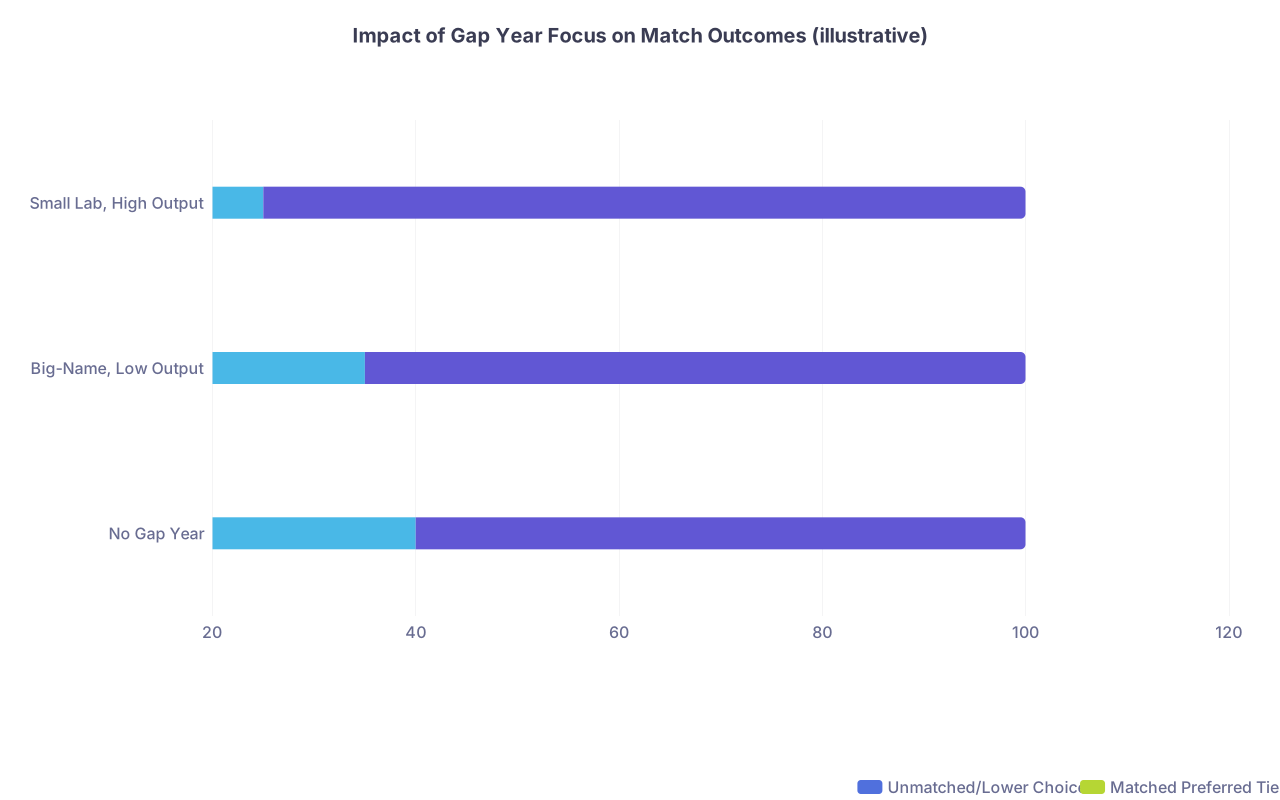
| Category | Unmatched/Lower Choice | Matched Preferred Tier |
|---|---|---|
| No Gap Year | 40 | 60 |
| Big-Name, Low Output | 35 | 65 |
| Small Lab, High Output | 25 | 75 |
The table above isn’t from a specific paper—it’s the pattern people in advising and PD roles see over and over: high output + clear role beats prestige alone.

The One Thing That Actually Does Not Work
This is the scenario that really does backfire:
- You take a research year (big-name or tiny place).
- At the end, you’ve got:
- No publications or submissions.
- Maybe one poster where you’re author #7.
- A bland letter that says you were “dependable and enthusiastic.”
- And you can’t clearly explain what your main project was or what you personally did.
That’s when committees ask: “What exactly did this person do for a year?”
If that’s the outcome, yes—your gap year looks questionable. But notice: the problem isn’t the lab name. It’s the lack of execution.
Quick Reality Check: What You Should Actually Optimize
You should optimize for:
- A mentor who cares enough to meet with you and give you ownership.
- Projects with a realistic path to concrete outputs within 6–12 months.
- The chance to tell a clean story in your application about why you took that year and what you did with it.
If that’s at a big-name lab, great. If it’s not, you are not doomed. You’re only doomed if you waste the year either doing nothing or playing a tiny, forgettable role.

FAQs
1. Will a big-name research lab significantly improve my chances in very competitive specialties?
It can help, but only if you pair it with actual productivity and strong letters. For derm, plastics, ENT, ortho, rad onc: brand does carry more weight, especially in programs that have internal research fellow pipelines. But the people who get the real bump are the ones with first-author work, presentations at that specialty’s major meetings, and letters from well-known faculty who actually know them. Being anonymous at a famed institution is not a golden ticket.
2. Is a first-author paper from a small hospital better than a middle-author paper from a major academic center?
For many programs, yes. First-author status signals ownership: you can conceive, drive, and write a project. If the journal is extremely obscure and the big-name paper is in a major journal, committees will notice that too. But a solid, explainable first-author project from a smaller setting is often more compelling than forgettable middle-authorship from a giant machine where you were barely visible.
3. How many publications do I really need from a gap year?
There is no magic number, but patterns matter. A realistic, strong outcome from a single gap year looks like: 1–2 first-author pieces (case reports, retrospective studies, QI) plus a couple of abstracts/posters, ideally in your intended specialty. Some will do more; that’s fine. But if you come out with zero submissions and only vague future promises, the year is going to be hard to justify no matter where you did it.
4. How should I explain a non-prestigious gap year in my personal statement or interviews?
Own it directly and lean into substance. For example: “I spent a dedicated research year at a community-based program where I led a quality improvement project to reduce 30-day readmissions for heart failure. I wrote the protocol, coordinated the care team, and presented our results at the state cardiology meeting. That experience convinced me I want to train in a program where I can combine hands-on clinical care with outcomes research.” Concrete actions, specific outcomes, and a clear link to your specialty matter far more than the institution’s brand.
Key points:
- A “big-name” lab is optional; measurable output, ownership, and strong letters are not.
- A smaller or non-prestigious lab can be a better gap year if it gives you real responsibility and tangible results.


