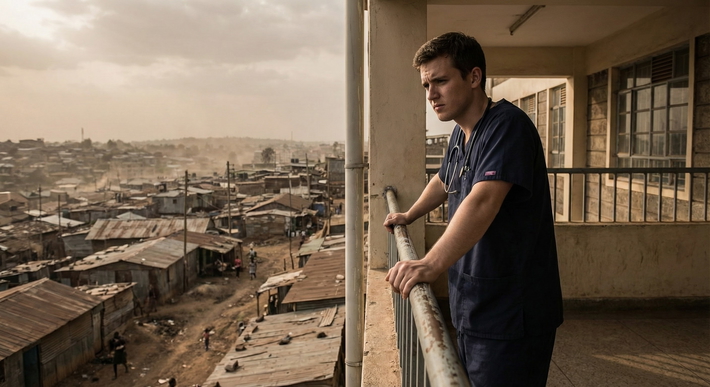
If you think safety training slows you down, the data suggests it's doing the opposite, preventing the costly events that stop missions cold.
I've watched too many global health teams treat pre-deployment safety training as a bureaucratic hurdle. You get the eyerolls. The "I've done this a hundred times" attitude. Then someone gets a needlestick in a high-prevalence setting, the whole team panics, post-exposure prophylaxis isn't where it's supposed to be, and the mission grinds to a halt for three days while everyone sorts out the fallout.
Here's what "safety training" actually covers in global health missions: clinical infection prevention, PPE competency, patient handling, violence and trauma risk, heat and cold injury, water and food safety, medication safety, and incident reporting and response. It's not a slide deck. It's operational readiness.
And adverse events on missions are not rare. They're predictable. Preventable. And training measurably improves adherence to the behaviors that prevent them.
Let's be clear about scope: this targets field missions, NGO deployments, short-term volunteer programs, outbreak response support, mobile clinics, places where training is frequently treated as optional or compressed into a 15-minute hallway briefing.

Myth #1: "We're Experienced, Safety Training Is Redundant"
This is the most dangerous myth in global health. Experience alone doesn't predict safe practice. In fact, experience without refreshers breeds something far worse than ignorance: complacency and the normalization of deviance.
Normalization of deviance is well-documented in high-risk environments from aviation to surgery to outbreak response. It's what happens when you skip a step, nothing bad happens, so you skip it again. Then it becomes habit. Then the habit becomes "the way we do things." Then someone gets hurt and everyone says, "We've always done it this way."
I've seen experienced clinicians who can't don and doff PPE correctly under time pressure. They know the theory. They've read the guidelines. But knowing and doing are different skills, and doing under stress with sweat running into your eyes and a line of patients outside is a competency that requires supervised practice.
The evidence is clear: training increases correct knowledge and, more importantly, behavioral adherence. Hand hygiene compliance, correct doffing sequence, timely exposure reporting. These are behaviors, not facts. Behaviors need rehearsal.
Here's the mechanism: missions have context-specific hazards. Local pathogens. Facility workflows that don't match your home institution. Water sources that aren't potable. Security realities that differ from what your embassy advisory suggested last month. Waste disposal systems that range from "incinerator on site" to "open pit behind the clinic." Generic prior knowledge doesn't map to these variables.
The practical takeaway: training isn't about repeating basic medicine. Nobody needs to be told to wash their hands. It's about operationalizing safety under real-world constraints, time pressure, supply variability, language barriers, cultural differences in how patients and staff interact with clinical spaces.

Myth #2: "Safety Training Slows Missions, and Emergencies Don't Wait"
Wrong framing. Well-designed safety training reduces downtime caused by incidents. Exposure events. Staffing shortages from illness or injury. Medication errors requiring retrieval, mitigation, and documentation. Those are the things that actually slow missions.
Let's talk time-cost reality. You don't need an eight-hour certification course before every deployment. Micro-sessions, 30 to 60 minutes, paired with job aids and quick-reference checklists capture most of the behavioral benefit. Longer doesn't automatically mean safer. What matters is competency verification, not hours logged.
Think through the incident-and-correction lens. It's not just injuries that cost time. Investigations take time. Reporting takes time. Decontamination takes time. Replacing a sick or injured team member can take days or weeks, especially if you're in a remote location with visa and credentialing barriers. A 45-minute pre-brief that prevents one needlestick has saved the mission dozens of hours.
Training is speed. Pre-briefs and role-based drills, PPE workflow runs, sharps handling practice, escalation pathway walkthroughs, are operational accelerators. When the emergency hits, the team that's drilled together moves faster and communicates cleaner than the team improvising on the fly.
Myth #3: "Risk Is the Same Everywhere, PPE and Protocols Don't Need Local Adaptation"
This myth gets people hurt. Pathogen epidemiology, transmission routes, facility infrastructure, and waste disposal practices vary enormously between sites. A protocol that works in a Kenyan district hospital may fail in a Haitian mobile clinic. "One protocol fits all" is a fiction that falls apart on contact with reality.
Training that includes local workflow integration, where PPE is stored, who supervises doffing, how waste is actually handled at this specific site, produces measurably better adherence than generic guidance. The data shows it. When people know where the sharps container is and who to call when something goes wrong, they follow the protocol. When they're improvising, they don't.
Here's a misconception that needs killing: correct PPE donning and doffing is not intuitive. It's a skill. It requires supervised practice with feedback. I've watched teams who "knew the steps" contaminate themselves because they didn't practice in the actual gear they'd be wearing, in the actual space they'd be using, with the actual buddy they'd rely on.
And infectious disease is only part of the picture. Violence. Road safety. Heat stress. Waterborne and foodborne illness. These are under-taught compared with infection control, and they cause significant morbidity on missions. A team that's drilled on Ebola PPE but hasn't discussed vehicle safety protocols or heat illness recognition is unprepared.
Myth #4: "Only Clinical Staff Need Safety Training, Support Roles Are Low Risk"
Dead wrong. Every mission role faces hazards. Drivers navigate dangerous roads and sometimes carry infectious materials. Translators are in the room during aerosol-generating procedures. Logistics staff handle chemicals and unpack shipments that may contain damaged sharps. Cleaners encounter blood and body fluids directly. Medication handlers manage cold chain and dosing. Data staff walk through clinical areas to collect records.
Training should be role-based, not profession-based. The goal is matching risk to tasks. A driver doesn't need the same PPE doffing drill as a nurse, but they need vehicle safety protocols, what to do at a checkpoint, and how to respond if they're transporting a sick patient. A translator needs respiratory protection education and knowledge of where to stand during high-risk procedures.
Here's what operationalizing responsibility looks like: define who can stop work. Make escalation paths explicit. And, critically, make incident reporting protective rather than punitive. If reporting a near-miss gets someone blamed, they'll stop reporting. Then you're flying blind.
Documentation matters. Checklists, competency sign-offs, refresher schedules. These aren't bureaucratic overhead. They're the backbone of a real safety culture. No sign-off, no deploy.

What "Good" Safety Training Looks Like (So It Actually Works)
Let's get concrete. Good safety training includes: pre-brief risk assessment, infection prevention, PPE competency, exposure management, medication safety, sharps handling, waste disposal, emergency response, and security and evacuation procedures. Not all of it every time, scale to the mission risk profile, but the framework is non-negotiable.
Competency over attendance. Sitting through a briefing means nothing. Supervised demonstrations, checklists, scenario drills, and post-training evaluations mean something. If you can't show me you can doff correctly while someone watches, you haven't been trained. You've been briefed.
Refreshers and logistics: schedule touchpoints. Not just "before deployment." Mid-mission refreshers when fatigue sets in and shortcuts creep in. And make sure supplies match the training. If you trained on a specific PPE model, have that model available. If you trained on alcohol-based hand rub availability, make sure it's actually stocked. Nothing erodes training credibility faster than teaching a protocol the supply chain can't support.
Measure outcomes. Track near-misses, exposure events, adherence audits, and incident reporting turnaround. Use the data. If hand hygiene compliance drops from 75% to 50% in week two, that's a signal. If exposure reporting is consistently delayed, the pathway is broken. Fix it.
Closing Summary: The Myth Costs More Than the Training
Treating safety training as optional increases harm, disrupts missions, and transfers risk to the most vulnerable people, the patients and communities you're there to serve. Training works when it's role-based, competency-verified, locally adapted, and linked to real escalation pathways and supplies. Mission leaders should require a safety competency standard before deployment. Period. Regardless of seniority. Regardless of urgency. The myth costs more than the training ever will.
Key Takeaways:
- Safety training isn't a bureaucratic checkbox, it's a proven behavior-and-workflow intervention that prevents mission-stopping incidents.
- Experience doesn't substitute for local, competency-based safety practice; generic guidance without drills and job aids is how preventable harm happens.