
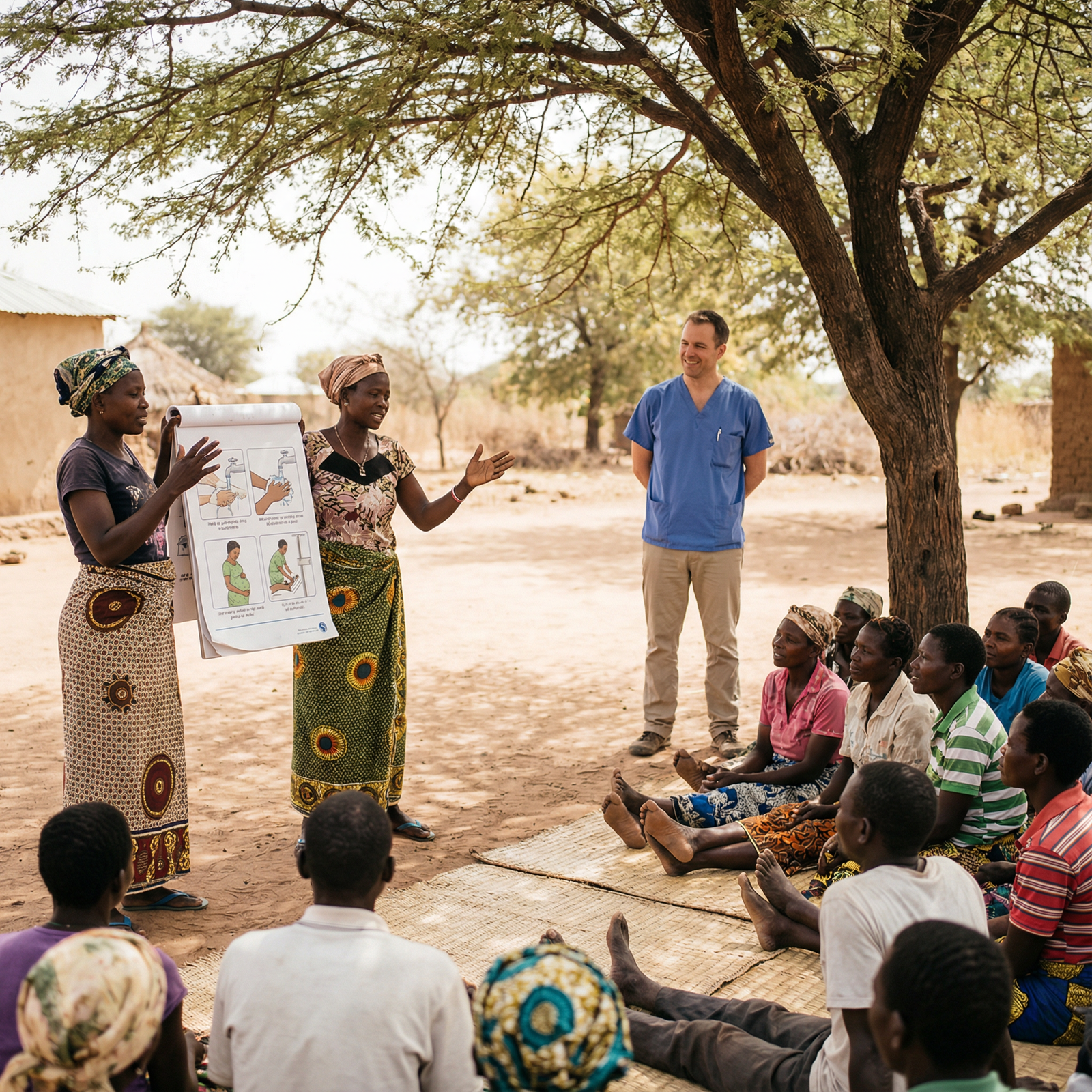
The assumption that you must move abroad for years to “really” do global health is wrong.
You can build a serious, ethical, and respected global health career while being based primarily in your home country. But you cannot do it casually, and you definitely cannot do it ethically by trying to run projects overseas from your laptop with no real partnerships.
Here’s the real answer and the tradeoffs.
The Short Answer: Yes, But Only If You’re Strategic
If what you mean is: “Can I contribute meaningfully to global health, be recognized for it, and advance my career without living outside my home country for years?”
Yes.
If what you mean is: “Can I do global health with zero time abroad, no direct relationships, and no cultural immersion?”
Not really. That turns into armchair consulting very fast.
You’re aiming for a middle path:
- Home-base in your country (US/UK/Canada/etc.)
- Periodic but purposeful time abroad (days to a few weeks)
- Deep, long-term partnerships with people who do live there
- Work that actually aligns with what local partners want, not what looks good on your CV
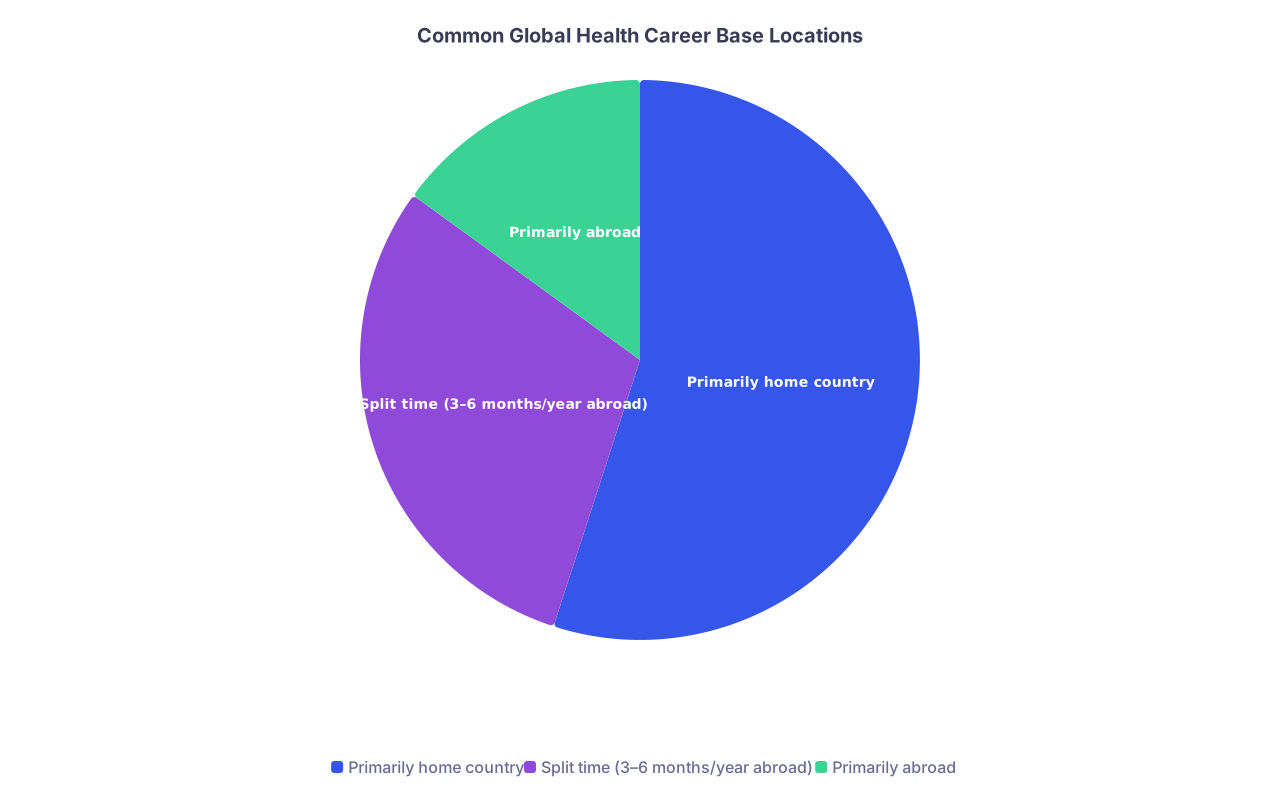
| Category | Value |
|---|---|
| Primarily home country | 55 |
| Split time (3–6 months/year abroad) | 30 |
| Primarily abroad | 15 |
What “Global Health” Looks Like Without Long-Term Relocation
Global health is not one job. It’s a cluster of roles. Many of them can be done while living at home.
Here are the main buckets that work well without permanent relocation:
Academic global health
- You’re faculty or trainee at a home institution.
- You collaborate with partners abroad on:
- Implementation research
- Clinical trials
- Health systems projects
- You travel 1–4 times per year for:
- Relationship-building
- Co-design and review of projects
- Training or workshops
- The day-to-day:
- Data analysis
- Grant writing
- Manuscripts
- Online meetings
- Mentoring trainees
Telehealth and remote clinical support
- Subspecialty consults (oncology, cardiology, radiology, pathology) for low-resource sites.
- Building clinical guidelines and protocols with partner institutions.
- Teaching via virtual case conferences, ECHO-style programs, or short courses.
Policy, advocacy, and health systems
- Working with:
- NGOs
- Multilateral agencies (WHO, UNICEF, World Bank, regional bodies)
- Ministries of Health (often through consultancies)
- Home-based with periodic missions (5–15 days) to:
- Conduct situational analyses
- Facilitate workshops
- Co-create national strategies
- Working with:
Data science, informatics, and implementation support
- You’re not “there,” but your work is:
- Building EMR tools
- Designing dashboards
- Supporting surveillance systems
- Running impact evaluations
- You rely heavily on local teams to define requirements, test tools, and interpret outputs.
- You’re not “there,” but your work is:
Education and capacity-building
- Co-running:
- Distance-learning master’s programs
- Online certificate courses
- Regional training networks
- Short annual visits to host institutions to:
- Co-teach
- Review programs
- Strengthen partnerships
- Co-running:
None of this requires you to uproot your life for years. But it does require you to treat global health as a serious, long-term commitment, not a side hobby.
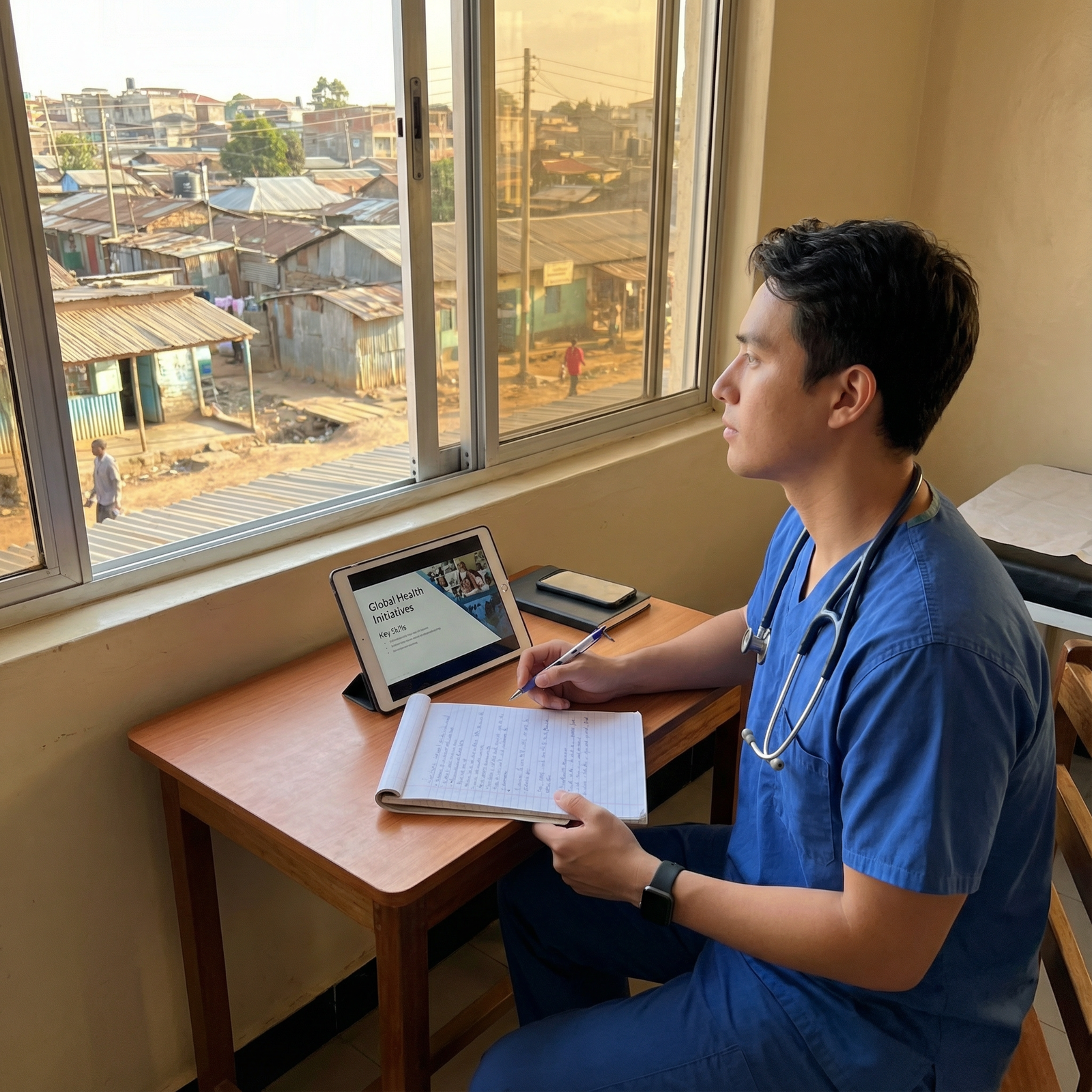
Ethical Reality Check: How To Avoid “Parachute Global Health”
Here’s where people go wrong: they try to do global health “remotely” in ways that are extractive, superficial, or just plain disrespectful.
You can work mainly from home and still be ethical if you:
Anchor everything in long-term partnerships
- Not one-off electives.
- Not rotating through different countries every year.
- Think: the same institution or region for 5–10+ years.
- You should be able to name actual people you call when something changes.
Let local partners lead
- You don’t show up with a pre-baked project and hunt for a site to host it.
- They define:
- Priorities
- Research questions
- Implementation strategies
- You bring:
- Technical skills
- Access to funding
- Mentorship
- Visibility in your own academic / policy networks
Share credit and control
- Local partners should be:
- First or senior authors on many papers
- PIs or co-PIs on grants
- Publicly visible leaders of the work
- If all the first-author papers and big grants sit with you at the home institution, you’re doing it wrong.
- Local partners should be:
Invest time in understanding context
- Even without living there long-term, you must:
- Spend enough in-country time early on to understand systems, politics, history.
- Listen far more than you talk.
- Accept that your “great idea” might be irrelevant locally.
- Even without living there long-term, you must:
Be honest about your motives
- Are you doing this mainly for:
- CV lines?
- Feel-good voluntourism?
- Or:
- Shared agenda
- Long-term health system strengthening
- Genuine co-learning
- Are you doing this mainly for:
If you want a phrase to keep taped to your screen:
“Global health is local leadership plus long-term relationships, not flights plus publications.”

| Step | Description |
|---|---|
| Step 1 | Interest in global health |
| Step 2 | Identify potential partners |
| Step 3 | Listen to local priorities |
| Step 4 | Co-design project |
| Step 5 | Agree on roles and credit |
| Step 6 | Implement with local leadership |
| Step 7 | Share results with community |
| Step 8 | Refine and continue long term |
| Step 9 | Shared agenda? |
How Much Time Abroad Do You Actually Need?
You do not need 5+ years abroad. But you also cannot do this well with zero on-the-ground time.
A realistic pattern for someone based at home who still builds real credibility:
- Early training (med school / residency / MPH):
- 4–12 weeks cumulative in one or two sites.
- Goal: exposure, humility, and relationship-building.
- Early career (fellowship / junior faculty / early job):
- 2–8 weeks per year in-country.
- Often in 1–3 trips, focused on:
- Stakeholder meetings
- Training
- Project setup or troubleshooting
- Mid-career and beyond:
- Your travel can become more focused and efficient, sometimes less frequent.
- The relationships and local teams carry more of the day-to-day work.
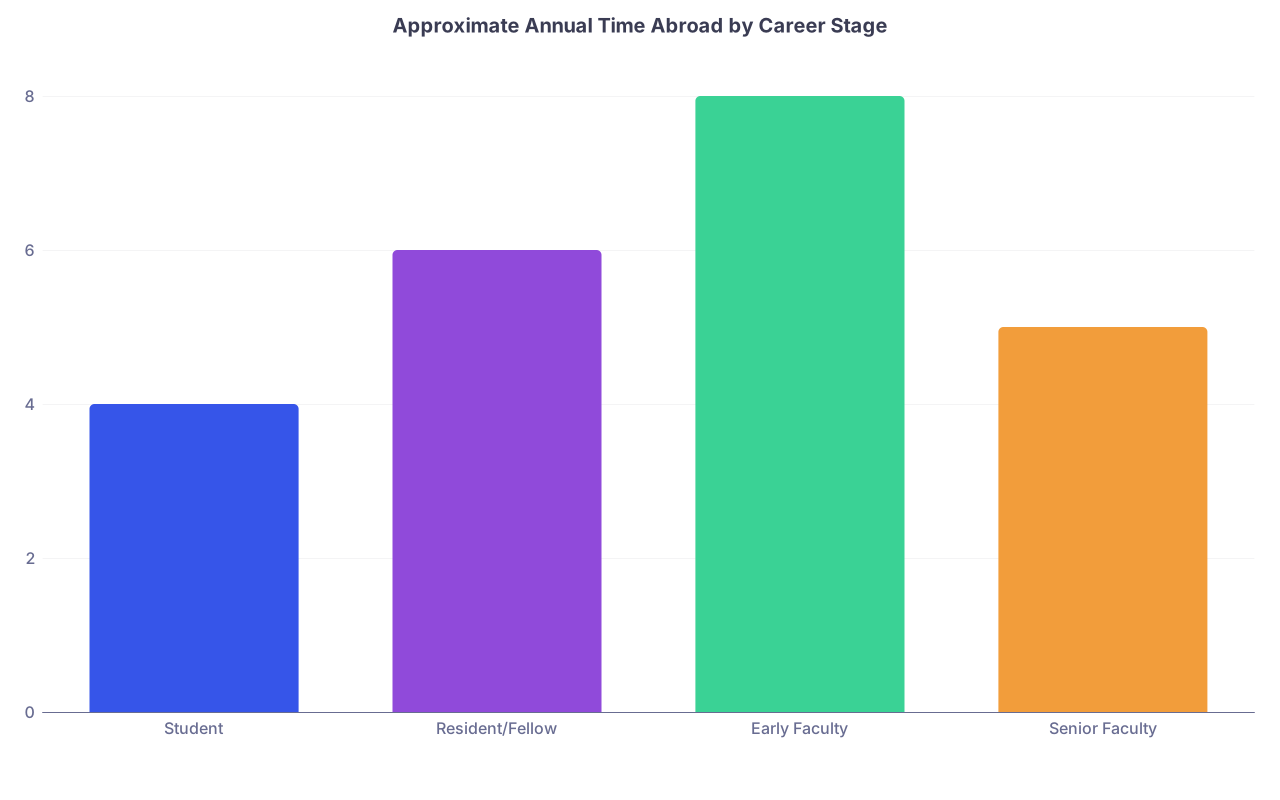
| Category | Value |
|---|---|
| Student | 4 |
| Resident/Fellow | 6 |
| Early Faculty | 8 |
| Senior Faculty | 5 |
The exact numbers don’t matter. The point: some presence. Regular re-engagement. Depth over frequency.
Choosing Roles That Fit a Home-Based Global Health Career
You can absolutely tailor your path. Some roles mesh better with you being based primarily at home.
| Role Type | Long-Term Abroad Needed? | Typical Travel Pattern |
|---|---|---|
| Academic implementation research | No | 2–4 trips/year, 1–2 weeks each |
| Clinical telehealth/consults | No | 0–1 trip/year |
| WHO/NGO technical advisor | Sometimes | 3–6 missions/year |
| Field-based program management | Often | Majority of year abroad |
| Policy/advocacy from home country | No | Occasional short visits |
If you know you never want to live abroad long-term, steer away from:
- Roles where you’re the in-country program manager.
- Jobs that expect 6–9 months per year in the field.
- Positions that explicitly require relocation.
Lean toward:
- Academic centers with established global health partnerships.
- Telehealth-heavy specialties (radiology, pathology, oncology, cardiology).
- Policy, health systems, and evaluation roles.
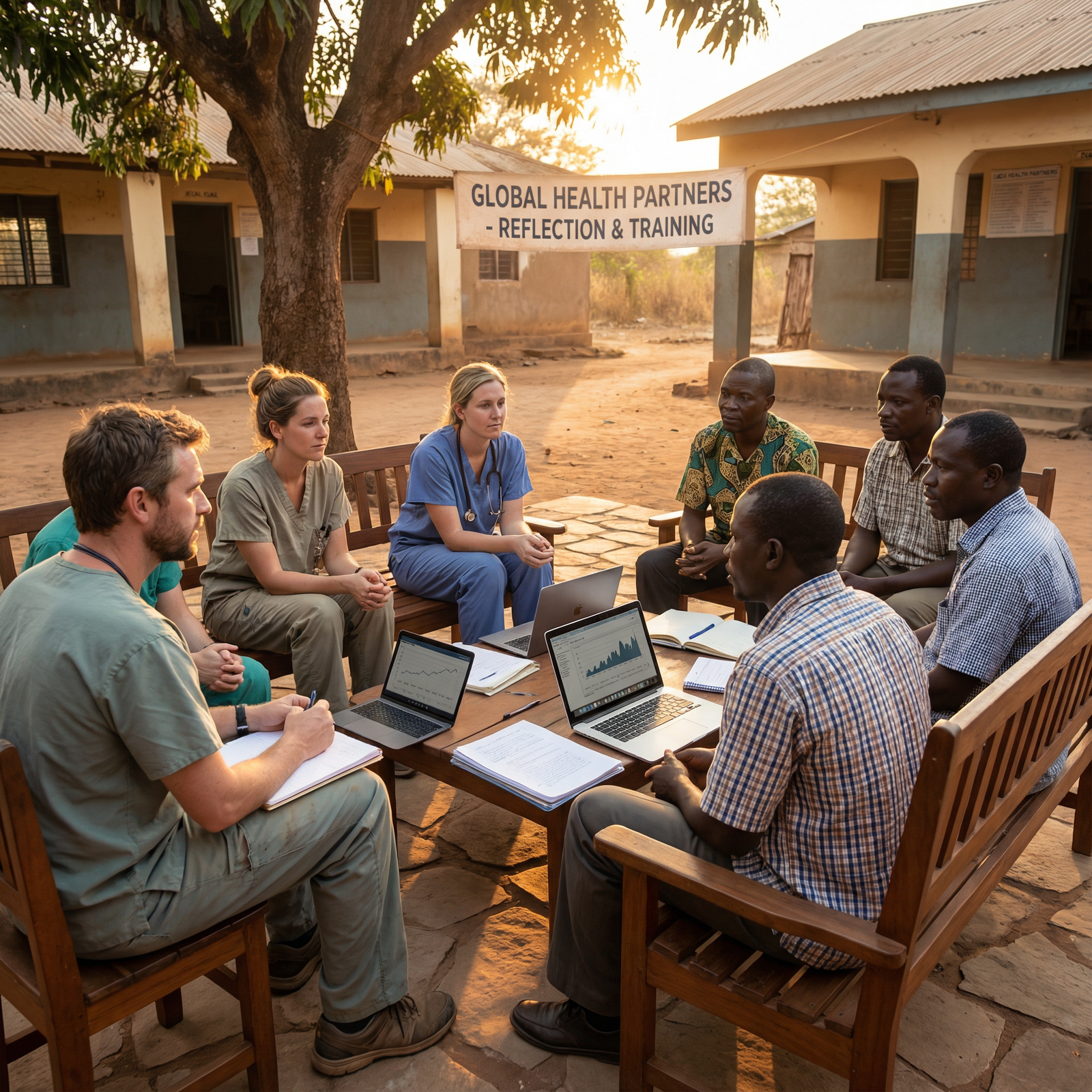
Training Path: What To Do At Each Stage
Let’s assume you’re in medicine or a health-related field. Here’s a practical playbook.
As a student
- Take at least one structured global health elective with:
- Clear supervision
- Reciprocal benefit for the host site
- Avoid:
- Short, self-arranged “mission trips” with no continuity.
- Start learning:
- Global health ethics
- Health systems
- History of colonialism in medicine and aid
As a resident / fellow
- Choose programs that have:
- Longstanding partnerships (10+ years is a good sign)
- Protected time and funding for global health work
- Aim for:
- 4–8 weeks per year at the same site or region
- Start building:
- A small, realistic project owned by local partners that you support.
As an early attending / professional
- Decide your “lane”:
- Primarily research? Primarily clinical telehealth? Policy? Education?
- Get more formal training if you want depth:
- MPH, MSc in global health, or equivalent.
- Negotiate protected time:
- 10–30% FTE for global health depending on your institution.
- Apply for:
- Early career grants with explicit support for partner institutions.
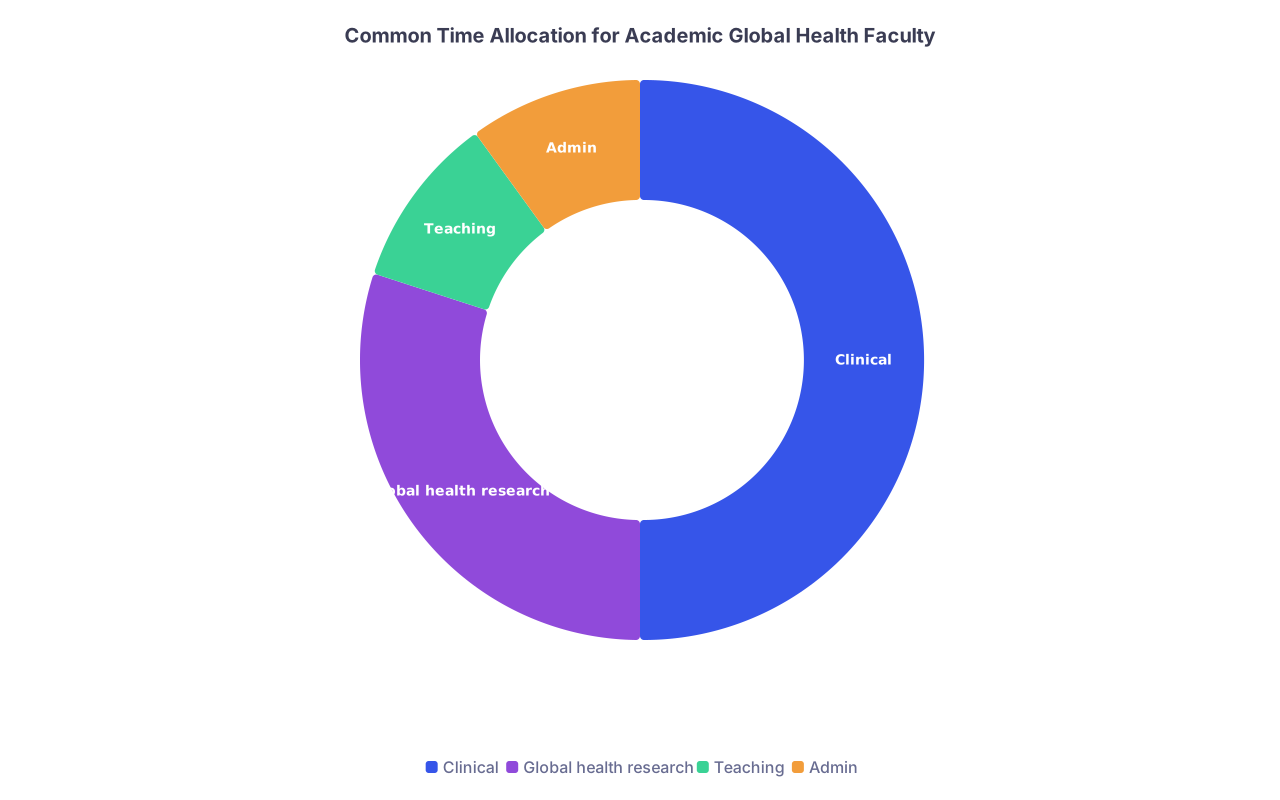
| Category | Value |
|---|---|
| Clinical | 50 |
| Global health research | 30 |
| Teaching | 10 |
| Admin | 10 |
Big Ethical Questions You Need To Wrestle With
If you’re going to stay based at home but work globally, there are a few uncomfortable questions you should actually face head-on:
Power and money
- You will often sit closer to funding, journals, and prestige.
- How will you intentionally hand power back?
- Are you okay when “your” big project ends up with someone else as the visible leader?
Whose career is this advancing?
- If every project magically aligns with your CV needs, and local colleagues are just “data collectors,” that’s not global health. That’s extraction.
What happens when you stop traveling there?
- If everything collapses when you’re not on the ground, you were the project. Not the partner.
- The goal is systems and capacity that outlive you, not dependence on you.
Are you willing to be uncomfortable?
- Hearing “no, that is not our priority here.”
- Being told your project idea is misaligned or harmful.
- Accepting that local context overrides your theoretical model.
If your ego can’t tolerate that, long-term relocation won’t fix it either.
How To Know If You’re Doing This Right
Quick self-audit. If most of these are yes, you’re on a good track:
- You can name specific colleagues abroad you’ve worked with for several years.
- They contact you with ideas, not just respond to your ideas.
- At least some projects were conceived by them, not you.
- Local partners are on grant budgets as equal or lead partners.
- When you speak about your work, you emphasize “we” and name their institutions, not “my project in X country.”
- If you stopped going tomorrow, useful things would still be happening on the ground.
If none of that feels true, you don’t need to move abroad. You need to rewire how you’re engaging.
FAQs
1. Do I need at least one year living abroad to be taken seriously in global health?
No. It helps, but it’s not mandatory. Serious people will look at the depth and continuity of your partnerships and the ethics of your work, not just how long you had an apartment in Nairobi. A few well-structured, repeated visits to the same site plus long-term collaboration can matter more than one random year abroad with no follow-up.
2. Can I do global health if I have family or personal reasons that make long-term relocation impossible?
Yes. Many people in global health have kids in school, partners with immovable jobs, or visa constraints. You may end up in roles that lean more on research, telehealth, policy, or data rather than front-line field management. That’s fine. Just be transparent with partners about your availability and show up consistently in the ways you can.
3. Is it unethical to lead global health projects from a high-income country?
It’s unethical to control global health projects from a distance without meaningful local leadership, credit, and benefit. Leading from a high-income country is not inherently wrong if leadership is shared, decision-making is locally grounded, and you’re actively building local capacity and autonomy. The test: if your name disappeared, would the work still belong to and benefit the local institution?
4. How can I avoid being a “parachute” researcher if I only go for short trips?
Anchor yourself to one or two long-term partnerships, let local colleagues define priorities, and commit to years, not months, of collaboration. Share authorship and funding equitably. Spend your short trips on listening, joint problem-solving, and capacity-building, not collecting data and vanishing. And don’t hop countries just to pad your CV with “global” stamps.
5. Should I skip global health entirely if I can’t move abroad?
No—if you care and you’re willing to do the work ethically, you can add real value from where you are. What you should skip are shallow, one-off projects, voluntourism disguised as global health, and any engagement that advances your career while leaving partners overburdened and under-credited. Focus on long-term relationships, shared agendas, and roles that make sense for a home-based professional.
Key takeaways:
You can build a legitimate global health career without living abroad long-term, but not without real relationships and some in-person engagement. Choose roles that fit a home base, commit to long-term partnerships, and share power and credit with local leaders.


