

Only about 15–20% of the global burden of disease in low- and middle-income countries is due to the classic "tropical" infections most students imagine when they say they are interested in global health.
That means 80% is something else.
Yet if you listen to how many medical students talk about “doing global health,” you’d think the entire field is one long parade of cerebral malaria, leishmaniasis, and dengue.
Let me be blunt: if your mental image of global health is mostly exotic infections in far‑off villages, you’re about a decade behind reality—and you’re setting yourself up to be both ineffective and ethically clumsy.
The Myth Factory: Why Everyone Thinks Global Health = Tropical Medicine
Global health has a branding problem, and medical education helped cause it.
For years, the pipeline looked like this: infectious disease attendings with a tropical medicine hobby would run short electives in East Africa or Central America. Students saw a lot of HIV, TB, malaria. They came home and told everyone, “Global health was amazing, I saw so much pathology we never see here.”
So the next class signs up, expecting the same. Pathology tourism, but with good intentions.
Meanwhile, the epidemiology quietly shifted. Noncommunicable diseases (NCDs)—diabetes, cardiovascular disease, COPD, cancer—exploded across low- and middle-income countries (LMICs). Urbanization, processed food, air pollution, tobacco, longer lifespans. The usual suspects.
Look at the Global Burden of Disease (GBD) data: in many LMICs, NCDs now account for the majority of deaths and disability, often eclipsing infectious diseases.
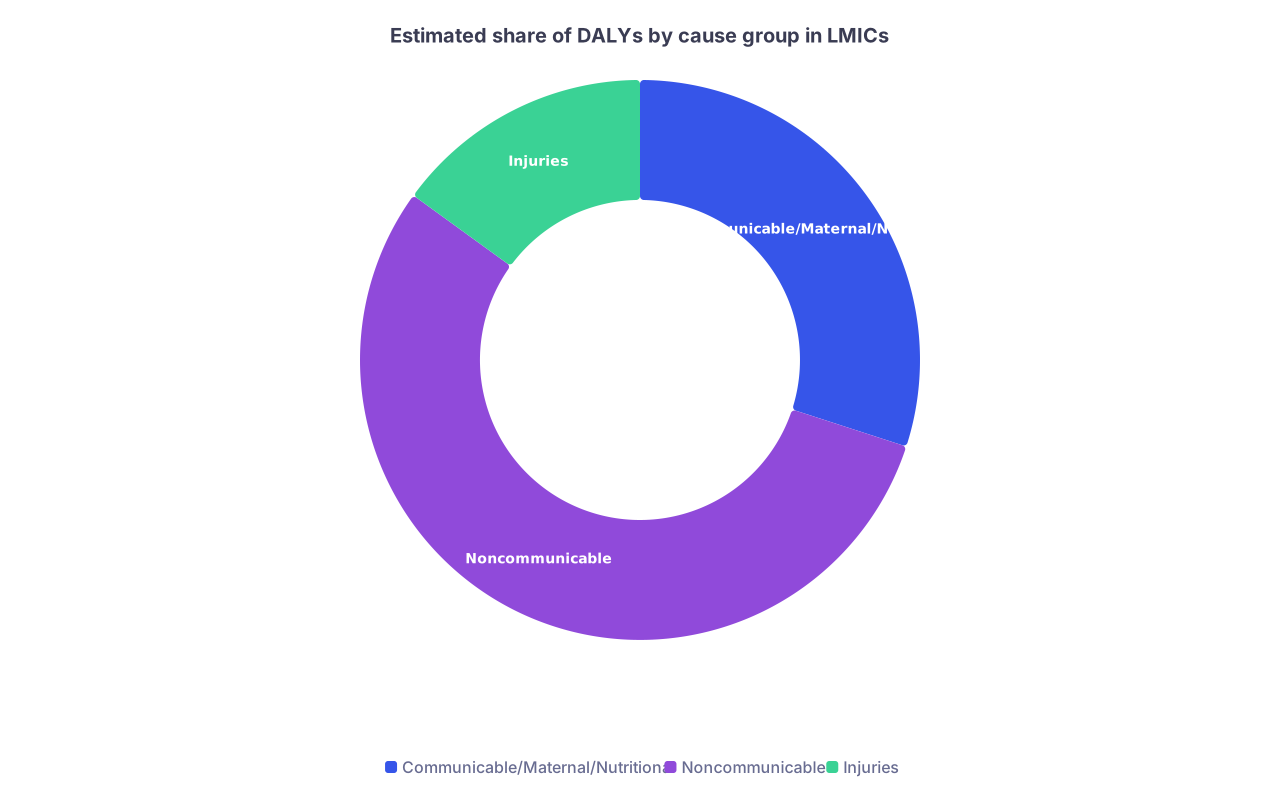
| Category | Value |
|---|---|
| Communicable/Maternal/Nutritional | 30 |
| Noncommunicable | 55 |
| Injuries | 15 |
Yet students still arrive at global health interest group meetings asking, “Will we learn about tropical dermatology?” I’ve heard that exact sentence.
Programs play along because it’s an easy sell: “Come see diseases you’ll never see at home.” It's dramatic. It photographs well. It looks great in residency essays.
But it’s a distortion of what actually drives illness, disability, and death globally.
If you’re serious about global health—ethically and professionally—you have to stop equating it with exotic infections and start dealing with what’s actually killing people.
Reality Check #1: Global Health Is Mostly Boring Chronic Disease
The truth is much less cinematic.
Most “real” global health work looks like this:
A 54‑year‑old woman in Nairobi with poorly controlled type 2 diabetes, on erratic metformin supply, who can’t afford regular glucose monitoring and lives two hours from the clinic.
A man in Dhaka with heart failure from long‑standing hypertension and rheumatic heart disease, admitted for the third time this year because there is no consistent primary care follow‑up.
A teenager in Rio struggling with depression and suicidal ideation in a favela where mental health services are nearly nonexistent.
None of this is “tropical.” All of it is global health.
And the data back this up. WHO estimates show:
- Cardiovascular diseases alone account for about 17.9 million deaths annually worldwide, most in LMICs.
- Over 75% of deaths from NCDs occur in low- and middle-income countries.
- Type 2 diabetes prevalence is climbing fastest in regions that used to be associated only with undernutrition.
Meanwhile, your classic short‑term global health elective tends to be heavy on:
- Acute care in outpatient settings
- Infectious disease management (HIV/TB/malaria/STIs)
- A bit of OB and pediatrics
And almost no real longitudinal NCD management, health systems strengthening, or policy work.
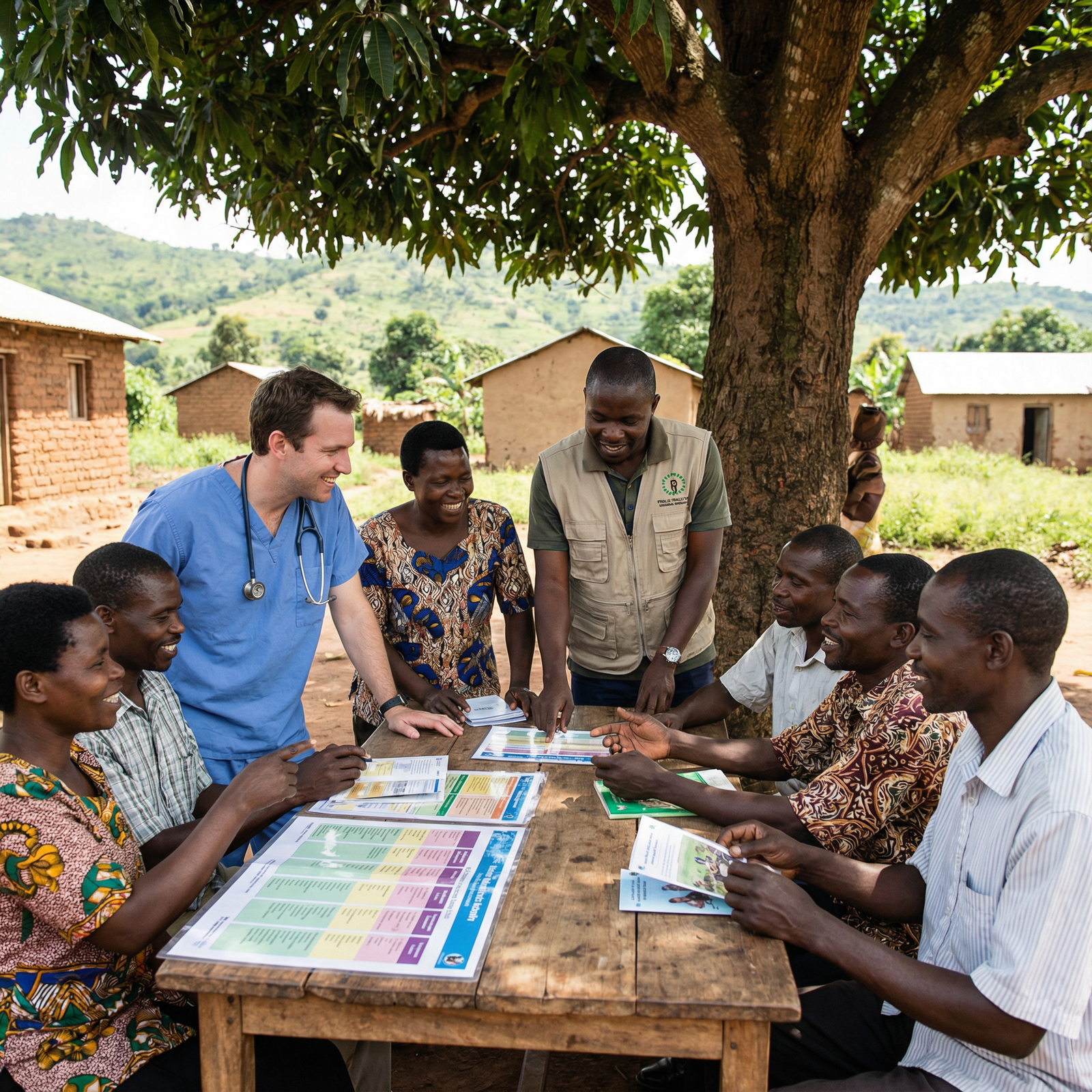
The mismatch is obvious once you see it. We sell students a movie version of global health while the local clinicians are drowning in the slow, grinding reality of chronic disease.
If your “global health experience” is two weeks of treating skin infections and viral URIs with the occasional malaria case, you’re shadowing at the surface of the health system. Not engaging with the main drivers of disease.
Reality Check #2: Global Health Is as Much About Systems and Power as It Is About Patients
Another myth: global health is just clinical care, but in a different country.
That’s comfortable because it keeps you, the visiting student or resident, squarely in the hero role: you show up, you see patients, you feel useful.
The actual field of global health—at least the serious part—is obsessed with things that sound much less romantic:
- Supply chains: Why do essential medications go out of stock every 3 months?
- Financing: Why does this country spend $40 per capita per year on health while others spend thousands?
- Governance and corruption: Why is funding allocated to vertical HIV programs but not to primary care?
- Task-shifting: What can nurses, community health workers, or pharmacists safely do that doctors currently hoard?
This is where the ethics really bite.
You can’t talk about “global health” without talking about:
- Historical legacies of colonial medicine.
- Donor-driven agendas that distort local priorities.
- Research extractivism: collecting data and publishing papers without meaningfully benefiting the host community.
- Power dynamics in partnerships: who writes the grants, who controls the money, who gets senior authorship.
I’ve watched U.S. trainees arrive in a partner hospital, immediately start brainstorming “quality improvement projects,” with zero understanding of the past ten years of local attempts that failed due to structural constraints, not ignorance.
There’s a term for this: parachute medicine. You drop in, fix what you can see, fly out, and leave the harder, less visible problems untouched.
Global health worth doing is the opposite: slow, longitudinal, collaborative work on unsexy system problems.

| Step | Description |
|---|---|
| Step 1 | Student idea of global health |
| Step 2 | Short mission trip |
| Step 3 | Many tropical cases |
| Step 4 | Big personal impact |
| Step 5 | Reality of global health |
| Step 6 | Long term partnership |
| Step 7 | System level projects |
| Step 8 | Slow measurable change |
If you’re only interested in cases you can present on rounds back home, you’re not interested in global health. You’re interested in medical tourism.
Reality Check #3: Global Health Includes High‑Income Countries. Yes, Including Yours.
This one really bothers people.
“Global health” is not a synonym for “medicine in poor, hot countries.” It’s about health equity and cross‑border determinants of disease. Pollution does not care if it’s in Delhi or Detroit. Pharmaceutical pricing doesn’t either.
Take the opioid crisis in the United States. Or Indigenous health in Canada and Australia. Or migrant farmworkers’ occupational exposures in southern Europe. These are global health issues. The same structural patterns—marginalization, underfunded primary care, perverse incentives—just in a different currency.
In fact, many global health leaders argue that the field should stop pretending that “global” means “over there.” Because the more you study social determinants of health, the more you realize the logic is identical in Baltimore and in Bangalore:
Who gets sick, who gets treated, and who gets left behind is driven by power, politics, and money. Not geography.
Here’s what the training pipeline looks like in practice:
| Primary practice setting | Approximate share of careers* |
|---|---|
| High-income country safety-net / underserved clinics | 40–50% |
| Split time: HIC home base + periodic LMIC work | 30–40% |
| Primarily based in LMIC institutions | 10–20% |
*Rough synthesis from multiple program outcomes; not perfect, but directionally honest.
Most people who “go into global health” end up working in their own country, often with marginalized populations, using skills they picked up abroad: dealing with scarcity, system constraints, culture, and language gaps.
If your ethical frame is “helping them over there,” you’re already off. A more honest frame is: learning to see structural injustice in health—anywhere—and doing something about it.
Reality Check #4: The Ethical Bar Is Higher Than You Think
Let’s talk about the stuff that rarely makes it into the glossy brochure.
The most common ethical failures I’ve seen in global health electives aren’t headline‑grabbing disasters; they’re small, repeated boundary violations:
A resident who would never independently manage a laboring patient at home, suddenly “running the delivery room” abroad because “there’s no one else.”
A student prescribing antibiotics in a language they don’t speak, relying on another student as interpreter, in a setting with no follow‑up and limited understanding of local resistance patterns.
A visiting team that brings a suitcase of expired medications, hands them over without proper documentation or integration into the pharmacy system, and leaves.
These are not edge cases. They are routine.
The ethical standard in global health isn’t “Do more good than harm.” It’s “Do no harm at a minimum, and don’t violate local standards you wouldn’t dare violate at home, just because no one is watching.”
There’s reasonable data on this. Studies of short‑term medical missions have shown:
- Weak or nonexistent supervision of trainees.
- Poor continuity of care.
- Interventions that are unsustainable once the visiting team leaves.
And the biggest one: interventions driven by the visiting team’s skills and interests, not by locally expressed need.
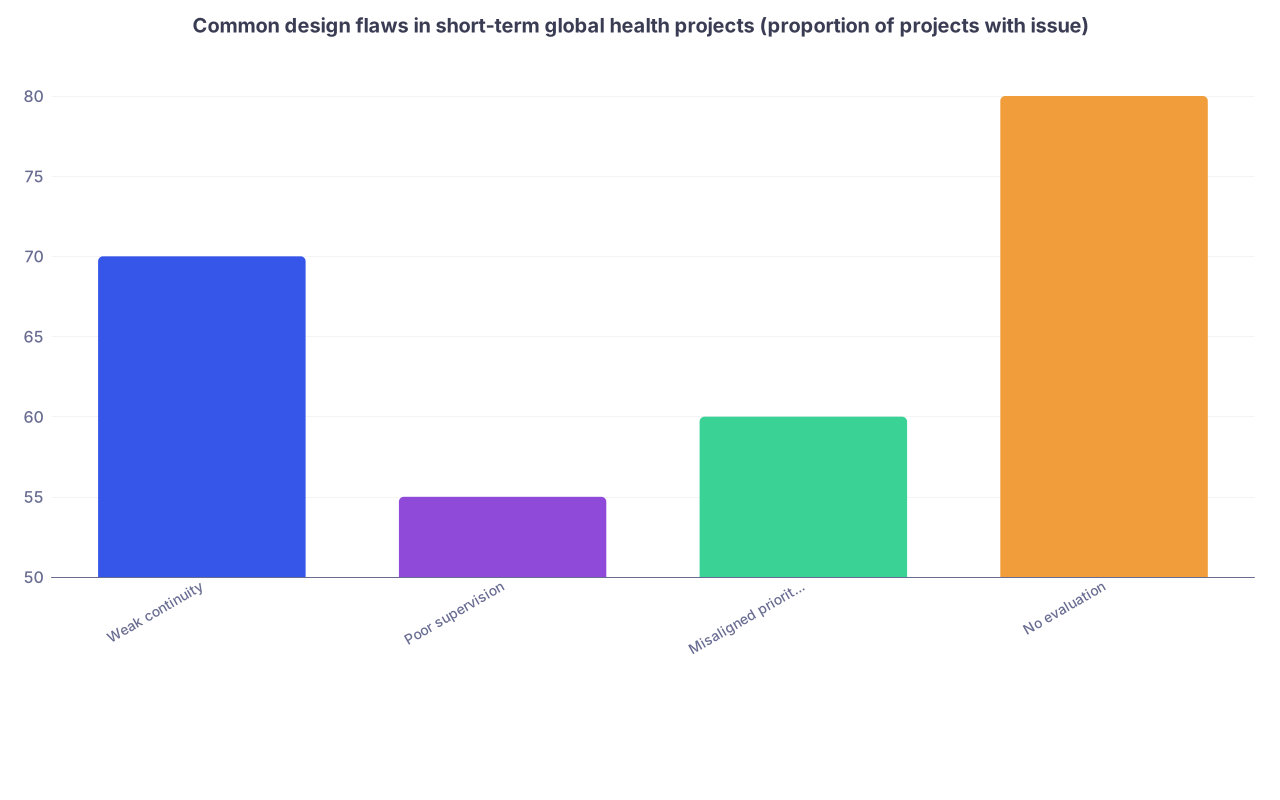
| Category | Value |
|---|---|
| Weak continuity | 70 |
| Poor supervision | 55 |
| Misaligned priorities | 60 |
| No evaluation | 80 |
If you’re serious about global health ethics, you need to ask harder questions before you sign up for anything:
- Who invited us?
- Who defines success?
- What happens when we leave?
- Would I be allowed to do this level of practice at home—and if not, why is it suddenly acceptable here?
If those questions are unwelcome, that’s your red flag.
So What Is Global Health Competence, Really?
If global health is not just tropical medicine, what should you actually be learning?
Hint: it’s not “memorize the WHO dengue guidelines and buy a headlamp.”
Global health competence looks more like:
You understand the basic architecture of health systems: primary vs tertiary care, financing models, referral pathways, and how they fail.
You can read a simple cost‑effectiveness analysis and understand why a country might rationally prioritize vaccines or hypertension control over high‑tech oncology.
You’re comfortable working through translators, acknowledging the limits of your understanding, and not overstepping your scope.
You can think in terms of populations and processes, not just individual patients and spectacular cases.
You have enough humility to realize that local clinicians know more about practicing medicine there than you ever will, no matter how many articles you read.
None of this is glamorous. All of it is learnable.
And ironically, if you focus on this “boring” foundation, you’ll be far more useful if and when you do encounter malaria, Chagas, or visceral leishmaniasis in a global setting—because you’ll actually understand the system those patients move through.
What This Means for Your Personal Development and Ethics
Here’s the uncomfortable part: a lot of people like the tropical medicine myth because it flatters them.
“I want to see rare diseases.” “I want to have more responsibility.” “I want to feel like I made a difference.”
All human. All understandable. But it centers you.
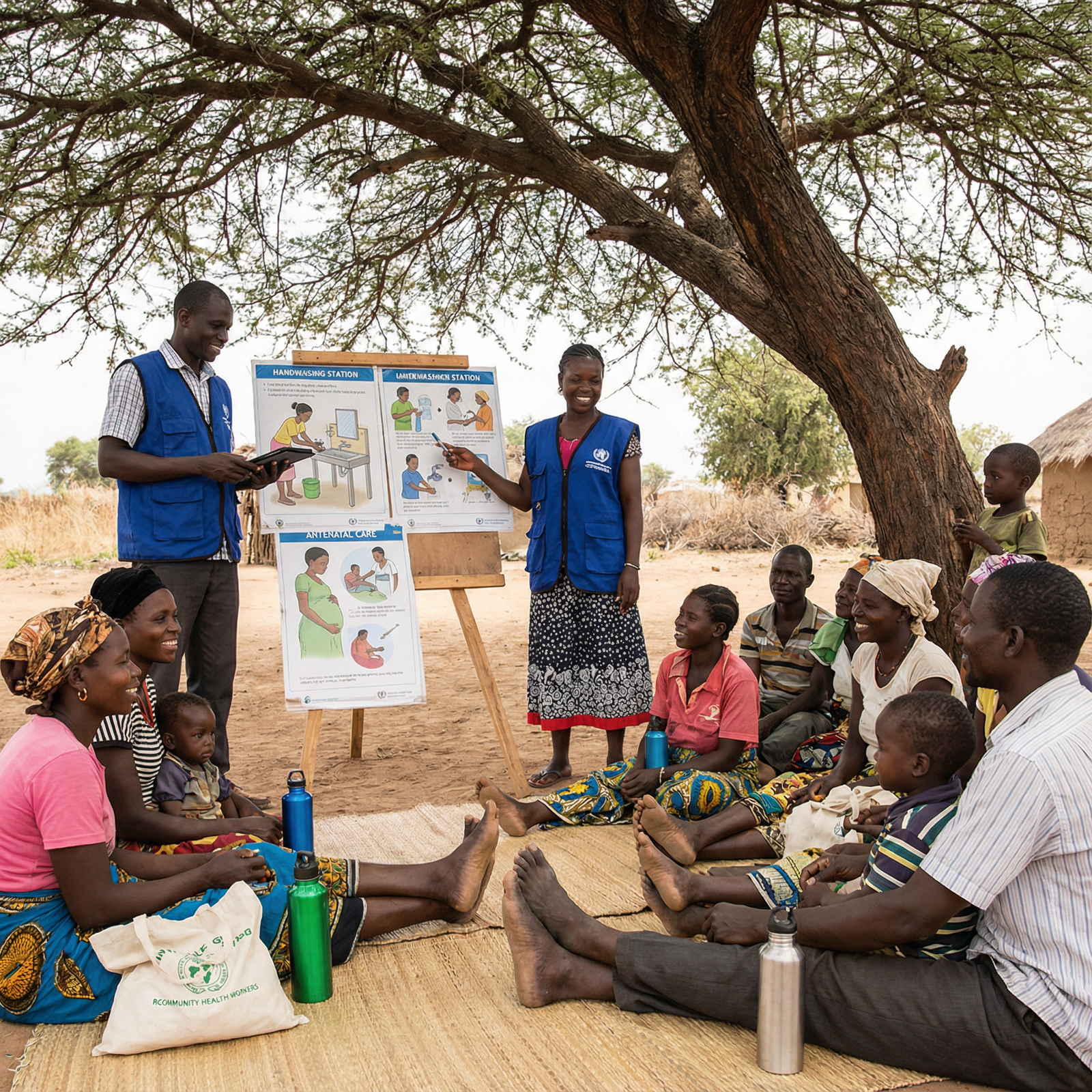
The reality frame flips that: global health is about aligning your skills with actual needs, even if that means seeing fewer “cool” cases and doing more painstaking, local, often invisible work.
Ask yourself a few blunt questions:
- Am I willing to work on problems that don’t impress anyone on Instagram?
- Would I still be interested in global health if it meant improving data quality in a district health office rather than diagnosing schistosomiasis in the field?
- Do I see global health as a career and ethical stance—or as a personality accessory?
Your answers matter. For the patients you’ll meet, but also for your own development as a physician who claims to care about justice, not just physiology.
The Bottom Line
Three points, then stop:
Global health is not synonymous with tropical medicine. NCDs, mental health, injuries, and systems failures now dominate the global burden of disease, especially in low- and middle-income countries.
The real work of global health is systems, power, and ethics, not just clinical heroics abroad. Short-term, pathology‑tourism electives often misrepresent the field and can be ethically shaky.
Global health includes your own backyard. If you care about health equity and structural injustice, you are doing global health whether you are on a ward in Kampala or in a safety‑net clinic in Cleveland.
If your interest starts and ends with “seeing cool cases overseas,” you’re not chasing global health. You’re chasing a story to tell.


