

What if I told you that flying to a war zone as a med student to “help” might do more harm than good—and that many of the people cheering you on have no idea what they’re talking about?
Let’s strip this down.
There’s a persistent fantasy in global health: the half‑trained medical student or young doctor who drops into a conflict zone, saves lives, finds their purpose, and comes back “transformed.” Social media loves this story. Residency application committees… much less than you think. And the people who actually run serious humanitarian responses? They’re usually trying to keep untrained “helpers” out, not sneak them in.
You’re in the personal development and medical ethics phase of your career. This is exactly when bad ideas—dressed up as “service” and “courage”—can screw up your trajectory and, more importantly, put patients at risk.
Let me be direct:
If you don’t have specific training and experience, you have no business “volunteering in a war zone” in a clinical role. None.
Now let’s back that up with what the data and real‑world practice actually show.
The Myth: “If I Want to Do Global Health, I Need to Go to a War Zone”
You’ve heard versions of this:
- “Programs love applicants with global health experience, especially in crisis zones.”
- “It’ll make you stand out for competitive specialties.”
- “You’ll learn so much more than you ever could at home.”
- “They’re so short‑staffed there—any help is better than nothing.”
Every one of those lines is either incomplete or flat‑out wrong in the way most people interpret them.
Serious global health and humanitarian organizations do not recruit untrained, short‑term foreign volunteers to do front‑line clinical work in active conflict zones. They just don’t. Doctors Without Borders / Médecins Sans Frontières (MSF), ICRC, IRC, IOM, UN agencies—look at their recruitment pages. They want:
- Board‑certified or fully licensed clinicians
- With at least 2–3 years of independent practice
- Often with prior low‑resource or humanitarian experience
- Willing to commit for months, not 10 days during winter break
They are not impressed by “I’m a second‑year med student and super passionate.” They’ve seen what that looks like in the field. It’s often unsafe.
Here’s the part no one puts on Instagram:
Short‑term, poorly supervised foreign volunteers in crisis settings are associated with:
- Misdiagnosis and inappropriate treatment
- Broken follow‑up and poor continuity of care
- Burden on already overworked local staff to supervise, translate, and fix errors
- Ethical breaches around consent, patient privacy, and unsafe procedures
Published evaluations of “short‑term medical missions” repeatedly show this pattern. War zones simply raise the stakes.
What Conflict Medicine Actually Requires (That You Don’t Have Yet)
You’re picturing “war zone medicine” as some heroic mix of trauma surgery, emergency resuscitation, and flexible improvisation. That’s the Hollywood version. The real skill set is harsher and much more specific.
Here’s a non‑romantic, reality‑based list of what you actually need to function safely and ethically in a conflict clinic or hospital:
Strong core clinical competence You should be able to:
- Diagnose and manage common acute and chronic conditions independently
- Prioritize in overcrowded, resource‑poor settings
- Recognize when you’re out of your depth and stop
Translation: if you still need an attending to sanity‑check most plans, you’re not ready.
Context‑specific training War zones aren’t generic. You need:
- Familiarity with local epidemiology (e.g., prevalence of TB, malaria, malnutrition)
- Understanding of weapon‑related injury patterns
- Knowledge of humanitarian health standards (Sphere standards, WHO emergency guidelines)
Security and ethics training Not optional. Real operations train staff on:
- Personal security, kidnapping, evacuation protocols
- Working under International Humanitarian Law
- Neutrality, impartiality, and the politics of access
- What to do when armed groups show up in your clinic
System thinking, not just “heroics” You’re not there to be the star surgeon. You’re part of a system:
- Triage, referral networks, and coordination with other actors
- Supply chain realities: what do you do when essential meds run out?
- How to avoid setting up parallel, short‑lived services that collapse when you leave
If you’re a med student or early resident and that list feels like a stretch—it should.
What the Evidence Actually Says About Short‑Term “War Volunteering”
Let’s talk data and patterns, not vibes.
Studies of short‑term medical missions (not necessarily all in war zones, but in low‑resource and crisis settings) consistently find:
- Projects are often weeks, not months, with limited planning or follow‑up.
- Volunteers frequently operate outside their usual scope (students doing procedures, non‑surgeons operating, etc.).
- Local health systems are sometimes undermined—patients prefer the free foreign clinic for a week, then have no continuity of care once it disappears.
- Documentation and handover are often abysmal.
- Volunteers get more benefit (experience, CV padding, sense of purpose) than patients do.
In conflict settings, multiply the risk by ten. Supply chains break. Staff get displaced. Records are lost. Families move constantly. There’s a reason experienced humanitarian organizations have entire logistics and security divisions. This is not your student‑run free clinic plus some dust and gunshots in the distance.
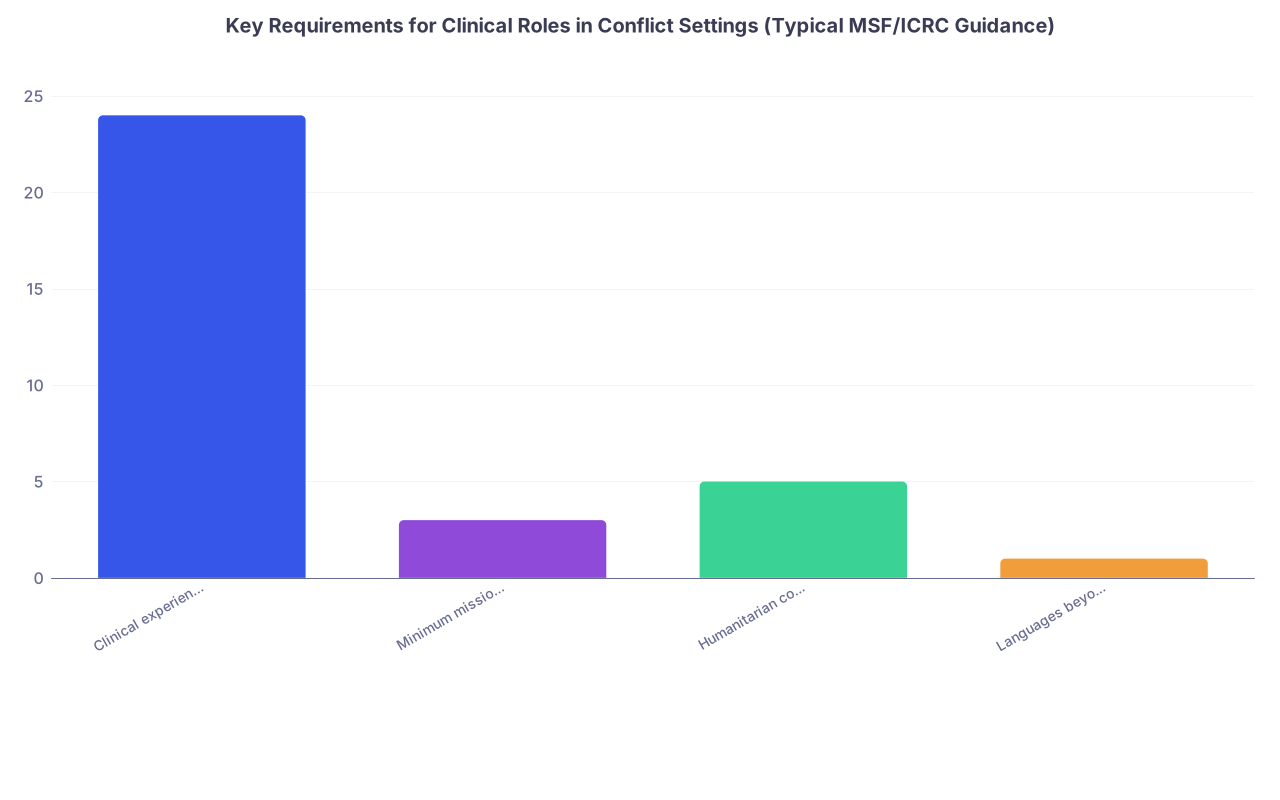
| Category | Value |
|---|---|
| Clinical experience (years) | 24 |
| Minimum mission length (months) | 3 |
| Humanitarian courses (days) | 5 |
| Languages beyond English (count) | 1 |
Two years of independent clinical experience. Multi‑month deployments. Some structured humanitarian training. At least one other working language is “nice to have” that becomes “essential” in many contexts.
This doesn’t mean you should never work in conflict or crisis settings. It means not yet, and not like this.
The Ethical Problem: “Any Help Is Better Than No Help” Is a Lie
One of the most dangerous myths in global health is that in poor or war‑torn places, the bar is so low that anything you offer is automatically an upgrade.
No.
Here are a few real scenarios I’ve seen or been told directly by colleagues:
- A visiting trainee performs a procedure they’ve only done twice in simulation. It partially works. The patient develops a complication that can’t be managed locally, and there’s no referral option. Long‑term disability as the price of “learning.”
- Short‑term visitors hand out lots of antibiotics, steroids, and injections to “treat something” because they don’t know the guidelines and want patients to feel helped. Resistant infections and steroid complications show up months later—someone else’s problem.
- Volunteers take photos and videos of “war victims” for fundraising or Instagram with vague consent at best—and those images live online forever.
The core ethical questions you need to answer before going anywhere near a conflict zone:
- Are you practicing at or below your true level of competence? Or above it?
- Are you improving the system that will remain after you’re gone? Or distorting it?
- Are you adding supervisory burden to local staff? Or actually relieving it?
- Would you accept this level of training, documentation, and follow‑up for your own family?
If the honest answer is uncomfortable, that’s your signal.
What Training You Actually Need (In What Order)
This is where people get impatient. They want a shortcut: “Tell me the course I can do so I can go on a mission next summer.”
There isn’t one. There’s a progression.
1. Become very good at medicine somewhere first
The most ethical, impactful “global health” investment you can make in med school and early residency is boring: become clinically solid.
That means:
- Mastering bread‑and‑butter internal medicine, pediatrics, OB, or surgery
- Learning to manage common emergencies without fancy tools
- Getting comfortable with uncertainty and making decisions with incomplete data
Humanitarian organizations do not want “global health tourists.” They want competent clinicians who can function without an attending whispering in their ear.
2. Learn how health systems actually work
Most trainees think “health system” means “hospital.” In crisis settings, that’s laughably narrow.
You need to understand:
- Primary care vs hospital vs referral vs public health functions
- Supply chains, stockouts, and essential medicines lists
- How NGOs interact with ministries of health and local actors
- Why dropping in parallel services can be harmful even if your intentions are good
You can start learning this at home. Read real evaluations of humanitarian projects. Talk to faculty who have done 6–12‑month fieldwork, not just a “global health elective” for four weeks.
3. Specific humanitarian training (once you have a base)
When you’re actually ready—usually as a late resident or attending—there are serious trainings that matter:
- Health Emergencies in Large Populations (HELP, ICRC)
- Humanitarian health courses (various universities, WHO‑linked programs)
- Tropical medicine diplomas
- Security and field operations trainings run by NGOs
Doing those while still clinically weak is pointless. They’re multipliers; they’re not substitutes for competence.
What You Can Ethically Do as a Student or Early Trainee
You don’t need a war to contribute to global health. And you definitely don’t need to be in active shelling range to be “serious” about this work.
Here’s what does make sense at your stage:
Work with migrant, refugee, or asylum‑seeker populations in your own country
- No passports, no security risk, real continuity of care.
- You actually see the long‑term consequences of trauma, conflict, and displacement.
- You can be properly supervised under your own training system.
Do rigorous, mentored global health research or quality improvement
- Not vanity “I collected surveys on a trip.”
- Projects co‑designed with local partners, with outputs they actually want: protocols, training materials, data to support funding.
-
- Arabic, French, Spanish, Swahili—pick something used in humanitarian settings.
- A junior clinician who speaks the language is more useful than a senior one who doesn’t, in many field contexts.
Participate in properly structured electives
- Affiliated with real partnerships, not “parachute” electives.
- Ideally in stable low‑resource settings, not active frontlines.
- With clear scopes: you’re observing, assisting within your level, and learning, not “rescuing.”
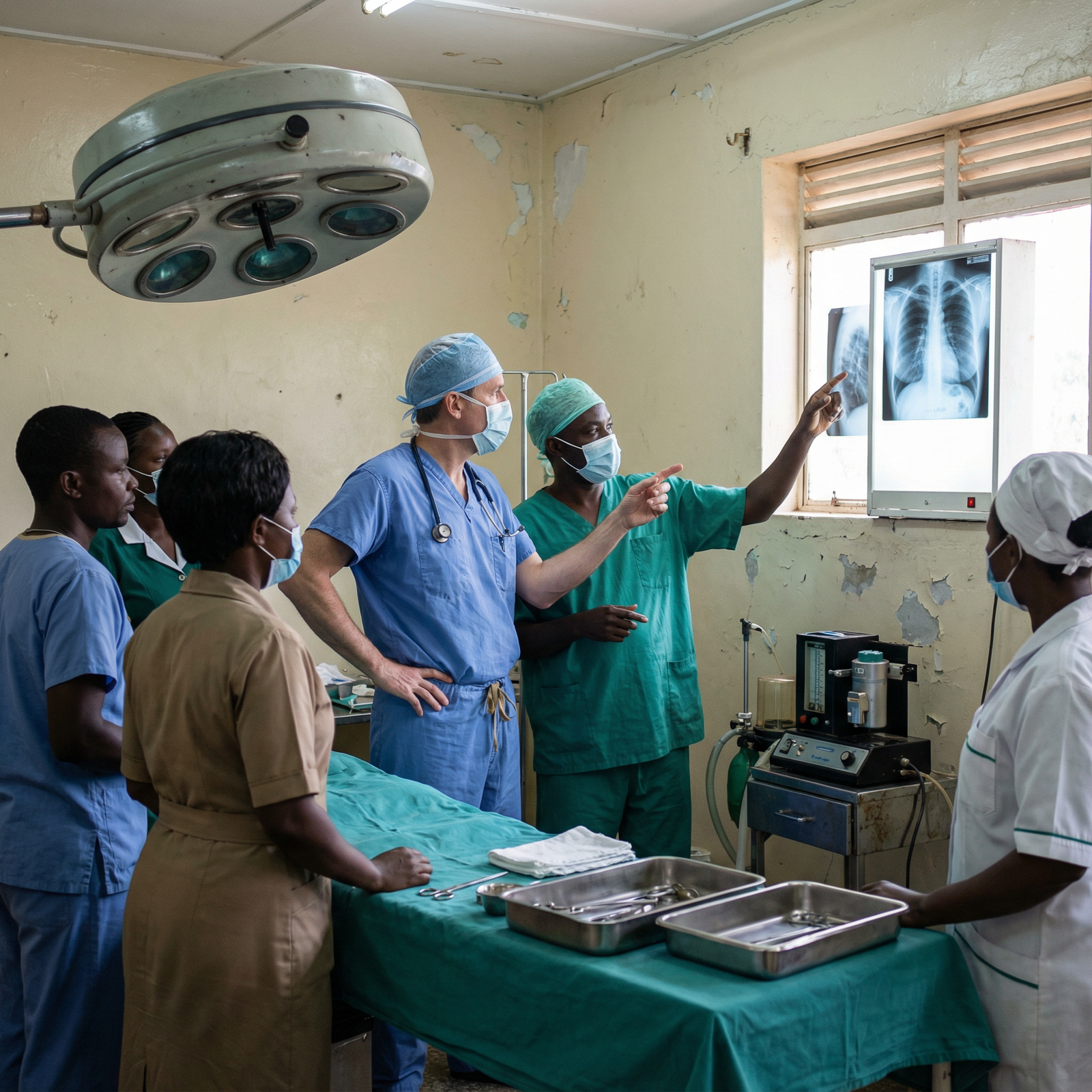
If a program seems too eager to throw you into clinical roles beyond your current scope, especially in unstable areas, that’s not “bold global health.” That’s a red flag.
How This Actually Plays on Your CV and in Interviews
Let’s talk self‑interest. Because pretending this is all pure altruism is naïve.
Program directors and global health faculty look for a few specific things:
They do not get excited by:
- “Two weeks in a conflict‑adjacent region as a second‑year, doing procedures I wouldn’t be allowed to do at home.”
- Vague “I did whatever they needed” stories with no supervision described.
- Overly dramatic “I saw so much suffering, it changed me” narratives.
They do respect:
- Sustained engagement with one community or project over years.
- Evidence that you understand power, ethics, and systems—not just pathology.
- Humility about your level of contribution at each stage.
A very common behind‑closed‑doors reaction to the naïve war‑volunteer application:
“Impressive courage, concerning judgment.”
You do not want “concerning judgment” attached to your name.
| Profile Type | Typical Features |
|---|---|
| War Tourist | 1–2 short trips, dramatic stories, vague roles, minimal supervision |
| Short-Term CV Builder | Several brief missions, no long-term partnerships, little follow-up |
| Emerging Professional | Strong home training, language skills, mentored projects, stable electives |
| Field-Ready Humanitarian | Board-certified, 2–3+ years practice, humanitarian courses, multi-month deployments |
The goal in med school and residency is to move from “Short-Term CV Builder” to “Emerging Professional.” Not to skip to “Field-Ready Humanitarian” by booking a flight to the nearest conflict.
If You Still Want to Work in War Zones Long-Term
Good. We need people who are serious about this. But do it like you plan to stay alive, stay licensed, and actually help.
A realistic roadmap:
- Finish strong residency training in a field directly useful in crises: EM, IM, Peds, OB/Gyn, Gen Surg, Anesthesia, Psychiatry.
- Work independently for 2–3 years in a setting with substantial clinical responsibility.
- Do structured humanitarian training and link with a major organization.
- Start with stable or semi‑stable low‑resource settings, prove you can work in a team, handle logistics, and respect local leadership.
- Then, if it still calls you, transition into higher‑risk conflict roles with proper preparation, security backing, and organizational support.
This isn’t sexy. It’s not Instagram‑friendly. It’s just how grown‑up global health works.

| Step | Description |
|---|---|
| Step 1 | Med Student |
| Step 2 | Strong Clinical Foundation |
| Step 3 | Residency in Relevant Field |
| Step 4 | Independent Practice 2 to 3 years |
| Step 5 | Humanitarian Training |
| Step 6 | Stable Low Resource Work |
| Step 7 | Long Term Partnerships |
| Step 8 | Structured Conflict Deployments |
FAQs
1. I’m a med student and got invited on a “medical mission” near a conflict area. Should I go?
Maybe—but be ruthless about vetting it. Ask:
- What exactly will my role be, and who will supervise me?
- How is follow‑up care arranged when we leave?
- Are local health authorities involved and supportive?
- Am I doing anything I wouldn’t be allowed to do at my home institution?
If those answers are vague, or your role sounds inflated for your training, walk away.
2. Doesn’t my desire to help count for something, even if I’m not fully trained?
Desire is necessary but not sufficient. In clinical work, good intentions without competence are dangerous. If you genuinely want to help, channel that into training, language learning, work with displaced people at home, or solid research with real partners. That’s how you earn the right to work in high‑risk settings later.
3. Are there any safe, ethical ways to get exposure to humanitarian work as a student?
Yes. Look for:
- Electives with established, long‑term institutional partnerships
- Work in refugee or asylum clinics in your own country
- Involvement in global health research with faculty who have credible field experience
- Seminars and case conferences run by MSF, ICRC, or similar groups
Your goal now is exposure and learning, not front‑line responsibility.
4. Will not going to a war zone hurt my chances for a global health–focused residency or fellowship?
No. Serious programs are more impressed by judgment and depth than by adrenaline. A strong clinical record, consistent global health engagement, language skills, and thoughtful reflection will beat one flashy but ethically shaky war‑story trip every time.
Key points:
- Untrained or under‑trained “volunteering” in war zones is usually unethical, often unsafe, and rarely respected by serious global health actors.
- The training you actually need is robust clinical competence, system literacy, and later, targeted humanitarian preparation—not a weekend crash course and a plane ticket.
- If you’re serious about global health, build depth and judgment now; the front lines will still be there when you’re actually ready.


