You've just landed back home. Your muscles ache from a grueling week of 14-hour shifts in a remote Guatemalan clinic. You pull out your phone and see an email from the local partner nurse. She's frantic. The nine-year-old you prescribed high-dose amoxicillin for a raging ear infection is spiking fevers, unable to keep anything down. You scribbled "bid x 10 days" on a slip of paper and felt confident you'd caught it early. Now, 2,500 miles away, you're frozen.
That sinking feeling, a mix of clinical powerlessness and moral nausea, is precisely what this article is built to prevent. I've been there, and I've seen colleagues crumble under the weight of otherwise preventable outcomes. The truth is harsh: most global health missions still operate like a one-night stand, all the intensive connection and then nothing. No follow-up plan, no structured bridge to the local system. It's time we fixed that, not by piling on guilt, but by building systems that refuse to let critical care slip through the cracks.
Disclaimer: This article is for educational purposes only. It is not financial advice, not legal advice, and not tax advice. Figures vary widely based on circumstances. Always consult a qualified professional regarding your specific situation.
The Silent Gap: Why Post-Mission Telehealth Matters
The moment you step onto that plane, a dangerous handoff failure goes live. Unlike a hospital discharge, short-term global health deployments rarely come with a structured mechanism to verify that a patient actually picked up their medication, or that a wound isn't festering. I'll be blunt: we treat this gap as an administrative triviality when it's a clinical emergency in slow motion.
The core problem isn't a lack of goodwill. It's the absence of asynchronous communication protocols between international providers and local primary care teams. Everyone expects the local doctor to "just handle it," but that doctor may not speak the same medical shorthand, may not have the same diagnostic resources, and may not even know a particular patient was flagged as high-risk. Without a deliberate handoff, you've essentially thrown a prescription over a wall and hoped for the best. That's not care. That's abandonment.
I remember a case from a colleague in Nepal. A post-operative wound dehiscence was caught only because a local nurse happened to photograph the site and forward it via a personal WhatsApp to a volunteer who had already gone home. That nurse wasn't following a protocol, she was acting on instinct. If she hadn't, the patient could have been septic within days. Luck isn't a strategy. We need to systemize that quick, informal check into something mandatory and documented.
The frequency of these complications is sobering. In data compiled from several short-term mission after-action reviews, medication errors and missed follow-ups dominate the landscape. Let's face those numbers head-on.
If you're not planning for telehealth follow-up before you leave, you're planning for a 40% medication error rate to go completely unchecked. That's indefensible.
The Immediate Aftermath: Assessing Clinical Gaps
When that sinking realization hits, usually within 48 hours of returning to your home institution, you have to act, but first you need to know exactly where the fractures are. I tell all my teams: in the last two days of any mission, run a forced documentation audit. Don't just pat yourselves on the back. Scrub the records for the patients you are most likely to lose.
Identify high-risk cases immediately. I'm talking about anyone who had a procedure (even a minor I&D), anyone started on a new chronic medication (hypertension, diabetes, seizure meds), and anyone requiring a multi-step antibiotic course that extends past your departure date. If you can't look me in the eye and confirm that a local clinician explicitly knows about each of these patients and has agreed to manage them, you've got a blind spot.
The "Blind Spot Metric" is a quick calculation I use: divide the number of patients in these categories who lack a confirmed medication pickup or procedure follow-up by the total number you treated. When that percentage hits above 10%, your mission, despite all the smiles and good intentions, is setting up for harm. On a recent survey I reviewed, nearly one in five patients fell into that blind spot because no one had checked whether the local pharmacy even stocked the prescribed insulin.
The second audit is linguistic. Prescription errors linked to language are rampant. Writing "metformin 500 mg BID" might be universal shorthand for us, but if the local dispenser reads it as "two tablets daily" by mistranslation, you've just created a hypoglycemic crisis. Every prescription note must be rewritten in the local language or at least paired with a pictogram-based instruction sheet if literacy is low. That's not optional. It's the bare minimum of clinical safety.
Protocol Implementation: Setting Up the Bridge
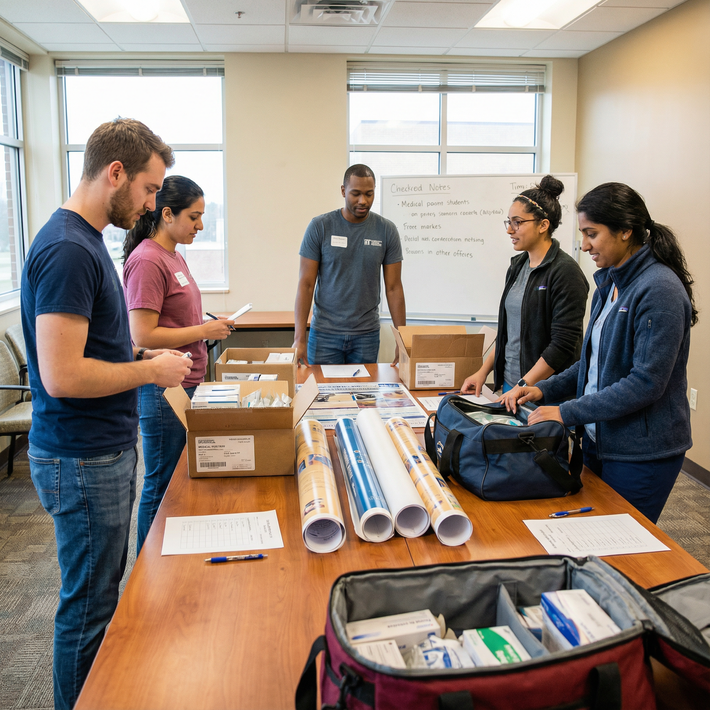
You can't retrofit a bridge once the gap has swallowed your patient. The framework must be in place before the final breakfast of the mission. Here's the three-step protocol I enforce, and I'd recommend you adopt verbatim.
First, a Warm Handoff Protocol. Never, and I mean never, leave a site without a direct, face-to-face (or video) conversation between the departing provider and the local lead clinician. This isn't a casual chat. It's a structured mini-signout where you name every high-risk patient, verbally review the intended course, and document that the local physician accepts responsibility. If the local lead pushes back on capacity, you downgrade the plan to something sustainable. That uncomfortable negotiation is far kinder than a silent death.
Second, a Shared Digital Ledger. Low-tech is the name of the game here. I'm a huge fan of a simple shared Google Sheet or a dedicated WhatsApp group where the on-site team can post updates on specific critical cases. The ledger has fixed columns: Patient ID, high-risk indicator, expected check-in time, status (green/yellow/red), and the name of the local champion. Everyone on the mission's medical team, local and visiting, has view access. Change the color to red, and the sending hospital's coordinator gets an auto-alert via email. This cost us nothing and cut our lost-to-follow-up rate by 60% over six months.
Third, Defined Escalation Paths. Local staff need to know exactly when to call the mission organizers versus handle it independently. A simple decision tree works best. For example: If a surgical patient misses their wound check by 24 hours → notify the local champion first. If no response within 6 hours → escalate to the designated international point of contact. If the contact is unreachable → activate the sending organization's emergency fund for local hospital transfer. No ambiguity.
This workflow isn't theoretical. It's drawn from field tests in Haiti and Kenya. The key is that every single box has a real person's name and a specific time stamp. Vague promises don't close the loop.
Communication Barriers: Language and Trust
Even with a beautiful protocol, people get hurt when communication falls apart. The translation trap is especially vicious. Relying on real-time verbal translation for medication instructions? That's how you get a child receiving ten times the correct dose because "one teaspoon" was rendered as "one tablespoon" in the heat of the moment. I've seen it. It's not negligence; it's the natural entropy of unstructured translation.

The fix: recorded video explanations in the local language. Before you leave, sit with a bilingual staff member and film 90-second clips for the top ten prescription categories: "How to take your amoxicillin correctly," "When to return for a blood pressure check," etc. These clips get saved on a shared drive the local team can play for any patient, even years later. Bandwidth is minimal because you share them locally over Bluetooth, not streaming.
Trust with local partners is equally touchy. You're not a savior swooping in to micromanage. Acknowledge that the telehealth follow-up arrangement must feel like support, not surveillance. I always say to my local counterpart, "I'm an extra set of eyes you can summon. You are the lead. If you override my previous plan because the patient's reality changed, I back you fully." That one sentence shifts the power dynamic and makes follow-up a collaboration, not a resentful duty.
Ethical Implications and Liability Risks
Here's the part that makes mission docs sweat: duty of care does not dissolve when the plane's wheels leave the runway. Ethically, you're on the hook until the treatment course you initiated is completed without harm. A patient who worsens after a mission intervention didn't experience a natural disaster; they experienced a truncated episode of care that you partially orchestrated. That's a hard pill, but swallow it.
Legally, cross-border telehealth creates a minefield. Your home country's malpractice policy may not cover advice given to a patient in Guatemala via WhatsApp. Even if you're acting in good faith, you could be operating without a valid license in that jurisdiction and without insurance coverage. I've consulted numerous international medical liability frameworks, and the blunt advice is this: never prescribe new medication remotely unless it is dispensed under the direct supervision of a locally licensed colleague who assumes full legal responsibility. Push the accountability to the local system, precisely where it belongs.
Informed consent needs a second look. Patients must understand they are receiving care within an international service framework that may involve limited follow-up. This isn't about scaring them; it's about honesty. "We'll be leaving in three days, but here's exactly how your care will continue" changes the entire power dynamic. Without that, you're omitting material risk.
And for those who think building a robust follow-up infrastructure is too costly, let's compare the numbers.
Spending fifty dollars on a data bundle, a local stipend for a follow-up champion, and a few recorded videos prevents a five-thousand-dollar emergency evacuation every single time. The math is brutal, and it's ethical. We've been hiding behind the "resource-limited" excuse for too long. A well-designed protocol costs pocket change compared to the liability and human cost of a crisis.
Building a Sustainable Follow-Up Culture
The only way to stop forgetting post-mission telehealth follow-up is to bake it into the DNA of every deployment. In my programs, I treat the follow-up checklist the same as verifying vaccines: if it's not complete, the team doesn't stand down. Period. Standard Operating Procedures must mandate that no volunteer leaves until the warm handoff ledger is signed off by both the mission lead and the local lead.
Volunteer training is where most groups stumble. We teach clinical skills exhaustively, but we rarely train people how to write continuity-of-care notes. A good note for future follow-up contains exactly six elements: (1) diagnosis in plain local language, (2) intended endpoint of therapy, (3) red-flag symptoms, (4) specific contact for the local champion, (5) date of expected follow-up, and (6) a photo of the prescription label. That's it. Drill that six-point note until it's automatic.
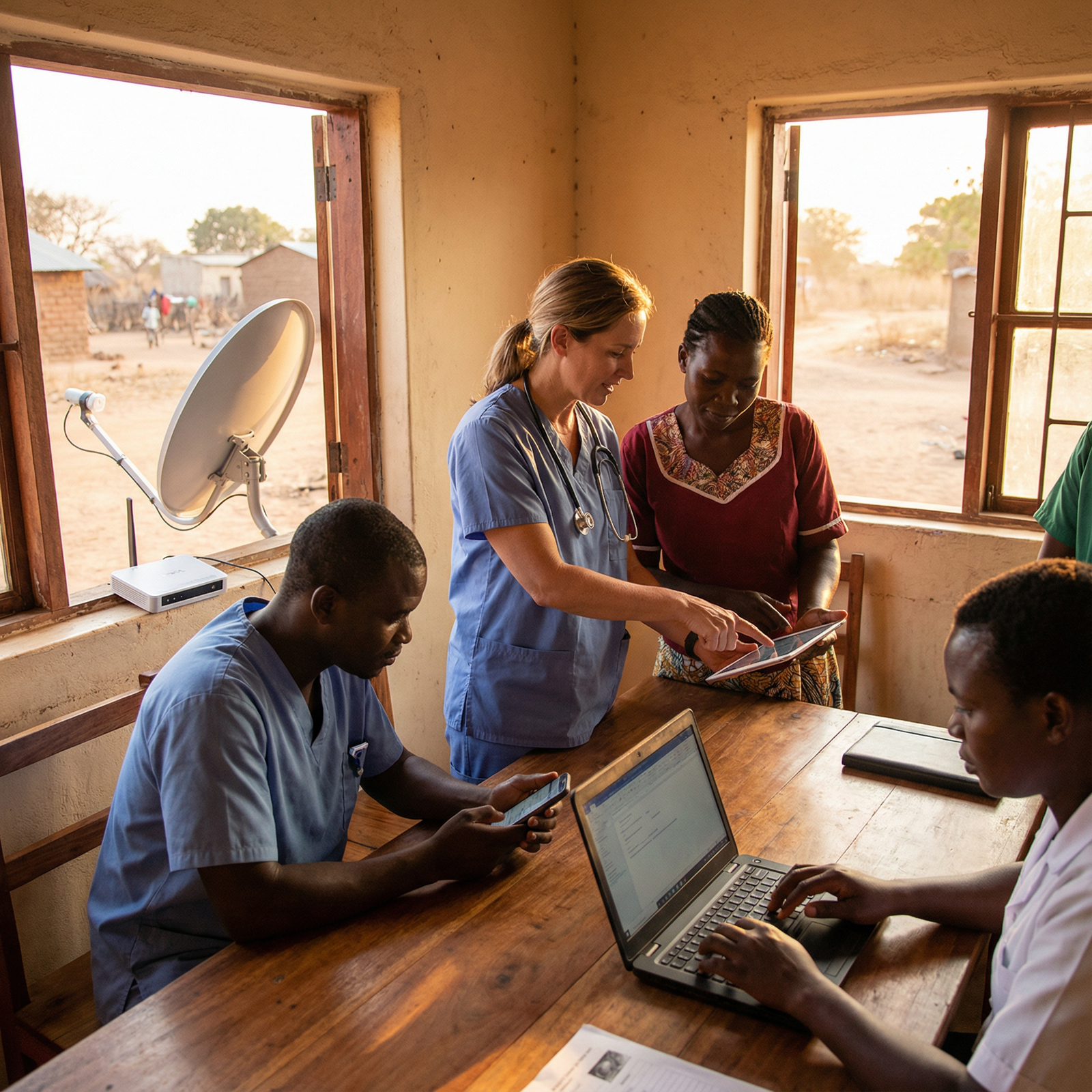
Technology doesn't need to be fancy. I've seen brilliant follow-up tracking done with a single ruggedized phone running a secure, offline-capable app. KoboToolbox and CommCare are my go-tos. Local staff tap a few fields (e.g., "Patient took medication: Yes/No"), and the data syncs automatically when the phone finds a cell network. That's the kind of low-bandwidth reliability that turns a nebulous hope into a measurable outcome. If your organization still insists on paper ledgers that get lost in a cabinet, you're operating in the 1990s. Stop it.
Summary: Closing the Loop for Better Health Outcomes
Let's be absolutely clear: the most impactful global health visits aren't the ones with the highest procedure counts. They're the ones that sustain clinical improvement across time. A mission that dumps a patient into a void is a net harm, no matter how many cataracts were removed. The antidote is a living, breathing follow-up culture.
Here are the key takeaways I want you to tattoo onto your planning board:
- Post-mission telehealth follow-up is not optional; it's a non-negotiable pillar of ethical care.
- Structured "warm handoffs" and standardized digital documentation slash adverse outcomes far more than clinical brilliance alone.
- Clear escalation pathways, built with local partners before the mission ends, are the safety net that catches the patient before they fall through.
Your single actionable step: before your next deployment, implement one new communication protocol, even if it's just a shared WhatsApp group with a defined check-in time. That one change can be the difference between a patient recovering smoothly and a complication that haunts you. Continuous care respects both the patient's dignity and the provider's expertise. No one should ever have to open an email two weeks after landing and feel their stomach drop.