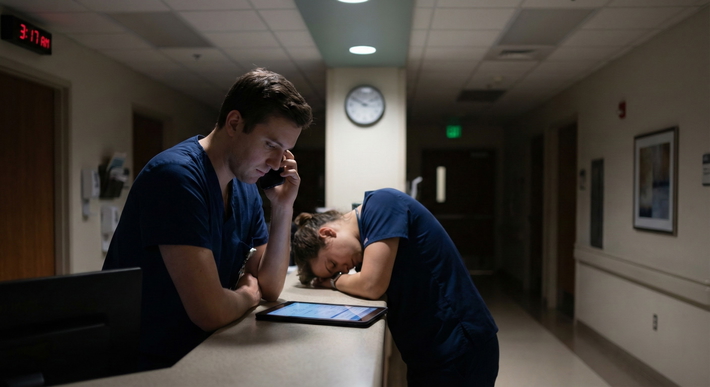
What if I drown in my workload on day one, miss something critical, and the attending just throws me under the bus?
It's the 3 AM terror. The absolute worst-case scenario playing on a loop in your head while you stare at the ceiling. You picture the morbidity and mortality conference. You picture the disappointed stare from your program director. You picture the whispers in the workroom.
But let's look at the reality. Yes, blame happens in medicine. It's an ugly, unvarnished truth. But most modern residency programs use structured feedback and team-based safety nets, especially for intern-level issues. The system expects you to be slow. It expects you to be overwhelmed.
The actual risk isn't "being overwhelmed." Every single intern gets overwhelmed. The risk is failing to communicate, failing to document, and failing to escalate when the water rises above your chin. Overwhelm is a state of being. Silence is a choice. And silence is what gets you blamed.
The Worst-Case Scenario Loop (and Why It's So Common Before Intern Year)
You know the loop. You imagine being the direct cause of patient harm, and then you immediately rehearse the blame that follows. They'll say I was careless. They'll say I didn't care. They'll say I shouldn't be a doctor.
But you have to separate being overwhelmed from being negligent. Negligence is ignoring a known duty. Overwhelm is having too many duties and not enough hours. As an intern, you are explicitly expected to learn under supervision. You aren't an independent attending yet. You are a trainee.
The transition stress is brutal. You're dealing with sudden, crushing responsibility, severe sleep deprivation, cognitive overload from learning new EMR systems, and the sheer pressure of perfect documentation. Your brain is misfiring. It's taking normal situational stress and turning it into a character flaw.
I've been there. You stare at a list of 14 patients and think, If I don't check that potassium result in room 4, they'll code, and it'll be my fault. That's not negligence. That's the terrifying weight of the job. The trick is recognizing the loop for what it is: anxiety, not a prophecy. Your brain is trying to protect your patients by scaring you. Acknowledge the fear, then pivot to the process.
How Blame Actually Happens in Real Hospitals (It's Often About Process, Not Intent)
Let's strip away the emotion and look at how blame actually works in a hospital. It rarely happens because an intern was "trying their best but failed." It happens because of process breakdowns. Missed escalations. Delayed communication. Unclear handoffs. Incomplete documentation. Ignoring safety protocols.
There is a massive difference between being overwhelmed and escalating appropriately versus being overwhelmed and staying silent. If you have 20 tasks and you tell your senior, "I am underwater, I need you to triage this with me," you are protected. If you have 20 tasks, panic, and just quietly drop three of them without telling anyone? That's where the blame lands.
Blame risk is almost always a "system plus communication gap" issue. Work compression happens. Unclear responsibilities happen. Inadequate supervision happens. When things go wrong, the hospital looks at the timeline. Did you ask for help? Did you document the delay? Did you hand off the pending task?
Look at that flow. The divergence point isn't "did the intern know the answer?" It's "did the intern communicate?" The system can forgive a knowledge gap. It cannot forgive a communication blackout.
The "Blame-Proofing" Behaviors That Protect Patients and You
So, how do you actually protect yourself and your patients when the ward is on fire? You build blame-proofing behaviors. These aren't just defensive medicine tactics; they are good medicine.
First, use early, explicit escalation. Ask for help way sooner than you think you should. If you feel that tightness in your chest, page your senior. Don't wait until you're actively drowning. Say, "I'm getting behind, can we review my prioritization?"
Second, implement structured communication. Use closed-loop updates. Repeat back plans. When your attending gives you a verbal order, read it back. "Just to confirm, you want 1 liter of normal saline over two hours, then reassess?" It feels robotic at first. It saves your skin later.
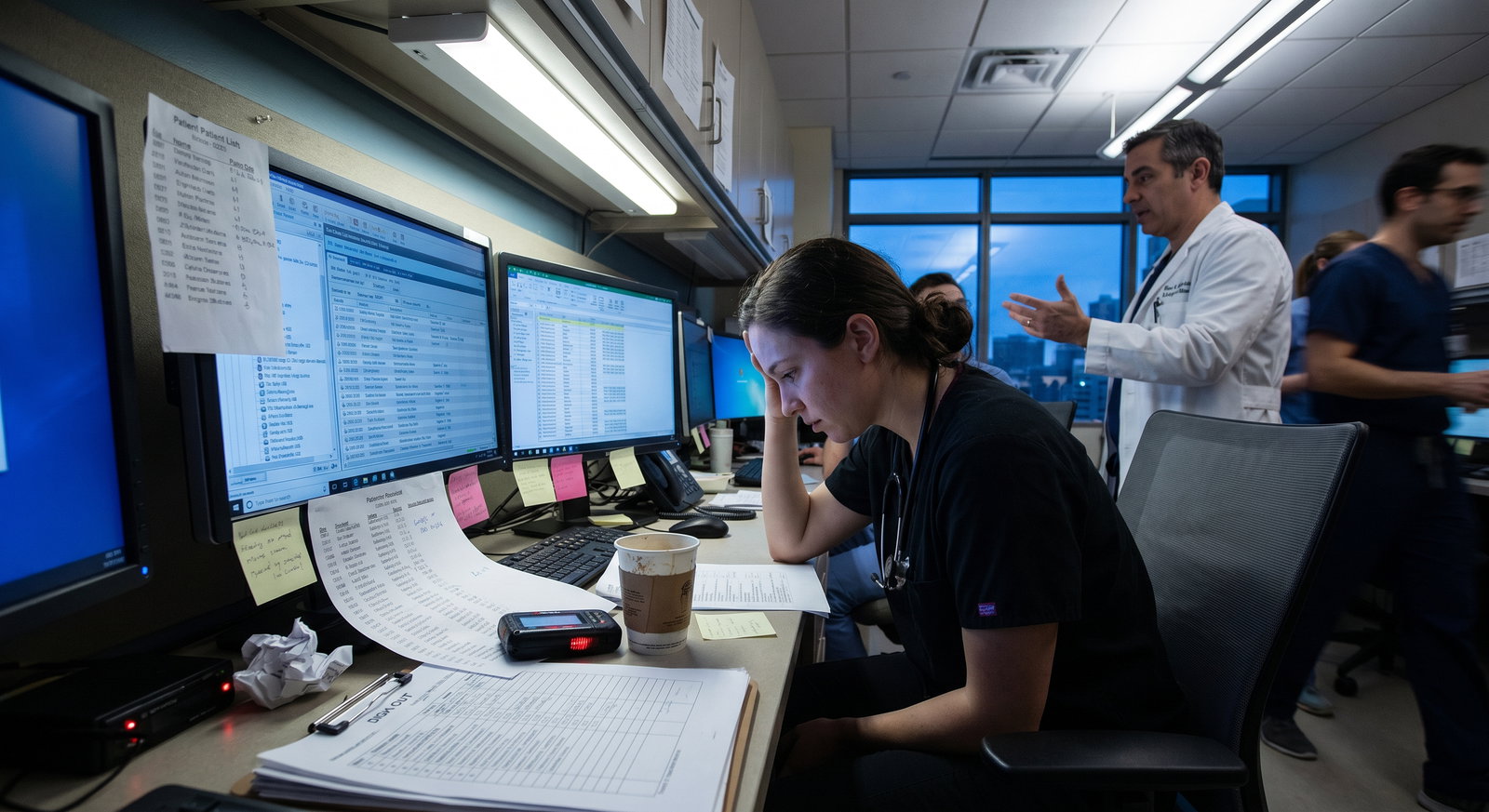
Third, document to reduce ambiguity. Your note is your shield. Write down what you observed, what you thought, what you did, and exactly who you informed. "Discussed with Dr. Smith at 14:00, agreed to hold beta-blocker pending morning labs." If it's not in the note, it didn't happen. And if it's not in the note, you look like you forgot, not that you made a calculated, supervised decision.
Fourth, master safety netting. Confirm follow-up tasks. Clarify "who owns what" during sign-out. If you order a stat CT scan at 4 PM and you sign out at 5 PM, explicitly tell the night intern: "Room 4 is waiting on a stat CT, please check the results and act on them." Don't just assume they'll see it in the inbox. Verify results. Check the cultures. Check the imaging. Close the loop yourself whenever possible.
Finally, enforce professional boundaries. Request time-critical assistance. Don't "push through" when safety is at stake. If you are too fatigued to safely place a central line, say so. Pushing through exhaustion isn't heroic; it's a liability. The hospital doesn't care how tough you are. They care if the patient is safe. Protect your own limits so you can protect your patients.
What Programs Typically Expect, and What They Should (Ideally) Train You To Do
What do programs actually expect from you in July? They don't expect you to be a master clinician. They expect you to prioritize triage, communicate changes in clinical status, follow established protocols, and absorb supervision.
Good programs have common training structures to support this. They run orientation sessions on handoffs. They map out explicit escalation pathways. They provide "just-in-time" safety coaching on the wards.
But here's the hard part: feedback often feels personal. When an attending critiques your note, your anxious brain hears, "You are a terrible doctor." You have to normalize this. Good programs separate performance coaching from blame. Blame says, "You messed up because you're careless." Coaching says, "You missed this lab result because our sign-out system is flawed; let's fix your handoff process."
Look at the gap. The expectations are high across the board, but the blame triggers cluster around poor communication and delayed escalation. If you hit the communication metrics, you give yourself a massive buffer on the clinical ones. You don't have to be perfect. You just have to be present and communicative.
Red Flags to Watch For (So You Don't Accidentally Walk Into a Blame Culture)
Not all stress is a toxic blame culture. Residency is just hard. But you need to know the red flags so you don't accidentally walk into a meat grinder.
Warning signs? Punitive responses to errors without any coaching. Attendings who openly mock interns for asking questions. Seniors who actively discourage escalation ("Don't page me at night unless they're coding"). Unclear supervisory availability. If your attending is "around" but never actually answers their phone, that's a massive red flag.
Assess the handoff culture. Are roles and priorities clearly stated? When an intern says, "I didn't know that was my job," is the response to clarify the role, or to yell at them? "I didn't know" scenarios should be tolerated and used to fix the system, not punish the person.
During interviews or orientation, ask the right questions. "How does feedback work here?" "What happens when an intern is overwhelmed and needs to drop tasks?" "Can you walk me through a recent near-miss and how the team handled it?" Watch their body language. Do they get defensive? Do they blame the intern in their story?
Balance your skepticism with hope. Not every grumpy attending is running a blame culture. Sometimes they're just tired. Focus on observable behaviors. Do residents look out for each other? Do seniors stay late to help interns finish notes? That's the culture you want. Trust your gut. If the vibe feels punitive, it probably is.
Your Action Plan for When You're Overwhelmed on Day One
You need a plan before the panic hits. When you're overwhelmed on day one, your executive function shuts down. You need a scripted loop to fall back on.
Step one: STOP. Physically stop walking. Put the phone down. Take one breath. Step two: Prioritize. Who is unstable? What is time-critical? Everything else can wait. Step three: Communicate. Call or page your resident or attending. Give a one-to-two sentence summary. Step four: Ask. Ask a specific question and request the next step. Step five: Document. Write down your assessment, the action, the escalation, and pending items. Step six: Safety net. Confirm follow-up and read back the plan.
Create a personal escalation threshold. Write it down. "If a patient's MAP drops below 60, I call the senior within 5 minutes." "If I have more than 3 admissions before noon, I ask for help triaging." Adapt this to your specialty and site.
Pre-plan your handoffs. Use a consistent format every single time so you don't omit things when you're tired.
And build a "receiving help" strategy. Have specific phrases ready that invite guidance without sounding panicked. "I'm worried about safety here, can you review this plan with me?" or "I have too many critical tasks right now, can you help me prioritize?" It's not weakness. It's resource management.
Closing Reassurance: You're Not "Bad" for Being Overwhelmed, You Just Need a Plan
Let's reframe this. Overwhelm is a normal physiological signal to slow down and escalate. It is not a moral failure. You aren't a "bad" doctor because you can't do the work of three people.
Focus on what you can control. You can control your communication. You can control your documentation. You can control how you use supervision and safety netting. Your goal is patient safety and learning, not avoiding every piece of negative feedback.
You're going to survive this. The anxiety is just your brain trying to keep your patients safe. Channel that anxiety into your action plan.
Stop rehearsing the worst-case scenario and start rehearsing your escalation script. Write down your personal thresholds today, share them with your co-interns, and go into day one knowing exactly what to say when the water rises. You've got this.