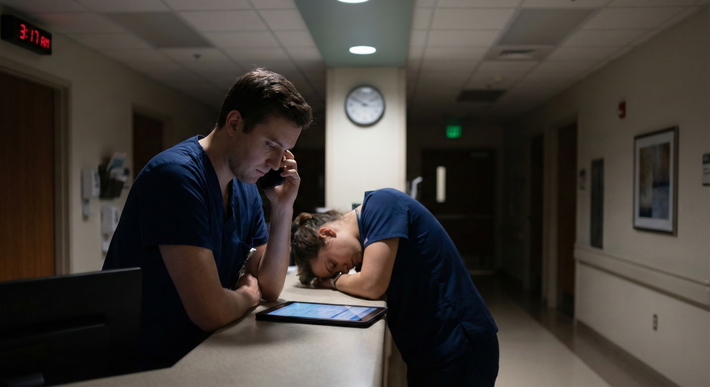
It’s 2:15 a.m. You’re on call, 18 hours into your shift. Your pager hasn’t stopped. You’re covering two services, you still have three admits to write up, the cross-cover list is a mess, and you just realized you haven’t physically seen one of your sickest patients in four hours. You’re asking yourself the right question:
“Is this just residency being hard… or is my workload actually unsafe?”
Let’s answer that directly.
The Core Answer: Unsafe = Risk to Patients or You, Not Just Being Tired
Residency is supposed to be challenging. You’ll be tired, stretched, uncomfortable, and working at the edge of your abilities a lot of the time.
That’s not the definition of unsafe.
Your intern workload becomes unsafe when reasonable, good-faith effort cannot prevent:
- Missed or delayed critical care for patients
- Regular, predictable violations of duty hour rules
- You making repeated errors because of fatigue, volume, or lack of supervision
- You being forced to work beyond what you can reasonably handle with appropriate help
If your situation is such that even a solid, organized, hard‑working intern cannot safely manage the load, that’s a red flag.
Now let’s make this concrete.
Clear Red Flags Your Workload May Be Unsafe
These are the things I want you to watch for. Not vague burnout. Specific, repeatable patterns.
1. You Cannot Physically See Your Patients
Especially on inpatient rotations.
Unsafe pattern:
You’ve got so many patients or so many admits that you cannot:
- Lay eyes on all new admissions in a timely way (within 2–4 hours, faster if sick)
- Reassess unstable or high-risk patients frequently enough
- Complete essential tasks (consents, critical med reconciliations, discharge education) the same day they’re needed, even when you’re hustling
If you’re routinely leaving the hospital thinking, “I hope that one patient is okay, I never actually got back to check on them,” that’s not just feeling busy. That’s patient safety risk.
2. Your Error Rate Climbs and You Can See Why
Everyone makes mistakes as an intern. You’ll miss a lab here, order the wrong formulation there. Normal.
Unsafe pattern: you’re seeing preventable errors piling up because of:
- Sheer number of patients/tasks
- Constant interruptions while writing orders
- No time to double-check meds, doses, or allergies
- Working 16–24 hours with barely any break, repeatedly
Examples I’ve seen that were driven by workload, not laziness:
- Heparin gtt dose miscalculated because the intern was paged 4 times while entering the order
- Patient discharged on home meds that were clearly inappropriate because med rec was done in a rush at 8:30 p.m. with five other discharges pending
- Radiology critical result note missed because the inbox was flooded and there was no time to systematically clear them
If “I just didn’t have the bandwidth to do it right” is becoming your internal monologue, that’s a signal.
3. You’re Being Asked to Work Beyond Duty Hour Rules – Routinely
Duty hours aren’t just bureaucratic nonsense. They exist because exhausted doctors hurt patients.
Unsafe pattern:
- Regularly > 80 hours/week averaged over 4 weeks
- More than 24+4 continuous hours for in-house call (or your program’s defined max)
- Less than 8 hours off between shifts, over and over
- “Just stay later and don’t log it” culture
One post-call day where you stay a bit late to stabilize a crashing patient? Fine. A pattern where you’re post-call, still writing 4 discharge summaries at 3 p.m. every time? Unsafe.
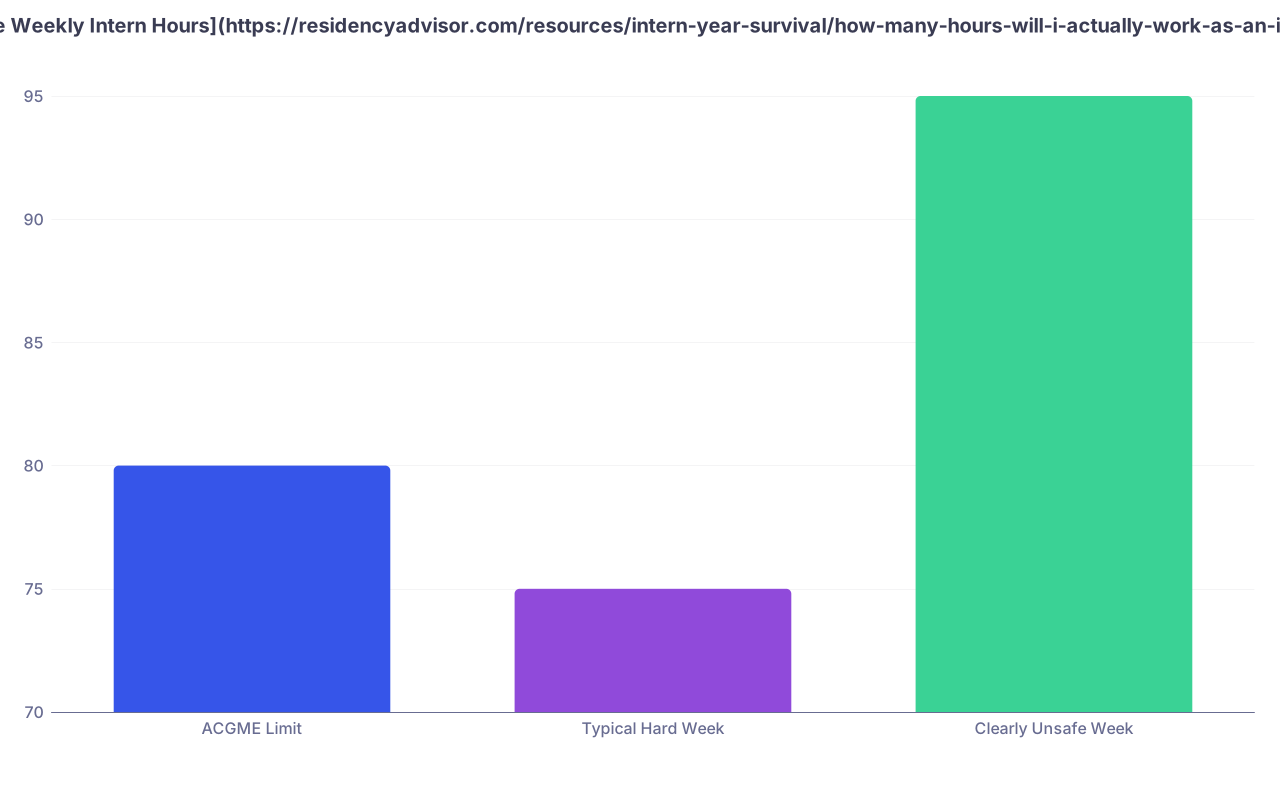
| Category | Value |
|---|---|
| ACGME Limit | 80 |
| Typical Hard Week | 75 |
| Clearly Unsafe Week | 95 |
If you’d be embarrassed to show your actual hours to your program director because you know they violate policy, that’s a red flag.
4. Supervision Is Inadequate for the Level of Responsibility
High workload + weak supervision is where serious harm happens.
Unsafe patterns:
- You’re cross-covering patients you’ve never met, with no accessible senior resident or attending who knows them
- You’re asked to independently manage things you’re not trained for (complex ventilator changes, chemo orders, high-risk obstetrics decisions)
- Nights where the only supervising physician is “available by phone” but routinely unreachable or unhelpful
- Seniors/attendings explicitly telling you, “Don’t wake me unless someone is coding”
If you’re making major decisions you’re not comfortable with because there’s no practical way to get real-time help, that’s not “learning autonomy.” That’s unsafe.
5. Systemic, Not Just “Bad Day,” Problems
One awful shift isn’t the metric. I’m talking about patterns:
- Every call shift on a rotation is nuts
- Every weekend you’re solo covering a census that would normally be split between 2–3 people
- Every intern on your service is drowning, not just you
- Nurses and consultants are saying “Your team is always slammed” or “We can never get hold of anyone”
If other residents shrug and say, “Yeah, that rotation is known to break people,” that’s not a rite of passage. That’s likely a systems problem your program should be addressing.
How to Distinguish “Just Hard” from “Actually Unsafe”
Let me give you a simple framework.
Ask yourself these four questions:
If I were fully rested, organized, and reasonably experienced at this rotation, would this still feel unmanageable?
- If yes, lean toward unsafe system/workload.
Are patient care corners being cut that I know are not okay (not just ‘not perfect’)?
- Examples: not examining patients, not reviewing imaging, not reconciling meds.
Have I raised concerns and been told to just ‘suck it up’ without any attempt to adjust staffing, expectations, or support?
- Dismissive culture is a problem in itself.
Would I be comfortable explaining my current workload and support structure to an external reviewer (ACGME, state board, malpractice lawyer)?
- If that thought scares you, you probably already know.
If you’re hitting “yes” on more than one of those, I’d treat your workload as potentially unsafe and start acting on it.
Concrete Examples: When You Should Start Worrying
Let’s put some realistic scenarios side-by-side.
| Scenario | Probably Safe-Hard | Probably Unsafe |
|---|---|---|
| Night float admits | 6 admits, 25-patient cross-cover, responsive senior | 12 admits, 60+ cross-cover, senior covering 3 services |
| Duty hours | 72-hour busy week, all logged, post-call protected | 90-hour week, pressured not to log overages |
| Supervision | Senior on-site, attending reachable, questions welcomed | Senior at home, attending “don’t call after 10 pm” culture |
| Rounding | You see every patient daily, though notes are short | You skip seeing stable patients because “no time” |
| Errors | Occasional minor order errors, caught quickly | Repeated missed labs, delayed codes, medication errors |
If your day looks more like the right column consistently, you’re not just “weak” or “disorganized.” You’re in an unsafe setup.
What To Do In the Moment When Things Feel Unsafe
You don’t need a committee meeting to act when your gut says, “This is bad.” Here’s the practical, real-time playbook.
Step 1: Escalate Early and Specifically
Don’t just say “I’m overwhelmed.” Say:
- “I have 10 admits pending and 30 cross-cover patients. I can’t safely see all the new ones and respond to urgent pages. I need help prioritizing or re-assigning.”
- “I’m worried I will miss something critical if I take more admissions. Can we cap or get another team to take some?”
Page your senior. Call the chief. In a real emergency, use the attending’s cell.
Step 2: Prioritize Ruthlessly for Safety
When you can’t do everything, do the right things:
- Sick/unstable patients first: hypotensive, hypoxic, altered, sepsis, chest pain, new neuro deficits.
- Time-sensitive tasks: STAT orders, critical labs, blood products, antibiotics, insulin, anticoagulation.
- Then everything else: notes, complete med rec, non-urgent consults, “nice to have” documentation.
Say out loud to your team or nurse: “I’m prioritizing the sickest patients first. I’ll be delayed on less urgent things.” That clarity helps.
Step 3: Use the System – Or Expose That There Isn’t One
Hospitals usually claim to have:
- Backup coverage
- Float residents
- Rapid response teams
- Mechanisms to divert admissions
If those exist, push to use them. If they don’t, or they exist only on paper, that’s critical information to bring later to leadership or the GME office.
How and When to Formally Report Unsafe Workload
Here’s the line: When a pattern of unsafe conditions persists despite you raising concerns through reasonable channels.
Who you can go to:
- Your senior resident or chief residents
- Program director or associate PD
- Department chair (in serious cases)
- GME office or designated resident ombudsperson
- Anonymous safety reporting system (most hospitals have one)
- Duty hour reporting tools in your residency management system (MedHub, New Innovations, etc.)
What to actually say (and document):
- Concrete numbers: “Regularly 16–18 patients per intern with 6–8 new admits on call, plus 40 cross-cover”
- Specific safety events: “Two near-miss anticoagulation errors due to simultaneous cross-cover and admits”
- Logged duty hours: “Average 88–92 hours/week, 3 weeks in a row”
- Lack of response: “Raised concerns with X on [dates]; no staffing or supervision changes”
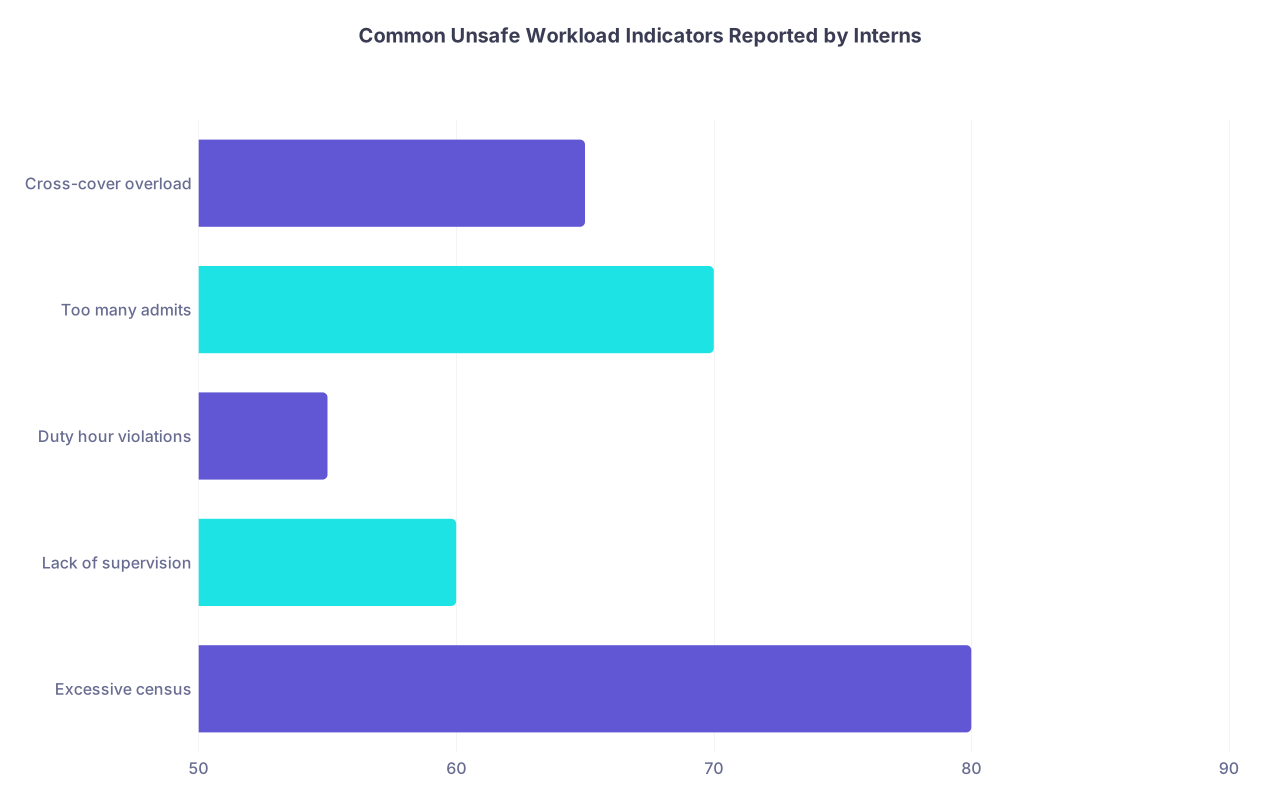
| Category | Value |
|---|---|
| Excessive census | 80 |
| Lack of supervision | 60 |
| Duty hour violations | 55 |
| Too many admits | 70 |
| Cross-cover overload | 65 |
Pattern + documentation is what forces programs to act.
Hard Truths: What’s Not Automatically Unsafe
Let me be blunt about a few things that feel awful but aren’t necessarily “unsafe” on their own:
- Being very busy with 8–10 patients on day shift, with good supervision
- Staying late a couple days a week to finish notes and discharges
- Feeling emotionally exhausted on certain rotations (ICU, ED, oncology)
- Getting snappy pages or attitude from consultants or nurses
- Having 24-hour call occasionally, with real post-call days
These can be miserable. They can contribute to burnout. But without the other elements (chronic duty hour violations, patient care shortcuts, major errors, lack of supervision), they’re just part of a hard training environment.
Your goal is not to label all discomfort as “unsafe.” Your goal is to recognize when discomfort has crossed into unacceptable risk.
How to Protect Yourself While the System Catches Up
Even in a flawed system, you’re not powerless. A few survival rules:
- Never fake or back-date orders, notes, or exam findings to “look good.” If something wasn’t done, document the reality and the constraints.
- Document your concerns in emails to chiefs/PDs: short, factual, not emotional rants.
- Use your duty hour logs honestly. If you’re told to change them, that’s a serious red flag and should be escalated outside your program if needed.
- Find allies. There’s almost always a senior or faculty member who quietly agrees things are out of control and is willing to help push for change.
- Take your days off seriously. If the system is bad, you’ll need every bit of recovery you can get.
FAQ: “When Should I Worry that My Intern Workload Is Unsafe?”
1. How many patients is “too many” for an intern?
There’s no magic number, but if your typical day involves more patients than you can physically see, examine, and meaningfully think about, that’s too many. On most general medicine services, once you’re consistently above 12–14 active patients plus admits, I start getting suspicious, especially if supervision is thin or the acuity is high.
2. Should I ever refuse new admissions because I feel it’s unsafe?
In the moment, phrase it as escalation, not refusal: “Given my current census and cross-cover responsibilities, I’m worried I can’t safely take more admits without risking patient care. Can we involve the chief or attending to redistribute?” If no one listens and you truly believe harm is likely, it’s reasonable to clearly document your concern (email/text to chief/PD) and continue to focus on safety-critical tasks.
3. Will I get in trouble for reporting unsafe workload or duty hour violations?
Retaliation is explicitly prohibited by ACGME, and programs can get into serious trouble for it. Does that mean it never happens? No. But if you document facts calmly, avoid personal attacks, and ideally involve multiple residents (group concern), you have protection. If you’re worried, use anonymous reporting or talk directly to the GME office or resident ombudsperson.
4. How do I know if it’s me being slow/disorganized vs. workload truly being unsafe?
Ask yourself two things: (1) Are other solid interns similarly drowning on this rotation? (2) When you’re well-rested and reasonably efficient, are you still unable to complete essential tasks? If yes to both, it’s likely a system/workload issue. You can also ask a trusted senior to shadow your workflow for part of a shift to see if there are fixable efficiency issues vs. genuine overload.
5. What if my program leadership says, “This is how we all trained; you’ll be fine”?
That’s a red flag. Standards have changed for a reason. If leadership dismisses concrete safety concerns, escalate outside the department: GME office, institutional wellness officer, or ACGME resident survey comments. You’re not obligated to accept unsafe conditions because “that’s how it’s always been.”
Key takeaways:
- Your workload is unsafe when, even with good effort and basic competence, you cannot provide timely, essential care or avoid repeated errors.
- Patterns matter more than single bad days: chronic overload, duty hour violations, and poor supervision are the big red flags.
- When it feels unsafe, escalate early, be specific, document patterns, and use the systems that exist—even when the culture tries to pretend everything is fine.