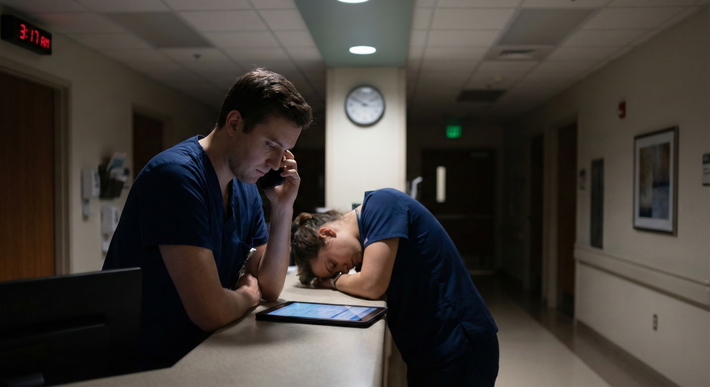
What happens when you realize your “manageable” sign-out list has quietly doubled and you’re now carrying 18 patients with cross-cover on top?
That’s the moment almost every intern asks: “Is this normal? Or is my cap insane?” Let’s answer that directly.
The short answer: the numbers most people don’t say out loud
On a typical inpatient medicine service in the U.S.:
- A reasonable daily census for an intern: about 8–12 patients
- A hard upper limit that’s still common: 14–16 patients
- Beyond 16 on a busy, unstable population? You’re moving into unsafe territory for most interns, no matter how “strong” they are.
For other specialties:
- General surgery floor: 6–12 (depending on acuity, ICU vs floor, and whether there’s an NP/PA)
- ICU intern: 6–10 (higher acuity, more procedures, more calls)
- OB/Gyn, EM, psych: patient count is less meaningful; throughput/intensity per hour matters more.
Let me be blunt: any attending or program that consistently expects a brand-new intern to safely manage >16 complex inpatients during the day, with full notes, orders, family calls, and discharges, is kidding themselves. Or they’re prioritizing billing and “productivity” over patient safety and training.
Now let’s unpack what actually drives a “reasonable” number.
What really determines a safe intern cap (it’s not just the number)
Raw census is a blunt instrument. Five crashing ICU patients is harder than 15 stable geriatric boarders. So you judge the number in context.
Here’s what actually matters.
1. Acuity and complexity
Carrying 10 patients is not the same across services.
- Ten stable CHF/COPD follow-ups on a VA ward? Completely doable.
- Ten new admits, all undifferentiated, ICU-borderline? That’s a death march.
Watch for these red flags:
- Multiple patients on vasoactive drips or BiPAP
- High turnover days (3–5 discharges plus 3–5 new admissions)
- Heavy social work/placement needs (homelessness, nursing home, complex family dynamics)
- Procedures you’re expected to do yourself (lines, LPs, paracenteses)
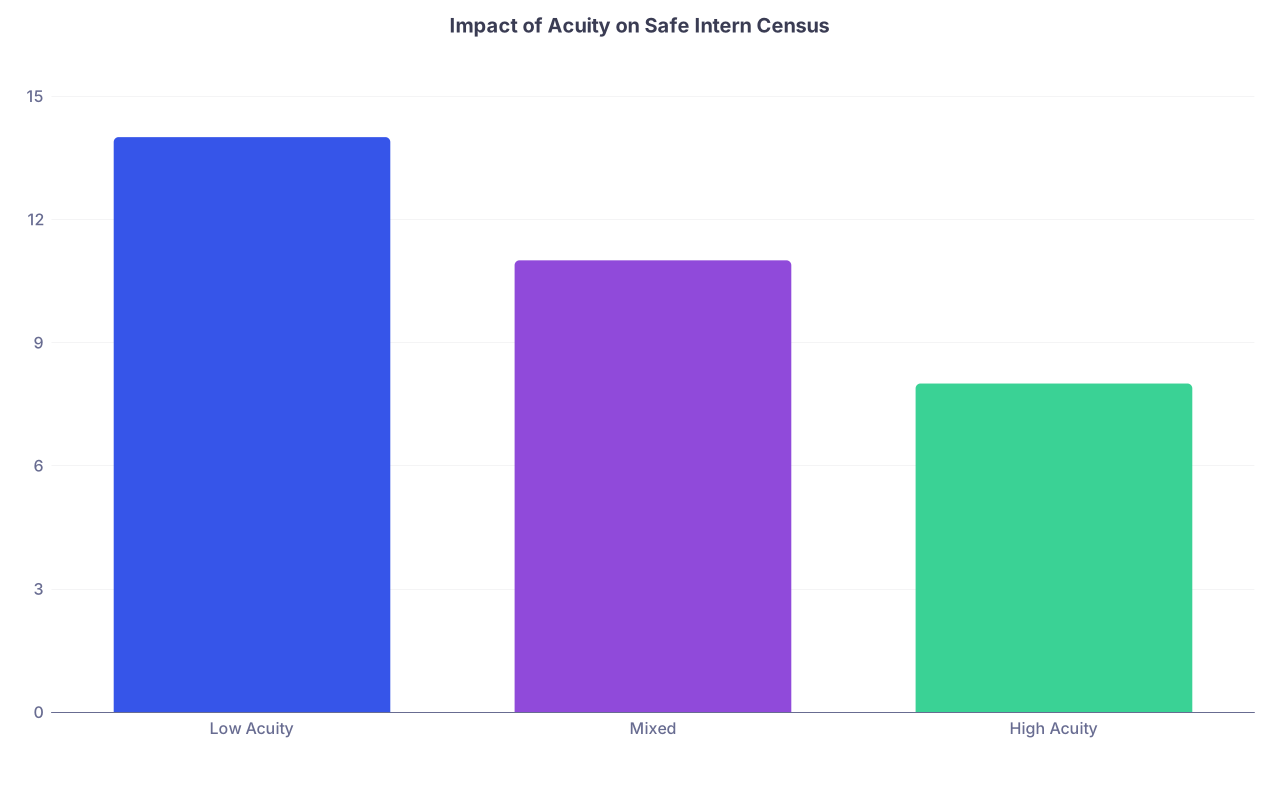
Rule of thumb: if >30–40% of your list is “high-touch” (you’re in and out of the room all day, constant pages, rapid response risk), your cap should be closer to 8–10, not 14–16.
| Category | Value |
|---|---|
| Low Acuity | 14 |
| Mixed | 11 |
| High Acuity | 8 |
2. Support on the team
Your “true” workload depends heavily on who else is around.
Big difference between:
- You + senior + attending + NP + case manager who actually help
vs - You + checked-out senior who rounds, disappears to clinic, and leaves you to run the floor
Support that lowers your safe census:
- A senior resident who pre-writes or helps with discharges
- NPs/PAs covering some notes, follow-up calls, or discharges
- Dedicated case management and social work present on rounds
- Unit-based pharmacists who help with med rec and dosing
Support that doesn’t really lower your workload (but programs like to brag about):
- “We have night float” (okay, but your day is still slammed)
- “We cap as a team at 20!” (while quietly expecting the intern to do 90% of the work)
- “Your senior cosigns the notes” (but doesn’t touch orders or documentation)
Real talk: a good senior can safely increase your workable cap by 2–4 patients because they anticipate, help, and take tasks off your plate. A bad or absent senior effectively cuts your safe cap down.
Typical caps and loads by specialty
This is what I actually see in real programs — not what’s in pretty brochures.
| Service | Typical Intern Load | Often Unsafe Beyond |
|---|---|---|
| Inpatient Medicine | 8–12 | 16 |
| Step-down/Telemetry | 8–10 | 14 |
| ICU | 6–10 | 12 |
| General Surgery | 6–12 | 16+ (floor + ICU mix) |
| Oncology/BMT | 6–10 | 12 |
Again, these are typical, not “ideal.” Plenty of interns spend weeks above the “often unsafe” line because hospitals are chronically understaffed, and programs lean hard on “but duty hours are within ACGME limits.”
Let me translate that: “You’re drowning, but you’ll at least clock out under 80 hours this week.”
How to tell when your list is actually unsafe (not just uncomfortable)
You’re going to feel overwhelmed all the time as an intern. That’s normal. So where’s the line where you should actually speak up?
Watch for these concrete signs:
You routinely:
- Can’t see all patients before rounds
- Finish notes after sign-out or at home
- Don’t follow up on labs/imaging until someone pages you about them
You’re forced to choose between:
- Calling a family back
- Fully assessing a sick patient
- Finishing a critical discharge summary
Because you literally can’t do all three.
Things are slipping:
- Orders entered >2–3 hours after rounds because you’re putting out fires
- Missed med changes, missed DVT prophylaxis, forgotten consults
- Nurses start calling you more aggressively about “stuff the team forgot”
Safety events:
- Rapid responses or near misses you know might have been preventable if you’d had time to reassess
- Tests or results not reviewed until the next day that changed management
One internal metric I like:
If you are consistently finishing your notes after 5–6 pm on a day service where you started at 6–7 am, and you’re not doing a ton of new admissions, that’s a workload problem, not a “you’re just slow” problem.

PGY1 vs PGY2: why your cap will (and should) change
In July as a day-1 intern, a census of 6–8 new patients can feel like a mountain. By January or March, that same list might feel… fine.
You get faster at:
- Pre-charting efficiently
- Structuring your notes
- Anticipating orders and handoffs
- Not over-documenting every single review-of-systems detail
So your effective cap rises a bit. But not infinitely.
What should happen:
- July–September: your supervising team protects you, keeps you closer to 8–10 patients as you learn workflows.
- October–March: you live in that 10–12 range on medicine, sometimes higher on busy days.
- By the time you’re a senior: the intern carries 10–12, you manage team capacity, and you’re capped more by complexity and admissions than sheer census.
What often does happen:
- Day 5 of intern year: “You’re capped at 16. Try to pre-round faster.”
Which is lazy leadership, to put it nicely.
How to push back (without getting labeled “weak”)
You can’t just say, “I’m overwhelmed, I need fewer patients.” That gets dismissed fast.
You need specific, observable facts tied to patient safety and education. Think like this:
Lead with patient safety, not your feelings
Example:
“I’m concerned that with 17 patients and 4 new admissions today, I haven’t been able to reassess Mr. X after his hypotension this morning. I’m worried we’re missing stuff because of the volume.”Use time stamps
“I got to bedside for my last new patient at 3 pm, wrote the H&P at 6 pm, and I still haven’t reviewed her CT results. That’s directly because of the number I’m carrying, not because I spent extra time chatting.”Involve your senior first
“Can we talk about redistributing some patients? I’m missing follow-ups and finishing notes after sign-out consistently.”If nothing changes, escalate strategically
- Chief resident
- Program leadership
- Hospital safety/quality channels (RSI forms, safety reports etc.)
The magic phrase that gets attention:
“I’m worried the current patient load is creating unsafe conditions.”
No good program director wants that sentence on record repeatedly without doing something.

| Step | Description |
|---|---|
| Step 1 | Notice unsafe pattern |
| Step 2 | Document specific examples |
| Step 3 | Talk to senior |
| Step 4 | Monitor and recheck |
| Step 5 | Talk to chief |
| Step 6 | Email PD with specifics |
| Step 7 | Improves? |
| Step 8 | Improves? |
Tactics to handle a heavy list when you can’t change the number
Sometimes you’re stuck. Census is high, staffing is bad, and help isn’t coming. In that case, you switch to survival mode: safe, streamlined, and unsentimental.
Here’s how I’d triage a 16-patient list as an intern:
Sort your list into three groups first thing:
- Red: unstable / could crash / active issues (see early, full reassess)
- Yellow: moderate risk / active plan evolving
- Green: stable, discharge planning, slow-moving
See all Red patients before rounds. No exceptions.
Write short, targeted notes on green patients. Stop writing novels:
- One-liner
- Yesterday vs today
- Assessment with today’s actionable changes If your “stable” notes are longer than your “sick” notes, flip that.
Batch work:
- Put in all daily routine orders right after rounds
- Call all consults at once
- Then go room-to-room for re-evals
Say no to nonessential nonsense:
- “Can we get a full ROS in your note?”
“For my critical patients, I’m prioritizing assessment and plan. I’m happy to add more detail to stable patients’ documentation if time allows.”
- “Can we get a full ROS in your note?”
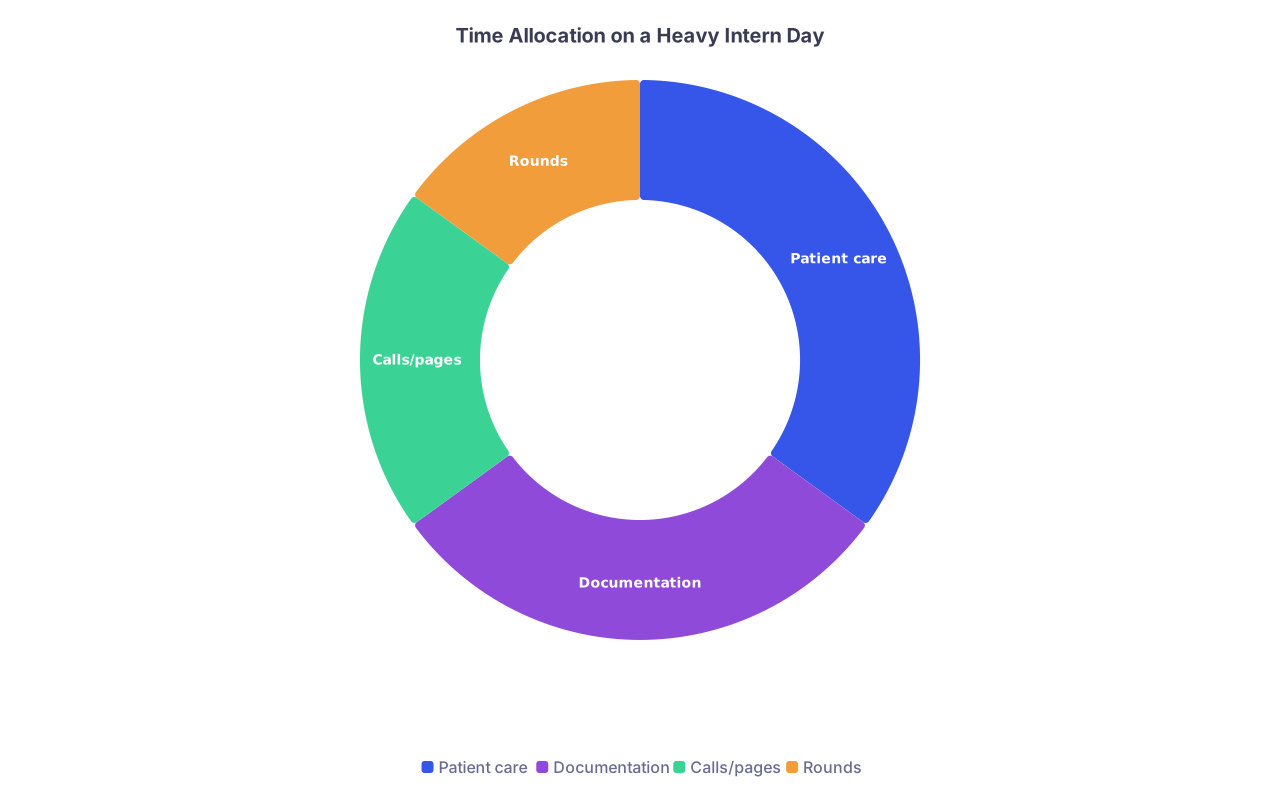
You’re not there to produce beautiful documentation. You’re there to not miss sepsis, bleeding, arrhythmias, and respiratory failure.
| Category | Value |
|---|---|
| Patient care | 35 |
| Documentation | 30 |
| Calls/pages | 20 |
| Rounds | 15 |
When your number should definitely be lower
There are some situations where even 10 is too many:
- First 1–2 weeks of intern year, especially if:
- New EHR
- New hospital system
- You’ve never done inpatient medicine here
- New to a subspecialty with intense learning curve (heme/onc BMT, transplant, advanced HF)
- You’re coming off a serious personal health or mental health crisis
A strong program proactively lightens your load in these moments. If they don’t, you’re not weak for asking. You’re smart.
FAQs: Intern patient loads
1. Is it normal to cry or feel like you’re failing when you hit 12–14 patients?
Yes. And it doesn’t mean you’re not cut out for this. I’ve seen incredibly competent, later rockstar senior residents break down at 13–15 patients early in the year. Your brain and workflow just aren’t built for that volume yet. It gets better, but the system is also frankly built around pushing you past reasonable limits.
2. How many patients should I carry by the end of intern year?
On inpatient medicine, by late spring, you should be reasonably comfortable managing 10–12 on a typical day, with occasional days creeping up toward 14 when things are stable. “Comfortable” doesn’t mean relaxed. It means you can get through the day without constant panic and you aren’t chronically missing important stuff.
3. My co-intern carries 15 easily and I’m dying at 9. Am I just slow?
Probably not “just slow.” You may be:
- Over-documenting
- Re-writing the entire story daily
- Personally doing tasks that could be delegated or batched Or your co-intern might simply be cutting corners in ways you don’t see. Compare workflows, not just census. Ask them to walk you through exactly how they structure their pre-rounding and note-writing. You’ll pick up speed, but don’t use the most extreme person on your team as your benchmark.
4. What does ACGME say about how many patients I can carry?
ACGME has duty hour limits but is very vague on hard census numbers. Some internal medicine guidelines suggest team caps (often total team census around 20 for 1 intern + 1 resident), but there’s a lot of wiggle room and many hospitals push the boundaries. Use ACGME as backup when you talk about safety, but don’t expect a clear “you must cap at 10” rule. It doesn’t exist.
5. Should I track my daily census and workload?
Yes. Keep a simple log: date, number of patients, number of new admits, time you left, any safety concerns. It’s invaluable if you need to later show patterns to chiefs or your PD. Memory is fuzzy; logs are not. A simple notes app or spreadsheet works fine.
6. How do I talk to my program director about chronic overloading?
Bring:
- Specific examples of unsafe days (with dates)
- Objective data (census, admits, time of last note, documented near misses)
- A calm, safety-focused frame
Example: “Over the last month, on 8 days I carried 16–18 patients as the only intern on the team. On those days, I finished notes after 7 pm and missed follow-ups on imaging until the next day. I’m concerned this level of workload isn’t safe for patients or sustainable for interns.”
7. What’s the one number I should keep in mind when I’m judging if my list is reasonable?
On a typical inpatient medicine service: around 10–12 is the reality-based “reasonable” range for a functioning intern with modest support. If you’re routinely >14–16, especially with high-acuity patients and shaky support, that’s not you being weak. That’s the system being overleveraged.
Key points to hold onto:
- For a medicine intern, 8–12 patients is reasonable; >16 is usually unsafe, especially with high acuity.
- Your safe cap depends heavily on acuity, support, and experience—don’t judge yourself by a raw number alone.
- When the list is truly unsafe, speak up with specific, safety-focused examples and protect your patients first, documentation second, and everything else last.