The worst thing you can do with an unsafe call schedule is stay silent and try to “tough it out.”
If you honestly can’t handle your current call schedule, yes—you should tell your program director (PD). But how you do it is the difference between being seen as a struggling but responsible intern… and being labeled a problem.
Let’s walk through exactly what to do, what to say, and when to escalate.
1. The Core Answer: Yes, But Not As Step One
You don’t start with an email to your PD saying “I can’t handle this.” That’s how people scare leadership and trigger all kinds of formal processes you might not want.
Do this instead—stepwise and fast, not over months:
- Reality-check your situation.
- Talk to senior residents and chief residents.
- Try simple schedule or workflow fixes.
- Document what’s happening.
- Then talk to your PD using the right framing.
You want to show:
- You’re self-aware.
- You’re trying to be safe.
- You’ve already tried reasonable steps.
- You’re asking for targeted help, not a rescue from residency.
If you’re already at the point where you’re thinking, “I might genuinely make a dangerous mistake,” you’re already past the point of keeping this to yourself.
2. First Question: Is This Normal Hard or Unsafe Hard?
Everyone feels wrecked on certain rotations. That alone isn’t a reason to call the PD. The key question: Are you just tired and overwhelmed, or are you objectively unsafe?
Use this quick gut-check:
Ask yourself:
Sleep
- Are you consistently getting less than 4–5 hours between shifts for days on end?
- After call, are you so exhausted you’re nodding off writing notes or in sign-out?
Errors / Near Misses
- Have you made or almost made serious mistakes (wrong dose, missed critical lab, unsafe discharge) because you were fried?
- Are nurses or seniors catching things you “normally would never miss”?
Function
- Are you forgetting key parts of your plan repeatedly?
- Are you losing track of your patients’ stories or labs mid-day?
Mental Health
- Are you crying daily, dreading every shift, or having passive thoughts like “I just wish I’d get hit by a car so I wouldn’t have to go in”?
- Are you using alcohol or substances to sleep or cope regularly?
If you’re checking multiple boxes, this isn’t just “intern year is hard.” This is “I’m functioning at or near an unsafe level.” That does rise to PD-level concern.
3. Who to Talk to Before the PD (Usually Within a Week)
Unless you’re in immediate crisis, don’t jump straight to your PD. There’s usually a simpler route first.
Here’s the order I recommend.
Step 1: Senior Resident on Your Team
Say this clearly and concretely, not dramatically:
“I’m really struggling on this call schedule. I’m worried I’m going to miss something important because I’m so exhausted. Can we go over my workflow or see if I’m doing something inefficient?”
This:
- Signals concern for patient safety, not just comfort.
- Invites coaching, not pity.
- Makes it easier for them to advocate for you if needed.
Sometimes the issue is workflow:
- Writing notes during the day instead of after sign-out.
- Pre-charting better.
- Prioritizing tasks in a smarter order.
- Using templates and dot phrases efficiently.
If your senior brushes you off with “Yeah, everyone’s tired, you’ll be fine,” and you know you’re not fine, that’s a data point—not the end of the conversation.
Step 2: Chief Residents
Chiefs are the pressure valve between residents and PD. They usually control:
- Call schedules
- Switches/trades
- Float/night coverage
- Schedule fixes like adding a swing or short-call person
Reach out with something like:
“I’m reaching out because I’m having a really hard time with the current call schedule on [rotation]. I’m worried about my ability to be safe on call given [concrete reasons]. I’ve already talked with my senior about workflow, but I’m still struggling. Can we talk about possible adjustments or strategies?”
You’re not asking:
- “Cancel my call”
- “Make my life easy”
You’re asking:
- “Help prevent a safety problem.”
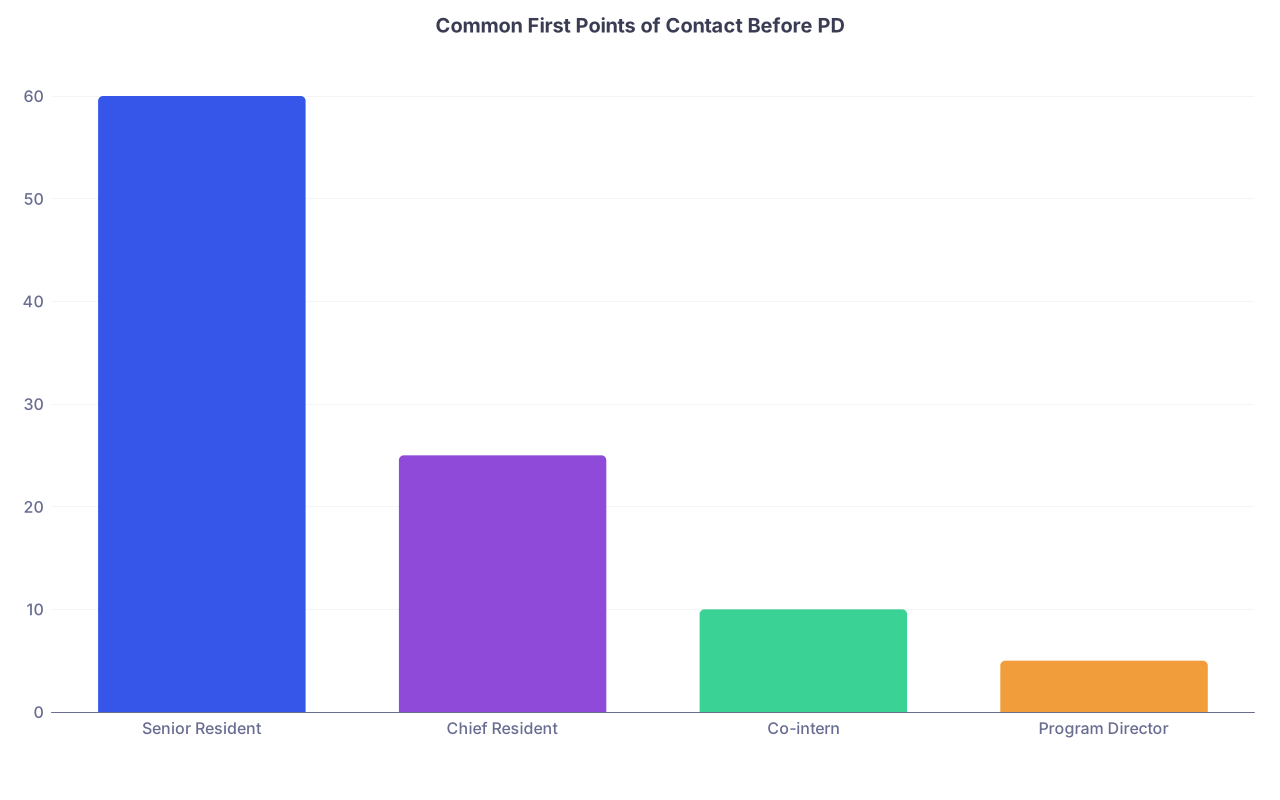
| Category | Value |
|---|---|
| Senior Resident | 60 |
| Chief Resident | 25 |
| Co-intern | 10 |
| Program Director | 5 |
4. When It Should Go to the PD
There are clear situations where going directly to the PD is appropriate:
- You’re having serious mental health symptoms (panic attacks, suicidal thoughts, can’t sleep at all).
- You’re being scheduled in a way that clearly violates duty hours and it’s not being fixed.
- You’ve already talked to seniors/chiefs and nothing has changed, and you’re still unsafe.
- There’s a cultural issue (retaliation, shaming, bullying) when you do ask for help.
If any of these are you, you’re not “weak” for telling your PD. You’re doing your job as a physician to protect patients and yourself.
5. How to Talk to Your PD Without Blowing Yourself Up
This is where people screw it up. They drop vague, emotional bombs like:
- “I just can’t do this schedule.”
- “I’m burnt out.”
- “This rotation is toxic.”
Your PD hears: red flag, maybe not fit for residency, might need formal evaluation.
Instead, be clear, specific, and oriented to solutions.
A Simple Framework: Facts → Impact → Efforts → Ask
Facts (neutral, concrete)
- “On this rotation, we’re averaging X hours, Y calls in Z days.”
- “My last four calls, I’ve left post-call at [time] and then returned at [time].”
Impact (on safety and functioning, not just feelings)
- “I’m noticing I’m missing small but important details.”
- “I’ve had [specific near miss] that I caught late, and that scared me.”
- “I feel dangerously fatigued driving home and sometimes while in patient rooms.”
Efforts (what you’ve already tried)
- “I’ve talked with my senior about my workflow and made these changes: [brief examples].”
- “I reached out to the chiefs about whether any small shift changes were possible.”
Ask (specific, calm)
- “I’m asking for your help figuring out how to make this sustainable and safe. I’m open to options—schedule adjustments, more support on certain call days, or anything else you think is reasonable.”
Example script you can literally use:
“Dr. Smith, I wanted to talk about my current call schedule on [rotation]. Over the last three weeks, my calls have been [brief facts]. I’ve noticed I’m making more small errors and I had one near miss on [describe in 1–2 lines] which scared me because I caught it much later than I should have.
I’ve talked with my senior about my workflow and tried to tighten things up—pre-charting earlier, writing shorter notes, prioritizing sicker patients—but even with those changes, I’m still feeling dangerously tired, especially on post-call days.
I’m worried I’m not functioning at the level I should be for patient safety. I wanted to bring this to you directly and see if we could talk about what options there might be to make this safer—whether that’s some adjustment to call, additional support, or something else you’d recommend.”
Notice what you don’t say:
- “I want to get out of this rotation.”
- “I can’t do intern year.”
- “This is unfair.”
You’re framing it as a shared problem, not a personal failing.
6. What Might Actually Change?
Be realistic. Your PD cannot magically erase all hard calls or make intern year comfortable. But good PDs can do things like:
| Type of Change | Example Action |
|---|---|
| Schedule tweak | Reduce one call, add short call |
| Added support | Extra night float or backup |
| Rotation change | Swap you to less acute service |
| Time-limited adjustment | Temporary lighter schedule |
| Professional support | Referral to counseling or wellness |
And yes, sometimes the “only” thing they can offer is therapy, coaching, or some reassurance plus closer follow-up. That’s still something. Also, it puts your situation on their radar, which matters if things get worse.
7. But Won’t This Hurt My Reputation?
This is what everyone’s secretly worried about.
Here’s the blunt truth:
- If you’re quietly unsafe—making errors, crying in stairwells, snapping at nurses, getting complaints—that hurts you more than proactively asking for help.
- PDs would rather deal with a resident who says, “I’m getting close to my limit,” than one who implodes, disappears, or ends up reported for unprofessional behavior.
- Every PD I’ve spoken to has some version of: “I can work with insight. I can’t work with denial.”
You’re not asking them to “fix your feelings.” You’re asking them to help maintain patient safety.
The residents who get quietly blacklisted are usually:
- Chronically late, defensive, or blame others.
- Deny any problem even when multiple people complain.
- Refuse feedback.
The ones who get support and still match into good fellowships:
- Acknowledge struggles early.
- Ask for specific help.
- Follow through on plans made with PDs or counselors.
- Show improvement over time.
8. What If the Problem Is the Whole System?
Sometimes the answer is: your program is actually toxic. Or wildly non-compliant with duty hours. Or running on the logic of “we suffered, so you suffer.”
Red flags:
- You’re consistently working 100-hour weeks and being told not to log it.
- Calling out safety gets you mocked or retaliated against.
- Every intern on your service is breaking down and leadership shrugs.
In those cases:
- Document your hours and experiences (privately, not on your work computer).
- Use your GME office or ombudsman if your PD is part of the problem.
- If you’re in genuine danger (sleep driving, collapsing), use sick leave or FMLA rather than just showing up and hoping.
But still: don’t be a martyr. You don’t get bonus points for being destroyed by a bad system.

| Step | Description |
|---|---|
| Step 1 | Realize schedule unsafe |
| Step 2 | Talk to senior |
| Step 3 | Talk to chiefs |
| Step 4 | Monitor and adjust |
| Step 5 | Talk to PD |
| Step 6 | Implement plan |
| Step 7 | Contact GME or ombuds |
| Step 8 | Improves? |
| Step 9 | PD responsive? |
9. How to Prepare Before Talking to Your PD
Don’t walk in cold.
Before the meeting, write down:
- 2–3 specific examples of unsafe fatigue or near misses.
- A short summary of your schedule pattern (not a rant—numbers).
- What you’ve already tried (workflow changes, talking with seniors/chiefs).
- 1–2 ideas you’d be open to (fewer calls temporarily, additional support, mental health referral).
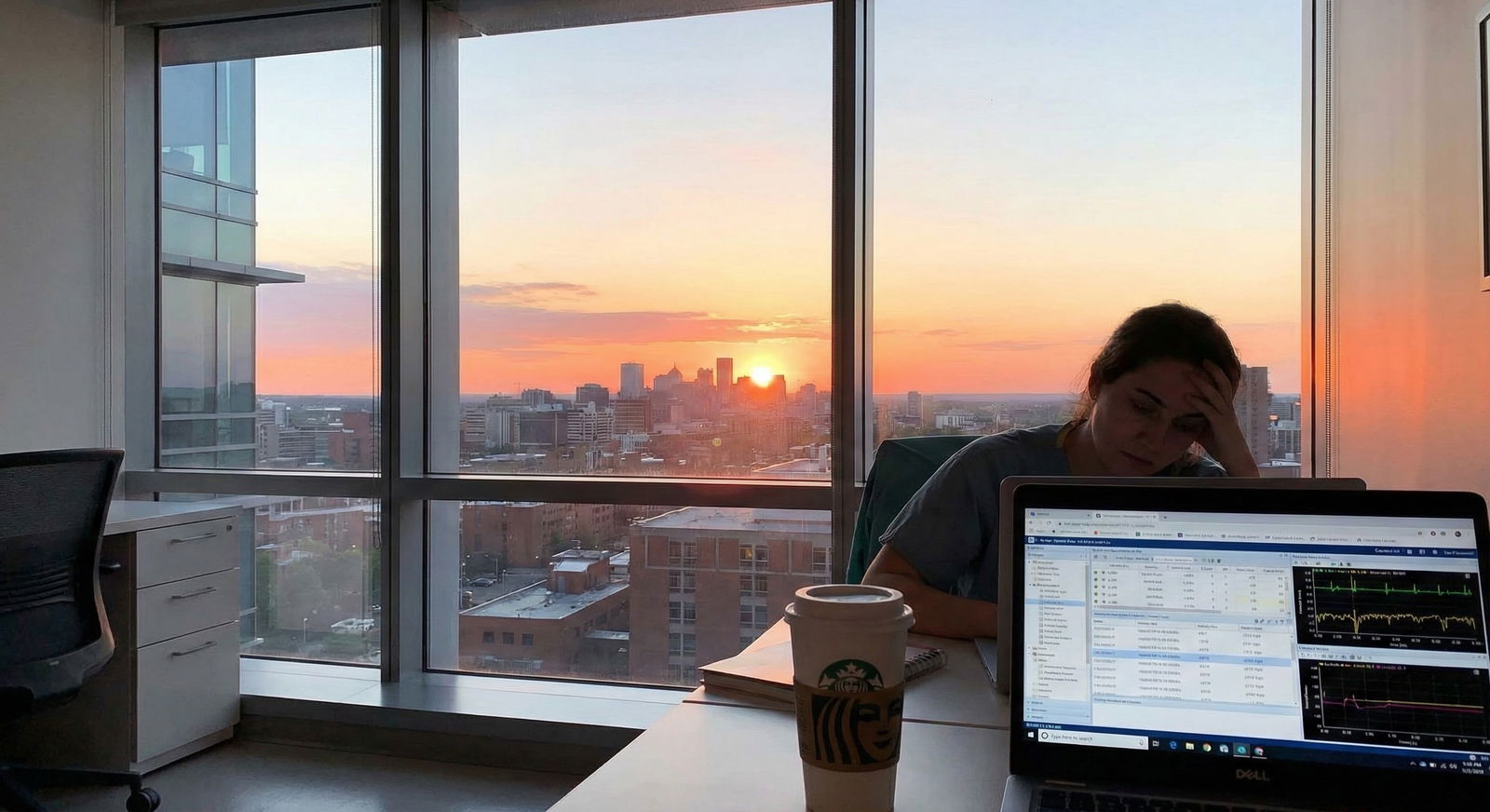
You’re not going in to “vent.” You’re going in to collaborate on a plan.
10. What If the Issue Is Mental Health, Not Just Schedule?
Let’s be honest: sometimes it’s not mainly the call schedule. It’s depression, anxiety, PTSD, or pre-existing mental health issues that residency is amplifying.
If you’re:
- Having panic attacks before shifts
- Not eating or sleeping
- Numb, detached, or hopeless
- Having thoughts of self-harm
This is no longer just a “schedule” conversation. This is a health conversation.
You can still talk to your PD, but you should also:
- Contact your institution’s confidential counseling service.
- Talk to your own therapist/psychiatrist if you have one.
- Use employee assistance programs (EAP).
Language you can use with your PD:
“I’ve been having significant mental health symptoms that are affecting my ability to safely handle my current call schedule. I’m working with a mental health professional, but I wanted to loop you in so we can come up with a plan that keeps patients and me safe while I get treated.”
Yes, it’s scary. But I’ve seen residents do this, get temporary accommodations or leave, come back, and finish residency successfully.
11. Bottom Line: Silence Is Riskier Than Speaking Up
If you can’t safely handle your current call schedule, pretending you can is not professionalism. It’s denial.
You don’t have to use dramatic language. You don’t have to say “I can’t do this” at all. You do have to say:
- “Here’s what’s happening.”
- “Here’s how it’s affecting my safety and performance.”
- “Here’s what I’ve tried already.”
- “Here’s what I’m asking your help with.”
That’s the resident PDs trust.

FAQ: “Should I Tell My PD If I Can’t Handle My Current Call Schedule?”
1. Will telling my PD I’m struggling with call get me fired or not renewed?
Almost never, if you come in early, honest, and solution-focused. PDs worry more about residents who hide problems and then have major incidents or complaints. If you’re transparent, show insight, and engage in a plan, you’re usually seen as responsible, not incompetent.
2. What if I’m just slow and disorganized—should I still say something?
Yes, but frame it around performance and safety, not just feelings. Say, “I’m noticing I can’t complete my tasks on this schedule without missing things. I’ve tried improving my workflow by doing X and Y, but I’m still behind. Could we work on a plan to make sure I’m functioning safely?” Many PDs will pair you with a coach, senior mentor, or help restructure parts of your day.
3. Should I email my PD or ask for an in-person meeting?
If it’s serious enough that you’re worried about safety or your own health, ask for a brief meeting. Keep the email short: “I’m having some difficulty with my current call schedule and have concerns about safety and sustainability. Could we find 15–20 minutes to talk this week?” Don’t pour your whole story into a long emotional email.
4. What if my program punishes people who speak up?
Then you have a system problem, not just a schedule problem. Document your concerns privately, talk to chiefs you trust, and consider using your GME office, ombuds, or institutional wellness office. If you’re truly unsafe or being retaliated against for raising concerns, that’s exactly the kind of thing GME is supposed to handle.
5. I’m not sure if it’s “bad enough” to involve my PD. How do I decide?
Use this rule: If your fatigue or distress is causing near misses, repeated forgetfulness, serious mood changes, or you’re dreading work to the point of panic or despair—it’s “bad enough.” Start with senior/chief. If things don’t improve or you still feel unsafe after a week or two, that’s your sign to talk to your PD.
Open your calendar and pick a 20-minute block in the next week. If you know you’re not safe on your current call schedule, use that block to either talk to your senior/chief or email your PD to set up a meeting. Don’t wait for a major error to force the conversation.