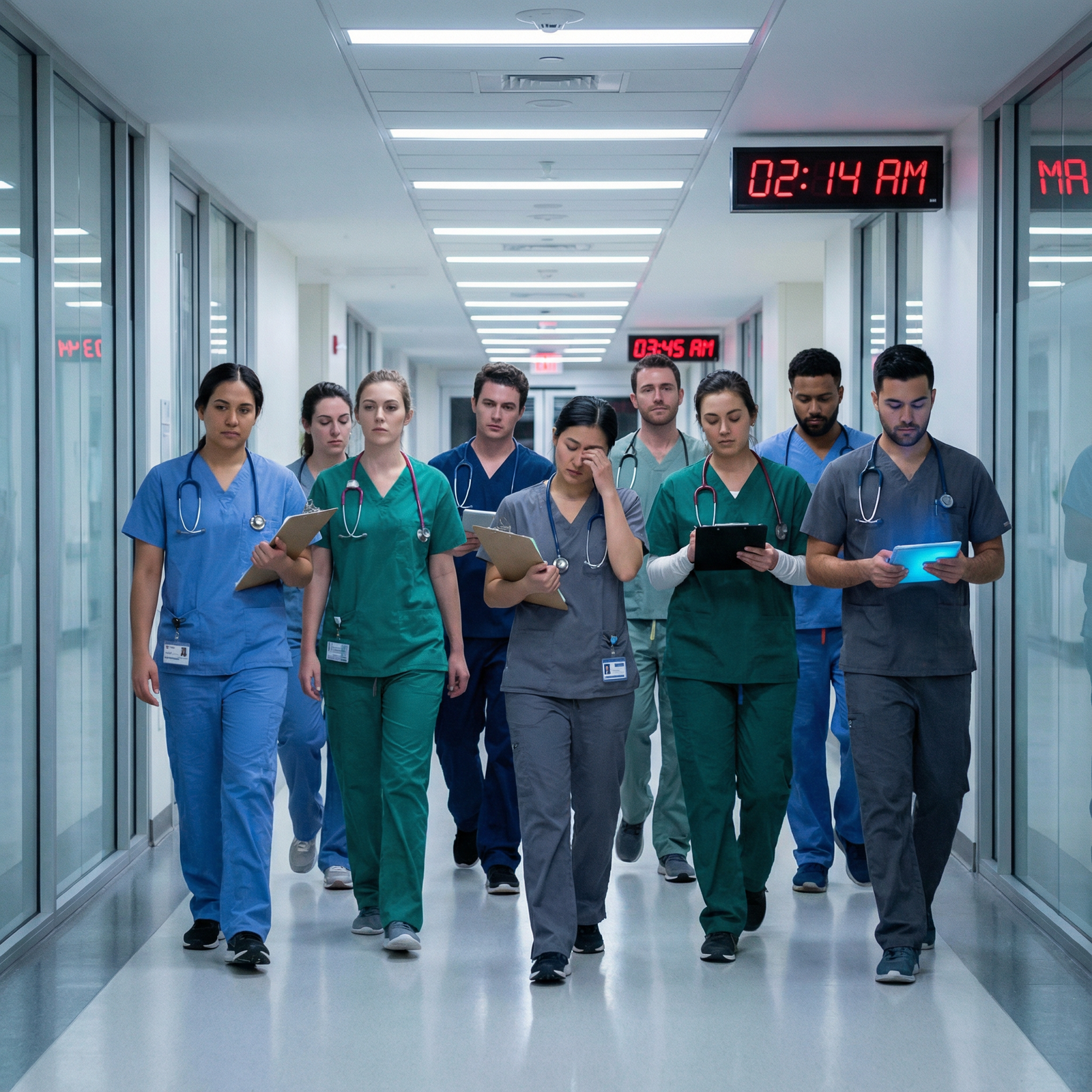
Here’s the myth: if you shorten shifts, you solve fatigue.
You don’t. Not automatically. You may reduce one kind of fatigue and replace it with another. That’s the part people skip because “24-hour call bad, night float good” is cleaner, easier, and sounds modern. Real life in residency isn’t that tidy.
Intern fatigue is not just feeling sleepy while inhaling stale coffee at 4:17 a.m. It’s sleep deprivation, circadian disruption, slower reaction time, worse working memory, mood deterioration, and the cumulative drag that makes your post-call drive home feel more dangerous than your cross-cover pager. I’ve watched interns do fine at hour 12, get sloppy at hour 22, and then somehow still be expected to absorb teaching rounds like their brain is functioning normally. It isn’t.
The real question isn’t which system sounds more humane. It’s which system produces less harmful fatigue while preserving patient safety, continuity, and actual learning. And the evidence? It helps, but it doesn’t give you a simple winner. That’s inconvenient. It’s also true.
24-Hour Call vs Night Float: What Problem Are We Actually Solving?
Programs often pretend the only problem is “too many hours in one stretch.” That’s lazy thinking.
Fatigue has several moving parts:
- Acute sleep loss: the obvious one
- Circadian misalignment: being awake and responsible when your brain wants sleep
- Cognitive slowing: worse attention, slower processing, more missed details
- Cumulative strain: the effect of repeated bad sleep, heavy workload, and poor recovery
That matters because a schedule can look better on paper and still leave you wrecked. A night float block may eliminate the 28-hour marathon, sure. But if it gives you fragmented daytime sleep, repeated circadian inversion, and no meaningful recovery, congratulations—you’ve engineered a different flavor of impairment.
This is where the usual debate gets dumb. Shorter shifts do not automatically mean safer care. More humane? Sometimes. Less acutely delirious? Often. Better across every domain? No.
The evidence can tell us a few things clearly: prolonged wakefulness hurts performance; circadian disruption is real; and bad scheduling design creates errors whether the badge says “call” or “night float.” What it can’t prove cleanly is that one schedule universally optimizes fatigue, education, continuity, and safety all at once. That schedule does not exist.
What the Data Actually Shows About Fatigue, Sleep, and Performance
The physiology is not controversial. Prolonged wakefulness degrades performance. Attention slips. Reaction time slows. Mood worsens. Working memory gets shakier. If you’ve ever reread the same potassium value three times at 5 a.m. and still felt uncertain, you don’t need a journal club to know this is real.
Data from sleep and occupational performance research consistently show that being awake for long stretches can impair function in ways that are not subtle. You may still be standing, charting, and answering pages. That does not mean you are functioning well. Medicine has a long tradition of confusing physical presence with cognitive reliability. Bad tradition.
But total hours worked are only part of the story. Circadian timing matters. A resident working several nights in a row often has lower alertness during biological night even if the nominal shift is shorter than a 24-hour call. Why? Because humans are not built to be sharp at 3 a.m. just because the schedule says so. Your melatonin doesn’t care about the chief resident’s spreadsheet.
Sleep quantity matters. So does sleep timing. So does recovery opportunity. A protected six-hour daytime block after a night shift may outperform a technically longer but fragmented sleep opportunity interrupted by noise, errands, commute, and life. Structure helps only if it creates real sleep, not fantasy sleep.
And yes, sleep deprivation and circadian disruption can coexist. That’s the nightmare setup: little sleep, wrong-time sleep, poor recovery, high cognitive load. Some night float models improve this. Some don’t. Some 24-hour call systems are barbaric. Some are buffered by caps, strategic naps, and better post-call relief. Details matter far more than ideology.
One more thing the data keeps reminding us: fatigue is not just an intern wellness issue. It affects handoffs, communication, emotional regulation, and the ability to notice that the patient who “looks okay” is actually beginning to spiral. Those misses often happen quietly. No dramatic collapse. Just slower thinking, narrower attention, and one more thing overlooked.
24-Hour Call: The Pros, the Problems, and the Mythology
Let’s be fair first. Twenty-four-hour call has real advantages.
You see the arc of illness. You admit the patient, reassess them overnight, watch the lactate rise or improve, respond to the family, then present the overnight story in the morning. That continuity teaches. It builds ownership. It cuts down on handoffs. And handoffs are not harmless administrative rituals; they are failure points.
I’ve seen interns learn more from one messy overnight GI bleed with repeated reassessments than from three polished noon conferences. That’s not nostalgia. That’s how clinical pattern recognition gets built.
Now the myth that needs to die: endurance is not professionalism.
Staying upright for 24 hours does not make you more dedicated. It makes you awake for 24 hours. Medicine spent decades romanticizing impairment because it looked tough. Same energy as bragging that you haven’t eaten all day. Congratulations on your cortisol, I guess.
The downside of call is brutally straightforward:
- Sleep debt accumulates fast
- Judgment worsens late in the shift
- Attention becomes less reliable
- Recovery spills into the next day, sometimes the next two
- Safety risks extend beyond the hospital, especially driving home post-call
The dangerous part is that the deterioration can feel normal from the inside. Tired people often overestimate how functional they still are. That’s not a character flaw. That’s part of fatigue itself.
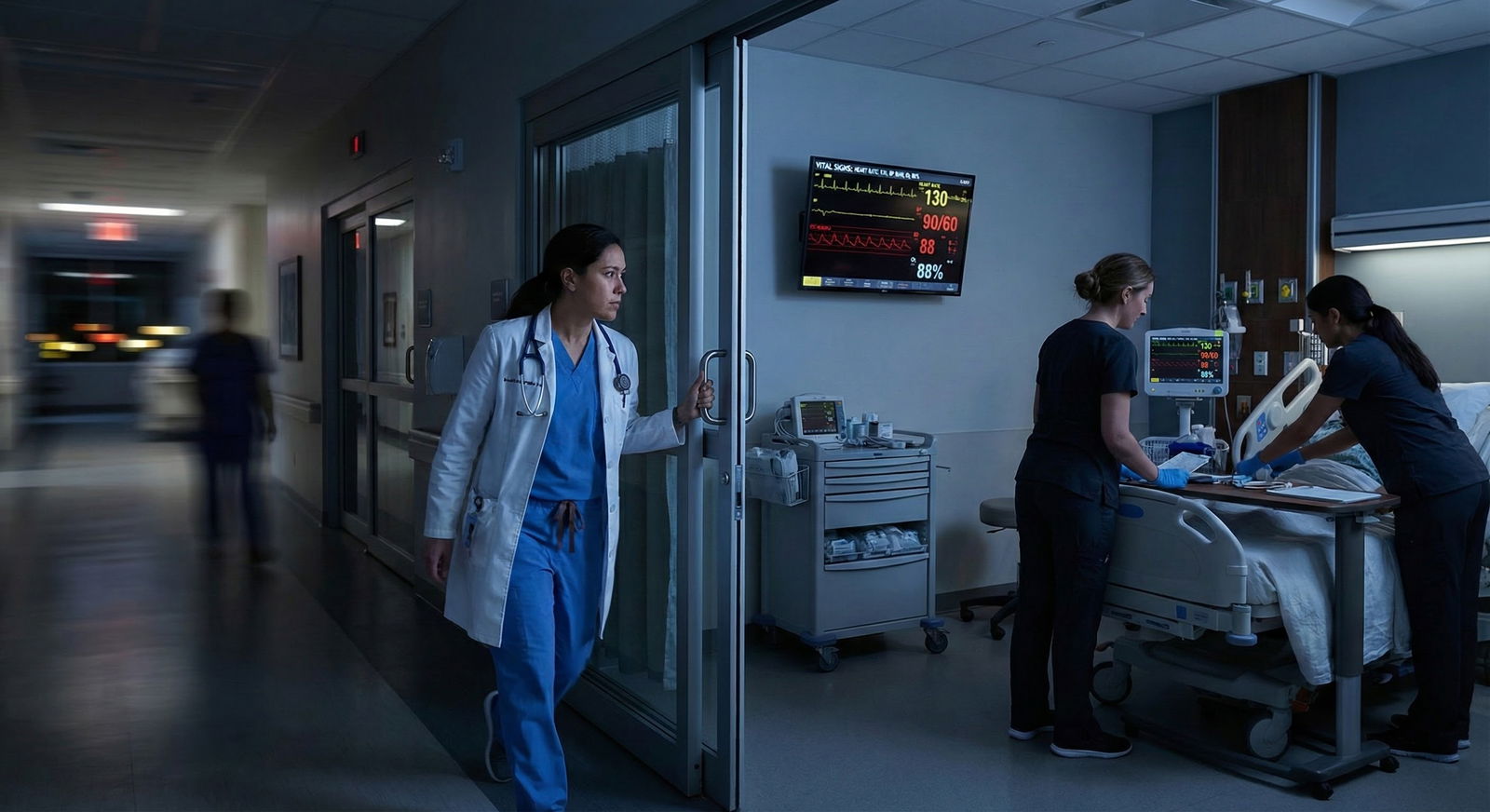
There’s also a hidden cost people underplay: post-call inefficiency. Even if duty hours technically comply, a resident who is physically present after an overnight call may absorb less, contribute less, and retain less. That’s not educational rigor. That’s wasted human bandwidth.
Could a carefully designed call system preserve continuity while reducing harm? Yes. Protected naps, workload caps, meaningful post-call relief, and limiting nonessential daytime obligations all help. But the macho version of call—the one that treats exhaustion like a rite of passage—isn’t noble. It’s outdated and sloppy.
Night Float: Less Heroic, More Effective? Not So Fast
Night float usually does one thing well: it reduces the sheer catastrophe of a single prolonged shift. That matters. An intern working a defined overnight schedule often gets a more predictable sleep opportunity than someone riding a call cycle into the ground. Acute fatigue often improves. Fewer zombie hours. Better immediate function. Good.
But don’t oversell it.
Night float is not magical. It often trades one stressor for another: circadian inversion. Multiple nights in a row can create chronic biologic jet lag, especially when residents try to bounce back toward daytime life on days off. Add in daytime noise, inconsistent sleep hygiene, long commutes, and mandatory educational events, and suddenly that “safer” schedule starts looking a lot messier.
The other cost is educational. Night float can mean:
- less exposure to daytime rounds and attending teaching
- fewer longitudinal patient relationships
- less ownership of daytime decision-making
- more cross-cover medicine, which teaches prioritization but not always deeper management
And then there’s the handoff burden. More night float usually means more transitions. More transitions mean more opportunities for dropped details, ambiguous plans, and that classic sign-out poison: “just keep an eye on them.” On what, exactly? For how long? What threshold triggers action? Bad handoffs can erase some of the gains from reduced single-shift fatigue.
So yes, night float is often less heroic. Good. Heroics are overrated. But “less heroic” does not automatically equal “fully solved.” Poorly implemented night float can simply move the fatigue problem from prolonged wakefulness to chronic circadian dysfunction and fragmented continuity.
So Which Schedule Is Better for Interns? It Depends on the Outcome You Care About
If your primary outcome is acute fatigue during a single shift, night float usually wins. That’s the cleanest finding. Shorter overnight shifts with real off-time are generally better than asking interns to function deep into the second day of wakefulness.
If your primary outcome is continuity and ownership, 24-hour call has legitimate strengths. Fewer handoffs. Better sense of illness trajectory. More direct experience with overnight consequences of daytime decisions.
If your primary outcome is all-around safety, the answer is more annoying: the schedule matters, but design matters more. A good night float system with protected sleep opportunities, capped workload, and solid handoffs can be excellent. A badly run one can be a circadian meat grinder. A well-buffered call system can preserve valuable continuity. A macho one can be dangerous nonsense.
Here’s the practical bottom line I actually believe:
- Night float often reduces acute fatigue
- 24-hour call can preserve continuity and some learning value
- Neither system works well without protected recovery
- Handoff quality is not optional
- Workload can sink either model
- Ideology is useless; implementation is everything

The debate was never toughness versus laziness. That framing is childish. The real question is how to balance fatigue, learning, continuity, and patient safety on a given service with actual human bodies, actual patients, and actual limits.
And here’s the reminder: no schedule earns moral points for looking hard. If it leaves interns cognitively dulled, patients handed off badly, and recovery treated like a luxury, it’s a bad system. The data doesn’t support worshipping 24-hour call. It also doesn’t support pretending night float is a universal fix. Protected sleep, sane workload, good handoffs, and real recovery time matter more than the mythology attached to either model.