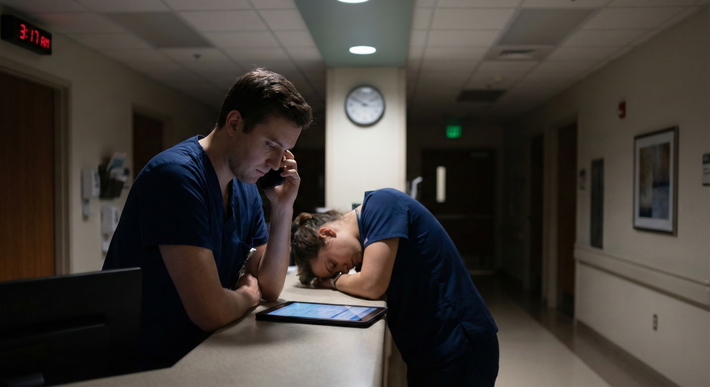
78% of interns in a large U.S. study reported routinely staying beyond duty-hour limits “to finish everything,” yet programs with stricter enforcement of work-hour rules had no worse patient outcomes and sometimes fewer serious errors.
So the cherished mantra—“good interns stay until everything is done”—does not correlate with better care. It correlates with something else: burnout, hidden work, and a culture that confuses self-sacrifice with competence.
Let’s dismantle this properly.
Where This Myth Comes From (And Why It Won’t Die)
The idea that “good interns stay until everything is done” is not random. It is baked into the culture you’re walking into.
I have literally heard an attending in July say, “If you’re walking out at 5, you’re not doing enough.” Same hospital where another attending, same week, told a different intern, “If you’re here after 7, you’re inefficient.” No memo went out clarifying which religion you’re supposed to follow.
This myth survives because it’s:
- Simple: “Stay late = good.”
- Visible: People notice who’s still on the floor at 8 p.m.
- Flattering: Seniors who also overworked themselves get to believe that’s why they’re good.
- Convenient: Hospitals quietly benefit from free extra hours.
But when you actually look at the data, the story changes.
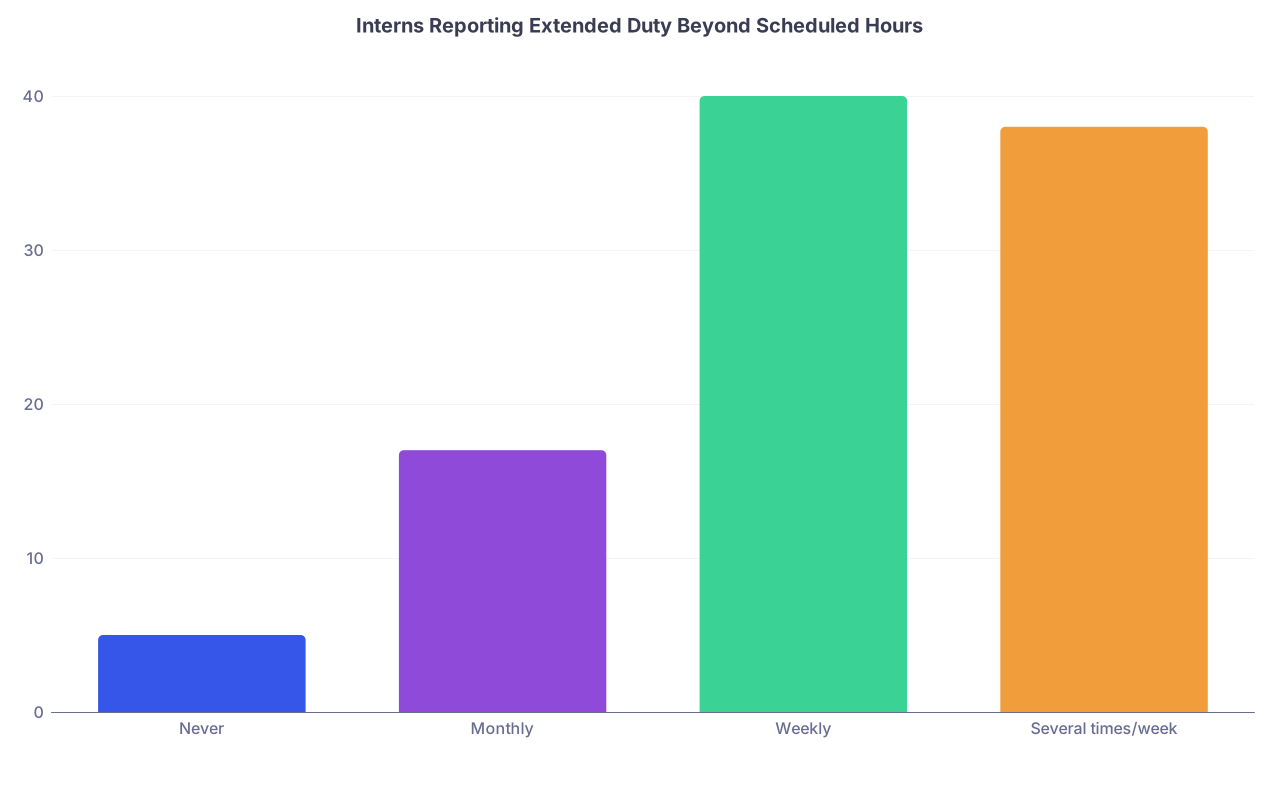
| Category | Value |
|---|---|
| Never | 5 |
| Monthly | 17 |
| Weekly | 40 |
| Several times/week | 38 |
Multiple studies of resident work-hours (IOM reports, ACGME data, and large trials like iCOMPARE and FIRST) all tell a consistent story: past a certain point, more hours don’t mean better care. They mean more errors, more burnout, more depression, and more people quietly charting in dark corners long after they were supposed to hand off.
So no, staying until everything is done does not make you a “good intern.” It makes you a tired one. Sometimes a dangerous one.
Reality Check: What Actually Predicts Good Patient Care
Here’s the uncomfortable part: the qualities that actually correlate with better care are a lot less romantic than heroic late nights.
We have decent evidence on what matters:
- Rested brains make fewer diagnostic and medication errors. There are sleep-deprivation studies on residents that show error rates climbing sharply after long shifts and poor sleep.
- Standardized handoffs (I-PASS is the classic example) reduce preventable adverse events significantly. Handoffs done well beat “I just stayed and did everything myself.”
- Team-based care—with nurses, pharmacists, night float—catches what your exhausted 26-year-old brain misses.
- Supervision and communication, not solo heroics, are what protect patients.
In other words: the system is safer when you leave on time and hand off well, than when you stay until your eyes blur.
Yet the myth clings because staying late is visible, measurable in hours, and easy for lazy evaluators: “Oh, she’s here late, she must care.” Meanwhile, the intern who quietly signs out a clean list at 6 and goes home gets labeled “less committed.”
Lazy thinking. And common.
The Hidden Problem: “Everything” Is A Mirage
“Stay until everything is done” sounds reasonable until you ask a basic question: what’s “everything”?
On a typical ward day, your “everything” might include:
- Notes on 12–18 patients
- Medication reconciliation on three new admits
- Discharge summary for two complex patients
- Five pages of lab results and imaging
- Ten MyChart messages or family calls
- Following up on a stat CT, MRI, or echo
- Calling three consultants, two SNFs, and a PCP
- Signing endless orders and clarifications
None of that stops because the clock hit 6:30 p.m.
The clinical workload is effectively infinite. New admits show up. A patient decompensates at 6:45. The “quick discharge” explodes because the DME order is wrong and the SNF has no bed. You can always find one more thing to do.
So the standard “stay until everything is done” has two built-in lies:
- That “everything” is finite and reasonable.
- That you, personally, are the right person to still be doing it at 9 p.m.
Both are false. Night float exists for a reason. Cross-cover exists for a reason. The system is literally designed around the fact that one person cannot, and should not, do it all.
If your culture pretends you can, that’s not professionalism. That’s denial.
What Good Interns Actually Do (That No One Puts On A Poster)
Let me strip the sentimentality out of this.
Good interns do not stay until every box is checked. They do something far more boring and far more valuable: they prioritize and hand off.
Good interns:
- Decide what truly must be done before they leave (time-sensitive, unstable, can’t-hand-off tasks).
- Decide what can be safely handed to the night team with a clear plan.
- Leave on time most days, not because they’re lazy, but because they’re organized and realistic.
Bad interns? Two types.
First type: show up late, leave early, dump all the mess on the night float with trash sign-outs like “stable” and no plans. Everyone hates them—and deservedly so.
Second type (this one gets praised): live at the hospital, hoard tasks, never ask for help, and quietly burn out. They’re applauded in October and broken by March. Some make serious mistakes on hour 14 that they don’t even remember.
I’ve watched both types. Only one is sustainable. And the sustainable one is not the martyr.
Here’s the rough breakdown of where your time really goes if you track it on a typical ward month:
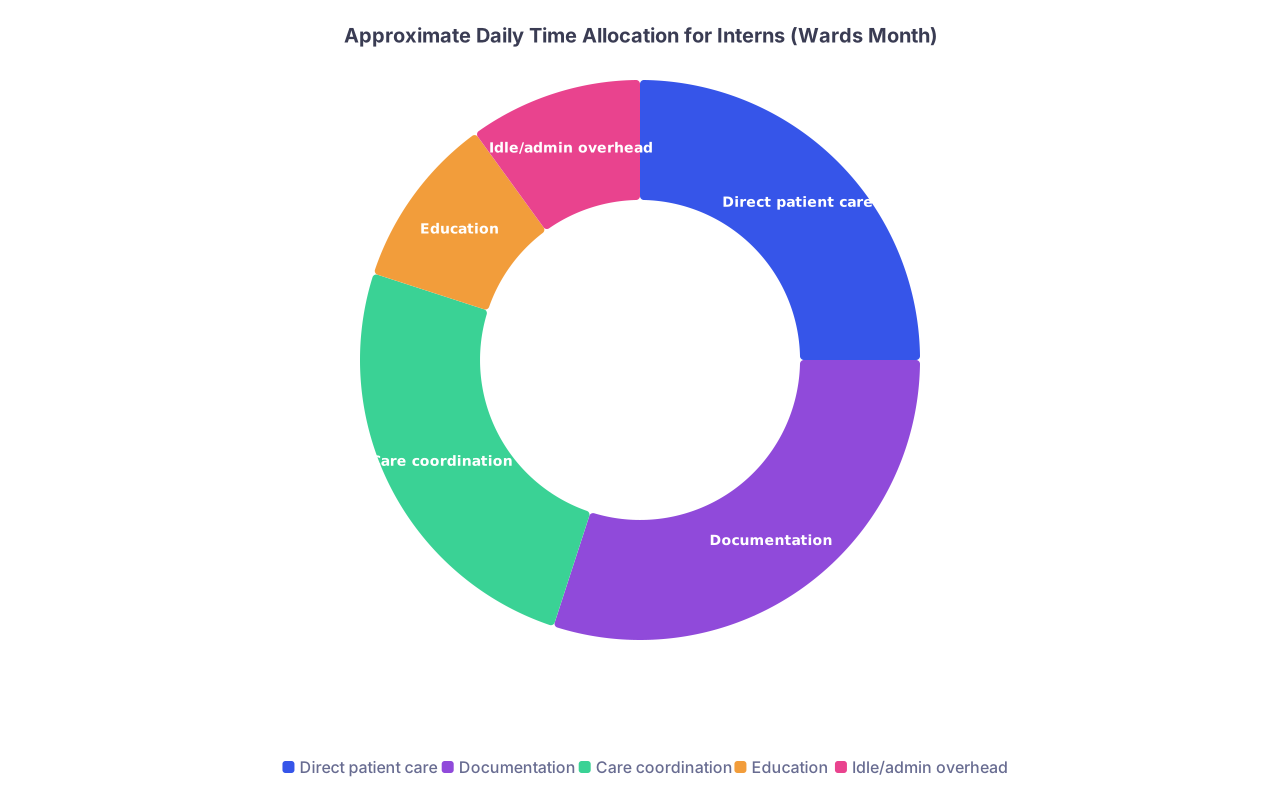
| Category | Value |
|---|---|
| Direct patient care | 25 |
| Documentation | 30 |
| Care coordination | 25 |
| Education | 10 |
| Idle/admin overhead | 10 |
The fantasy is that if you stay a bit later, you “finish it all.” Reality: their charting expands to fill the extra time, you pick up low-yield busywork, and your decision-making quality drops as the night goes on.
The Data: Do Longer Hours Make You Better?
Let’s bring receipts.
Large studies on resident work hours and outcomes (iCOMPARE, FIRST Trial, etc.) looked at different duty hour structures: more flexible, more continuous hours vs. stricter limits. What they found was messy but consistent in one crucial way: simply working more hours didn’t make residents better or patients safer.
- Serious patient outcomes did not consistently improve with more continuous resident coverage.
- Residents in longer-hour systems reported more fatigue and sometimes more burnout.
- Self-perceived “educational opportunities” were sometimes higher—but that’s subjective. Fatigue makes people overestimate how “hardcore” they’re learning.
Meanwhile, ACGME surveys show that a large share of interns still quietly violate duty hours to “finish work,” but programs with tighter enforcement don’t collapse. Patients don’t suddenly die because interns went home on time and signed out properly.
Here’s the ugly punchline: the belief that “good interns stay until it’s done” is mostly cultural inertia. Not evidence-based practice.
| Culture Style | Resident Hours | Burnout Risk | Patient Outcomes |
|---|---|---|---|
| Heroic stay-late norm | Higher | Higher | Neutral/mixed |
| Enforced sign-out & limits | Lower | Lower | Neutral/mixed |
| Chaotic, no clear norms | Variable | High | Risk of errors |
Notice the missing column: “Good intern rating.” Because those usually come from subjective impressions, not hard outcomes.
How This Myth Screws You (And Your Patients)
You’re not just fighting tiredness. You’re fighting warped expectations.
Here’s what happens when everyone silently believes “good interns stay late”:
You feel guilty leaving on time, even when you’ve done your job.
You avoid asking for help because you don’t want to look “weak.”
You hoard tasks:“I’ll just finish this myself,” instead of looping in night float.
You cut corners where nobody sees—sleep, food, exercise, relationships—to look “dedicated.”
You normalize charting or working off the clock, unpaid and invisible.
That guilt is not a sign of professionalism. It’s a sign that the system did a good job brainwashing you.
The data on resident burnout, depression, and even suicidal ideation is not subtle. Burnout rates in some surveys hit 50–70% for residents. Sleep deprivation correlates with more errors, more mood symptoms, and worse learning. Same brain that you’re trusting to manage the norepinephrine drip at 1 a.m.
Yet when an intern quietly leaves at 6:30 with a clean sign-out, some senior will still mutter, “Back in my day, we stayed until it was done.”
Back in their day, we also didn’t wash our hands between every patient and routinely did 36-hour calls. “Back in my day” is not an argument. It’s nostalgia.
So What Should You Aim For Instead?
Let me rewrite the myth into something that’s actually defensible:
“Good interns make sure everything that matters is either done or clearly handed off before they leave.”
That’s the standard.
And yes, it sometimes means staying late. But not as a default identity. As an exception for specific, clear reasons.
You stay because:
- Your patient just decompensated and there is no clean way to leave mid-crash.
- A time-critical study is about to result and you’re the one who knows the plan.
- A complex family conversation is happening now and you are the only continuity.
You do not stay because:
- You’re rewriting notes for the third time to make them look pretty.
- You’re pre-charting three days ahead “just in case.”
- You’re doing work that could be done by the night team with a decent sign-out.
- You’re afraid someone will think you’re “lazy” if you leave with everyone else.
A high-functioning, “good” intern year looks less like a string of hero shifts and more like a consistent pattern:
You come in, you work hard, you learn fast, you protect your sleep when you can, you sign out clearly, and you leave.
Over time, you get faster. Not because you magically became a better person, but because your pattern recognition improved, your typing picked up, and you stopped doing pointless extra work to impress people who left the hospital three hours ago.
Practical Reality: How To Be Good Without Worshipping the Clock
You wanted something concrete, not just philosophy. Here’s the short version of how real “good interns” behave in programs that actually function:
They front-load critical work early in the day. They see their sickest patients first, place key orders early, and make sure anything requiring coordination (SNF placement, imaging, consultants) is rolling before noon.
They protect a “hard stop” in their head. Maybe it’s 6:30 on wards. When the clock gets close, they mentally shift: “What must I own tonight versus what can night float safely manage?”
Their sign-outs are clean and ruthless. Not novels. Not “patient stable.” But: “If BP < 90, give 500 mL LR and page me if she needs pressors—she’s borderline septic but responding so far.” Clear triggers. Clear plans.
They escalate system problems instead of absorbing them. If 90% of your day is calling radiology to fix order errors, that’s not a you problem. That’s a systems problem your chiefs and program director need to hear about.
And crucially: they do not confuse suffering with value.

If your attending or senior explicitly shames you for leaving on time with solid sign-out, that’s not a sign you’re bad. That’s a signal the culture is broken.
The Quiet Truth: Your Future Self Doesn’t Care How Late You Stayed
Years from now, you will not be proud of the nights you stayed rewriting discharge summaries from 7:00 to 9:30 p.m. so they “looked better.” You probably won’t even remember which months you were habitually staying late versus leaving on time.
You will remember the bad mistakes you made while exhausted. The ones that still wake you up sometimes.
You will remember the colleagues who always dumped on you at sign-out, and the ones who had your back.
You will remember when you finally learned to say, without apology: “I’ve done what I safely can. Here’s the plan for overnight.”
Being a “good intern” isn’t about martyrdom. It is about judgment.
Judgment to know what matters now, what can wait, and when you are no longer the safest person to be making decisions.
The myth says: “Good interns stay until everything is done.”
Reality says: “Good interns know that ‘everything’ never ends—and they practice medicine like they understand that.”