At 4:40 p.m., everyone’s body language changes.
You’ve probably seen it already. The day team is half-standing, half-sitting. Someone has the sign-out list open. The senior is trying to move things along. Nursing is calling about one last potassium. And then the page lands: new admission coming up.
Instant morale drop.
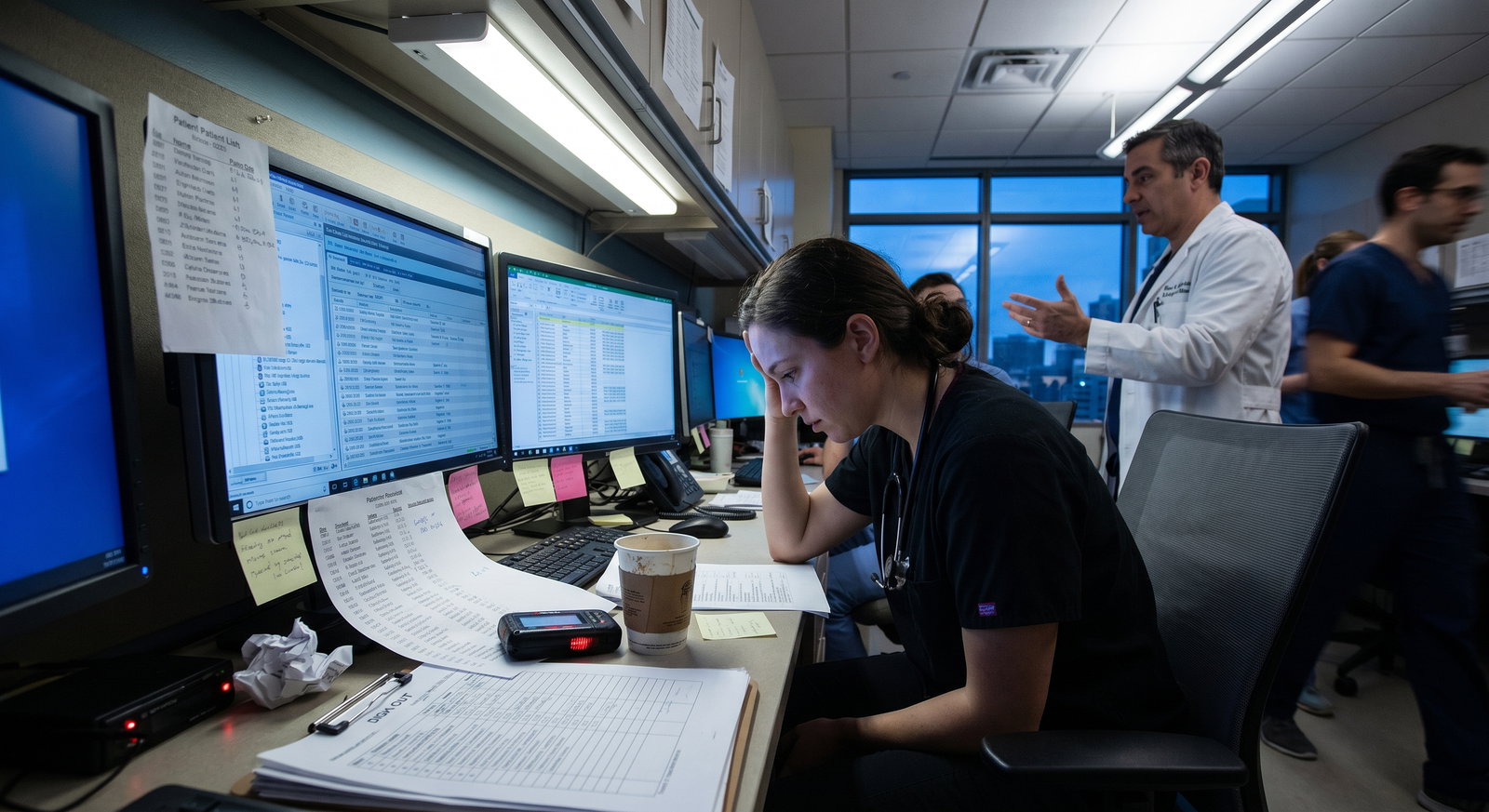
I’ve watched brand-new interns make the same mistake here. They think the goal is to complete the whole admission before handoff. Full history. Full med rec. Pristine note. Every order perfectly placed. That is how sign-out gets torched and how the night team inherits chaos anyway, just packaged later.
Here’s the real problem: you need enough information to know whether this patient is sick, enough orders to keep them safe, and a handoff clean enough that the night team doesn’t spend two hours uncovering land mines you never mentioned. That’s it. Not perfection. Safety.
Because the core tension in the late-day admission is simple: if you rush mindlessly, you miss important things. If you chase completeness, you trap the night team in a vague, bloated handoff and keep everyone there late. Both are bad. One is dangerous. The other is just inconsiderate and still dangerous.
The right move is to stabilize the situation, define what matters now, and make hidden tasks visible. That’s how you handle a late admission like an intern people trust.
Step 1: Decide What Must Happen Now vs. What Can Wait
Your first job is triage. Not note-writing. Not box-checking. Triage.
When the admission hits late, ask one question immediately: does this patient need me at bedside right now, or can I safely do a focused workup and hand off the rest? If you don't answer that first, you’ll waste precious minutes clicking through old echocardiograms while the patient is hypotensive in room 18. Dumb. Don’t do that.
Start with a fast checklist:
- Vitals: hypotension, hypoxia, fever, tachycardia, tachypnea
- Airway/breathing/circulation concerns
- Mental status change
- Uncontrolled pain or agitation
- Sepsis risk
- Active bleeding
- Chest pain, respiratory distress, focal neurologic symptoms
- Disposition urgency: floor vs stepdown vs ICU question
If anything feels off, involve your senior early. Early. Not after you’ve spent 25 minutes trying to prove you can handle it alone. Nobody is impressed by delayed escalation.
Minimum safe next actions usually include:
- putting the patient on the right monitoring
- ordering the essential labs
- giving one-time treatments that can’t wait
- reassessing after an intervention
- clarifying whether the patient actually belongs on your service and level of care
If the patient is stable, your goal is narrower: get enough data to define the overnight problem. That may be as simple as baseline labs, telemetry, symptom control, and a clear “what we’re watching for.”
A practical script I like:
“This is a late admission. I’m first deciding if they’re sick-sick or just workup-pending sick.”
That mindset keeps you out of the weeds.
Step 2: Get the Story Fast Without Losing the Signal
Late-day admissions punish unfocused people.
You do not need a museum-quality history at 4:52 p.m. You need the signal. Why are they here, why now, and what could go bad tonight?
Your focused history should cover:
- Chief complaint
- Timeline of events
- Major red flags
- Relevant past medical history
- Meds that matter tonight
- Allergies
- Code status
- Exact reason for admission
That last one gets missed all the time. “Admitted for weakness” is garbage sign-out. Weakness from what? Volume depletion? GI bleed? New cancer? Stroke rule-out? Placement disaster masquerading as medicine? Say the actual clinical question.
Your chart review should be equally selective. Pull what changes your thinking:
- prior baseline mental and functional status
- recent discharge summaries
- outside records if they explain the current issue
- key consultant notes
- the labs and imaging tied to today’s problem
Don’t become the intern frozen at the computer with 37 tabs open, reading nephrology notes from 2021 while the patient still doesn’t have PRN pain meds. I’ve seen this happen. It feels industrious. It’s not. It’s avoidance with a mouse.
Clarity beats completeness. Every time.
If the story is messy, write yourself a one-line anchor:
“Admit for likely CHF exacerbation after 3 days of dyspnea and edema, currently stable on 2 L NC, diuresis started, watching oxygen need and renal function overnight.”
That one sentence is gold. It keeps your orders tighter, your note cleaner, and your handoff intelligible.
Step 3: Order Smart, Not Broad
Late in the day, broad ordering is usually fear in costume.
You don’t need to shotgun every lab, every imaging study, and every PRN “just in case.” You need orders that answer the admission question and reduce overnight risk.
Good late-day orders usually fall into a few buckets:
- Monitoring: vitals frequency, telemetry, pulse ox if needed
- Key labs: the ones that affect overnight decisions
- Immediate treatments: fluids, antibiotics, diuretics, analgesia, antiemetics, insulin, whatever the actual problem requires
- Nursing communication: parameters that matter
- Home meds only if appropriate and relevant tonight
Imaging should have a reason. If the CT, ultrasound, or repeat X-ray won’t change what happens overnight, don’t order it reflexively just because admissions feel incomplete without extra radiation.
Before sign-out, double-check the time-sensitive basics:
- Did the urgent meds actually get ordered?
- Are admission labs in?
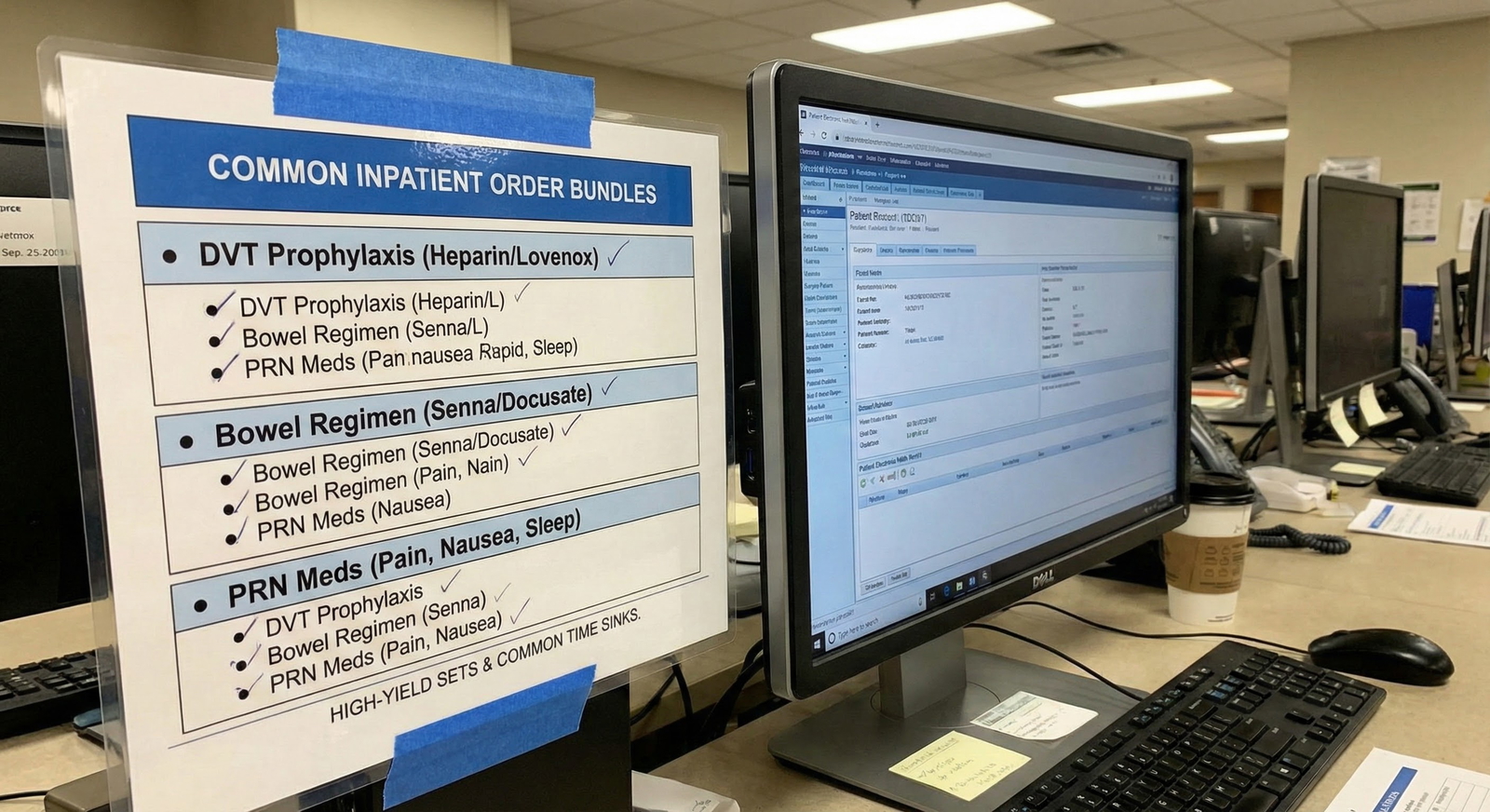
- Is DVT prophylaxis addressed?
- Is the patient on the right diet or NPO if it matters?
- Is telemetry ordered if you’re saying they need telemetry?
- Are pain and nausea covered?
Missing basics are what blow up at 9:30 p.m. Not your eloquent assessment.
One underrated move: say what you deliberately did not order. Example:
“I didn’t order repeat troponins overnight because chest pain resolved, EKG unchanged, and initial workup points to volume overload rather than ACS.”
That tells the night team you made a decision. Omission without explanation looks sloppy. Judgment looks professional.
Step 4: Write a Sign-Out That Makes Night Coverage Safer, Not Busier
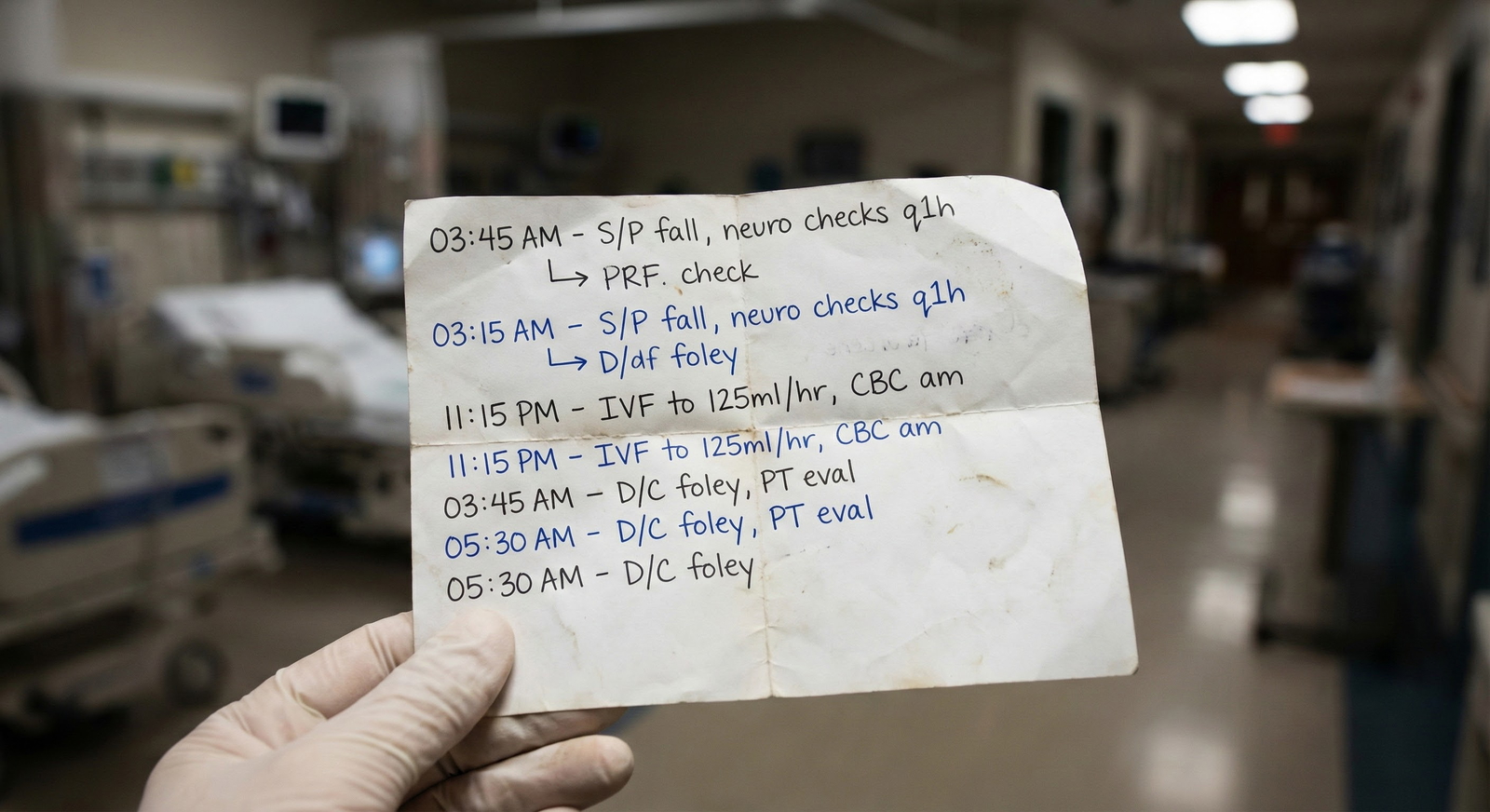
A bad sign-out creates detective work. The night team should not have to reconstruct your thought process from scraps.
Your sign-out for a late admission should be brutally functional. Include:
- what the patient has or is most likely to have
- how they look right now
- what’s been done
- what’s still pending
- what actually matters overnight
- what to do if things change
A simple structure works:
Admit reason / current status / major data / pending items / contingency plan
For example:
- Admit for likely community-acquired pneumonia with mild hypoxemia
- Currently stable on 2 L nasal cannula, afebrile, normotensive
- Done: blood cultures, ceftriaxone/azithro, lactate normal, CXR with RLL opacity
- Pending: CBC/CMP final, MRSA nares not urgent overnight
- If worse: increasing O2 >4 L, hypotension, rising lactate, worsening work of breathing → evaluate and call senior
That’s useful.
What’s not useful?
“New admit. See chart.”
That’s not sign-out. That’s abandonment with Wi-Fi.
You also need to separate active tasks from watch items.
Active tasks:
- follow 10 p.m. hemoglobin
- review CT if it’s being done overnight
- recheck glucose after insulin
- call back consultant if they promised recommendations tonight
Watch items:
- monitor O2 needs
- watch for fever/hypotension
- notify if worsening pain or confusion
Those are not the same thing. Mixing them creates wasted pages and missed work.
And don’t forget contingency thresholds. “Call if worse” is lazy. Worse how? Tell the night team what changes the plan.
Step 5: Close the Loop Before You Leave
This is the last two-minute sweep, and it saves you from the classic overnight blowups.
Before you walk out, check the usual failure points:
- missing admission orders
- critical labs resulted but not communicated
- consult recommendations sitting unread in the chart
- patient placed on wrong level of care
- family expecting a plan nobody explained
- nurse unclear on what to watch for
- medication reconciliation problems that will trigger pages all night
I’m not saying you need a perfect family meeting at 5:05 p.m. I am saying if the patient’s daughter thinks mom is getting an MRI and a neurology consult tonight, but neither is true, that misinformation will come back like a boomerang and hit the night team in the face.
Tell the night intern what you’re most worried about. One sentence. Maybe two.
Examples:
- “Biggest concern is occult GI bleed if the repeat hemoglobin drops.”
- “I’m most worried her oxygen need will climb after she lies flat.”
- “If he gets more confused, don’t just blame dementia—he came in altered from baseline.”
That kind of handoff prevents bad anchoring.
And if time runs out? Say so plainly. Don’t vanish. Don’t pretend the work is more complete than it is.
A strong sentence is:
“I got the patient stable, initial orders are in, but med rec and a fuller history are incomplete. Main overnight issues are oxygen requirement and pending BMP after diuresis.”
Honest, specific, safe. That’s good medicine.
Bottom Line: A Late Admission Is a Prioritization Test, Not a Perfection Test
When a patient shows up 20 minutes before sign-out, don’t try to be heroic. Be useful.
Your job is to:
- Check if the patient is unstable.
- Do the minimum essential work that prevents harm tonight.
- Get the story tight enough to define the clinical question.
- Place smart orders, not panic orders.
- Hand off clearly, with pending tasks and contingencies spelled out.
That’s the whole game.
You are not being judged on whether the admission is polished by 5 p.m. You’re being judged on whether the patient is safe and whether the night team inherits a workable situation instead of a mess with hidden traps. Protect both. That’s what good interns do.
FAQ
1. What if the patient arrives right before sign-out and I can’t finish everything?
Do the safety-critical parts first. See the patient, assess stability, place the essential orders, and hand off the unfinished pieces clearly. A clean, honest sign-out beats staying late to chase low-yield details while the night team still has no idea what matters.
2. Should I start all the admission orders before I sign out?
No. Start the orders that prevent immediate harm or answer the main admission question. Monitoring, key labs, urgent treatments, symptom control. If the rest can safely wait, say so directly in handoff instead of flooding the chart with half-considered orders.
3. How do I avoid sounding unprepared when I hand off a late admission?
Be specific, not defensive. Say why the patient is here, how they look now, what you’ve done, what’s pending, and what would worry you overnight. That sounds prepared because it is prepared. Nobody needs fake confidence; they need your thinking.