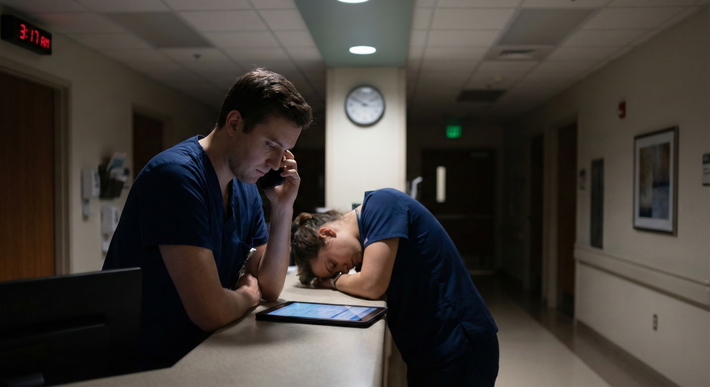
The ICU will expose every weakness in your workflow in the first 30 minutes of your first call.
If you do not have a ruthless system for task prioritization, the ICU will eat you alive.
Let me break this down specifically.
The Core Reality of ICU Intern Life
You are not “learning critical care” your first few weeks. You are learning how to not drown.
The consultant cares about vasopressors, ventilator modes, and lactate clearance.
You will live or die by:
- How you structure your day
- How you rank tasks when everything feels urgent
- How quickly you recognize sick vs crashing vs already gone
If you get those wrong, no one cares that you remembered the ARDSNet table.
On ICU rotations, interns usually occupy three major roles:
- Primary workhorse for note-writing and order entry
- First responder for new issues and overnight calls
- Liaison between bedside nurses and the senior/fellow
Your power is not in fancy knowledge. It is in execution: what you do first, how fast, and how reliably.
Let’s start with the single most important ICU skill: deciding, under pressure, what you do in the next 5 minutes.
The 4-Level Triage Model: How to Decide What to Do Next
Most interns fail in the ICU not because they do the wrong thing, but because they do the right thing in the wrong order.
I use a 4-level mental model for every ICU task list. I have seen this save people’s sanity on Q4 call months:
- Code / pre-code
- Time-sensitive physiologic
- Operational-critical
- Everything else
You apply this over and over, throughout the day and night.
Level 1: Code / Pre-code – “Move Your Feet Now”
Anything that can kill the patient in minutes if you do nothing.
This includes:
- Pulselessness / unresponsiveness
- New severe hypotension, especially on pressors
- Rapid desaturation (vented or non-vented)
- Active major bleeding
- Seizure in a sick ICU patient
- Ventilator alarm with real problem (not just “circuit disconnected” that the nurse has already fixed)
Your response is immediate. No “I’ll finish this note.” No “let me just put in this Tylenol order.” You go. Right now.
At the bedside you focus on:
- ABCs (and yes, in ICU you sometimes jump straight to C if MAP is 30)
- Check monitor yourself, feel a pulse, look at the patient
- Call for help: senior, fellow, rapid response, code, RT, anyone not already busy
You do not manage Level 1 alone as an intern. Your job is:
- Rapid recognition
- Physical presence at bedside
- Basic interventions while calling for backup (bagging, IV access, pushing ordered meds, compressions if needed)
If you are handling a Level 1 issue, everything else in the unit is on hold unless someone explicitly takes it from you.
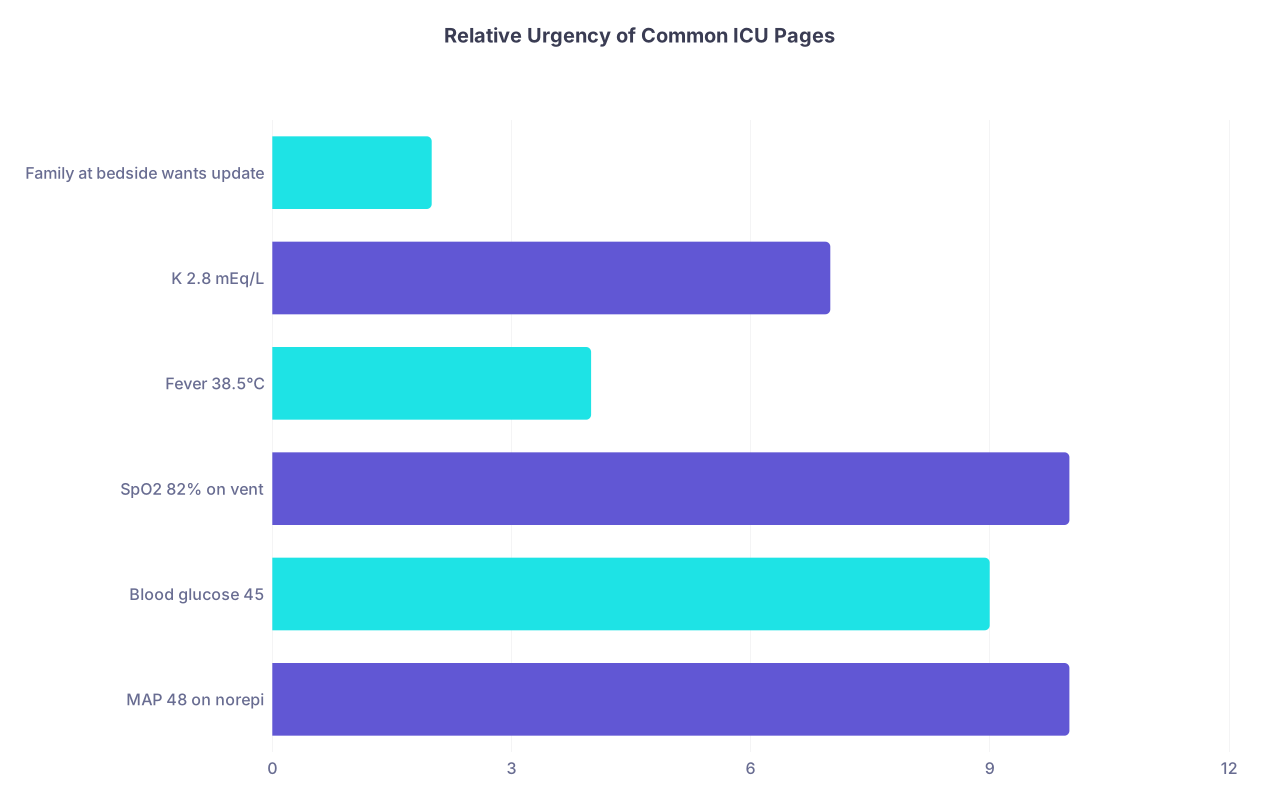
| Category | Value |
|---|---|
| MAP 48 on norepi | 10 |
| Blood glucose 45 | 9 |
| SpO2 82% on vent | 10 |
| Fever 38.5°C | 4 |
| K 2.8 mEq/L | 7 |
| Family at bedside wants update | 2 |
Level 2: Time-Sensitive Physiologic – “Do This Before It Hurts Them”
These are problems that will cause harm in hours, not minutes, but directly affect survival or organ function.
Examples:
- MAP drifting 60–65 on pressors in a septic patient (not crashing, but trending down)
- Rising lactate, new oliguria
- K 2.8 or 6.0, Na 121, pH 7.1, glucose 45
- New AF with RVR in a hemodynamically fragile patient
- New chest pain, new ST changes, concern for PE or stroke in ICU-level patient
These do not require you to sprint, but they absolutely override:
- Discharge paperwork
- Note finishing
- Routine med reconciliation
- Non-urgent consult calls
Your mental script:
- “Is this going to change what we do in the next 1–2 hours?”
- “Could this turn into a crash if it sits for 30–60 minutes?”
If yes, it is Level 2. Go see the patient, eyeball them, check the monitor, open the chart, review last labs, then call your senior with a clear, structured update:
“Bed 8, 64-year-old septic shock on norepi. MAP drifting 60–65 from low 70s over the past hour, urine 10 cc/hr from 40, lactate 4.5 from 3.2. Vented, FiO2 40%, sats stable. No overt bleeding. I think we need to…”
That “I think we need to” line matters. Show that you have a plan, even if they change it.
Level 3: Operational-Critical – “This Will Blow Up Later If I Ignore It”
This is where a lot of interns mis-prioritize. These tasks do not directly change the physiology now, but they:
- Unlock other people’s work
- Affect bed flow / OR timing / transfers
- Make nursing or RT’s job possible
Examples:
- Admission orders on a new ICU transfer (so nursing can give meds, start drips)
- Transfer orders out of ICU so new admission can get the bed
- Stat imaging orders when the scanner is waiting
- Procedure orders (dialysis, central line, bronchoscopy) the team decided already
- Insulin orders for TPN that just started
These should be done early and cleanly. If you delay operational-critical tasks, the system punishes you:
- Bed control calls the fellow.
- OR delays get escalated.
- Nurses get (justifiably) annoyed and start bypassing you.
On a busy morning, after you handle any Level 1 or 2 issues, you want to clear Level 3 tasks before deep-diving into long notes.
Level 4: Everything Else – “It Can Wait”
This is where you reclaim your sanity.
Level 4 includes:
- Detailed note perfection, reformatting, rewriting
- Updating the “prose” part of every daily note before rounds
- Non-urgent med reconciliation when nothing is unsafe
- Detailed family updates when there is no decision pending and no sudden change
- Chasing every last lab to absolute completion before you even see the patient
These are not unimportant. But they are not first.
A clean one-liner plus daily problem-based A/P that is mostly accurate is more valuable at 8:00 AM than a beautifully formatted 3-page novel at 10:30 AM that caused you to miss a hypotensive drift.
Structuring Your ICU Day: A Realistic Timeline
Let me walk you through a standard day on a busy medical ICU as an intern. Assume:
- 8–10 patients
- One senior resident, one fellow
- Nurses page frequently
- You have pre-rounding, rounds, midday chaos, and afternoon tasks
Pre-round Workflow: 5:30–8:00
Your entire goal: walk onto rounds knowing who is sick, what changed, and what obviously needs action this morning.
Sequence that actually works:
Sickest first, not room-number order.
Quickly scan the census and overnight events. Who coded? Who is on two pressors? Who desatted? See those patients first. Physically. Not just the chart.At the bedside: 1–2 minute exam, eyeball, ventilator glance.
- Mental check: Better / same / worse than yesterday?
- Look at: pressor dose compared to yesterday, FiO2 and PEEP, urine bag, sedation level.
On the computer: targeted chart skim.
- Overnight notes from nurses / cross-cover
- New labs (don’t obsessively scroll; look at deltas)
- New imaging reports
- Any micro results that change antibiotics
Update a simple pre-round template for each patient.
You do not write the full note yet. Just a tight skeleton:- 1-liner: “65M septic shock 2/2 pneumonia, day 3 vent, on norepi.”
- Overnight: “Pressors weaned from 0.2 to 0.12, still on FiO2 50, AF RVR x1 episode → metop pushed, stable now.”
- Today’s problems: “Wean FiO2, reassess diuresis vs fluid, follow repeat lactate, clarify code status with daughter.”
Flag Level 2 problems for early team discussion.
If you see: Cr jumped, new fevers, pressor uptrend, new arrhythmia – put a star next to that patient in your list. You want them up early in rounds.
Do not waste pre-round time trying to make each note beautiful. Your senior and attending care more about you knowing exactly what happened overnight, not about indentation.
Real-Time Prioritization During Rounds
Rounds in the ICU are not a leisurely hallway academic exercise. They’re moving triage.
Intern mistake I see constantly: trying to half-write notes, half-listen, half-enter orders while walking between rooms. You end up doing none of those well.
Better approach:
During discussion in each room, focus on:
- New plan elements that change today: imaging, procedures, med changes, goals-of-care, sedation adjustments
- Anything that clearly lands on you: “intern to call nephro,” “intern to order CT chest,” “intern to update family”
Immediately after each room, take 30–60 seconds and jot down action items in order:
I literally structure it like this in my brain and sometimes on paper:
- Level 2: “Check repeat K after repletion,” “call senior about rising pressor,” “order insulin drip”
- Level 3: “Place CT chest order,” “put in post-intubation CXR,” “start tube feeds per nutrition recs”
- Level 4: “Update chronic med list,” “tweak note wording,” “finish family letter”
If a Level 2 item arises during rounds (e.g., MAP trending down, new arrhythmia), it immediately outranks the social complexity of the next patient’s family meeting. Say to your senior:
“Can I step out after this plan to put in the pressor titration orders and check on his line? I do not want this to lag.”
Your job on rounds is to be the person who translates decisions into concrete, time-ranked tasks.
Night Float / Call: Surviving the Page Storm
Overnight is where interns either grow up or melt down.
You will get a mix of:
- Legitimately scary pages
- Mildly concerning pages that can become scary if ignored
- Noise
You need a fast mental filter. Here is a practical categorization I have used and taught:
| Page Content Example | Category | Immediate Action |
|---|---|---|
| "MAP 48 on norepi 0.2" | Level 1–2 (borderline) | Go to bedside, call senior from there |
| "SpO2 84% on vent, FiO2 now 80%" | Level 1 | Run to bedside, call RT + senior |
| "Blood sugar 42" | Level 2 | Orders + bedside check |
| "Temp 38.4, otherwise stable" | Level 3–4 (context) | Review chart, no rush if stable |
| "Patient complaining of 4/10 pain" | Level 4 | Chart review, call back, non-urgent fix |
If your pager goes off three times simultaneously:
“Bed 5 MAP 50,” “Bed 9 BS 45,” “Bed 3 wants more pain meds,” here is your order of operations:
- MAP 50 – go physically.
- Call nurse back for BS 45 while walking: “Give amp D50 now, I will come see them after I check Bed 5.”
- Pain meds – “I will look at their MAR; if safe I’ll put an order in shortly.” That is allowed to wait.
You’ll get faster with pattern recognition, but early on, err on physically seeing the patient for:
- Any desat
- Any real hypotension (especially on drips)
- Any neuro change: confusion, unresponsiveness, seizure
What you do not do: sit in front of the computer writing long notes while pages queue up unanswered.
Building a Personal Task System That Survives Chaos
If your “system” is 10 sticky notes, 4 pieces of scrap paper, and 3 half-finished EMR task lists, you will drop critical things. ICU will expose that fast.
You need something simple, durable, and portable.
Paper-based (still the most reliable)
I am unapologetically old-school here. The interns who do best usually:
- Carry a single folded census / sign-out sheet
- For each patient, they maintain a mini to-do list with boxes to check
- They re-write the list at midday if it gets too messy
The structure I recommend:
For each patient (one line or box):
- Top: Name / Bed / Vent or not / Code status
- Underneath:
- AM: labs, imaging, procedures
- Call: consults, family
- PM: follow-up labs, re-assessments
Then add a separate small section labeled:
- “STAT / before noon”
- “Before sign-out”
Anything Level 2 or must-do-by-X-time goes into those top sections, not buried in the patient’s block.
EMR Task Lists – Use, but Do Not Trust Alone
Some EMRs allow:
- Task flags
- Reminder lists
- “Sticky notes” within the chart
These are fine, but:
- They break when systems go down.
- They fragment across screens.
- You cannot see all tasks at a single glance while you’re walking down the hall.
Use EMR tools to track low-risk tasks (like tomorrow’s follow-up labs). Use your physical running list to track today’s real work.
Communication Under Pressure: Nurses, Seniors, and Fellows
You will not survive the ICU by being “nice and quiet.” You survive by being clear and predictable.
With Nurses
Good ICU nurses can save your career. If they trust you, they’ll help you notice what matters early.
What they hate:
- Delayed callbacks to real issues
- Vague answers: “Uh, I don’t know, let me think about it…” followed by nothing
- Ignoring critical labs or vitals they bring to you repeatedly
What works:
Close the loop quickly.
- If they page a MAP of 52 on a sick patient: “I am coming now,” and then actually show up.
- If it is non-urgent: “Let me review the chart and I will call you back in 10–15 minutes.” Then you actually do.
Be specific with plans.
- “If MAP stays below 60 despite 2 boluses, please page me again. Otherwise, we will reassess in an hour.”
- “If he needs more than 4 of morphine in 2 hours, call me – we may need to adjust the regimen.”
Admit your uncertainty, but attach action.
- “I am not comfortable changing the pressor on my own; I am calling my senior now.” Nurses respect that more than fake confidence.
With Seniors/Fellows
They are triaging too. If you bring them nonsense, they will eventually tune you out.
You must learn to package your concerns. Use something like a compressed ICU SBAR:
- Situation: “Bed 7, 58-year-old septic shock on norepi.”
- Background: “Day 2 vent, FiO2 50, had been stable on 0.08 norepi, good UOP.”
- Assessment: “Now MAPs low 50s for 20 minutes on 0.16, urine dropped, lactate pending.”
- Recommendation: “I think we should bolus fluids vs add second pressor; do you want me to start with a fluid challenge while you come see?”
You are not calling to dump the problem. You are calling to escalate with a preliminary plan.
Common ICU Intern Traps (And How to Avoid Them)
Let me call out a few predictable failure patterns.
Trap 1: The Note-First Intern
This intern sits down at 6:15 AM to “get my notes mostly done before rounds.” They adapt the same approach from the floor.
Two hours later:
- Two patients had hypotensive drifts they did not see.
- They never physically examined half of the unit before rounds.
- They stare blankly when asked, “What happened overnight in Bed 4?”
Fix: In the ICU, bedside and situational awareness beat polished notes every time. Your early-morning ranking is: eyeballs on sickest patients → identify overnight changes → rough plan → notes.
Trap 2: The Pager-Avoidant Intern
This intern is so overwhelmed they start mentally screening pages as “probably unimportant.” They call back late. Or not at all.
You will get labeled as unreliable. Nurses will escalate around you. Seniors will lose trust.
Fix: Develop a quick callback script:
- Always return pages within 5–10 minutes, even if just to set expectations.
- Ask 2–3 targeted questions: “What are the vitals? How does the patient look? Any new complaints?”
- Decide: bedside now vs chart review vs scheduled reassessment.
Trap 3: The Everything-is-an-Emergency Intern
Opposite problem. Every page triggers panic.
They run to the bedside for any fever. They call the fellow for every Mg 1.7. They cannot distinguish a true crash from background noise.
Fix: Use the 4-level schema relentlessly. Before you move your feet, ask:
- Can this kill them in minutes? (Level 1)
- Can this materially harm them in the next few hours? (Level 2)
- Will someone’s work be blocked if I do not act? (Level 3)
- Or is this discomfort / completeness work? (Level 4)
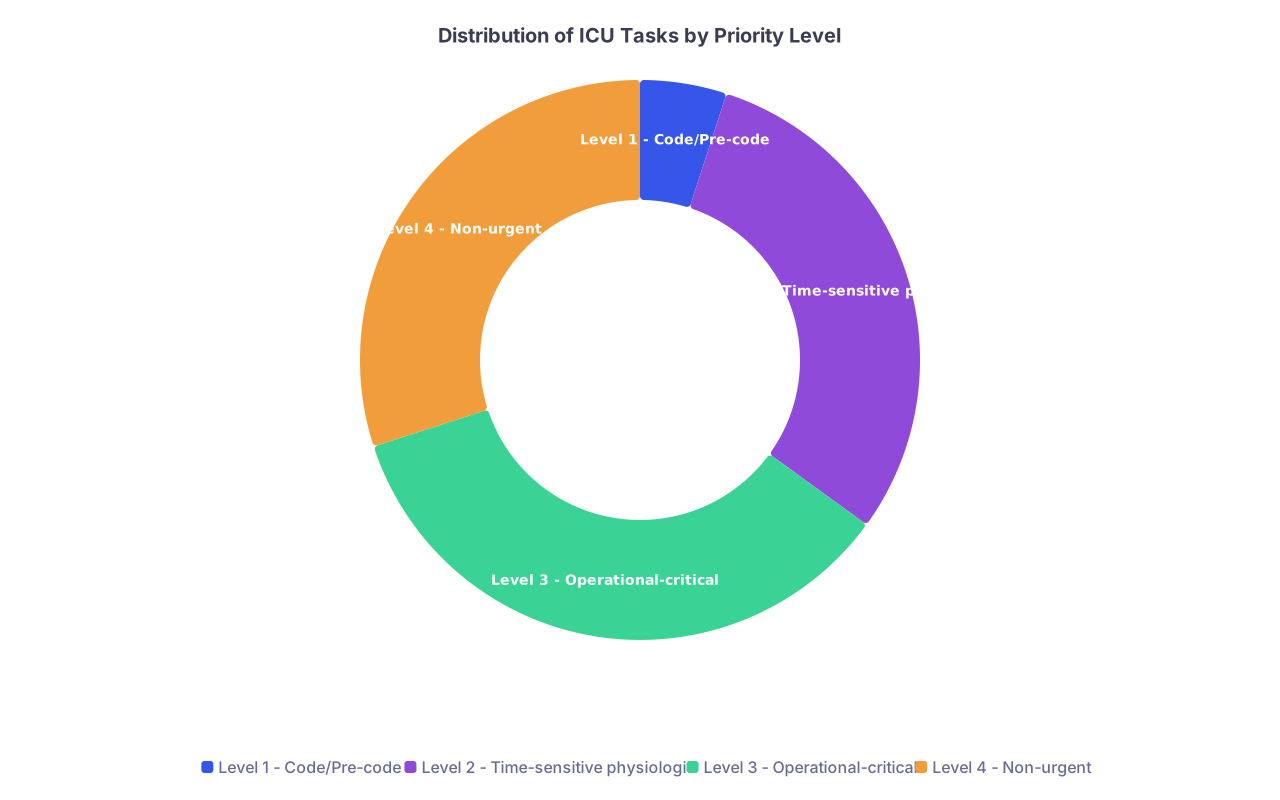
| Category | Value |
|---|---|
| Level 1 - Code/Pre-code | 5 |
| Level 2 - Time-sensitive physiologic | 30 |
| Level 3 - Operational-critical | 35 |
| Level 4 - Non-urgent | 30 |
Most of your day is Level 2–3. Level 1 is rare but loud. Level 4 will expand to fill all available time if you let it.
Practical Micro-Skills That Make You Look Competent
There are a few tiny habits that separate the flailing intern from the solid one.
1. Always Know Your Sickest 2 Patients Cold
If your attending cold-calls you at 9:00 AM:
“Who are you most worried about right now?”
You should immediately have:
- Name / bed
- Brief problem
- Current vent settings / pressor status
- Why they are unstable today
This is not about impressing. It shows that your internal priority list is real.
2. Pre-Write Order Sets in Your Head
For common ICU issues, you should have default packages ready:
- Hypotension in septic shock:
- Confirm real (manual BP, arterial line check)
- Fluid bolus order (if appropriate), norepi titration parameters, lactate, cultures if new
- Hypoglycemia:
- D50 order, q1h glucose x3, adjust insulin regimen
- Hyperkalemia:
- Calcium, insulin/dextrose, albuterol, diuretics or dialysis consult depending on context
You will still discuss the plan with your senior, but you should already know what you are going to suggest.
3. Use “Checkpoints” in Your Day
ICU time can dissolve. To avoid missing things that need re-check, build 2–3 self-checkpoints into the day:
- Late morning: quickly scan vitals, pressor doses, vents after rounds – did anything drift?
- Mid-afternoon: re-check labs that were “pending” earlier, re-evaluate any patient who was borderline.
- Pre-sign-out: confirm that all imaging was done and resulted, all big abnormal labs addressed, all Level 2 tasks closed.

| Step | Description |
|---|---|
| Step 1 | Pre-round Bedside Checks |
| Step 2 | Identify Sickest Patients |
| Step 3 | Quick Chart Review |
| Step 4 | Team Rounds |
| Step 5 | Enter Level 2 and 3 Orders |
| Step 6 | Midday Reassessment |
| Step 7 | Afternoon Tasks and Follow-up |
| Step 8 | Pre Sign-out Safety Check |
These checkpoints take 5–10 minutes each and prevent slow disasters.
Learning Under Pressure Without Falling Apart
You are in the ICU to learn, but it will not feel like it the first week. It will feel like a constant fire drill.
So how do you actually grow clinically when your brain is a pile of mush by 3:00 PM?
Three strategies that actually work:
Post-hoc debrief on one case per day.
Pick one interesting management decision (new pressor, changing vent mode, starting CRRT). After the rush, ask your fellow or senior:
“Can you walk me through why we chose X over Y in Bed 6?”
Five focused minutes are better than 30 minutes of half-listening on rounds.Micro-reading.
One short topic per day based on what you saw: lactate interpretation, sedative choices, ARDS PEEP ladders, etc. Not chapters. 10–15 minutes.Pattern recognition, not memorization.
Notice what “pre-crash” looks like in real life:- The slightly more mottled skin
- The increasing pressor dose with stable MAP
- The minute-ventilation creep on the vent
Those patterns will drive your prioritization more than guidelines.

When Everything Breaks: Handling the True Mass-Casualty Shift
You will eventually have That Night.
Two admissions, one intubation, one code, three families upset, and bed control on your back.
In those moments, your workflow becomes brutal triage:
Life over limb, limb over function, function over documentation.
- Code > crashing intubation > hypotension > everything else.
Delegate aggressively.
- Ask your senior: “Can you take this admission H&P while I stay in the code?”
- Ask nurses: “Can you keep an eye on Bed 4’s MAP and page us if it stays below 60?”
Accept documentation imperfection.
- A short, factual code note is acceptable.
- Late, but accurate, H&Ps for admissions are acceptable when two people almost died.
Protect handoff quality.
- Before you leave post-call, make sure the oncoming team knows:
- Who is unstable
- What labs/imaging are pending that matter
- What big decisions are still unresolved
- Before you leave post-call, make sure the oncoming team knows:
You do not go home with everything pristine. You go home with no patient dangerously hanging because you wanted perfect notes.
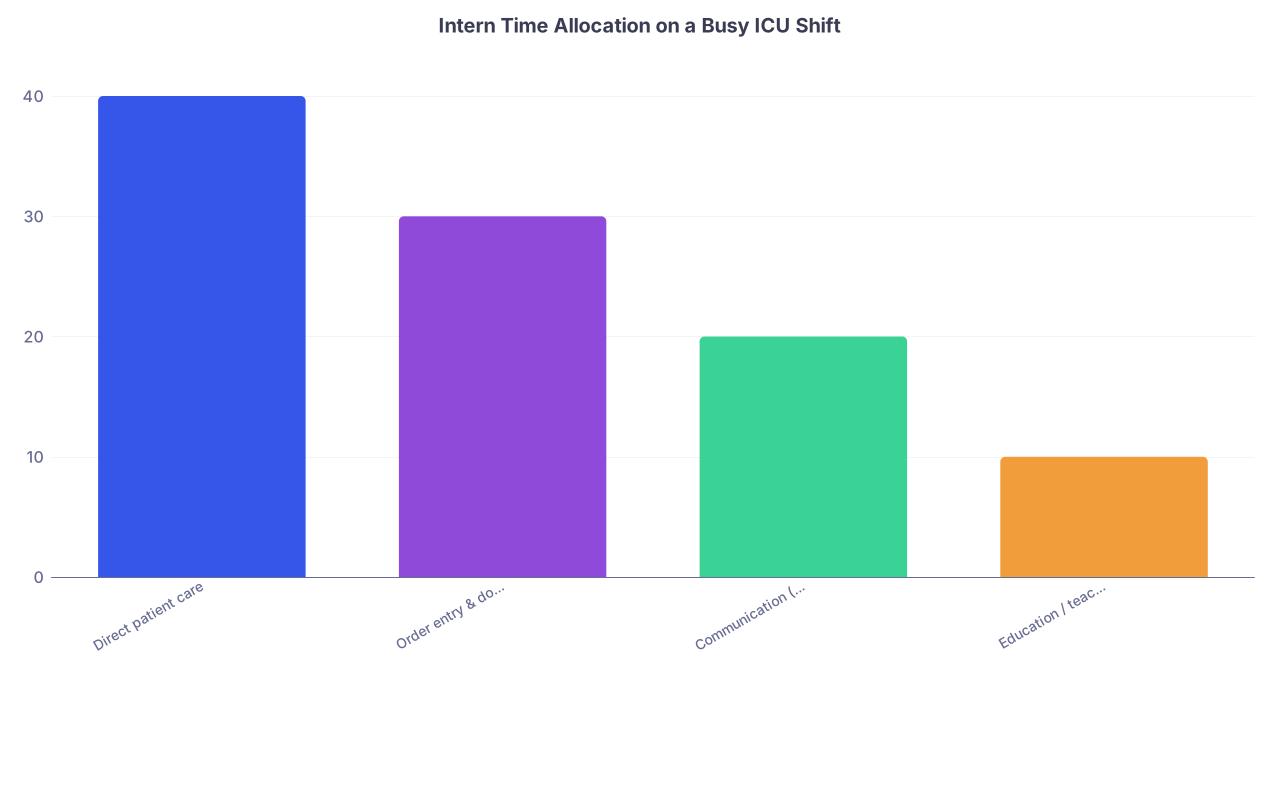
| Category | Value |
|---|---|
| Direct patient care | 40 |
| Order entry & documentation | 30 |
| Communication (nurses, families, consults) | 20 |
| Education / teaching moments | 10 |
Final Thoughts: What Actually Matters
You will not be a master of ventilator management after one ICU month. Nobody is expecting that from an intern.
What separates the interns people want to work with again:
- They know, at all times, who is sickest and what needs to happen first.
- They respond quickly and reliably to instability and critical pages.
- They turn team decisions into clear, prioritized tasks and actually close the loop.
If you remember nothing else:
- Do not chase perfect notes when you have not seen your sickest patients.
- Rank every task through the lens of: minutes, hours, operations, or later.
- Communicate clearly and early with nurses and seniors, especially when something feels wrong, even if you cannot fully articulate why yet.
Get those three right, and the rest of ICU – the fancy physiology, the nuanced vent tweaks – becomes learnable instead of overwhelming.