
Only 38% of intern consult calls are complete enough that the consultant does not need to call back for basic information.
That number comes from one service chief who kept an informal tally over a month. It matches what most subspecialists will tell you quietly on rounds: most intern consults are incomplete, inefficient, or unclear about the actual question. And that hurts you, your patient, and your reputation.
Let me break down how to do this like someone who has been burned by bad consults and learned the hard way.
1. What a “Good Consult” Actually Looks Like
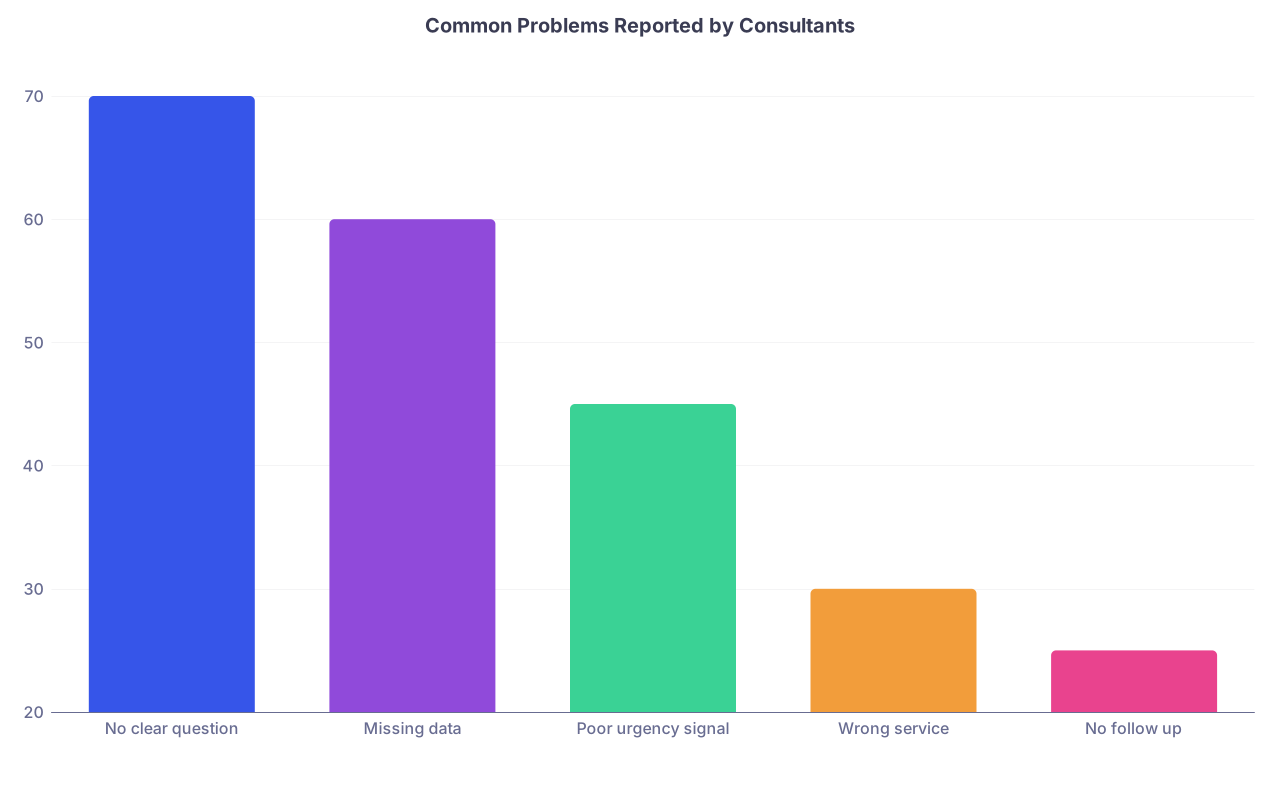
| Category | Value |
|---|---|
| No clear question | 70 |
| Missing data | 60 |
| Poor urgency signal | 45 |
| Wrong service | 30 |
| No follow up | 25 |
Here is the consulting service perspective that no one spells out during orientation:
A good consult has three things:
- A specific question
- The relevant data already gathered
- A documented plan for follow‑up and ownership
If one of those is missing, the consult becomes painful. If two are missing, they start avoiding your pager number.
You are not “ordering a consult” like a lab test. You are asking another physician to think hard about your patient. That means:
- You decide which service is appropriate.
- You clarify why you are calling them and not someone else.
- You do the basic legwork before you pick up the phone.
The “consult mantra” (memorize this)
Before you call, you should be able to state, in one breath:
“Hi, this is Dr. X from Y team about a Z‑year‑old with A, admitted for B, now with C, and I am calling to ask for help with D.”
If you cannot fill in the D (specific question) clearly, you are not ready to call.
Example:
Bad: “We want GI to see for anemia.”
Better: “We are asking GI whether this 74‑year‑old with iron deficiency anemia and melena needs inpatient endoscopy this admission versus outpatient workup.”
That is the level of specificity that makes them take you seriously.
2. Before You Call: Doing the Work Up Front

Most “annoying” consults are not annoying because the question is bad. They are annoying because the intern clearly has not done basic prep. Here is a concrete, reproducible pre‑call checklist.
Step 1: Be sure you are calling the right service
Classic mistakes:
- Calling nephrology for mild AKI in a septic patient before you have even given fluids or held nephrotoxins.
- Calling ID for “fever” before you have cultures, a chest x‑ray, or a working differential.
- Calling surgery for biliary colic without an ultrasound.
If you are not sure who owns the problem, ask your senior: “Which service usually manages X here?” Every hospital has its own weird turf rules.
Step 2: Stabilize first, then consult
You do not call cardiology asking “What should we do?” in an actively hypotensive patient with chest pain. You manage ABCs and initial stabilization, then call.
Baseline rule:
- If the patient is unstable: manage airway, breathing, circulation, pressors, fluids, etc. Call a rapid response or code if needed. Then you call the consult and say what you have already done.
Consultants do not like feeling used as an emergency response team because the primary did nothing.
Step 3: Gather core data (the minimum set)
For almost any consult, have this ready (not all will apply, but you should think through each):
- Vital trends: last 24 hours, not just the last one.
- Relevant labs: CBC, BMP, LFTs, coags, troponin, lactate, cultures, etc.
- Most recent imaging: CXR, CT, MRI, ultrasound – at least know whether it was done and the headline result.
- Med list: especially anticoagulation, antiplatelets, immunosuppressants, nephrotoxins.
- Allergies.
- Code status and goals of care (especially for invasive or high‑risk consult questions).
- Baseline functional status and comorbidities.
Step 4: Decide and phrase your question
Your question should be answerable. Not: “What do you think?” But:
- “Does this patient need cardiac catheterization this admission?”
- “What additional workup is indicated for chronic hyponatremia?”
- “Do you recommend inpatient versus outpatient colonoscopy?”
- “Is this a surgical abdomen that you want to take to the OR?”
If you cannot boil it down, write one sentence before you call. Literally type it in a note and look at it.
3. How to Call a Consult Without Sounding Lost

| Step | Description |
|---|---|
| Step 1 | Need for consult identified |
| Step 2 | Confirm right service |
| Step 3 | Stabilize patient |
| Step 4 | Gather data and define question |
| Step 5 | Call consult and present case |
| Step 6 | Clarify recommendations and urgency |
| Step 7 | Document consult note |
| Step 8 | Follow up and close the loop |
This is where most interns either ramble for five minutes or get cut off after twenty seconds. You want a structure that works for almost any service.
The 7‑sentence consult script
Aim for a tight, structured, 1–2 minute presentation:
- Who you are and where you are calling from.
- Who the patient is (age, key comorbidities).
- Why they are admitted / main problem.
- What changed or the specific issue triggering the consult.
- The focused relevant data.
- What you have already done.
- Your specific question and urgency.
Example:
“Hi, this is Dr. Lee, the medicine intern on 9 Silver. I am calling about a 68‑year‑old man with CAD and CKD admitted yesterday for decompensated heart failure. Overnight he developed worsening chest pain with dynamic ECG changes and troponin rise concerning for NSTEMI. He is on aspirin, high‑dose statin, and we started heparin and nitro, now pain is improved, hemodynamically stable, creatinine is 1.8 from baseline 1.5. I am calling cardiology to ask if this patient should go for early angiography this admission, and how you would like to risk stratify him. This is urgent but not emergent – within the next hour is fine.”
Short, clear, covers everything they actually need.
Key habits that make you sound competent
- Start with the question early: “I am calling to ask X. Let me give you a brief overview.” That frames the call.
- Do not read the admission H&P. Pick the parts that matter for their specialty.
- Anticipate what they always ask. Nephrology: urine output, baseline creatinine, exposures. Cardiology: ECG changes, troponins, hemodynamics. Surgery: exam findings, imaging, lactate, peritoneal signs.
- Say the urgency explicitly: “stat / within the hour / by the end of the day / routine sometime tomorrow.”
That one phrase (“this is urgent but not emergent”) prevents half of the passive‑aggressive comments you will otherwise get.
4. Efficient, High‑Yield Documentation of Consults
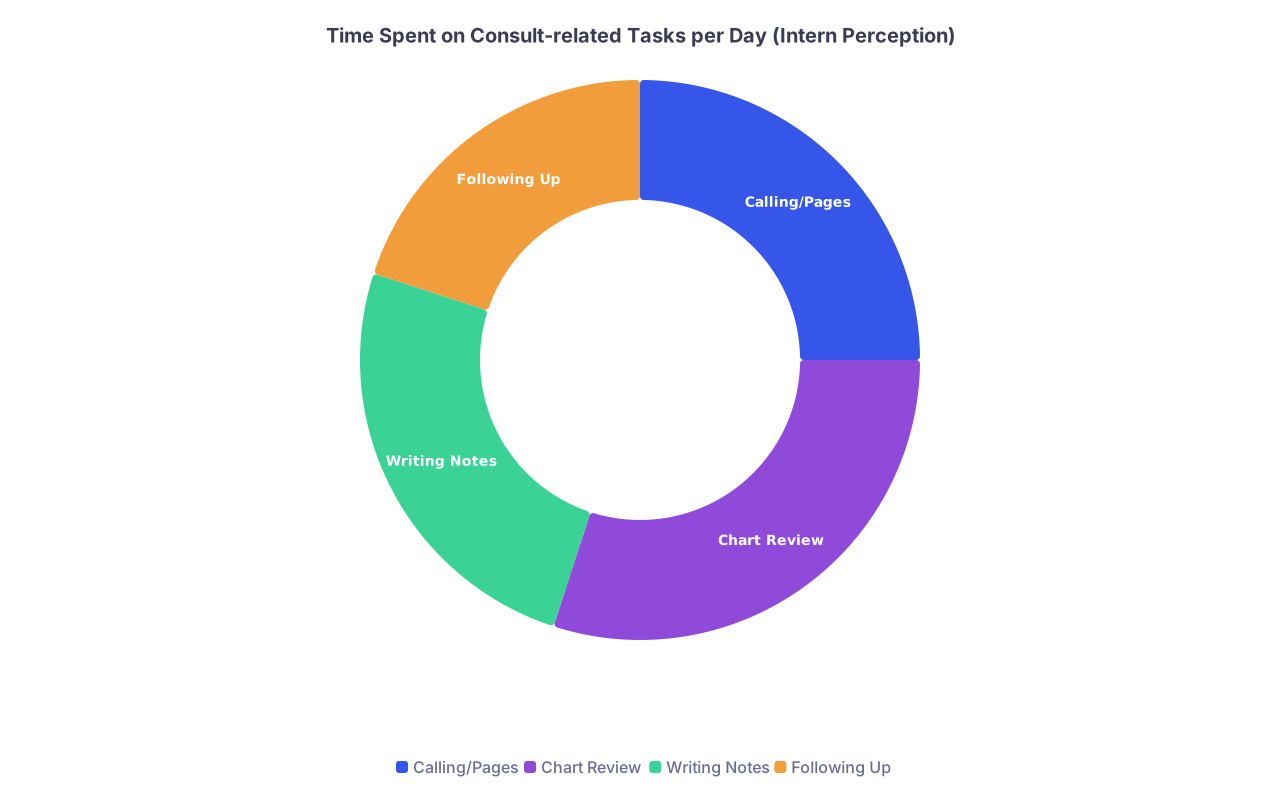
| Category | Value |
|---|---|
| Calling/Pages | 25 |
| Chart Review | 30 |
| Writing Notes | 25 |
| Following Up | 20 |
Most interns either over‑document consults (walls of text nobody reads) or under‑document (“GI consulted, awaiting recs”). Both are wrong.
You need two separate but connected pieces of documentation:
- A brief progress note in your own team’s notes.
- A clear “consult called” event with the recommendation and plan.
Your team’s note: where ownership lives
In your daily progress note, you integrate the consult’s input. Example template:
- Assessment: “Acute DVT – confirmed by duplex ultrasound. Hematology consulted.”
- Plan:
- “Heme recommends starting therapeutic enoxaparin 1 mg/kg BID, transition to DOAC in 48–72 hours if stable.”
- “Will order thrombophilia workup only if unprovoked event and after anticoagulation is stabilized.”
- “Primary team to monitor CBC daily, watch for bleeding.”
You are not transcribing their note. You are stating: “I heard them, I understood them, and here is what we are doing.”
A concise consult call note (same day)
Some services or hospitals want a separate “Consult notification” or short note. If your EMR does not enforce it, you should still document somewhere obvious.
Use a simple, reproducible structure:
- “Service consulted”: Cardiology
- “Reason”: NSTEMI – question of timing of cath and management
- “Time of discussion”: 14:30 with Dr. Smith (cardiology fellow)
- “Key recommendations”:
- Continue heparin infusion
- Keep NPO after midnight for possible cath in AM
- Trend troponin q6h until peak
- Call back if recurrent chest pain or hemodynamic change
That note takes 1–2 minutes and it saves you when:
- The consultant’s formal note is delayed until late.
- Someone misremembers the plan.
- You hand off to night float.
Where people screw this up
- Writing “Cards to see” with no time, person, or content.
- Not stating who you talked to (and then getting “we never said that” later).
- Not updating the plan if recommendations change after they see the patient.
If the fellow changes the plan in person, you add a short addendum: “Updated recs after bedside evaluation with Dr. X: now recommending…”
5. Following Up: Not Dropping the Consult
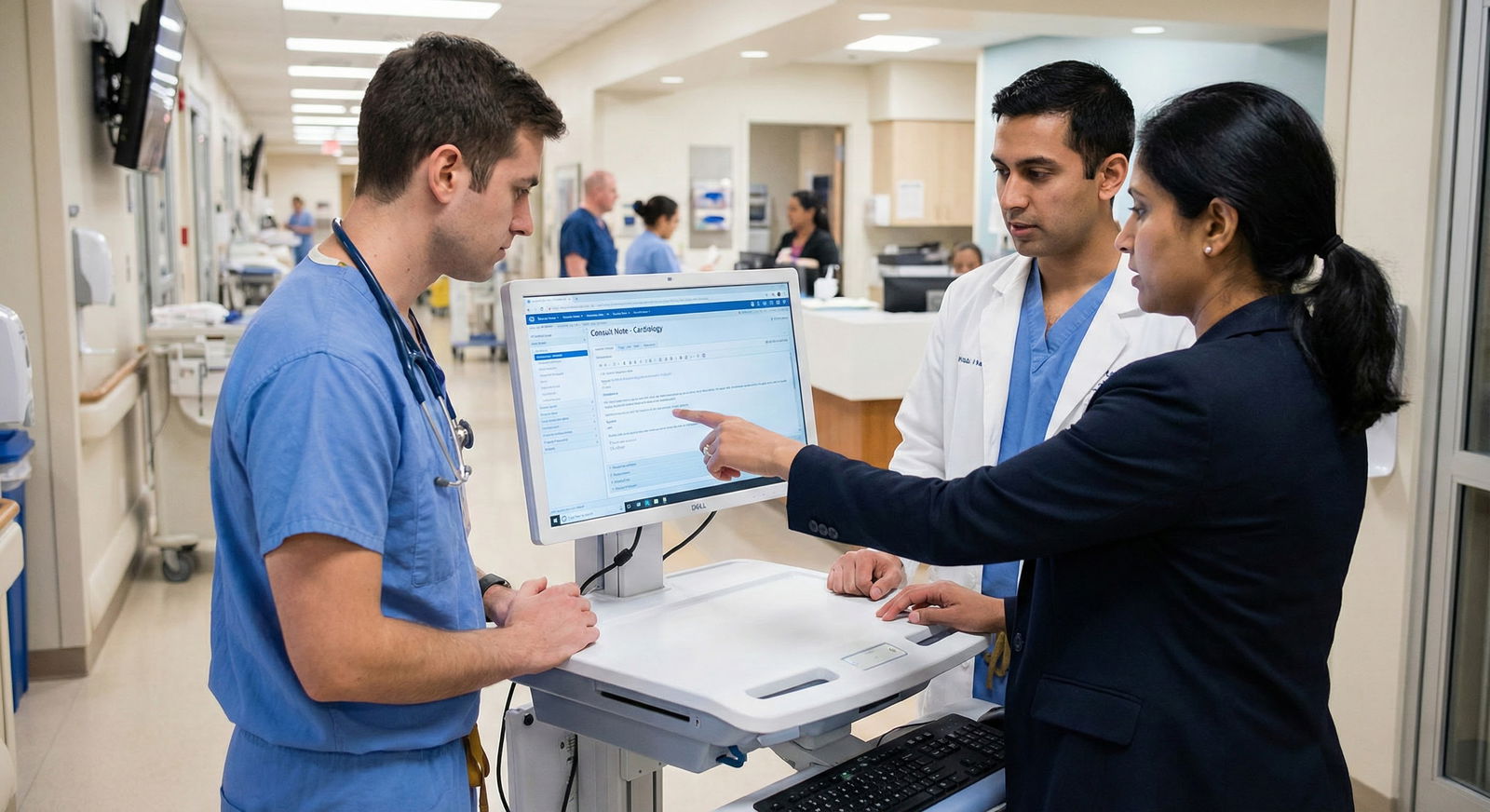
Calling the consult is the easy part. Following up is where you prove you are actually safe to work with.
Step 1: Close the loop the same day
After you call:
- Make sure you know if and when they will see the patient.
- Clarify whether they will write a note today, tomorrow, or not at all (some “curbside” consults do not generate a note).
- Communicate expectations to your team: “Nephrology will see this afternoon; for now we are doing X.”
If you have not seen a formal note by the time you are signing out, mention it in sign‑out: “Cards consulted; note pending; initial plan as per my 2pm call: heparin, NPO for possible cath.”
Step 2: Actually carry out the recommendations
You would be surprised how many times:
- ID recommends changing antibiotics, and the order never gets put in.
- GI asks for NPO and bowel prep, and nobody orders it so the procedure is delayed a day.
- Orthopedics orders non‑weight bearing, and PT has the patient ambulate because it was not in the orders or sign‑out.
Your job:
- Enter the orders yourself unless you explicitly agreed otherwise.
- If the consult team enters orders, review them. Make sure nothing conflicts with the primary plan.
And then document: “Orders placed as per nephrology recommendations.”
Step 3: Re‑consulting and escalation
Sometimes the first consult is not enough. The plan is not working. Or the situation worsens.
When to call back:
- The clinical status has significantly changed (new hypotension, rising creatinine, arrhythmia, etc.).
- Their plan is not feasible (e.g., patient refuses procedure, NPO not possible because of other issues).
- You or your attending disagree strongly with the plan.
How to do it without creating drama:
“Hi, this is Dr. X from medicine calling back about the patient you saw earlier today, Mr. Y. Brief update: now with … We followed your recommendation to start Z, but he remains… I want to ask whether you would modify the plan or consider A/B.”
If the consultant is unresponsive or dismissive and your attending believes patient care is at risk, the escalation path is:
- Your senior → their fellow
- Your attending → their attending
Use that chain. Do not fight this battle alone at 2 a.m.
6. High-Yield Service-Specific Consult Tips
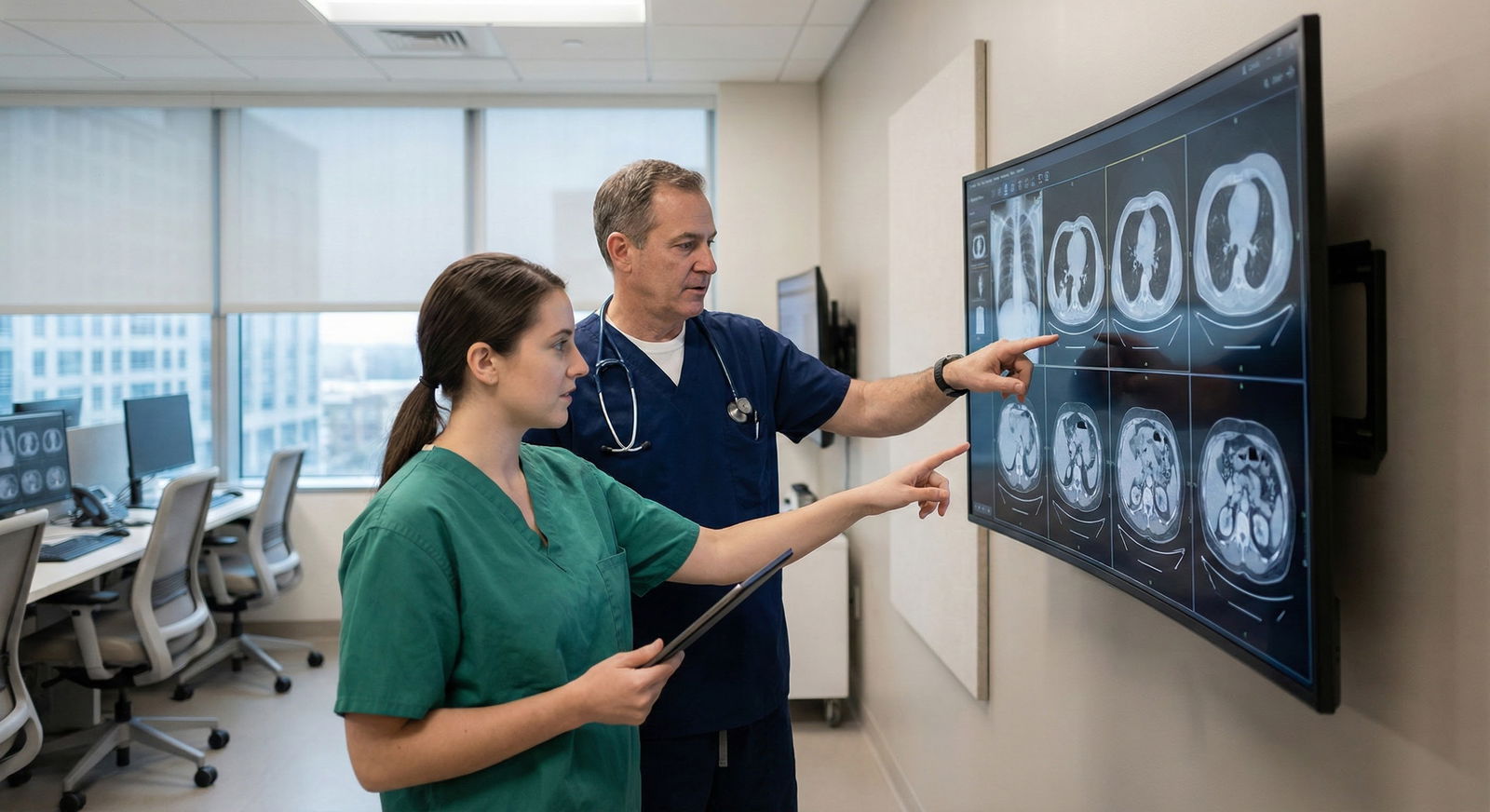
Different services care about different things. If you sound like you already know their mental checklist, they treat you better. Let me give you a few common ones.
| Service | Must-Have Data Before Calling |
|---|---|
| Cardiology | ECG, troponins, vitals, chest pain description, meds |
| Nephrology | Baseline Cr, trend, urine output, meds, exposures |
| GI | Hb trend, hemodynamics, stool description, anticoagulants |
| ID | Source, cultures, imaging, antibiotics given, timecourse |
| Surgery | Exam, peritoneal signs, imaging, lactate, comorbidities |
Cardiology
Do this before calling:
- Get an ECG. Actually look at it or at least know what it supposedly shows.
- Trend at least one troponin if the question is ACS.
- Know the last several BP/HR readings and whether the patient is on pressors.
Consult question examples:
- “Does this patient require urgent cath or can this be managed medically?”
- “Is this arrhythmia concerning enough for EP evaluation this admission?”
Nephrology
They will always ask:
- Baseline kidney function and trend.
- Urine output: actual numbers, not “okay.”
- Volume status: exam, I/Os, weights if available.
- Nephrotoxic meds and contrast exposure.
Do not call for: Cr 1.1 to 1.2 on a septic patient who is still being fluid resuscitated. At least start the basics: fluids, hold ACEi/ARB/NSAIDs, check UA.
GI
For bleeding:
- Hemoglobin trend and hemodynamics.
- Description of stool (melena, hematochezia, coffee ground).
- Coags and platelet count.
- Anticoagulants/antiplatelets and whether they have been held.
Always ask explicitly:
“Do you think this patient needs endoscopy during this admission, and if so, when?”
Then act on the prep / NPO instructions immediately.
ID
Every ID doc I know hates “consult for fever” with no workup.
Bare minimum:
- Two sets of blood cultures if febrile and not already done.
- A chest x‑ray if any respiratory symptoms or unclear source.
- UA/urine culture where appropriate.
- Current and prior antibiotics, with start dates.
Your question should be something like:
“Given this septic patient with likely pneumonia and AKI, are our current antibiotics appropriate and how long should we treat?”
7. Time Management: Fitting Consults into an Already Insane Day
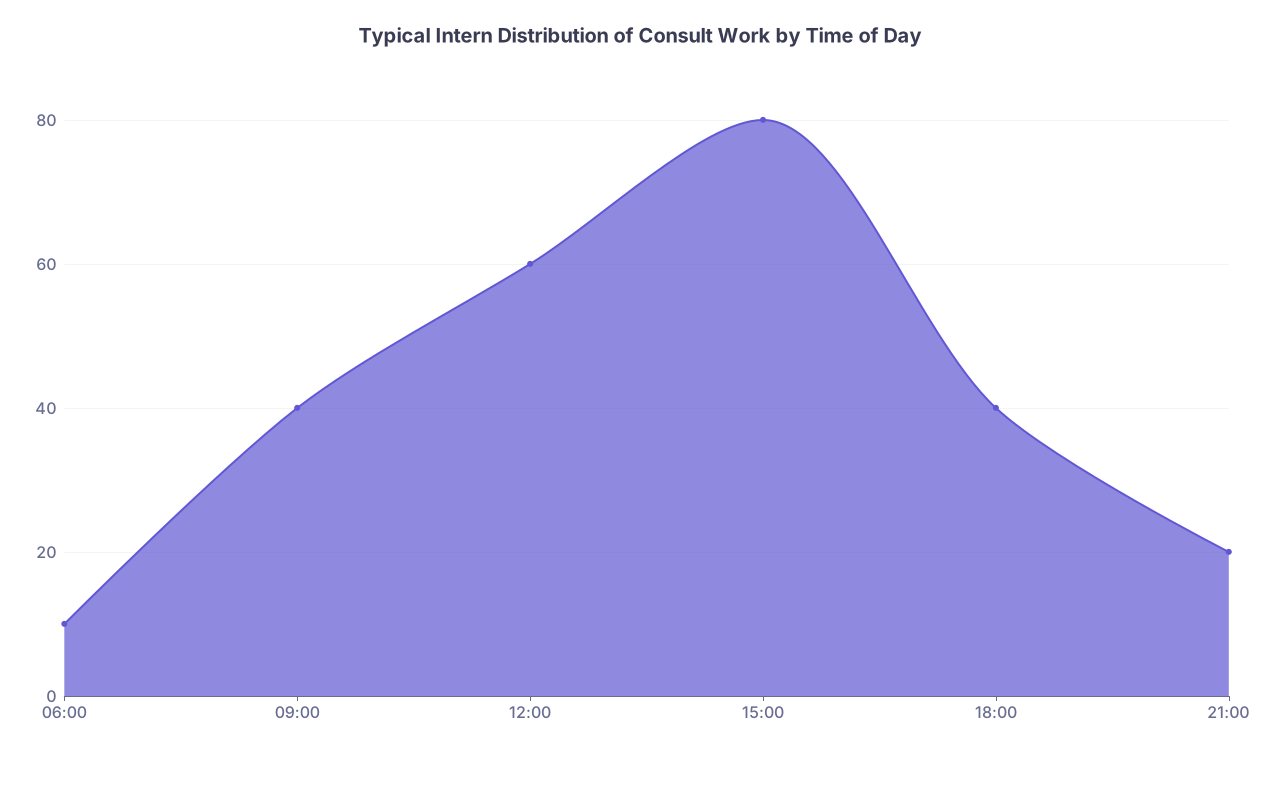
| Category | Value |
|---|---|
| 06:00 | 10 |
| 09:00 | 40 |
| 12:00 | 60 |
| 15:00 | 80 |
| 18:00 | 40 |
| 21:00 | 20 |
Consult chaos usually peaks late morning and mid‑afternoon. Orders are placed, issues are discovered, attendings throw in their “by the way, can you call…” at 11 a.m.
You need a simple system or consults will eat your whole day.
Strategy 1: Batch when possible
Instead of:
- Calling nephrology at 9, then again at 11 with new labs, then at 2 with yet another question…
Try:
- Quickly stabilize and gather data.
- Round with your attending and agree on a consolidated set of questions.
- Call once with a well‑formed question and follow‑up questions already thought through.
Obviously you cannot always wait, but mindless, repeated “piecemeal” consults are a huge time sink.
Strategy 2: Track every open consult
Do not rely on memory. By October, that strategy fails.
At minimum:
- Keep a section on your sign‑out list: “Open consults / pending recommendations.”
- For each: Service, date called, specific question, status (called / seen / note pending / plan implemented).
If you prefer analog, a tiny index card in your pocket with consults for the day works surprisingly well.
Strategy 3: Offload the right amount to your senior
You should not punt every consult to your senior. But you also should not suffer in silence if:
- You are unsure who to call.
- You are calling a service with complex hospital politics (e.g., surgery vs IR vs GI for a bleeding case).
- The consultant is being unreasonable or rude.
What a good intern says: “I have the data, here is my proposed question to ID, can you listen to my script once before I call them?”
You improve faster that way, and your senior is more likely to step in only where necessary.
8. Night Float and After-Hours Consults

Night consults are different. People are more irritable, more tired, and there is less margin for error.
Basic rules:
- Only call at night if it genuinely affects management before morning.
- If your attending, cross-cover note, or sign‑out explicitly says “If X, call Y service,” then you call.
- Be even clearer about urgency: “This can absolutely wait until morning; I just wanted to confirm Y” versus “This is an acute change that cannot wait.”
If you really do not know if it can wait, phrase it honestly: “I am the night float covering this patient, there is a new finding of X, and I am unsure whether you would want to be called overnight about this versus in the morning.”
Most consultants appreciate that transparency and will tell you where their threshold is.
FAQ (Exactly 5 Questions)
1. Should I put in the consult order before or after I call?
If the patient is stable and the consult is routine, it is reasonable to place the order first and then call, especially if that is your hospital’s culture. For anything urgent, call first, stabilize, then put in the order while you are documenting the conversation. What you must not do is “order only, no call” for anything time-sensitive or unclear.
2. How detailed does my presentation need to be for a curbside consult?
For a true curbside (no formal note, quick hallway or phone opinion), you still use the same 7‑sentence structure, but even tighter. Emphasize: key problem, salient data, specific question. Do not abuse curbsides for complex or high‑risk decisions (anticoagulation in a brain bleed, for example); those warrant a formal consult.
3. What if the consultant’s recommendation conflicts with my attending’s preference?
You do not “pick a side” alone as an intern. Present the recommendation clearly to your attending, including the rationale if you understand it. If there is disagreement, your attending should discuss with the consulting attending. Your job is to communicate accurately, not to negotiate independently.
4. How do I handle a rude or dismissive consultant on the phone?
Stay calm, stay factual, and do not match their tone. Repeat your question clearly, provide the requested data, and document the interaction including time and person spoken to. If behavior crosses a line or affects patient care, tell your senior and attending. Let them handle escalation. Do not turn it into an argument at 2 a.m. as a PGY-1.
5. Do I need a separate note every time I update a consultant by phone?
Not for minor clarifications, but for any substantive change in plan discussed by phone, you should add at least a brief addendum or progress note: “Discussed X with cardiology fellow at 16:00; updated plan is Y.” That protects you legally and ensures the rest of your team understands the current strategy.
Key points:
Get your consult question crystal clear, with relevant data in hand, before you call.
Document who you spoke to, what they recommended, and how it changes your plan.
Close the loop and actually execute – consults are not done when you hang up; they are done when the recommendations are in place and the patient’s course reflects that plan.