
The way we structure overnight coverage in residency makes or breaks cognitive performance. Not in a vague “fatigue is bad” way. In a very specific, measurable “your diagnostic accuracy drops 20–30% after hour X” way. Night float and traditional 24–28 hour call are not equivalent systems just painted different colors. They stress the brain in different ways, and the performance failures you see on each are predictable.
Let me break this down specifically.
The Physiologic Ground Rules: What Your Brain Does at 3 a.m.
You cannot talk about night float vs traditional call without understanding two things that never compromise: sleep homeostasis and circadian rhythm.
Sleep pressure builds the longer you are awake. Circadian rhythm modulates alertness based on internal biological time. They are not the same.
On a typical diurnal schedule:
- Peak alertness: late morning to early evening
- First drop: post-lunch dip
- Steep decline: 11 p.m.–3 a.m.
- Worst performance zone: ~3–6 a.m. (“circadian nadir”)
Now layer on duration of wakefulness. After ~16 hours awake, reaction time, working memory, and error rate look like you are at or above legal intoxication.
This is why the shape of the schedule matters. Whether you are:
- Post-call at 11 a.m. after 26–28 hours awake
vs. - On night 4 of a string of 7 night floats, awake “only” 12–14 hours but at the wrong circadian phase
The failure modes are different. Traditional call kills you with time-awake plus circadian nadir. Night float kills you with circadian misalignment, chronic sleep curtailment, and social jet lag.
What Actually Changes in Your Brain: Domain by Domain
Let us be very concrete. When residents are studied on different schedules (yes, there is data), we see consistent shifts in specific cognitive domains.
1. Vigilance and simple attention
This is the Psych 101 “press the button when you see the light” test. The psychomotor vigilance task (PVT) has been done to death in sleep research.
After a 24–28 hour call:
- Lapses (reaction times >500 ms) spike dramatically
- Microsleeps appear: 1–15 second episodes where your brain briefly goes offline even if your eyes are open
On stabilized night float (after a few consecutive nights):
- Fewer catastrophic lapses compared with post-call
- But more overall variability in reaction time during the circadian nadir
In practical terms: the post-call intern is more likely to completely miss that a monitor is alarming behind them. The night float intern is more likely to register the alarm but be sluggish and less consistent in responding, especially at 4–5 a.m.
2. Working memory and executive function
This is what you use to:
- Hold the last three lab values in your head
- Compare them to yesterday
- Decide whether to change the heparin drip
- Call the right consultant and say the right words
On traditional call:
- After the ~20–24 hour awake mark, executive function drops off a cliff.
- Set-shifting (task switching) and updating (revising plans) become slower and more error-prone.
Night float:
- You rarely hit that 24-hour awake mark, which helps.
- But chronic misalignment (sleeping 09:00–14:00 on weekdays, trying to flip back on weekends) blunts executive function every night, not just “post-call.”
- The effect is smaller per night, but it never fully clears.
So with traditional call, you get sharper on most days and truly impaired on a few post-call days. With sustained night float, you are never fully sharp, but also rarely as catastrophically impaired as a badly post-call resident.
3. Diagnostic reasoning and clinical judgment
This is what program directors actually care about, but almost nobody measures rigorously.
What we know from simulation and chart review work:
Residents post-call after extended shifts show:
- Fewer differential diagnoses listed
- Reduced likelihood of reconsidering the diagnosis after new data
- More anchoring and premature closure
Night float residents:
- Are more likely to under-investigate borderline issues at 4–5 a.m. (“This can wait until day team”)
- Less likely to pick up subtle pattern deviations that require integrating multiple data streams, especially later in the week
Different error signature:
- Post-call: confident but wrong; marching forward on a flawed plan.
- Night float: more conservative, more deferral, more “hold and follow up,” but sometimes under-triaging smoldering problems.
4. Procedural performance
This is less often measured in residency literature, but we have good analogues from surgery and anesthesia.
Basic pattern:
- Longer time awake and circadian nadir both:
- Increase time to complete a procedure
- Increase minor technical errors
- Increase risk of forgetting a critical step in a multi-step procedure
Traditional call:
- Intern on hour 25 doing a central line: more likely to break sterility, fumble equipment, or mis-sequence the steps.
- Attending oversight mitigates some, but not all, of this.
Night float:
- Intern at 2 a.m. on night 5 of float, but “only” 10 hours into the shift:
- Slower motor speed
- Reaction time to sudden changes (brisk bleed, decompensation) worse, but not as extreme as hourly 25 post-call.
From a cognitive performance standpoint, post-call procedures are the worst-case scenario. On many services, they wisely do not happen. Night float shifts that run “just” 12 hours avoid the truly catastrophic end of the curve.
Night Float vs Traditional Call: The Core Tradeoffs
Let us line up the structures because the design itself predicts cognitive performance.
| Feature | Night Float | Traditional Call |
|---|---|---|
| Typical shift length | 10–14 hours overnight | 24–28 hours continuous |
| Consecutive nights | 4–7 in a row | 1 every 3–7 days |
| Circadian alignment | Chronic misalignment | Mostly aligned except call/post-call days |
| Sleep fragmentation | Daytime sleep, often interrupted | Pre-call normal, on-call fragmented, post-call short |
| Peak impairment | Moderate every night at 3–6 a.m. | Severe post-call late night and morning |
Now, what does this architecture do to resident performance in the real world?
Traditional call: “sharp most days, wrecked on a few”
Patterns I have actually seen on wards and in ICUs:
- The white-cloud PGY-2 who is outstanding on non-call days. Organized, anticipatory, great teaching. Then on post-call morning rounds, she misses an acute kidney injury because the creatinine is buried in a sea of labs and her brain is simply saturated.
- The cross-cover night where the intern spends 3–4 a.m. writing notes because the pager finally slowed down, then nearly misses a crashing GI bleeder at 6 a.m. because he is experiencing microsleeps while “reviewing vitals.”
Cognitively, you get:
- High variance. Some days they are fantastic. Some mornings they are objectively unsafe.
- The worst performance almost always clusters:
- Late in the call night (3–6 a.m.)
- On post-call morning (7–11 a.m.), especially on “holdover” issues
Resident strategies to cope:
- Over-ordering “just to be safe” when tired
- Defaulting to protocols instead of individualized decisions
- Hand-waving borderline issues to the next team
You can see how this leads to near-misses and subtle care-quality issues that rarely show up in clean RCT endpoints, but are painfully obvious on the ground.
Night float: “never fully sharp, rarely truly wrecked”
Flip to a week of night float.
- Night 1–2: They are circadian-misaligned and relatively sleep deprived from flipping their schedule. Performance is worse than advertised.
- Nights 3–5: They stabilize. Sleep debt may still be there, but their internal clock shifts a bit. Performance at 2–3 a.m. improves.
- Night 6–7: Chronic sleep restriction, social isolation, and cumulative fatigue creep in. Judgment gets conservative. Cognitive flexibility drops.
Concrete examples:
- The night float senior at 4:30 a.m. who sees an elevated lactate in a borderline patient, but because the BP is “okay enough,” kicks the question to the day team instead of initiating a broader sepsis workup and stepping up monitoring.
- The NF intern who miscalculates a sliding-scale insulin dose not because they are too sleepy to do the math, but because they are rushing through 20 cross-cover pages with blunted working memory and reduced error checking.
The error pattern:
- More omission errors (things not done) than commission errors (things done wrong aggressively).
- Lower daytime-equivalent diagnostic creativity; fewer novel hypotheses raised overnight.
- Less catastrophic immediate impairment than the 26-hour post-call zombie, but a lower ceiling every night.
What the Literature Actually Shows (When You Strip the Spin)
Programs often cherry-pick one or two studies to justify their scheduling architecture. Let us be more honest.
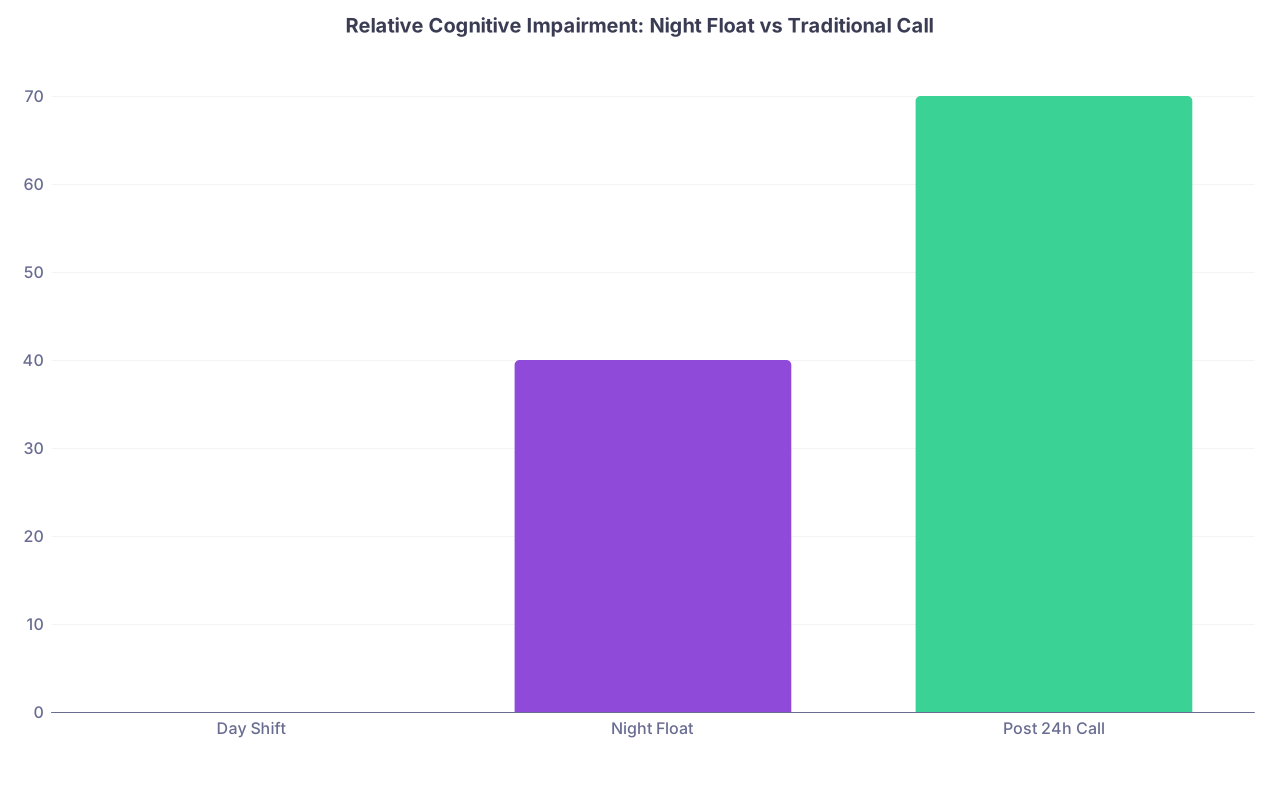
| Category | Value |
|---|---|
| Day Shift | 0 |
| Night Float | 40 |
| Post 24h Call | 70 |
This chart is a conceptual summary, not exact numbers from a single study, but it matches the broad pattern seen across psychomotor vigilance, error rates, and self-reported fatigue:
- Day shift on a normal schedule – baseline
- Night float – moderate, chronic impairment
- Post 24h call – severe, acute impairment
Key findings from multiple systems (internal medicine, surgery, pediatrics):
Extended shifts (24+ hours awake)
- Increased attentional failures, near-miss errors, and motor vehicle crashes post-call.
- Residents self-report more mistakes that reached the patient.
- Objective performance on PVT and similar tasks tracks how long they have been awake – not how long the “shift” is labeled.
Night float systems
- Reduce the number of consecutively awake hours.
- Shift the impairment into the “circadian mismatch + partial sleep restriction” domain.
- Often increase total number of handoffs and patient transitions, creating different cognitive demands (memory at sign-out, communication clarity, anticipation).
Educational and cognitive side effects
- Traditional call: resident is present for the admission, decompensation, and resolution. Deep learning, but at a cognitive cost.
- Night float: you often see the middle chunk (stability / nighttime management), but not the full trajectory. Less pattern-building.
- Chronic fatigue from either model reduces learning efficiency. Tired brains encode poorly. That is non-negotiable.
Where the Errors Actually Cluster: Time-of-Night and Time-Awake
You do not need a grant to see this pattern; it is obvious to any senior who has staffed cross-cover calls for a few years.
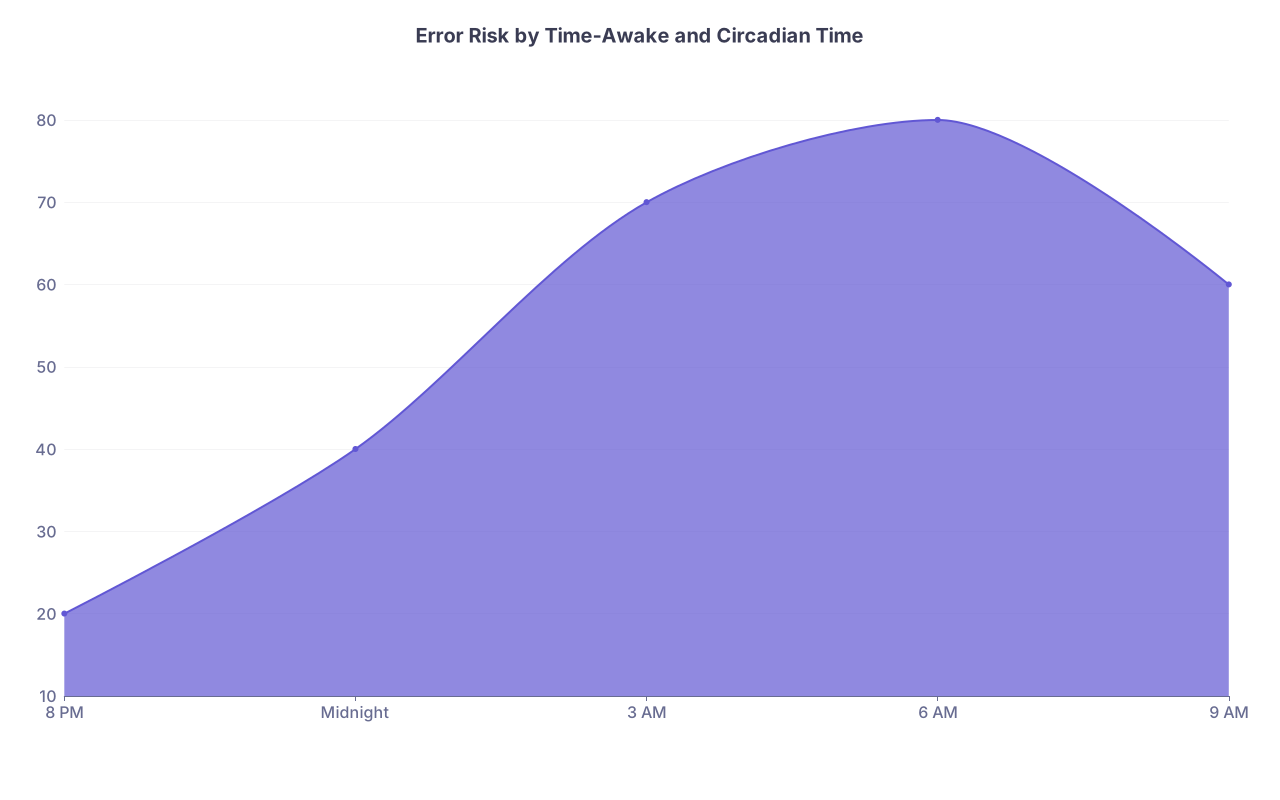
| Category | Value |
|---|---|
| 8 PM | 20 |
| Midnight | 40 |
| 3 AM | 70 |
| 6 AM | 80 |
| 9 AM | 60 |
Interpretation:
- Risk is low at 8 p.m., even if you started your day at 7 a.m.
- Climbs through midnight as circadian alertness drops.
- Peaks around 3–6 a.m., especially when:
- You have been awake >18–20 hours (traditional call), or
- You are in the early phase of night float rotation and not yet shifted.
In a traditional Q4–Q5 call model:
- The 5–7 a.m. window is brutal. You are past 22 hours awake. You may be trying to pre-round, call consults, respond to cross-cover pages, and draft notes simultaneously.
- This is exactly when you see:
- Wrong doses documented
- Critical values misinterpreted or un-acknowledged
- Delayed escalation for real deterioration
In a night float model:
- Worst times are night 1–2 around 3–5 a.m., when circadian misalignment is highest and you still have daytime responsibilities bleeding into the “day off.”
- By night 3–4 your rhythm partially adjusts, and the performance nadir blunts somewhat.
- Chronic issues (mood changes, apathy, subtle cognitive drag) grow instead.
Handoffs, Memory Load, and Who Actually Forgets What
People love to point out that night float increases handoffs. True. But they rarely talk concretely about what that does cognitively.
With traditional call:
- You may admit a patient at 10 p.m. and then sign them out post-call at 8–9 a.m.
- You hold the full mental model for ~10–12 hours, but in the last 4–6 hours, your working memory and recall are heavily degraded.
- Post-call handoff quality tanks.
- I have seen perfectly competent residents forget to mention that a patient’s blood cultures flagged positive at 4 a.m. because they “handled it already” with a single vanc dose and their brain considered it “closed.”
Night float:
- You admit overnight, then sign out to the day team at 7 a.m.
- You are still impaired (circadian phase), but your time awake is shorter, and the memory trace is fresher.
- On the flip side, the day team inherits a larger fraction of their patients from cross-cover or night float, with only sign-out narratives rather than firsthand evaluation.
Cognitively, this means:
- Traditional model: deeper individual patient knowledge, but higher risk that post-call you will omit or distort important threads in memory.
- Night float: shallower knowledge of more patients, but less impaired memory at the moment of handoff. However, you must be extremely structured in how you encode information overnight, because you will not be present to course-correct.
Specialty and Service Patterns: Cognitive Demands Are Not Uniform
“Night float” on a medicine floor and “night float” on a trauma surgery service are not the same job cognitively.
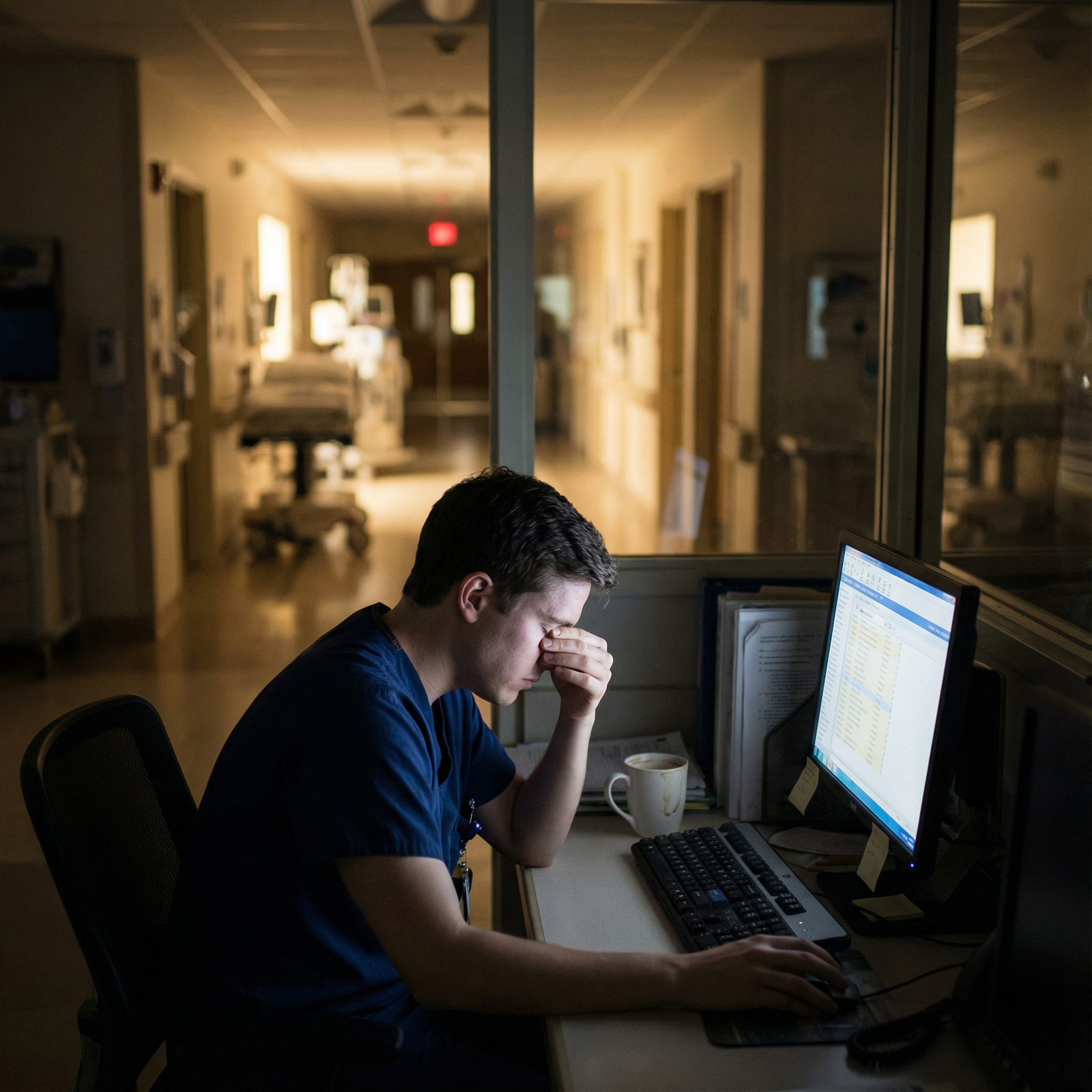
Broadly:
Internal medicine nights:
- Cognitive load is heavy on diagnostic reasoning and longitudinal risk assessment.
- Lots of cross-cover, subtle status changes, titration of drips, managing slow-burn sepsis, arrhythmias, and borderline decompensations.
- Night float can be cognitively draining in a “hundred medium decisions” way; traditional call adds exhaustion on top.
Surgery nights:
- Mix of acute procedural events (trauma, OR emergencies) with post-op cross-cover.
- Peaks of intense focus interspersed with low-level monitoring.
- Extended call makes the 5–7 a.m. OR cases particularly vulnerable; night float makes multiple nights of trauma activations cumulatively draining, but rare to hit 24+ hours awake.
OB/GYN nights:
- Continuous monitoring, high-stakes decisions on labor progression, timing of operative delivery.
- Time-of-night effects matter a lot; tired brains are worse at predicting “trajectory” in borderline strips.
Different schedule structures interact with those task profiles. For services that require high-stakes procedures in the early morning hours (e.g., emergent laparotomy at 6 a.m.), the extended-call model is simply more dangerous cognitively.
So Which Model Is “Better” for Cognitive Performance?
If you force me to choose strictly on acute patient safety and cognitive performance, I will say this:
- The worst model is: 24–28 hour call without protected post-call rest and with heavy procedural load in the last 6–8 hours.
- The best practical model is: tightly limited night shifts (≤12 hours), grouped in blocks of 4–5 nights with protected daytime sleep, and no expectation of flipping back for conferences or clinics during the block.
What about the real-world binary you usually face—“classic 24-hour q4 call” versus “night float system”?
On balance:
- Night float reduces peaks of catastrophic cognitive impairment associated with extreme time-awake.
- It introduces moderate, chronic circadian and sleep debt issues that keep performance somewhat suppressed every night.
- Traditional call gives you better overall days, worse specific nights/mornings, and a post-call period that is cognitively dangerous but often still used for patient care and documentation.
If a program actually enforces:
- No new admissions after hour 16–20 of call
- True post-call relief with no clinical work
- Limited procedural exposure in the post-call morning
Then traditional call can be defensible in low-acuity settings. Most programs, frankly, fail to do all three consistently.
How Residents Can Protect Their Brains (Regardless of System)
You cannot completely fix a bad schedule with “self-care.” But you can blunt some of the performance collapse, if you understand the enemy.
Before and during night float
- Stabilize your schedule. Do not flip back to days on your “off day” in the middle of a NF block. The one brunch is not worth the cognitive hit.
- Anchor sleep. Same approximate daytime sleep window every day, including weekends. Dark curtains, white noise, and absolutely no phone rituals in bed.
- Pre-shift nap. A 90-minute nap before night 1–2 reduces the impact of the initial circadian mismatch substantially.
During the shift:
- Use strategic caffeine. 11 p.m.–1 a.m. is fine. After 3 a.m. is asking for wrecked daytime sleep and worse nights 2–3.
- Micro-breaks, not martyrdom. A 3-minute walk away from screens improves vigilance more than your 20th chart review.
- Be rigid with checklists. When your working memory is blunted, externalize it. Use structured sign-out templates and crisis checklists.
Surviving traditional 24+ hour call
- Bank sleep pre-call. Not a myth. Going into call already sleep deprived is how you achieve true cognitive disaster by 6 a.m.
- Front-load complex decisions. Aggressively tidy up borderline issues before midnight while your brain still functions reasonably. You are not “saving time” by deferring that unclear AKI until 5 a.m.
- Avoid new non-emergent procedures after hour 20. If your service culture pressures you into this regularly, that is a systems problem, not a grit problem.
Post-call:
- Go home. Stop “just finishing my notes” for three hours while your PVT-equivalent is in the drunk range. Your documentation and decisions will not be good.
- Do not drive if you are nodding off sitting upright. Call a co-resident, a ride share, something. Falling asleep at a red light is common. It is not benign.
Program-Level Design: How to Make Either System Less Stupid
Most arguments about “night float vs call” miss the point. The cognitive performance difference comes less from the label and more from:
- Actual hours awake
- Quality of protected sleep
- Task distribution across the circadian cycle
Basic design principles that help:
| Design Feature | Cognitive Benefit |
|---|---|
| Limit shifts to ≤16 hours | Reduces extreme time-awake impairment |
| Protected post-call relief | Avoids care by severely impaired residents |
| Consistent NF scheduling | Reduces circadian jet lag |
| Structured handoff systems | Offloads memory burden |
| No early-morning elective procedures post-call | Avoids worst-time decision making |
Then add the obvious things programs often ignore:
- Do not schedule mandatory 7 a.m. conferences after nights.
- Do not assign heavy continuity clinic on “post-call” days.
- Do audit near-misses and adverse events by time-of-day and resident state (post-call, early NF, etc.). Patterns are not subtle.
If you are in a position of influence and you are not looking at error timing data stratified by schedule type, you are flying blind.
The Real Takeaway: Designing for the Brain You Actually Have
You do not become superhuman when you match into residency. Your prefrontal cortex responds to circadian biology the same way everyone else’s does. The culture that treats 28-hour shifts as a rite of passage is not “tough”; it is ignoring 40 years of cognitive science.
Night float is not a magic fix. It replaces spikes of severe impairment with a plateau of moderate impairment and more handoffs. Traditional call is not educationally sacred; much of its supposed “learning value” happens while your brain is functioning at levels you would never accept from a pilot.
The smart move, for programs and for you personally, is to stop pretending the label (night float vs call) is the main variable. The variables that actually drive cognitive performance are:
- How many hours you have been awake when you make the decision
- Where you are in your circadian cycle
- How predictable and protected your sleep has been in the last 3–5 days
- How much you lean on external supports—checklists, structured sign-out, team redundancy—when your brain is running at 60%
You are not going to change ACGME duty hour rules from your PGY-1 workroom. But you can understand exactly when and how your performance is most likely to fail, and structure your own practice—sign-outs, pre-call planning, when you tackle complex problems—to respect those limits.
With that foundation, you are in a much stronger position to look at any schedule a program hands you and ask the right question: not “Is this night float or traditional call?” but “Given how brains actually work at 3 a.m., where are the landmines in this system, and how am I going to avoid stepping on them?”
Once that mindset clicks, the next step is obvious: using the same cognitive principles to protect your learning, not just your patient care. But that is a conversation for another night on call.