
The most dangerous part of your shift is not the code blue. It is the 15–20 minutes at 7 a.m. when everyone is half-awake, rushing through handoff, pretending this is “good enough.”
Let me be blunt: most residency programs chronically underestimate how fragile morning sign-out is. You are tired, the team is changing, pages are firing, and the hospital expects a seamless transition of 20–40 complex patients in the time it takes Starbucks to spell your name wrong. This is exactly where near-misses and bad outcomes are born.
Let me break this down specifically.
Why 7 a.m. Handoffs Are Uniquely Dangerous
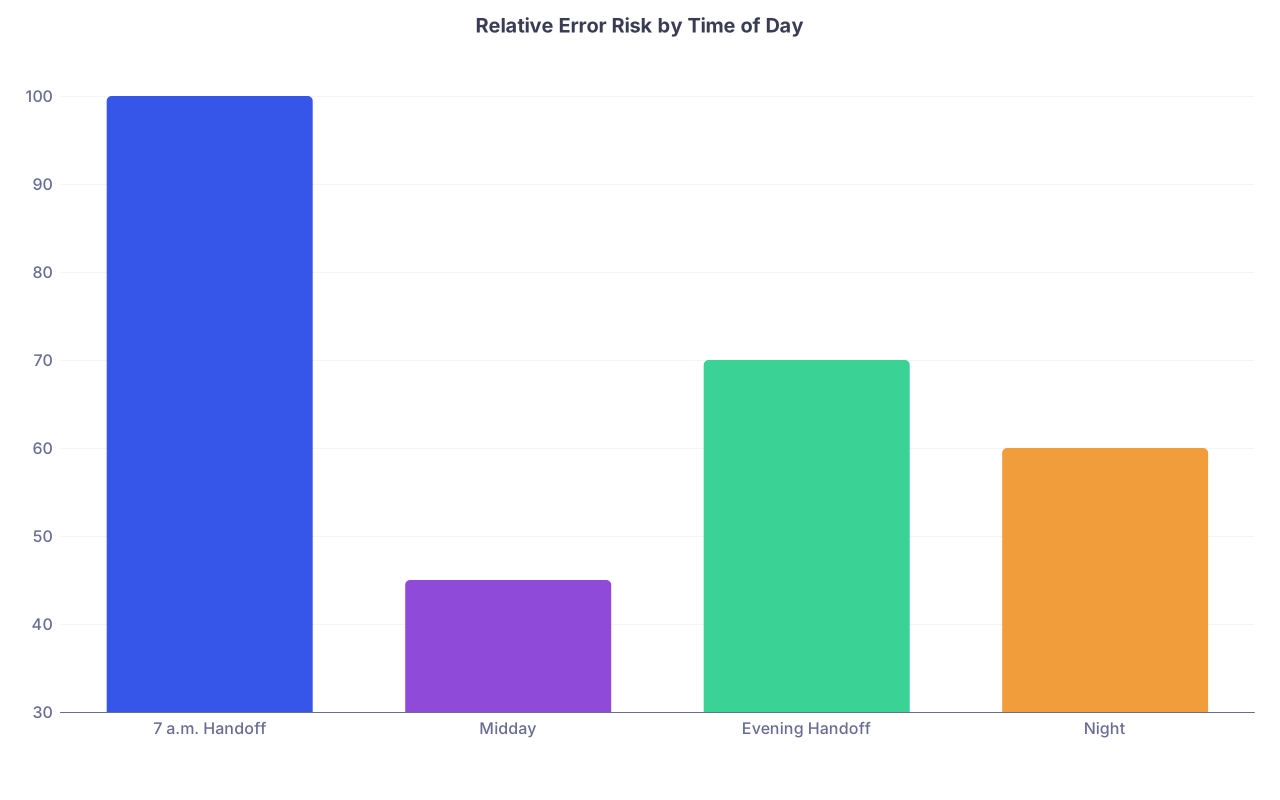
| Category | Value |
|---|---|
| 7 a.m. Handoff | 100 |
| Midday | 45 |
| Evening Handoff | 70 |
| Night | 60 |
Morning handoff is not just “another sign-out.” It is structurally high-risk for a few reasons that are baked into residency life.
Circadian low + cognitive overload
Night float is at the tail end of their shift, running on caffeine and adrenaline remnants. Day team is just walking in, mentally shifting from commute/weather/parking stress into “you now own 30 sick patients.” Attention and working memory are both compromised.Volume and complexity converge
You are not signing out 3 ED boarders. You are signing out the entire service: fresh post-ops, septic patients, decompensating heart failure, weird consults, and all the “follow up this critical lab” landmines.Cultural minimization
Morning report, rounds, OR start times, clinic — all of that is treated as sacred time. Handoff is treated as “we’ll squeeze it in.” So people show up late, drift in and out, start checking labs mid-handoff. Sloppy by design.Diffuse accountability
At night there is usually one or two people covering a lot of patients. In the morning, responsibility fragments: seniors, interns, subspecialty teams, consultants. Everyone assumes “someone” heard the key detail. Often no one did.System distractions
Nurses changing shift, transport moving patients to procedures, labs resulting, pharmacy asking questions. It is the noisiest time in the hospital. Perfect storm for missed details and dropped tasks.
You cannot eliminate these pressures. You can only build a handoff process robust enough to survive them.
The Common Failure Modes: Where Things Actually Go Wrong
I am not going to give you generic “communicate clearly” advice. Let us talk about the specific failure points I have seen over and over — and the kind that show up in M&M.
1. The “Unstable but Not Crashing” Patient
Classic scenario:
- 68-year-old with pneumonia, on 4L NC at 10 p.m., on 8L by 4 a.m. but “looks okay-ish.”
- Night float adjusts antibiotics, gives a little fluid, maybe checks a lactate.
- They sign out: “Watch Mr. J, he needed some oxygen overnight but he’s fine now.”
- Day team: rounds, teaching, notes. Noon: RRT, now on BiPAP or intubated.
What went wrong?
- No explicit trigger given (“If still >6L by 7 a.m., he needs an ABG and a step-up discussion”).
- No clear statement of trend (“up from 2L to 8L in 6 hours” is different from “up to 3L”).
- “Fine now” is subjective and worthless.
High-risk pattern: evolving instability that has not yet forced an acute intervention. These are the patients that get lost in the shuffle because they are not in active crisis at 7:05 a.m.
2. Orphaned Action Items
These are the silent killers of handoff.
Examples I have actually seen:
- “Follow up MRI brain in the morning” → No one opens imaging until 3 p.m.; large stroke, now outside window.
- “Touch base with ID about narrowing vanc/zosyn” → No call; AKI worsens; patient ends up on dialysis.
- “Needs echo before discharge” → No order placed; patient discharged; comes back in 72 hours worse.
Two key failure modes here:
- The task is mentioned verbally but never documented in a way that survives the transition.
- The task is documented but with no owner and no time frame.
If your “to-do” does not have a name and a when, it is aspirational, not real.
3. The “I Thought That Was Clear” Medication Mess
Medication plans are a minefield:
- Steroid tapers
- Anticoagulation (hold vs resume, dosing, indication)
- Pressors/vasoactives in the ICU
- Insulin regimens in brittle diabetics
- Anti-epileptics after a seizure admission
Common pattern:
- Night doctor: “We held apixaban for the possible procedure; need to clarify with GI in the morning.”
- Day intern hears: “Apixaban was held” and nothing more.
- Procedure is cancelled. Anticoagulation never resumed. Embolic stroke two days later.
Or:
- Steroids: “We gave 40 mg IV methylpred; can probably switch to PO tomorrow.”
- No explicit plan on dose, duration, or indication.
- Day team writes a discharge summary with an arbitrary prednisone dose for 5 days. No one knows why.
Medication ambiguity becomes permanent if it is not nailed down in the handoff itself.
4. Fragmentation Across Roles
This one is subtle but pervasive. On bigger services:
- Senior thinks: “I told the intern to follow up the troponin.”
- Intern thinks: “Senior probably is tracking this; they seem on top of it.”
- Subspecialty fellow thinks: “The primary team will manage follow-up.”
Result: high-risk result sits in the chart unaddressed.
The danger skyrockets at 7 a.m. because:
- New interns rotate in.
- Night float has not met half these patients previously.
- Cross-cover might be a different specialty entirely.
Assumptions about “the usual workflow” are wrong during transitions.
5. Cognitive Offloading to the EMR Alone
Many residents try to bypass the discomfort of handoff by over-documenting.
You see sign-outs like:
- “See chart for full story.”
- “Complex course, details in H&P and progress notes.”
- Or just 6–8 lines of copy-pasted history with no priorities.
The EMR did not round on your patient at 3 a.m. It has no idea which issue is about to explode. If you are not explicitly ranking risk and urgency in your verbal handoff, you are using the EMR as a crutch. It will not save you.
What an Actually Safe 7 a.m. Handoff Looks Like

| Step | Description |
|---|---|
| Step 1 | Night Team Preps List |
| Step 2 | Prioritize Sick Patients |
| Step 3 | Structured Verbal Handoff |
| Step 4 | Clarify Action Items |
| Step 5 | Assign Ownership |
| Step 6 | Closed Loop Confirmation |
Let me lay out a high-reliability model. This is not theoretical. This is what keeps your service out of M&M.
1. Pre-Handoff Discipline: Night Float’s Responsibility
If you show up to 7 a.m. handoff and start updating your sign-out then, you have already failed.
Night team should:
- Update vitals, labs, and major events for each patient by 6:30–6:45 a.m.
- Flag any patient who had:
- Rising oxygen requirement
- Hypotension (even transient)
- New chest pain, neuro change, or arrhythmia
- Escalation in support (pressors, higher O2, more insulin)
- Convert all “vague to-dos” into explicit action items with ownership suggestions.
The mental model:
“Could the day team safely take over this list without me here? If not, what exactly do they need to hear?”
2. Structure: Use a Rigid Template, Not Free-Form Storytelling
Unstructured handoff at 7 a.m. is asking for trouble.
Minimum elements per patient:
- One-line summary (who is this and why are they here)
- Current clinical status (stable / tenuous / actively concerning) with specific anchors
- Big overnight events or changes
- Explicit “watch items” with triggers
- Concrete to-dos with deadlines and owners
A simple, brutal template that works:
ID & trajectory
“Mr. Smith, 72, CHF exacerbation, day 3, trending better/worse/stable.”Stability snapshot
“Now on 4L (up from 2L), BP 100–110/60s, making urine, afebrile.”Overnight events
“Up-titrated diuresis; had soft BP for an hour but responded to fluids; lactate normalized.”What you are worried about
“Biggest risk: respiratory fatigue; if he needs >5L or RR >30, please get ABG and consider step-up.”Clear tasks
“Today: call cardiology about long-term plan, follow up echocardiogram, decide on discharge timing. Intern to follow echo; senior to call cardiology.”
That is a 20–30 second handoff with real signal, not fluff.
Prioritizing: Not All Patients Deserve Equal Airtime

The most common error is equal distribution of attention. You spend 30 seconds on the guy going home and 30 seconds on the borderline septic patient. That is malpractice by symmetry.
You need triage within the handoff.
Categorize Patients Before You Speak
Quick categories that work:
- Red: Unstable or high risk of crashing in next 12 hours
- Yellow: Stable but with high-risk decisions or pending results
- Green: Truly stable, predictable course, low risk
If your list has:
- 5 red
- 10 yellow
- 12 green
Your airtime should be:
- Red: 60–90 seconds each
- Yellow: 20–30 seconds each
- Green: 5–10 seconds (or even “no changes, dispo in progress” if truly uneventful)
If you find yourself monologuing about a green patient’s cholesterol while skipping the nuanced ventilator changes on your ICU patient, you have lost the plot.
The Five High-Risk Elements That Must Be Explicit
Every 7 a.m. handoff should force you to articulate five specific things for high-risk patients.
| Element | Question You Must Answer Clearly |
|---|---|
| Diagnosis & Trajectory | Getting better, worse, or unclear? |
| Active Instability | What could decompensate today? |
| Critical Meds | What cannot be missed, changed, or held? |
| Time-Sensitive Tasks | What must happen today and by when? |
| Worst-Case Scenario | If they crash, what is the first move? |
1. Diagnosis & Trajectory
Not just “pneumonia.”
“Pneumonia, day 2, not yet responding to therapy; O2 needs rising, inflammatory markers static.”
Trajectory tells the day team whether they should be breathing easy or walking in with a healthy level of paranoia.
2. Active Instability
Specify the single biggest physiologic vulnerability:
- “Biggest issue is oxygenation; work of breathing creeping up.”
- “Most worried about hemodynamics; BP drifting down despite fluids.”
- “Neuro status is labile; waxing/waning confusion, at risk for delirium and pulling lines.”
If you cannot answer “what is the single most fragile organ system right now?” you do not understand your own patient.
3. Critical Meds
Call out:
- Pressors/inotropes: current dose, trend, weaning plan
- Anticoagulation: indication, hold/resume criteria
- Insulin: pattern overnight, hypoglycemia risk
- Sedation/anti-epileptics: seizure risk, holding danger
Say the non-negotiables:
- “Do not stop his Keppra unless neuro is involved.”
- “He must get his morning PD dialysis; missing it will destabilize him.”
4. Time-Sensitive Tasks
These are not “to-dos.” These are clock-dependent.
Examples:
- “Repeat troponin at 9 a.m.; if rising, he needs cardiology urgently.”
- “If CT PE is positive, page ICU immediately; he is too unstable for the floor.”
- “Needs EGD today; NPO after midnight is already done; call GI by 8 a.m. to keep his slot.”
Include time and action: “By X time, do Y; if Z result, do W.”
5. Worst-Case Scenario
You do not need a novel. Just the first domino:
- “If he acutely desaturates, go early to BiPAP; he tires quickly.”
- “If BP drops again, avoid more fluid boluses; he is in cardiogenic shock territory, go to pressors.”
- “If he has another neuro change, get a stat CT before calling neurology; last time they were adamant about imaging first.”
You are giving the day team a mental rehearsal of the crash before it happens.
Environmental Controls: Fix the Room, Not Just the Words

Smart residents treat the environment of handoff as part of the safety protocol. Sloppy programs run handoff at the loudest, busiest nurse station they can find.
You want:
One physical location
Not “sometimes here, sometimes there, sometimes in the hallway.” People need to know exactly where sign-out happens every single day.Limited interruptions
Someone in the group should be designated to answer urgent pages while others protect the flow. Or you pause, handle code-level pages only, then resume.Single speaker at a time
Side-bar teaching, cross-talk, and argument can happen later. During handoff, there is a clear narrator, and questions go through that person.Visual anchor
Project or pull up the list on a shared screen, or everyone with an identical printed copy. If three different versions of the list are floating around, you will miss something.
You cannot eliminate all chaos. But you can refuse to tolerate self-inflicted chaos.
Documentation That Actually Backs Up Your Verbal Handoff
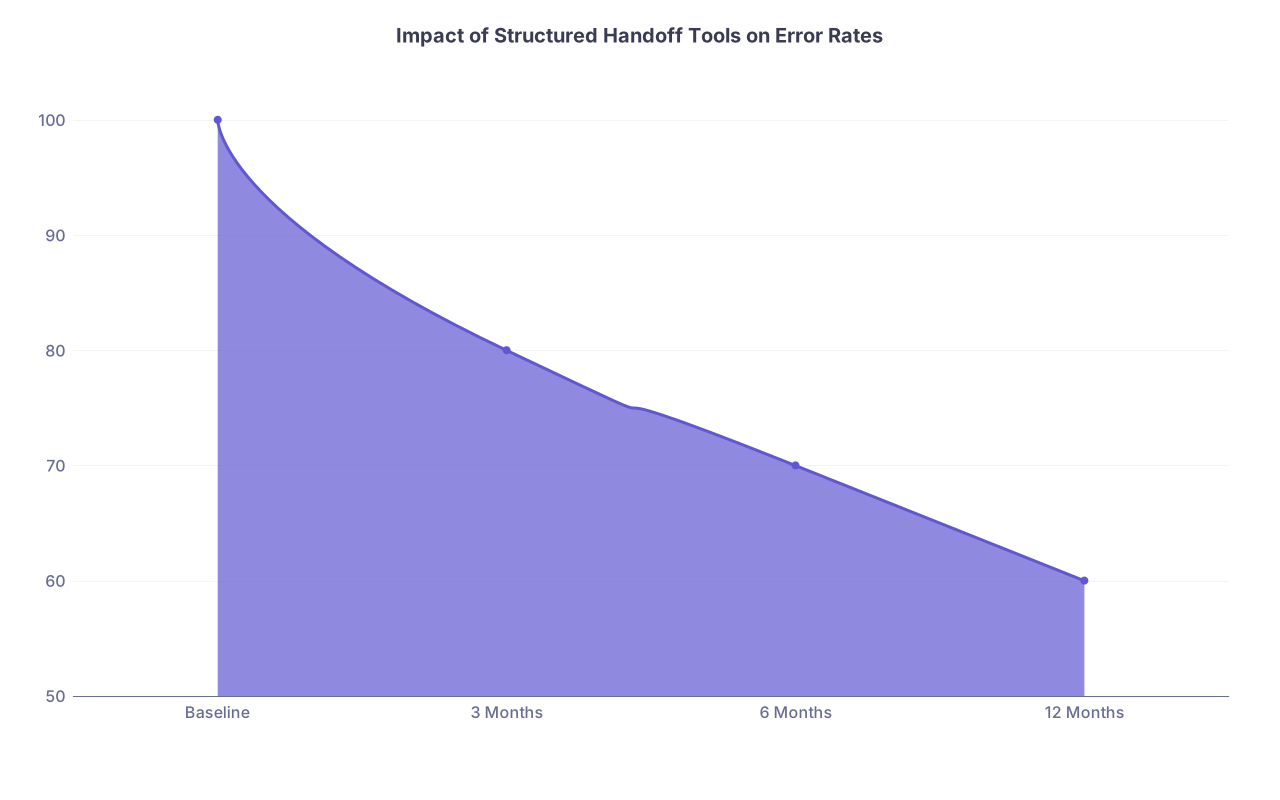
| Category | Value |
|---|---|
| Baseline | 100 |
| 3 Months | 80 |
| 6 Months | 70 |
| 12 Months | 60 |
Most EMR sign-out tools are either underused or abused.
Here is how to make them work for you:
One-line summary must be real, not copied
“65M, COPD, now septic with pneumonia, tenuous on 6L” is useful.
“65M with PMH of HTN, DM2, COPD, admitted for SOB” is noise.Separate sections for “Clinical Summary” and “To-Do/Watch For”
For each high-risk patient, the “To-Do / Watch For” field should include:- “Watch: rising O2 needs; ABG if >5L.”
- “To-do: follow blood culture results; if positive, broaden abx and call ID.”
Time-stamp critical tasks
“Today: call neurosurgery by 9 a.m.”
Not “call neurosurgery.” The first version survives shift changes; the second is forgotten.Update or delete old junk
Old, completed to-dos clog the list. If the “to-do” section is a graveyard of last week’s tasks, people stop reading it. Ruthlessly prune.
Verbal without documentation is fragile. Documentation without prioritization is noise. You need both.
Team Dynamics: Who Owns What at 7 a.m.?
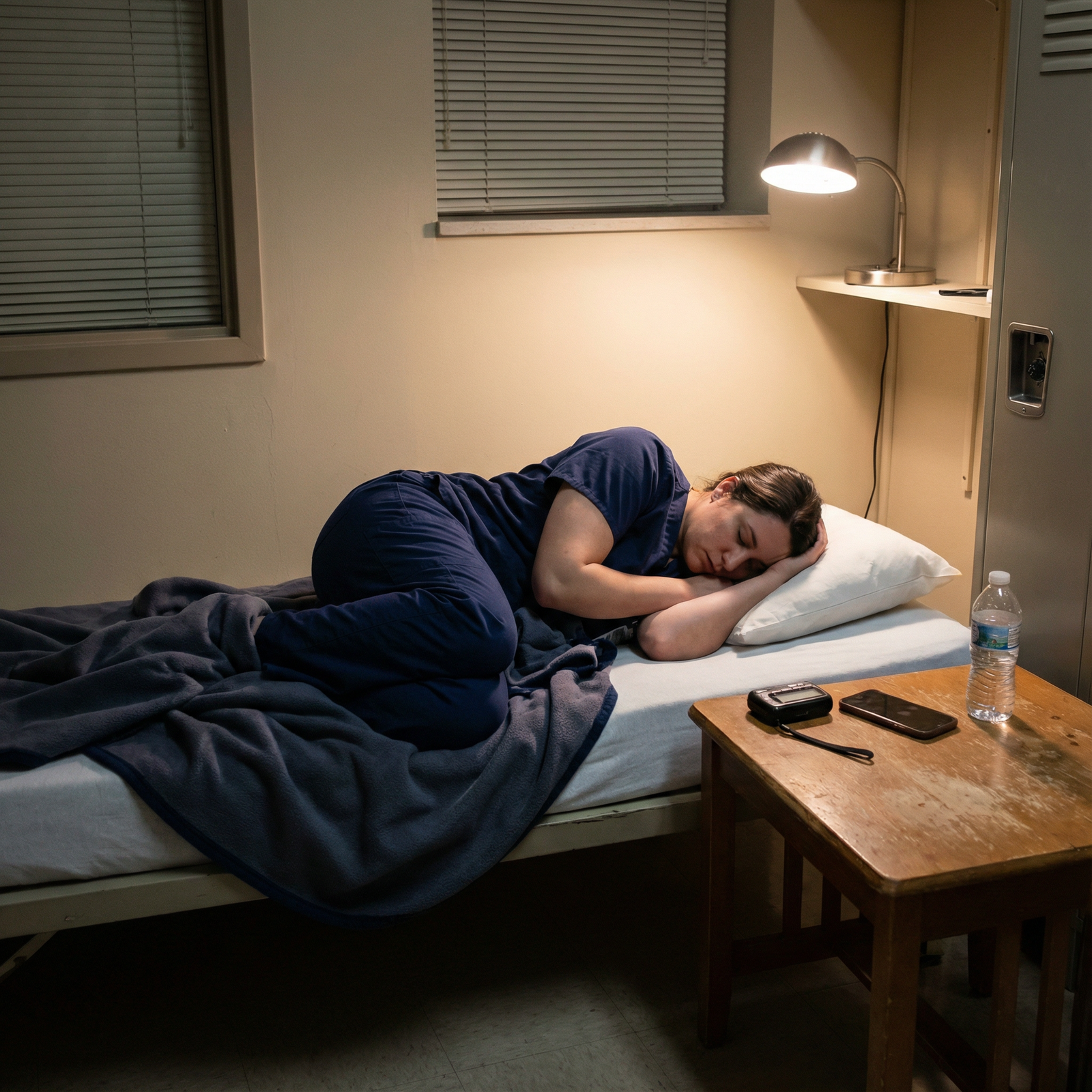
One of the quiet failure points is ambiguous ownership right after handoff. I have watched this happen too many times:
- Night float signs out a borderline patient, walks away.
- Day team listens, then heads straight to morning report.
- Nurses do not know who to page, so they keep paging the night float number.
- Patient deteriorates in the vacuum.
You need explicit answers to three questions before everyone scatters:
Who is actively covering the service from 7–8 a.m.?
If day team has conference, is there a designated “early intern” or “pre-rounding senior”? Spell it out.Who is primary for rapid changes?
Nurses should have a clear page number for “day coverage” starting at a defined time, not a vibe-based transition.Who is tracking the high-risk patients first?
“Intern A: go lay eyes on the two step-down patients now. Intern B: check on the overnight transfer from ICU.” Not “we’ll see them all eventually.”
You want a brief, almost military-style wrap:
- “I own codes until 7:30. After that, page the day senior.”
- “These three patients are first stops; let us divide them.”
What You Personally Can Do Tomorrow Morning
Even if your program culture is mediocre, you are not powerless. You can raise the floor by changing your own practice.
Very concretely:
The night before your call/night float:
- Open your sign-out list and clean it. Delete old trash. Condense the nonsense.
During the night:
- Any time something non-trivial happens, add a line under “Events/Plan” with what changed and what needs to happen after 7 a.m.
At 6:30–6:45 a.m.:
- Go down your list and star/circle the top 5–7 patients that genuinely worry you. Decide what exactly the day team must hear.
At 7 a.m.:
- Start with: “Before we go patient-by-patient, here are the three patients I am worried about and why.”
- Then do the structured, short handoff for each patient, with heavier emphasis on red and yellow patients.
Right after handoff:
- Confirm: “Who is available for urgent stuff between now and rounds?” Make someone say “me.”
If you do just that, your service becomes meaningfully safer, even if the rest of the system stays chaotic.
Closing: The Non-Negotiables
I will keep this short.
- 7 a.m. handoff is a high-risk, high-consequence moment. Treat it with the same seriousness you give to codes and procedures.
- The danger lives in specifics: rising O2 that “looks fine,” orphaned tasks, unclear meds, and fuzzy ownership. Name them explicitly.
- A rigid, prioritized, verbally clear handoff — backed by cleaned-up documentation and explicit role assignment — is your best defense against preventable harm in those 15 minutes that everyone else treats as an afterthought.