
The way most residents “manage” rotating shifts is backwards, unsafe, and completely unsustainable.
Let me be blunt: if you treat sleep as whatever scraps are left after work, your brain will punish you. Memory, judgment, mood, reaction time – all of it. The residents who survive nights and swing shifts with their sanity and performance intact are not tougher. They run protocols. Deliberate, repeatable sleep protocols built around circadian biology, not vibes.
You are not a victim of your schedule. You are working against powerful physiology with powerful tools. If you use them on purpose.
Let’s design those tools properly.
1. The Brutal Basics: What You Are Up Against
Residents on rotating shifts are battling three things at once:
- Acute sleep restriction (call nights, late admits, pager).
- Circadian misalignment (working when your internal clock thinks you should be asleep).
- Chaotic rotation patterns (q4 call, one week nights, random “long days”).
You already know you are tired. What you may not appreciate is how predictable the failure modes are if you do nothing systematic.
Typical patterns I see:
- The “heroic crash”: On post‑call or after a night block, sleep 14 hours straight. Destroy circadian timing for the rest of the week.
- The “social denial”: Stay on normal daytime social schedule on days off during a night block. Every transition feels like jet lag x2.
- The “random nap chaos”: Napping at any time you can, any duration, including 2–3 hour naps at 6 p.m. before a 7 a.m. shift. Then wondering why you cannot fall asleep that night.
Those are not strategies. Those are reflexes.
To fix this, you need three core principles:
- Anchor: Have at least one consistent sleep anchor across the week (usually a wake time or a protected core-sleep window).
- Predictive pre‑sleep: Treat the hours before sleep as part of the protocol, especially when trying to sleep off‑cycle.
- Controlled naps: Use naps as micro‑doses, not binge episodes.
We will build specific protocols for:
- Straight days
- Steady nights
- Rotating “blocks” (week of nights → week of days)
- Single overnight or 24‑h call (the ugliest one)
But first, the physiology you are either working with or against.
2. Circadian Biology for People Who Do Not Have Time for Circadian Biology
You do not need a PhD. You need the short list of levers that actually move your clock.
Your circadian system (suprachiasmatic nucleus, melatonin, cortisol, etc.) is strongly driven by:
- Light exposure (timing, intensity, wavelength)
- Sleep timing (especially consistent wake time)
- Activity and meals
If you want to sleep during the day and work at night, you are trying to shift this clock. You can either:
- Crush the clock completely and run “split sleep” patterns, or
- Bend the clock partially with timed light and darkness.
Here is the fast, clinically relevant summary:
- Bright light in the morning (for a day schedule) advances the clock – you get sleepy earlier.
- Bright light in the late evening / early night delays the clock – you get sleepy later.
- Melatonin taken 3–5 hours before current natural sleep time advances the clock; taken in the morning can delay it. Doses beyond 3 mg are almost always useless for shifting.
- Caffeine has a half‑life of ~5 hours. It is still meaningfully in your system 8–10 hours later in many people.
So when you “just” slam 300 mg caffeine at 3 a.m. to get through cross‑cover, you are making 9 a.m.–11 a.m. sleep wildly harder.
Use this framework: timing > amount. A modest dose at the right time is better than a megadose at the wrong time.

3. Build Your Baseline: Day Shift Protocol
You need a stable “home base” pattern that you can return to between rotations. That is your day‑shift protocol.
Target (adjust clock times to your actual schedule):
- Wake: 05:30–06:00
- Bedtime: 22:00–23:00
- Minimum core sleep: 6.5–7 hours on busy services, 7.5–8 on lighter ones.
Morning:
- Get actual outdoor light within 30–60 minutes of waking. Even 5–10 minutes walking from parking to hospital, without sunglasses, helps.
- Caffeine front‑loaded: majority before 11:00. Absolute cut‑off by 14:00 for most people if you need a 22:30–23:00 bedtime.
Afternoon/evening:
- If you are coming off a brutal day and tempted to nap, cap naps at 20–30 minutes before 16:00. Longer or later naps will push bedtime out.
- Dimming: reduce bright overhead lights and especially screens 1–2 hours before bed. This matters more than you want to admit.
Bedtime routine (15–30 minutes):
Non‑negotiable when rotating: a short, repeatable wind‑down you can deploy at any hour.
Example:
- 5 minutes: basic hygiene.
- 5–10 minutes: something low‑stimulation and consistent (same podcast, same book, same breathing exercise).
- Phone face‑down, notifications off except emergency contact list.
The reason to have this nailed on your day schedule is simple: when you flip to nights and try to sleep at 09:00, your brain will panic and tell you “this is wrong.” A familiar routine is a powerful cue that “we sleep now,” regardless of clock time.
4. Protocol for True Night Float / Week of Nights
If you have a solid week (or more) of straight nights, you can run an actual night protocol instead of white‑knuckling every shift.
Assume night shift: 19:00–07:00
Goal: defend 6–7 hours of day sleep and minimize circadian whiplash on days off.
Core elements
You must decide upfront: are you going to become fully “nocturnal” that week, or run a compromise where you sleep partially at night on off days? For a 5–7 day block, full nocturnal is usually more stable.
Here is a pragmatic, resident‑tested schedule:
Work nights 1–5:
Pre‑night nap (optional but powerful):
- 15:00–17:00: 90–120 minutes. Dark room, eye mask, white noise.
- Alarm at 17:00 sharp. Groggy is normal; give yourself 20–30 minutes buffer before leaving.
Light and caffeine during shift:
- 19:00–23:00: normal lighting, modest caffeine.
- Midnight–03:00: strongest drive to fall asleep. Use your bigger caffeine dose here if you have to (one 100–200 mg dose), not at 05:00.
- After 03:00: minimize caffeine. You want it decaying by 07:00–09:00 when you will try to sleep.
Post‑shift wind‑down:
- 06:30–07:00: dark glasses leaving hospital if it is bright. Phone on “minimal stimulation” mode (no social scrolling).
- Light snack + hydration at home. No giant meal.
- Run your standard bedtime routine, just at 07:30–08:00 instead of 22:30–23:00.
-
- 08:00–14:00: target 6 hours. Use:
- Blackout curtains or eye mask.
- White noise machine or loud fan.
- Room cool if possible (18–21°C range).
- If you wake at 12:30–13:00, do not fight for more light sleep. Get up, have food, brief light exposure, then consider a short pre‑shift nap again at 15:00–16:00.
- 08:00–14:00: target 6 hours. Use:
Days off after nights (this is where most people blow it):
You have two main choices, depending on how many days off.
| Pattern | Best For | Core Idea |
|---|---|---|
| Stay Nocturnal | 1 day off | Keep night schedule, sleep 08:00–14:00, stay up late |
| Partial Flip | 2 days off | Shift sleep to 04:00–10:00, then 01:00–08:00 |
| Full Flip | 3+ days off | Use melatonin, light, and earlier wake to return to day schedule |
Most interns sabotage themselves by fully flipping for a single day off. That makes the first night back feel like eastbound trans‑Atlantic jet lag.
If you have only 1 day off in the middle of a night block:
- Sleep after your last night just like usual (08:00–14:00).
- Stay up until 03:00–04:00 that “off” night (with dim light; do not blast yourself with blue light), then sleep 04:00–10:00.
- You will feel a bit off, but you are not completely desynchronized when you return to 19:00–07:00 the next night.
If you have 3–4 days off after the block and then go back to days, you can do a controlled flip:
Day 1 post‑nights:
- Sleep 09:00–13:00 (shorter).
- Set an alarm. You will hate it, but this is how you pay back the circadian debt.
- Stay awake to at least 21:00–22:00 with bright light exposure in afternoon / early evening.
- Optional: 0.5–1 mg melatonin at 19:00–20:00 if your brain is still wired. Bedtime ~22:00.
Day 2:
- Target normal wake time 06:30–07:30.
- Heavy morning light exposure, no naps later than 15:00, normal caffeine cut‑off by early afternoon.
That pattern, repeated consistently, makes your next days rotation an actual day schedule, not a mess of 03:00 wakeups.
5. The Worst Case: Single 24‑Hour Call or Random Overnight
This is the rotation design I have the least patience for. One isolated 24‑hour call in a week is essentially scheduled jet lag with no time to adapt.
You cannot fully fix it. But you can blunt the damage with a specific plan.
Before the 24‑hour call
Think about where the hit lands: before, during, or after.
Most residents do best putting the sleep debt after, not before. In other words, you come in well‑rested, and accept that the post‑call day will be rough but controlled.
If call is 07:00–07:00:
Day before:
- Wake at normal time (06:00–07:00).
- No big nap that afternoon. If you must, do a 20–30 minute power nap before 15:00–16:00.
- Aim for slightly earlier bedtime (21:30–22:00) and maximize sleep quality: cool, dark, no late caffeine, no doomscrolling.
Morning of call:
- Normal caffeine front‑loaded 06:30–11:00.
- No “pre‑loading” with energy drinks. You are just shifting the crash earlier.
During the 24‑hour call
- Strategic micro‑sleeps: If you can, take 20–30 minute naps at night, but only if:
- You can lie down in a dark or low‑stim room.
- You actually set an alarm and wake yourself.
- Do not slide into a 2‑hour sleep if you are required to function reasonably on morning rounds. That deep‑sleep inertia is brutal.
Caffeine:
- Early: normal intake until ~22:00–23:00.
- Midnight–03:00: if needed, one or two smaller doses (50–100 mg) spaced out.
- After 03:00: minimal. Any significant caffeine after ~03:00 will sit in your system when you try to sleep at 08:00–09:00.
After the 24‑hour call: post‑call protocol
This is where most of the harm can either be locked in or limited.
Core rules:
- Sleep once, not three times.
- Nap short, then full night, or full daytime block with forced wake, not both.
For a 07:00 end time:
Option A – Short post‑call crash + normal bedtime (my default recommendation):
- 08:30–11:00: 2–3 hour protected sleep. Dark room, phone off. Get family/roommates on board: this is non‑negotiable.
- 11:00: Get up, light meal, go outside for light. No going back to bed.
- Stay awake through the afternoon with gentle activity. No driving long distances if you can avoid; your reaction times are impaired.
- 20:00–21:00: Early but full night of sleep. You will usually sleep 9–10 hours.
Option B – Long post‑call crash (if you are off the next day):
- 08:30–14:30 or 15:00: 6–7 hour sleep.
- Force wake. Even if you feel sick.
- Short walk outside, hydrate, small meal.
- Stay up until 22:00–23:00, then back to bed. Next morning, back on normal wake time.
The biggest mistake: sleeping 08:00–18:00 post‑call, then lying awake all night, then dragging into clinic the following morning feeling like you pulled two all‑nighters. You did. That is why.
6. Rotating Week: Days → Nights → Days
This is where genuine strategy matters. Many residents just “survive” each block and hope the off‑days will somehow reset them.
Let’s take a brutal but common pattern:
- Mon–Thu: days (06:00–18:00).
- Fri–Sun: nights (19:00–07:00).
- Then back to days Monday.
You are essentially flying from New York to Europe and back every week.
You cannot truly adapt your circadian clock fully in just 3 nights. So the goal is not full adjustment. The goal is hybrid stability: stay biased toward days but with enough flexibility to survive nights.
Here is a specific template that works better than the default chaos.
Monday–Thursday (day shifts)
- Classic day protocol: 22:00–05:30 or similar.
- Protect sleep more aggressively on Wed–Thu (no late chores, minimal screen time at night) to enter the weekend with maximal reserve.
Thursday evening before first night
- Do not go to bed at 22:00 and sleep 7 hours if you are going to be awake all night Friday.
- Sleep‑shift with a planned evening nap:
Example:
- Thu night: normal bedtime (22:30). Wake 05:30.
- Fri daytime: planned nap 14:30–17:00 (90–150 min).
- That gives you a dual‑sleep day: 7 hours at night + 2 hours afternoon. You enter the first night with ~9 hours in the last 24–36 hours, not 16+ hours awake.
Fri–Sun nights
- Use a split‑sleep strategy rather than full nocturnal:
Daytime after each night:
- 08:30–13:00: 4.5 hours core sleep.
- 13:00–14:00: wake, food, some natural light.
- 15:30–17:00: second sleep block (90 min).
Total: ~6 hours daytime split. It is not perfect, but it keeps your circadian anchor somewhere between full day and full night.
Evenings pre‑shift:
- 17:00–19:00: gentle wake‑up, caffeine, light exposure, commute.
This pattern makes it slightly easier to flip back to days on Monday, because your clock never went fully nocturnal.
Sunday → Monday flip back to days
The key is the last night and post‑shift:
- After your Sunday 19:00–07:00:
- Sleep 08:30–12:00 (~3.5 hours only).
- Wake, eat, get outside, stay vertical.
- You will feel like trash. That is expected.
- No naps after 15:00.
- Bedtime 21:00–22:00, then up at 05:30–06:00 Monday.
You are intentionally sacrificing some Sunday daytime sleep to avoid wrecking the entire upcoming week. Trade one bad day for five functional ones.
7. Naps: Micro‑Tools, Not Chaos
Residents either worship naps or swear them off entirely. Both extremes are wrong.
Naps are a tool. Use the right dose for the right effect.
There are essentially three nap “prescriptions” that make physiological sense:
15–25 minute “micro nap”
- Purpose: immediate alertness boost, minimal sleep inertia.
- Timing: anytime before 17:00 for day schedule; 01:00–03:00 for night shift.
- Use: pre‑drive after a long call, quick reset on a rare lull.
90‑minute “one full cycle” nap
- Purpose: deeper recovery, some REM/N3.
- Timing: afternoon (14:00–17:00) for day pattern; late afternoon before night shift; mid‑morning after a night if you must split sleep.
- Use: pre‑night shift, part of deliberate split sleep.
2–3 hour “post‑call” recovery block
- Purpose: pay down extreme acute sleep debt just enough.
- Timing: immediately after call/day from hell.
- Use: as in the 24‑hour call strategy above.
What you want to avoid:
- 60‑minute naps: wake from deep sleep and feel horrendous.
- Unplanned couch naps at 18:00–20:00 on a day schedule: guarantee insomnia.
So when someone offers, “Want to sleep for an hour before sign‑out?” and it is 17:30, the right answer is either 25 minutes or 90 minutes. Not 60.
8. Light, Melatonin, and Caffeine: Use Like a Pharmacologist
Let me break these down specifically, because most residents use all three badly.
Light
Your primary external lever.
- Dark glasses on the way home if it is bright. You do not want a strong circadian “morning” signal as you are trying to go to bed at 08:00–09:00.
- Blackout curtains or, at minimum, a good eye mask. If you are in shared housing, the eye mask is your survival gear.
Day schedule:
- 10–20 minutes of outdoor light in the first 1–2 hours after waking, even on cloudy days.
- Dimming house lights 60–90 minutes before bed. Overhead lights off, lamps or warm temperature bulbs only.
Melatonin
Melatonin is not a sleeping pill. It is a time signal.
Use low doses: 0.5–1 mg is typically enough for circadian effects. The 10 mg gummies are pharma theater.
When to actually use:
- Shifting from nights → days: take 0.5–1 mg about 2–3 hours before your intended new bedtime on the first 2–3 nights.
- Flying across time zones mid‑rotation (yes, this happens around holidays): can help anchor to local night.
When not to rely on it:
- “I cannot sleep after a call so I take 5 mg melatonin at 09:00.”
You are fighting biology and caffeine there. Darkness, cooling the room, and cutting caffeine earlier the day before are more effective.
Caffeine
Your residency will run on caffeine, but you can choose whether it is controlled or chaotic.
Rules that save you:
- Front‑load for day shifts. Most of your total caffeine by late morning.
- On nights, peak your caffeine between midnight and 02:00. You are propping up the circadian nadir, not delaying sleep until noon.
- Understand your limit. For many residents, total daily intake above 300–400 mg turns into anxiety, palpitations, and broken sleep. That is 3–4 small coffees. Not 2 venti triple‑shots.
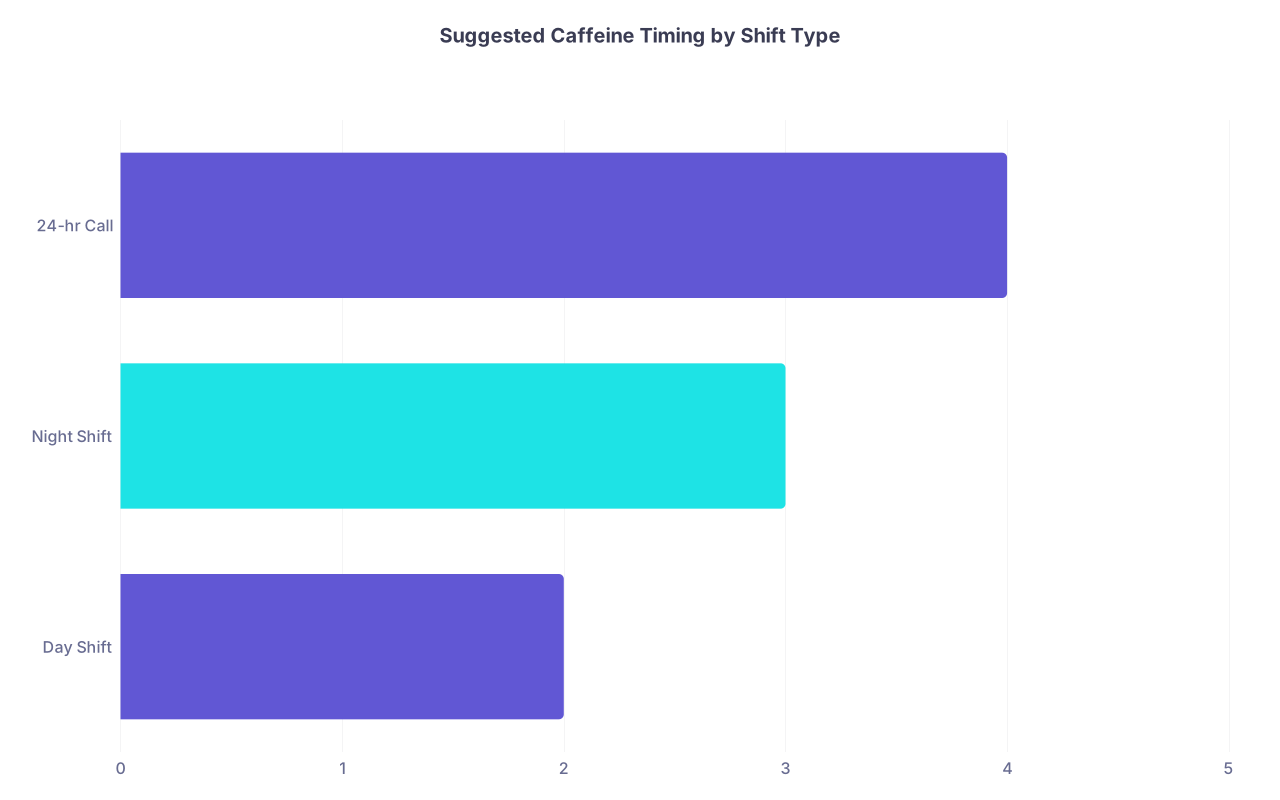
| Category | Value |
|---|---|
| Day Shift | 2 |
| Night Shift | 3 |
| 24-hr Call | 4 |
(Think of those numbers as primary “caffeine windows,” not cups.)
9. Personalizing: Different Chronotypes, Same Constraints
Not everyone starts at the same baseline. Some of you are true morning larks; others are hardcore night owls who coast through nights and melt on 05:00 pre‑rounds.
You cannot change service expectations, but you can angle protocols slightly.
Lark (naturally sleepy 21:00, wake 05:00):
- You will suffer more on nights, less on early days.
- For night blocks:
- Lean heavily on pre‑shift naps 15:00–17:00.
- Keep “off” days slightly earlier than colleagues (maybe 02:00–03:00 sleep, 09:00 wake) instead of 04:00–11:00.
- On day rotations:
- Use your chronotype as an advantage. Protect that 21:30–05:00 block fiercely.
Owl (naturally sleepy 01:00–02:00, wake 09:00):
- You will handle nights better, but early starts are murder.
- For day blocks:
- You must use morning light aggressively and shut down screens earlier than feels natural.
- A short 15–20 minute nap after work (16:00–17:00) can help you avoid 19:00 couch crashes and 01:00 bedtimes.
10. Environmental Engineering: Sleep on Hard Mode
Hospital life gives you bad apartments, bad call rooms, and neighbors who vacuum at 13:00. You compensate with gear and boundaries.
Minimum viable setup for a resident on rotating shifts:
- Eye mask that actually blocks light, not the free airline flimsy one.
- White noise source: dedicated machine or very loud fan.
- Reasonable blackout solution:
- Ideal: blackout curtains.
- Budget hack: cheap blackout film or even taped garbage bags in a pinch. I have watched PGY‑2s do this on still‑daylight post‑call afternoons and go from 4 hours of fractured sleep to 6 solid.
Noise:
- If you live with partners/family: write out your “post‑call” schedule and put it on the fridge. You need them to treat 09:00–13:00 like 01:00–05:00.
- Consider molded silicone earplugs if noise is bad. Combine with white noise.
Temperature:
- Cool beats warm. There is good evidence that a slight drop in core body temperature facilitates sleep onset.
- If the building is hot and you cannot control it, aim for a fan directly on you. Residents underestimate how much an overheated room wrecks sleep.
11. Putting It Together: A Concrete Example Week
Let me show you a real composite schedule, because abstract advice is easy; execution is harder.
Scenario:
- PGY‑1 on medicine wards.
- Mon–Thu days 06:00–18:00.
- Fri–Sun nights 19:00–07:00.
- Then Mon clinic 08:00–17:00.
Here is the protocol I would hand them.
Mon–Thu (days):
- 05:15 wake, short light exposure, coffee.
- 06:00–18:00 work.
- 18:30–19:30 home, eat.
- 20:30 dim lights, no charts in bed, no heavy caffeine after 12:00.
- 22:00 bed.
Thu:
- Same, but mentally plan for Friday transition.
Fri:
- 05:15 wake, day shift 06:00–12:00 (assuming early sign‑out to night team; if full day, shift times slightly).
- 13:00 light meal.
- 14:30–17:00 nap (90–150 min).
- 17:00 wake, shower, light snack.
- 18:15 commute.
- 19:00–07:00 night shift; caffeine front‑loaded midnight–02:00.
Sat:
- 08:30–13:00 sleep.
- 13:00–15:30 awake, light, food.
- 15:30–17:00 second sleep (90 min).
- 19:00–07:00 night 2.
Sun:
- Same pattern: 08:30–13:00 + 15:30–17:00 sleep, then 19:00–07:00 night 3.
Mon:
- 08:30–12:00 shortened sleep.
- 12:00–21:00 awake (no naps after 15:00).
- 21:00 bed, melatonin 0.5–1 mg at 19:00 if needed.
- Tue: 06:30 wake, essentially back on days.
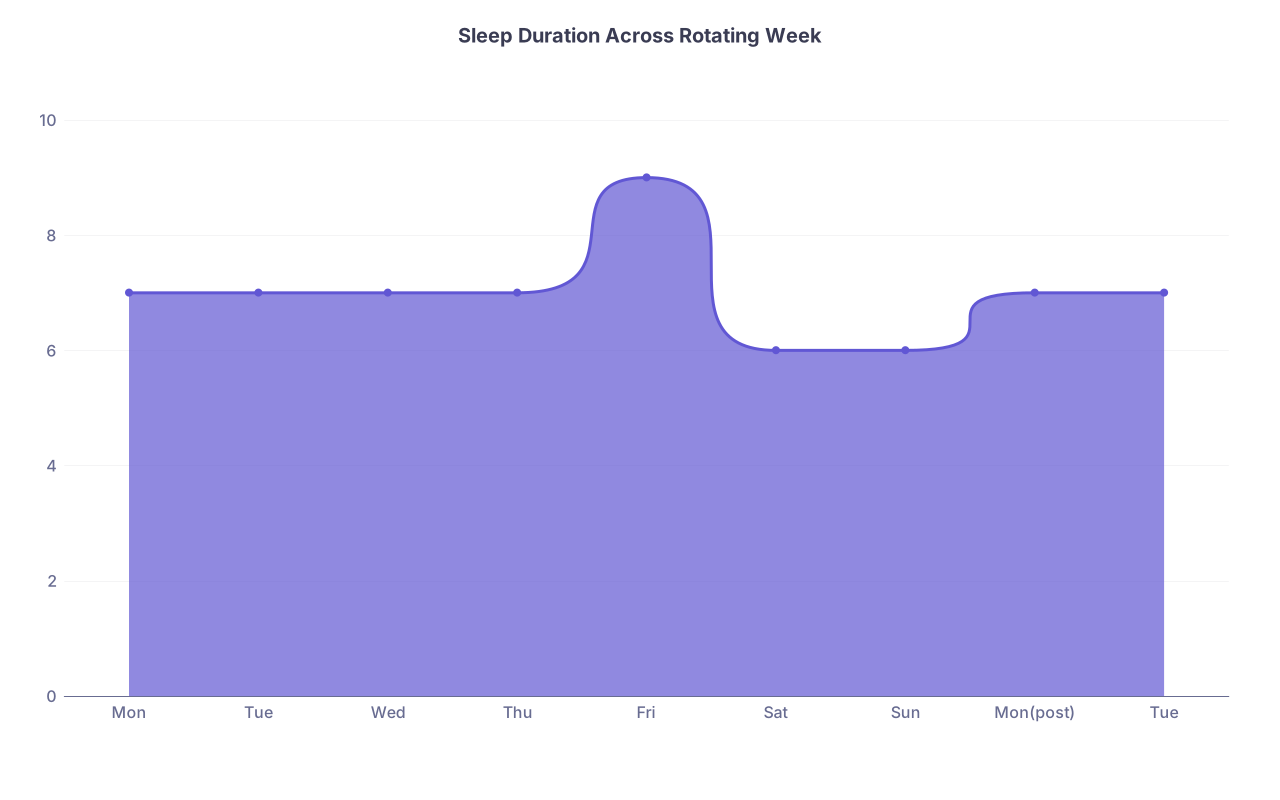
| Category | Value |
|---|---|
| Mon | 7 |
| Tue | 7 |
| Wed | 7 |
| Thu | 7 |
| Fri | 9 |
| Sat | 6 |
| Sun | 6 |
| Mon(post) | 7 |
| Tue | 7 |
Notice two things:
- There is no 12‑hour post‑call coma.
- Every hard hit (Mon post‑nights) is done for the sake of keeping the rest of the week functional.
That is a protocol. You can tweak it, but it beats “see how I feel each day” by a mile.
12. What Actually Matters Long‑Term
You are not trying to win a theoretical prize for ideal sleep. You are trying not to quietly wreck your brain, body, and career over three to seven years of abuse.
I have watched residents who thought sleep protocols were “extra” burn out, pick up new anxiety, or start making terrifying cognitive errors on call. I have also watched residents with brutal schedules stay surprisingly stable because they treated sleep like a procedure – something you do with intention, not when you remember.
If you remember nothing else, keep this:
- Design your week before it starts. Decide your sleep anchors, nap slots, and flip strategy ahead of each rotation or call block.
- Use the biology, not brute force. Light, timing, caffeine, and environment are your tools. Use them with precision.
- Trade one bad day for a stable week. Controlled short sleeps and ugly Mondays are better than chronic chaotic half‑sleep for months.
You cannot control the rotation grid. You can absolutely control whether your sleep is random or protocol‑driven. The residents who last treat it like an essential part of patient safety and their own survival, not a luxury.