

You walk out of the hospital. It is 10:37 a.m. on a Sunday after a 24+4 call that was more like 28. Your scrubs smell like chlorhexidine and coffee. Your badge reel is hanging by a thread.
You have:
- 1.5 days "off" before your next shift.
- A brain that feels like oatmeal.
- A to-do list that includes laundry, notes, groceries, meal prep, life admin, and maybe seeing another human being.
You are exhausted, wired, guilty for wanting to sleep, and slightly panicked that your entire “weekend” will disappear into a coma on your mattress.
Here is the blunt truth: post-call is not a vibe. It is a system problem. If you do not build a structure for post-call life, the system will eat your "days off" and you will start PGY‑2 already half-burned out.
What you need is a post-call protocol. A repeatable, automatic system that protects your sleep, your brain, and your actual life. Not vague advice. A concrete playbook.
That is what we are going to build.
The Core Principle: Treat Post-Call Like a Procedure
You would not walk into a central line insertion and “see how it goes.” You have a checklist, a sequence, and a clear endpoint.
Post-call should be the same:
- Defined phases
- Pre-decided rules
- Minimal decision-making when your brain is offline
We are going to divide post-call life into:
- Immediate Post-Call (0–2 hours after sign-out)
- Recovery Block (First big sleep)
- Functional Block (What is left of the day)
- Weekend Warrior Block (The “off day” after post-call)
- Weekly Reset and Maintenance System
I will give you a base plan, then show you how to tweak it for different call schedules.
Phase 1: Immediate Post-Call – The First 2 Hours
This is the danger zone. This is where people make terrible choices:
- Driving home half-asleep
- “Powering through” with three coffees and then crashing at 3 p.m.
- Agreeing to brunch 40 minutes away because they “feel okay right now”
You should not be making decisions post-call. You should be running a script.
Step 1: Pre-Decide Your Exit Plan
Before the call even starts, you should know:
How you are getting home
- Ideal: ride from partner/co-resident/ride-share
- Backup: sleep pod / call room nap → then ride-share
- Hard rule: if you are fighting to keep your eyes open at sign-out, you do not drive. Period.
Where your stuff is staged
- Go-bag in one place (keys, wallet, headphones, snack, electrolyte packet)
- One text pre-written in your phone to send when you are done: “Off now. Heading home. Half-dead.” No thinking.
This sounds trivial until you have done 9 admissions after 2 a.m. and cannot remember where you parked.
Step 2: Micro-Reset Before You Leave
From sign-out to the door, do not linger.
- Finish sign-out.
- Close all charts. Physically log out.
- 3-minute reset:
- Bathroom
- Wash your face with cold water
- Brush teeth or at least rinse
- Put on non-hospital shoes or hoodie → physical signal: shift is over.
- Leave. No hanging out in the workroom “just finishing a few things” for 45 minutes.
You will think, “I should just finish…” Do not. If it can be safely signed out, it is not your problem any more.
Step 3: Safe Transit
Hard rule:
- If your head nods while walking → you do not drive.
- If you cannot remember the last 5 minutes on the unit → you do not drive.
You:
- Call your pre-arranged ride
- Or order a ride-share
- Or set a 45–60 minute alarm, nap in a safe area, then reassess
You are not “tough” for driving post-call exhausted. You are a liability.
Phase 2: Recovery Block – Your First Big Sleep
This is where most interns sabotage themselves. They either:
- Stay up too long “to protect night sleep” and end up a disaster
- Or sleep 10 hours straight post-call and cannot sleep that night, then start the week wrecked
You want controlled recovery, not chaos.
The 3 Recovery Models
Think of post-call sleep like this:
| Model | Post-Call Sleep | Bedtime Same Day | Best For |
|---|---|---|---|
| A: Long Nap | 2–4 hours | Normal (10–11 p.m.) | Lighter calls, younger residents |
| B: Split Sleep | 3–5 hours + 1–2 hours | Slightly later (11 p.m.–12 a.m.) | Moderate fatigue |
| C: Full Crash | 6–8 hours | Very late or skip | Extreme, unsafe fatigue |
Your default should be Model B: Split Sleep for most standard 24+4 calls.
Model B: The Split Sleep Protocol (Recommended Default)
Assume you get home at 11 a.m.:
In the door (11–11:30 a.m.)
- Drink 8–12 oz water with electrolytes
- Light snack with protein + carbs (yogurt + granola, PB toast, eggs + toast)
- No massive greasy meal, you will regret it
Sleep block #1 (11:30 a.m.–3:00 p.m.)
- Dark, cool room
- White noise if needed
- Phone on do not disturb except for true emergencies
- Set alarm for 3–3:30 p.m. max
3:30–4:00 p.m.: Groggy wake protocol
- Get out of bed within 10 minutes of your alarm. No second alarms.
- Shower. Hot then 30 seconds cool at the end.
- Caffeine is allowed here, but cap it (e.g., 1 coffee or 100–150 mg). Not at 6 p.m.
Evening light activity (4–9 p.m.)
- Move your body: short walk, light stretching, or 20–30 min easy exercise if you are not wrecked
- Eat a real meal with protein, complex carbs, and some veg
- No heavy cognitive work. This is not when you rewrite your research abstract.
Optional Sleep block #2 (9–10 p.m. wind down, bed by 11–12)
- Treat it like a normal night
- Very low screens the last 30 minutes
- Melatonin 0.5–3 mg is fine if you already tolerate it (do not start brand new meds post-call)
This keeps you functional that day and able to sleep close to normal time.
When You Need Model C: Full Crash
If the call was brutal (e.g., no sleep, multiple codes, 4–6 a.m. ICU admits), your body may force Model C:
- You get home at 11 a.m., eat something, lie down “for a bit,” wake up at 6 p.m.
If that happens:
- Accept that the next night may be short.
- Do a midnight wind-down:
- No stimulants after 6 p.m.
- At 11–12, get off electronics, read or relax
- Even if you only sleep 3–4 hours that night, it is still better than nothing
- Next day: prioritize an early night if possible
The key: do not panic about “ruining your sleep schedule.” You are an intern on call. The schedule is already ruined. You are playing damage control.
Phase 3: Functional Block – The Rest of Post-Call Day
Here is where the “weekend warrior” identity starts. What do you do with the 4–7 hours you actually feel semi-human?
You do not try to “catch up on everything.” That is how people end up burned out and resentful.
You use a tiered system: Must-do, Should-do, Nice-to-do.
The Tier System
Right after you wake from your first sleep block (Model B) or full crash (Model C), you do this. Takes 3 minutes.
Grab a sticky note or notes app, and write three short lists.
-
- Things that, if undone, will directly harm you or your week.
- Examples:
- Wash scrubs / work clothes needed for tomorrow
- Pay bill due today
- Refill essential medication
- Quick meal prep or at least buy groceries
Should-Do Today (2–3 items)
- Helpful, but not critical.
- Examples:
- 15–20 minutes tidying your room
- Check in with partner/family
- Skim tomorrow’s patient list / check schedule
Nice-to-Do If Energy Allows
- Purely optional.
- Examples:
- Watch a show
- Call a friend
- Light workout
Your rule:
- Must-Do first.
- Then 1–2 Should-Do if you have gas in the tank.
- Then you are allowed to be a human again.
This prevents the common trap: staring at a giant, unsorted list, doing nothing, then hating yourself for it.
Phase 4: Weekend Warrior Block – The Day After Post-Call
This is your “real weekend” day. Or at least what passes for one as an intern.
Most interns screw this up by:
- Scheduling it like a normal weekend from med school
- Overbooking social stuff
- Trying to do deep studying + all errands + social life in 14 hours
You need a deliberate, protective structure for this day.
Let us build one.
The 3-Block Weekend Warrior Template
Think of the day after post-call in three major blocks:
- Block 1: Slow Morning (Restore)
- Block 2: Functional Core (Run Your Life)
- Block 3: Social / Personal (Be a Human)
And you protect one non-negotiable in each.
Block 1: Slow Morning (Restore)
Target: 7–10 a.m. (adjust to your schedule)
Non-negotiables:
- Wake at a consistent time (roughly ±1 hour from usual)
- Hydrate
- Light movement (5–15 minutes: stretching, short walk, yoga, or just pacing with coffee)
What you do not do here:
- Log into the EMR “just to check something”
- Start intense studying
- Back-to-back social plans
You are refilling the tank.
Block 2: Functional Core (Run Your Life)
Target: Late morning to mid-afternoon (about 3–5 hours total, not continuous intensity)
This is where you put the heavy lifting of your life. You choose 3–5 key tasks:
Typical Weekend Warrior Core Set:
- Home base reset (45–60 minutes)
- Dishes, trash, surfaces
- Quick bathroom reset
- One load of laundry from start to finish (washed, dried, put away)
- Food security (60–90 minutes)
- Simple grocery run
- 2–3 simple meals prepped or at least components (e.g., rice, roasted veggies, hardboiled eggs, rotisserie chicken)
- Admin (30–60 minutes)
- Bills, emails, required modules, lab follow-ups, scheduling issues
- Work prep (20–40 minutes)
- Look at schedule for the week
- Skim any new protocols relevant to your rotation
- Quick review of any critical patients if you stay on the same service
Notice what is not here: 4 hours of hardcore studying for boards on your only real day off.
Some studying is fine. But it cannot cannibalize your only recovery day every week.
Block 3: Social / Personal (Be a Human)
Target: Late afternoon/evening
You pick one of each category max:
One social thing
- Dinner with partner
- One hangout with a friend
- Phone call with family
One joy thing (even if tiny)
- Read non-medical book
- Walk in a park
- 1–2 episodes of a show you actually like
- Music, hobby, whatever still makes you feel like you
The rule:
- No overbooking. If you schedule brunch, a big hike, dinner, and a FaceTime call in the same day, you are not a weekend warrior. You are a weekend martyr.
A Visual: Your Post-Call + Weekend Flow

| Step | Description |
|---|---|
| Step 1 | Sign out post call |
| Step 2 | Exit hospital quickly |
| Step 3 | Transit home safely |
| Step 4 | Recovery sleep block |
| Step 5 | Wake and Tier List |
| Step 6 | Must do tasks |
| Step 7 | Should do tasks |
| Step 8 | Evening wind down |
| Step 9 | Sleep |
| Step 10 | Weekend morning restore |
| Step 11 | Functional core tasks |
| Step 12 | Social and personal time |
| Step 13 | Prepare for next shift |
Adapting the System to Different Call Schedules
Not all call systems are created equal. Let us adjust for a few common patterns.
1. Traditional 24+4 In-House (IM, Peds, etc.)
- Post-call day:
- Use Split Sleep Model (3–5 hours, then awake, then normal bedtime)
- Light Must-Do list only
- Next day off:
- Use the 3-Block Weekend Warrior Template fully
Your goal: post-call day = recovery priority; following day = life + relationships priority.
2. Night Float
Different beast. Your “post-call” is really “post-block” or “post last night.”
Key adjustments:
- After your last night:
- Get a short nap (2–4 hours) after sign-out
- Force yourself to wake by early afternoon
- Stay awake until at least 9–10 p.m., then aim for a full night
- Weekend Warrior template still applies, but:
- Expect you will feel jet-lagged
- Do not stack massive social expectations on the first “day back”
Do not try to “fix” your schedule in one day. Aim to nudge bedtime earlier by 1–2 hours each day off.
3. 28-Hour Call (Surgery, Some ICUs)
When you are truly wrecked:
- You may require Model C (Full Crash) just to be safe
- Your post-call day might realistically be: sleep, eat, shower, minimal tasks
- So your Weekend Warrior day becomes even more important:
- Protect that day with sharper boundaries
- Do not give that day away easily to favors/extra shifts/“just one more project meeting”
The Hidden Lever: Reducing Decision Fatigue
The more tired you are, the worse your decisions. So we bake decisions into systems.
Here are five small systems that dramatically reduce post-call chaos:
1. The “Uniform Basket”
Designate:
- One small basket/bin at home for:
- Clean scrubs
- Clean socks/undershirts
- Work badge if you take it off
- On Weekend Warrior day, you reload that basket with at least 3–4 full work outfits.
Result: Post-call and pre-call mornings, you are not hunting for clean socks at 4:15 a.m.
2. The Fixed Grocery Template
Stop designing your diet from scratch every week. Have a default.
Example template:
- Proteins: rotisserie chicken, eggs, tofu or beans
- Carbs: rice, tortillas, frozen potatoes or bread
- Veg: two frozen veg, one fresh bagged salad or pre-cut
- Snacks: Greek yogurt, nuts, fruit
Make a simple list you reuse weekly. On your Weekend Warrior block, you run that list with minor adjustments.
3. The 15-Minute Reset Rule
Every non-call day, at one consistent time (say 8 p.m.), you do a 15-minute home reset:
- Dishes into dishwasher or washed
- Trash out if full
- Clear one horizontal surface
You set a timer and stop when it goes off.
This prevents the “explosion” that makes a single post-call reset feel impossible.
4. The Boundaries Script
Have pre-written phrases for saying no, especially around your post-call and “weekend warrior” days.
Examples:
- “I am post-call that day and need to sleep, I will not be reliable.”
- “That is my only full day off this week; I can do a short call but not a long hang.”
- “I can help review it, but not until after [specific date].”
You are not being selfish. You are protecting the only recovery time you have so you do not fall apart mid-rotation.
5. The Weekly Calendar Snapshot
On your Weekend Warrior day:
- Open your calendar or schedule
- In 5 minutes, mark:
- Which days are call / heavy
- Which evenings you can realistically study or socialize
- Where you will put one workout or movement session
This is not a full planner spread. It is a quick map of landmines so you do not walk into them blind.
Building the “Weekend Warrior” Identity (Without Going Broke)
You are not just trying to survive; you are trying to still feel like a person you recognize.
You do not need expensive hobbies or elaborate self-care. You need small, predictable anchors.
Some options that play nicely with post-call life:
- 20–30 minute walk with a podcast after your recovery nap
- A standing low-key dinner with your partner/friend on your off day (they know it may be takeout and sweatpants)
- One hobby that:
- Does not require travel
- Can be enjoyed in 20–40 minutes chunks
- Does not need you to be mentally sharp
- Examples: simple cooking, light guitar, drawing, plants, low-stakes video game, reading fiction
Drop the Instagram fantasy of the Intern Who Trains for an Ironman and Does Research and Travels and Has Perfect Skin. That person is either lying, or about to crater.
The actual “weekend warrior” in intern year:
- Protects their post-call sleep
- Keeps their home just functional enough
- Shows up consistently for 1–2 important people
- Maintains one or two hobbies in tiny doses
- Is still standing in June
A Quick Look at Energy Reality
Your energy and competence are not constant through the week. Rough model:
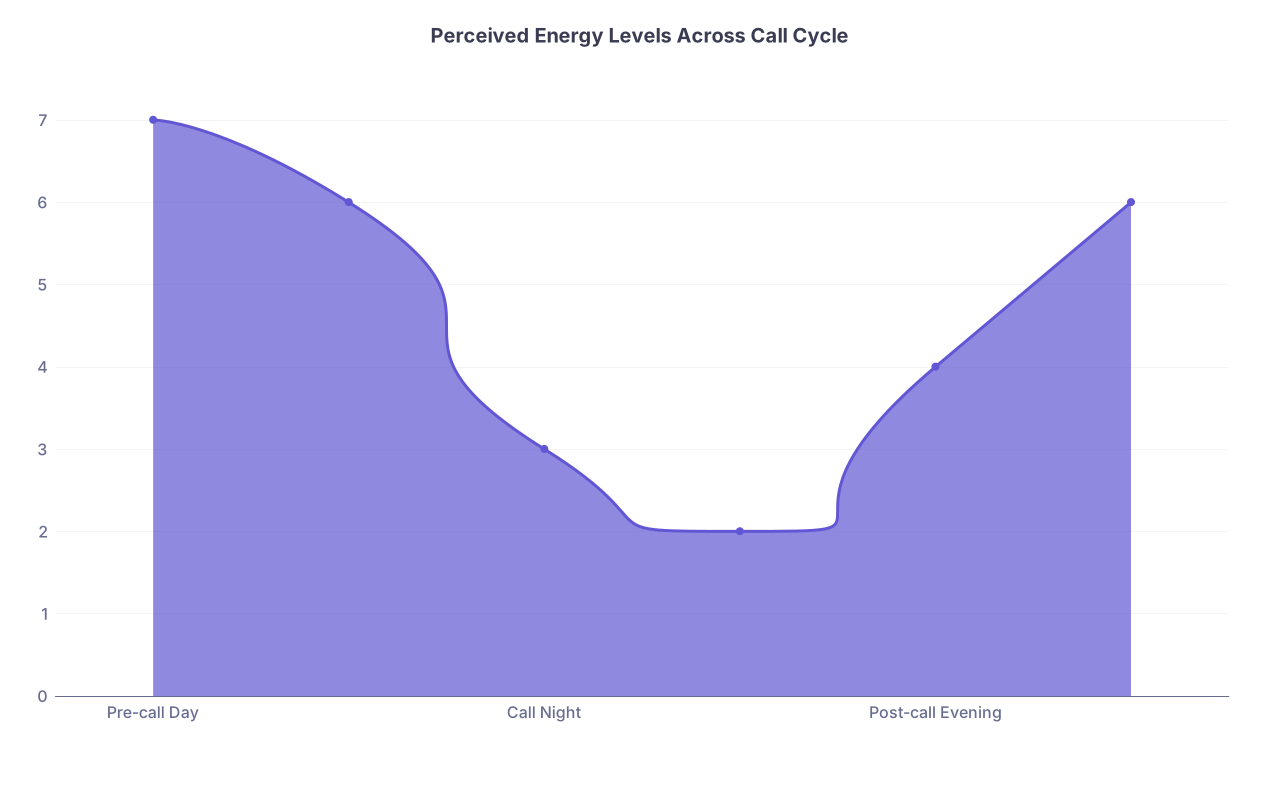
| Category | Value |
|---|---|
| Pre-call Day | 7 |
| Call Day Morning | 6 |
| Call Night | 3 |
| Post-call Morning | 2 |
| Post-call Evening | 4 |
| Weekend Warrior Day | 6 |
Stop scheduling “Level 9” goals when you are at a “Level 3” day. Match tasks to your realistic energy.
Putting It All Together: A Sample 48-Hour Playbook
Assume:
- Call: Saturday 7 a.m. to Sunday 11 a.m. (24+4)
- You are off: Sunday post-call + Monday
Sunday (Post-call)
- 11:00: Leave hospital, ride-share home
- 11:30: Snack + water, shower, in bed
- 11:45–15:00: Sleep (Recovery Block)
- 15:00–15:30: Wake, coffee, light snack
- 15:30–16:00: Make Tier list; do 1–2 Must-Do:
- Start laundry of scrubs/work clothes
- Quick text to partner/family
- 16:00–18:00: Light activity (walk, mindless TV, no big tasks)
- 18:00–19:00: Simple dinner (frozen meal + salad is fine)
- 19:00–21:00: Low-stakes downtime
- 21:30–22:30: Wind down, in bed by 23:00
Monday (Weekend Warrior Day)
- 07:30–08:00: Wake, hydrate, short stretch/walk
- 09:00–11:30: Functional Core
- 45-min home reset
- 60-min grocery + simple prep
- 20-min admin (bills, email, schedule scan)
- 12:00–13:00: Lunch
- 13:00–14:00: Optional light studying (review common issues on your service, not hardcore Step 2)
- 15:00–17:00: Social/Personal
- Coffee with friend or call family
- 30 min of hobby or show
- 17:30–19:00: Dinner + relax
- 19:00–20:00: Quick prep for next day (clothes out, bag packed, glance at schedule)
- 21:30–22:30: Wind down, in bed at a reasonable time
Run this two or three cycles, tweak what does not work, and you will realize something: your “time off” finally feels like it exists.
Your Next Step (Do This Today)
Do not wait for your next brutal call to improvise.
Right now:
- Open your notes app.
- Create three headers:
- “Post-call Immediate Script”
- “Post-call Tier List Template”
- “Weekend Warrior Day Blocks”
- Under each, write your first draft:
- 3–5 bullet points of exactly what you will do after sign-out
- The Must/Should/Nice-to-Do headings, ready to fill in
- Morning / Functional Core / Social-Personal blocks for your next off day
Save it. That is your version 1 protocol.
Next call, run the system once. Then adjust. That is how you stop being the intern who “loses” every weekend to exhaustion and become the one who is tired, yes, but still functional, still human, and still standing at the end of the year.


