
It is 02:47. You are staring at two active orders: a stat CT head and a repeat potassium level on a GI bleeder. Your pager just went off again—“Pt c/o CP, please eval.” You have not eaten since 19:00, your head feels like sandpaper, and you still have three cross-cover calls to return. You promised yourself you would “figure out a system” for night float. You did not. Now you are drowning.
Let us fix that.
This is a structured, repeatable system to keep you safe, efficient, and at least semi-human on night float. Not vibes, not “remember to practice self-care.” A concrete operating protocol you can run every night, even half-asleep.
The Night Float Framework: The 5-Block System
You need one mental model that covers the whole night. Use this:
- Pre‑shift setup (90 minutes before start)
- Intake & triage (first 60–90 minutes)
- Standard operating procedures for common problems
- Energy management & micro‑recovery
- Post‑shift shutdown and recovery between nights
You are going to build habits inside each block. Same every night. No decision fatigue.
1. Pre‑Shift Setup: Win Before You Walk In
Your night float starts long before you swipe your badge.
A. Lock in a sleep schedule that is actually sustainable
Stop improvising your sleep. Pick a pattern and stick to it for the entire block.
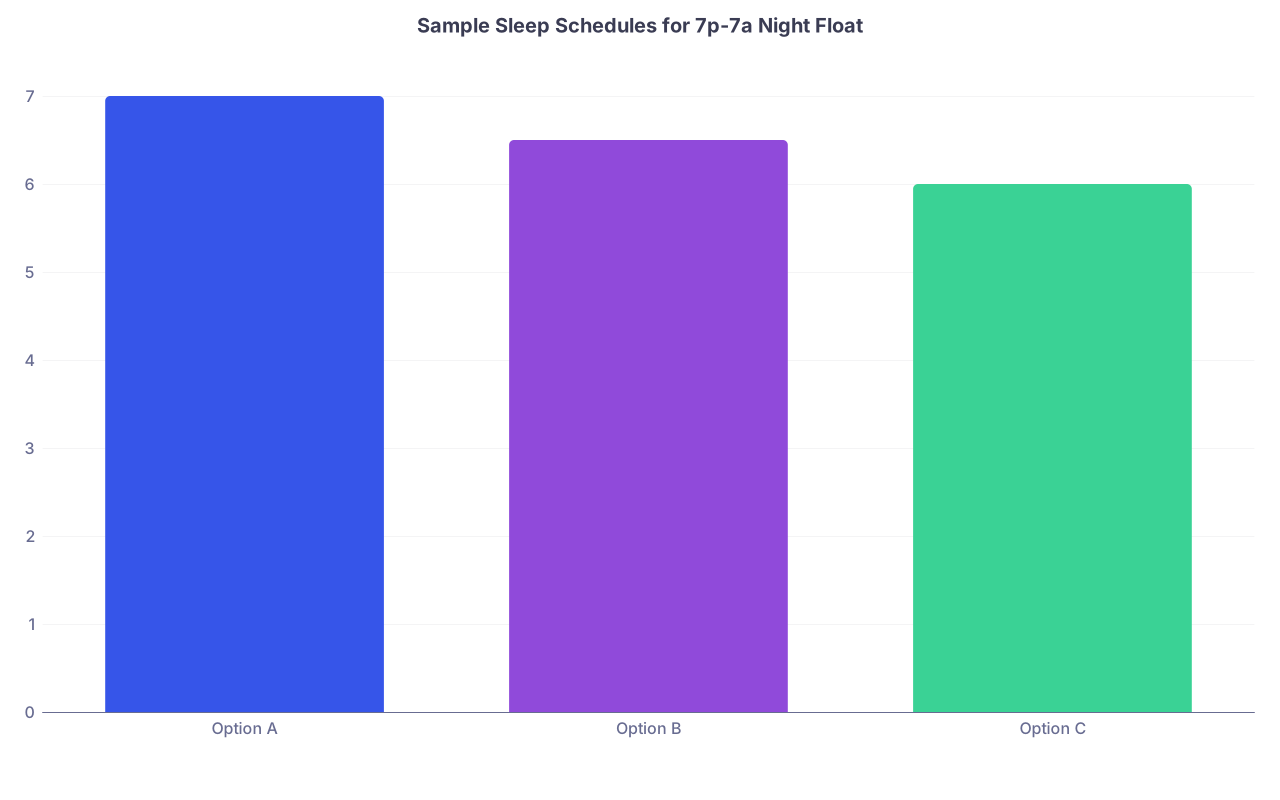
| Category | Value |
|---|---|
| Option A | 7 |
| Option B | 6.5 |
| Option C | 6 |
- Option A – “Long anchor” (my go‑to)
- 13:30–18:30: Main sleep (5 hours)
- 06:30–08:30: Anchor nap after shift (2 hours)
- Option B – “Split”
- 10:30–14:00: Main sleep (3.5 hours)
- 17:00–19:00: Pre‑shift nap (2.5 hours)
- Option C – “Heavy post‑shift” (works for some, not my favorite)
- 09:00–15:00: Main sleep (6 hours)
- 18:00–18:30: Power nap (0.5 hour)
Pick one and protect it like an ICU bed. Do not move it more than 30–60 minutes either way once you start your block.
B. Pre‑shift checklist (start 60–90 minutes before)
You should not be scrambling ten minutes before sign‑out. Run this checklist like a pilot.
1. Body maintenance (30 minutes)
- Shower (hot if you need to wake up, warm if you are jittery)
- Light meal with:
- Protein (eggs, chicken, Greek yogurt)
- Complex carbs (oats, brown rice, whole grain toast)
- Minimal grease and sugar
- Hydrate: 500–750 mL water, with a bit of salt if you tend to cramp
2. Caffeine strategy (plan, do not react)
- If shift is 19:00–07:00:
- First caffeine: 20:00–21:00
- Last caffeine: 01:00–02:00 latest
- Ignore the 04:00 desperation coffee. That one destroys your 08:00–12:00 sleep.
3. Pack like a professional

Mandatory gear:
- 2 pens + 1 backup in your pocket
- Small notebook or folded pocket card
- Portable phone charger and short cable
- Water bottle (you will forget to drink otherwise)
- Two pocket snacks (nuts, protein bar, trail mix)
- Alcohol swabs + a couple of flushes if your hospital allows it
- Mini hand lotion or lip balm (sounds trivial until your skin cracks at 03:00)
C. Mental prep: set your priorities for the night
Decide your non‑negotiables now, so at 04:00 you are not debating with yourself.
Your nightly priorities, in order:
- Do not miss life‑threatening issues.
- Do not delay time‑sensitive care (sepsis, ACS, stroke, bad vital trends).
- Keep people safe until day team returns.
- Document enough that your future self does not want to strangle you.
- If bandwidth: clean up loose ends for the day team.
Write this at the top of your sign‑out sheet if you have to.
2. Intake & Triage: Controlling the Chaos Early
The first 60–90 minutes determine your whole night. This is where most interns lose control.
A. Get a real sign‑out, not a monologue
You are not there to passively listen. You are there to extract what you need to keep people alive overnight.
Ask for structure:
- “Let us do sickest to most stable.”
- “For each: active issues, what you are worried about tonight, and what you do not want me to miss.”
On your side, structure your notes.
| Column | Purpose |
|---|---|
| Name / Room | Identification |
| Dx / Service | Quick context |
| Code / DNR | Rapid decision info |
| Watch for | What might go wrong |
| If X then Y plan | Pre-agreed actions |
Get explicit if‑then plans from the day team:
- “If her BP stays in the 90s but MAP > 65, ok to watch?”
- “If his pain is not controlled with oral meds, ok to use IV hydromorphone 0.2–0.4?”
Push gently. “I just do not want to wake you for something you already have a plan for.”
B. Triage your work using a 4‑bucket system
The pager starts. Now what?
Use four mental buckets:
- Stat / emergent (0–5 minutes)
- New chest pain, acute SOB, hypotension, neuro changes, active bleeding
- Urgent (within 30–60 minutes)
- Fever, uncontrolled pain, abnormal labs on otherwise stable patient, new confusion
- Routine (within 2–4 hours)
- Sleep meds, nausea, constipation, mild tachycardia in known AF, electrolyte repletion
- Deferrable / day team (only if truly safe to defer)
- Requests for med rec in a stable patient
- Non‑urgent social work issues
- Chronic symptom complaints that have been present for weeks and are unchanged
Write a quick running list:
- “Now” column
- “Next” column
- “If time” column
Cross things off aggressively. Physically crossing items reduces mental load.
C. Use a simple decision flow for every new page
You are tired. Your thinking will get sloppy. Use a default pattern.

| Step | Description |
|---|---|
| Step 1 | Pager goes off |
| Step 2 | Quick info from nurse |
| Step 3 | Go see patient now |
| Step 4 | Check chart and vitals |
| Step 5 | Call nurse back with plan |
| Step 6 | Safe to defer or give simple order |
| Step 7 | Decide labs, imaging, treatment |
| Step 8 | Document briefly if needed |
| Step 9 | Emergent red flags? |
| Step 10 | Change from baseline? |
You want three things from the nurse on first call:
- Vitals and how they changed from baseline
- What the patient looks like “from the door”
- What the nurse is worried about
If the nurse says, “He just does not look right,” go. That line is right more often than the lab result.
3. Standard Operating Procedures for Common Night Float Problems
This is where I see interns bleed time and sanity. Every call feels brand new. It is not. 80–90% of your night float pages are about the same 10 issues.
Build default workflows. You can always deviate with attending input, but start from a structured baseline.
A. Chest pain overnight
Non‑negotiable: you go see them. Full stop.
Default workflow:
- Ask nurse: vitals, tele changes, description of pain, onset, associated symptoms.
- At bedside: ABCs, focused history (onset, quality, radiation, exertional vs positional, pleuritic, trauma, GI).
- Quick exam: heart, lungs, chest wall, calves, neuro if concerning.
Immediate steps (while you think):
- Put on tele if not already
- Stat ECG
- Obtain troponin if appropriate per your service’s practice
- Sublingual nitro if you suspect ischemia and BP allows
- Oxygen if hypoxic
Document a brief note:
- “Returned page for chest pain. Exam, ECG, initial plan. Monitoring and next lab / imaging steps.”
If you are new: overcall. Let the senior or nocturnist help. The mistake is not asking, not asking “too often.”
B. Fever overnight
The classic 38.2 at 02:00 on post‑op day 1.
Workflow:
- Confirm temperature, check prior temps
- Look at WBC, differential, recent cultures, antibiotics
- Ask nurse: new symptoms? Productive cough, dysuria, pain, mental status changes?
Rough approach:
- If neutropenic, post‑transplant, unstable vitals → this is an emergency; call senior.
- Otherwise:
- Full set of vitals
- Focused exam (lungs, line sites, surgical wounds, urine, skin)
- Decide: need cultures now vs day team, need broadening antibiotics vs continue current
Key: do not fall into “automatic cultures and antibiotics” for every low‑grade temp. That is lazy, not safe. Think.
C. Hypertension / hypotension
Night float is 30% blood pressure babysitting.
Tools:
- Trend vitals in EMR, not just the last one
- Compare to admission and prior days
- Know the code status and ICU criteria for your hospital
Hypotension
- Step 1: confirm manually. Bad cuffs lie.
- Step 2: ask about symptoms: dizziness, chest pain, SOB, altered mentation, oliguria.
- Step 3: rapid bedside assessment: lung exam, JVP if you can, peripheral perfusion.
Decisions:
- If MAP < 60 with symptoms or concerning context (GI bleed, sepsis, post‑op) → this is “call senior now.”
- Fluid bolus vs pressors vs holding meds depends on context. You will learn patterns (e.g., that septic neutropenic patient needs aggressive escalation, not “another 250 mL LR and recheck”).
Hypertension
- Step 1: confirm; arm position and anxiety matter.
- Step 2: symptoms? Headache, vision changes, chest pain, neuro changes.
- Step 3: check meds: have they missed home antihypertensives?
Hypertensive urgency overnight is mostly watch + resume meds. Hypertensive emergency is rare but real (neuro deficits, chest pain, AKI). When in doubt, loop in senior.
D. Delirium and agitation
Huge time sink. Also dangerous.

Approach:
- Rule out must‑not‑miss: hypoxia, hypoglycemia, stroke, sepsis, medication effect, alcohol withdrawal.
- Check:
- O2 sat, blood glucose, infection sources, med changes, urinary retention, constipation.
Non‑pharmacologic first:
- Reorient, lights on enough to reduce shadows, hearing aids and glasses in place, presence of staff or sitter if possible.
Pharmacologic (per your hospital protocols):
- Avoid just reflexively hammering with high‑dose haloperidol in elderly with QT issues.
- Low‑dose options, watch QTc, know your geriatric and hepatic patients require more care.
Key concept: Safety trumps perfect pharmacology at 03:00. If a patient is going to hurt themselves or staff, you do what you have to do with supervision, then clean up in the morning.
E. Pain control
Half your pages. You cannot fix chronic pain at 02:30. Your job is safe, reasonable relief until day team can re‑evaluate.
System:
- Verify what has been given already and when.
- Clarify the pattern: new pain vs chronic, escalating vs stable, post‑op vs long‑term issue.
- Use multimodal options where possible: non‑opioids, regional blocks (if available), heat/ice, positioning.
Do not:
- Write “q2h PRN IV hydromorphone” just to stop the pages. That is how you cause respiratory arrests.
- Change long‑term pain regimens dramatically without context – leave those for teams that know the patient.
4. Energy Management: Staying Functional from 23:00 to 06:00
If you do not manage your energy deliberately, the night will manage it for you. Badly.
A. Use deliberate micro‑breaks
You are not a robot. You need short resets more than you need the illusion of constant grinding.
Aim for:
- 5 minutes off every 90 minutes, minimum.
- In that 5 minutes:
- Drink water
- Small snack if >3 hours since last food
- Stand, walk a short loop, stretch your back and neck
- No doom‑scrolling; it destroys attention
The hospital will rarely give you breaks. You have to take them in small, controlled bites.
B. Time your “deep work” and “grunt work”
Your brain is moderately functional from 19:00–23:00, declines 23:00–03:00, and craters after 04:00.
Use that:
- 19:00–23:00:
- See the sick sign‑outs
- Clean up pending tasks
- Write any detailed notes that require real thought
- 23:00–03:00:
- Run on autopilot workflows for pages
- Do only necessary documentation
- Avoid complex med reconciliations if possible
- 03:00–06:00:
- Expect to be stupid. Double‑check all orders. Use seniors more.
- Batch small tasks that do not require much cognition (repletions, non‑urgent checks).
5. Post‑Shift Shutdown: Protecting Your Next Night
What you do from 07:00–10:00 decides whether the next night is survivable.
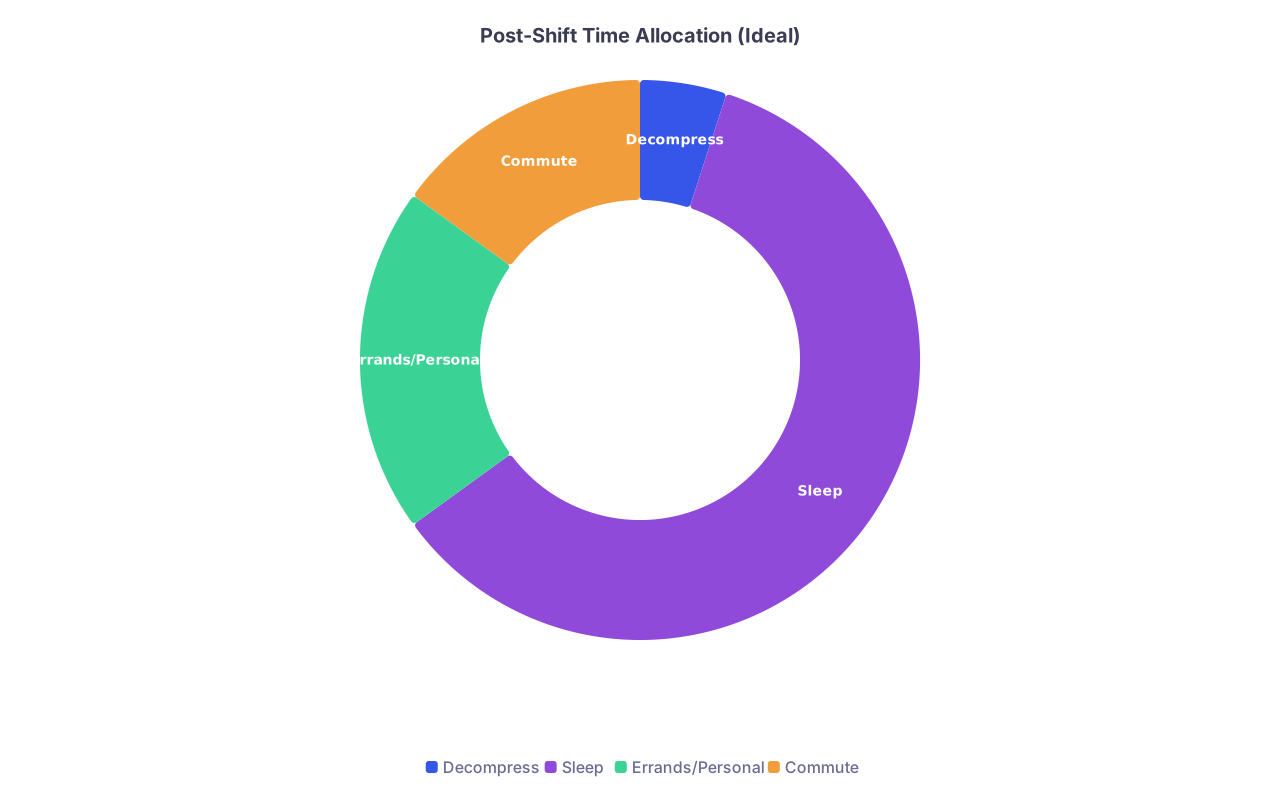
| Category | Value |
|---|---|
| Decompress | 5 |
| Sleep | 60 |
| Errands/Personal | 20 |
| Commute | 15 |
A. Get out of the building cleanly
Sign‑out back to day team should be:
- Short, structured, honest.
- Hit:
- Overnight events
- Any patients you are worried about
- Labs/imaging pending with potential action items
- Landmines (families upset, allied staff concerns)
Then stop. Do not let them keep you for a 40‑minute debrief. “I wish I could stay but I am already post‑call and need to protect my sleep so I can be safe tonight.”
B. Commute rules
- No driving drowsy. I have seen interns fall asleep at red lights.
- If you are nodding off:
- Coffee + 15–20 minute nap in your car before driving.
- Or call ride‑share or co‑resident.
C. Sleep protection protocol
Home routine:
- Light snack if starving, nothing heavy.
- Blackout curtains or eye mask.
- White noise if you live in a loud neighborhood.
- Phone on silent, only emergency numbers bypass. If your family calls you three times a day “just to check,” tell them very clearly: “Do not call between X and Y unless someone is dead or dying.”
You are not being dramatic. You are protecting patient safety by protecting your sleep.
6. Communication, Boundaries, and Not Being the Night Doormat
Day teams and nurses will test boundaries. Not maliciously. They are just trying to get things done. Your job is to be helpful and appropriately firm.
A. With day teams
Common issue: dumping non‑urgent work in sign‑out.
Example: “Can you also get MRI brain, and do a family meeting if they come overnight?”
Your response:
- “I will absolutely handle any urgent issues. For non‑urgent things like MRI scheduling or family meetings, I will leave that for your team unless something changes acutely overnight.”
If they push: “Night coverage should really focus on acute care so we do not miss sick patients. Happy to flag it in my note for you.”
B. With nurses
Most nurses are your allies. Treat them like it. When they call you at 03:00, respond like you want them to call you again next time something is wrong.
But it is fine to set limits on clearly inappropriate stuff:
- Acceptable: vitals concerning, patient more short of breath, new confusion, chest pain, pain not controlled, family escalating.
- Less acceptable: “He wants a sandwich at 02:30 but says the menu is confusing; can you come order it?”
You can say: “If it is not a safety issue, can we leave that for the day shift? I need to stay available for changes in condition.”
The more you are dependable for real issues, the less people bother you with noise.
7. Building Your Personal Night Float Playbook
Everything above is the factory default. You still need to customize it for your hospital, your specialty, and your brain.

| Step | Description |
|---|---|
| Step 1 | Start Night Float Block |
| Step 2 | Week 1 - Observe patterns |
| Step 3 | List top 10 page types |
| Step 4 | Create quick workflows |
| Step 5 | Test and adjust for 3 nights |
| Step 6 | Save templates and phrases |
| Step 7 | Refine with senior feedback |
A. Track your last 20–30 pages
Literally write down:
- What was the page?
- What did you do?
- What did you forget?
- Did you need to call someone?
Patterns will jump out. Example from a real intern:
- 7 pages for hypoglycemia in brittle diabetics
- 5 pages for post‑op pain on a certain service
- 4 pages for low potassium in one stepdown unit
So you build micro‑protocols for each. You stop reinventing the wheel.
B. Create reusable templates
In your EMR or personal notes, keep:
- Pre‑built order sets you tweak (electrolyte repletion, nausea, sleep)
- Brief note templates: “Overnight event – chest pain,” “Overnight – fever,” etc.
- Standard phrases that are actually accurate and not fluff
This saves minutes per page, which turns into actual rest.
8. When You Are Failing: Early Warning Signs and Rescue Plan
Sometimes, despite everything, the wheels come off. Here is how you know it is happening—and how to pull out of the dive.
A. Warning signs
- You are rereading the same lab result three times and not understanding it.
- You have to ask the nurse to repeat basic info because you forgot it in 30 seconds.
- You are snapping at staff or patients.
- You realize you entered an order on the wrong patient or almost did.
That is not just “I am tired.” That is “I am dangerous” territory.
B. Emergency self‑rescue protocol
- Tell your senior. Exactly this:
- “I am hitting a wall and I am worried I am going to make a mistake. I need 15 minutes to reset, then I can keep going.”
- Take a 10–15 minute controlled nap in a safe room, phone on loud with senior as backup.
- On return:
- Drink water
- One small caffeine dose if still before your cut‑off time
- Do only low‑complexity tasks for the next 30 minutes while your brain spins up
You are not weak for doing this. You are the opposite. The weak move is pretending you are fine until someone gets hurt.
FAQs
1. How long does it usually take to feel “normal” on night float?
For most interns, the first 3–4 nights feel awful, then the body partially adapts. By night 5–7 you develop a rhythm, if your sleep schedule is consistent and you are not trying to live a daytime life on your days “off.” Expect to feel somewhat off the entire block; the goal is “functional and safe,” not “fully normal.”
2. Should I flip back to a day schedule on my days off?
If your block is short (3–4 nights), I usually tell people not to fully flip. Keep a modified later schedule and shift it by at most 2–3 hours. For longer blocks (1–4 weeks), some people do a mild flip on days off, but abrupt swings wreck your sleep and attention. Pick a compromise that still lets you sleep during the day before your next night.
3. How often should I be calling my senior or attending overnight?
More often than you think. Early in intern year, if you are asking yourself “Is this worth calling about?” the answer is yes. Call for: any hemodynamic instability, new chest pain, concerning neuro changes, unclear sepsis source, anything you would hate to explain on M&M if it went bad. Nobody gets in trouble for calling too much on night float. They get in trouble for guessing alone.
Key points:
- Run night float as a system: structured pre‑shift routine, clear triage, standard workflows for common problems.
- Treat sleep and micro‑breaks as non‑negotiable safety equipment, not luxuries.
- Communicate early and often—with nurses, day teams, and your senior—so you stay safe, useful, and still somewhat human by the end of the block.