This article is for educational purposes only. It is not financial advice, not legal advice, and not tax advice. Figures vary by individual circumstances, so consult a qualified professional before acting.
Wait, did I just ruin my chances in my backup specialty?
I can't stop replaying the moment. The way the words slipped out before I could catch them. The slight tilt of the interviewer's head. The pause that felt like a door slamming shut. Did I actually say that? Did I just torpedo my only remaining path to a residency spot? My chest tightens. I'm sitting in the dark at 3 AM, laptop screen glowing like a judgmental ghost, wondering if one sentence just cost me everything.
If you're dual-applying, you know this panic. It's a special kind of hell. You're propped up by fragile hope and a mountain of anxiety, trying to convince a specialty you sort of fell into that you're all in. Meanwhile, every program director in a less competitive field can smell insecurity from across the Zoom screen. They've seen this movie before. They've been burned by applicants who treat their program like a safety net, and they're not stupid. They're looking for red flags, and honestly, I'm terrified I've been waving them like a parade banner.
Before you step into any session, review what program directors privately look for in low-competition fields to align your expectations.

Mistake #1: Treating the Backup Interview Like It's Your Safety School
I keep circling back to the same catastrophic thought: what if I accidentally made it clear they're not my first choice? Not because I'm a jerk, but because I'm so riddled with fear that I overcompensated and sounded like I was doing them a favor just by showing up. A slip of the tongue. A slightly too casual "I'm keeping all my options open." A vague, unconvincing answer to "Why this specialty?" It's the verbal equivalent of writing "I guess you'll do" on your forehead.
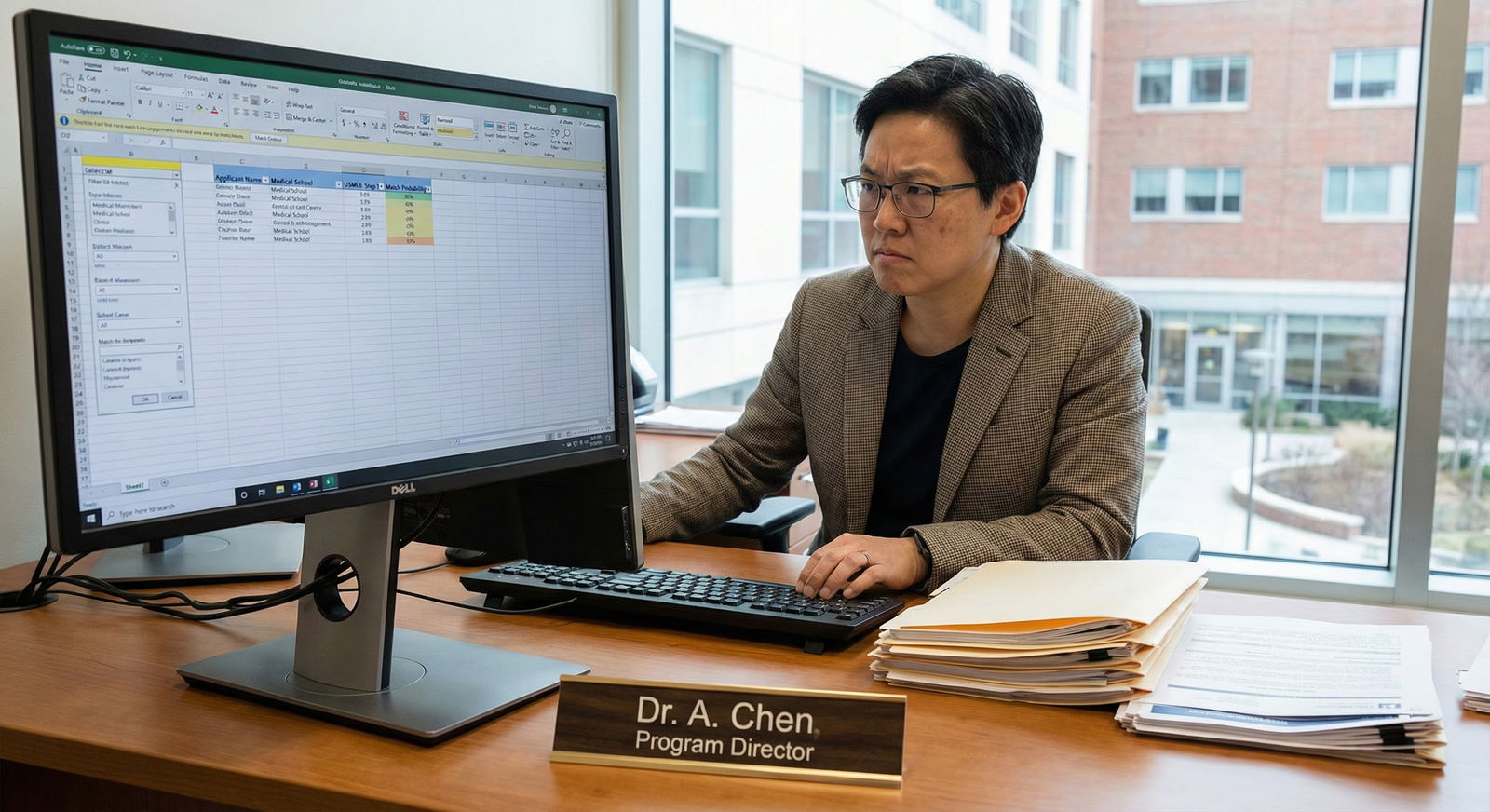
Program directors in backup specialties know the game. They've seen dual-applicants who treat the interview like a formality, a temporary stop on the way to a more prestigious dream. And they're ruthless about sniffing out that lack of commitment. If they even suspect you'll bolt the second a spot opens in your primary field, you become a flight risk. And flight risks get buried on rank lists. I'm picturing my name on a spreadsheet, next to a note that says "Would rather be doing dermatology." That's it. Done.
What if they ask directly, "Why are you applying to this specialty?" and my answer sounds like a rehearsed PR statement I'd actually written for a different audience? I'm terrified that my voice will crack, that I'll pause too long, that I'll accidentally say "I'm passionate about" and then forget the name of the specialty. I'm scared I'll sound like I'm trying to convince myself, not them. And the data doesn't lie. The match rate for applicants who interview with palpable enthusiasm is sky-high. Those who come across as lukewarm? They're practically invisible.
Mistake #2: Complimenting the Specialty by Insulting It
I keep replaying the interview in my head and I think I might have done something worse than sound uninterested. I might have been condescending. I remember trying to say something positive about work-life balance, and I heard myself say, "At least the hours are better than surgery." The second it left my mouth, I wanted to crawl under the table. I'd just told a room full of people who have dedicated their lives to this field that their career is the "easy" version of a real doctor's job. I equated "less competitive" with "less demanding," and I'm pretty sure the interviewer's eyebrows tightened by a millimeter.
They've heard it all before. "It seems much less stressful than neurosurgery." "I'm looking for a better lifestyle." "I realized I didn't need the adrenaline of the OR." Every one of those backhanded compliments is a slap in the face. It says, "I'm settling for you because I can't handle the real thing." I didn't mean it that way. I was just trying to show I'd done my research. But I phrased it like a consolation prize. Now I'm positive I came across as the kind of applicant who thinks family medicine is a fallback for failed surgeons. I'm cringing. It's a visceral, stomach-churning regret.
Mistake #3: Bringing Up Your Primary (Competitive) Specialty Out of Nowhere
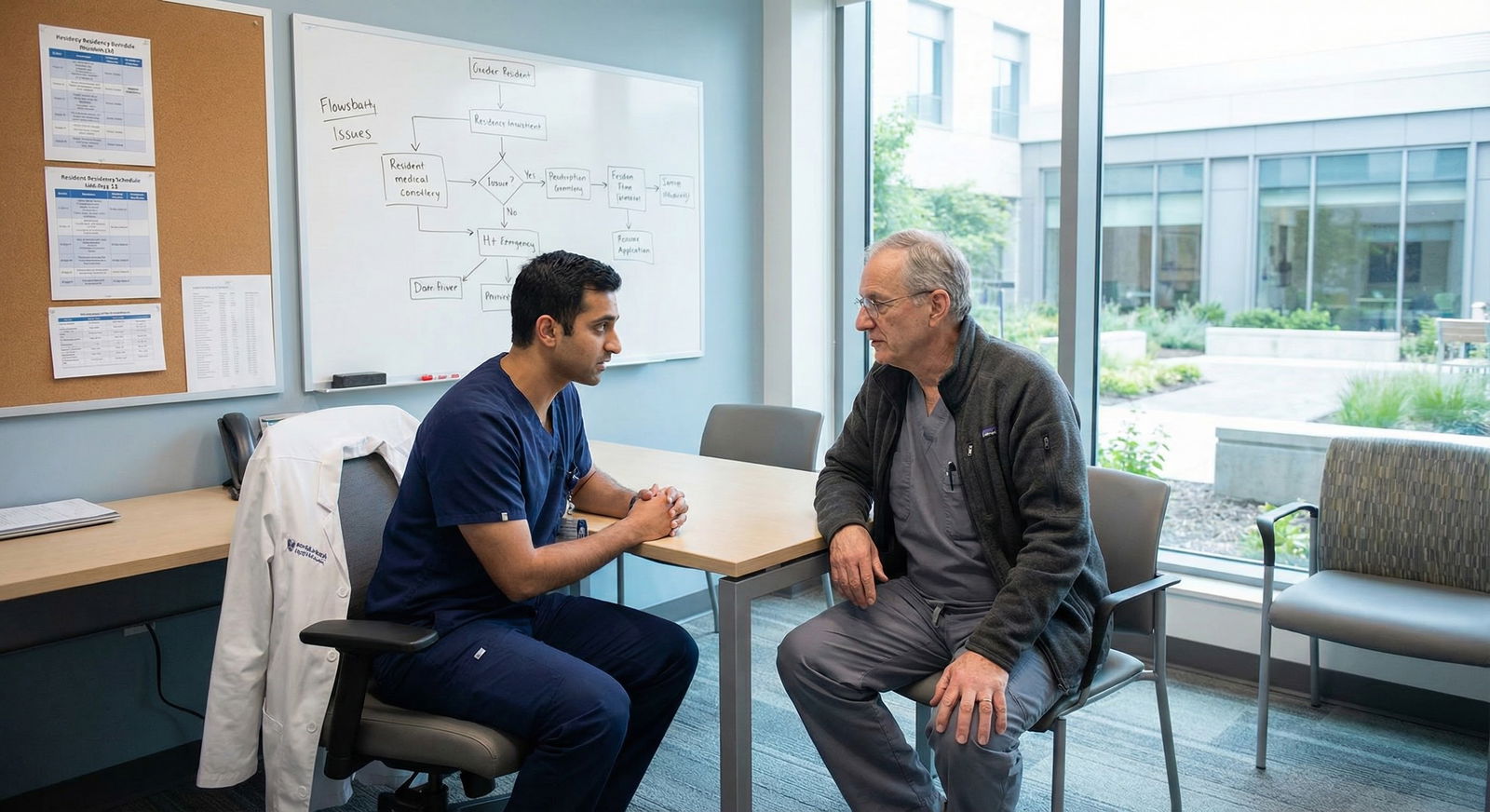
I couldn't stop myself. I was so worried they'd see my CV and wonder why someone with all this ortho research was suddenly passionate about internal medicine. So I decided to preemptively explain. I mentioned my "previous interest in orthopedic surgery" as if it was a quirky phase, a footnote in my journey. But the moment I said it, the room went cold. I'd just handed them the red flag they were looking for.
I thought I was being transparent, showing growth. But all they heard was, "I'm actually here because I failed to match into a competitive field." Bringing up your step score, your derm research, your surgical sub-I, it's a neon sign that says you're still emotionally tethered to another specialty. And interviewers are not therapists. They're not going to process your grief with you. They're going to note that you're not fully committed, that you're a risk. I'm panicking now because my CV does scream that I wanted a different life. I can't scrub it. I can't take back the sentence where I said, "When I was planning to apply to plastics..." I might as well have written "I don't want to be here" on a sticky note.
Mistake #4: The Dreaded 'Plan B' Body Language and Tone
I'm not just worried about my words. I'm terrified of what my face is doing. My body language is a traitor. During the Zoom call, I caught a glimpse of myself in the corner of the screen. I looked exhausted. Defeated. I was sighing without realizing it. My shoulders were hunched. I was clutching my pen like a lifeline. I probably looked like I was about to burst into tears. And I almost was. Because this interview, no matter how much I tried to reframe it, felt like a funeral for my dream specialty.
Imposter syndrome is a silent killer. I was so deep in my own head, cataloging my failures, that I barely made eye contact with the camera. I was physically present but emotionally absent. And program directors can read that. They see the micro-expressions. The flat affect. The way your voice drops when you talk about the specialty's future. They interpret your inner turmoil as disinterest. You're not "genuinely anxious," you're just "not that into us." I'm convinced they labeled me as someone who was crying on the inside and didn't even try to hide it. The worst part? I can't go back and fix my facial expression.
Mistakes #5, #6, and #7: Asking Tone-Deaf Questions and Burning Bridges
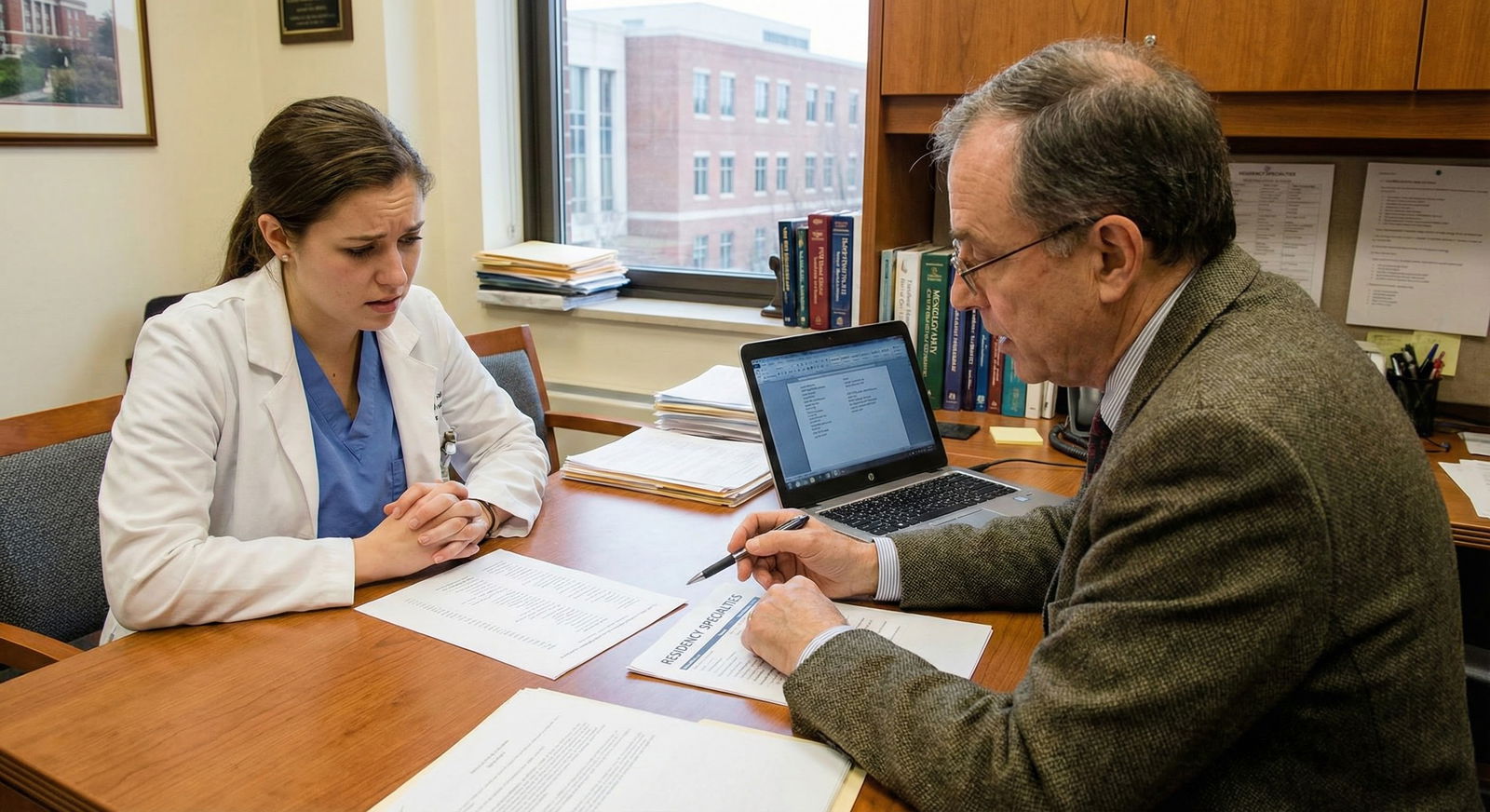
I can't even think about the Q&A portion without my pulse racing. I asked questions like, "What opportunities are there for research in a different field?" or "How easy is it to transfer to another program later?" I was trying to be strategic, but I was basically asking for an escape route. I might as well have said, "How quickly can I leave you?" I'm sure they've already written me off.
Then there's the research I didn't do. I copy-pasted my interview prep from my primary specialty. I knew the program's mission statement, but I couldn't name a single faculty member whose work genuinely excited me. I stumbled over a question about the program's unique strengths because I'd only skimmed the website. They knew. They could tell I was just another dual-applicant who hadn't bothered to learn the language of their specialty. I was a fraud.
And the thank-you note. I sent it late at night, half-asleep, and it still sounded like it was meant for a dermatology program. "I particularly admire your focus on procedure-based care", wait, this is a primary care track. I'm panicking that I actually wrote that. I'm too scared to check my sent folder. I've burned every bridge I had.
Is it already too late for me to fix this?
I've been spiraling for hours, convinced that one bad interview sentence has permanently derailed my career. But here's the thing I'm desperately trying to believe: it's not over. Program directors are human. They've seen nervous applicants. They're not sitting in a dark room tallying your every mistake. One awkward phrase doesn't have to define you. But you do need to act.
First, send a follow-up email, not a generic thank-you, that subtly reinforces your genuine interest in the specialty. Mention a specific conversation point from the interview that you've reflected on. Show you were listening. Second, if you're still in the thick of interview season, rewrite your personal narrative. Strip every accidental reference to your primary field. Practice out loud until you believe it. Third, do the research. Right now. Learn the nuances of the backup specialty so deeply that you can talk about it with the same passion you'd reserve for any dream job. Fake it until you genuinely appreciate it, and eventually, you will. Because these fields are full of incredible medicine, and they deserve someone who's all in.
I'm still terrified. I'm still checking my rank list generation like it's a crystal ball. But I'm also reminding myself that my backup specialty isn't a consolation prize. It's a career. And if I can stop treating it like a life raft, maybe I can actually earn a spot.