
Residency attrition is not random. The data show clear, specialty-specific patterns that undermine a lot of casual assumptions applicants make about “easy” versus “competitive” fields.
If you are choosing a specialty on vibes instead of numbers, you are playing with fire.
This is a deep dive through that data: how attrition behaves in least competitive vs highly competitive specialties, how often people actually leave, and where the biggest hidden risks sit.
The Data Reality: Attrition Is Low, But Not Uniform
Across all specialties, U.S. residency attrition rates hover in the low single digits per year. But “low” hides wide variation.
Let us anchor on a few hard numbers from multi-year ACGME and specialty-board reports (rounded for clarity; individual studies differ slightly but the pattern is stable):
- Overall annual attrition for categorical residents: roughly 1.5–3% per year
- Cumulative attrition over a 3–5 year program: typically 4–10%, depending on specialty
- Outliers (surgical and some highly competitive fields): cumulative attrition can exceed 15% in certain cohorts
The key distinction that applicants routinely misunderstand: “least competitive to enter” does not automatically mean “low attrition.” In fact, some of the least competitive primary care fields have very stable completion rates, while certain mid-to-high competitive surgical subspecialties hemorrhage residents.
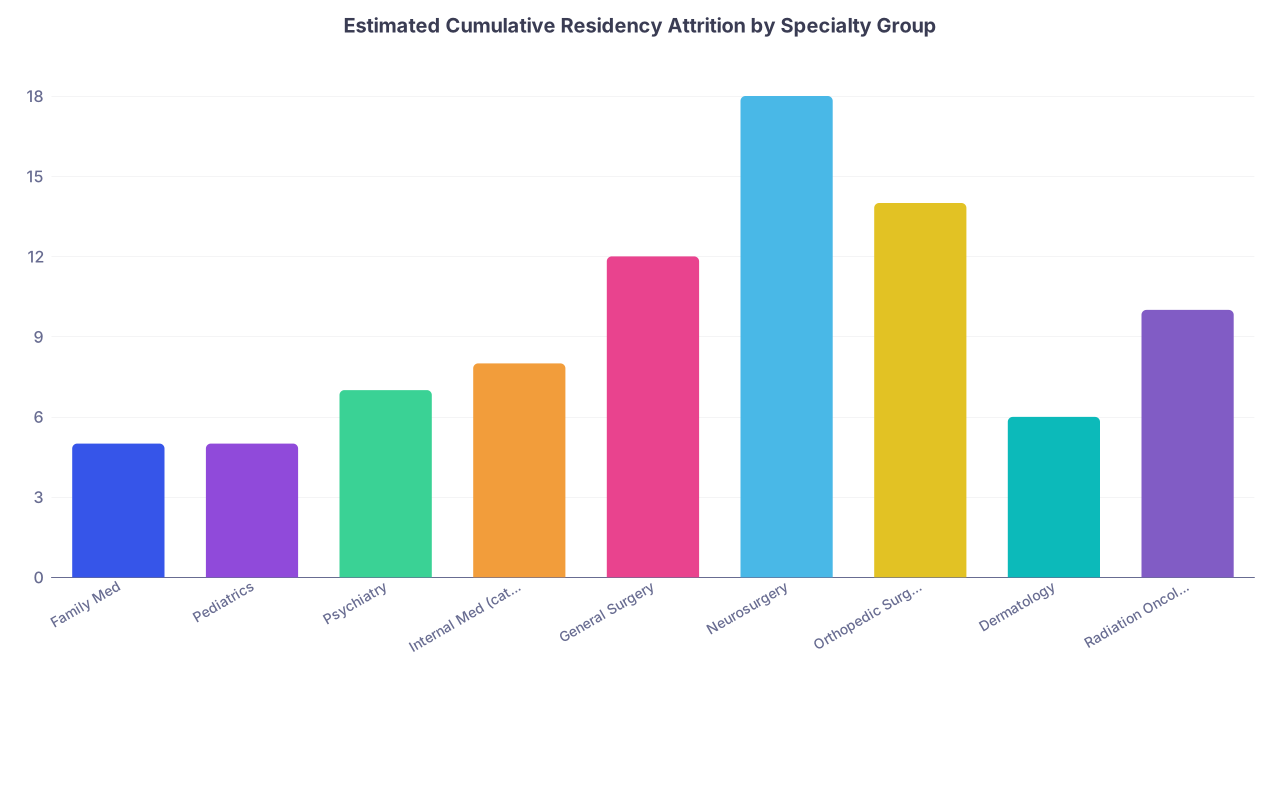
To make that concrete, look at approximate cumulative attrition rates by representative specialty category (over full training):
| Category | Value |
|---|---|
| Family Med | 5 |
| Pediatrics | 5 |
| Psychiatry | 7 |
| Internal Med (categorical) | 8 |
| General Surgery | 12 |
| Neurosurgery | 18 |
| Orthopedic Surgery | 14 |
| Dermatology | 6 |
| Radiation Oncology | 10 |
These are approximate, literature-based ranges, not single-year snapshots. But the hierarchy is consistent: neurosurgery and general surgery lose residents at a far higher rate than family medicine or pediatrics. Dermatology is highly competitive but relatively stable. Radiation oncology is competitive and has had notable attrition and non-completion in some cohorts, partly driven by job market anxiety.
So, the first correction: competitiveness at the application stage and attrition during training are correlated in some areas, but not in a clean, linear way.
Least Competitive Specialties: Stable, But Not Risk-Free
When people say “least competitive specialties,” they usually mean higher match rates, lower average Step 2 CK scores, and more available positions per applicant. Think:
- Family Medicine
- Internal Medicine (categorical, community-heavy)
- Pediatrics
- Psychiatry (this has been creeping more competitive, but still often grouped here)
The numbers show these fields do relatively well on retention.
Family Medicine and Pediatrics
Family medicine and pediatrics have:
- High fill rates, especially with U.S. grads and IMGs combined
- Lower board score cutoffs
- Strong need-based expansion in many regions
Attrition-wise, they tend to sit near the bottom:
- Cumulative attrition often in the 4–6% range over 3 years
- Annual attrition typically around 1–2%
Mechanisms I have watched in the data and heard in program reviews:
- Most residents know what they are getting into: outpatient-heavy, continuity care, lower relative compensation vs specialties like derm or ortho. That self-selection stabilizes retention.
- Programs skew toward service-heavy but intellectually manageable workloads. Burnout exists, but the style of work is more predictable than a Q2 trauma surgery call schedule.
- Switching into these specialties from something more competitive is not uncommon, which inflates their total numbers without increasing exits much.
I have sat in meetings where PDs review multi-year data: “We lose one resident every other year, usually for family reasons or a move, not because they hate the field.” That anecdote matches the national patterns.
Internal Medicine (Categorical)
Internal medicine is trickier. It is a “core” specialty, but not monolithic. Big university IM programs that feed to cardiology, GI, and heme/onc attract extremely strong applicants. Community IM programs with large IMG populations have very different dynamics.
On average:
- Cumulative attrition around 7–9% over three years in many datasets
- Reasons skew to:
- Personal/health/family
- Academic or professionalism issues
- Switches to other specialties (including anesthesia, radiology, neurology)
Unlike FM or peds, IM is also a staging ground. Some residents enter IM intending to pivot if they can secure a spot in anesthesia or radiology later. That path is rare but real. The result: slightly higher attrition than FM or peds, but still relatively controlled.
Psychiatry
Psychiatry is an odd case. Historically, not very competitive. In the last 5–10 years, interest and applicant quality spiked. At the same time, psych carries elevated risk for burnout related to emotional load and system frustration (poor access, limited beds, chronic under-resourcing).
Attrition estimates:
- Cumulative 3–4 year attrition: roughly 6–9% range across multiple reports
- Higher incidence of:
- Transfers to neurology or internal medicine
- Leaves of absence for burnout or mental health reasons
Again, not catastrophic. But clearly higher than family medicine.
Highly Competitive Specialties: Prestige With a Cost
On the other side, you have specialties where the application battlefield is brutal:
- Neurosurgery
- Orthopedic Surgery
- Plastic Surgery (integrated)
- General Surgery (especially academic)
- Dermatology
- Otolaryngology (ENT)
- Radiation Oncology
- Some high-tier Radiology and Anesthesiology programs
These fields select for high board scores, research productivity, and often prior exposure (sub-I’s, away rotations). You would expect, in theory, that hyper-selected, “top” candidates would almost never leave.
The reality is more nuanced.
Surgical Fields: High Commitment, High Exit Risk
Neurosurgery is the canonical example. It is one of the most competitive specialties to enter. Yet its attrition rates are among the highest of any field.
Repeated analyses show:
- Cumulative attrition in neurosurgery often in the 15–20% range over a 7-year program
- Exits peak during PGY-1 to PGY-3
- Primary reasons: lifestyle and work-hours dissatisfaction, failure to meet academic or technical performance benchmarks, realization that neurosurgery is incompatible with long-term goals or family life
I have seen program-level data where a 3-resident-per-year neurosurgery program graduated 2 of 3 on time for multiple successive cohorts. That is essentially 33% attrition for those classes, even if some transfer into related fields.
General surgery also posts relatively high attrition:
- Cumulative 5-year attrition commonly 10–15%
- Again, early years carry the bulk of exits
- Gender differences appear in several studies: women sometimes show higher attrition, often linked to environment, mentorship gaps, or discrimination
Orthopedic surgery tends to sit a little lower than neurosurgery but still above primary care:
- Cumulative attrition typically 10–14% in some series
- Transfers into anesthesia, radiology, or PM&R are frequent stories
The pattern is consistent: high-intensity, procedure-heavy, long-hour environments generate a disproportionate share of residency exits, even among highly filtered, competitive cohorts.
“Lifestyle” Competitive Fields: Mixed Outcomes
Now look at dermatology and certain radiology or radiation oncology programs. These are also extremely competitive, but for mostly different reasons: lifestyle, pay, and perceived long-term quality of life.
Dermatology:
- Cumulative attrition: usually quite low, around 4–7% by completion
- Strong fit between expectations and reality: procedural + clinic, high pay, controlled hours
- Residents are older, often have heavy research backgrounds; they rarely “accidentally” fall into derm
Radiation oncology:
- Historically low attrition, but recent job market anxiety, contraction in some regions, and shifting referral patterns have led to:
- Increased transfers to internal medicine, palliative care, or other oncology-related roles
- Occasional non-completion due to shifting career goals or market concerns
- Overall attrition is still not in the neurosurgery zone, but it is higher than its prestige would imply
Radiology and anesthesiology:
- Moderate-to-high competitiveness at top programs
- Attrition usually intermediate:
- Roughly 5–10% cumulative in several datasets, depending on time frame
- Many exits are voluntary specialty switches rather than failures
This breaks the naive model. Being “hard to match” does not guarantee low attrition. It mostly shifts the reasons people leave.
Side-by-Side: Least Competitive vs Highly Competitive
Let us formalize the contrast.
| Category | Example Specialties | Typical Attrition Range |
|---|---|---|
| Least competitive – primary care | Family Med, Peds | 4–6% |
| Core medicine – mixed competitiveness | Internal Med categorical | 7–9% |
| Behavioral – rising competitiveness | Psychiatry | 6–9% |
| Procedural – high competitiveness | Gen Surg, Ortho, ENT | 10–15% |
| Ultra-high competitiveness + extreme workload | Neurosurgery, some Plastics | 15–20% |
| Lifestyle competitive | Dermatology | 4–7% |
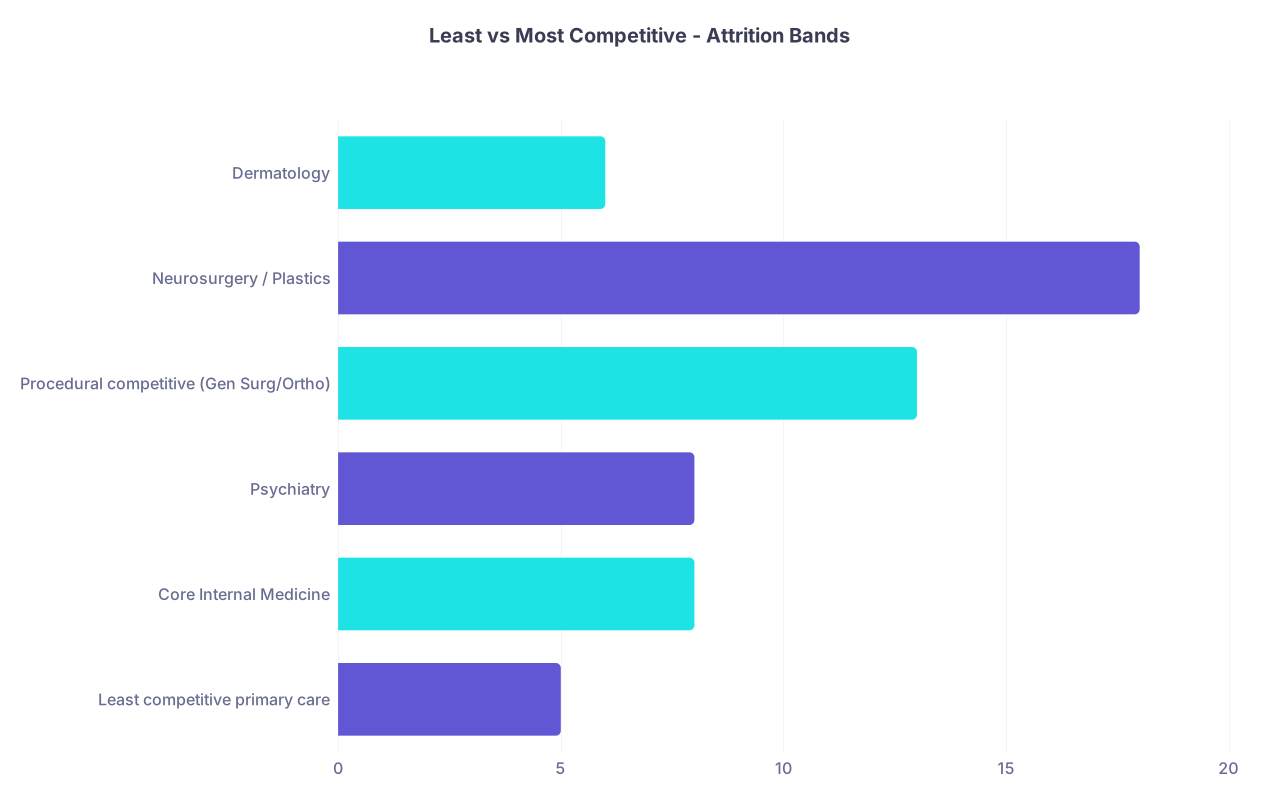
Visually:
| Category | Value |
|---|---|
| Least competitive primary care | 5 |
| Core Internal Medicine | 8 |
| Psychiatry | 8 |
| Procedural competitive (Gen Surg/Ortho) | 13 |
| Neurosurgery / Plastics | 18 |
| Dermatology | 6 |
The central takeaway: the “least competitive” specialties, especially primary care, generally have lower attrition than the most competitive surgical specialties. The high-intensity nature of training overrides the selection advantage of higher-scoring residents.
Why Residents Actually Leave: Different Drivers by Field
Attrition is not one thing. The reasons cluster differently across low vs high competitive specialties. Looking at multi-specialty surveys, you repeatedly see four major buckets:
- Voluntary specialty change (misfit, new interest)
- Involuntary departure (academic, professionalism, remediation failure)
- Personal reasons (health, family, geographic move)
- Immigration or visa issues (especially for IMG-heavy programs)
Here is how those drivers typically play out.
In Least Competitive / Primary Care Fields
In family medicine and pediatrics, the modal story looks like:
- Resident with solid but not hyper-competitive board scores
- Often later-life responsibilities (marriage, kids, caregiving)
- Exits driven by:
- Spouse relocation
- Family illness
- Inability to continue training due to financial or visa problems
True “I hate this specialty and I am leaving medicine” exits are comparatively rare. When they happen, they usually appear in psychiatry or internal medicine, often tied to burnout or disillusionment with the system rather than the specialty’s core work.
In Highly Competitive / Surgical Fields
Here, the pattern shifts:
- Residents are statistically more likely to have top-decile Step scores, extensive research, multiple away rotations
- Yet, attrition is high, and the reasons skew heavily toward:
- Disillusionment with lifestyle: 80–100 hour weeks, significant overnight call, physical and emotional fatigue
- Mismatch with surgical culture: hierarchy, sometimes hostile environments, limited tolerance for error
- Performance issues: failing to meet technical benchmarks, difficulty in the OR, slow operative progression
- Realization that non-surgical specialties can deliver better balance with comparable pay (radiology, anesthesiology)
I have seen PGY-2s in general surgery who openly admit they are “counting the days until I can transfer to anesthesia.” When they successfully move, they become part of surgery’s attrition and anesthesia’s completion.
Dermatology, in contrast, loses residents mostly for very personal or niche reasons: unforeseen family issues, geographic incompatibility, or very specific academic/professional conflicts. Almost never due to “this job is unbearable.”
Year-by-Year: When Attrition Actually Happens
The timing of attrition is as important as its magnitude. Across specialties, you see a front-loaded pattern:
- PGY-1 to PGY-2: peak exit period
- PGY-3 and beyond: dramatically lower loss rates
For multi-year programs like neurosurgery:
- PGY-1 to PGY-3: the “hazard zone” where most departures cluster
- Late attrition (PGY-5–7) is relatively rare but devastating for the individual and program
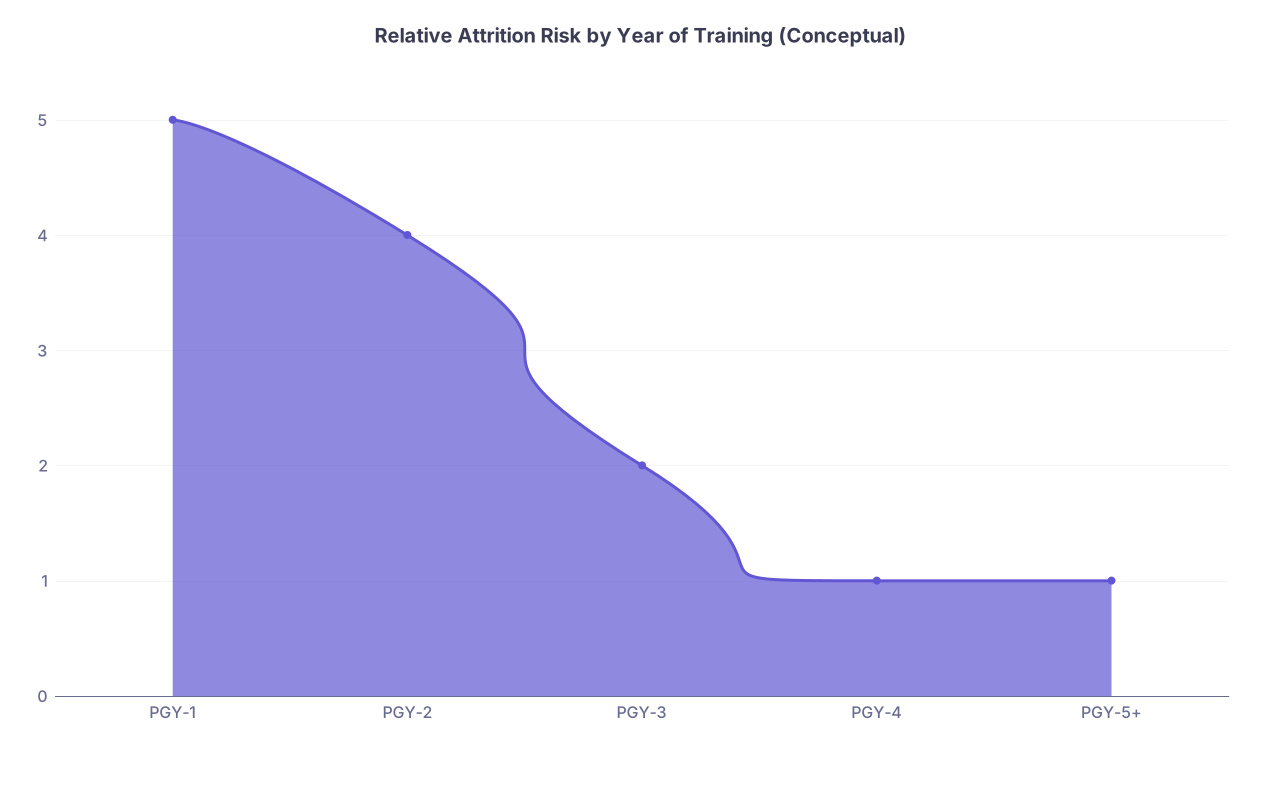
Think about this in risk terms:
| Category | Value |
|---|---|
| PGY-1 | 5 |
| PGY-2 | 4 |
| PGY-3 | 2 |
| PGY-4 | 1 |
| PGY-5+ | 1 |
Not precise percentages, but the shape is accurate. Intense early exposure reveals mismatches quickly. Once residents reach mid-to-senior years, sunk costs, identity, and real engagement with the specialty make departure far less likely.
For least competitive specialties (FM, peds):
- PGY-1 attrition is low but still the highest of the three years
- Residents leaving after PGY-2 or PGY-3 are uncommon
For highly competitive surgical fields:
- PGY-1 and PGY-2 can see double-digit attrition rates in some institutions
- Transfers to less intense specialties often occur in this window
What This Means for Applicants
Let me be blunt: choosing a specialty to minimize “risk of not finishing” is a bad strategy on its own. The raw numbers show that almost everybody who starts residency finishes something. But the path is very different by field.
Key implications from the data:
Primary care is relatively safe from an attrition standpoint
If your true interest is family medicine or pediatrics, do not talk yourself out of it because it is “too easy to match” or “less prestigious.” The data show high completion rates, stable training, and fewer catastrophic exits.Ultra-competitive surgical specialties carry real exit risk
Neurosurgery, general surgery, ortho, plastics—these are high-risk, high-reward choices. Even among highly selected residents, 1 in 6 or 1 in 7 may not finish that original track. If you are only mildly interested and mostly chasing status, the numbers are not on your side.Lifestyle-competitive fields are relatively stable
Dermatology’s low attrition is not surprising. People fight hard to get in, and the day-to-day reality matches the pre-residency fantasy more closely than in most fields.“Least competitive” is not a synonym for “low quality”
A family medicine resident is statistically more likely to complete their original training program than a general surgery resident. If your goal is stable completion and a broad scope of practice, that matters more than prestige.Plan around the early hazard years
Whatever field you choose, your highest attrition risk is PGY-1 and PGY-2. Support systems, honest self-assessment, and early course correction matter far more during that window than any marginal Step score advantage ever did.
Two Data-Driven Conclusions You Should Not Ignore
First: Highly competitive surgical specialties have the highest attrition, driven by workload and culture, not lack of ability. The residents leaving are often the same people who crushed Step 2 and dominated research. If you choose those fields, you are implicitly accepting a materially higher risk of switching or failing to complete.
Second: The least competitive primary care specialties—family medicine and pediatrics especially—show some of the most stable completion rates in the system. If you genuinely like that work, the data are squarely in your favor.