
The biggest mistake applicants make for “easier” specialties is treating them like they are actually easy.
They are not. They are less competitive relative to derm, ortho, plastics, but a bad application will still sink you. The good news: if you give yourself 6 disciplined months and stop coasting, you can turn a middle‑of‑the-road profile into a very strong one for most low‑competition fields.
I am going to walk you through exactly how.
This is for the student or grad who says:
- “I do not have research.”
- “My Step scores are average.”
- “I have 6 months before ERAS and I do not want to scramble.”
You have enough time. If you stop doing random things and follow a plan.
1. Understand What “Low-Competition” Really Means
“Least competitive specialties” does not mean “anyone gets in.” It means the bar is lower than the hyper-competitive fields if you clear a few predictable hurdles.
We are usually talking about:
- Family Medicine
- Internal Medicine (community / mid-tier academic)
- Pediatrics
- Psychiatry
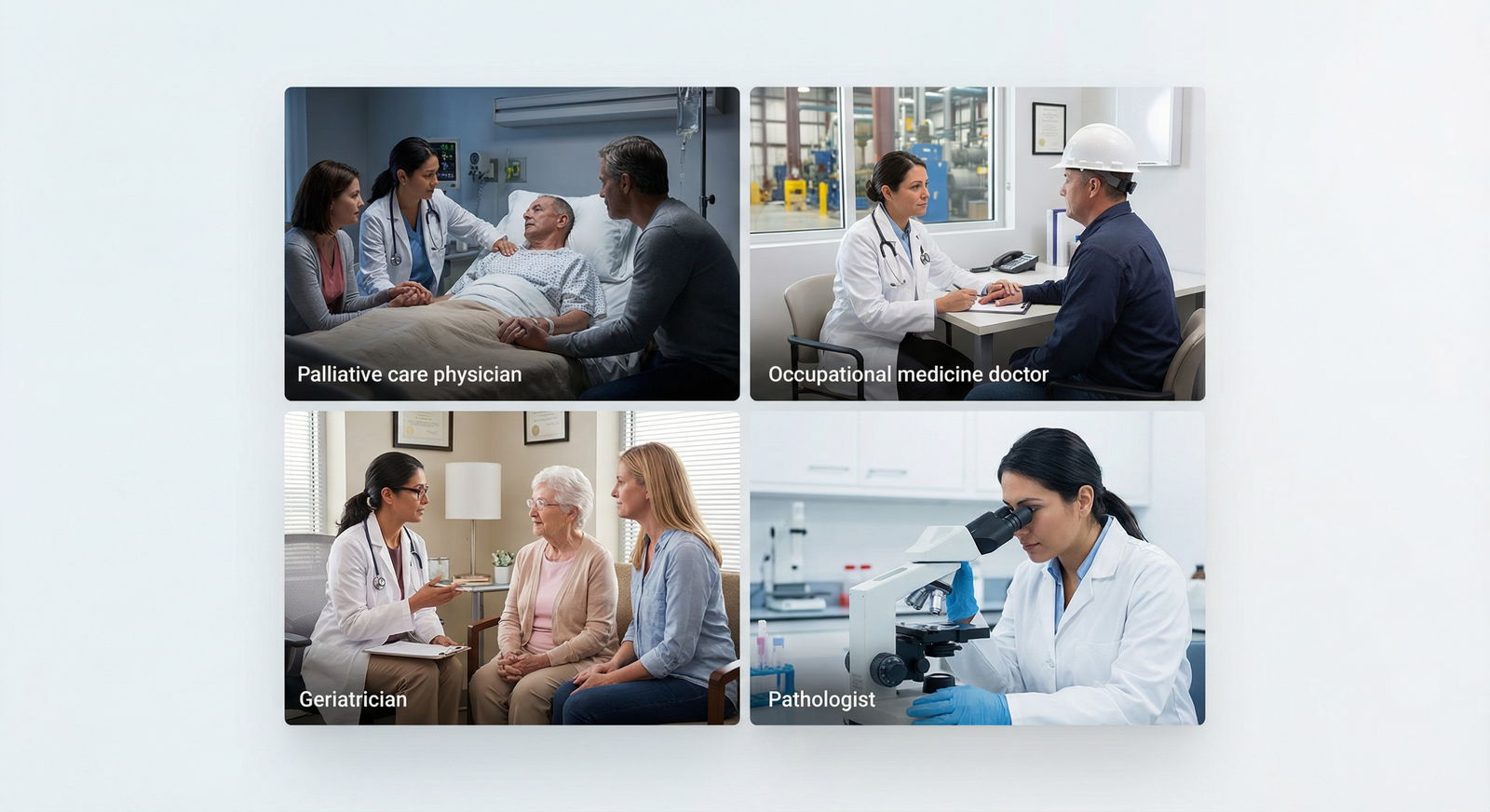
- Pathology
- PM&R (Physical Medicine & Rehabilitation) — lower than ortho, but rising
- Neurology
- Emergency Medicine (recovered somewhat after the recent dip in interest)
- Some community programs in OB/GYN and Anesthesiology
These have three shared features:
- They care more about: reliability, fit, and communication than a 270 Step score.
- They still screen hard for: exam failures, lack of US clinical experience (for IMGs), and poor professionalism.
- They reward: focused, specialty‑aligned work over scattered, generic CV padding.
You are not competing against derm applicants. You are competing against hundreds of people who:
- Passed the boards on the first attempt
- Did adequate clinical work
- Wrote bland personal statements
- Sent 60 generic applications
If you build a sharp, specialty-specific 6‑month plan, you can absolutely stand out.
2. First Step: Brutal Self-Assessment (Week 0–1)
You cannot fix what you refuse to quantify. For 1–2 days, you are going to stop studying, stop emailing attendings, and instead run a true diagnostic on your application.
A. Score and Academic Snapshot
List:
- Step 1: Pass / Fail (if scored, include score)
- Step 2 CK: exact score or projected NBME range
- Any failed shelf/board exams?
- Core clerkship grades: Honors / High Pass / Pass in IM, FM, Peds, Psych, Surg, OB, Neuro
Now label yourself:
- “Safe” → No fails, Step 2 ≥ 230–235 (USMD) or ≥ 240 (DO/IMG aiming IM/FM), mostly HP/Honors
- “Borderline” → One fail or Step 2 in 215–230 range, mostly Pass
- “Red flag” → Multiple fails, Step 2 < 215, major professionalism issue
I am not calling you a bad applicant. I am telling you how programs will categorize you in 10 seconds.
B. CV Snapshot
Write out current:
- Research: specialty, your role, any posters/pubs
- Clinical exposure: electives/sub‑Is in your target specialty?
- Letters: how many strong letters in your specialty?
- Leadership/service: anything continuous and real, not four clubs you barely attended
- Gaps: time out of training, visa issues, country of graduation (for IMGs)
C. Specialty & Program Tier Reality Check
Pick one primary specialty for this plan. Not three. If you are between two (e.g., FM vs IM, Psych vs Neuro), you can target both, but you must still prioritize one in your narrative.
Then pick a realistic program target:
- Community programs in your geographic region
- Mid-tier academic programs that are IMG‑friendly or DO‑friendly (if applicable)
- Avoid top‑10 name‑brand programs if your numbers are average. You can apply, but do not build your confidence on them.
Now, identify your top 3 weaknesses. Be concrete:
- “No letters in psychiatry.”
- “No US clinical experience in IM as an IMG.”
- “Step 2 218 with one failure in surgery shelf.”
- “Zero specialty‑aligned activities.”
Those will drive your 6‑month strategy.
3. The 6‑Month Master Timeline
You need structure, not vibes. Here is a realistic macro‑plan for someone with ~6 months until ERAS submission.
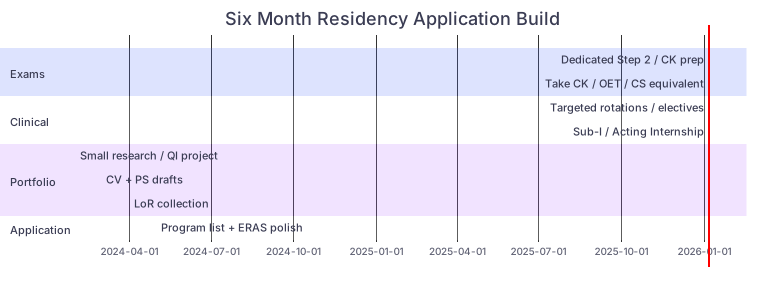
| Task | Details |
|---|---|
| Exams: Dedicated Step 2 / CK prep | a1, 2024-01, 2m |
| Exams: Take CK / OET / CS equivalent | a2, after a1, 0.5m |
| Clinical: Targeted rotations / electives | b1, 2024-01, 3m |
| Clinical: Sub-I / Acting Internship | b2, after b1, 2m |
| Portfolio: Small research / QI project | c1, 2024-02, 3m |
| Portfolio: CV + PS drafts | c2, 2024-03, 2m |
| Portfolio: LoR collection | c3, 2024-04, 2m |
| Application: Program list + ERAS polish | d1, 2024-05, 1m |
You will overlap tasks. That is fine. But every month you must know:
- What exam target you are working on.
- What clinical objective you are hitting.
- What documentation you are building (letters, PS, CV, etc).
4. Fixing the Non‑Negotiables: Exams and Red Flags (Month 1–2)
If your scores are weak or missing, everything else is downstream.
A. Step 2 CK (or COMLEX Level 2)
If you have not taken CK yet:
- Make CK priority #1 for the first 6–8 weeks.
- Goal: strong “rescue” score if Step 1 was pass/low or if you had any failures.
Practical protocol:
- NBME Baseline
- Take an NBME or UWSA at the start. No ego. You need to know if you are 205 or 235.
- Daily Structure (6 days/week):
- 40–80 UWorld questions / day (timed, mixed) + full review
- 1–2 hours focused weak area review (from question misses)
- 10–20 Anki cards of high‑yield topics
- Progress Checks
- NBME/UWSA every 2 weeks.
- If you are not seeing 5–10 point jumps per exam, your review is too shallow.
For lower‑competition specialties, a solid CK (e.g., 230–240) can entirely change how your app is read. It signals: “This person can pass our boards.”
B. Addressing Failures and Gaps
You cannot erase failures in 6 months, but you can:
- Show a clear upward trend.
- Build a clean narrative.
Action steps:
- Retake and pass any remaining exams as early as possible in the 6‑month window.
- Ask a trusted faculty advisor: “How would you explain my failure(s) in 1–2 sentences?”
Then refine that into your own concise explanation for your PS and interviews. - Do not write a pity essay. Own it, show what changed, and move on.
5. Clinical Work: Build Specialty-Specific Signal (Month 1–4)
Programs in low‑competition specialties still want to see you actually like the work.
A. Prioritize Targeted Rotations
You need at least:
- 1 sub‑internship / acting internship in the specialty (for IM/FM/Peds/Psych/Neuro/etc)
- 1–2 additional electives in the same or closely related field
Examples:
- Family Medicine: FM sub‑I + outpatient FM clinic month + community health center experience.
- Psychiatry: Psych sub‑I + inpatient psych + addiction or consult‑liaison elective.
- Internal Medicine: IM sub‑I + hospitalist month + possibly a subspecialty IM elective (cards, GI, etc).
If you are an IMG:
- You need US clinical experience (USCE), ideally inpatient and recent (within 1–2 years).
B. On Rotation: Behave Like a Future Colleague, Not a Tourist
I have watched average students get outstanding letters because their day‑to‑day behavior was elite. You want attendings thinking: “I would work with this person on my service.”
On every rotation:
- Arrive 15–20 minutes early.
- Pre‑round on your patients and have a plan ready.
- Volunteer for the annoying but essential work: discharge summaries, calling families, organizing follow‑up.
- Ask smart, humble questions. “I read X about starting antipsychotics in older adults; can I show you my approach to this case?”
- End the day with: “Is there anything else I can help with before I leave?”
Then, 2–3 weeks into the rotation:
- Ask attendings: “I am planning to apply to [specialty]. If I continue working at this level, would you feel comfortable writing me a strong letter of recommendation?”
That single word “strong” forces honesty. If they hesitate, find someone else.
6. Letters of Recommendation: Your Most Underrated Weapon (Month 2–5)
In lower‑competition fields, letters and narrative carry more weight than people realize. They help PDs distinguish between:
- Generic, low‑effort passers.
- Workhorses they can trust at 3 a.m.
Aim for:
- 3–4 total letters, with at least:
- 2 from your target specialty
- 1 from core IM/FM/Peds/Psych (for primary care–adjacent fields)
- Optional: 1 research / dean / sub‑specialty letter
Protocol to secure strong letters:
- Identify writers early on your best rotations.
- Send a concise email:
- Attach CV + personal statement draft (even rough).
- Include bullet list: “3–4 things you observed about my work that I hope came across.”
- Example bullets:
- Took early ownership of new admissions and followed through to discharge.
- Consistently stayed late to help with notes and follow‑up calls.
- Improved performance after mid‑rotation feedback on presentations.
- Ask explicitly: “If you feel you can write a strong, positive letter, I would be very grateful. If not, I completely understand.”
You want detailed letters with specific behaviors, not generic “worked hard” fluff.
7. Lightweight Research and QI: Doable in 6 Months (Month 2–4)
You are not going to produce an RCT in half a year. You do not need to.
For low‑competition specialties, a couple of modest but real scholarly activities show:
- Initiative
- Basic academic literacy
- Ability to complete projects
Think:
- Case reports
- Retrospective chart reviews
- QI projects
- Educational handouts or small curricula
A. Choosing the Right Project
Pick fast‑cycle projects over grand designs. Examples by specialty:
- Family Medicine / IM / Peds
- QI: Improve hypertension follow‑up rates in clinic over 3 months.
- Case report: Unusual presentation of common disease.
- Psychiatry
- Chart review: Patterns of readmission in patients with severe mood disorders.
- Case report: Complex psychopharmacology or rare side effect.
- Neurology
- Case: Young stroke, autoimmune encephalitis, or rare seizure disorder.
- Pathology
- Case series: Rare tumors in your institution.
- PM&R
- Small QI: Falls reduction in rehab unit; compliance with DVT prophylaxis.
B. Execution Protocol
- Ask a faculty member already doing something for a small role:
- “Do you have any smaller projects where an extra pair of hands could help with data collection or drafting?”
- Agree on a concrete deliverable within 8–10 weeks:
- One poster abstract.
- One case report manuscript draft.
- Carve out 3–5 hours per week consistently:
- Same afternoons or evenings so it actually happens.
- Aim for:
- Submission to a regional/national specialty meeting.
- Or a poster day at your institution.
- Publication is a bonus, not a requirement.
If you finish one case report + one QI poster in 6 months, you are already ahead of a sizeable chunk of applicants in many low‑competition fields.
8. Build a Specialty‑Aligned Narrative, Not a Random CV (Month 3–5)
Programs remember stories, not checklists.
You need a 2–3 sentence core narrative that everything else supports.
Examples:
- Family Medicine: “I am building a career in full‑spectrum, community‑based care with a focus on chronic disease management and underserved populations.”
- Psychiatry: “I am focused on severe mental illness and continuity of care between inpatient and outpatient settings.”
- Pediatrics: “I want to work in general pediatrics with an emphasis on preventive care and family education.”
Then you align:
- Rotations
- Volunteering
- Research/QI
- Personal statement
- Letters
So they all hum the same tune.
If your activities currently look random:
- Choose 2–3 that match your narrative.
- In the next 6 months, add 2–3 more that clearly fit that same story.
- De‑emphasize or drop things that are off‑theme when you describe them in ERAS.
9. Concrete 6‑Month Action Plan by Month
Here is what this actually looks like in practice.
| Month | Exams Focus | Clinical Focus | Portfolio Focus |
|---|---|---|---|
| 1 | CK baseline + heavy UWorld | Start or plan key sub-I/elective | Identify mentors, choose project |
| 2 | CK prep + NBME checks | High-performance on rotation | Launch small research/QI |
| 3 | Take CK (if ready) | Continue specialty rotations | Draft PS outline, update CV |
| 4 | Shelf/COMLEX cleanup | Sub-I / acting internship | Collect 1–2 letters |
| 5 | Light question bank | Finish USCE / electives | Finalize PS, secure letters |
| 6 | Maintain via light review | No new rotations if possible | ERAS polish, program list |
You adjust timing around your real calendar, but the priorities stay the same.
10. Personal Statement and ERAS: Stop Sounding Like Everyone Else (Month 4–6)
Programs skim hundreds of generic essays: “I have always been passionate about helping people.” You need to be sharper.
A. Personal Statement Structure That Works
- Opening scene
One specific, clinical moment from your rotations that shows you functioning in the role you want. Short. Concrete.
Example for Psych: a night admitting a suicidal patient, what you did, what you learned. - Why this specialty
1–2 clear reasons, tied to:- Type of patients
- Type of work
- How your personality fits
- Evidence you fit
Highlight:- 2–3 rotations
- 1–2 projects or leadership roles
- Skills that matter for the specialty (communication, follow‑through, teaching)
- Future direction
Not a grand manifesto. One or two realistic career goals: community FM with teaching, inpatient psych with outpatient continuity, etc. - Tone
Mature, straightforward, no melodrama, no hero stories.
Then give it to:
- One faculty in the specialty.
- One co‑resident or senior who matched recently.
Tell them: “I want you to circle anything that sounds generic or fake.” Then cut that.
B. ERAS Application Polish
- Experiences section:
- Use your 3 “Most meaningful” slots for specialty‑aligned items.
- Describe what you did and what changed because of your involvement, not just what the organization does.
- Gaps & red flags:
- Brief, factual explanations. No multi‑paragraph defenses.
- Geographic ties:
- Make them explicit if they matter: family nearby, previous school, prior work.
11. Program List Strategy: Low-Competition Still Requires Volume (Month 5–6)
You cannot “out‑optimize” a too‑short list with a mediocre application. Range and volume matter.
For most low‑competition specialties, a typical target (for an average US grad with no major red flags):
- Family Medicine: 25–40 programs
- Internal Medicine (community focus): 30–50
- Pediatrics: 25–40
- Psychiatry: 30–50 (it has gotten more competitive)
- Neurology: 25–40
- Pathology, PM&R: 25–40, adjusted for your stats and IMG/DO status
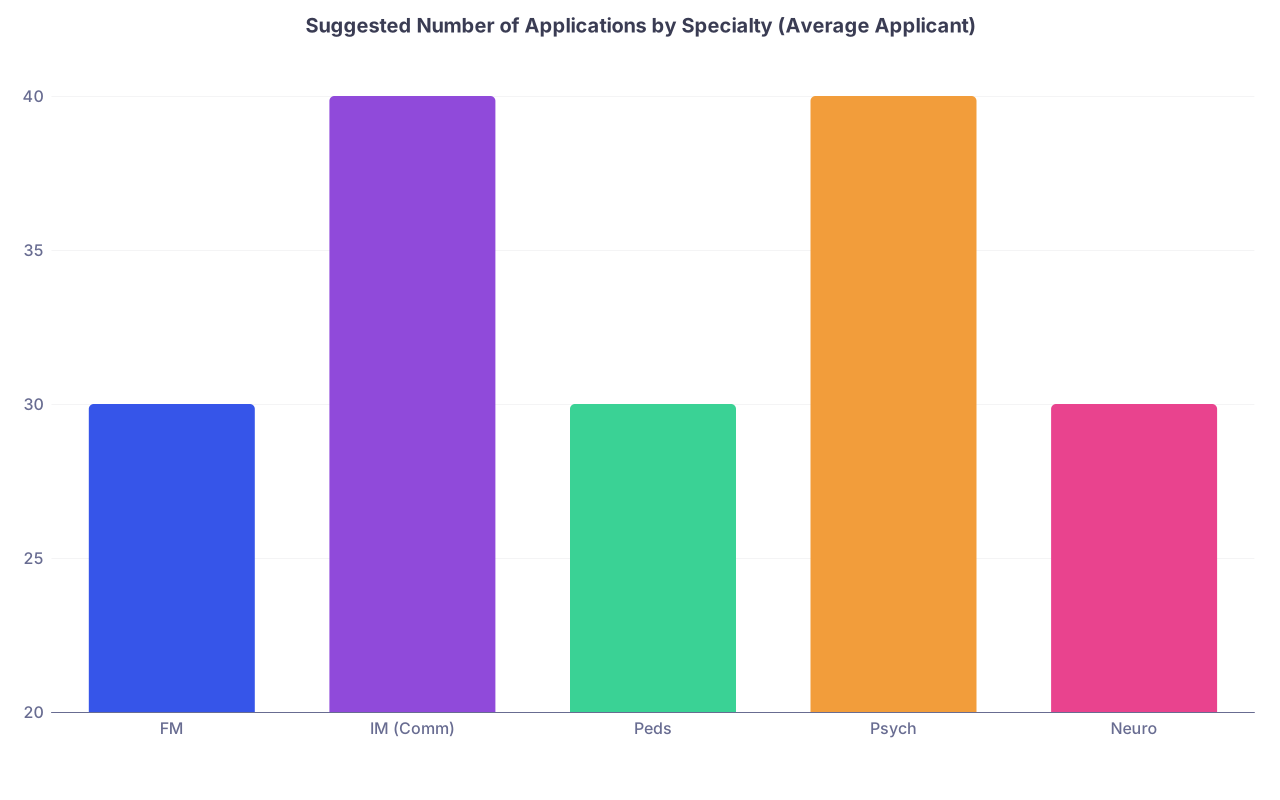
| Category | Value |
|---|---|
| FM | 30 |
| IM (Comm) | 40 |
| Peds | 30 |
| Psych | 40 |
| Neuro | 30 |
Adjust upward if:
- You are an IMG without strong USCE.
- You have multiple exam attempts.
- Your Step 2/CK score is clearly below recent match medians.
A. How to Build a Smart List
- Start with:
- Home program (if any).
- Programs where you rotated.
- Add:
- Community and mid-tier academic programs in regions where you have ties.
- Programs known to be IMG/DO friendly if that applies to you.
- Use:
- FREIDA
- Program websites
- Recent match lists from your school
If your dean’s office or advisor says: “For your profile, you should aim for at least X programs,” listen.
12. Interview Prep: Specialty-Specific, Not Generic (Month 5–6)
If you do the first 5 months correctly, you will get some interviews. Do not blow them with sloppy prep.
Common questions for low‑competition fields:
- Why this specialty?
- Why this program?
- Tell me about a challenging patient.
- How do you handle conflict on the team?
- Tell me about a time you made a mistake.
You need:
- One or two real stories for:
- Clinical challenge
- Communication problem
- Feedback and improvement
- Ethical tension
Practice with:
- A resident in your chosen field.
- A faculty advisor.
- Or record yourself on video and watch. Cringe at least once. Then refine.

| Step | Description |
|---|---|
| Step 1 | Receive Interview Invite |
| Step 2 | Research Program |
| Step 3 | Review Own Application |
| Step 4 | Prepare 6-8 Stories |
| Step 5 | Mock Interview |
| Step 6 | Refine Answers |
| Step 7 | Interview Day |
- Show you understand what their residents actually do.
- Reference something specific about the program: clinic structure, call schedule, resident clinic population, fellowship outcomes.
- Ask real questions you actually care about.
13. Example: 6-Month Turnaround Scenarios
Two quick composites I have seen work.
Case 1: Average USMD Aiming for Family Medicine
- Step 1: Pass
- Step 2: 226
- No research, average clerkship comments, likes outpatient care.
Six‑month plan:
- Month 1–2:
- Push CK up with NBME‑guided review → retake not needed, but use studying to strengthen knowledge.
- Start FM clinic elective + community health center volunteering 4 hrs/week.
- Month 2–4:
- FM sub‑I: crush it, secure 2 strong FM letters.
- QI project: no‑show reduction in clinic → poster at regional FM conference.
- Month 4–5:
- PS emphasizing continuity, underserved work.
- Another outpatient FM month if available.
- Month 6:
- Apply to ~35 FM programs, heavy in regions where they have family.
Outcome: Multiple interviews, matched at a solid community FM program with outpatient focus.
Case 2: IMG Aiming for Psychiatry with Mediocre Scores
- Step 1: Pass
- Step 2: 220
- No USCE, 3‑year gap doing non‑clinical work.
Six‑month plan:
- Month 1–3:
- Two back‑to‑back US psych electives (inpatient + CL psych).
- Begin small case report on a complex psych patient.
- Take OET/English requirements early.
- Month 3–4:
- Ask for letters from both electives.
- Continue case report → poster at hospital research day.
- Weekly volunteer at crisis hotline (once trained).
- Month 4–5:
- Craft PS around late entry into psych, highlight USCE and hotline experiences.
- Have mentor read PS specifically for risk of sounding apologetic or defensive.
- Month 6:
- Apply to 80+ psych programs, focus on IMG‑friendly list.
- Prepare strong, concise explanation of gap + clear evidence of current clinical readiness.
Outcome: Not a top‑tier match, but a real psych spot rather than a scramble.
14. Do Not Waste These 6 Months on This Nonsense
Common time‑sinks that do nothing for you:
- Joining five new “interest groups” and never actually doing anything meaningful in any of them.
- Starting a “big” research project that will not yield a poster or abstract before ERAS.
- Spending weeks tweaking font sizes and margins in your CV instead of improving content.
- Doom‑scrolling Student Doctor Network and Reddit to “see what others are doing.”
If an activity will not clearly:
- Improve your exam performance,
- Generate a strong letter,
- Give you credible specialty exposure,
- Or produce a tangible scholarly product in <4 months,
It is probably a luxury you cannot afford right now.
15. Quick Reality Checks Before You Hit Submit
Two months before ERAS, sit down and ask yourself:
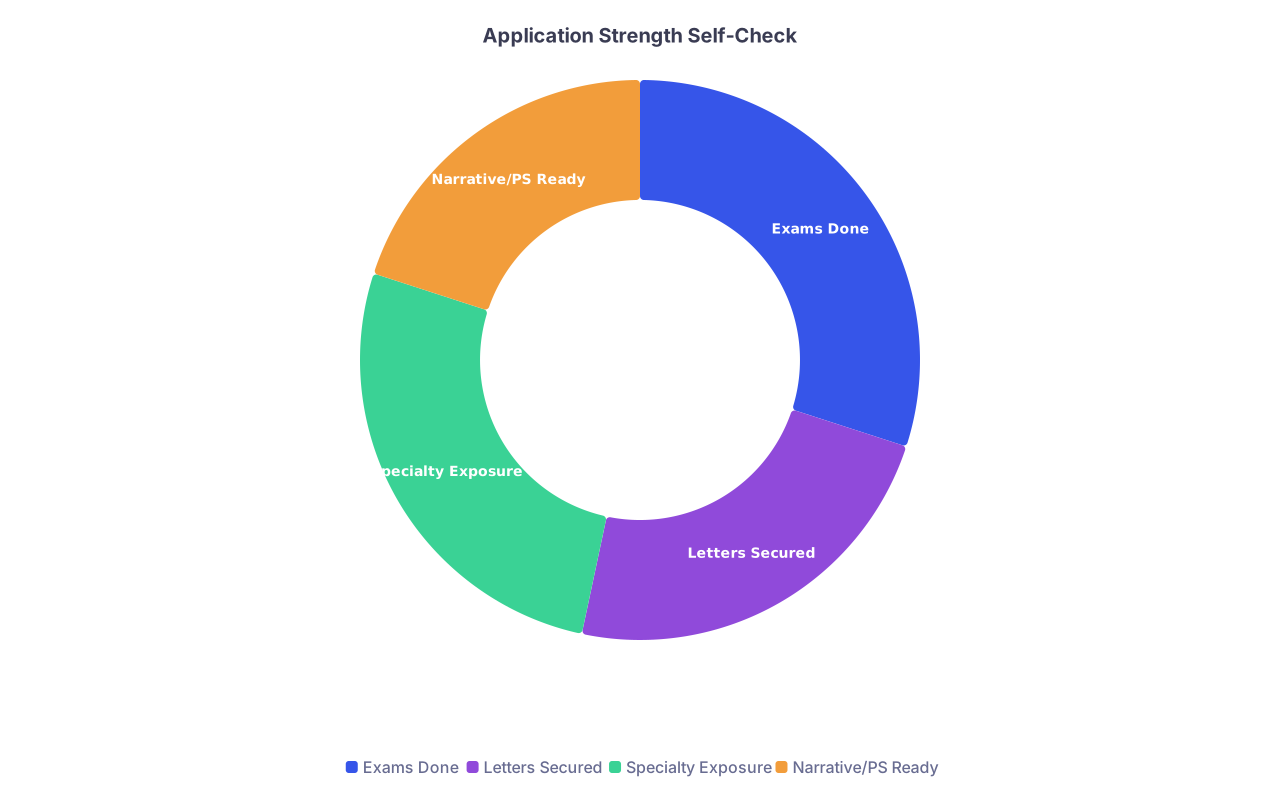
| Category | Value |
|---|---|
| Exams Done | 90 |
| Letters Secured | 70 |
| Specialty Exposure | 80 |
| Narrative/PS Ready | 60 |
If any of these are <70% “ready” in your gut:
- Exams: You have not taken CK or have an unexplained fail → prioritize fixing that or at least clearly addressing it.
- Letters: You have zero letters from your target specialty → urgently schedule a rotation or reach out to someone you worked with even briefly.
- Exposure: You have only a single, short elective in the field → try to add another or at least outpatient/inpatient mix.
- Narrative: You cannot summarize in 2 sentences why you and this specialty are a good fit → rework your PS and experiences descriptions.
You still have time to shore up at least one or two of these weak points.

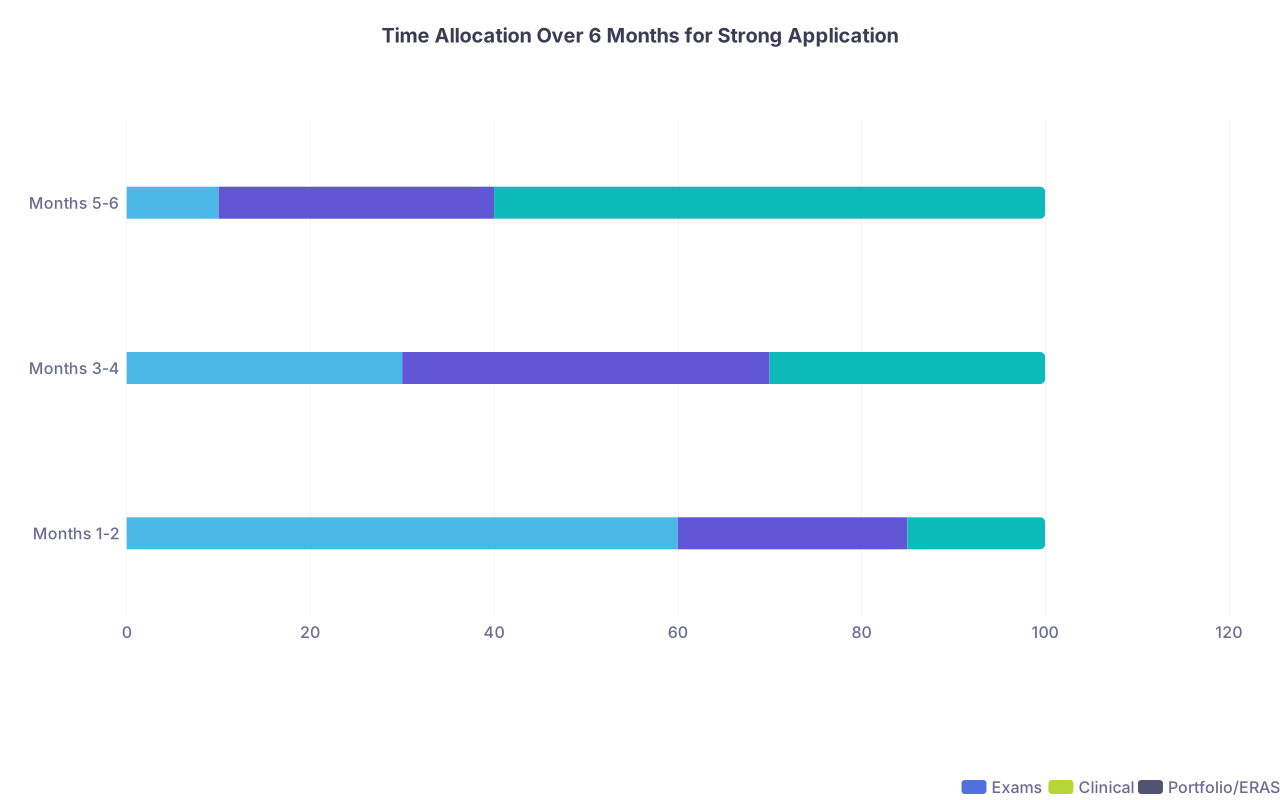
| Category | Exams | Clinical | Portfolio/ERAS |
|---|---|---|---|
| Months 1-2 | 60 | 25 | 15 |
| Months 3-4 | 30 | 40 | 30 |
| Months 5-6 | 10 | 30 | 60 |

Final Takeaways
- Low‑competition specialties are not automatic backups; you still need clean exams, real specialty exposure, and at least 2 strong letters.
- In 6 months, you can materially upgrade your application by focusing on three levers: Step 2/CK performance, high‑impact rotations with strong letters, and one or two fast‑cycle scholarly or QI projects that match your chosen field.
- Build a coherent story: one specialty, a clear narrative, and a program list that matches your actual profile—not your fantasy CV.