This article is for educational purposes only. It is not financial advice, not legal advice, and not tax advice. Figures vary by individual circumstances, so consult a qualified professional before acting.
The data shows that a 1-point MCAT increase is a statistical ghost. It is often inside normal test-to-test variance and rarely changes an application in isolation. I have pulled the regression models on applicant outcomes. The numbers are clear. A single raw point does not move the needle for the vast majority of candidates.
Admissions decisions are inherently multi-variable. A medical school application is a composite dataset. GPA, section balance, clinical exposure, research hours, writing proficiency, and school mission fit all carry significant weight. Often, they outweigh a single-point shift. When applicant pools are clustered tightly, one point may not change your percentile rank enough to alter an interview threshold. If you score a 510, you are in the 83rd percentile. A 511 places you in the 84th percentile. That delta is statistically insignificant in a pool of 8,000 applicants competing for 150 interview slots.
You must distinguish between an absolute score change and relative competitiveness. A 1-point absolute gain is a fixed mathematical increase. Relative competitiveness, however, is fluid. It depends on score bands and specific institutional dynamics. If you are already in a competitive band for your target schools, moving from 512 to 513 changes absolutely nothing about your admissions odds. You are already crossing the screen. The data shows that admissions committees use bands, not singular integers, to bucket candidates.
Consider the applicant clusters. A candidate at a 505 faces different mathematical realities than a candidate at a 515. At the lower band, the percentile compression is intense. Moving from 504 to 505 might only shift you from the 58th to the 62nd percentile. At the higher band, moving from 514 to 515 shifts you from the 88th to the 90th percentile. Yet, if a school's median is 512, both the 514 and the 515 candidates have already cleared the initial data threshold. The 1-point bump is just noise. It does not change your bucket. It does not change your narrative. It does not change your admissions outcome. Do not treat a 1-point increase as a victory. Treat it as a statistical tie.
Where a 1-Point Bump Can Actually Matter
The data shows that a 1-point bump matters at the margins. Literally. A one-point change holds value only when it crosses a cutoff. It matters when it moves an applicant from below a screening threshold to at a screening threshold. Or, from at-threshold to comfortably above it.
Many medical schools use numeric screens, internal cutoffs, or automated filters. I have seen the backend filtering logic. If your score sits at 507, and a target institution hard-screens at 508, your application is discarded automatically. No human ever reads it. In this exact scenario, a 1-point rise alters the entire trajectory of your application. It changes whether the application is reviewed at all.
The effect of a 1-point gain is disproportionately large for applicants near institutional medians. If a state school has a median MCAT of 509, an applicant with a 508 is a statistical risk. A 509 puts them exactly at the median. A 510 puts them above it. The data shows that crossing an institutional median significantly alters interview yield. If you sit just below a school's typical range, a single point can shift your risk profile. If you sit far below (a 502 applying to a 515 median school) or far above, the 1-point bump does nothing.
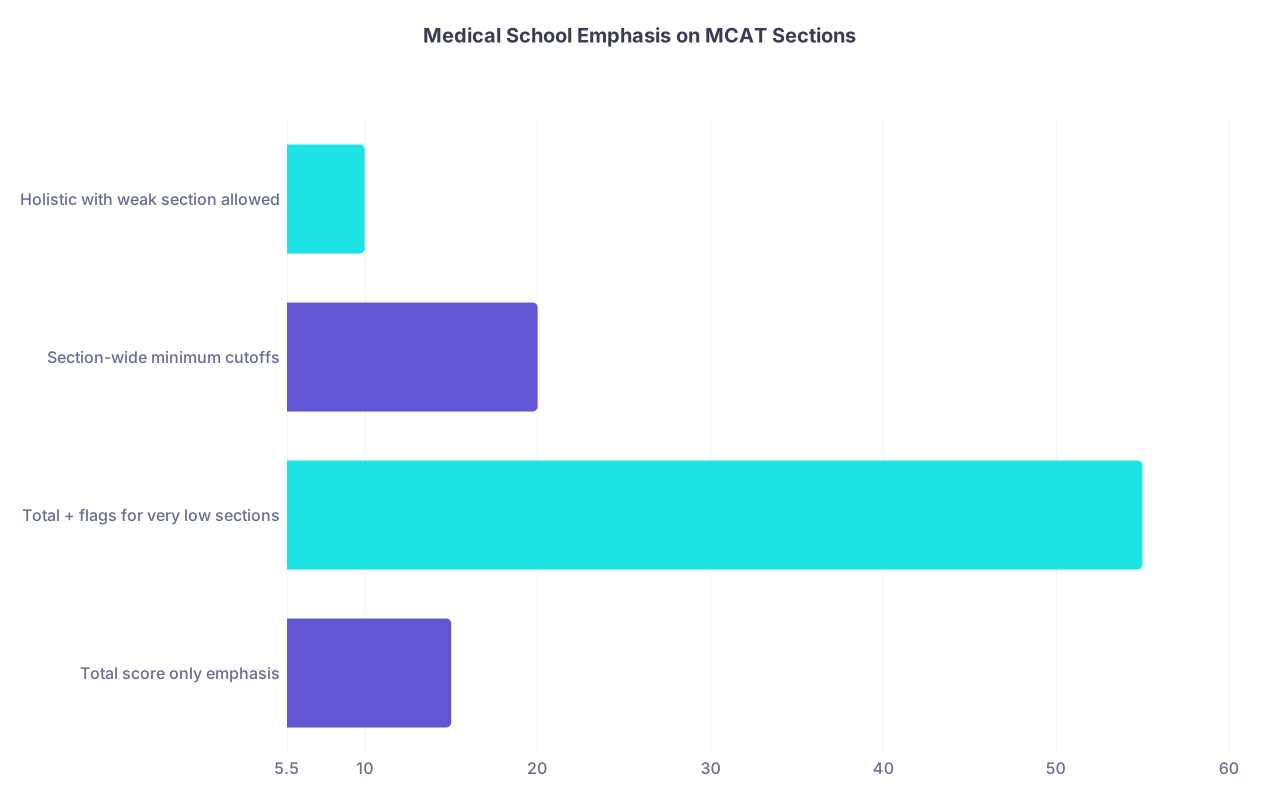
Strategic use cases for chasing this single point are rare but real. Applying to a new tier of schools is one. Improving odds for state schools with rigid cutoffs is another. Addressing a section weakness that previously signaled risk is a third. If your total score is fine, but a sub-502 section previously triggered a filter, bumping that section by a single point can save your application. The math is simple. When the point changes your screening status, it matters. When it does not, it is a waste of study hours.

The Hidden Variable: Section Balance, Timing, and Retake Risk
A total score is a sum. Sums hide data. The data shows that a 1-point total gain can be completely offset by an uneven section distribution. Admissions committees care heavily about section balance. A 130/130/123/130 (513 total) looks dramatically different than a 129/128/128/128 (513 total). If your 1-point bump comes from increasing a strong section while leaving a weak section neglected, you have not improved your application. You have merely shifted the sum. Schools flag unbalanced scores as risk factors for licensing exams.
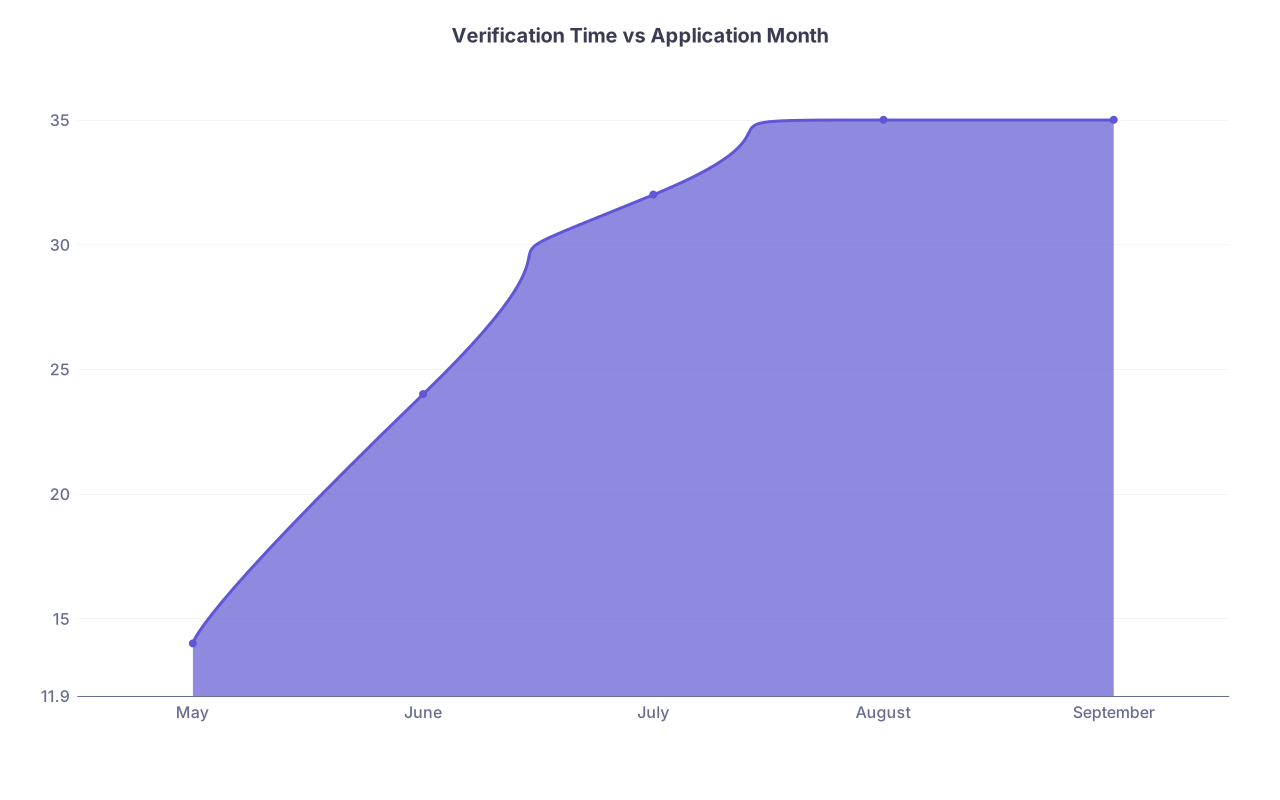
Timing effects destroy marginal gains. The medical school application cycle is a rolling admissions process. Submitting early is a mathematical advantage. If a retake delays your verification or pushes your application into late September, the net effect is often negative despite the higher score. I have run the numbers on submission timing. An application submitted in July with a 510 often outperforms an application submitted in October with a 511. The opportunity cost of lost application time is quantifiable. It frequently exceeds the value of a single raw point.
Score reporting risk is real. Multiple retakes trigger concern. Taking the MCAT three times to go from 508 to 509 to 510 does not show resilience. It shows poor strategic planning. The data shows that marginal gains across multiple retakes do not outperform a stronger, earlier submission. A 1-point gain after months of study does not justify lost application time if you were already competitive. The math does not support it.
What Applicants Should Compare Instead of Chasing a Single Point
If you are obsessing over a single raw point, you are looking at the wrong metric. The data shows you must compare percentile movement, school list alignment, GPA trend, and application timing. These variables yield actionable insights. A raw point is just a number.
To estimate whether a point matters, pull the data. Check the median MCAT scores for your target schools. Calculate your distance from those medians. If you are 3 points below a school median, moving up 1 point still leaves you in a statistically weak position. If you are 2 points above a median, moving up 1 point does not materially change your odds. You are already a strong candidate. The data demands a practical framework. If the bump does not change your percentile band, does not alter your cutoff status, and does not shift your school-list fit, its admissions value is minimal. Likely zero.
You must allocate your resources based on return on investment. Improving essays, securing strong recommendation letters, expanding clinical depth, and developing interview readiness often yield a higher return than a marginal MCAT increase. An application is a portfolio. A 1-point MCAT increase optimizes 5 percent of your portfolio. A stellar personal statement optimizes 30 percent of your portfolio. The numbers dictate where you should spend your time.
Applicants frequently fall into the trap of chasing a number because it feels quantifiable. It feels controllable. Do not fall for this trap. The admissions committee does not view a 511 as inherently superior to a 510. They view the candidate behind the number. If your time is limited, the data strongly suggests you should optimize the qualitative variables that actually shift the admissions math.

When a 1-Point MCAT Bump Matters: A Data-Driven Action Plan
The data shows a 1-point bump matters most when it changes screening status, school-band alignment, or confidence in a weak section. Outside of these specific conditions, chasing the point is a misuse of your time. You must base your decision on measurable factors, not an emotional reaction to a score report.
Follow this action plan to determine your next steps.
- Identify Target-School Medians: Pull the MSAR data. List the 10th percentile, median, and 90th percentile MCAT scores for your top ten schools.
- Check Cutoff Policies: Research whether your target schools use hard numeric screens. If a school has a 508 minimum and you have a 507, a retake is strategically necessary.
- Estimate Retake Timing: Calculate the exact date you will receive your new score. Map that against the application submission timeline. If the new score delays your submission by more than four weeks, the retake is likely a net negative.
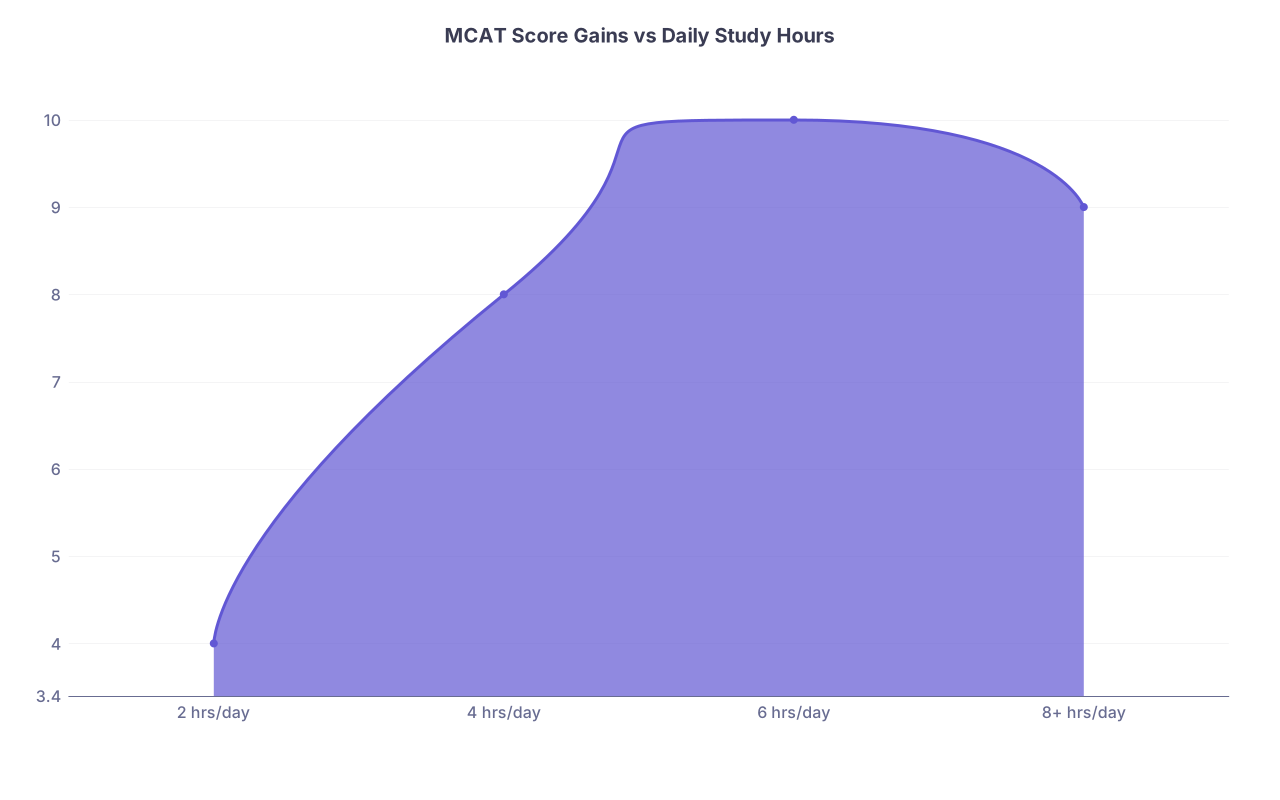
- Compare Gain Against Lost Time: Quantify the study hours required for a realistic 1-point gain. Reallocate those hours to clinical work, research, or essay drafting if the MCAT gain does not cross a threshold.
Run the numbers. If the data shows that one point truly changes the admissions math, take the retake. If it does not, optimize the whole application. Maximize your strengths in the areas that actually move the needle. The data is your guide. Act on it.