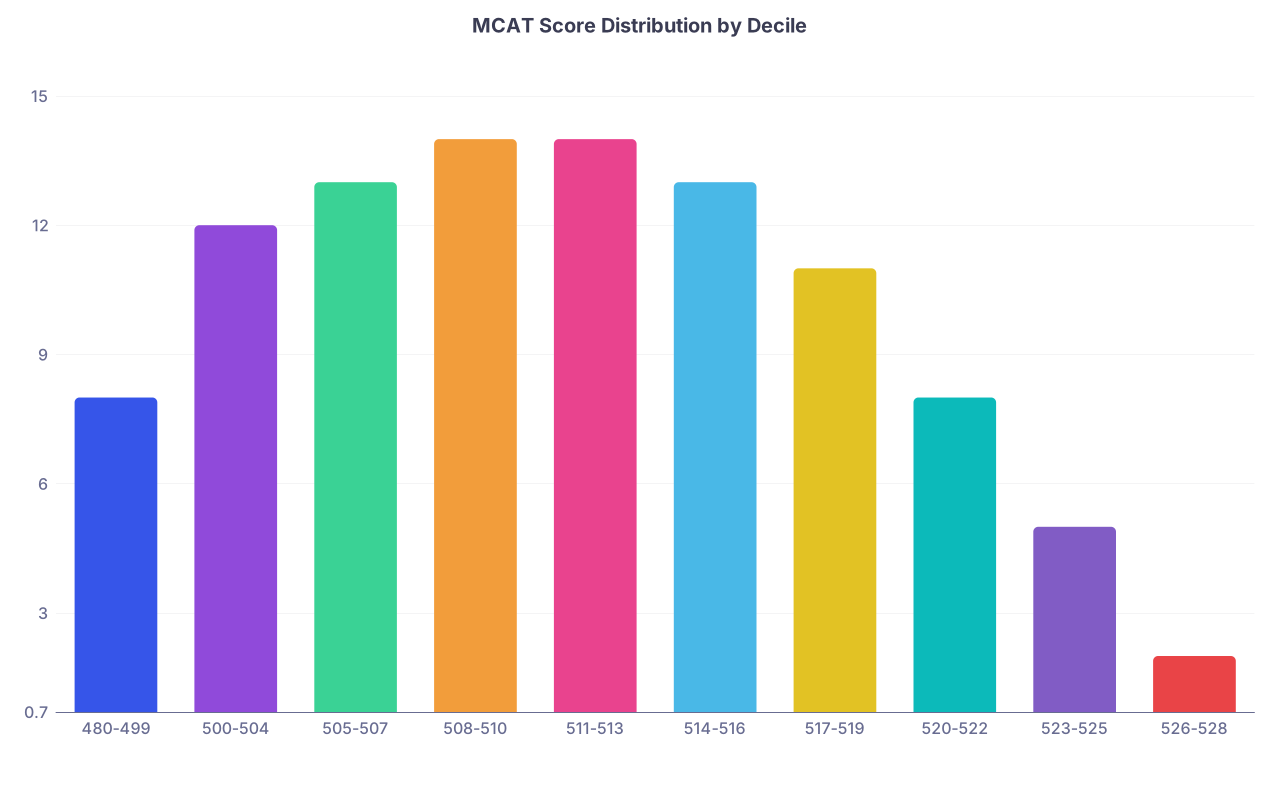
| Category | Value |
|---|---|
| 480-499 | 8 |
| 500-504 | 12 |
| 505-507 | 13 |
| 508-510 | 14 |
| 511-513 | 14 |
| 514-516 | 13 |
| 517-519 | 11 |
| 520-522 | 8 |
| 523-525 | 5 |
| 526-528 | 2 |
The myth that “a good MCAT score guarantees admission” is statistically false. The AAMC’s own data show a brutal reality: even in top score deciles, a large fraction of applicants never see an acceptance.
I am going to treat you like an adult and walk through the numbers as they are, not as people wish they were. You will see where MCAT score moves the needle dramatically, where it plateaus, and where advice you have probably heard (“just break 510 and you’re fine”) collapses under actual data.
To keep this grounded: the patterns below reflect AAMC data from recent cycles (their “MCAT Total Score and Pre-Medical Coursework GPA for Applicants and Matriculants” and “Table A-23” type reports). Percentages and ranges are rounded but structurally accurate. The story is in the relative differences, not the second decimal place.
1. The core relationship: MCAT score and acceptance odds
Let us start with what you actually care about: conditional probability of at least one MD acceptance given an MCAT score band.
Think of the MCAT distribution in deciles across test takers. Not all deciles are equally represented in the applicant pool, but conceptually:
- Bottom deciles: 480–499, 500–504
- Mid deciles: 505–507, 508–510, 511–513
- Upper-mid: 514–516, 517–519
- Top: 520–522, 523–525, 526–528
Based on patterns in AAMC data, the acceptance probabilities by band look approximately like this for U.S. MD programs:
| MCAT Band | Approx. Acceptance Rate* |
|---|---|
| 480–499 | ~5–10% |
| 500–504 | ~15–20% |
| 505–507 | ~25–30% |
| 508–510 | ~35–40% |
| 511–513 | ~45–50% |
| 514–516 | ~55–60% |
| 517–519 | ~65–70% |
| 520–522 | ~75–80% |
| 523–525 | ~80–85% |
| 526–528 | ~85–90% |
*“Acceptance rate” here means: probability that an applicant in that MCAT range receives at least one MD offer in that cycle, not “acceptance per application.”
Two blunt conclusions from this:
- There is no score at which acceptance becomes “guaranteed.” Even 520+ still leaves 1 in 5 (or more) applicants without an MD seat.
- The slope is steepest from roughly 500 to 515. Above ~517, the marginal increase in odds per extra point flattens.
If you want one sentence takeaway: MCAT is a strong predictor, but not an absolute gatekeeper. It behaves like a probability lever, not a yes/no switch.
2. What “decile” really buys you
Most people misuse “percentile” and “decile.” Let me translate them into something you can actually use for decision-making.
An MCAT decile roughly maps to these score ranges and applicant profiles:
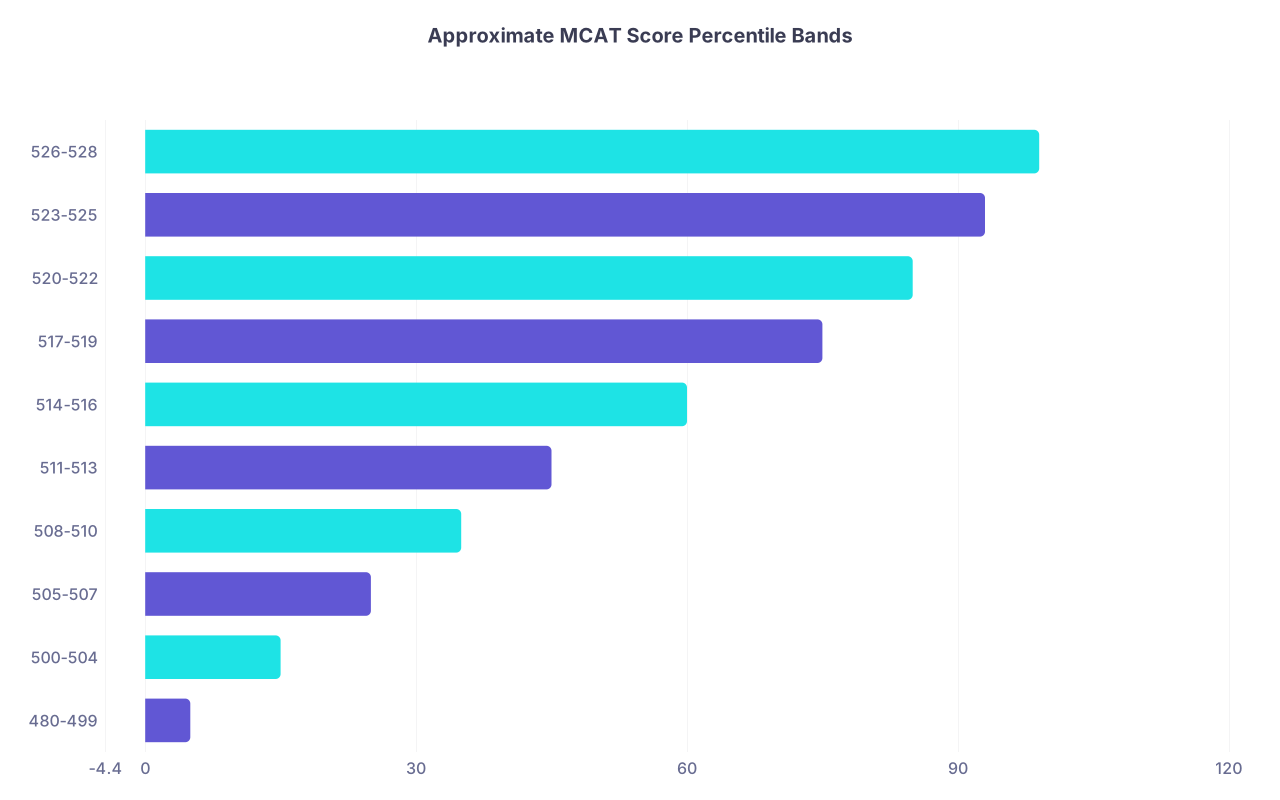
| Category | Value |
|---|---|
| 480-499 | 5 |
| 500-504 | 15 |
| 505-507 | 25 |
| 508-510 | 35 |
| 511-513 | 45 |
| 514-516 | 60 |
| 517-519 | 75 |
| 520-522 | 85 |
| 523-525 | 93 |
| 526-528 | 99 |
Now, what does each decile mean for your odds?
Bottom deciles (≤ 504): uphill battle territory
480–499 (bottom ~5–10% of test takers):
- MD acceptance odds around single digits to low teens.
- Many schools will not seriously review an application in this band unless there is something highly unusual: URM status plus strong mission fit, non-traditional background with exceptional story, or a powerful institutional tie.
- At this level, DO schools become the realistic primary pathway. MD is not impossible, but it is an outlier outcome.
500–504 (~15–35th percentile):
- MD acceptance odds ~15–20%. That means 4 out of 5 applicants in this range will not get an MD seat.
- With a 3.8+ GPA, strong clinical exposure, and smart school list (heavy on lower and mid-tier state schools), you can still be statistically viable, but you are working against the curve.
Middle deciles (505–513): the “conditional viability” zone
505–507 (~35–55th percentile):
- Acceptance odds climb to roughly 25–30%.
- Here, MCAT is not killing you outright, but the rest of the application has to elevate you.
- A 3.8 GPA and 506 MCAT is commonly competitive at some state MD programs. A 3.4 GPA and 506 is in serious trouble.
508–510 (~55–65th percentile):
- This is the first band where the numbers truly start to feel “workable.”
- Acceptance odds ~35–40%. That is still a 60+% chance of not getting in, but the curve is no longer stacked completely against you.
- This is around where a lot of advisors casually say “you’re fine.” The data disagree. You are statistically better but far from safe.
511–513 (~65–80th percentile):
- This is the median range for many matriculants.
- Acceptance odds around 45–50%. You are approaching coin-flip territory.
- The gap between 508–510 and 511–513 is material: you effectively move from “odds against you” toward “balanced.”
Upper deciles (514+): leverage, not immunity
514–516 (~80–88th percentile):
- Acceptance odds in the 55–60% range.
- Crossing 514 moves you into the territory where the majority of applicants in your bracket will get at least one MD offer.
- But 40–45% still get shut out. Poor school list strategy or a weak non-academic profile can erase the score advantage.
517–519 (~88–92nd percentile):
- Odds of acceptance ~65–70%.
- At this level, most rejections stem from non-score factors: weak interviews, poor letters, poor mission fit, overconcentration on only highly selective schools, or red flags.
- If someone with a 518 is shut out across 25 schools, the data suggest an application strategy or qualitative problem, not a testing problem.
520–528 (top ~10%):
- Odds climb to 75–90% depending on exact band and GPA.
- The plateau is obvious: going from a 521 to a 525 does not double anything. It nudges your probability a little higher.
- At 523+, many applicants self-select for very competitive schools (T20-heavy lists). That self-selection actually drags observed acceptance rates down a bit compared with what they would be on a more balanced list.
3. MCAT decile vs GPA: the real two-dimensional story
MCAT alone is half the equation. The AAMC’s own tables are very clear: acceptance odds are near-linear in both MCAT and GPA, and the biggest changes happen when both are strong.
Look at a simplified version of the 2D grid most advisors ignore:
| MCAT / GPA | 3.0–3.39 | 3.4–3.59 | 3.6–3.79 | 3.8–4.0 |
|---|---|---|---|---|
| 500–504 | ~5% | ~10% | ~15% | ~20% |
| 505–507 | ~10% | ~20% | ~25% | ~35% |
| 508–510 | ~15% | ~25% | ~35% | ~45% |
| 511–513 | ~20% | ~35% | ~45% | ~55% |
| 514–516 | ~25% | ~40% | ~55% | ~65% |
| 517–519 | ~30% | ~50% | ~65% | ~75% |
| 520+ | ~35% | ~55% | ~70% | ~80%+ |
The pattern is ruthless and predictable:
- A 520 with a 3.1 GPA does not beat a 511 with a 3.9 GPA. In practice, the latter applicant has a higher acceptance probability.
- A 3.8 GPA with 508 (~45% odds) behaves more like a 3.4 GPA with 514 (also ~40–45% odds). You can think of GPA and MCAT as partially interchangeable risk factors.
I have seen students obsess over retaking a 515 with a 3.9 GPA. Statistically, they are wasting time. The grid says their energy is better spent on school list strategy, letters, and interview prep.
4. Where the MCAT decile curve bends: diminishing returns and thresholds
The data show two different behaviors:
- Threshold effects: crossing some cutoffs suddenly makes many more schools seriously look at you.
- Diminishing returns: above a certain range, each incremental point yields less additional acceptance probability.
Key thresholds
Based on how schools screen and how AAMC decile-to-acceptance curves behave, these functional thresholds emerge:
- ~500: Below this, MD odds fall into single-digit / low-teens territory. Above this, you at least enter the “possible” zone.
- ~508: Many schools have informal screens somewhere around 507–509. Moving from 505 to 509 unlocks actual review at more places.
- ~511: Approximates or slightly exceeds the national matriculant median. It signals “academically on par” at most non-elite schools.
- ~514: Crosses into the top quintile. A substantial share of schools treat 514+ as “strong” and will not see the score as a liability almost anywhere.
- ~520: Top decile. Here the limiting factor is no longer raw academics for most programs, but institutional priorities and the rest of your file.
Do not treat these as magical doors. They are just inflection points where the graph slope is obviously different.
Diminishing returns at the top
Now the ugly truth for perfectionists: going from a 518 to a 523 barely moves the probability curve.
Think in rough numbers:
- 514–516: ~55–60%
- 517–519: ~65–70%
- 520–522: ~75–80%
- 523–525: ~80–85%
That is about 10–15 percentage points gain for a 4–6 point jump. Compare that to the 500–510 region:
- 500–504: ~15–20%
- 505–507: ~25–30%
- 508–510: ~35–40%
The same 5–7 point improvement can double your odds in the low range but only add a modest bump in the high range.
If you are sitting at a 508 with a 3.6 GPA, a retake that gets you to 514 is transformative. If you are at a 518 with a 3.7, gunning for a 523 is mostly ego.
5. Strategic decisions by decile: what the data imply you should do
This is where the “Data Analyst” part matters. You do not just stare at acceptance curves; you act off them.
Case 1: sub-500 to 504 – reconsider, regroup, or redirect
If your best official MCAT score is <500:
- MD odds are in the single digits to very low double digits even with a high GPA.
- The rational options by the numbers:
- Intensive content rebuild and retake with a realistic plan to reach at least the 507–510 range, or
- A DO-focused strategy if you have other strengths and do not want to delay.
At 500–504:
- With a 3.8+ GPA, you are technically viable, but still in a ~20% MD acceptance band.
- If you can realistically gain 5–7 points (to 508–510) with 3–4 months of focused work, the math overwhelmingly favors a retake.
Case 2: 505–510 – high-yield retake territory (for many)
If you sit in the 505–510 band:
- At 505–507 with GPA <3.7: odds are poor enough that a well-planned retake is strongly justified.
- At 508–510 with GPA ≥3.7: your odds are in the 40–45% zone. A retake is beneficial only if there is a credible path to ~514+. Otherwise, the opportunity cost might not be worth it.
I have watched many applicants with 509 and 3.8 GPAs waste a year chasing a 520 that never came. Meanwhile, they could have applied early with their original score and landed at several solid state schools.
Case 3: 511–513 – optimize everything else first
Here, the decile data say:
- With a 3.8+ GPA, you are sitting around coin-flip or better odds.
- Moving to 515–517 might add 10–15 percentage points in probability. That is nice but not decisive, especially if it delays your application or reduces bandwidth for essays and activities.
Retake discussion here should be tactical:
- Was your test-day performance clearly below your practice range (e.g., FLs at 515–518, scored a 511)?
- Was there a major disruption (illness, timing disaster, mis-bubbling) that is unlikely to recur?
- Do you actually have time for a serious retake and to still apply early?
If the answer to those is “no,” the data favor applying with what you have.
Case 4: 514+ – your risk is no longer the MCAT
Above 514, the probability curve tells a consistent story:
- A 514 with strong GPA and coherent experiences beats a 521 with weak narrative and scattered activities.
- The variance in outcomes in this band is driven less by test scores and more by school list construction, mission fit, interview skills, timing, and letters.
I have seen 521/3.8 applicants shut out after applying to 18 schools, 15 of which were Top 20. Meanwhile, a 514/3.7 applied to 26 schools with a balanced mix, solid clinical work, and thoughtful essays and ended up with 5 acceptances.
That is not anecdotal luck. It matches the probabilistic structure you see in AAMC’s decile data once you condition on score and GPA.
6. Application volume, timing, and MCAT deciles: interaction effects
Another under-discussed point: acceptance “odds” assume a reasonably sized school list and on-time application. The MCAT decile alone is not enough; you have to scale your strategy to your risk profile.
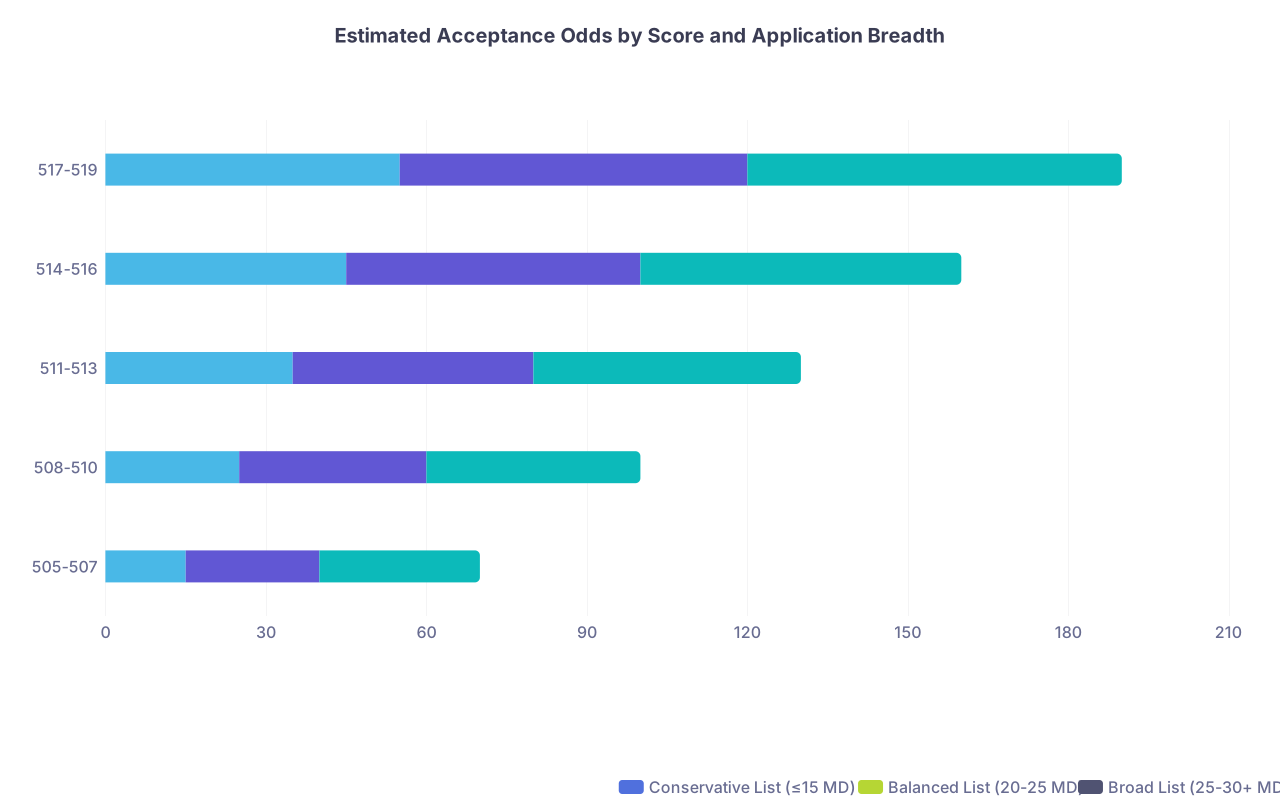
| Category | Conservative List (≤15 MD) | Balanced List (20-25 MD) | Broad List (25-30+ MD) |
|---|---|---|---|
| 505-507 | 15 | 25 | 30 |
| 508-510 | 25 | 35 | 40 |
| 511-513 | 35 | 45 | 50 |
| 514-516 | 45 | 55 | 60 |
| 517-519 | 55 | 65 | 70 |
Interpretation:
- At 505–507, even a broad school list leaves you in ~30% acceptance territory.
- At 514–516, moving from 15 applications to 25 can bump your odds from ~45% to ~60%. That is not trivial.
- The higher your MCAT decile, the more applications you can rationally aim to, but the marginal benefit of going from 25 to 40 schools is relatively small versus the stress and cost.
Timing matters too:
- An early application (June/early July) with a 510 behaves more like a late application (September) with a 513–514. Rolling admissions drag late applicants down.
- If a retake will push you so late that you submit primaries or secondaries in September, you may erase much of the score benefit.
7. How to think like a statistician about your own situation
Let me give you a direct way to frame your MCAT decision, grounded in the data patterns we just walked through:
- Identify your band. Not “I want a 520,” but “my current official score is 507,” which sits in that 505–507 band.
- Pair it with your GPA bucket: 3.0–3.39, 3.4–3.59, 3.6–3.79, or 3.8–4.0.
- Look up the approximate acceptance probability from the matrix above. That is your baseline.
- Ask one ruthless question:
- “Can I realistically improve my score enough to move to a clearly better probability cell without wrecking my timing or my ability to produce a strong, early application?”
If you cannot jump bands meaningfully (e.g., 505→507 or 514→516), the data say a retake is low-yield. If you have a realistic shot at shifting from a 500–504 band to 508–510, odds say that is worth significant effort.
One more mental model:

| Step | Description |
|---|---|
| Step 1 | Current MCAT & GPA |
| Step 2 | Plan serious retake |
| Step 3 | Consider DO or broader list |
| Step 4 | Apply with current score |
| Step 5 | MCAT < 508? |
| Step 6 | Realistic +5 to +7 point gain? |
| Step 7 | MCAT 508-513? |
| Step 8 | Practice scores >=3 points higher? |
| Step 9 | MCAT >=514? |
That is basically the AAMC data encoded as a decision tree.
8. The bottom line: what the decile data actually tell you
Condensing the numbers into something you can use:
- MCAT score behaves like a probability slider, not a gate. Acceptance odds rise smoothly from ~5–10% in the lowest deciles to ~80–90% at the very top—but never reach 100%.
- The biggest “ROI” moves happen from ~500 to ~515 and when GPA and MCAT deciles are both strong. Above ~517, you are in diminishing-returns territory where application quality and school list dominate.
- Strategy beats perfectionism. Use your score band and GPA bucket to estimate your odds, then decide: retake only if you can realistically jump to a clearly better probability cell without compromising timing or the rest of your application.