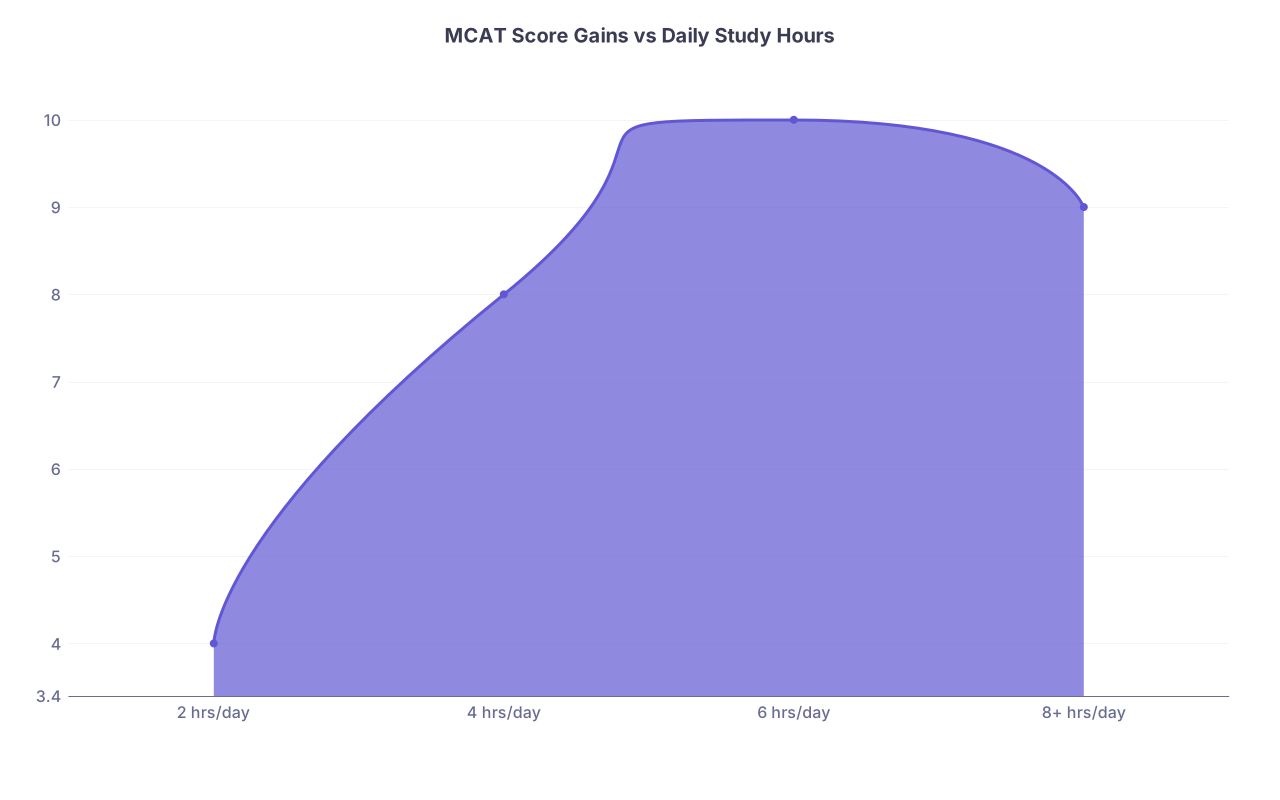
Most applicants are dead wrong about how admissions committees read multiple MCAT scores.
You think they see a number. They see a story. And they judge the story more than they judge the number.
I’ve sat in those rooms. I’ve watched people with a 512 get rejected and someone with a 505–506–509 sequence get a long discussion and, sometimes, an acceptance. Not because of “holistic review” buzzwords. Because of what that trend whispered about reliability, work ethic, and risk.
Let me walk you through how this actually plays out when your file is on the projector and your MCAT history is in front of people who make decisions fast and quietly.
The First Glance: What They Actually Look At
Here’s the ugly truth: at most schools, your MCAT gets skimmed before it ever gets read.
An assistant, admissions officer, or sometimes software will screen on a simplified version of you:
- Cumulative GPA (or science GPA)
- Highest MCAT total score
- Whether any section is below their quiet cutoff
That’s it.
No one is pausing at that first screen to appreciate the heroic jump from 495 to 507. They’re looking at a number and a grid. If you clear that bar, your file lives to see a more nuanced review. If you don’t, you die in the hallway.
Once you’re past that initial screen, that’s when trend matters. That’s when a faculty member, adcom, or subcommittee is sitting with your full score report and asking the key question:
“Can I trust this number?”
That’s what MCAT trend is really about. Trust.
How Different MCAT Trends Get Interpreted
Let me show you how these conversations actually sound behind closed doors.
1. Single Strong Score (e.g., 516 once, nothing else)
This is the cleanest profile. Quietly, it’s the most loved.
In committee, this gets a two-second glance: “516, good. Any low sections? No? Okay.”
No drama. No risk. No “but what about…?” conversations. You did it once, you did it well, end of story.
If your GPA is solid, this combination makes you feel “easy” to accept. And that matters more than you think.
2. Upward Trend: 500 → 506 → 511
This is the redemption arc that gets people’s attention.
Behind closed doors, someone will say something like:
“Started at 500, now at 511. Big improvement. Looks like they figured it out.”
They’ll then check:
- Did the sections rise together, or did one lag?
- Did the improvement line up with a change in behavior? (Dedicated study, fewer hours working, better resources)
- Does this match your transcript trend? (C+ science early, A- later? Great. The story hangs together.)
If your final score is in range for that school, a sharp upward trend can soften doubts about a lower GPA or a rocky early academic record. You look like someone who responds to feedback and can grind.
But there’s a ceiling. A 485 → 495 → 503 trend is improvement, yes. But if the school’s quiet cutoff is 507, that story still dies on the floor. Trend doesn’t override basic thresholds.
3. Flat Scores: 508 → 509 → 508
Committees are more suspicious of this than premed advisors admit.
The immediate thought is, “Why did they keep taking this?” followed closely by, “What was the plan here?”
If your first score was already perfectly acceptable for that school, repeated near-identical attempts can trigger three reactions:
Judgment about decision-making.
You used three test dates and hundreds of hours to move essentially nowhere. That suggests poor strategy.Question about score ceiling.
This looks like your realistic upper limit. Nobody’s saying it out loud, but they’re thinking it: “This might be it.”Concern about response to disappointment.
Did you just keep banging your head against the wall instead of stepping back and fixing your approach?
If you have a flat trend but a reasonably strong score (say 511-ish), you’re not doomed. But no one is impressed by “I took it three times and plateaued.” At best, it’s neutral. At worst, it irritates people.
4. Downward Trend: 513 → 509
This is the one applicants underestimate.
On paper, 509 is still fine at plenty of schools. But if we see 513 first, then a 509, the question becomes:
“Which score do we believe?”
And the quiet, often unspoken bias is: the later one. Because it’s closer to your current performance.
I’ve heard committee members say variations of:
- “Maybe first time was a bit of a fluke high.”
- “Did they burn out? That worries me.”
If the second sitting is significantly lower (say 513 → 504), that’s a red flag. Even if you keep the higher score officially, humans are sitting there staring at the drop.
You absolutely can explain a minor drop in a secondary or interview. Big drops are harder. And no, “I was very stressed” doesn’t usually help.
5. Wild Variability: 498 → 509 → 501
This pattern makes people nervous.
The concern isn’t intelligence. The concern is consistency under pressure. This is the internal monologue on the committee:
“On their best day, they’re fine. On their worst day, they’re in trouble. Which version am I getting in M2? On Step 2? On night float?”
If you have volatile scores like this, you must have a believable, specific explanation that shows the last one is the real you:
- First attempt rushed, took it while overcommitted.
- Second attempt after a clear plan, full prep, appropriate timing.
- Third attempt: concrete crisis (illness, family situation) that’s visible elsewhere in your life.
Even then, some schools won’t want the risk.
What Matters More Than You Think: Section Trends
Here’s something most premeds never hear: committees often care more about section consistency than you do.
Because they’re trying to answer, “Can this person handle our curriculum and, later, boards?”
Certain patterns grab attention fast:
Strong Overall, One Weak Section
Example: 513 total with a 123 in CARS.
At a lot of schools, anything below 124–125 in a section sets off a quiet alarm. Someone will say:
“Great total score, but that CARS is… rough. Are we going to be fighting this on Step 1/Step 2?”
If your GPA shows you crushed humanities, writing, and reading-heavy coursework, that might reassure them. If not, they start to worry about reading speed, test endurance, or language issues.
Now flip it.
Say you’re 508 with 130 CARS and weaker sciences. At research-heavy or analytically focused schools, that might still be fine if your transcript shows you can hack the science when you actually show up and work.
Section Trend Over Time
A 124 → 127 → 129 in Chem/Phys tells a very different story than a flat 124 → 124 → 124.
Repeatedly low sections suggest either:
- Weak foundation you never really fixed, or
- Poor insight into your own weaknesses
Neither sells well.
When faculty say “I care more about how they study than how smart they are,” this is what they’re looking at. Did you identify what was broken and actually fix it?
How Many MCAT Attempts Is “Too Many”?
Here’s the line almost no one will give you straight:
Once you hit three attempts, people start asking, “Why didn’t they get it done?”
They won’t say that on the website. They won’t tell your premed advisor. But in private:
- One attempt: clean, ideal.
- Two attempts: common, totally acceptable if there’s improvement.
- Three attempts: must show clear trajectory or clear context.
- Four or more: you’re in “this better be one hell of a story” territory.
Not all attempts are equal, though. What bothers committees is wasted attempts—sittings where it’s obvious you weren’t actually ready.
Scenarios that raise eyebrows:
- Taking it “just to see what it’s like” and scoring way below your practice range.
- Signing up too early because “my timeline” and then underperforming predictably.
- Retaking with essentially the same or lower score three times.
You look impulsive. You look like you didn’t listen to anyone. And remember: they’re deciding if they want you for four years.
How Different Schools Quietly Read Trends
This part’s never written down, but I’ve watched it play out.
| School Type | Trend Attitude |
|---|---|
| Top-20 Research | Harsh, high bar |
| Mid-tier Private | Nuanced, contextual |
| State MD | Cutoff-heavy |
| DO Schools | Trend-friendly |
| Mission-Driven | Story-sensitive |
At top-20 research schools, a 522 that drops to 515 can still get in. But you’re competing with people who scored 521 once and walked away. They’re not looking for “grit”. They’re looking for outliers who nailed it on try one or two.
At mid-tier privates, a 500 → 509 trend with a strong upward college GPA can absolutely get attention. These schools are more likely to say, “They grew. They figured it out,” especially if your story matches your stats.
State MD schools often rely more heavily on MCAT/GPA filters and in-state preference. If your final score clears their internal bar, your trend matters less than your residency status and whether you’re close to their mission (rural, primary care, etc.).
DO schools tend to be more forgiving on multiple attempts and upward trends, especially if you bring strong clinical exposure and maturity. A 495 → 502 → 506 might be viewed as “someone who fought their way up” rather than “someone who struggled.”
Mission-driven schools (rural-focused, urban underserved, certain Jesuit institutions) will stretch more for a strong upward trend with heavy life responsibilities, work, and real-world experience. They still care about the final number, but they’re more willing to say, “The trend plus the story is enough.”
But there’s one constant across all of them: no one loves unexplained chaos.
Strategy: How to Design a Trend That Actually Helps You
Let me be blunt: your goal is not “I’ll keep retaking until I hit my dream score.” That is how you end up with a messy, suspicious spread.
Your goal is: “I will take the MCAT as few times as possible, with a clear plan, and if I retake, I’ll make it obvious why it worked.”
Here’s how that plays out.
1. Do Not Sit for a “Practice” Official MCAT
They see every attempt. There’s no “throwaway” test.
If you’re scoring 495–500 on FLs and your target is 510+, you’re not “seeing where you are.” You’re logging a low score that will confuse your narrative later.
Committees don’t care that your Kaplan rep said “the first one is just to get used to the test.” They care that you lacked judgment.
2. Only Retake When Three Things Are True
You should only be sitting again when:
- Your practice scores (official-style FLs, not one weird Qbank exam) are consistently above your previous official score by 3–5+ points.
- You’ve changed your approach in a concrete way: new schedule, new resources, targeted review—not just “more of the same but harder.”
- You have the bandwidth to treat the retake as your top academic priority for that window.
If those aren’t true, a retake is more likely to flatten or damage your trend than rescue it.
3. Know When to Walk Away
If your first score is slightly below what you want but solid for a wide band of schools, you need to make an adult call.
Say you get a 509 when you were dreaming of 514+. Your GPA is 3.7, your experiences are decent, and you’re not locked on top-15 only. Taking it again and getting 509–511 doesn’t change your life; it just eats 3–4 months and opens the door to a lower score.
I’ve watched committees say, “I wish this person had just trusted the 510 and applied, instead of making us wonder why they kept retaking.”
How to Explain Your Trend Without Sounding Like Excuses
If you have multiple scores, someone will eventually look you in the eye—on a secondary, or in an interview—and silently ask: “So what happened?”
You have two jobs:
- Make the pattern make sense.
- End on control and growth, not victimhood.
Bad explanation:
“I had a lot of stress and anxiety and just didn’t do well, so I took it again.”
Better structure:
- Briefly name what went wrong (“I took it during a full course load and a 30-hour work week; my practice scores never stabilized.”)
- Name what you changed (“For the retake, I cut work hours, structured a 12-week content review, and switched to official AAMC-based practice.”)
- Point to the result (“My practice tests rose from 500 to 508–510 range, and my final score reflected that improvement.”)
You’re not trying to get sympathy. You’re showing that you can analyze a failure, fix your process, and execute.
That’s what they’re hiring you for, by the way.
A Quick Reality Check on Score vs. Trend
Let me give you the hierarchy that actually runs the show when we’re scanning your MCAT:
- Does the highest score meet or reasonably approach this school’s true range?
- Are any sections dangerously low relative to our curriculum?
- Does the trend make us more confident or less confident in that score?
- Does the story in the rest of the file line up with what the MCAT is telling us?
If you’re sitting here obsessing over whether a 505 → 508 is “enough of an upward trend” while applying to schools where the median is 515, you’re fighting the wrong battle. The issue isn’t your trend. It’s your target list.
And if you’re 516 with one solid sitting but you’re agonizing over not having a sexy “growth story,” stop. They like clean profiles more than inspirational arcs.
Visualizing How Committees React to Trends
Here’s roughly how “comfort level” behaves as trends change, assuming final scores are within a school’s general range:
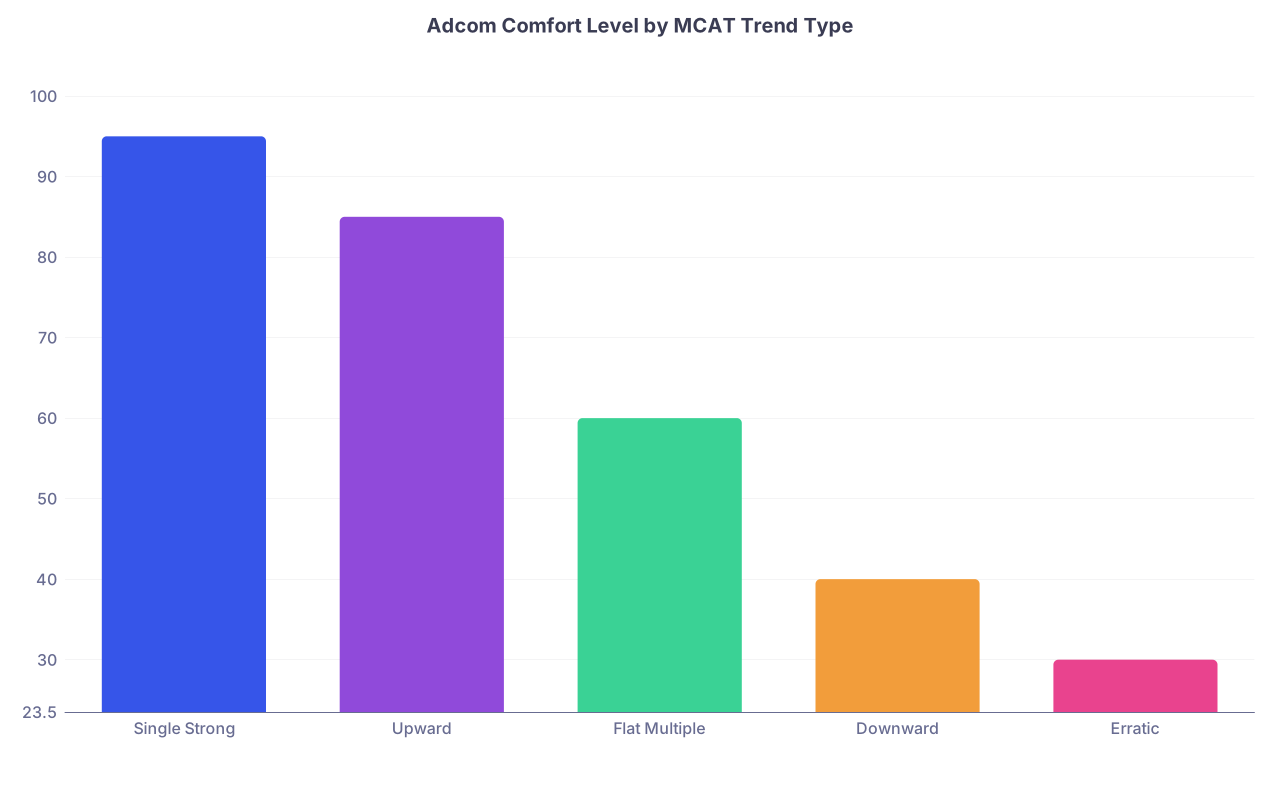
| Category | Value |
|---|---|
| Single Strong | 95 |
| Upward | 85 |
| Flat Multiple | 60 |
| Downward | 40 |
| Erratic | 30 |
Not scientific. But emotionally accurate.
How MCAT Trend Interacts With GPA Trend
MCAT trend doesn’t live in isolation. People always cross-check it with your transcript.
There are a few patterns that make committees nod:
- Rocky early GPA, strong upward MCAT trend: “They grew up. They learned how to study.”
- Weak but upward GPA, upward MCAT: “Trajectory is good. Late-bloomer profile.”
- Declining GPA and declining MCAT: “Burnout? Life chaos? Reliability problem.”
- High GPA, one decent MCAT then a random bad retake: “Why did they touch it again?”
If your GPA story is weak (like 3.1–3.3 with no clear upward arc), then yes, your MCAT trend matters more. It’s sometimes your only academic redemption. But you can’t expect miracles. A 3.2 GPA with 498 → 507 doesn’t suddenly become a lock for top-tier MD. It becomes “maybe viable” for a curated list of schools.
Timeline: Planning MCAT Attempts Without Trashing Your Trend
Here’s how a rational, committee-friendly plan often looks for most traditional applicants:
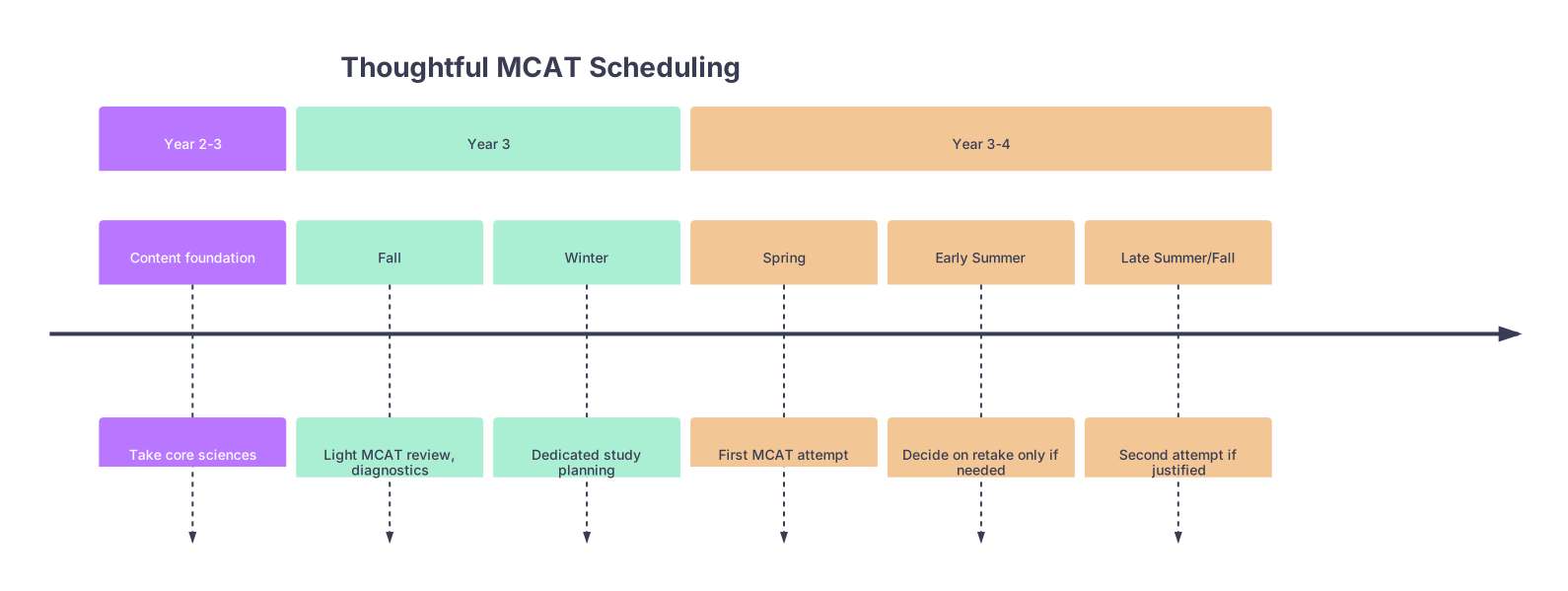
| Period | Event |
|---|---|
| Year 2-3 - Content foundation | Take core sciences |
| Year 3 - Fall | Light MCAT review, diagnostics |
| Year 3 - Winter | Dedicated study planning |
| Year 3-4 - Spring | First MCAT attempt |
| Year 3-4 - Early Summer | Decide on retake only if needed |
| Year 3-4 - Late Summer/Fall | Second attempt if justified |
Notice what’s missing? “Third attempt shoved between rotations and life chaos because I panicked.”
Your trend is built long before you ever click “Register.”
When a Bad Trend Truly Hurts You (And When It Doesn’t)
Let’s be clear about who actually gets burned by MCAT trends:
- People who test prematurely “just to see,” then have to explain a 490 that didn’t need to exist.
- People who retake impulsively without meaningful improvement in preparation.
- People whose second or third attempts are lower with no coherent reason.
Who survives, even with less-than-perfect lines?
- The person who took it twice, improved clearly the second time, then stopped.
- The person with one modest but acceptable score and a strong rest-of-file that matches their performance.
- The nontraditional applicant with a heavy life load, an upward MCAT trend, and a believable story about how their circumstances changed.
In other words: it’s not perfection they want. It’s coherence.
Inline Visual: How Many Attempts Start Raising Questions
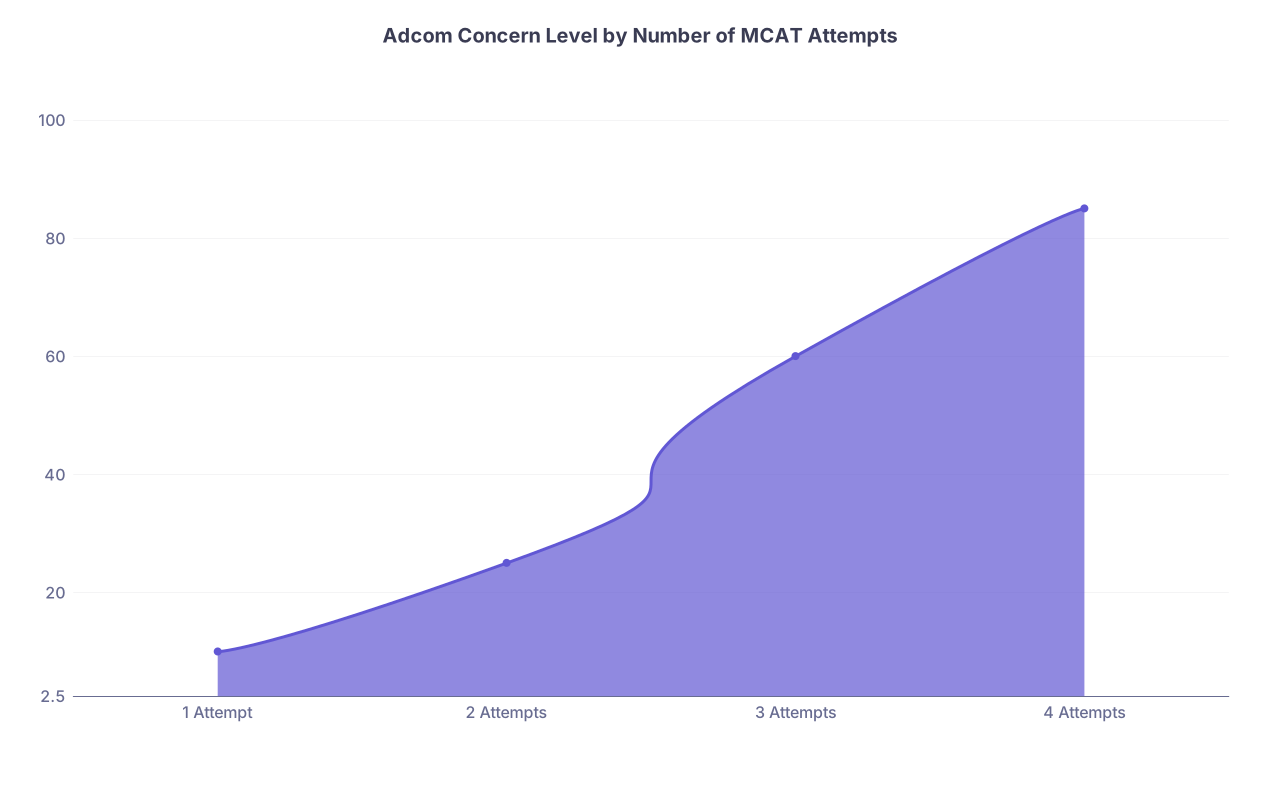
| Category | Value |
|---|---|
| 1 Attempt | 10 |
| 2 Attempts | 25 |
| 3 Attempts | 60 |
| 4 Attempts | 85 |
You can recover from 2 or even 3. Four is where you’re relying heavily on the mercy and mission-focus of specific schools.
The Bottom Line: How Adcoms Actually Read Your Trend
When that score report is on the screen, nobody is admiring how many times you sat for the exam. They’re doing something much simpler and more ruthless:
- They look at the highest score and decide if it meets their bar.
- They scan for ugly section outliers.
- They glance at the pattern and ask: “Does this make me trust or doubt that number?”
Your job is to give them as few reasons as possible to doubt.



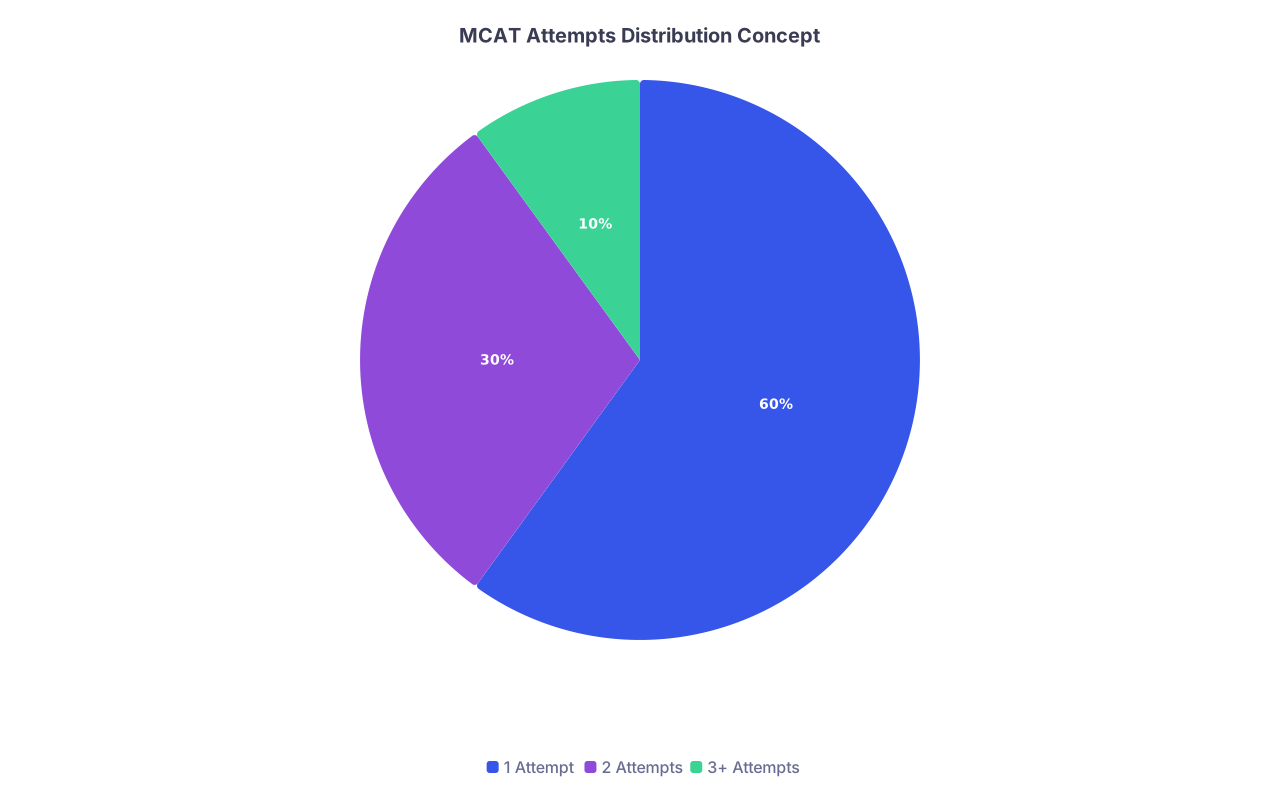
| Category | Value |
|---|---|
| 1 Attempt | 60 |
| 2 Attempts | 30 |
| 3+ Attempts | 10 |