
The blunt truth: the MCAT has a soft deadline and a hard deadline. Most students only pay attention to the hard one—and that’s how they end up sabotaging a whole application cycle.
You’re not really asking “When is it too late to schedule my MCAT?”
You’re asking: “What’s the latest I can take it without wrecking my chances this year?”
Let’s answer that clearly.
The Short Answer: Latest You Can Take the MCAT Per Cycle
If you want to apply in this cycle:
- Ideal latest MCAT date: Late May to mid‑June
- Borderline latest date: Late June to early July
- Functionally too late for this cycle: Mid‑July and later
Why?
Because schools don’t see your score the day you test. Scores are released about 30–35 days after your test date. So your “real” MCAT date is roughly a month after the actual exam, from the application’s point of view.
Here’s how that translates in a typical AMCAS cycle:
| MCAT Test Date | Score Release | Application Impact |
|---|---|---|
| Late April | Late May | Excellent timing |
| Late May | Late June | Still strong |
| Late June | Late July | Okay, mildly late |
| Early July | Early Aug | Late, but possible |
| Late July+ | Late Aug+ | Functionally too late for most applicants |
If you’re targeting a U.S. MD cycle starting:
- June: Primaries submit
- July–Sept: Secondaries + many interview invites start
You want your MCAT in the system before you become “late” in the screening pile.
So, if you’re asking:
- “Is an April–May MCAT okay?” → Yes. That’s normal-to-ideal.
- “Is a late June MCAT okay?” → Usually fine, just not early.
- “Is a July MCAT okay?” → It’s late. Can still work, but there are caveats.
- “Is an August MCAT okay if I’m applying this cycle?” → For most MD applicants, that’s too late to be competitive unless your app is otherwise stellar and you’re okay with risk.
How Application Timing Really Works (And Where MCAT Fits)
Most people underestimate how brutal rolling admissions actually is.
Here’s the rough timeline for AMCAS (MD):
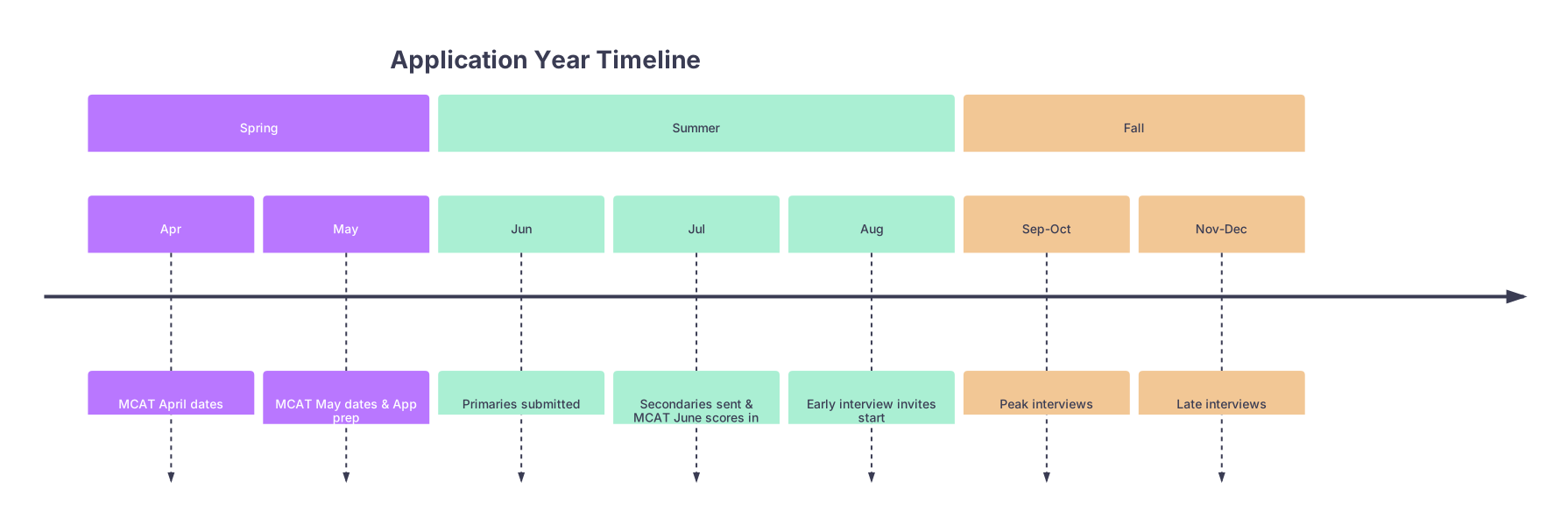
| Period | Event |
|---|---|
| Spring - Apr | MCAT April dates |
| Spring - May | MCAT May dates & App prep |
| Summer - Jun | Primaries submitted |
| Summer - Jul | Secondaries sent & MCAT June scores in |
| Summer - Aug | Early interview invites start |
| Fall - Sep-Oct | Peak interviews |
| Fall - Nov-Dec | Late interviews |
What this means in practice:
- If you test by late May → Scores in by late June. You submit in June/early July with a complete app. You're in the early chunk of the pile. Strong.
- If you test in late June → Scores in late July. Primary can be submitted earlier, but many schools won’t move you forward until they see the score. You’re mid‑cycle. Still okay.
- If you test in July → Scores hit in August. At many schools, the first wave of invites has already gone out. You’re late, especially for competitive MD programs.
- If you’re testing August or later → Your score comes back when a lot of interview slots are already spoken for. You’re now playing from behind.
DO schools and some state MD schools may be a little more forgiving, but you’re still later than ideal.
Here’s a rough sense of timing advantage:
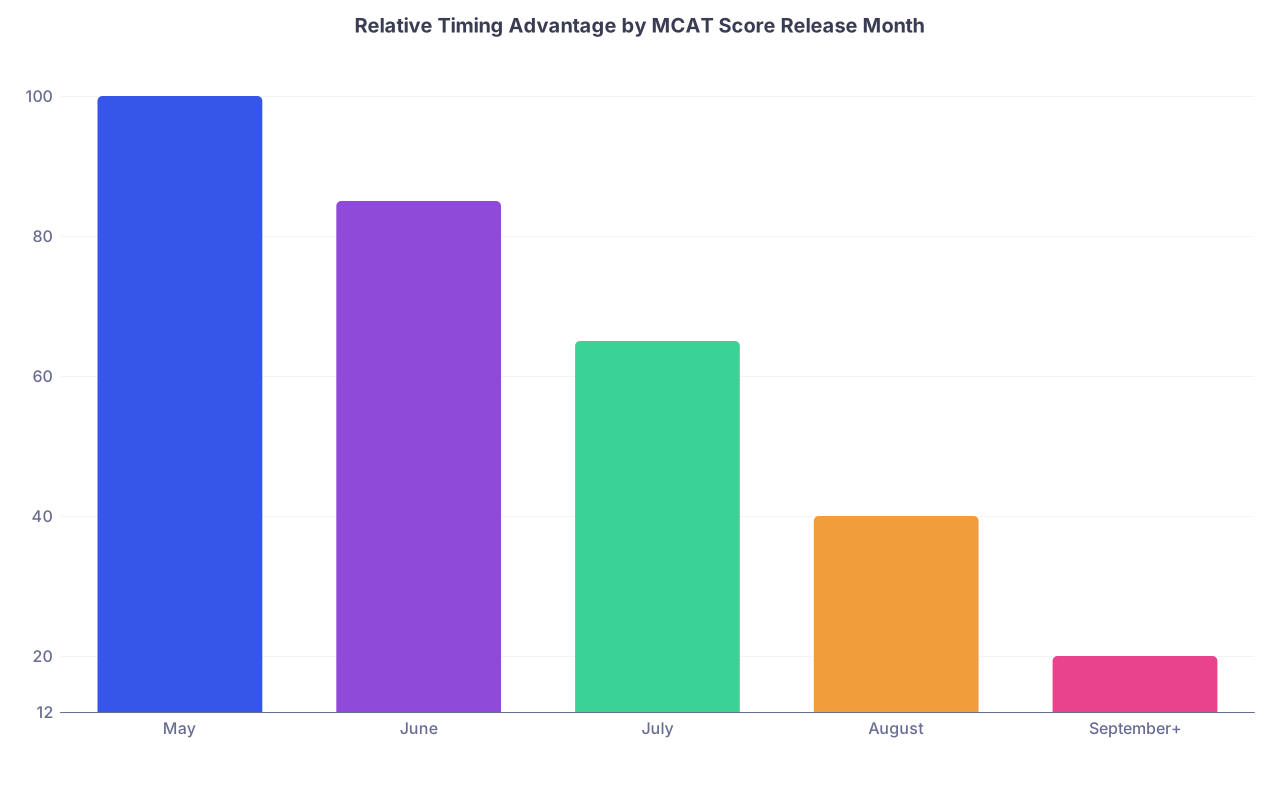
| Category | Value |
|---|---|
| May | 100 |
| June | 85 |
| July | 65 |
| August | 40 |
| September+ | 20 |
100 doesn’t mean “100% chance of success.” It means: relative to yourself, May is your best shot in that cycle. Once you drift into August+, you’re working against the calendar as well as the competition.
When It’s Actually “Too Late” vs Just “Not Ideal”
Let’s separate this into three scenarios:
1. Too Late for This Cycle, Still OK for Next Cycle
It’s effectively too late for this cycle when:
- Your MCAT date is mid‑July or later, and
- You don’t already have:
- A polished personal statement
- Activities section completed
- School list ready
- Transcripts and letters in process
If you’re scheduling in August or September and expecting to apply this same year to start school the following fall, you’re planning a weak, late application.
Often the smarter play:
- Take the MCAT in late summer/fall
- Use the rest of the year to upgrade your application (clinical, volunteering, letters, personal statement)
- Apply early next cycle with a great score in hand
This is especially true if:
- Your GPA is average or below average
- You’re aiming for competitive MD programs
- You might need a retake
You don’t want to be the person scrambling with a 506 in September deciding whether to “just send it” and hope.
2. Late but Still Reasonable (High-Risk, High-Reward Move)
“Late but maybe okay” for this cycle usually means:
- Testing: late June – early July
- Score release: late July – early August
- You already:
- Have your primary app ready to submit in June
- Pre‑written secondary essays (at least for your top 10–15 schools)
- Strong GPA, strong activities
This can work fine, especially if:
- You’re not applying to only super‑high‑stat schools
- You’re applying broadly (state MD, DO, and maybe some mid‑tier privates)
But I’ve seen this backfire on people who:
- Take the MCAT July 15
- Score drops below practice range
- Results drop Aug 15
- Panic, rewrite their whole school list
- Submit secondaries late August/September
That’s how a “just a little late” plan morphs into “functionally a reapplicant next year” territory.
3. Not Too Late for You If You’re Not Applying This Year
If you’re more than a year away from applying (e.g., you’re a sophomore or early junior), then “too late in the cycle” basically doesn’t matter yet.
In that case, your rules are simpler:
- Don’t take the MCAT until:
- You’ve finished the core prereqs (gen chem, orgo, physics, biochem, bio)
- You can consistently hit your target range on full-lengths
- Don’t rush into a February–March test just to “get it over with” if your prep isn’t ready
You want the MCAT date to sync with your readiness, not just the calendar.
How to Decide: Test Now, Delay Within the Cycle, or Push to Next Year
Here’s the decision framework I’d actually use with a student in front of me.
First question:
Are you applying in this upcoming cycle or not?
If no → Optimal MCAT window is:
- January–September of the year before you apply
- Take it when:
- Content is learned
- You have 6–10 solid weeks of focused prep
- Your last 3–4 practice full‑lengths are in or slightly above target range
If yes, you want to start from the score release date and work backward.
Ask yourself:
Do I need the MCAT score before choosing schools?
- If your GPA is borderline, yes. You can’t build a sane school list blind.
- That argues for an April–May (maybe June) MCAT.
Am I willing to risk reapplying if this cycle goes poorly?
- If no, don’t play timing games. Take it earlier or push to next year.
Are my practice scores already close to my target?
- If you’re 10+ points below your goal 4–6 weeks out, taking a July or August test to “just see how it goes” is a terrible plan if you’re applying that year.
- You’ll burn your first impression with med schools.
Here’s a simplified way to look at it:
| Situation | Latest Sensible MCAT For This Cycle |
|---|---|
| Strong GPA, strong prep | Late June–early July |
| Average GPA, applying MD broadly | Late June |
| Lower GPA, need very strong MCAT | May at latest |
| Considering DO and MD | Late June–July |
| Might need a retake | May–early June |
The Retake Trap: Planning Backward
Everyone thinks they won’t need a retake. A lot of them are wrong.
If there’s a real chance you might retake (based on diagnostics and practice tests), you should plan MCAT timing like this:
- First attempt: no later than May–early June
- So that:
- You get your score back by June–July
- You still have time to either:
- Apply that cycle with a score you’re happy with, or
- Regroup, prep again, and retake in late summer/fall for next cycle
What you don’t want:
- First attempt: late July
- Score back: late August
- Result: 505 when you needed 512
- Now:
- Too late for a meaningful retake for this cycle
- And you’ve shown med schools a weak score as your “first look”
Planning only for the fantasy that your first score will be great is how you corner yourself into bad timing decisions.
Special Cases: DO Schools, TMDSAS, and Osteopathic Flex
Not all systems are equally punishing with timing.
DO schools (AACOMAS)
They’re generally more flexible with later MCATs than many MD schools. A July score can absolutely still work. August can also be viable but is getting later; you want the rest of your app strong and in early.Texas schools (TMDSAS)
Still rolling. Still favor earlier. Testing by June is safer. July is pushing it.Reapplicants
If you’re cleaning up a previous cycle and reapplying, and your GPA is fixed, then:- A late spring/early summer MCAT retake is fine
- But a late summer retake is basically planning for the following cycle, not this one
Visual: Calendar Reality Check
Here’s what a reasonable testing vs. application pattern looks like for someone applying in June:

| Step | Description |
|---|---|
| Step 1 | Dec-Feb: Study content |
| Step 2 | Mar-Apr: Full lengths & review |
| Step 3 | Schedule April-May MCAT |
| Step 4 | Extend prep to May-Jun |
| Step 5 | Score in May-Jun |
| Step 6 | Schedule June MCAT |
| Step 7 | Submit primary in June |
| Step 8 | Score late July |
| Step 9 | Delay to next cycle and plan retake |
| Step 10 | Practice scores near target? |
| Step 11 | Score acceptable? |
If your current plan doesn’t look anything like that—if it has you taking a first attempt in July with no exit plan—fix it now.
Common Mistakes People Make About “Too Late”
I’ve seen the same bad logic derail people over and over:
“I’ll just take it in August and rush my app.”
Translation: “I’ll submit a late application with a rushed score and hope the adcoms ignore both those facts.” They won’t.“If it’s late, I’ll just apply to more schools.”
More applications doesn’t magically fix weak timing, especially at MD programs that have front‑loaded interview slots.“I’ll see how this cycle goes; it’s just practice.”
Schools absolutely keep track of reapplicants. A messy “practice” cycle can haunt you.“My friend took it in August and got in.”
For every one friend who pulled that off, there are five silent people on SDN who didn’t. Survivorship bias is a thing.
Practical Rules of Thumb
If you want a simple set of rules without all the nuance:
- If you’re applying this cycle, try to have your MCAT score in by late June–July 1.
- July MCAT = only if:
- You’re very confident in your prep
- You already have the rest of your app basically done
- You accept that you’re applying late
- If you’re looking at August or later and insisting on applying that same year to MD programs, you’re basically choosing a weaker overall hand. For most people, that’s strategically dumb.
- If you’re more than a year out from applying, “too late in the cycle” isn’t your problem yet. “Too early relative to your readiness” might be.
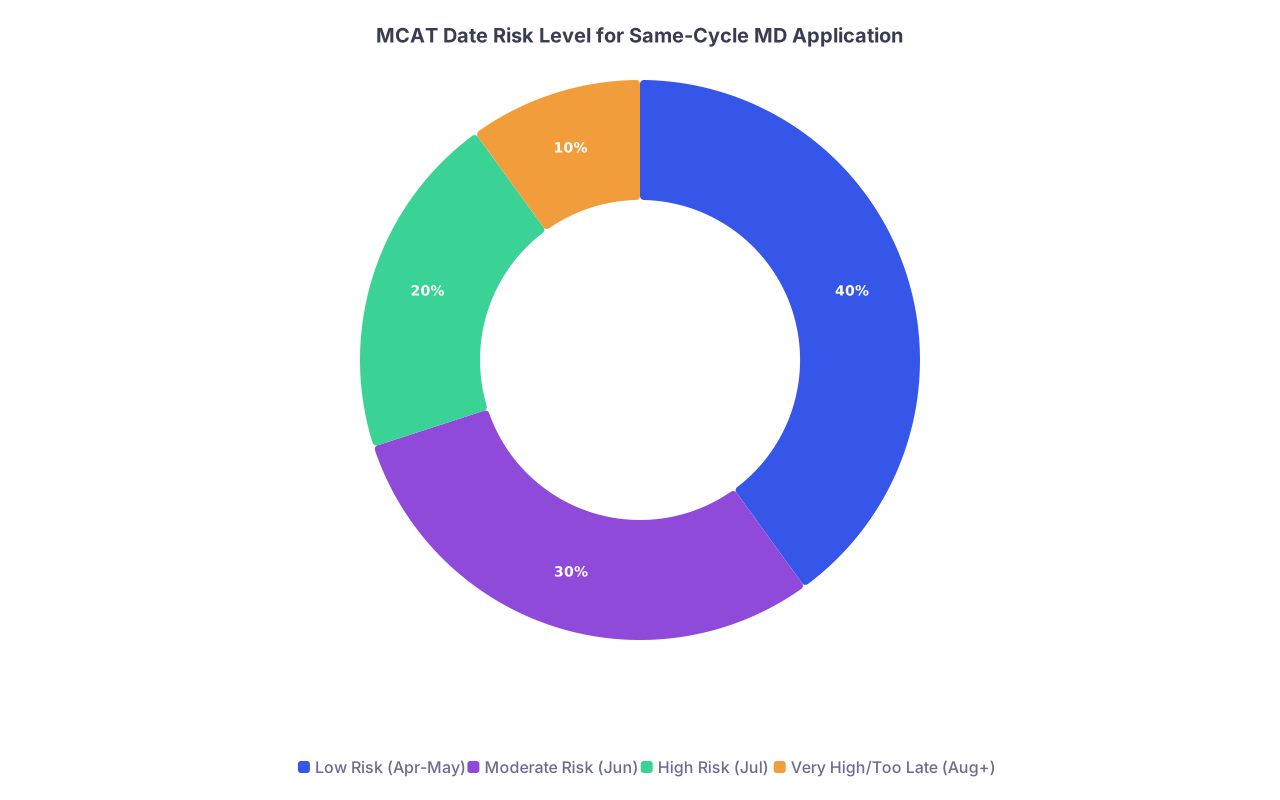
| Category | Value |
|---|---|
| Low Risk (Apr-May) | 40 |
| Moderate Risk (Jun) | 30 |
| High Risk (Jul) | 20 |
| Very High/Too Late (Aug+) | 10 |
FAQ: MCAT Timing Questions You’re Probably Still Thinking About
1. Is a June MCAT too late for MD applications?
No. A June MCAT is still fine for most MD applicants, especially if:
- You submit your primary in June
- Your score comes back late June/early July
- You move quickly on secondaries
Would April or May be better? Yes. But June is still solid, not “late.”
2. Can I apply without an MCAT score and add it later?
You can submit your primary without a score, but many schools won’t review you seriously or send secondaries until your MCAT posts.
It’s only worth doing this if:
- You’re testing within the next 1–2 months, and
- You’re aiming to keep your place in line in a rolling system
If you’re testing in August or later and applying that same year to MD, you’re essentially submitting a partial app into an already crowded cycle.
3. Is July “too late” for DO schools?
Not necessarily. For DO programs, a July MCAT can still fit reasonably well into the cycle, especially if:
- Your primary is already submitted
- You’re quick with secondaries
An August MCAT for DO can still work, but now you’re pushing into late territory. You want everything else in your app to be early and strong to offset that.
4. Should I delay my MCAT if my full-length scores are still low but I’m in the “ideal” timing window?
Yes. Always choose readiness over calendar perfection within reason.
An early but bad MCAT is worse than a slightly later but stronger MCAT, especially if you’re willing to push your application to the following cycle.
If your full-length scores are far from your goal (e.g., 500s and you want 515+), the solution is not “keep the date because June is perfect.” The solution is “move the date to when you can actually score in range, even if that pushes your timeline.”
5. I’m planning to apply next year. When should I take the MCAT?
Best window if you’re applying next cycle:
- January–September of the year before you apply
- Most people land in March–July
This gives you:
- Time for a retake if needed
- A score in hand before you finalize your school list
- Less stress overlapping intense studying with writing secondaries
6. Bottom line: When is it truly “too late” to schedule my MCAT for this cycle?
For a first attempt, applying to MD programs this same year:
- Too late in practice: Testing mid‑July or later, with no prior score
- Way too late: August or later for any competitive MD strategy
For DO-focused applicants, August isn’t instant death, but it’s still far from ideal.
If you’re staring at a July/August date and you’re not ready, the honest move is simple:
Take a breath, push the MCAT, and shift your mindset to crushing next cycle, not limping into this one.
Key takeaways:
- For same-cycle MD, aim for your MCAT score to be in by late June–early July, not just your test date.
- A June MCAT is fine, July is late and risky, August+ is basically “too late” for a strong first MD cycle.
- When in doubt, prioritize a strong score and clean application next year over a rushed, weak shot this year.