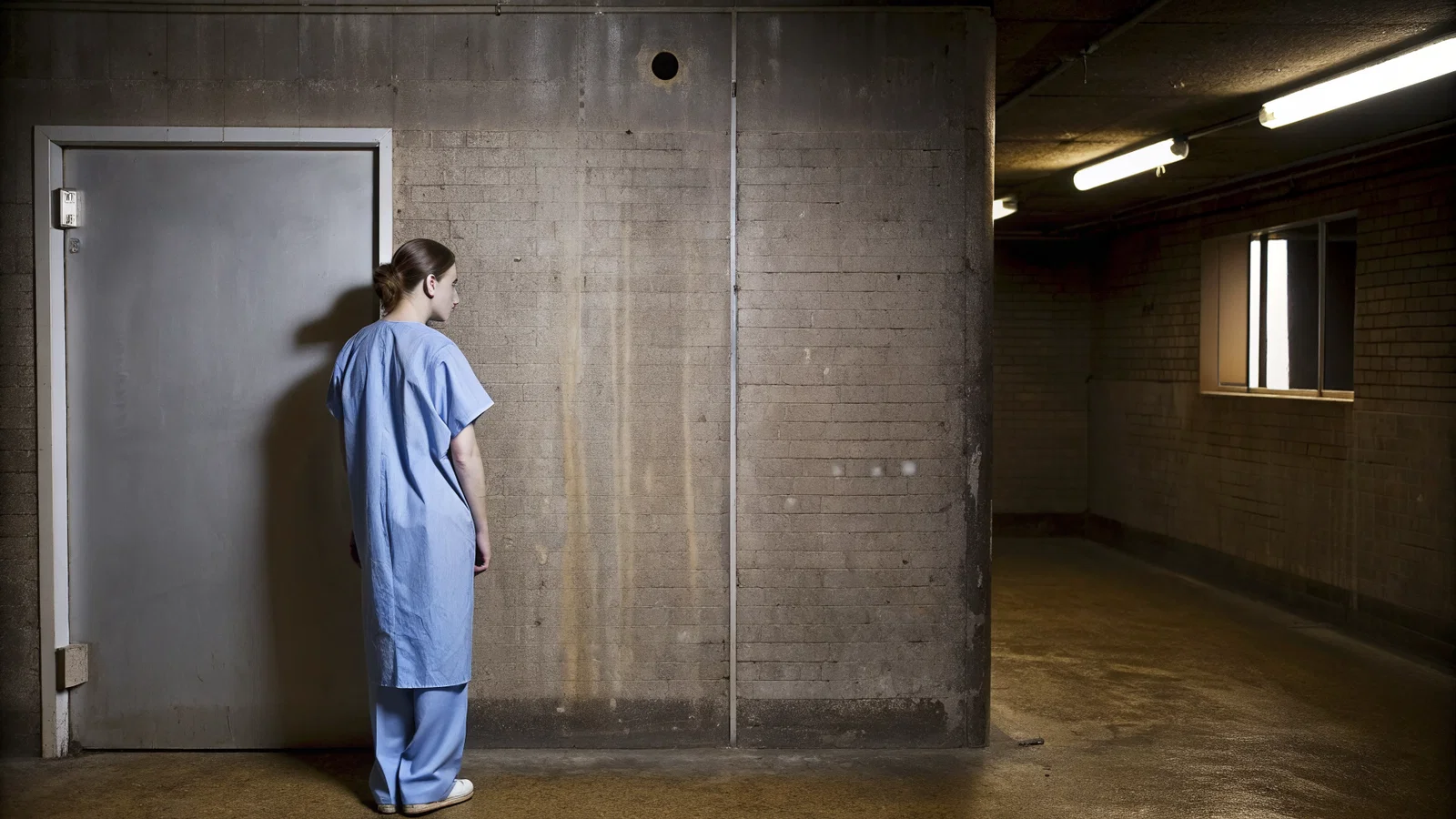
The code ends. The attending calls it. The room goes quiet except for the monitor's flatline hum. And you're standing in the corner of the room, still holding the reflex hammer you were using to check for response three minutes ago, thinking: what do I do now?
If you've just lived through this moment, or you're terrified it's coming, this is for you. Patient deaths during clerkships aren't rare dramatic events from someone else's medical school. They happen to over 70% of medical students. And nobody tells you what to do in the first sixty seconds, or the first week after, when the shock wears off and the grief sneaks up on you in the stairwell at 2 a.m.
Here's the situation, and here's what to do.
The Moment Everything Stops: Recognizing What Just Happened
Your body will react before your brain catches up. Shaking hands. Nausea. A weird floating sensation, like you're watching yourself from across the room. Some students cry. Some go completely blank. One student I spoke with said she felt nothing for three days, then sobbed in a grocery store parking lot over a bag of oranges.
All of this is normal.
Don't let anyone, including the voice in your head trying to be "professional", tell you that the appropriate response is stoic composure. You just watched a human being die. You were part of their care team. You may have talked to them yesterday, asked them about their grandchildren, adjusted their pillow. This is not a textbook case. This is a person who lived and breathed and is now gone, and your nervous system knows it even if your medical student identity wants to file it under "learning experience."
The guilt is coming, too. You'll replay everything: Did I miss something? Should I have called the team sooner? Was that medication interaction I noticed written in the chart important? Stop. The patient's outcome was not determined by your presence or absence in the room. The disease did what diseases do. You were there. You showed up. That mattered to them, even if you can't see it yet.
What to Do in the First Hour: Immediate Practical Actions
Your job right now is small and specific. Don't try to be a hero. Don't try to be invisible. Just do the next thing.
If you're alone with the patient when they die: Call for help immediately. Hit the call button, step into the hallway, find a nurse, whatever is fastest. Do not touch anything. Do not straighten the sheets. Do not turn off equipment. The scene needs to remain exactly as it was until the team arrives and the proper documentation begins. This isn't about you being in trouble; it's about the medical and legal reality of death in a hospital.
If the team is present: Stay in the room unless someone tells you to step out. Contain your reaction as best you can, not because your feelings are wrong, but because the family may be watching you for cues about how to behave. You're not a performer; you're a witness. Breathe.
Once the attending takes charge, your role is to follow instructions. You might be asked to document the time of death. You might be asked to step out so the family can be brought in. You might be asked to call the chaplain. Whatever it is, do it, and then find a private moment, a stairwell, an empty consult room, a bathroom, to fall apart for a few minutes if you need to.
Talking to the Family: If You're Present
You'll almost never lead this conversation. Attendings, residents, and social workers handle death notifications. But you might be standing in the room. You might be the person a grieving spouse turns to and asks, "Is he really gone?" or "What happened?"
Here's your script, and it's enough:
"I'm so sorry for your loss. I'm a medical student on the team. Let me get your doctor or nurse, they can answer your questions better than I can."
That's it. Honest, compassionate, honest about your role. Do not speculate. Do not say "they didn't suffer" unless you personally witnessed the moment of death and can make that statement truthfully. Do not promise follow-up calls or information you have no authority to promise. And do not fill the silence with nervous chatter. Your quiet presence, being a witness, standing in the room while a family says goodbye, is doing more than you think.

After the Code or Death: The Paperwork and Emotional Aftermath
You will likely be asked to document something. Time of death, the events leading up to it, who was present, your observations. This feels surreal, writing about a death in clinical language, abbreviating a human being into a chart note. It's not callousness. It's the system working the way it's supposed to. Hospitals run on documentation. Do your part, and try not to read too much into the coldness of the language.
The bigger emotional aftermath hits later. Here's what to expect:
Notice that "questioning your career" is on this list. It's not a sign you're in the wrong profession. It's a sign you're human and you're processing something heavy. Almost everyone has this moment. The students who don't are the ones I worry about.
Processing Your Grief: Why This Hits Harder Than You Expected
Here's the part no one warns you about: the grief will be delayed. You might walk out of the hospital feeling functional, go home, eat dinner, study for an exam. Then three days later you're crying in your car before a shift for reasons you can't name. Or two weeks later you're walking through the ICU and suddenly can't breathe because the blanket on a patient's bed is the same pattern as the one your grandmother had.
This is normal. Your mind protected you through the acute phase. Now it's catching up.
The "I just met them" guilt is also real and also nonsense. Attachment is not proportional to time. You spent hours with this person. You asked them intimate questions. You examined their bodies. You advocated for their pain control. Of course you bonded. That's not a failure of professional boundaries, that's empathy doing its job.
This isn't happening on top of nothing, either. You're already exhausted. You're already carrying imposter syndrome, sleep debt, the pressure of evaluations, and the underlying terror of the shelf exam. Patient death is a weight added to a load that's already heavy. Beating yourself up for struggling to carry it is both unfair and pointless.
Seeking Support: Who to Talk to and How
The myth that "real doctors don't cry" is a lie, and it's a lie that burns physicians out by year three. Real doctors cry in call rooms, in their cars, in their spouses' arms, in the bathroom between patients. Real doctors go to therapy. Real doctors call their own attendings six months later and say, "Hey, do you remember Mr. Johnson? I think about him all the time."
Here's what actually helps, based on what students consistently report:
Notice that "time alone" is at the bottom. Isolating yourself with this is the worst move, even if it feels right in the moment.
Your clerkship director needs to know what happened. Not because you'll be punished, you won't be, but because they can offer flexibility, extend a deadline, reassign you to a different service, or simply check in. This is part of their job. They were once a medical student who watched their first patient die.
Student wellness services exist for exactly this. Walk in. Make the appointment. There is no "I should be tougher than this" threshold you need to meet before you deserve support.
And your co-students. They are the only people in the hospital who are processing the same thing at the same time in the same way. Talk to them. Cry in the cafeteria. Send the group chat. This is what the group chat is for.
Returning to the Wards: How to Continue Your Clerkship
The pressure to "get back to it" and prove you're tough is enormous, and you should resist it. You can return to clinical duties while still being honest about what you need.
When you go back, talk to your team. Something like: "I'm ready to be back on the floor, but I might need a few minutes to step out if things feel heavy today." That's it. Reasonable adults will respect that. If they don't, that's information about the team, not about you.
Some students want busy work, dispo summaries, lab follow-ups, mindless tasks that keep hands busy while the brain catches up. Others want to be assigned a less acute patient for a few days. Both are legitimate. Communicate what you need.
The red flag is this: if you're having intrusive thoughts, can't sleep, are using substances to cope, or feel like you can't function, that's urgent. Same-day help. Call your student health service, your therapist, or go to the ER if you're in crisis. Complicated grief and acute stress reactions are real medical conditions. Treat them like one.

What This Means for Your Future: Growth, Not Damage
Here's the truth: nearly every physician has a "first patient who died" story. It's a threshold moment. It marks the transition from student-as-observer to someone who is part of the circle of mortality in a way that can't be un-understood. You will carry this patient with you. Not as trauma, but as context. The next time a family asks you "is my mother going to die?" you will know, in your body, what those words mean. The next time you sign an order for comfort care, you will pause. The next time you hold a patient's hand, you will mean it differently.
This is what makes you a physician instead of a person who memorized a textbook. It will make you better. Not immediately, and not without cost, but it will.
If you're questioning medicine entirely after this, whether you can do this for thirty years, whether the price is too high, that's worth taking seriously. But give it time. Don't make a career decision in the first 72 hours after your first death. Sit with the question. Talk to people further along. Read some physician memoirs. Then decide.

Moving Forward: Practical Steps for the Days Ahead
You have a roadmap. It's not linear, but it helps to know what comes next.
Some specific moves worth making:
- Write the patient a private note. Not a chart note, not a learning objective. A note to them. What you learned from them, what you wish had gone differently, what you'll carry forward. Put it somewhere safe. Read it again in a year.
- Name what you learned about yourself. Not medical learning. The human kind. I learned I freeze in crisis. I learned I'm not as detached as I thought. I learned I need to talk to people, not bottle things up.
- Watch for complicated grief. Symptoms lasting more than a month, avoidance of all patient care, intrusive thoughts that won't stop, dissociation, substance use. These warrant professional help, not willpower.
- Give yourself a deadline to feel better, and then ignore it. Grief runs on its own schedule. Some students feel normal in two weeks. Some take two months. The number doesn't measure your fitness for medicine.
Your Patient Lived and Died, You Were There: Final Thoughts
This is the part of medical school that doesn't show up in the curriculum. No one assigns a textbook chapter on how to stand in a room while someone's heart stops. You learn it by being there, and you survive it by being honest about what it cost you.
You showed up. You cared about a stranger enough to be there at the end. You witnessed something most people never see and most people who see it try to forget. That is not weakness. That is the beginning of being the kind of doctor patients actually need.
Be gentle with yourself. This is hard. And you are not alone, there is a long line of physicians behind you who have walked through this exact door, and most of them would tell you the same thing: it gets easier to carry, even when it never gets light.

Key Takeaways
- Patient deaths during clerkships are common, over 70% of students experience this. You're not an anomaly for being affected.
- Your emotional response is real and necessary. Suppressing it leads to burnout, compassion fatigue, and worse patient care down the line.
- Seek support immediately and without hesitation: clerkship directors, wellness services, peers, mentors, and professional counseling are all on your side.
- This is a defining moment, not a damaging one. It will shape how you practice medicine, and processing it well builds the resilience you need for decades of work.
- Grieve on your own timeline. There's no schedule, no "right" way, and no weakness in taking the time you need.