
The wait after a failed shelf exam appeal is not "extra time." It's a separate stressor with its own rules, its own damage, and its own recovery plan. If you're stuck in it right now, refreshing your email, replaying the score report, inventing futures that all end badly, this is for you.
This article is for educational purposes only. It is not financial advice, not legal advice, and not tax advice. Figures vary by individual circumstances, so consult a qualified professional before acting.
Start Here: What This Waiting Period Actually Feels Like
Let's name it cleanly. Shock. Uncertainty. Shame. Anger. Rumination. Fear of what this means for your rotation, your year, your match, your identity as someone who "should have passed."
I've watched students describe this stretch as worse than the fail itself. The fail is a fact. The wait is fog. You don't know the outcome, and you don't know what comes next academically. Those two pressures stack. One hits your nervous system. The other hits your calendar, your clerkship schedule, your sense of control.
Shame likes to dress up as productivity. You'll feel the urge to "fix it" by rewriting the appeal in your head at 2 a.m., drafting emails you shouldn't send, or Googling remediation policies until your eyes burn. That's not strategy. That's your brain trying to outrun uncertainty.
Anger shows up too, at the exam, the grader, the school process, yourself. All of that can be valid and still unhelpful if it becomes the only channel you live in. Fear of consequences is rational. Catastrophizing every consequence into a permanent professional death sentence is not.
This period is real. Treat it like a clinical problem: stabilize the patient first, then work the plan.
What to Do in the First 24-72 Hours
Your job in the first few days is not to solve your career. It's to stop the bleed.
Simple triage: pause → stabilize → don't send anything impulsive.
- Pause. Give yourself a hard stop on major decisions for 48 hours unless a deadline is actually imminent. Most "I have to email the dean right now" impulses are anxiety wearing a lab coat.
- Stabilize the body. Sleep, food, water, a shower. Basic, boring, non-negotiable. Your prefrontal cortex does not run well on caffeine and self-loathing.
- One trusted person. Not a group chat. Not three classmates who will spiral with you. One person who can hear "I failed and the appeal is pending" without turning it into a performance review.
- Communication boundaries. Set two check-in windows for email/portal, morning and late afternoon. Outside those windows, the portal is closed. Yes, really.
- Write a 48-hour plan. Not a five-year plan. Meals. Sleep target. One support check-in. One practical next step (policy review, advisor email draft saved as draft only).
What not to do:
- Obsessive portal checking every 12 minutes
- Worst-case scenario marathons ("I'll never match, I'm done, I wasted everything")
- Drafting repeated appeals messages, apology essays, or multi-paragraph emotional dumps to administration
- Announcing the situation to everyone who will listen so you can outsource regulation
Impulsive messages create permanent records. Save drafts. Sleep on them. Send only what is factual, brief, and necessary.
If you do nothing else in the first 72 hours, protect sleep and stop the impulsive outbound communication. That alone changes the trajectory of the next two weeks.
How to Protect Your Mental Health While the Decision Is Pending
Containment beats motivation speeches. Build a routine that holds the anxiety in a box so it doesn't own your whole day.
Containment routine that actually works:
- Checking times only. Two windows. Timer on. Then close it.
- Structured study blocks. 45-90 minutes with a defined task, not "I should be productive because I failed."
- Protected off-time. A walk, a meal with someone, a show, a workout. Off-time is not a reward you earn after suffering enough. It's maintenance.
Cognitive strategy: facts vs. fears.
Write two columns.
Facts: I failed this shelf. I appealed. A decision is pending. Policy X exists. Deadline Y is on the calendar.
Fears: I'll be dismissed. Everyone will know. I'm not cut out for medicine. My whole future is over.
Your brain will try to smuggle fears into the facts column. Don't let it. All-or-nothing thinking thrives here, "one fail means I'm incompetent." That's a lie with good branding. Plenty of excellent physicians have failed a shelf, a board attempt, or a rotation evaluation and still built strong careers. A single exam outcome is data. It is not a verdict on your worth or your future license.
Realistic coping, not Instagram coping:
- Movement that doesn't require a perfect gym plan, walk around the block
- Brief social contact that isn't a postmortem of your score
- Journaling one page: what I know, what I don't, what I can control today
- Counseling through student health or a therapist who understands high-stakes training
- Mindfulness or prayer if that's already part of how you regulate, not as a new personality project under duress
When stress stops being "normal waiting stress," you escalate. Red flags: panic attacks that keep you from functioning, inability to sleep for multiple nights, not eating, inability to get through basic daily tasks, or any thoughts of self-harm. That's not you being dramatic. That's a clinical threshold. Get help the same day.
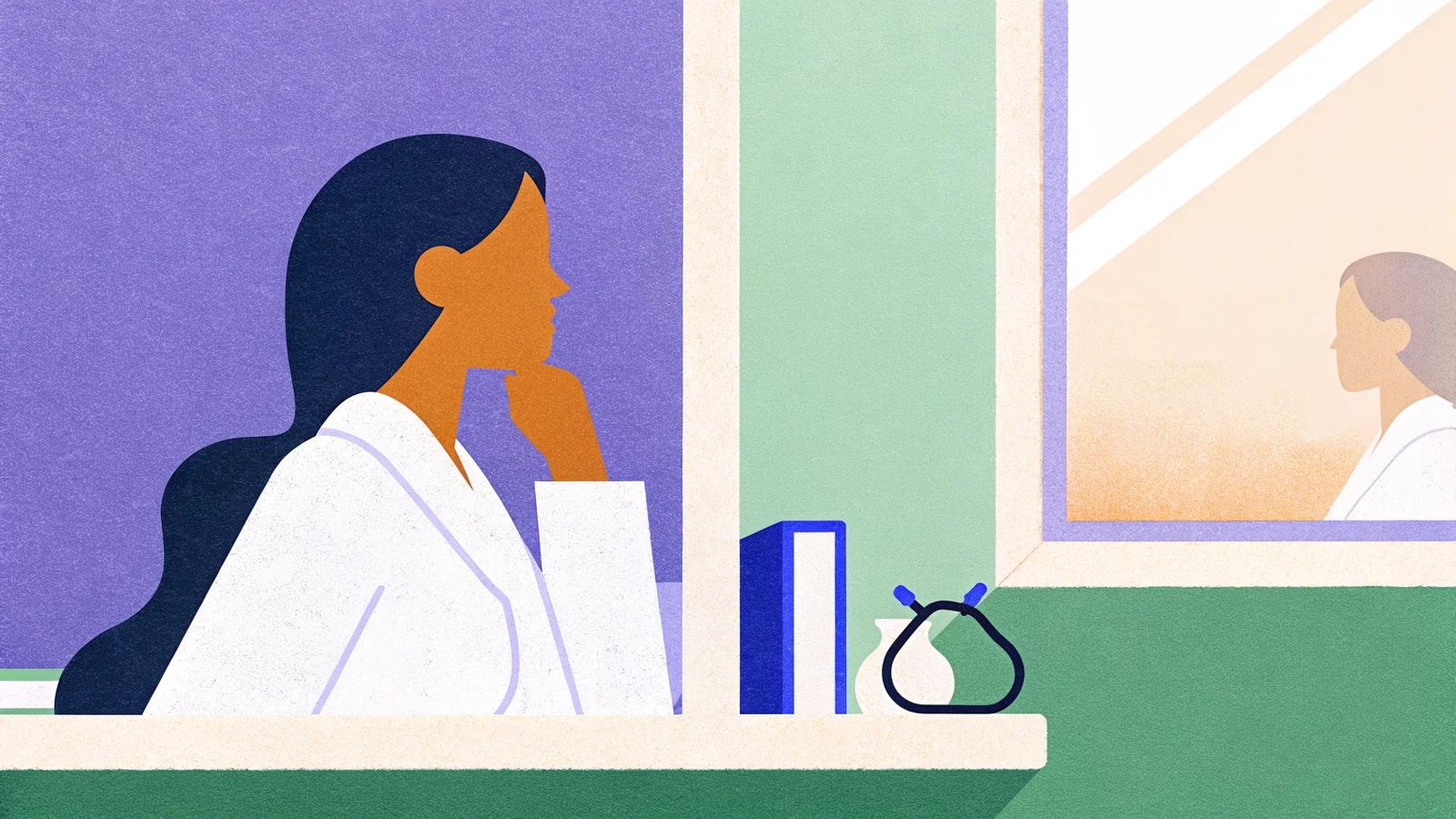
You are allowed to be upset and still function. You are not required to perform calm for other people's comfort. You are required to keep yourself safe and operational enough to make the next decision well.
How to Handle School Communication, Study Plans, and Backup Scenarios
Powerlessness shrinks when you build parallel plans. Not magical thinking. Parallel plans.
Communication decision framework
Contact administration when:
- You need clarification on timeline, policy, or next steps
- A deadline is approaching and silence creates real academic risk
- You were told to expect a response by a date that has passed
Keep it brief:
- Who you are
- What you're asking
- What you've already reviewed
- A clear, polite request for timeline or options
Document everything. Dates, names, email threads, handbook language, what was said in meetings. Screenshots if the portal changes. This is not paranoia. It's basic professional hygiene under a high-stakes process.
Do not send daily "just checking in" emails. Do not write emotional novels. Do not CC half the school.
Two parallel plans
Plan A, appeal approved / favorable outcome
- What changes immediately (schedule, grade, progression)
- What you still need to remediate in knowledge gaps
- How you'll re-enter the rotation or next exam without pretending nothing happened
Plan B, appeal denied
- Remediation options and timelines
- Impact on clerkship sequence, graduation timeline, and future exams
- Who you meet with next (advisor, student affairs, academic support)
- What support documentation you may need
Building Plan B is not "giving up." It's how adults survive bureaucracy. Students who only fantasize about Plan A fall apart harder if the denial comes.
Practical academic steps during the wait
- Re-read the actual policy, not the hallway version
- Map hard deadlines on one page
- Ask specifically about remediation formats, retake windows, and transcript language
- Protect upcoming rotations and other exams so one crisis doesn't cascade
- Use the wait productively without self-punishment studying, targeted weak areas, not 14-hour shame marathons
Overstudying as penance feels virtuous and usually backfires. You're not paying a moral debt. You're preparing for the next concrete task.
Read that chart as intensity of attention, not a score. If you hear back today, communication and support spike. If silence continues, you hold steady routines and advance backup planning. If denied, everything becomes concrete action: meetings, remediation mapping, and tighter support, not rumination.
How to Rebuild Confidence After the Decision
Approved or denied, you still need an emotional recovery plan. The decision ends the wait. It does not automatically restore your sense of self.
Reframe this as a setback, not a character judgment. Medicine is full of high-stakes binary moments that feel existential and later become a paragraph in a longer story. You failed a shelf. You appealed. You waited. You will now act. That sequence does not disqualify you from becoming a good physician. What wrecks people is isolation, secrecy, and untreated collapse, not a single exam outcome.
Use real support systems:
- Advisor or dean of students
- Mentor who has seen trainees recover
- Therapist or campus counseling
- Family or partner if they're steady, not amplifying
- Peers who can be calm, not competitive
- Disability services or student affairs if accommodations or process support apply
1-2 week recovery roadmap:
- Debrief. What happened academically and emotionally, without courtroom cross-examination of your soul.
- Plan. Next academic actions in writing, with dates.
- Rest. One or two days of lower demand if your schedule allows. Sleep debt is not a personality trait.
- Restart. One controlled work block. Then another. Confidence returns through evidence of function, not affirmations.
If the appeal was denied, grief is appropriate. Feel it. Then move the plan. If it was approved, don't skip the processing, relief and residual shame often coexist.
What to Do If You're Not Coping Well
Clear red flags, act the same day:
- Suicidal thoughts
- Self-harm urges or behavior
- No sleep for days
- Not eating / complete shutdown
- Feeling out of control, unable to keep yourself safe, or unable to function at a basic level
Immediate actions:
- Contact campus counseling or student mental health
- Use crisis services / local emergency resources if safety is at risk
- Tell a trusted person where you are and what you need
- If you are in immediate danger, emergency services are the right call
Asking for help here is appropriate and urgent. It is not theatrical. Medical training culture still sneaks in the idea that struggling means weakness. Ignore that idea. It is wrong, and it gets people hurt.
If you're unsure whether you "qualify" for help: that uncertainty itself is a reason to reach out.
Closing: You Do Not Have to Wait Alone
Stabilize first. Then plan. Then get help when the stress outruns your tools.
The wait after a failed shelf exam appeal is a real mental health stressor. Treat it like one. Protect sleep and food. Bound your portal checking. Build two plans so you're not trapped in fantasy or doom. Lean on people who can hold reality with you.
Do this today: pick one support person, set two email check windows, and write a one-page Plan A / Plan B. That's enough for the next twenty-four hours. Then take the next smallest step, because you don't have to finish this alone, and you don't have to finish it all at once.