Educational note: This article is for educational purposes only and is not medical, legal, financial, or tax advice. If virtual learning is affecting your functioning, safety, or health, seek support from your school, a licensed clinician, or other qualified professionals.
Virtual med school days look easier on paper and hit harder in real life. That’s the truth.
From the outside, they seem efficient. No commute. No sprint across campus. No hunting for a study room. Faculty love to frame this as reduced friction, and to be blunt, that’s because they’re usually measuring the day by logistics instead of by psychic cost. Students are measuring something else entirely: the strange deadness of learning alone, the constant screen exposure, the loss of normal social feedback, and the unsettling feeling that you are always “on” while somehow also barely there.
I’ve watched this play out with first-years, third-years in didactic-heavy stretches, and even very polished students who looked perfectly functional in online sessions. Their cameras were on. Their names were in the attendance report. Their assignments were submitted. And yet behind the scenes, they were fraying. Quietly. Predictably. Sometimes badly.
What really disappears on virtual days isn’t just in-person class time. It’s the invisible scaffolding that helps med students stay psychologically intact. The quick hallway complaint after a brutal lecture. The eye contact that tells you everyone else is confused too. The classmate who notices you’re off. The attending who catches your flat affect after rounds. Strip that away, and stress stops being shared. It becomes private. Secretive. Easier to mislabel as laziness.
This is where the real risk lives. Emotional disconnection. Comparison spirals. Attention depletion. Burnout that hides inside decent grades. Delayed help-seeking because nobody sees the slide early enough. Let me tell you what really happens: virtual days don’t just test discipline. They expose every weakness in structure, community, and self-protection that medical training already has.
The Invisible Shift: Why Virtual Med School Days Hit Harder Than They Look
The biggest misunderstanding about virtual med school is simple: people assume convenience and relief are the same thing. They are not.
Yes, your calendar may look cleaner. You may gain an hour by not commuting or changing locations. But human beings, especially stressed human beings learning dense material, rely on external structure more than they like to admit. Campus creates rhythm for you. You wake up because you have to. You move because the day requires movement. You pick up emotional cues from other people. You feel the difference between class time, lunch, lab, and done-for-the-day. At home, all of that blurs into one long digital smear.
Faculty often don’t say this out loud because many of them genuinely think they’re helping. “At least you can be in your own space.” “At least you have flexibility.” Fine. But flexibility without boundaries is a trap. I’ve seen students attend pharmacology from bed, eat lunch during pathology, answer small-group questions while checking Anki, and end the day unsure whether they learned anything or just survived six hours of low-grade cognitive assault.
And that low-grade assault matters. Screen fatigue is real. Isolation is real. Uncertainty is real. When your day is made of tiny rectangles, lagging audio, your own face in the corner, and the pressure to appear alert, your nervous system doesn’t read that as rest. It reads it as prolonged demand with weak reward.
That’s why the damage is easy to miss. You’re technically at class. Technically saving time. Technically functioning. Meanwhile, the internal cost keeps rising.
What Program Directors and Faculty Don’t Always Say Out Loud
Here’s the secret nobody likes admitting in committee meetings: virtual attendance is a terrible proxy for wellness.
A student can be logged in, camera on, nodding at the right times, and still be anxious, numb, ashamed, or completely lost. I’ve seen students master the appearance of engagement while privately unraveling. That’s not deception. That’s survival. Med students are very, very good at looking acceptable while feeling awful. Medical culture trains that early.
What makes virtual learning especially corrosive is the weird level of self-surveillance it creates. In a lecture hall, you mostly pay attention to the speaker, the slides, your notes, the room. On Zoom, you’re also monitoring your own expression, your posture, your lighting, whether you look tired, whether your room looks sloppy, whether you seemed too slow when called on, whether your silence looked stupid. It’s absurd. And it’s constant.
Then add recorded lectures into the mix. Sounds helpful. Sometimes it is. But for a lot of students, recordings become a psychological weapon. “I can always watch later” turns into backlog. Backlog turns into shame. Shame turns into avoidance. Avoidance turns into panic. I’ve seen this sequence so many times it barely counts as anecdote anymore.
The other problem is cultural and more dangerous than people realize. When everyone is remote, suffering becomes invisible. If you don’t hear the person next to you whisper, “I have no idea what’s going on,” you start to believe you’re the only one slipping. That belief is poison. It feeds impostor syndrome, secrecy, and delayed support-seeking. Students think, “Everyone else is adapting. Why am I struggling with something this basic?” So they hide. They wait. They tell themselves they’ll fix it after the next quiz, the next block, the next weekend.
Bad strategy. In medicine, private deterioration is rewarded right up until it becomes impossible to ignore.
The Mental Health Fallout: Burnout, Loneliness, Attention Fracture, and Emotional Numbness
Let’s name the fallout clearly, because vague language is part of the problem.
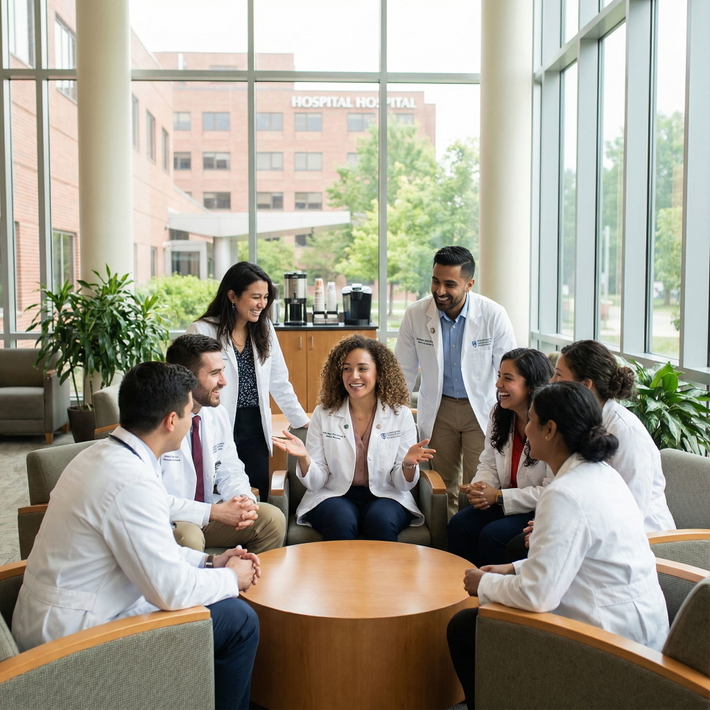
First: loneliness. Not just being alone, but the specific loneliness of doing hard things without shared atmosphere. Med school is already isolating. Virtual days strip away casual bonding, and those casual moments matter more than wellness offices admit. The five-minute walk after anatomy. The muttered “that was brutal” after a practical. The person who notices you haven’t said much today. Those aren’t extras. They are protective factors.
Second: burnout from blurred boundaries. On campus, the day has edges. At home, med school leaks into everything. Your desk becomes your lecture hall, your lab, your study area, your exam zone, your place to eat, and sometimes your bedroom. The brain hates that. There’s no clean off-switch. Students tell themselves they should be grateful for flexibility, but what they really get is a day with no clear beginning and no satisfying end.
Third: attention fracture. This one gets dismissed too often as poor discipline. Wrong. Prolonged screen exposure fragments attention because the medium itself encourages partial engagement. Tabs multiply. Notifications intrude. Recorded content lowers urgency. Tiny pauses in audio and video break momentum. You are trying to learn renal physiology while your brain is adapting to a delivery app alert and your own reflection in the corner of the screen. That is not a minor issue. That is a degraded learning environment.
Fourth: emotional numbness. This is the one high achievers miss in themselves. They’re still scoring fine, still answering questions, still turning things in. But the spark is gone. Curiosity drops. Clinical interest flattens. Everything starts to feel like identical digital sludge. You stop feeling stressed in the dramatic sense and start feeling deadened. That’s not resilience. That’s depletion.
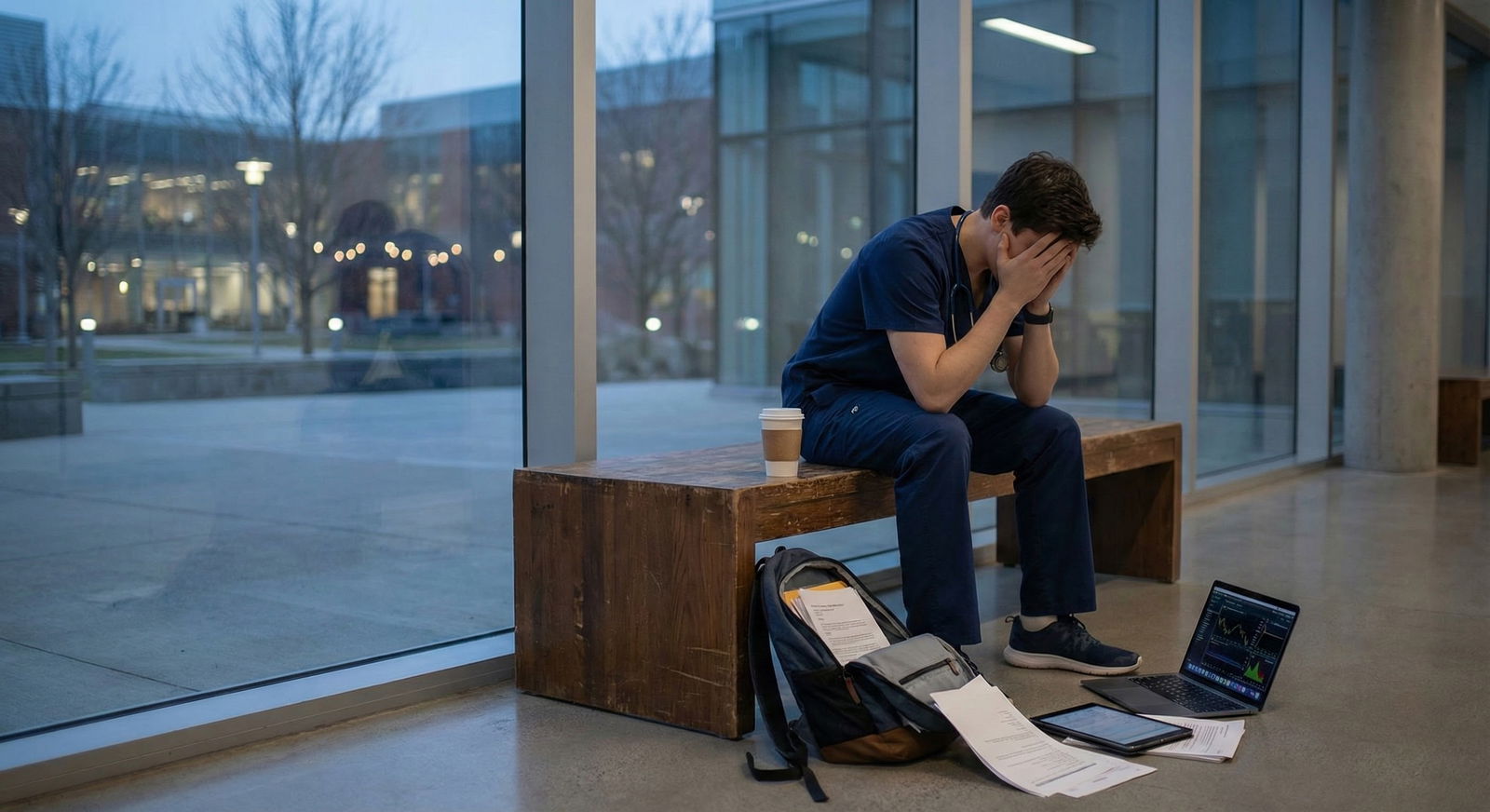
The students most at risk are often the ones who still perform. That’s the part advisors need to understand. High-achieving med students can deteriorate silently for weeks because competence masks suffering. They know how to compensate. They know how to cram. They know how to look composed. By the time grades dip, the problem is usually no longer early.
So what should you watch for? Irritability that feels out of character. Procrastination that has a sticky, avoidant quality rather than simple laziness. Sleep drift. Dread before logging in. Relief when class is canceled that feels wildly disproportionate. A subtle loss of interest in patients, clinical stories, or subjects you used to care about. Those signs matter. They are often the first honest indicators that your system is overloaded.
Why the Problem Escalates in Medical Training Specifically
Remote learning is hard for everybody. Medical training makes it worse. Much worse.
The stakes are high, the volume is relentless, and the culture is unforgiving. In a normal graduate program, a bad week might feel inconvenient. In med school, a bad week can feel like evidence that you don’t belong. That emotional interpretation changes everything. Students don’t just think, “I’m tired.” They think, “If I can’t handle this, maybe I’m not cut out for medicine.” That thought is gasoline on stress.
There’s also the professionalism problem. Students are deeply afraid of being seen as weak, unreliable, or fragile. So when virtual days trigger concentration problems, low mood, or detachment, many don’t label it as a mental health issue. They label it as personal failure. They call themselves lazy. Undisciplined. Soft. I hear this language all the time, and frankly, it’s wrong.
What virtual days remove in medicine is not just physical proximity. They remove micro-reassurance. The resident saying, “Everybody bombs the first practice set.” The classmate admitting they also had to replay the lecture twice. The faculty member noticing you look off and checking in for sixty seconds after small group. Those tiny moments prevent spirals. Without them, distress has room to grow unchecked.
Then pile on exam pressure, residency anxiety, and perfectionism. From the outside, virtual burnout can look like poor motivation. Behind the scenes, it’s often a stress response in a high-threat environment. That distinction matters because you can’t shame your way out of physiological overload. Med students try anyway. Doesn’t work.
How to Protect Yourself Without Pretending Virtual Days Are Fine
Start by dropping the fake toughness. Virtual fatigue is not imaginary, and pretending it’s fine wastes time.
You need structure on purpose. Real structure. Not vague intentions. Create a start ritual and a stop ritual. Change clothes. Leave your room for five minutes before the day begins. Open with a written plan for the first block. When the academic day ends, shut the laptop, physically move, and do something that marks the transition. It sounds basic. It works because the brain needs cues.
Schedule actual breaks, not fantasy breaks. A real break means no passive scrolling while half-listening to a recorded lecture. Stand up. Get outside if you can. Eat away from the screen. Protect your eyes and your attention before they’re wrecked for the second half of the day.
Stay visible to one trusted person. Just one. A classmate, partner, advisor, sibling, mentor. Someone who can notice when you vanish or start sounding flat. The strongest students I know don’t try to be self-contained machines. They build accountability and contact before they need rescue.
Use camera boundaries strategically. If your school allows flexibility, don’t perform wellness theater by forcing the camera on all day while your energy tanks. But don’t disappear completely either. Pick the sessions where visibility helps connection and engagement. Be intentional, not all-or-nothing.
And get support early. This is the insider piece students miss: faculty are far less shocked by early help-seeking than by dramatic last-minute collapse. Counseling, student affairs, a block director, a trusted mentor. Use them before performance drops. Not after. That’s what savvy students do behind the scenes.
The goal is not to power through until your functioning breaks. That’s amateur medicine. The goal is early recognition, smart adjustment, and fast intervention.
A Better Way Forward: What Strong Students Actually Do
Let me leave you with the version nobody says loudly enough: the strongest med students are not the silent ones.
They are the ones who notice patterns early. They admit when virtual days are flattening them out. They rebuild structure before chaos hardens into burnout. They tell one trusted person. They protect sleep. They stop glorifying private suffering.
Behind closed doors, experienced faculty respect that more than you think. Not performative fragility. Real self-management. The student who says, “This format is affecting me, and I’m addressing it now,” is showing judgment. That matters in medicine.
Virtual days may be part of modern med school. Fine. But they do not get to define your well-being. If you build structure, preserve human contact, and ask for support before the crash, you can stay functional and sane. That’s not weakness. That’s professionalism done right.