
Here’s the myth medical schools love because it keeps the messaging clean: wellness check-ins are just supportive conversations. Safe. Friendly. Off the record. Nothing to worry about.
That’s not how reality works.
Ask enough students and you’ll hear the same bad assumptions over and over: “If it’s with student affairs, it’s confidential.” “If they call it wellness, it won’t go in my file.” “If I’m not suicidal, nobody writes anything down.” Wrong. Sometimes spectacularly wrong.
I’ve seen this play out in the most ordinary ways. A student misses two required sessions, gets invited to a “supportive check-in,” mentions panic attacks and not sleeping, and suddenly there’s an email chain, a referral, a follow-up from academic affairs, and a note somewhere the student never knew existed. Not always malicious. Often well-intended. Still a record.
The data on this specific question varies because schools are all over the map, but broader surveys on medical student mental health and help-seeking show the same pattern: students don’t understand the institutional consequences of disclosure, and fear about confidentiality is one of the biggest barriers to getting help. That fear is not irrational. It’s often based on watching classmates get burned by vague policies and loose language.
So let’s separate fiction from reality. A wellness conversation can be supportive. It can also generate documentation. Both can be true at once. And if you don’t know the difference between informal support, a referral note, an academic file entry, and mandatory reporting, you’re walking into a high-stakes conversation blind.
The Myth: Wellness Check-Ins Are Just Supportive, Non-Record Conversations
Schools market wellness with soft language for a reason. “We’re just checking in.” “This is a supportive space.” “We want to help.” Fine. Good, even. But supportive does not mean undocumented, and “wellness” is not a magic legal category that erases record-keeping.
Here’s the real distinction.
Some conversations are genuinely informal. You talk to a trusted peer, a private therapist unaffiliated with your school, or maybe a faculty mentor who listens and doesn’t document anything identifiable. That happens.
But once you’re talking to someone acting in an institutional role—student affairs dean, course director, clerkship director, disability office staff, campus counselor employed by the school, or anyone involved because of attendance, performance, safety, or professionalism—the odds of a paper trail go up fast.
And no, “paper trail” doesn’t always mean some dramatic scarlet-letter file. It can be much smaller and still matter:
- a summary email
- calendar notes
- referral documentation
- accommodation paperwork
- a “just for continuity” note in an advising system
- a message to another administrator
- a report triggered by safety concerns
That’s the part schools often fail to explain clearly. A wellness conversation exists on a spectrum:
- informal support
- documented support
- formal institutional action
- mandatory escalation
Those are not the same thing. Students blur them together, usually because nobody bothers to define them before the conversation starts.
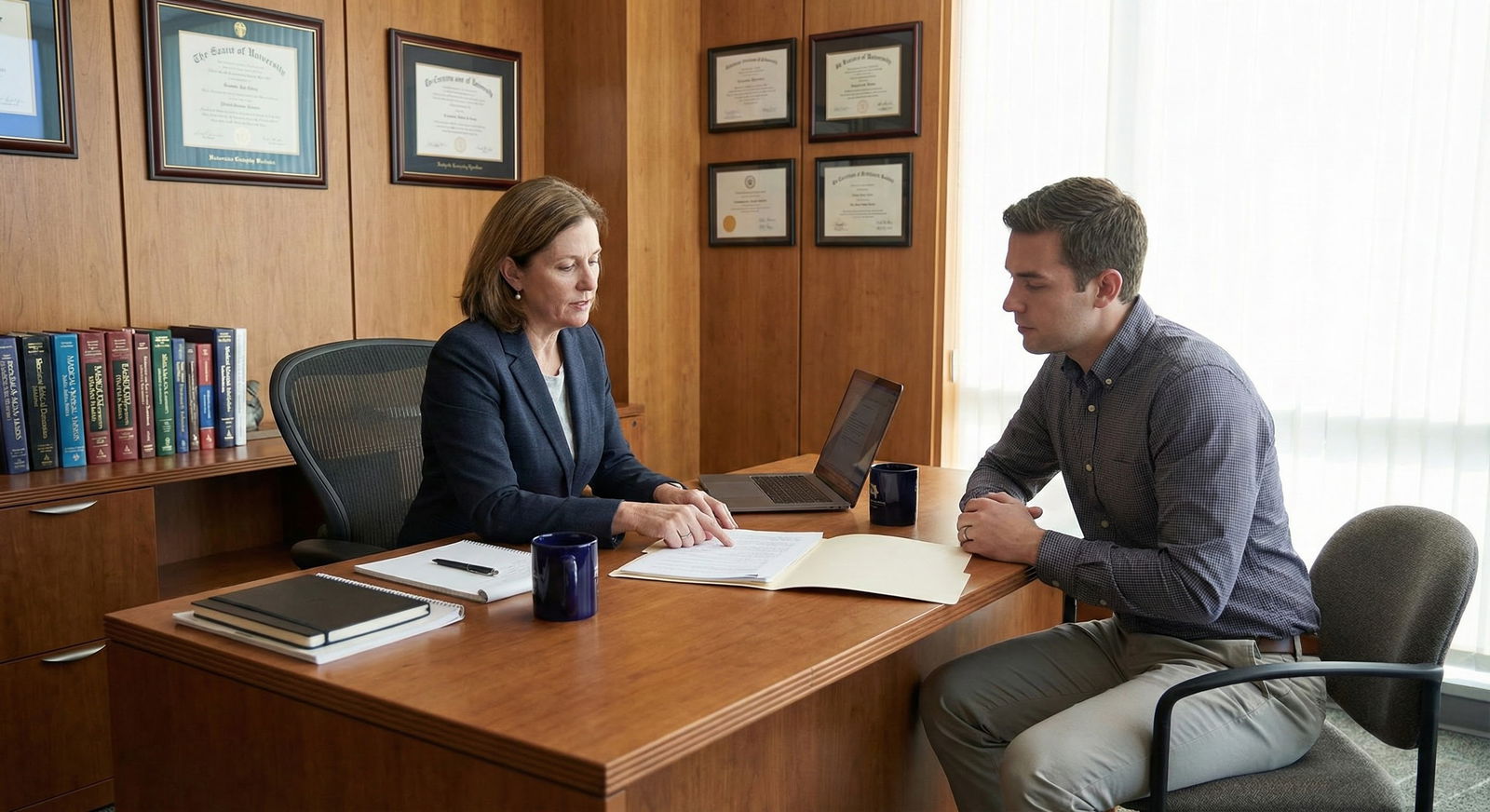
And yes, the title of the meeting matters less than who is there and why. “Wellness check-in” sounds harmless. If an associate dean, your course director, and an administrator are on the Zoom call, that is not a cozy off-the-record chat. That is an institutional meeting wearing a cardigan.
What Actually Gets Documented: From Casual Conversation to Institutional Record
Let’s get concrete. Not every conversation becomes a formal record, but many leave traces.
At the lowest level, there’s private listening. That’s the least documented form: a mentor hears you out, gives general advice, and nothing identifiable gets stored. Great. Rare in official school channels, but possible.
Next is note-taking for continuity. This is where students get fooled. An advisor says, “I’m just jotting this down so I can remember.” Sounds innocent. Maybe it is. But those notes may live in an advising platform, an email thread, or a secure internal system. They may be visible to other administrators. That’s documentation, even if nobody calls it a “record.”
Then there’s referral documentation. If someone connects you to counseling, occupational health, the disability office, a leave process, or an academic support program, that referral often creates a record that the interaction occurred. Not necessarily all the sensitive details. But enough to establish that there was an issue requiring follow-up.
After that comes academic or administrative documentation. Repeated absences. Missed clinical duties. Failure to complete required tasks. Requests for schedule modification. Concern about impairment in class or on the wards. Once your wellness issue intersects with training requirements, schools start documenting because now they’re managing operations and liability, not just feelings.
Finally, there’s professionalism or safety documentation. This is the category students underestimate most. Common triggers include:
- concern for self-harm or suicide risk
- concern for harm to others
- suspected substance-related impairment
- erratic behavior affecting patient care
- repeated no-shows after outreach
- major functional decline in clinical settings
- disclosures suggesting inability to perform safely
At that point, the school may be obligated to act. Mandatory reporting is real. Safety overrides your wish for secrecy.
Here’s what the data actually shows: practices vary wildly by school. Wildly. Some schools firewall counseling records aggressively. Some do a decent job separating health services from academic files. Others have blurry boundaries, lots of internal communication, and a culture of documenting “for support” that students only discover after the fact.
So no, you should not assume a wellness conversation is off the record unless someone explicitly tells you what is and isn’t being documented.
Why This Matters: Consequences for Privacy, Progression, and Future Licensing
This matters because records don’t just sit there looking decorative.
A documented wellness interaction can affect how your school handles:
- remediation
- required follow-up meetings
- leaves of absence
- return-to-training conditions
- accommodation processes
- fitness-for-duty evaluations
- letters of good standing
- internal promotion decisions
Now, let’s bust another myth. Students often swing to the opposite extreme and assume any mental health disclosure will ruin residency, licensure, and their career forever. That’s also false.
Most wellness disclosures do not automatically destroy your future. Most students who get help still graduate, match, and get licensed. Full stop.
The bigger risk is messier and more bureaucratic: unclear documentation, inconsistent terminology, and institutional actions that are later described badly. A private struggle is one thing. A formal leave framed ambiguously, a professionalism concern tied to untreated symptoms, or an unexplained administrative action can create headaches later when applications ask about interruptions, disciplinary action, or fitness concerns.
That distinction matters. Licensing boards in many jurisdictions have moved away from broad invasive mental health questions and toward current impairment. That’s progress. But schools are still inconsistent in how they document the events surrounding distress, absence, safety concerns, or performance problems. And residency applications, dean’s letters, and good-standing letters are only as clean as the underlying institutional record.
In other words: honesty itself usually isn’t the career-killer. Sloppy systems are.
I’ve seen students do everything “right” and still get trapped in nonsense because nobody clarified who had access to what. The counseling office said one thing. Student affairs implied another. A course director referenced a concern that the student thought was confidential. Suddenly trust is gone.
The chart above is illustrative, not universal, but it captures the general pattern: most interactions stay relatively low-level, some generate referrals or administrative notes, and a smaller number escalate into formal review. The point isn’t panic. The point is precision. Know what bucket you’re walking into.
What Students Should Ask Before They Speak: A Practical Checklist
Here’s the part schools should hand you before every so-called wellness meeting and almost never do.
Ask these questions first. Out loud. No apology.
- Who is in this conversation, and what are their roles?
- Is this confidential?
- What are the limits of confidentiality?
- Will anything be written down?
- Where will it be stored?
- Is it part of a counseling record, advising note, or academic file?
- Who can access it?
- Will this be shared with course leadership, promotions committees, or administrators?
- How long is it kept?
- What would trigger mandatory reporting or escalation?
That is not paranoia. That is informed consent.
You also don’t need to overshare to get basic support. There’s a smarter way to talk when the goal is help, not an accidental dossier.
Safer phrasing can sound like:
- “I’m dealing with a health issue affecting my functioning and need to understand support options.”
- “I’d like to ask about schedule flexibility and what documentation is required.”
- “Before I get into details, can you explain confidentiality and record-keeping?”
- “I want help, but I only want to share information necessary for the next step.”
That said, let’s be adults about this. If you have immediate safety concerns—self-harm risk, inability to care for yourself, risk to patients, severe impairment—this is not the moment for strategic vagueness. Get real help. Immediately. Safety comes first.
But outside acute risk, you are allowed to be deliberate. You are allowed to ask how the system works before feeding the system your most vulnerable information. In medical training, that’s not cynicism. That’s survival skills.
Bottom Line: Support Is Worth Seeking, But “Wellness” Is Not Automatically Invisible
Here’s the truth schools tend to soften because it sounds less friendly in orientation slides: wellness check-ins can be supportive and documented. The outcome depends on policy, personnel, purpose, and risk level. Not branding.
Don’t avoid help because you’re scared of records. That’s the wrong move, and it hurts students every year. But don’t walk into institutional conversations assuming “wellness” means private, consequence-free, or invisible. That’s naïve, and naïveté gets punished in bureaucracies.
Ask direct questions. Learn the rules. Know who is wearing the counselor hat, who is wearing the administrator hat, and who is quietly wearing both.
Protecting your mental health includes protecting your information. That isn’t weakness. It’s basic self-defense in a system that talks like a friend and documents like an institution.