
Educational disclaimer: This article is for medical education only. It is not legal, regulatory, business, reimbursement, financial, tax, employment, compensation, vendor-selection, contracting, or clinical decision advice about purchasing, contracting for, paying for, being compensated for, or implementing AI tools in any specific setting. Hospitals, clinicians, and organizations should review sepsis workflows, vendor agreements, liability questions, compensation or reimbursement implications, and compliance obligations with qualified legal, regulatory, operational, financial, tax, and informatics professionals, and should use independent clinical judgment for individual patients.
Delayed sepsis treatment still kills people. Don't make the lazy mistake of assuming an AI alert system fixes that by itself.
I've seen hospitals buy a sepsis prediction tool, plug it into the EHR, announce it at a committee meeting, and act like the problem is handled. It isn't. Not even close. A model can be mathematically impressive and still fail the patient in bed 14 because nobody owns the alert, nobody trusts it, or everybody trusts it too much.
Sepsis prediction AI, in practical terms, usually means an EHR-based model that scans vitals, labs, medications, notes, and order patterns to flag patients at risk before they obviously crash. That sounds powerful. It can be. But the danger isn't just whether the model is "accurate." The real danger is poor implementation: bad thresholds, vague escalation pathways, alert fatigue, and workflow gaps.
That's the mistake pattern this article is about. Preventable mistakes. The kind that delay antibiotics, delay ICU escalation, delay reassessment, and leave everyone later saying, "The alert was there," as if that somehow absolves the system.
My position is simple: sepsis AI should be an aid, not a substitute. If your workflow is broken, AI will not rescue it. It will often amplify the failure.
(See also: safely integrate AI decision support for practical tips on rounds.)
This article is for educational purposes only. It is not financial advice, not legal advice, and not tax advice. Figures vary by individual circumstances, consult a qualified professional before acting.
Here's the trap. People talk about sepsis AI as if prediction alone is the intervention. It isn't. Prediction is only useful if it triggers the right action, by the right person, fast enough to matter.
A sepsis model may identify rising risk before overt hypotension, before lactate is repeated, before the chart fully "looks septic." Good. That's the promise. Earlier recognition. Earlier evaluation. Earlier treatment when appropriate. But if the alert lands in a crowded inbox, or gets routed to somebody who can't act, or produces so many false alarms that staff stop caring, you have not built a safety system. You've built noise.
Don't obsess only over the model score. Ask harder questions:
- Who sees the alert first?
- What must happen in the next 10, 15, or 30 minutes?
- Who can override it?
- Who documents the response?
- What happens overnight, on weekends, during handoff, during boarding in the ED?
That's where patients get hurt. Not in the abstract. In the cracks.
The safest approach is blunt and disciplined:
- Use AI to raise suspicion, not end the conversation.
- Require bedside reassessment.
- Build a clear escalation path.
- Audit delays and misses relentlessly.
If you skip those steps, the model becomes a false comfort blanket. And false comfort in sepsis is dangerous.
Mistake #1: Believing a high-performing model on paper will perform safely at the bedside
This is one of the most common and most expensive mistakes in medical innovation: confusing a polished publication with a safe clinical tool.
A model with an AUROC of 0.90 in a paper can still underperform badly in your hospital. That's not a technical footnote. That's a patient safety issue.
Why the drop? Because real hospitals are messy.
Common deployment failures include:
- Different patient populations. Your center may have older patients, more transfers, more oncology, more dialysis, more trauma, or different infection patterns.
- Documentation differences. A model trained where nurses chart q1h vitals may stumble in units where inputs are delayed or sparse.
- Missing data. Retrospective datasets often look cleaner than live feeds.
- Workflow variation. ED boarding, step-down unit practices, and hospitalist coverage patterns all change how data appears and how alerts matter.
- Dataset shift. The population and practice environment change over time.
- Performance drift. A model that worked last year may degrade after new order sets, new triage processes, or new documentation templates.
Here's another mistake people miss: many retrospective models accidentally learn clinician behavior rather than true early physiology. If the training data includes patterns like early blood culture orders, broad-spectrum antibiotics, repeat lactates, or ICU consult timing, the model may partly be predicting that a clinician is already worried. That can make the model look smarter than it is. Then deployment happens, behavior changes, and performance slides.
I don't trust a sepsis model just because the methods section is pretty. I want proof that it works here, on these patients, under this workflow.
(See also: calibration, drift, and real-world failure.)
Minimum safety checks before broad deployment:
- Local validation on recent patient data
- Calibration testing, not just discrimination metrics
- External validation beyond the original development environment
- Subgroup analysis by age, language needs, comorbidity burden, ward type, and illness severity
- Prospective silent testing before live alerts
- Post-launch monitoring with predefined stop rules if harm signals emerge
Red flags that should make you uneasy immediately:
- No local validation
- No calibration review
- No ICU, ED, nursing, and hospital medicine audit
- No plan for model retraining or recalibration
- No one can explain what variables drive alerts
- The vendor says, "It's been validated elsewhere," and expects that to be enough
It isn't enough. Don't make that mistake. "Validated elsewhere" has harmed plenty of patients.
Mistake #2: Treating the alert as the diagnosis, or ignoring it completely because of alert fatigue
These are the two bad extremes. Both are dangerous. Both are common.
First mistake: blind obedience. The alert fires, and people start acting as if sepsis has been diagnosed. That's wrong. A sepsis prediction model estimates risk. It does not confirm infection, identify a source, rule out hemorrhage, explain tachycardia from atrial fibrillation, or distinguish septic shock from cardiogenic shock, pulmonary embolism, adrenal crisis, or medication effect.
(See also: alert fatigue and calibration for more.)
An alert should trigger thinking, not replace it.
A proper response still requires bedside work:
- Reassess vitals and trajectory
- Review mental status and perfusion
- Examine for likely infection source
- Review labs, cultures, lactate, renal function
- Look at hemodynamics
- Consider the differential diagnosis
- Decide whether sepsis treatment is appropriate now, not eventually
Second mistake: reflex dismissal. Staff get bombarded with alerts, many turn out false-positive or low-value, and the entire system becomes wallpaper. Then the one alert tied to a patient who is truly deteriorating gets ignored because the team has been trained, through repeated annoyance, not to care.
That's alert fatigue. It's not a personality flaw. It's a design failure.
I've seen units where sepsis alerts became background noise within weeks because threshold settings were sloppy. Too sensitive, too broad, too frequent, too little context. When everything is urgent, nothing is.
Threshold setting matters more than many leaders want to admit. If the threshold is too low, you flood clinicians. If it's too high, you miss the patients you wanted to catch early. There is no virtue in maximizing sensitivity if the resulting alert volume destroys response reliability.
And poor alert design makes the problem worse fast:
- No clear owner of the alert
- Same alert sent to everybody and effectively owned by nobody
- No required acknowledgment
- No expected response time
- No distinction between moderate and high urgency
- No workflow for boarding patients or cross-cover hours
- No structured documentation of what was assessed
That's how delays happen. Quietly. Repeatedly.
A safer design looks like this:
- Tiered alerts
- Lower-risk signal: nurse/primary team review
- Higher-risk signal: immediate clinician reassessment and escalation
- Role-based routing
- Send the alert to the person who can act now
- Acknowledgment requirements
- Somebody has to own the response
- Time-bound expectations
- Example: bedside reassessment within a defined interval
- False-positive review by unit
- ICU, ED, step-down, and general wards should not be treated as identical environments
- Structured response
- Not "FYI possible sepsis"
- Instead: reassess, review source, repeat vitals, decide on labs, fluids, antibiotics if indicated, escalation plan
That last part matters. Every alert should trigger a structured clinical response, not a vague notification floating in the chart. If your organization can't answer, in one sentence, "What exactly happens when this alert fires?" then your system is not ready.
Also, don't let a negative model output overrule your eyes. If the patient looks sick, is getting hypotensive, confused, tachypneic, mottled, oliguric, act. Waiting because "the score is low" is the kind of mistake that shows up later in a morbidity review and sounds awful out loud. Because it is awful.
Mistake #3: Missing the equity, ethics, and accountability problems that quietly harm vulnerable patients
Here's the part people love to wave away as administrative detail. It isn't. It's patient safety.
(See also: the ethics of AI decision support in diagnostics: bedside implications.)
(See also: algorithmic bias in medical AI: practical examples from common tools.)
If your sepsis AI performs worse in certain groups, those patients can be recognized later, treated later, escalated later, and harmed more. Quietly. Systematically. That's not an abstract fairness seminar. That's real-world inequity built into the workflow.
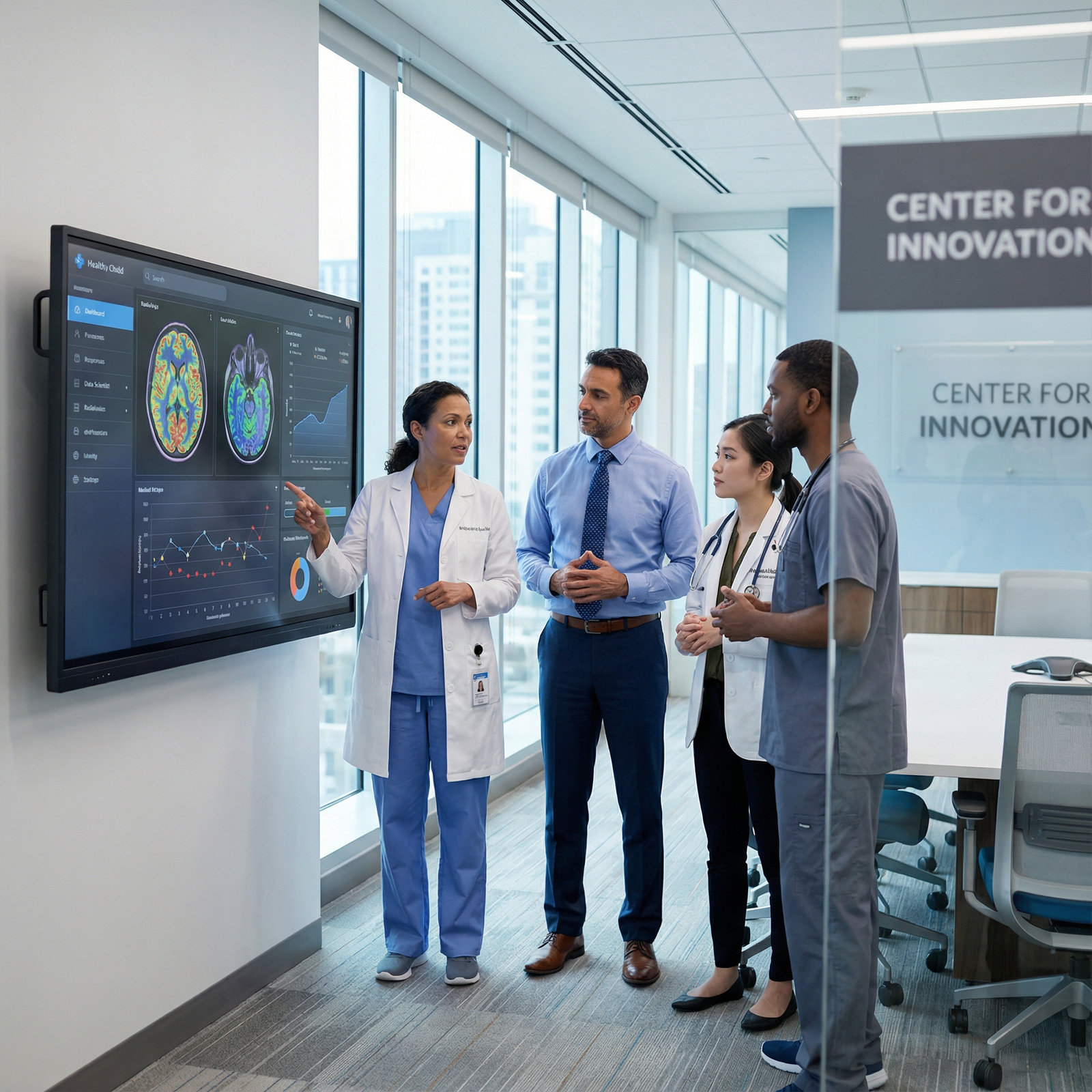
Bias can enter through the data in ugly ways:
- Documentation intensity varies across patients and units
- Proxy variables may reflect access to care or clinician attention rather than physiology
- Language barriers can distort symptom capture or timing
- Complex chronic disease can make "baseline abnormality" look like low priority noise
- Historically underserved populations may be underrepresented or differently represented in training data
A model doesn't have to "intend" bias to produce unequal harm. It only has to inherit the mess from the system that produced the data.
Then there's accountability. Another frequent failure. The tool is live, but no one can answer basic governance questions:
- Who reviews overrides?
- Who investigates missed cases?
- Who monitors subgroup performance?
- Who can pause the model if harm signals appear?
- Who updates policies when drift is detected?
If the answer is vague, that's a red flag.
Black-box models add another layer of danger. If clinicians can't tell why an alert fired, they may either trust it blindly or dismiss it angrily. Neither is safe. You don't need every bedside clinician to know the math in detail, but you do need enough transparency to support informed skepticism. If there are contexts where the model is less reliable, certain units, unusual comorbidity profiles, sparse data situations, say so plainly.
Legal and safety warning signs should not be ignored:
- No governance committee
- No explicit documentation expectations
- No adverse-event review process
- No patient safety monitoring plan
- No fairness audit
- No periodic recalibration schedule
- No clear override and escalation policy
The safer path is not mysterious:
- Audit performance across subgroups.
- Educate clinicians on what the model can and cannot do.
- Recalibrate periodically.
- Assign real accountability.
- Review harms, near misses, and overrides like you mean it.
If you skip ethics and governance because you're dazzled by innovation, you're not being progressive. You're being careless.
How to avoid delays and harm: a safer implementation checklist for sepsis prediction AI
This is the practical part. If you want sepsis AI to help rather than hurt, build the system as if failure is possible. Because it is.
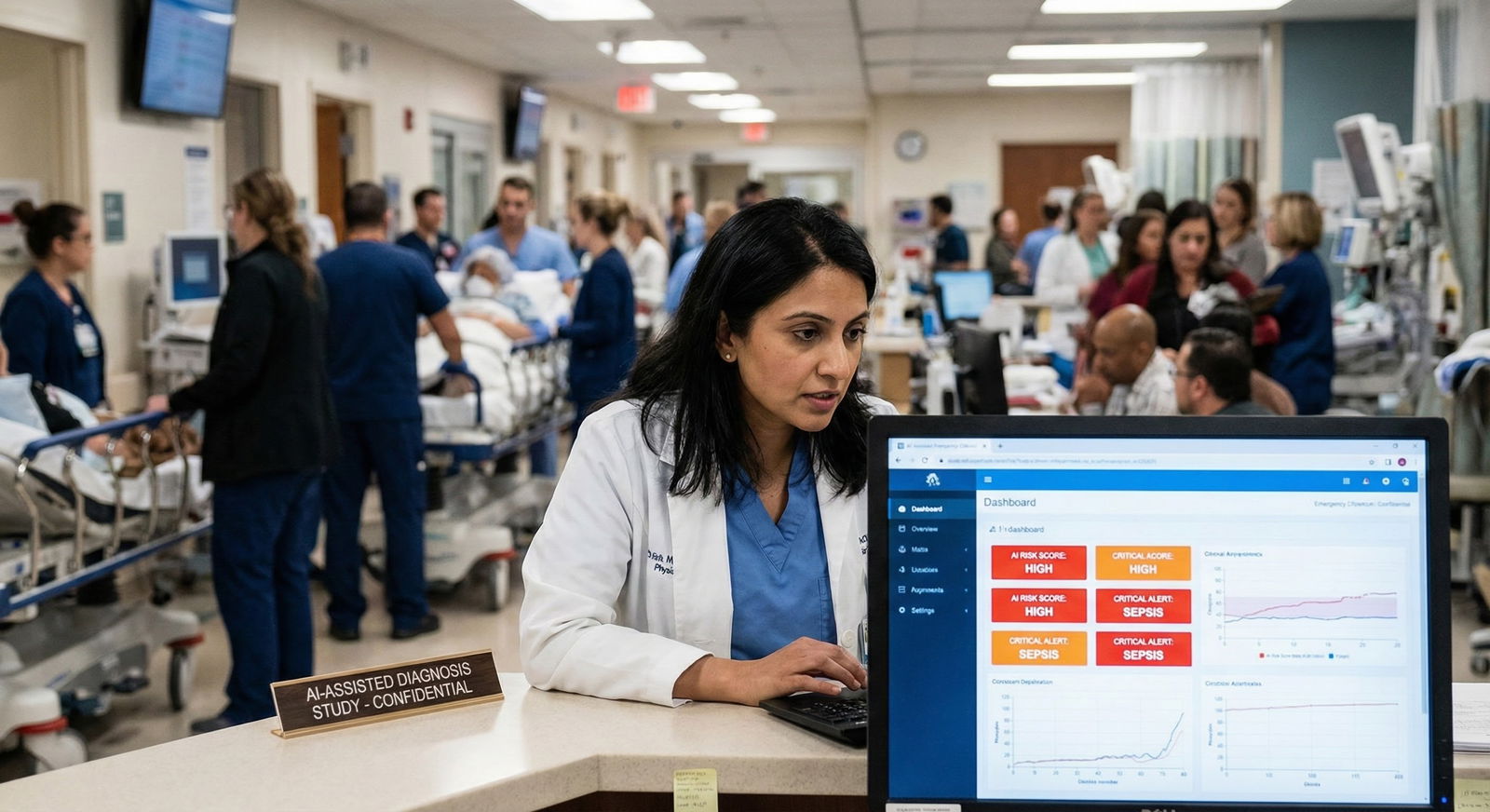
For hospital leaders
Do these before you congratulate yourself for adopting AI:
Validate locally
- Test on your own patients and workflows before go-live.
Define alert ownership
- One alert, one accountable responder.
Connect the alert to a protocol
- Reassessment, labs, escalation, documentation, time targets.
Pilot before scaling
- Start in selected units. Learn. Fix problems.
Monitor outcomes continuously
- Don't stop at accuracy metrics.
Review subgroup performance
- Look for unequal sensitivity, false-positive burden, and missed cases.
Recalibrate regularly
- Drift is normal. Ignoring drift is negligence.
Core metrics that matter more than bragging rights
Track these:
- Time to appropriate antibiotics
- Time to bedside reassessment after alert
- ICU transfer timing
- Rapid response activation timing
- False-alert burden by unit
- Missed sepsis cases
- Clinician acknowledgment rate
- Override patterns
- Adverse events after ignored or negative alerts
For frontline clinicians
Protect yourself and your patients with a few hard rules:
- Treat the alert as a prompt for assessment, not a verdict.
- Document your reasoning when you act or don't act.
- Escalate quickly if the patient is unstable.
- Don't let a low-risk score talk you out of concern at the bedside.
- If the alert system is noisy or unsafe, say so. That's not complaining. That's safety work.
The bottom line
The safest sepsis AI systems are not the ones with the flashiest launch deck. They're the ones built by people humble enough to expect failure, audit it early, and fix it before patients pay the price.
Key takeaways
- Don't confuse a strong research metric with safe real-world performance.
- The most dangerous mistake is letting alerts exist without a clear response pathway.
- A sepsis AI alert is a risk signal, not a diagnosis.
- Alert fatigue, biased data, and vague accountability quietly harm patients.
- Good governance, fairness checks, clinician training, and repeated outcome review are nonnegotiable.
Action steps you should take next
- If you're a leader: ask today who owns each sepsis alert and what the required response time is.
- If you're deploying a model: demand local validation and subgroup analysis before full rollout.
- If you're a frontline clinician: never let an AI output overrule a concerning bedside picture.
- If alerts are being ignored: measure false-positive burden and redesign the workflow instead of blaming staff.
- If no one is reviewing harm or drift: fix that now. Not later.
That's the protective mindset this technology needs. Use AI early. Use it carefully. And never, ever make the mistake of thinking prediction alone saves patients. Action does.