
A fourth-year medical student lands in a rural clinic for a ten-day trip. Day one, they are triaging patients they could not legally see alone at home. Day two, they are handing out deworming tablets and taking photos with children. Day three, they are starting to feel like they are "making a difference." Then they leave. No continuity. No follow-up. No idea whether the blood pressure medications will be refilled, whether the wound they dressed will heal, or whether the local clinicians needed any of what was delivered in the first place.
Now compare that with the resident in a formal institutional Global Health Track. Before departure, there is training. Not the fluffy "be respectful abroad" kind. Actual preparation: ethics, language basics, local disease epidemiology, safety planning, burden-of-disease review, host-partner goals, scope-of-practice limits, and post-return debriefing. They often return to the same site, work under named faculty, and contribute to a partnership that existed before them and will continue after them.
That difference matters. A lot.
Global health is one of the most morally attractive spaces in medicine. It is also one of the easiest places to do harm while feeling virtuous. That is the paradox. Intent is often sincere. Impact is often sloppy.
Let me define the two models clearly:
- Institutional Global Health Tracks (GHTs): structured, longitudinal programs embedded in medical schools or residency systems, with faculty oversight, defined learning objectives, formal partnerships, and evaluation.
- Ad-hoc Short-Term Mission Trips (STMTs): independently arranged or loosely organized service trips, usually brief, often episodic, and commonly lacking standardized oversight or longitudinal accountability.
And yes, the ethical landscape is impossible to ignore. The "White Savior" complex is not just a social media critique. It is a real pattern in medical education: trainees from wealthy systems entering low-resource settings, receiving praise for work they are underqualified to do, and leaving with personal growth while the host community absorbs the risk. I have seen students celebrated for improvisational care abroad that would trigger incident reporting back home. That is not global health. That is regulatory tourism with a halo.
Residency and fellowship directors have caught on. Ten years ago, a mission trip line on an application could pass without much scrutiny. Now experienced reviewers look harder. They ask: Was this supervised? Was it longitudinal? What did the community ask for? What did you learn about systems, equity, and humility? Did you work within your level of training, or were you allowed to cosplay as a fully trained physician because oversight was weaker and the patients were poorer?
Those questions separate serious global health engagement from voluntourism.
This article is for educational purposes only. It is not financial advice, not legal advice, and not tax advice. Figures vary by individual circumstances, so consult a qualified professional before acting.
The Paradox of Global Health: Intent vs. Impact
The strongest applicants in global health are rarely the ones with the most passport stamps. They are the ones who can describe one community partnership in detail. They can tell you the referral bottlenecks, the supply chain failures, the transportation barriers, the local staffing model, the role of community health workers, and the uncomfortable truth that the visiting team was not the hero of the story.
Before finalizing your strategy, consider how global health fellowships judge your medical mission experience to align your CV accordingly.
That is exactly why institutional tracks outperform independent mission trips on educational and ethical grounds.
Short-term trips do offer real benefits. I am not pretending otherwise. They can expose trainees to pathology rarely seen in the United States, sharpen physical exam skills, and force adaptation in resource-limited settings. They can also be professionally formative. But raw exposure is not the same as rigorous education. High volume is not the same as high value. And gratitude from patients does not equal ethical legitimacy.
Here is the core problem with ad-hoc trips: they often reward immediacy over accountability.
You can feel useful in 48 hours. You cannot build equitable care in 48 hours.
The institutional model is slower, less glamorous, and infinitely better. It asks harder questions:
- Who defined the need?
- What happens after we leave?
- Are we strengthening local systems or bypassing them?
- Are trainees learning humility, or just accumulating stories?
- Are outcomes being measured, or are we running on sentiment?
From a career standpoint, this distinction is no longer subtle. Residency directors increasingly favor applicants whose global health work demonstrates:
- longitudinal commitment,
- cultural humility,
- evidence of supervision,
- system-level thinking,
- and ethical self-awareness.
When assessing potential sites, avoid the trap of thinking more countries visited equals better global health experience.
The old mission-trip essay full of epiphanies and smiling group photos is not persuasive anymore. Frankly, it should not be.
Quantifying Value: Structural Rigor in GHTs
Institutional Global Health Tracks have a major advantage: they are built like educational programs instead of emotional experiences.
At minimum, a serious GHT includes three phases:
Pre-departure training
- local burden of disease
- ethics in low-resource clinical care
- scope of practice rules
- travel safety and emergency planning
- language and cultural orientation
- health systems background
- reflective practice expectations
Supervised clinical or research immersion
- defined host-site roles
- faculty mentorship
- local preceptor involvement
- documented objectives
- explicit limits on autonomy
Post-return debriefing
- case review
- ethical reflection
- psychological processing
- quality improvement analysis
- sustainability planning
That structure is not bureaucracy for its own sake. It is what separates education from extraction.
The literature on longitudinal global health engagement points in a consistent direction: continuity matters. Programs with repeat engagement at the same site are more likely to support patient follow-up, align with local priorities, improve trainee understanding of health systems, and avoid redundant or destabilizing interventions. That should not be surprising. Continuity of care is not some luxury principle that only applies in Boston or Toronto. It matters even more where specialist access is limited and every fragmented encounter has downstream consequences.
I have watched the difference firsthand. In one structured partnership, residents returned to the same maternal health program over several years. They did not arrive asking, "What procedures can I do?" They arrived asking, "What happened with the hypertension screening protocol we piloted last year?" That is mature global health. It is iterative. It is a relationship. It remembers what happened before.
Institutional oversight is another dividing line.
Strong GHTs often involve:
- faculty governance,
- host-site agreements,
- malpractice and liability review,
- safety protocols,
- formal supervision plans,
- and, when research or data collection is involved, IRB review or equivalent ethical oversight.
That matters because "do no harm" is not suspended at customs. If anything, the standard should be tighter abroad, not looser. Patients in low-resource settings are not your workaround for limited experience at home.
There is also a sustainability question that mission-trip culture usually handles badly. Everybody loves to say "sustainable." Very few programs define it. Serious institutional tracks do. They measure sustainability with actual metrics, such as:
- repeat site engagement over years rather than one-off visits,
- local leadership participation in agenda setting,
- capacity-building outcomes,
- patient retention or follow-up rates,
- training delivered to local staff,
- referral completion,
- and whether the host institution would still value the partnership if no visiting trainees came.
That last question is brutal. It should be. If the exchange mainly benefits the visiting learner, then it is not a partnership. It is academic tourism.
The best GHTs increasingly track outcomes in two directions:
- learner outcomes: cultural humility, systems-based practice, diagnostic adaptability, ethical reasoning;
- community outcomes: continuity, access, protocol adherence, training transfer, and host satisfaction.
That dual-accountability model is the future. Anything less is sentimental branding.
The Mission Trip Wildcard: Analyzing Risks and Rewards
Independent mission trips are the wildcard because they vary wildly. Some are run by deeply responsible organizations with durable local ties. Others are chaos with matching T-shirts.
The attraction is obvious. High clinical volume. More autonomy. Less administrative friction. More memorable stories. For a student or resident who feels boxed in by institutional rules, that can be intoxicating.
And that is exactly why it is risky.
The average ad-hoc mission trip suffers from three structural weaknesses:
- poor supervision,
- weak continuity,
- unclear accountability.
If something goes wrong, who owns the complication? The host clinician? The sending church? The NGO with no formal educational framework? The trainee? Too often, the answer is "nobody clearly," which is a terrible answer in medicine.
Liability and scope-of-practice issues are not abstract concerns. They are where good intentions crash into reality. I have seen learners abroad perform tasks they had never done independently at home because the environment was less regulated and the need was great. Need does not erase competence standards. Scarcity does not convert inexperience into expertise.
This happens especially in procedural fields. Surgeons, anesthesia trainees, emergency clinicians. The logic becomes dangerous very quickly:
- the pathology is advanced,
- local access is limited,
- the visiting team is here now,
- therefore the team should do whatever it can.
No. That is how complications get exported and then abandoned.
The mismatch between visiting skill sets and local needs is another recurring problem. A team may arrive prepared for cleft repairs, cataracts, or hernia operations while the community's more urgent needs are supply chains for antibiotics, prenatal blood pressure screening, diabetes continuity, local training, or transport to referral centers. Procedural work photographs better, so it often gets prioritized. That is not cynical speculation. It is how many short-term missions market themselves.
Educationally, mission trips can still be powerful. You may see advanced rheumatic heart disease, untreated clubfoot, severe malnutrition, or obstetric emergencies that expose the brutal effects of delayed access. Those experiences can permanently reshape how you think about health inequity. I would never dismiss that.
But without structure, the educational lesson can turn into the wrong one. Trainees may internalize that clinical heroics matter more than systems, that improvisation is always virtuous, or that standards can be relaxed for poor patients. Those are poisonous lessons.
Then there is the ugly but real issue of resume padding.
Program directors are not impressed by generic mission-trip claims anymore. If your application says:
- "Participated in medical mission to X country" and nothing more, many reviewers mentally file that under shallow exposure.
What gets attention is specificity:
- What was your role?
- Who supervised you?
- Was there a pre-existing partnership?
- Did you return?
- Did you produce scholarship, quality improvement, or capacity-building work?
- Can you discuss ethical tensions honestly, without self-congratulation?
The worst answers are the polished ones. "It taught me gratitude." Fine. That says almost nothing. Gratitude is not a global health competency. Cultural humility, systems awareness, and disciplined restraint are.
Here is my blunt view: if a mission trip primarily gave you stories, photos, and a stronger personal statement, but left no durable benefit for the host community, then the host community subsidized your professional development. That is not noble. That is extraction dressed up as service.
Strategic Decision Making: Building Your Global Health Portfolio
If you are deciding between joining a formal Global Health Track and signing up for an independent mission trip, start with honesty. Not branding. Not what will look noble online. Honesty.
Ask yourself:
- Do you want a meaningful long-term role in health equity?
- Or do you want one intense experience abroad?
Those are different goals. Do not confuse them.
If your aim is career development in academic global health, public health systems, infectious disease, maternal-child health, surgery in resource-limited settings, or equity-focused policy, the institutional route is better. Full stop. It gives you mentorship, scholarship opportunities, ethical scaffolding, and a language for discussing impact beyond "I helped."
If your aim is exposure, personal motivation, or faith-based service, an independent trip may still have value. But only if the organization is disciplined about supervision, local partnership, and continuity. If they cannot explain who their local clinical leader is, what happens between trips, and how they prevent trainees from practicing above their level, walk away.
Financially, the difference can be substantial even when nobody likes to say it out loud. Institutional programs may offer:
- travel grants,
- departmental funding,
- elective credit,
- malpractice review,
- protected time,
- and access to faculty networks.
Independent trips are often paid out of pocket, organized informally, and supported by personal fundraising. That can skew who gets to participate and can incentivize organizations to market emotionally rather than rigorously. The fundraising video is often smoother than the ethics policy. Red flag.
The evidence on competency development also leans toward structured experiences. Residents in longitudinal, mentored global health programs generally report stronger gains in:
- resource-limited clinical reasoning,
- cultural humility,
- public health literacy,
- systems-based practice,
- and commitment to underserved care after training.
That pattern appears again and again. Structure deepens reflection. Repetition sharpens judgment. Supervision reduces nonsense.
Does that mean every institutional track is excellent? Of course not. Some are all branding and no depth. Some call themselves "global health" when they really mean one elective abroad and a lecture series. You still need to interrogate the program.
A strong GHT should be able to answer:
- How long has the partnership existed?
- Who leads on the host side?
- How are learners evaluated?
- What are the rules on scope of practice?
- Is there post-return debriefing?
- Are outcomes tracked?
- What has the partnership changed for the host institution?
If they cannot answer those questions, the structure may be cosmetic.
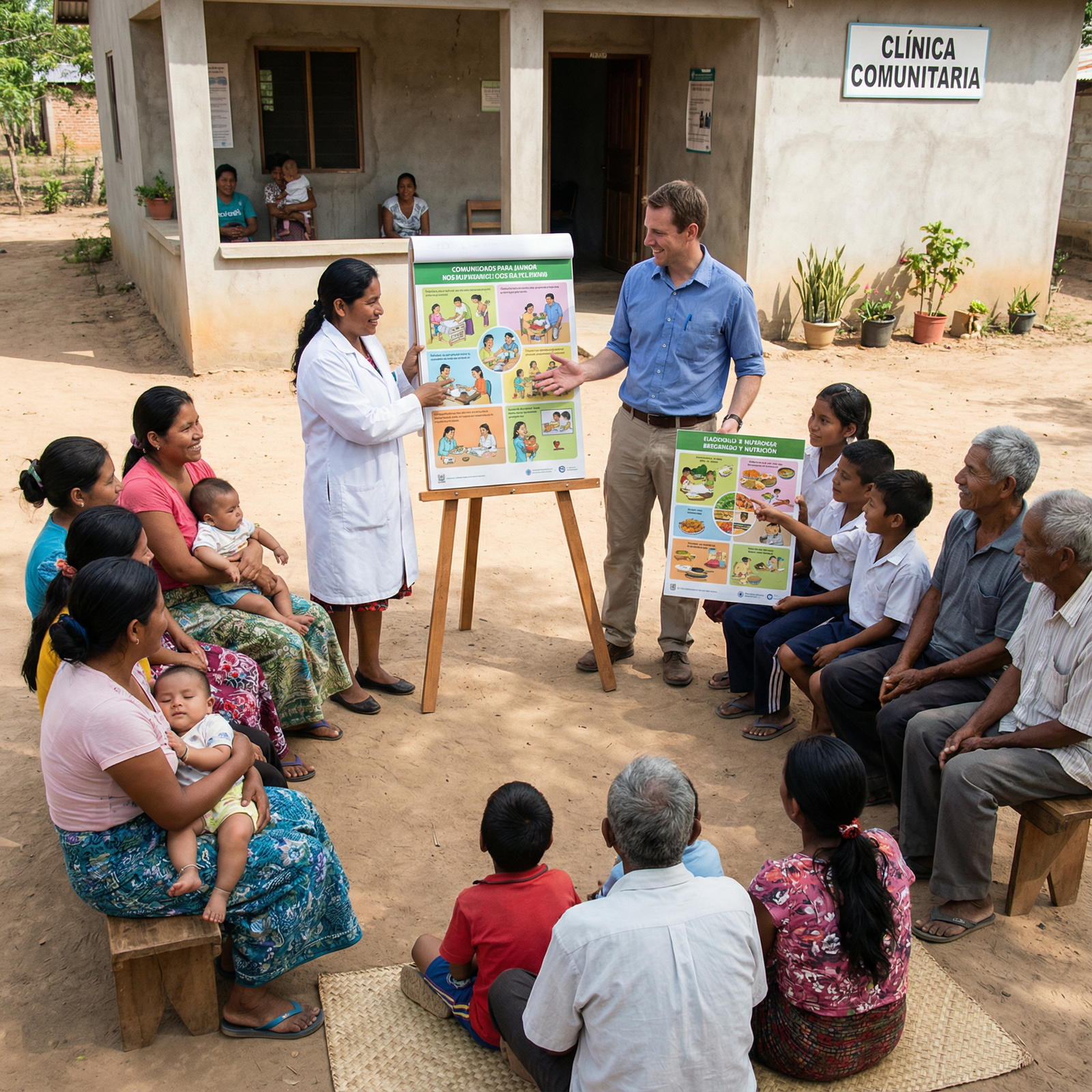
The bigger move, though, is to stop treating global health as a trip category. It is not a trip category. It is a professional orientation toward health equity, reciprocity, and systems change.
That means your portfolio should extend beyond travel:
- underserved domestic clinical work,
- immigrant and refugee health,
- community-based participatory research,
- language acquisition,
- policy engagement,
- implementation science,
- and mentorship under faculty who actually do this work seriously.
You do not need to cross an ocean to prove you care about inequity. In fact, people who ignore inequity at home and chase dramatic experiences abroad usually reveal more about themselves than they realize.
If you want to be taken seriously, build a body of work that shows consistency. One clinic. One partnership. One line of inquiry. Repeated effort over time. That is how credibility forms.
Summary
The data and the pattern in medical education are clear. Institutional Global Health Tracks outperform independent mission trips on the outcomes that actually matter: ethical rigor, continuity, supervision, sustainability, and long-term career value.
Independent mission trips can be meaningful, but they are too often clinically loose, ethically underbuilt, and professionally overrated. They may offer intense exposure and memorable stories, yet exposure without accountability is not excellence. It is just adrenaline with a service label.
Here is the bottom line:
- Structured GHTs provide stronger educational design, better oversight, and more credible evidence of commitment.
- Independent mission trips may offer volume and autonomy, but often at the cost of continuity, safety, and ethical clarity.
- Residency and fellowship leaders increasingly prioritize cultural humility, sustainability, and longitudinal engagement over one-off "service" narratives.
- Real global health work is not about parachuting in. It is about staying accountable to communities, building local capacity, and understanding that partnership matters more than personal transformation.
If you are building your path in global health, choose the model that disciplines your ego, not the one that flatters it. That is the better education. It is also the better ethics.


