
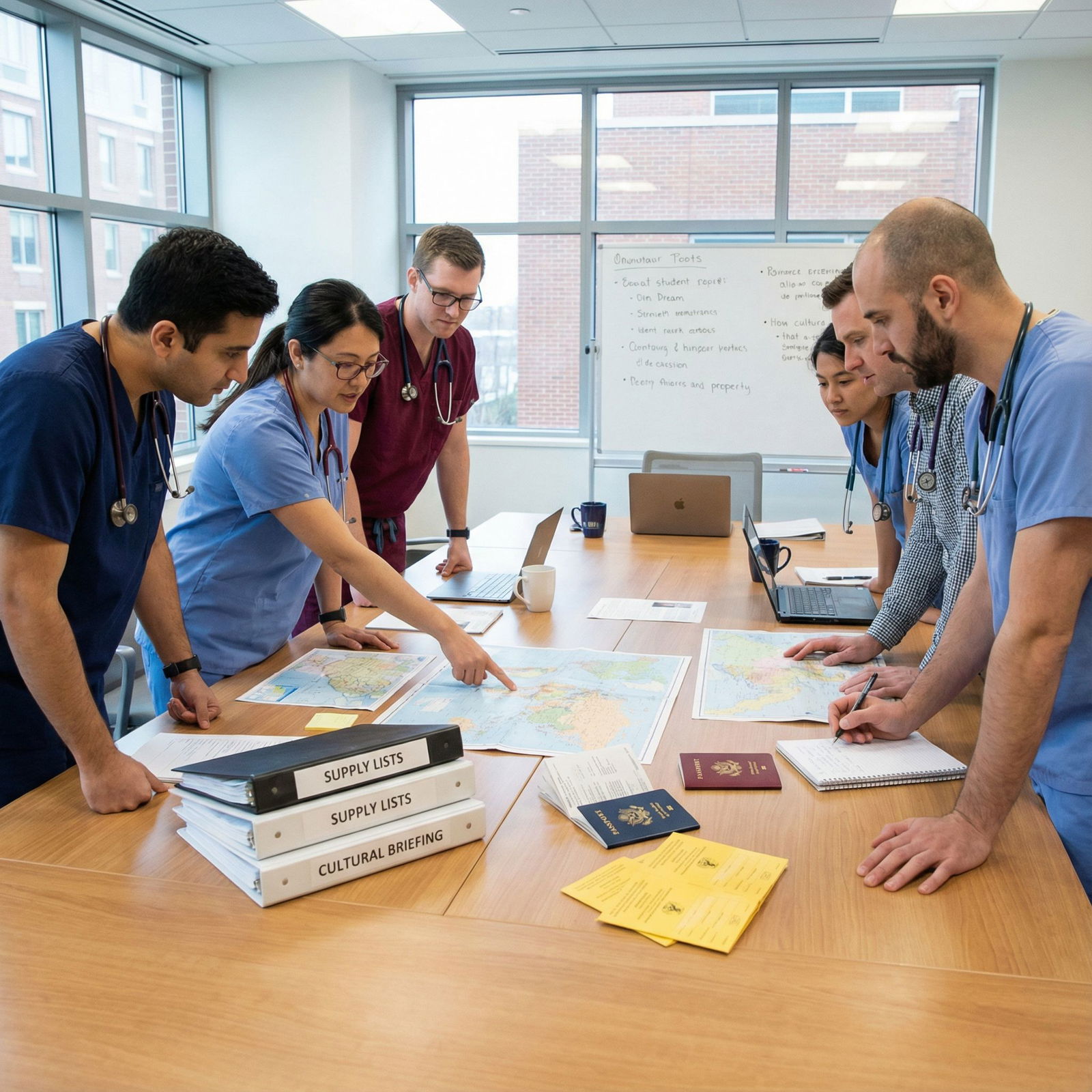
The belief that short-term medical missions boost residency match chances is largely a myth—and the sparse data we have quietly backs that up.
The core reality: the match runs on numbers, not narratives
Let me be blunt. Residency match decisions are dominated by a small set of quantifiable variables: exam scores, clerkship performance, class rank, and letters from known faculty. Everything else—including medical missions—sits in a noisy “maybe helpful, maybe irrelevant” bucket.
The problem: we do not have robust, large-scale, mission-specific match outcome data. But we do have several related data streams that point in the same direction:
- Program directors rarely rank “global health / mission trips” high as decision factors.
- Global health interest correlates with certain specialties and applicant profiles—but correlation is not causation.
- Short-term experiences are often indistinguishable from generic extracurriculars when screened at scale.
So the data does not say “missions hurt you.” It mostly says: they do not rescue a weak application, and they only matter when they are deep, longitudinal, and clearly tied to your clinical and ethical growth.
Let us unpack this with actual numbers.
What we know from NRMP and program director data
There is no NRMP table labeled “match rate differential for applicants with medical missions.” That data does not exist. But we do have a few proxies.
1. What program directors say they care about
The “NRMP Program Director Survey” is the closest thing we have to a ranked list of what matters. In recent editions, the top selection factors (for most specialties) look like this:
- USMLE Step 2 CK score (and historically Step 1)
- MSPE / Dean’s Letter
- Clinical grades in core clerkships
- Letters of recommendation (especially from known faculty)
- Class rank / Alpha Omega Alpha
- Interview performance
- Demonstrated interest in the specialty
“Global health experience” or “international electives” occasionally show up under broader categories like “Other life experiences” or “Unique aspects of application,” but they are never near the top.
| Factor Category | Median Importance Rank* |
|---|---|
| Board scores / exams | 1–2 |
| Clinical grades | 2–3 |
| Letters of recommendation | 2–4 |
| MSPE / class rank | 3–5 |
| Research / scholarly activity | 4–7 |
| Volunteer / service experiences | 8–12 |
| Global health / international | 10–15 (when listed) |
*Approximate composite from multiple NRMP PD surveys; exact rank varies by specialty.
So, from a pure data hierarchy perspective:
Medical missions sit in a mid- to low-priority bucket, competing with dozens of other “nice to have” experiences. Not irrelevant. Not central.
2. Specialty patterns: who actually pursues missions?
The literature on “global health” and “missions” tends to focus on:
- Primary care: family medicine, internal medicine, pediatrics
- EM and surgery with global health tracks
- Students with strong service orientation (often already leaning toward less competitive specialties)
These applicants already have higher baseline match rates compared with hyper-competitive specialties like dermatology, orthopedics, and plastics. So if you see a higher overall match rate among students with global health experience, be careful. That might simply reflect specialty choice and applicant type, not any causal benefit from missions.
3. Global health track outcomes
A few institutions publish internal outcome data for students in global health tracks or international health concentrations. Patterns are remarkably consistent:
- These students match at rates similar to or slightly higher than their institutional average.
- They cluster into certain specialties (IM, peds, FM, EM, OB/GYN).
- Their match strength seems tied more to overall academic performance than to the presence of “global health” as a line item.
You almost never see: “The only difference between matched and unmatched was a mission trip.” The data rarely, if ever, identifies missions as the decisive factor.
Short-term missions: high narrative value, low predictive value
Most “medical missions” for students fit one of three models:
- 1–2 week faith-based overseas trip during preclinical years
- 2–4 week international elective during fourth year
- Multi-trip pattern with the same site, sometimes evolving into research or QI projects
Let us group these by signal strength from a selection-committee perspective.
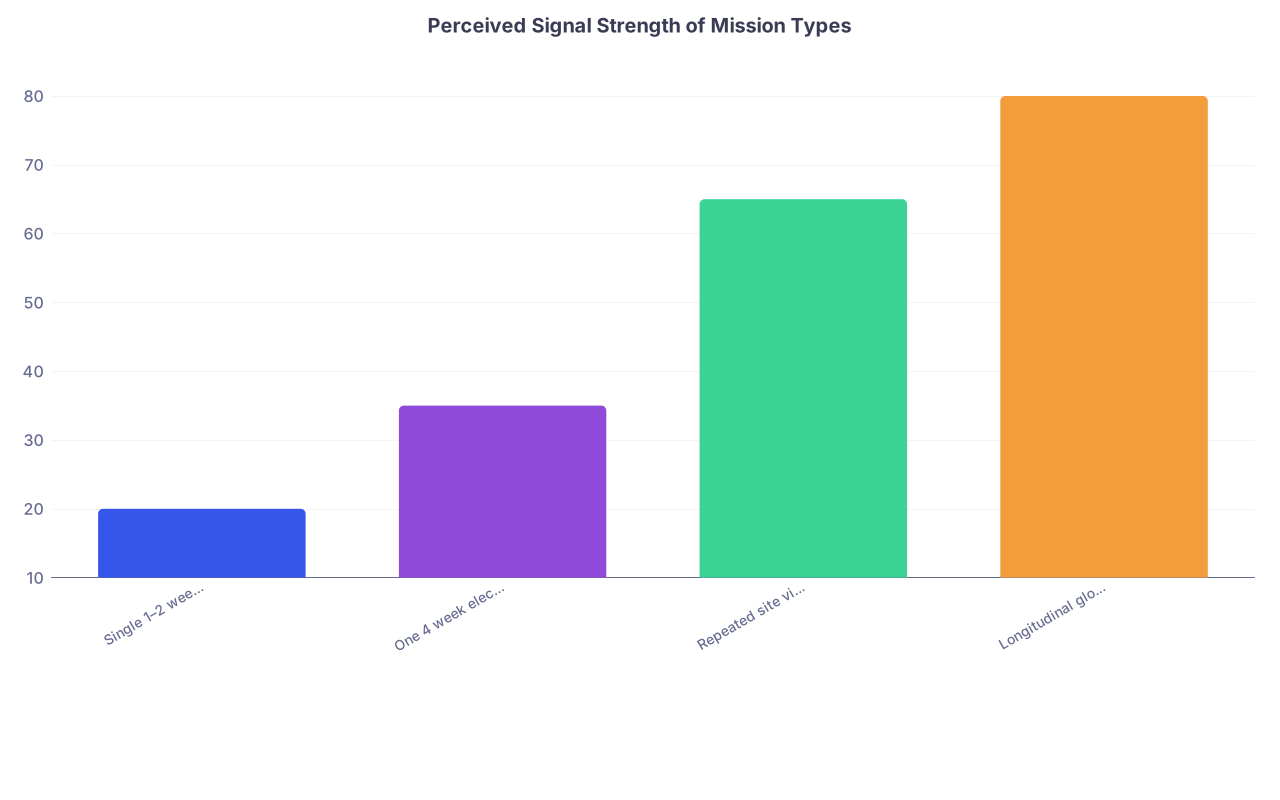
| Category | Value |
|---|---|
| Single 1–2 week trip | 20 |
| One 4 week elective | 35 |
| Repeated site visits | 65 |
| Longitudinal global health track | 80 |
Think of that chart as “approximate perceived value score out of 100” based on:
- Depth of engagement
- Ability to document real responsibility and learning
- Potential for letter writers and scholarly output
A single preclinical, short-term mission with little follow-up looks like any other volunteer week. It signals compassion and interest, yes. But in the data hierarchy it is weakly predictive of anything that PDs can trust: reliability, clinical independence, judgment under pressure.
The experiences that actually move the needle:
- Longitudinal involvement with a site or population
- Concrete outcomes (research, QI projects, curriculum development)
- Strong, specific letters from supervisors who observed your clinical work
Those are exactly the patterns you see in applicants whose “global health” contributions get discussed positively in ranking meetings.
How missions interact with core match metrics
The data is very clear on one thing: nothing romantically “offsets” low board scores or weak clerkship performance. Missions included.
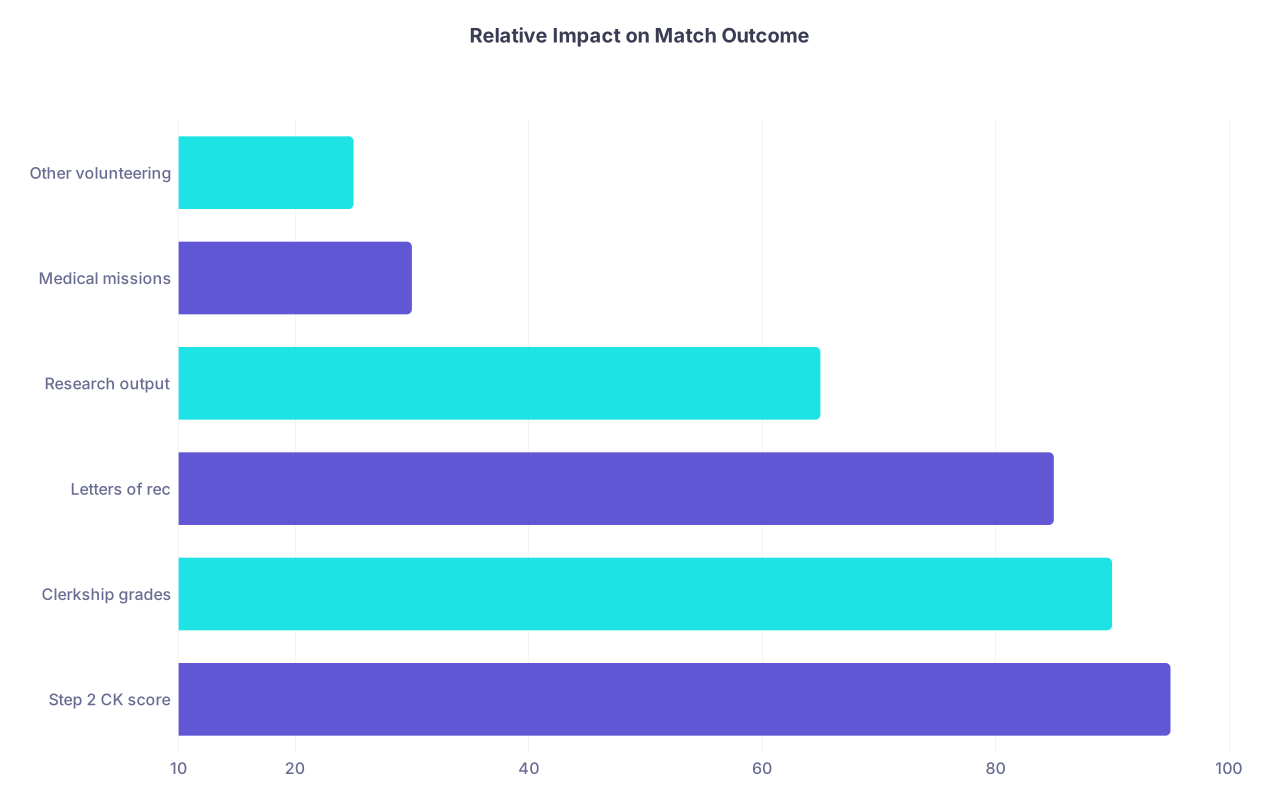
| Category | Value |
|---|---|
| Step 2 CK score | 95 |
| Clerkship grades | 90 |
| Letters of rec | 85 |
| Research output | 65 |
| Medical missions | 30 |
| Other volunteering | 25 |
Consider that chart as a conceptual scale out of 100 for impact on probability of interview and rank position.
What actually happens in committee rooms:
- Strong metrics + meaningful global health: mission experience is framed as a positive differentiator and a tie-breaker between similarly strong candidates.
- Weak metrics + mission-heavy narrative: the experience is acknowledged, but it does not compensate for academic concerns.
I have heard versions of the following more times than I can count:
“Nice global health background, but their Step 2 is below our usual range. We cannot justify bringing them in just for that.”
Or:
“Between these two, both solid Step scores, this one clearly has a long-term commitment to underserved care, including global work. That fits our program’s mission.”
This is the real role of missions: secondary differentiator, not primary driver.
Ethical quality matters more than “global” branding
There is a growing literature—especially in global health ethics—raising concerns about short-term “voluntourism” masquerading as clinical service. Program directors and faculty who actually do global health work pay attention to this.
The data we do have is more qualitative than quantitative, but the patterns are predictable:
- CVs that emphasize “doing surgeries abroad” without proper training or supervision raise red flags.
- Essays that center the student as the hero and local staff as background props tend to be viewed negatively by ethically attuned readers.
- Programs with established global health tracks explicitly favor applicants who demonstrate systems thinking, humility, and collaboration with local partners.
From the vantage point of match outcomes, this translates into a simple rule:
Ethically sloppy mission narratives can hurt you more than ethically thoughtful ones can help you.
If you portray mission work as a chance to “do more advanced procedures than in the US,” you are signaling poor judgment. And PDs rely heavily on inferred judgment when assessing risk.
Where missions can legitimately strengthen your application
Let us move from “do they help?” to “when do they actually add measurable value?” The data suggests four practical channels.
1. Signaling for specific program types
Programs with a declared focus on:
- Global health tracks
- Health equity and underserved care
- Refugee / immigrant health clinics
tend to preferentially value applicants whose past behavior matches their mission statement.
| Program Type | Why Missions Help |
|---|---|
| IM with global health track | Clear alignment with track goals |
| Family medicine with outreach | Demonstrates service orientation |
| Pediatrics with global projects | Shows child health focus, adaptability |
| EM with int'l partnerships | Signals interest in acute care abroad |
In these contexts, mission experience:
- Supports the “goodness of fit” story.
- Increases the plausibility that you will actually use the program’s global health resources.
- Differentiates you from equally qualified peers with generic CVs.
But again: this is additive, not foundational.
2. Source of strong, specific letters
A mission by itself is just a line item. A letter from an attending or global health director who supervised you clinically during that mission can change the weight dramatically.
High-value letters share certain features:
- Comparisons to other trainees (“among the top 10% of students I have worked with abroad”)
- Concrete descriptions of responsibility (“managed follow-up for 15–20 chronic care patients daily, under supervision”)
- Observed ethical reasoning and cultural humility
When those letters exist, you can see the impact in application reviews: PDs mention them explicitly as reasons to interview or rank highly.
3. Foundation for scholarly output
Many global health experiences generate:
- Retrospective chart reviews
- Quality improvement projects (triage redesign, follow-up systems, etc.)
- Education research (local training programs, curriculum development)
These are measurable. They create PubMed entries, conference posters, or at least institutional presentations. And research output does correlate with match success in more competitive specialties, even when the topic is not strictly within that specialty.
Paradoxically, a well-executed mission that leads to a QI poster or paper might be helping you more via “research productivity” than via “mission experience”.
4. Coherent professional identity
The data from personal statements and interviews is qualitative but consistent:
Applicants who use mission work as part of a longitudinal, coherent narrative—service in college, domestic underserved work in med school, then structured global engagement—are perceived as more authentic and directed.
That matters for:
- Interview scores
- “Would they actually stay and use our resources?” judgments
- Internal advocacy when faculty discuss you as a “mission fit”
Programs hate the “checkbox” vibe: a single, isolated trip in MS1 with no follow-up, then nothing. They notice the pattern.
The hidden risk: time and opportunity cost
There is an unspoken cost side that rarely gets discussed honestly. Every mission week is a week not spent on:
- Dedicated board prep
- Research with home faculty
- Longitudinal work at local safety-net clinics
- Sleep and recovery during a brutal training pipeline
Look at your calendar as a constrained optimization problem. You have 168 hours a week, finite vacation, and high-stakes exams.
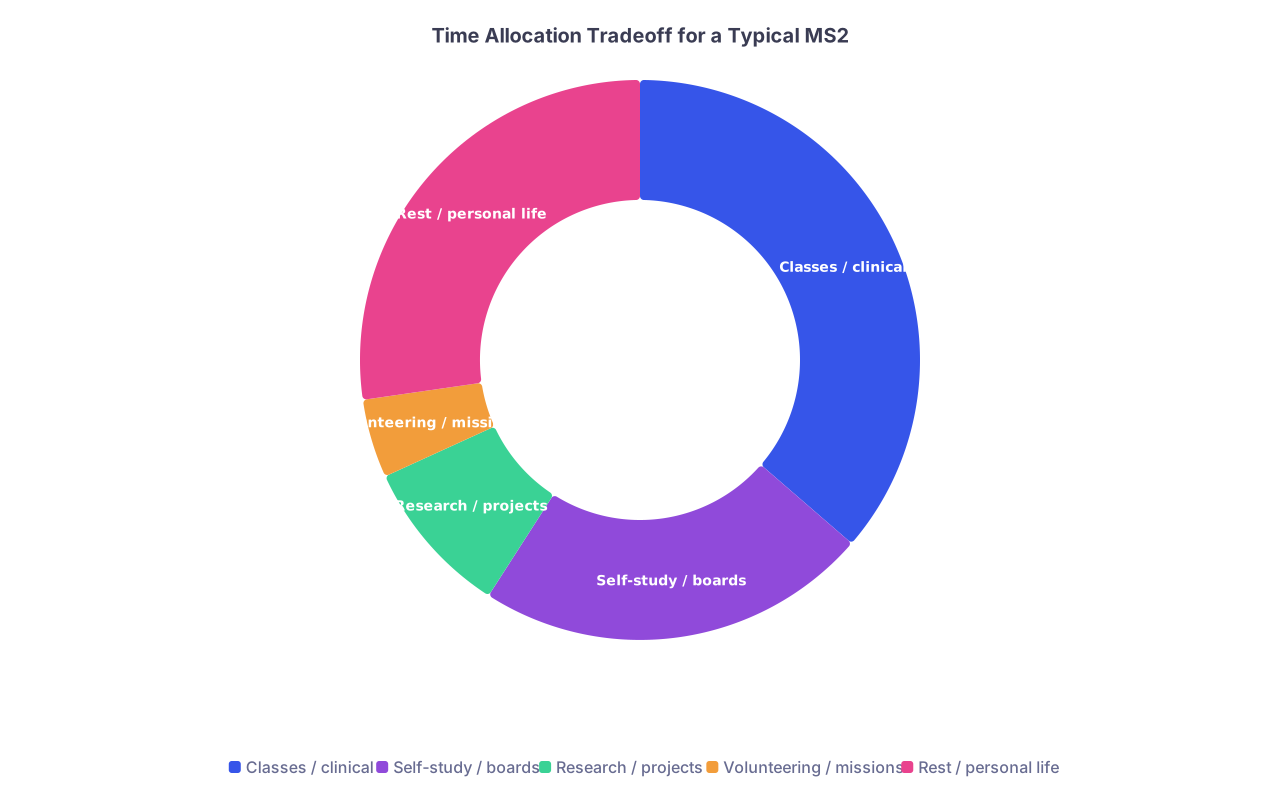
| Category | Value |
|---|---|
| Classes / clinical | 40 |
| Self-study / boards | 25 |
| Research / projects | 10 |
| Volunteering / missions | 5 |
| Rest / personal life | 30 |
Shifting even 1–2 weeks into a mission during critical board prep windows can have outsized negative effects if it displaces study time. A 5–10 point drop in Step 2 CK score matters much more for your match odds than any marginal gain from an extra trip abroad.
This is where data-driven thinking beats wishful thinking:
- Optimal if: missions are scheduled in low-stakes windows, built into formal electives, or integrated with research so they serve multiple functions.
- Suboptimal if: last-minute service trips cannibalize exam prep time or core clinical rotations.
How to make mission work actually count
If you are going to invest time and money into medical missions, do it in a way that holds up under the cold scrutiny of program directors and data.
Prioritize longitudinal over one-off
Returning to the same site, building projects over time, and maintaining local relationships are far more compelling than “I went to three different countries for a week each.”Align with your target specialty
An internal medicine applicant with chronic disease management work in a low-resource clinic can draw a very clean line from mission to residency. An aspiring neurosurgeon whose only clinical narrative is “I took blood pressures on a mission trip” will struggle to make it relevant.Integrate scholarship and reflection
Turn your experience into something measurable: QA project, educational intervention, poster. Combine that with thoughtful reflection on ethics and systems, not just “it made me grateful for what we have.”Protect your core metrics
Never trade Step 2 CK performance or major clerkship grades for a marginal mission opportunity. From a probability-of-match standpoint, that is a losing gamble.
Bottom line: what the limited data really suggests
The cleanest way to summarize the evidence is this:
- Medical missions alone do not systematically improve match outcomes.
- When embedded in a strong application, they can be a meaningful secondary advantage—especially for programs and tracks with explicit global or underserved missions.
- Poorly framed or ethically naive mission narratives can damage your credibility and judgment in the eyes of the very people reading your file.
Use missions to grow as a physician and human being. Use data to keep their role in your match strategy in perspective.


