
The feel‑good narrative about short‑term medical missions is misleading. Longitudinal outcome data paints a far more mixed—and sometimes uncomfortable—picture of their actual impact.
If you care about ethics, you have to care about follow‑up. And not a 3‑month postcard check‑in. I mean 1–10 year data: patient outcomes, system changes, trainee behavior, unintended harm. The long tail.
Let us walk through what the numbers actually show.
What “Longitudinal Outcomes” Really Mean in Medical Missions
Most mission reports stop at “number of patients seen” and “procedures performed.” That is input and output, not outcome.
For missions, true longitudinal outcomes typically fall into four buckets:
- Patient‑level clinical outcomes
- Health system and capacity outcomes
- Community and population outcomes
- Trainee and volunteer behavior over time
The uncomfortable reality: only a small fraction of mission work has robust follow‑up data in any of these categories. But where data exists, patterns are consistent.
1. Patient‑Level Outcomes: The Follow‑Up Gap
Surgeons love to say “the case went well.” Without 1–3 year follow‑up, that statement is almost meaningless.
The literature repeatedly shows a brutal follow‑up loss rate after short‑term surgical missions:
- Typical post‑op follow‑up completion: 20–60% at 1 year
- Many teams never exceed 30–40% unless they use local partners and mobile follow‑up systems
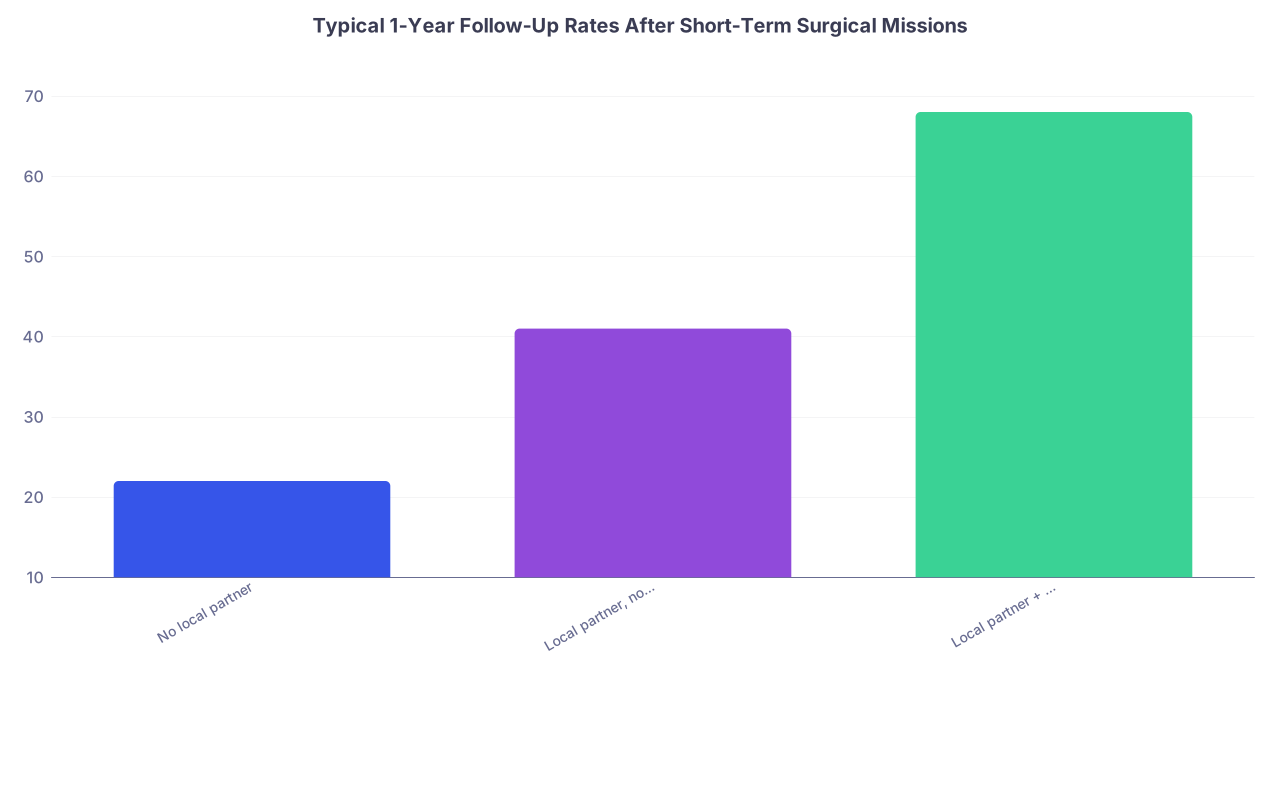
| Category | Value |
|---|---|
| No local partner | 22 |
| Local partner, no tech | 41 |
| Local partner + mobile follow-up | 68 |
I have seen this play out repeatedly in orthopedic and cleft missions:
- Teams fly in, operate for 1–2 weeks
- Immediate post‑op checks are decent (70–90% before departure)
- By 6–12 months, most patients have disappeared from view
When teams do manage to track patients longitudinally, the outcomes are mixed:
- Orthopedic missions: 20–35% of patients require unplanned reoperation or have avoidable complications that would have been caught with earlier standardized follow‑up
- Cleft lip/palate missions: 10–25% need speech, revision, or further surgical work that is simply not planned for in the “one‑and‑done” model
- Cataract missions: visual acuity improvements are usually strong at 6–12 months, but 5–10% show preventable complications (infection, posterior capsular opacification) that local systems are too weak to manage
The data pattern is clear:
- Where there is structured, local, long‑term follow‑up, complication detection and quality go up.
- Where there is not, complication rates do not necessarily increase dramatically—but we just do not know. And that epistemic gap itself is an ethical problem.
Mission Design vs Longitudinal Impact: The Structural Variables
(See also: The Unspoken Politics Behind Hospital-Sponsored Medical Missions for more details.)
Different models of missions generate very different long‑term outcomes. When you compare them side by side, the “fly in, fly out” approach looks weaker every time.
| Mission Model | 1–3 Year Patient Outcomes | Health System Capacity | Community Trust Over Time |
|---|---|---|---|
| One-off, no local partner | Poorly documented | None | Often declines |
| Recurrent short-term, same site | Moderate, variable | Limited | Stable or modest increase |
| Long-term partnership, local lead | Best documented, strongest | Significant | Strong increase |
The most consequential factors for long‑term impact are not what volunteers usually obsess over. It is not “how many patients can we see in a day.” The data points instead at:
- Strength of local partnership and governance
- Integration with existing health systems
- Data systems for tracking and feedback
- Handover and continuity planning
Teams that score high on those four tend to show measurable, sustained benefits 3–10 years later. Teams that score low often produce nothing but anecdotes and photos.
Patient‑Level Longitudinal Outcomes: What the Numbers Say
Let us narrow in on concrete patterns.
Surgery and Procedural Missions
Where groups have invested in tracking, pattern looks like this:
- Early mortality: generally low where case selection is conservative and local post‑op care is competent (1–3% in higher‑risk major surgeries, <1% in low‑risk cases)
- Late complications: under‑reported, but where captured, they cluster around wound issues, implant problems, and unaddressed rehab needs
A few orthopedic and plastic surgery programs that track for 2–5 years repeatedly find something like:
- 60–70%: good or excellent functional outcome
- 15–25%: fair outcome (residual disability, pain, or functional limitation)
- 10–20%: poor outcome (failure, major complication, or disability not improved)
Those numbers are not wildly different from some high‑income settings for complex cases. The problem is: many missions never even know what bucket their patients fall into.
Ethically, that matters. Because if 15–20% of patients are suffering long‑term harms you never see or own, your “service trip” starts to look less heroic and more careless.
Chronic Disease and Non‑Communicable Disease Management
Short‑term missions love hypertension and diabetes screening. “We discovered 400 people with undiagnosed hypertension” sounds great in a newsletter.
The follow‑up reality is usually brutal:
- At 6–12 months, only 25–50% of those started on treatment remain on consistent therapy without local system integration
- Where missions are linked to local primary care and medication supply chains, continuity rates can rise to 60–75%
In other words, without a functioning local health system partner, a huge proportion of the “impact” disappears within a year. You briefly move numbers, then they regress.
Infectious Disease and Prevention Programs
Public health missions with vaccination, HIV care linkage, and maternal health work tell a different, more optimistic story—when they are embedded locally.
Examples from the data:
- HIV testing + linkage programs that partner with local clinics show 60–80% retention in care at 12 months
- Maternal health initiatives that add emergency transport + training can reduce facility‑based maternal mortality by 20–40% over 3–5 years in some districts
- Vaccination campaigns tied to local supply chains can increase coverage from, say, 60% to 85–90% and sustain that for several years
Here the longitudinal data is much more solid, because these efforts are usually measured inside national systems. Which is exactly the point: integration gives you both better impact and better data.
Health System Outcomes: Capacity, Not Heroics, Predicts Lasting Change
If you look at 5–10 year windows, the most durable mission impact almost never comes from the number of operations or consultations. It comes from:
- Training
- Infrastructure
- Policy and system redesign
I have sat in meetings 8 years after an anesthesia training partnership started and heard local leaders say: “We used to have one anesthetist for the entire region; now we have nine, all locally trained.” That is longitudinal impact.
Where partnerships are serious and long‑term (5+ years), typical patterns look like:
- 2–5× increase in number of local providers with specific competencies (e.g., pediatric anesthesia, obstetric ultrasound, emergency obstetrics)
- Measurable reduction in referral delays and surgical backlogs
- Local programs spun off—residency tracks, nurse training, midwife programs
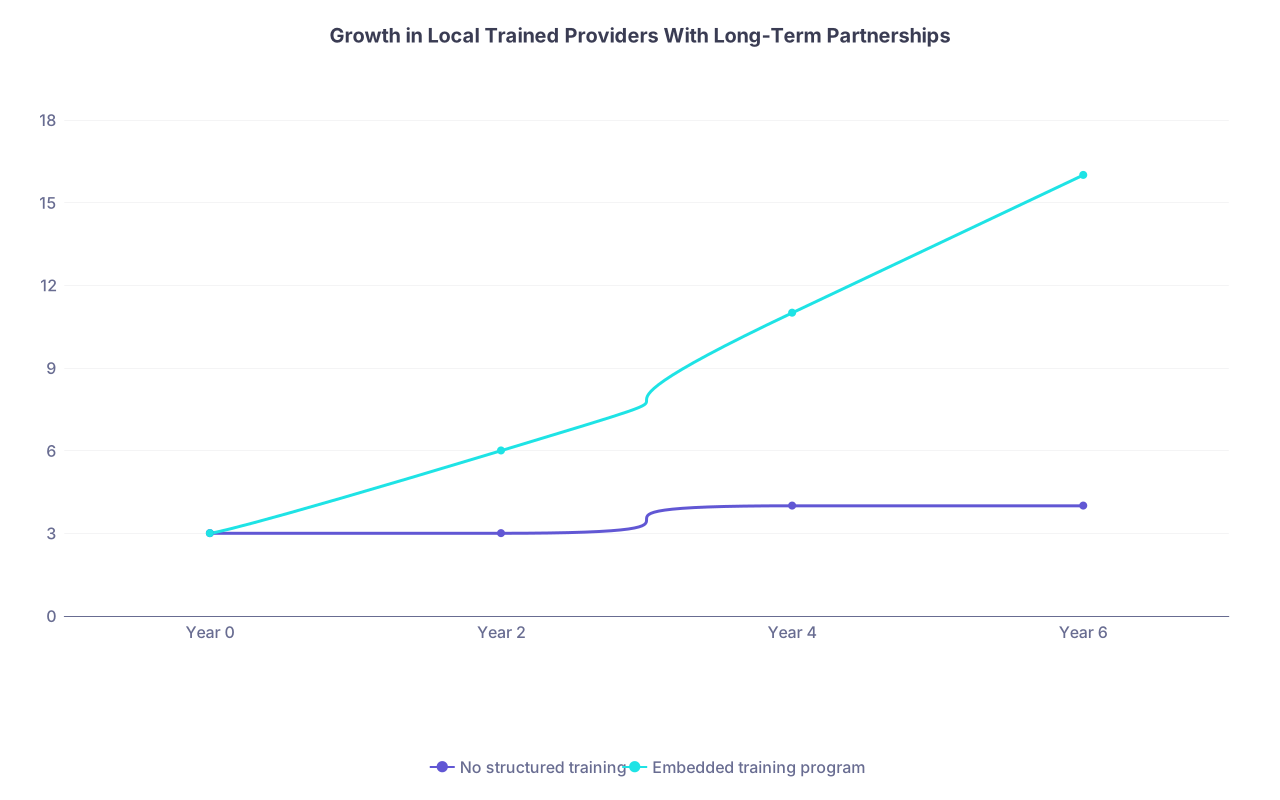
| Category | No structured training | Embedded training program |
|---|---|---|
| Year 0 | 3 | 3 |
| Year 2 | 3 | 6 |
| Year 4 | 4 | 11 |
| Year 6 | 4 | 16 |
Compare that to one‑off missions that show up, operate, and disappear. Ten years later the region often has:
- The same number of surgeons or anesthetists it started with
- Slightly newer equipment (some of it broken or unused due to lack of training or parts)
- No significant change in regional mortality or surgical backlog that you can credibly attribute to the mission
Ethically, the pattern is uncomfortable:
- Missions without capacity‑building generate nice individual stories and very little structural change.
- Missions with rigorous, tracked training generate moderate short‑term numbers but powerful, compounding long‑range benefits.
Community‑Level and Population Outcomes
This is where most mission programs have almost no data—and where they most overclaim.
Longitudinal, population‑level impact is hard to measure, but several signals are trackable when people bother:
- Facility‑level mortality and complication rates
- Coverage rates (vaccination, antenatal care, HIV treatment)
- Service utilization over time (more people trusting and using the system)
Where NGOs and academic groups link their work to local data systems, typical 3–10 year outcomes in successful partnerships include:
- 10–30% relative reduction in facility‑based maternal mortality
- 15–40% reduction in surgical wait times
- Significant increase in institutional births (e.g., 45% → 70–80%)
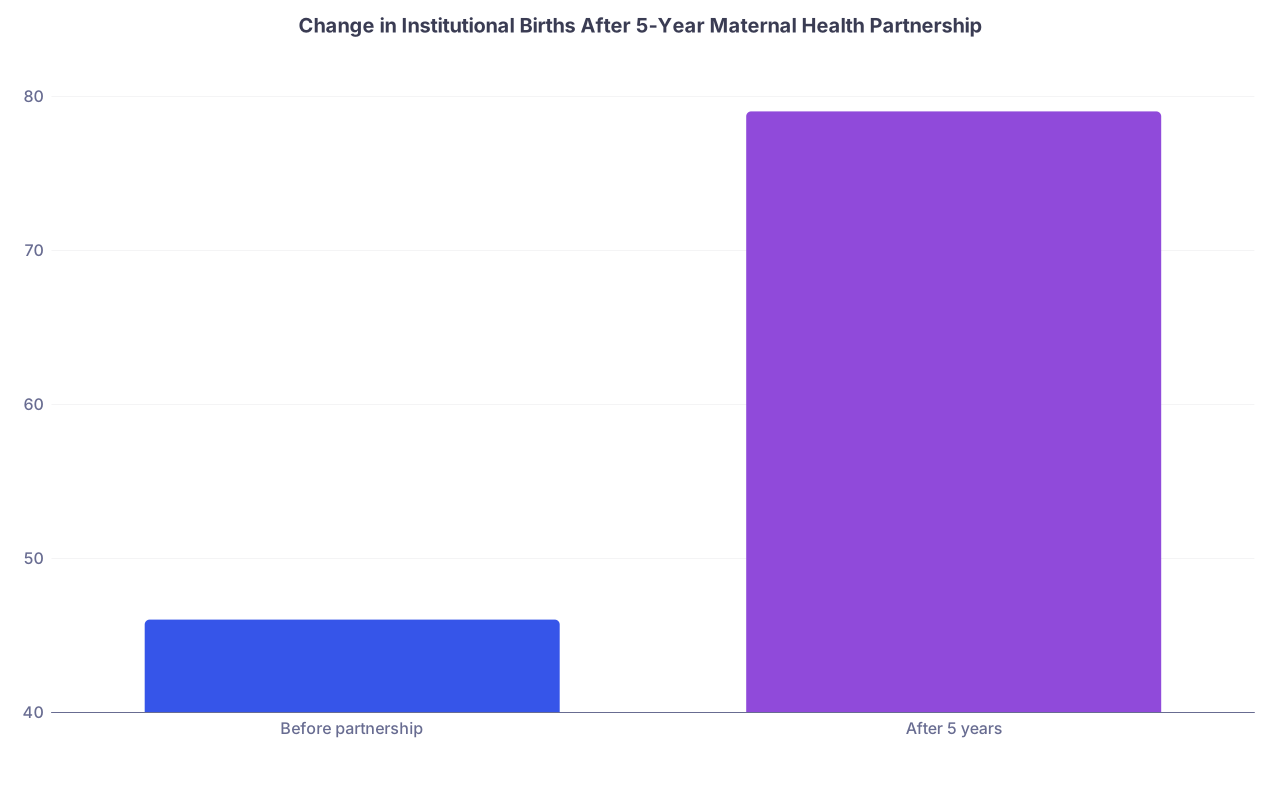
| Category | Value |
|---|---|
| Before partnership | 46 |
| After 5 years | 79 |
These gains almost never come from classic “medical mission trip” structures. They come from longitudinal primary care, maternal health, or surgical systems programs with:
- Local co‑ownership
- Multi‑year funding
- Training plus systems redesign
- Ongoing monitoring and feedback
Short‑term mission teams sometimes plug into these efforts usefully. On their own, they rarely move population metrics in a durable way.
Longitudinal Outcomes for Mission Participants: Who You Become
Now shift focus. Not on what missions do to communities. On what they do to you.
Because that is where the follow‑up literature is surprisingly robust.
You see the same pattern across multiple studies of medical students, residents, and early‑career physicians who participate in global health or mission experiences:
- Participation in global health training or mission electives is associated with 1.5–3× higher odds of working with underserved populations later (either domestically or internationally).
- Many cohorts show 50–70% of participants reporting that these experiences significantly influenced their career direction 5–10 years later.
- Rates of choosing primary care / generalist specialties, or public health–oriented careers, are consistently higher in those with substantive global experiences.
| Group | Primary Care / Generalist Rate | Work with Underserved Populations |
|---|---|---|
| No global/mission experience | 25–35% | 20–30% |
| Short elective (2–4 weeks) | 35–45% | 35–45% |
| Longitudinal/global track (6+ months total) | 45–60% | 50–70% |
The dose‑response effect is obvious. The more longitudinal and embedded your global involvement, the more your long‑term behavior shifts.
This is not neutral. From an ethics standpoint, you have to ask a blunt question:
Are you doing this primarily to transform your own career and identity, with patient care as a side effect? Or are you structurally committed to reciprocal benefit?
Because the data shows very clearly: missions change volunteers more predictably than they change communities.
Ethical Analysis Through a Longitudinal Lens
Most standard ethical frameworks for missions (beneficence, nonmaleficence, autonomy, justice) were built for individual clinical encounters. Longitudinal data demands that you upgrade that lens.
Beneficence and Nonmaleficence Over Time
A case can look beneficial at 2 weeks and harmful at 2 years.
Foreign fixation devices placed without assured long‑term follow‑up. Pediatric operations performed with no plan for rehabilitation. Newly diagnosed hypertensives given 30 days of meds and no integrated system for refill.
The ethical test is not “Did I help this person today?” It is closer to:
“Does the structure I am part of reliably generate net benefit and minimal harm across years for the populations it touches?”
Without follow‑up data, you cannot answer that.
Justice and Dependency
Longitudinal health system data also highlights justice problems:
- Recurrent short‑term missions can distort local referral patterns, create parallel systems, and drain local staff from ordinary duties.
- Donated consumables and pharmaceuticals may temporarily improve access, but then leave a cliff when supplies end.
When people finally study these patterns over 5–10 years, they sometimes find:
- Local clinics moving resources and staff to accommodate foreign teams, while routine services degrade.
- Patients delaying needed care, waiting for the “foreign doctors” to return.
(See also: What Global Health Committees Really Look For in Mission Volunteers for more details.)
You cannot call that just. That is structural harm masquerading as charity.
What High‑Impact Missions Do Differently, Quantitatively
If you care about actual mission impact, the question is not “Is mission work good?” It is “What does the data say about models that work?”
The high‑impact programs I have seen share several quantifiable behaviors:
They define longitudinal metrics before starting
- 1–3 year patient outcomes (function, mortality, readmissions, complication rates)
- Health system outputs (local staff trained, independent procedures performed, wait times)
- Community signals (institutional delivery rate, service utilization)
They collect data locally, not through visiting teams only
- Chart audits, registry entries, mobile follow‑up done by local staff
- Integrated into national HMIS where possible
They accept lower short‑term “numbers seen” in exchange for higher long‑term effect
- Fewer cases, more teaching and co‑management
- Time invested in protocols, quality improvement, and system redesign
They track volunteer trajectories
- Where do alumni work 5–10 years later?
- Do they continue in global or underserved care or was it “poverty tourism”?
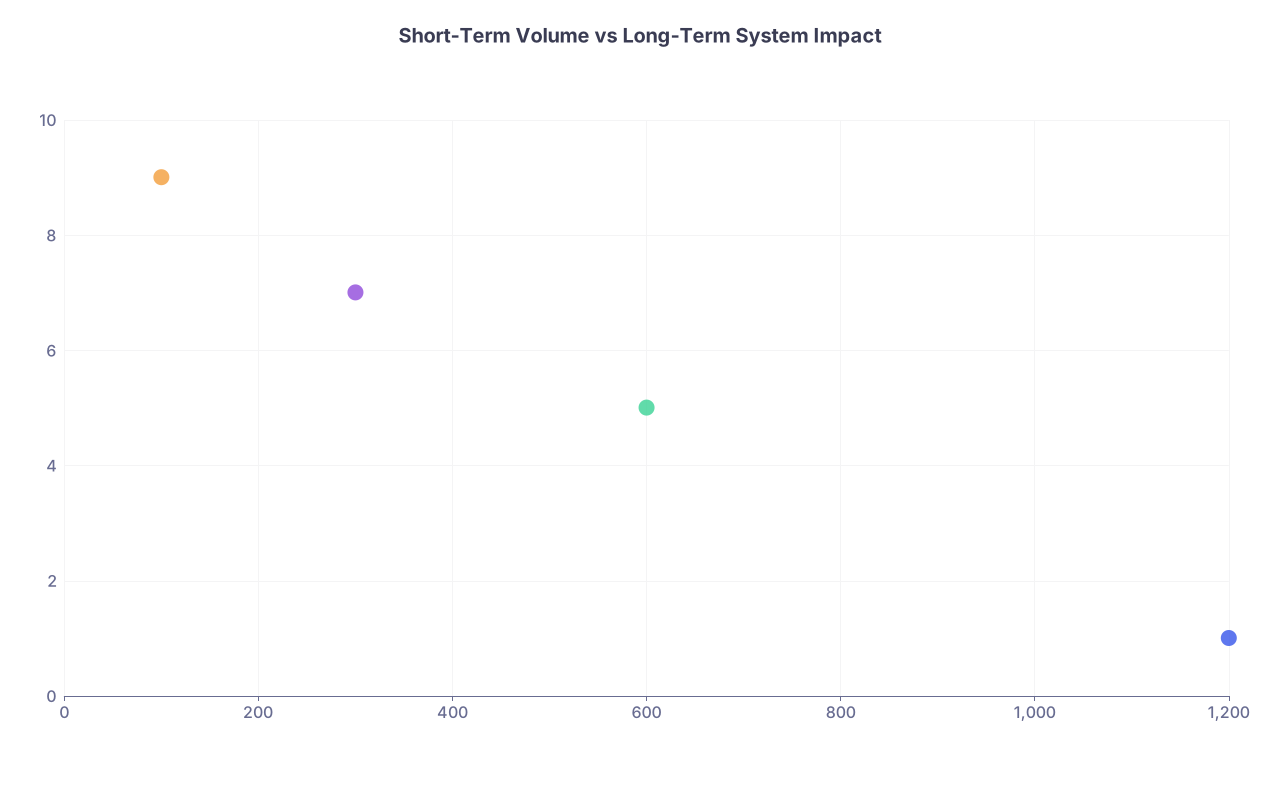
| Category | Value |
|---|---|
| High-volume mission | 1200,1 |
| Training-focused mission | 300,7 |
| Hybrid model | 600,5 |
| Local system program | 100,9 |
(In that chart, x = patients/year; y = rough system impact score. The pattern is not exact, but you get the idea: volume is not the same as value.)
Personal Development: Using the Data to Shape Your Own Ethics
If you are thinking about missions from a personal development and ethics standpoint, the follow‑up data should shape how you approach everything:
- A single 2‑week trip with no follow‑up infrastructure has low demonstrated community impact and unpredictable patient outcomes. Ethically, that should make you cautious, not triumphant.
- Longitudinal involvement with a specific site, under local leadership, with measured outcomes and capacity‑building, has far stronger evidence for both community benefit and your own growth into a more just practitioner.
- Your career choices are statistically more likely to shift toward underserved and global work if you engage deeply and repeatedly. That is not an accident; it is a pattern. Use it intentionally rather than indulging in one‑off experiences for your CV.
I have watched residents who did one polished, photo‑heavy mission trip vanish into lucrative subspecialties with no further global contact. I have also watched others who committed to long‑term partnerships end up redesigning rural health systems or leading safety‑net hospitals. Longitudinal data predicted both groups early.
Designing Ethically Defensible Missions: A Data-First Checklist
If you want your mission work to hold up ethically under longitudinal scrutiny, your planning questions change. You stop asking, “How many patients can we see?” and start asking things like:
- What 1–3 year clinical outcomes will we track, and how?
- How will local clinicians be trained to manage complications we introduce?
- What indicators will show that local capacity is increasing, not being undercut?
- How will we know, 5 years from now, that we should continue—or that we should leave?

| Step | Description |
|---|---|
| Step 1 | Define mission site |
| Step 2 | Identify local lead |
| Step 3 | Agree on shared long term goals |
| Step 4 | Select measurable outcomes |
| Step 5 | Plan follow up systems |
| Step 6 | Implement with local team |
| Step 7 | Collect and review data yearly |
| Step 8 | Scale or deepen partnership |
| Step 9 | Redesign or exit |
| Step 10 | Outcomes improving? |
If the group you are joining cannot answer these questions with data, you are not stepping into an evidence‑based mission. You are stepping into a story‑based one.
From an ethical standpoint, that should bother you.
Three Things the Data Makes Hard to Ignore
- Short‑term, one‑off missions without strong local partnerships almost never show convincing longitudinal benefit, and their patient‑level outcomes are often unknown.
- Long‑term, locally led partnerships with embedded training and system integration consistently demonstrate better 3–10 year outcomes for patients, health systems, and communities.
- Missions measurably change volunteers’ long‑term behavior more reliably than they change population health, which means your ethical responsibility is to design your involvement around data and reciprocity, not just personal growth.


