
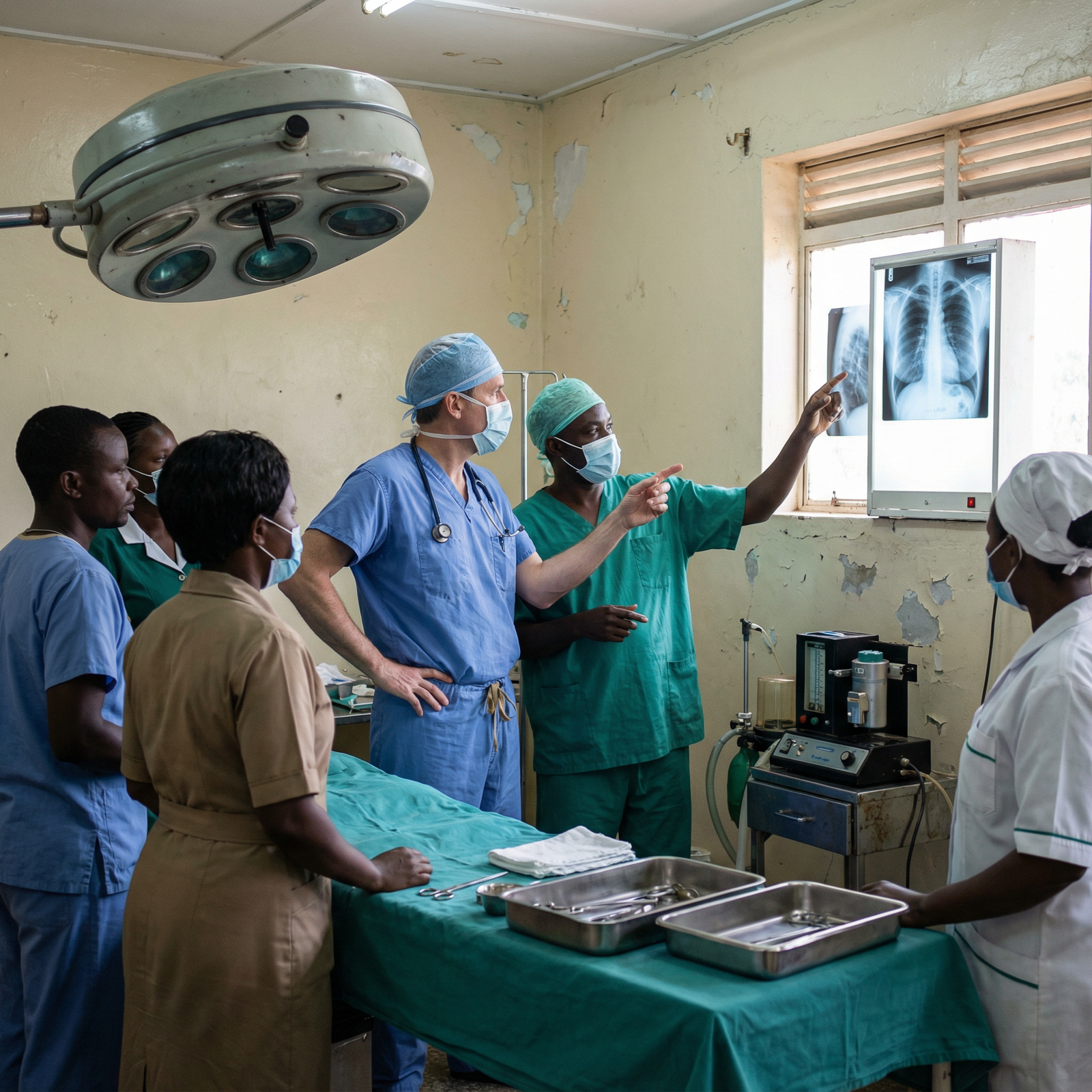
The feel‑good narrative about short‑term surgical missions is statistically fragile. When you actually follow patients, track complications, and compare outcomes to local standards, the data tell a much more complicated story.
You asked about “what the evidence shows.” So let’s treat this like a dataset, not a fundraising brochure.
What We Can Actually Measure
Most conversations about medical missions operate on vibes: “we helped a lot of people,” “the line was out the door,” “the local staff were so grateful.” None of that is data.
For surgical outcomes, you care about at least five things:
- Case mix and patient selection
- Perioperative safety (mortality, intraoperative events, early complications)
- Medium‑term outcomes (wound breakdown, infection, recurrence, reoperation)
- Functional outcomes and quality of life
- System impact (capacity building vs. dependency)
When you look at the published literature on short-term surgical missions (STSMs), especially in global surgery (cleft, hernia, cataract, obstetric fistula, basic general surgery), a pattern emerges:
- Immediate outcomes: often acceptable, sometimes comparable to high-income benchmarks.
- Follow‑up outcomes: heavily biased by loss to follow‑up, with a long tail of unmeasured complications.
- System impact: highly variable, depending on whether teams partner well with host institutions.
To ground this, let’s talk numbers.
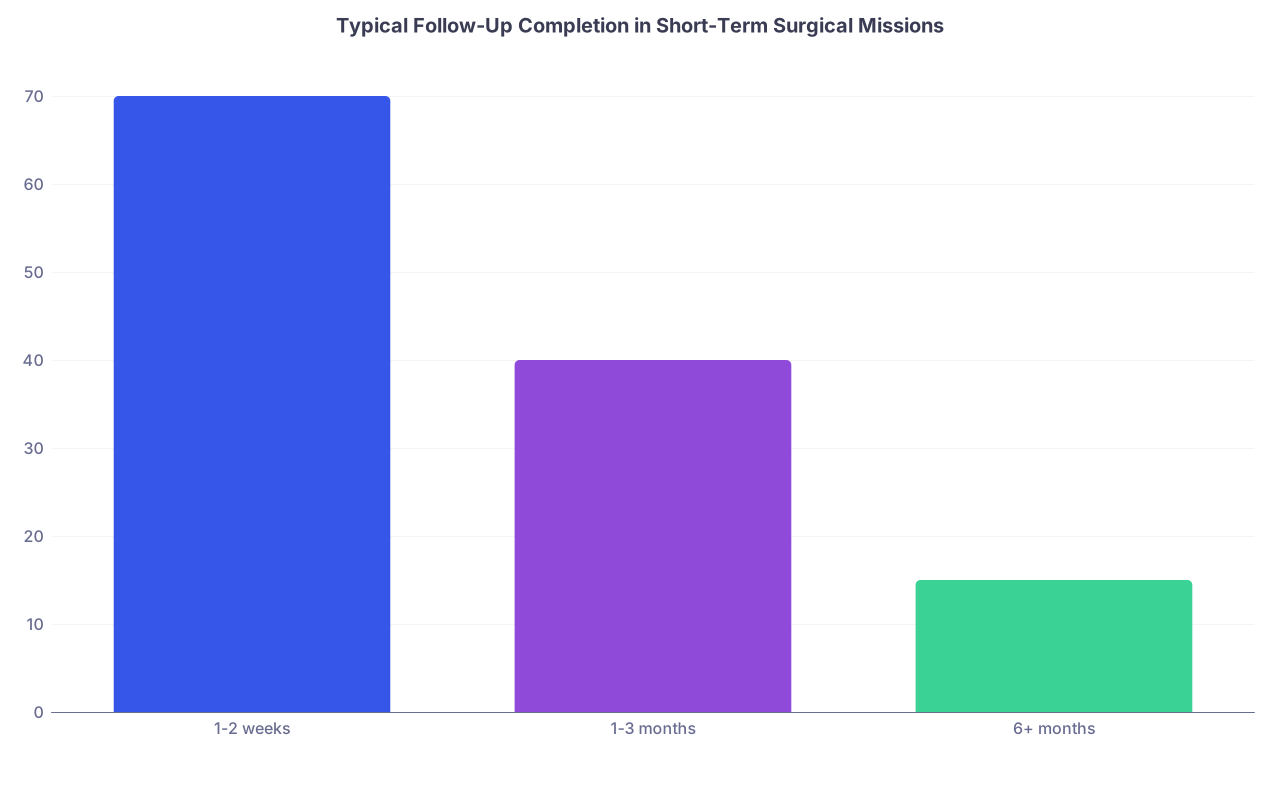
| Category | Value |
|---|---|
| 1-2 weeks | 70 |
| 1-3 months | 40 |
| 6+ months | 15 |
You see this type of distribution again and again: decent short-term follow-up, then a cliff. That cliff matters, ethically and clinically.
What Immediate Outcomes Show: Not a Disaster, But Not Uniformly Good
The strongest area of data comes from organized mission providers like Operation Smile, Smile Train partners, Mercy Ships, and similar organizations that actually collect prospective data.
Across multiple studies of cleft lip and palate missions:
- Perioperative mortality is usually reported at or near 0%.
- Major complication rates (airway issues, hemorrhage, anesthetic complications requiring ICU) often range around 1–3%.
- Minor complication rates (wound infection, dehiscence, minor bleeding) are more like 5–15%, depending on definition and follow-up rigor.
For context, elective cleft operations in high-income settings typically show:
- Perioperative mortality: essentially 0%.
- Major complication: under 1–2%.
- Minor wound complications: often 5–10%.
On paper, that looks “comparable.” But that comparison hides three big biases:
Patient selection bias – Missions often operate on patients pre‑screened to be reasonably healthy. The sickest or most complex are deferred, which can artificially improve mission statistics relative to a referral center that sees everything.
Data completeness – High‑income centers track basically all complications because patients come back. Missions lose a significant proportion after 2–4 weeks. So the “similar” infection rate you see may be an underestimate.
Under‑reporting and nonstandard definitions – A wound dehiscence fixed locally with dressings but never communicated back to the mission team is invisible in their dataset.
So when you see a paper saying “complication rates comparable to high-income countries,” read: “for patients we could still find, by our own flexible definitions.”
To model this, consider a hypothetical 200‑case mission cohort:
- 2% true major complication rate = 4 patients.
- If 30% of patients are lost to follow-up by 3 months, and complications cluster late for some procedures (hernia recurrence, fistula failure), you can easily undercount by 30–50%.
Now multiply that by dozens of teams, thousands of cases per year. The absolute numbers of under‑detected bad outcomes matter, even if percentages feel “small.”
Follow-Up and the Invisible Complications
The core problem with short-term work is temporal: surgeons leave, complications stay.
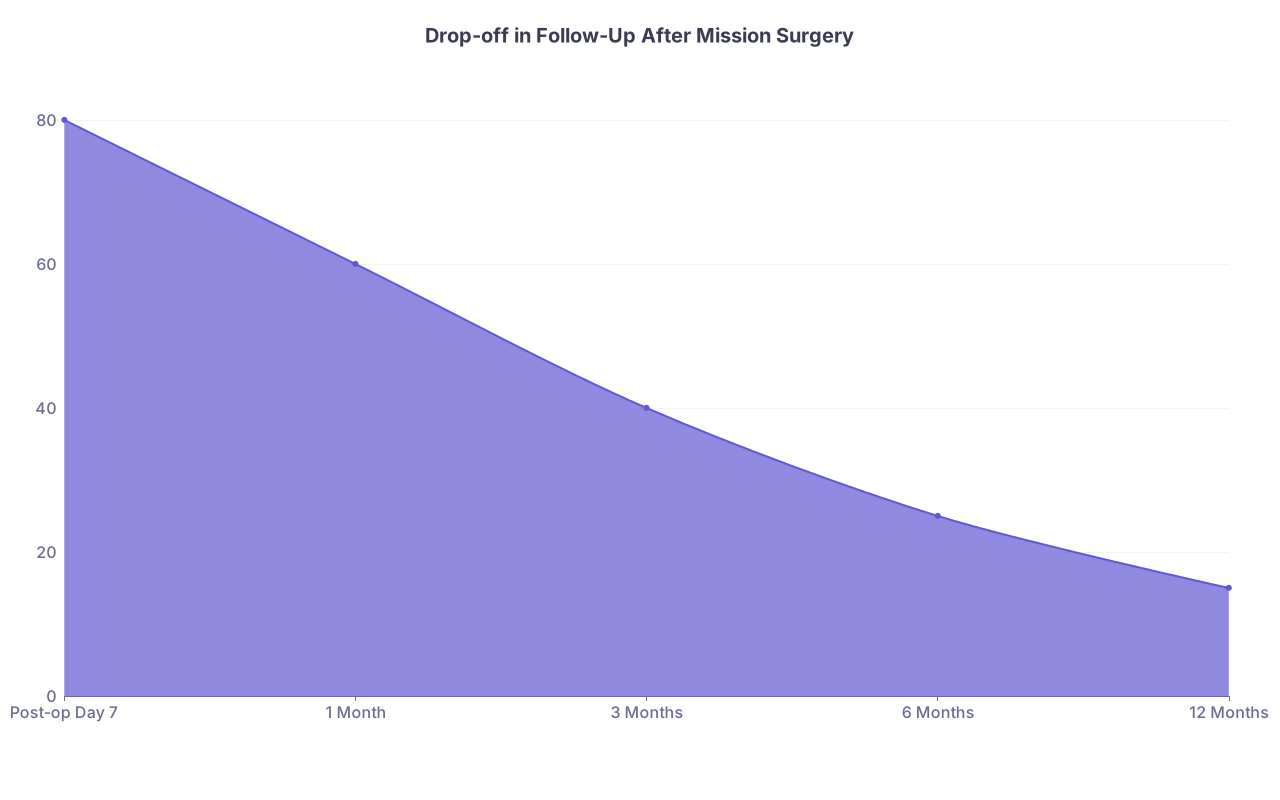
Several studies of mission surgery report follow-up attendance something like:
- 1–2 weeks: 60–80%
- 1–3 months: 30–50%
- 6–12 months: often under 20%
| Category | Value |
|---|---|
| Post-op Day 7 | 80 |
| 1 Month | 60 |
| 3 Months | 40 |
| 6 Months | 25 |
| 12 Months | 15 |
That drop‑off is not random. Sicker patients (pain, wound problems, disability) are more likely to try to return, but they are also more likely to be unable to travel due to cost, distance, or illness. So the missing data are structurally biased.
Examples from the literature and from surgeons I have worked with:
- Hernia repairs: Early pain and infection are caught. Late recurrence, testicular atrophy, chronic pain? Frequently missed unless there is a robust partnership with local clinics.
- Cleft palate: Speech outcomes and fistula rates can only be properly measured at 1–3 years. Almost no short-term mission datasets track that long; the ones that do often find higher fistula rates than home institutions.
- Obstetric fistula repairs: Some mission reports show closure rates >90% at discharge, then drop to 70–80% continence at 3–6 months when actually tracked.
The data show a consistent pattern: the shorter the mission and the weaker the local partnership, the more aggressively outcomes are over‑estimated.
Ethically, that matters. Telling donors you have “outcomes equivalent to Western hospitals” with 70–80% follow‑up at 2 weeks and 15–20% at one year is, at best, statistically naïve.
Comparing Mission Surgery to Local Care
You might ask the logical counter‑question: even if the missions are imperfect, are they still better than the counterfactual (no surgery or delayed surgery)?
Sometimes yes. Sometimes no.
Where data exist, they usually fall into three comparison categories:
- Mission surgery vs. doing nothing (no local alternative)
- Mission surgery vs. local non‑specialist surgery
- Mission teams that operate alone vs. those that operate in partnership with local surgeons
| Scenario | Access to Surgery | Complication Risk | System Strengthening |
|---|---|---|---|
| No surgery | None | N/A | None |
| Local non-specialist only | Limited | Moderate–High | Low |
| Short-term mission, team acts independently | Episodic | Moderate | Very Low |
| Short-term mission, strong partnership | Episodic | Lower | Moderate–High |
Cataract surgery is one area where mission data look relatively strong:
- Outreach camps supported by experienced ophthalmologists often achieve visual outcomes comparable to local tertiary centers, with complication rates in the low single digits.
- But again, this improves when missions are embedded in permanent local programs (e.g., Aravind’s outreach model) rather than “fly-in, fly-out” teams.
For general surgery (hernia, cholecystectomy, simple tumors), the picture is more mixed:
- Some mission‑based hernia programs have reported recurrence rates under 5–10% at one year in subsets they could follow, which is within global norms.
- Others, when more rigorously tracked, find higher recurrence in mesh‑less or “innovative” techniques used in resource-limited settings.
The real comparison is not missions vs. high‑income hospitals. It is missions vs. what the local system could do with equivalent investment in training, infrastructure, and long‑term support.
Repeated analyses of cost‑effectiveness show that:
- Well‑run, high‑volume, procedure‑focused missions (e.g., cleft, cataract) can reach cost per disability‑adjusted life year (DALY) averted in the range of $50–300, which is competitive with many global health interventions.
- But permanent surgical capacity building (e.g., training local surgeons, investing in anesthesia and nursing) often yields comparable or better DALY impact over time, with more sustainable benefits.
Short-term missions that ignore training and system strengthening usually do poorly by this metric. They may look efficient in the short term, but they cap the long‑term return.
Where Short-Term Missions Perform Worst
Three domains repeatedly show weak or frankly poor data:
Complex surgery beyond local follow-up capacity
Think complex oncology resections, advanced reconstructive flaps, high‑risk cardiac surgery. If the host system cannot manage complications or revisions, the risk profile for patients skyrockets.
The few retrospective analyses that exist show higher complication and mortality rates in these settings, often unacceptably high compared to what could be justified ethically.Anesthesia and perioperative medicine
Many teams grossly underestimate how much mission outcomes depend on anesthesia quality, monitoring, and postoperative care.
Where there are no ICU beds, limited blood bank capacity, and minimal monitoring, even “simple” surgery can carry elevated risk. Host sites that lack robust anesthesia capacity often see avoidable perioperative morbidity.Lack of case tracking and documentation
Some mission groups still arrive with paper charts that never enter any database, then write a feel‑good newsletter. That is not global surgery; it is medical tourism with a stethoscope.
When you do not even know your case volumes and basic complication rates, you cannot ethically defend your program’s continuation.
Ethical Implications for Trainees and Young Surgeons
If you are in the “personal development and medical ethics” phase, here is the uncomfortable truth: wanting to help is not an argument; outcomes are.
From an ethical standpoint, short-term missions raise at least five data‑linked questions:
Do no harm vs. unmeasured harm
If you cannot reasonably track medium‑term outcomes, especially for high‑risk procedures, you are operating in a data vacuum. “We did our best and then left” feels charitable; it is statistically reckless.Informed consent without real backing
Honest consent discussions require realistic statements about complication management. Telling patients “we’ll take care of you” when the team flies out in 7 days and there is no clear local handover is deceptive, even if unintended.Training on the poor
Many early‑career surgeons and residents are tempted by missions where they can “get more cases.” Ethically, this is only defensible if:- Your skill level is appropriate for the case complexity.
- Supervision is adequate.
- Outcomes are monitored and compared to a benchmark.
Using low‑resource patients as an informal skills lab without robust oversight is not a grey zone. It is wrong.
Opportunity cost
Every dollar, every week spent on a short-term trip is not spent on local training, infrastructure, or long‑term partnerships. The data show that capacity‑building yields compounding benefits. Episodic care does not.Equity and selection bias
Missions often treat patients who can reach a central hospital or camp site. The poorest, most remote, or least mobile are under‑represented. You leave with good photos and numbers, but the community’s overall surgical burden barely moves.
What “Good” Short-Term Missions Look Like in the Data
The evidence does not say “all short-term missions are bad.” It says outcomes depend heavily on design.
The stronger programs, when you look at their numbers, share several features:
Narrow, high‑volume procedure focus
Cleft lip/palate, cataract, basic hernia—procedures with strong evidence of benefit, relatively standard techniques, and tolerable risk in low‑resource ORs.Longitudinal partnerships with host hospitals
Teams return to the same sites for years, share data with local clinicians, and plan case lists together. This continuity improves patient selection and follow-up.Built‑in training components
Local surgeons, anesthetists, and nurses are in the OR, not sidelined. Over time, the host site can perform more of the work independently. That is visible in case logs and credentialing.Formal data collection and audit
Prospective registries, standard definitions of complications, and annual review of performance. Programs modify technique, triage criteria, and follow-up protocols based on their own numbers.Clear protocols for complication management
Explicit agreements with local hospitals about who manages post-op problems, and how communication with the mission team is handled. This does not solve everything but pushes outcomes closer to accountable care.
When those conditions are met, the data often show:
- Low perioperative mortality similar to high‑income benchmarks.
- Acceptable complication rates that converge with global standards over several years as the program matures.
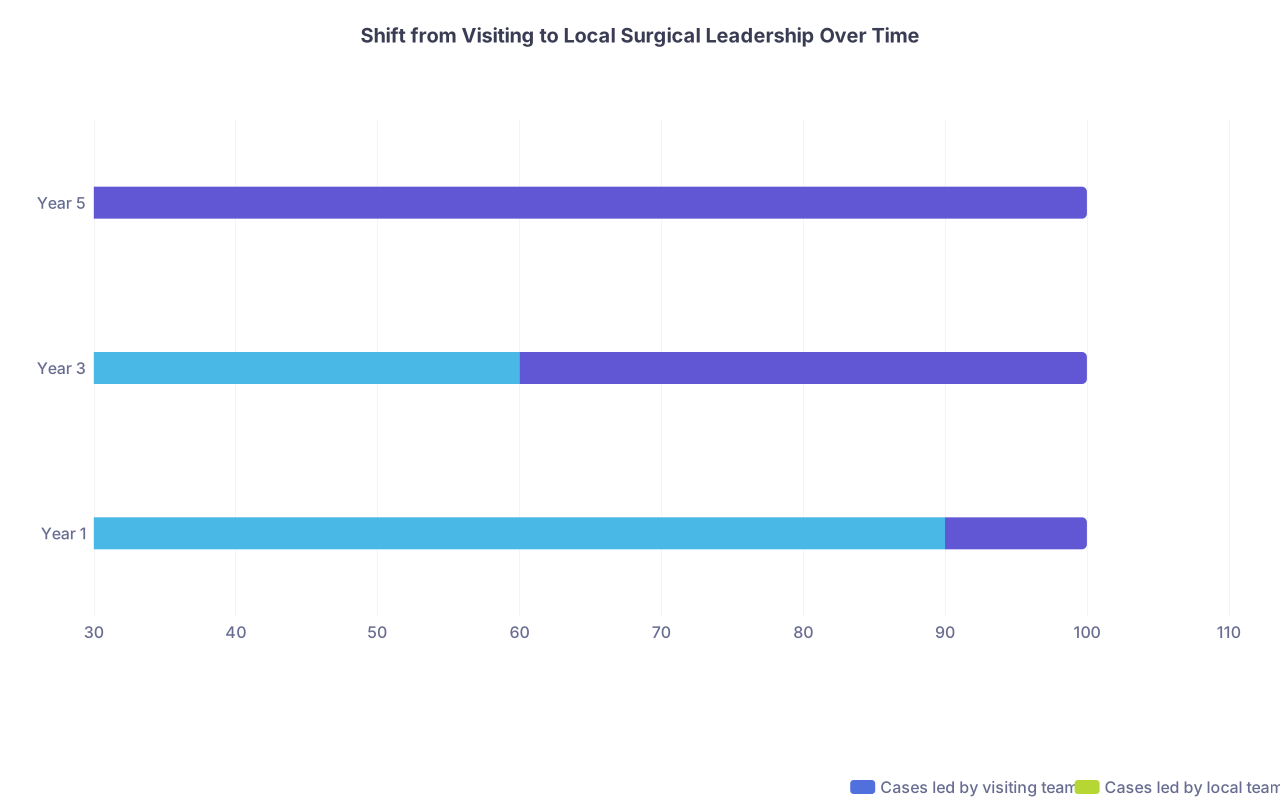
- Increasing proportion of cases led by local surgeons, with visiting teams migrating from “service” to “consultation and advanced training.”
| Category | Cases led by visiting team | Cases led by local team |
|---|---|---|
| Year 1 | 90 | 10 |
| Year 3 | 60 | 40 |
| Year 5 | 30 | 70 |
That stacked bar is what you want to see: decreasing reliance, increasing local ownership.
How You, Personally, Can Engage Responsibly
From a data and ethics standpoint, here is how an individual student, resident, or early‑career surgeon can align their personal development with decent outcomes.
Demand numbers, not narratives
Before signing on to a mission, ask:- How many cases do you do per trip?
- What is your last 3–5 years of complication data?
- What are your follow-up rates at 1 month, 6 months, 1 year?
Vagueness here is a red flag. A serious organization will have at least partial answers.
Stay within your proven skill envelope
If your complication rate for a given operation at home is unknown or marginal, do not export that operation abroad. This is not a place to “get experience”; it is a place to apply experience.Prefer programs that train and build
If the team is not actively teaching local staff or collecting joint outcomes, you are joining an episodic service, not a partnership. The literature is clear: partnerships outperform parachutes.Help with the unglamorous work: data systems
Many mission programs are weak on basic analytics. If you have any interest in QI or data science, you can add more value by helping create a simple REDCap registry, outcome tracking sheet, or audit process than by doing a handful of extra cases.Be honest in how you talk about it
When you come back, skip the “we changed lives” Instagram story as your primary narrative. Talk about follow-up rates, complication challenges, and what the host system taught you. Normalize outcome‑focused reflection instead of self‑congratulatory storytelling.
A Brief Ethical Bottom Line
The evidence on short-term missions and surgical outcomes does not support either extreme slogan—neither “missions save the world” nor “missions are always exploitation.” Reality is annoyingly conditional.
Three core points:
- Outcomes from well‑structured, narrow‑focus, partnership‑based missions can approximate global standards, especially for lower‑complexity, high‑benefit procedures.
- Poorly designed, one‑off, data‑free surgical trips are ethically indefensible once you factor in hidden complications, lost follow-up, and opportunity costs.
- If you want your involvement to be ethically clean, align yourself with programs that publish or at least internally audit their numbers, train local staff, and are willing to change or stop based on what the data show.
Feelings and good intentions do not carry scalpels. Outcomes do.


