
The first one that really landed on me didn’t happen during the code. That’s the part nobody explains.
During the code, you’re busy. You have a role. Push meds. Check rhythm. Watch the clock. Say the dose out loud so someone else hears it. Medicine trains you for action, and action is a powerful anesthetic. You can feel awful later. At the time, you’re moving.
It hit in the call room twenty minutes after we stopped. The overhead noise was gone. My gloves were off. I sat down for what I thought would be thirty seconds, and then that strange post-code silence rolled in. Not peace. More like a vacuum. My brain started replaying tiny details with cruel precision. The potassium. The last blood pressure. Whether I should’ve spoken sooner. Whether I missed the one thread that would have changed the ending. We had done the right things. The attending knew it. The team knew it. I knew it. Didn’t matter. I still felt flattened.
That’s what really happens to trainees, and frankly to attendings too. Shock. Guilt. Numbness. Sometimes nothing at first, then tears in the car or while opening your locker. Death breaks the normal rhythm of training. You’re taught to fix, escalate, rescue, document, move. Death says: not this time.
This article isn’t about pretending that doesn’t hurt. It’s about something more practical. How to reset your nervous system enough to function safely in the next minute, without becoming numb and without lying to yourself.
Let me tell you what program directors and seasoned faculty know but rarely say out loud: even very good clinicians get shaken after a patient dies. Not because they’re fragile. Because responsibility is heavy, attachment is real, and medicine quietly trains you to believe that vigilance should be able to outrun mortality. It can’t. But your nervous system hasn’t always gotten that memo.
A patient death doesn’t just register as “sad.” It often lands as accusation. Did I miss something? Did I anchor too early? Should I have called sooner? Was there one lab, one exam finding, one subtle change that could have bent the story another way? That mental courtroom opens fast, especially if you care. And the ones who care the most are usually the ones most vulnerable to self-prosecution.
Here’s the distinction that matters. Grief is normal. Being affected is normal. Feeling the adrenaline crash, the hollow chest, the nausea, the tremor in your hands, the weird inability to remember what you were doing ten minutes ago. Normal. Maladaptive self-blame is different. That’s when reflection turns into punishment. When you stop asking, “What happened?” and start declaring, “This proves I’m not good enough.” That shift is dangerous. It clouds judgment, impairs the next patient encounter, and teaches your brain the wrong lesson.
I’ve seen the common patterns over and over. The code ends and the body finally notices it’s exhausted. Heart racing, then sudden fatigue. A clinician walking down the hallway and replaying the monitor rhythm frame by frame like a bad film loop. Someone documenting the event and realizing they’ve read the same sentence three times without understanding it. Dissociation. Dry mouth. Headache. Shoulders up by the ears. Then, twelve hours later, tears in the shower. Delayed reaction is not fake reaction. It’s often the most honest one.
And yes, medical culture still handles this badly. Publicly, stoicism gets rewarded. You keep moving. You don’t “make it about you.” Fine. There’s some wisdom in professionalism. But behind the scenes? People process privately all the time. Attendings sit in their offices longer than usual. Nurses cry in med rooms. Senior residents take the long stairwell instead of the elevator just to get thirty seconds alone. The myth is that the strongest people feel nothing. Wrong. The strongest people feel it and still know what to do next.
What Faculty Quietly Teach: The Difference Between Caring and Carrying It
Here’s one of the hardest lessons in clinical medicine, and most people learn it late: caring is required; carrying every death like a personal indictment is destructive.
Good clinicians are not detached robots. They feel the loss. They remember names. They sometimes remember families for years. But they do not make themselves omnipotent in retrospect. That’s ego wearing the costume of guilt. Brutal truth. If you start acting as though every death means you personally failed, you’re not becoming more ethical. You’re becoming less accurate.
After a patient dies, I want you to run three questions. Not fifty. Three.
First: Was the care clinically appropriate?
Second: Was the outcome unavoidable, even with appropriate care?
Third: Is there a systems issue that needs to be reported or fixed?
That’s the attending-level framework. It cuts through the emotional fog.
If the care was appropriate and the outcome was unavoidable, then your pain may be real, but your self-blame is misplaced. If the care may not have been optimal, or you’re not sure, talk to the senior resident, attending, or a trusted faculty member. Quickly. Rumination loves uncertainty. Clarity starves it. I’ve watched trainees torture themselves for two days over a decision that an experienced attending could contextualize in five minutes.
And if there’s a systems issue, say so. Missing equipment. Delayed escalation pathway. Communication breakdown. Confusing order set. Bad handoff. Medicine loves to individualize failure because it’s neat and dramatic. Real life is messier. Sometimes the lesson is yours. Sometimes it’s the system’s. Know the difference.
The reframe I teach is simple because it needs to survive bad days: I am responsible for the process, not omnipotent over the outcome. Say it until it sounds less like a slogan and more like a fact.
The 60-Second Reset: A Practical Nervous-System Interrupt
Now the part you can use today. In a stairwell. Supply room. Bathroom stall. Empty charting alcove. Anywhere.
The goal is not healing in sixty seconds. Don’t be ridiculous. The goal is interruption. You are stopping the stress spiral long enough to regain enough steadiness to care for the next patient safely.
Step one: exhale longer than you inhale.
Not because it’s trendy. Because physiology listens to breath before it listens to pep talks. Inhale through your nose for about four seconds. Exhale for six to eight. Do that three times. Longer exhale tells the body the immediate threat has passed. Your heart rate often drops a notch. Your chest loosens. Not magic. Just autonomic nervous system basics.
Step two: name five things you see or feel.
This breaks the replay loop. Trauma and acute stress narrow attention and drag you back into the mental film reel. Grounding widens the frame again. Quietly identify: cold sink under your palm, badge clip against your neck, blue tile on the wall, pressure in your shoes, hum of the vent. Specific beats vague. Your brain needs concrete sensory data to come back to the room you’re actually standing in.
Step three: say one factual sentence.
Not affirmations. Facts. Try this: “A patient died; I am safe right now; my next job is the next right step.”
That sentence works because it does three things fast. It acknowledges reality. It locates you in the present. It directs action. No melodrama. No denial. Just orientation.
Step four: unclench the jaw, drop the shoulders, exhale again.
Most clinicians don’t realize how much muscle they’re holding after a bad event. Jaw locked. Tongue pressed to the roof of the mouth. Traps firing like they’re trying to hold the whole hospital up. Release them on purpose. Physical relaxation is not cosmetic. It’s a completion signal to the body.
That’s the whole reset. Four steps. About a minute.
I’ve seen people make this too complicated. They think they need a whole mindfulness routine, a perfect quiet room, a candle, a podcast voice whispering about calm oceans. No. You need a tool that works between tasks when your pager is still going off. This is that tool.
And here’s the secret: if you practice it when you’re only moderately stressed, it works better when the real hit comes. Don’t wait for the worst day of the month to try a new skill.
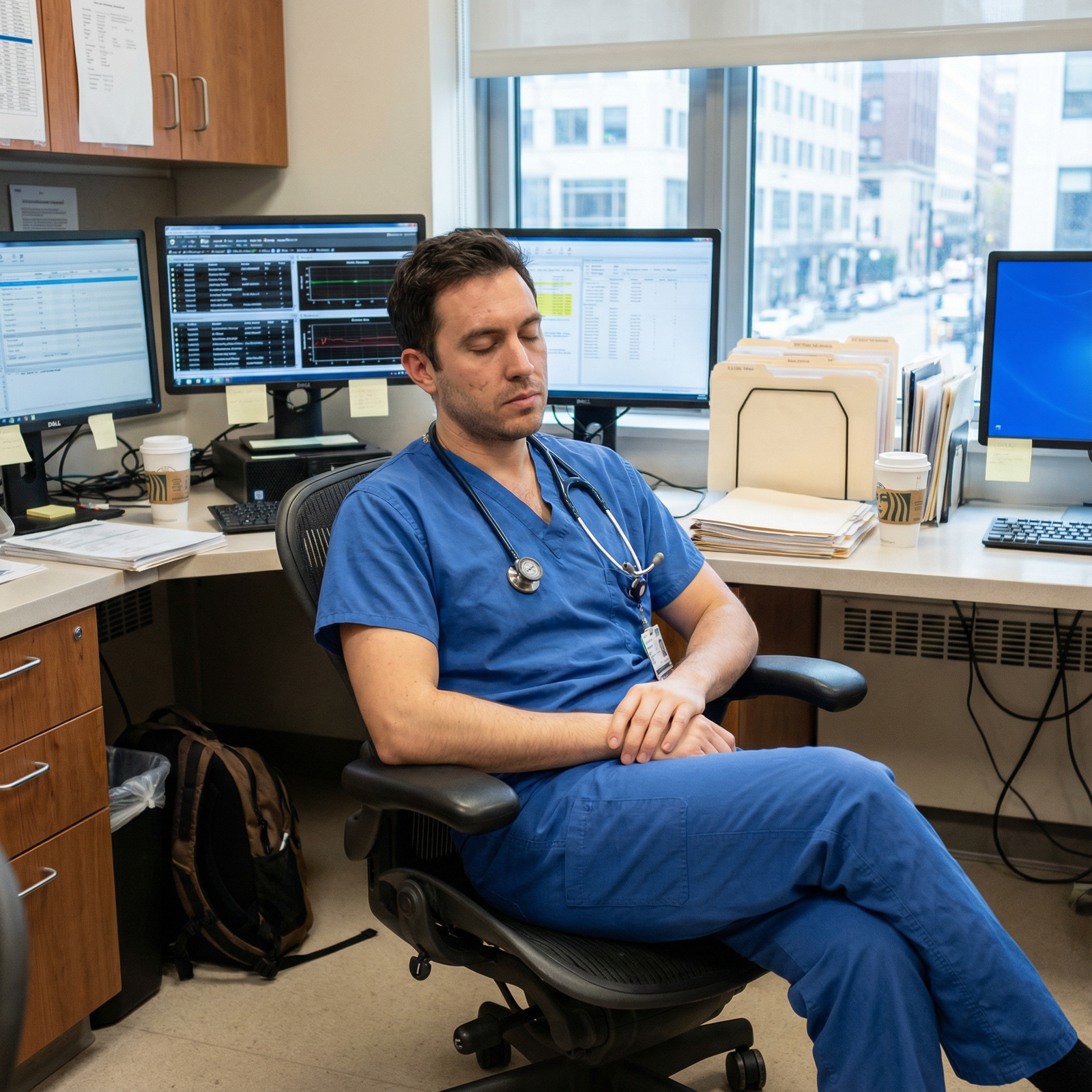
What to Do in the Next Hour and What Not to Do
The next hour matters more than people think. It sets the trajectory for whether the event becomes integrated or festers.
First, check in with the team. Briefly. You don’t need a dramatic circle of vulnerability, and forced resilience rituals are often cringe and useless. But a simple “Are you okay?” or “Anything we need to review?” goes a long way. If there’s a formal debrief, attend if you can. If there isn’t, ask one focused clinical question if you need clarity. Then document appropriately. Facts. Timeline. Interventions. No editorializing.
Eat something if you haven’t. Drink water. I know that sounds insultingly basic. It isn’t. People love to act as though self-neglect is professionalism. It’s not. It’s sloppy.
What shouldn’t you do? Don’t isolate for too long. Don’t replay the code endlessly like suffering itself is proof of virtue. Don’t catastrophize your entire career because of one loss. Don’t skip the basics, then wonder why everything feels worse. And don’t go home and marinate in doom-scrolling or anonymous forums full of performative despair. Bad idea. It pours gasoline on a nervous system that’s already overheated.
Also, don’t force yourself to “bounce back” instantly. That fake invincibility act fools nobody, least of all your own body.
If your reaction includes panic, inability to function, persistent guilt that won’t respond to reality-testing, or intrusive images that keep hijacking your attention, escalate. Tell a senior. Tell the attending. Reach out to a wellness lead, therapist, employee support service, or physician health resource. Strong response does not mean weakness. It means the event mattered, and your system may need more than sixty seconds.
You Do Not Need to Become Numb to Survive
Here’s the final truth, the one good faculty eventually learn and mediocre ones never do: being shaken by a patient death is not evidence that you’re unfit for medicine. It’s evidence that you have a conscience, a pulse, and a functioning moral center. Good. Keep that.
What you need is not numbness. Numb clinicians don’t make better doctors. They just get harder to reach. What you need is recovery. The ability to feel the impact, steady your physiology, think clearly, ask the right questions, and return to the work without turning yourself into the casualty.
So use the reset. Longer exhale. Ground your senses. Say the factual sentence. Drop the shoulders. Then do the next right thing.
That’s what the best clinicians do. Not because they feel nothing. Because they know how to recover without abandoning their humanity.