
The way most clinicians rush from one exam room to the next is broken. You are carrying the last patient into the next one, and everyone in the chain is getting a worse version of you.
You do not need a 10‑day retreat to fix this. You need a reliable 3‑minute reset protocol you can run between back‑to‑back patients. On a slammed Tuesday. In a noisy hallway. With messages piling up in your inbox.
This is exactly that protocol.
Why You Need a 3‑Minute Reset (Not a Weeklong Retreat)
Let me be blunt. The system will not protect you from:
- Emotional spillover from a difficult encounter
- Decision fatigue after the sixth complex case in a row
- Subtle dehumanization of patients when you are exhausted
I have watched residents walk straight from:
- Telling a family their loved one is dying
directly into - A room where a patient is complaining about waiting 15 minutes
They feel anger. Resentment. Numbness. Then shame for feeling all of that. And they try to “push through.”
That is how people burn out. That is how ethical erosion starts.
A 3‑minute mindfulness reset is not wellness fluff. It serves three hard, practical purposes:
Clinical performance
- Clearer thinking
- Fewer autopilot mistakes
- Better listening for subtle red flags
Ethical integrity
- You catch yourself when you start objectifying the “difficult” patient
- You notice when impatience is about your fatigue, not their behavior
Emotional containment
- You metabolize the last encounter so it does not bleed into the next
You are not trying to become “zen.” You are maintaining cognitive and ethical sharpness under load.
The 3‑Minute Reset Protocol (Step‑by‑Step)
Here is the protocol. It works in outpatient clinics, inpatient wards, ED, telehealth—anywhere you have 180 seconds and a door or a corner.
You will cycle through three phases:
- Clear (drop the last patient) – ~60 seconds
- Anchor (return to body and breath) – ~90 seconds
- Intend (prime for the next patient) – ~30 seconds
Phase 1: Clear (Drop the Last Encounter) – ~60 seconds
Your brain clings to unfinished emotional business. If you do not explicitly clear, it rides along.
Where: Just outside the door, in the workroom, or even while walking.
Steps:
Pause your body for 5 seconds
- Stop typing
- Take hands off keyboard or chart
- Let them rest on your thighs or at your sides
Name what you are carrying (10–20 seconds)
Silently label, in plain language, 1–3 things from the last patient:- “Frustrated about nonadherence.”
- “Sad for this family.”
- “Anxious I might have missed something.”
- “Annoyed about the time pressure.”
Do not analyze. Just label. This is affect labeling—reduces amygdala activation. You are not doing therapy; you are tagging cargo.
Release with one deliberate out‑breath (10 seconds)
- Inhale normally through nose
- Exhale slowly through mouth, slightly pursed lips, like cooling hot soup
- On exhale, silently: “Not for the next patient.”
You are not pretending the feelings vanish. You are deliberately choosing not to dump them on the next person.
Micro‑closure statement to yourself (15–20 seconds)
Pick one of these sentences and repeat it once or twice, silently:- “That encounter is complete for now.”
- “I did what I could with the time and information I had.”
- “I can revisit this case later. Right now: next patient.”
This is cognitive containment. You are putting the last encounter into a mental folder, not leaving it strewn across the next chart.
Phase 2: Anchor (Return to Body and Breath) – ~90 seconds
Now you bring attention out of the EHR, pager, and internal monologue back into your actual body. This is where the reset actually happens.
Where: Ideally seated in a chair, but standing in a hallway works.
Steps:
Posture reset (10–15 seconds)
- Feel your feet on the floor. Literally feel pressure through heels, balls of feet, toes.
- Straighten spine by 5–10%. No military rigidity, just “up and open.”
- Let shoulders drop one inch. Crown of head gently up.
Think: available, not collapsed; alert, not tense.
-
Use this pattern: 4‑2‑4‑2
- Inhale 4 seconds
- Pause 2 seconds
- Exhale 4 seconds
- Pause 2 seconds
Do this for 6 cycles (6 x 10 seconds ≈ 60 seconds).
While breathing:
- On each inhale: mentally say “In.”
- On each exhale: mentally say “Out.”
- When your mind drifts to charting, labs, or your to‑do list (it will), you do one thing: notice it and bring it back to “In…Out.” That’s the whole skill.
Add one physical anchor (15–20 seconds)
Choose one sensation to highlight:- The feeling of your palm against the doorknob
- The contact of your back on the chair
- The sensation of air in your nostrils
- The weight of your ID badge or stethoscope
For 15–20 seconds, track that sensation continuously. When you get distracted, come back to it. That is mindfulness in real life, not on a cushion.
You are not escaping the clinic. You are reclaiming your nervous system for 90 seconds.
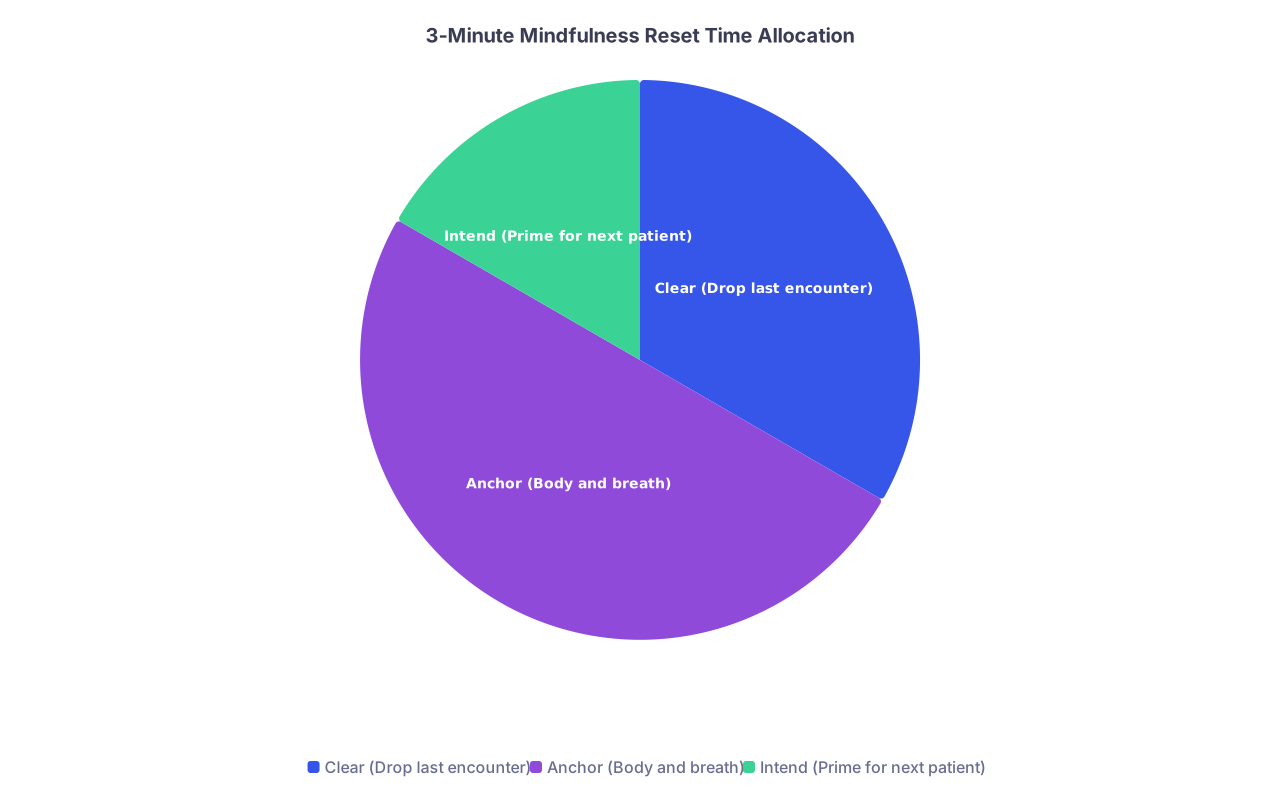
| Category | Value |
|---|---|
| Clear (Drop last encounter) | 60 |
| Anchor (Body and breath) | 90 |
| Intend (Prime for next patient) | 30 |
Phase 3: Intend (Prime for the Next Patient) – ~30 seconds
This is the ethical piece everyone skips. You decide what version of yourself walks into the room.
Where: Hand on the door, cursor hovering over “Start Visit,” or about to click “Join” for telehealth.
Steps (all internal, takes 20–30 seconds):
Name the upcoming patient as a person, not a task
Silently substitute:- Not: “Next is the COPD follow‑up.”
- Use: “Next is a person living with COPD.”
Or: “This is a person with chest pain and fear,” not “the chest pain in 3.”
Set one sentence of intention
Choose one per visit. Keep it simple and concrete:- “See this person clearly for who they are, not just their problem.”
- “Listen fully for the first 30 seconds before interrupting.”
- “Stay curious; ask one more question than feels necessary.”
- “Be kinder than my stress wants me to be.”
Ethical check: three‑second scan
Quick mental question:- “Is there any frustration, bias, or story I am already telling about this patient?”
If yes, name it and downgrade it:
- “I am expecting them to be demanding. That is a story, not a certainty. I will verify with my own eyes and ears.”
Then you open the door or click “Join.”
Entire Intend phase: under 30 seconds. But it shifts the entire encounter.
Making It Real: Where This Fits in a Chaotic Day
The protocol only works if it survives real clinic conditions: no time, constant interruptions, and too many patients.
Where to Put the Reset
Pick one consistent spot in your workflow:
- Outpatient: In the hall outside the exam room, or in your chair between signing the last note and opening the next chart.
- Inpatient: As you step away from the bedside and before talking to the team, or just before walking into the next room on rounds.
- ED: At the computer between clicking out of one chart and into the next, even if you only do a 60‑second “micro version.”

What About When You “Do Not Have 3 Minutes”?
Here is the uncomfortable truth: you are already losing 3+ minutes per patient in decision fatigue and miscommunication when you run hot.
If your schedule is brutal, you can deploy tiered versions:
| Tier | Time Available | What To Do |
|---|---|---|
| Nano | 15–30 sec | 1 long exhale, name feeling, 1 intention line |
| Short | ~60 sec | Quick clear (label + exhale) + 3 breath cycles |
| Standard | ~3 min | Full Clear–Anchor–Intend protocol |
Even one deep, deliberate exhale + “not for the next patient” is better than nothing. That is the emergency version.
Practical Scripts You Can Use Tomorrow
You do not need to invent language on the fly. Use these prebuilt scripts and adjust later.
Script for a Heavy Encounter → Routine Visit
Scenario: You just told a patient their cancer is back. Next is a healthy adolescent needing a sports physical.
Clear:
- “Sad about the recurrence.”
- “Angry at this disease.”
- Long exhale: “Not for the next patient.”
- “That visit is complete for now. I can revisit the plan at lunch.”
Anchor:
- Feel feet on floor, shoulders down.
- 4‑2‑4‑2 breathing x 6 cycles.
- Anchor on hand resting on door handle.
Intend:
- “Next is a teenager excited about sports.”
- “Today I will show up as present and calm, not grim.”
- “Notice any tendency to rush and soften it.”
Total time: 2–3 minutes. Energy shift: huge.
Script for an Annoying Encounter → Another High‑Demand Case
Scenario: Patient yelled about wait time and refused recommended tests. Next is complex multi‑morbid elderly patient.
Clear:
- “I feel defensive and irritated.”
- Exhale: “Not for the next patient.”
- “I did what I could with the information and time. Their choices are theirs.”
Anchor:
- Sit back in chair, feel back against the chair.
- 4‑2‑4‑2 breathing x 6 cycles.
- Anchor on sensation of air in nostrils.
Intend:
- “Next is a person with many health challenges trying to get through the day.”
- “Listen fully before suggesting changes.”
- “Check my tone for patience.”
Integrating This Into Team Culture (So You Are Not the Weird One)
You will feel self‑conscious at first. You do a mini meditation outside Room 4 and worry the nurse is judging you.
Solve it by normalizing and framing it as performance hygiene, not spirituality.
How to Talk About It With Colleagues
Use plain, clinical language:
- “I am doing a 60‑second reset between difficult cases. Helps me not drag frustration into the next room.”
- “It is my way of reducing cognitive errors when I am overwhelmed.”
- “I am checking my bias and resetting my head between patients.”
You can even be slightly blunt:
- “If I do not do this, I end up snapping at patients and regretting it. This takes one minute.”

| Step | Description |
|---|---|
| Step 1 | Finish Visit |
| Step 2 | Chart Key Points |
| Step 3 | Nano Reset |
| Step 4 | Short Reset |
| Step 5 | Standard Reset |
| Step 6 | Open Next Chart |
| Step 7 | Enter Next Room |
| Step 8 | Time Available |
Protecting 3 Minutes Without Blowing Up the Schedule
You cannot add time to the day, but you can steal seconds from low‑yield behaviors:
- Stop re‑reading the last two notes when you already know the plan. Skim key data, then reset.
- Cut the social media micro‑scroll between patients. That “break” is pure cognitive junk food. Use 50% of that time for this reset.
- Batch low‑priority inbox items for later instead of nibbling at them between every patient.
If your staff asks why you paused outside the door, you can respond:
- “Just taking 20 seconds so I do not bring the last room into this one.”
People actually respect that more than they mock it.
Ethical Backbone: Why This Matters Beyond “Wellness”
This is under “Mindfulness in Medicine,” but do not confuse it with scented candles and vague resilience slogans. This is about clinical ethics and professionalism.
Three ethical pillars this reset protects:
Respect for persons
Each patient deserves to be seen as a person, not an item on a conveyor belt. The Intend phase, where you re‑name “the diabetic in 5” as “a person living with diabetes,” is a direct counter to dehumanization.Nonmaleficence (do no harm)
A flooded, distracted clinician is more likely to:- Miss subtle symptoms
- Cut off explanations too early
- Default to bias (“They are just drug‑seeking,” “They never comply anyway.”)
A 3‑minute reset lowers that risk. That is harm reduction.
Justice and fairness
Every patient, including the one at 4:45 pm, is entitled to your best reasonably available attention. Not your 20‑year‑old idealism. Your best realistic state today. This protocol is how you level that out.
You are not obligated to be invincible. You are obligated to notice when your internal state threatens your judgment and to take reasonable steps to steady it. This is one of those steps.

Building the Habit: Turning the Reset into Autopilot
The protocol is only as good as your ability to deploy it under stress. That means you need to train it.
2‑Week Implementation Plan
Days 1–3: Learn the Moves (Off‑Shift or Early in the Day)
- Once a day, off clinical time, practice the full 3‑minute sequence in a quiet room.
- Do it exactly as written: Clear (label + exhale), Anchor (posture + breathing + physical anchor), Intend (person + sentence + bias check).
- The point is to memorize steps so you are not thinking about “what comes next” at 5pm when you are tired.
Days 4–7: Attach It to One Specific Patient Slot
- Choose 1–2 patient encounters per day (for example, your post‑lunch first patient and your last patient).
- Run the full 3‑minute reset before those only.
- Note what gets in the way: calls, nurses, pages. Adjust—sometimes you will only get 60 seconds. That is fine.
Days 8–14: Expand to All Difficult Transitions
For the second week, target:
- After any emotionally heavy visit
- Before seeing a patient you already feel some dread or bias about
- Before your last patient of the session (when fatigue and irritability are highest)
By the end of two weeks, the Clear–Anchor–Intend pattern will feel less artificial and more like muscle memory.
Dealing With Common Failure Points
“I forget to do it.”
- Put a tiny sticky note on your computer: “Reset?”
- Ask a nurse you trust: “If you see me freeze at the door for 10 seconds, I am not broken. I am resetting. If I start sprinting room to room, remind me.”
“I feel silly.”
- You also felt silly the first time you dictated into a phone or talked to a standardized patient. Now you do it on autopilot. Silly is not a valid metric.
“Sometimes I am interrupted mid‑reset.”
- If someone knocks mid‑breath, answer. You are not in a sacred bubble. Then resume for 10 more seconds when you can. Imperfect practice beats heroic all‑or‑nothing thinking.
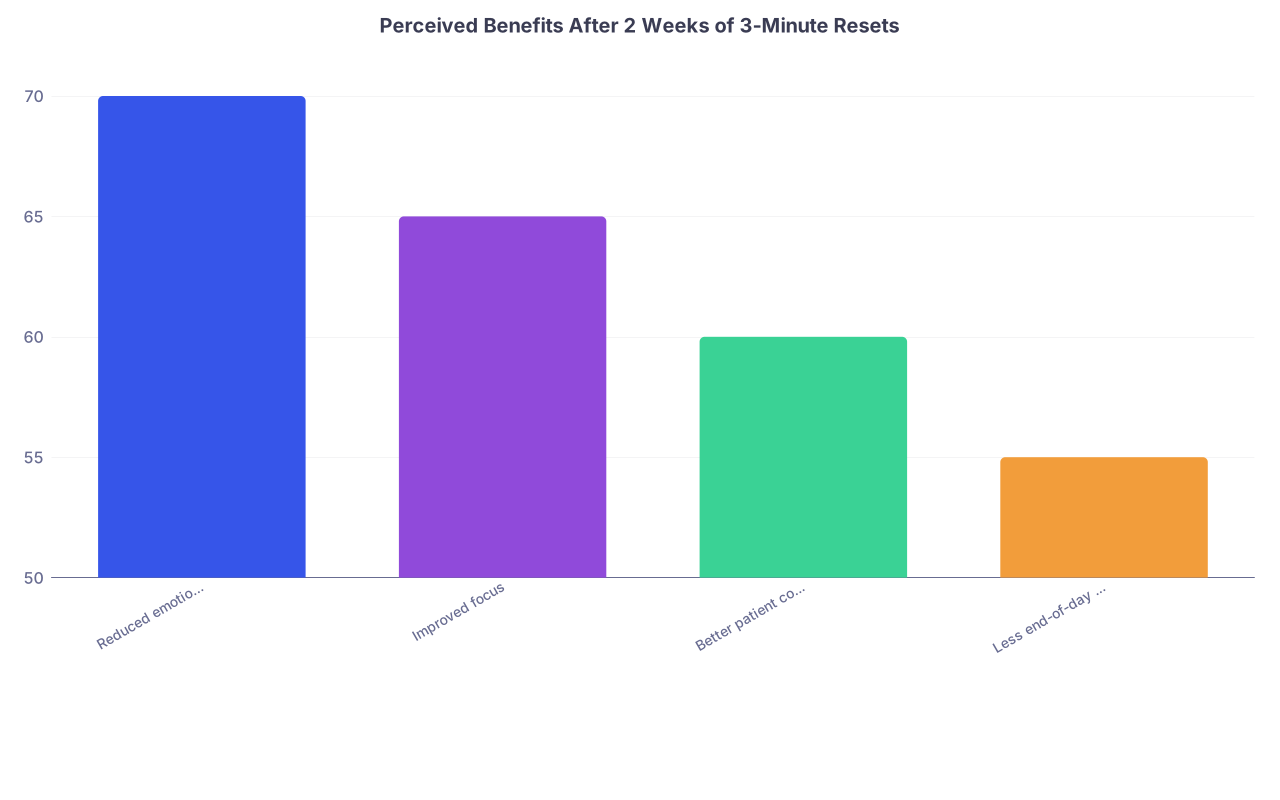
| Category | Value |
|---|---|
| Reduced emotional spillover | 70 |
| Improved focus | 65 |
| Better patient connection | 60 |
| Less end-of-day exhaustion | 55 |
(Percentages here approximate what clinicians report anecdotally when they actually commit to this for two weeks.)
Short Case Examples: What This Looks Like in Real Life
Resident on Wards
PGY‑1, post‑call, has just coded a patient who did not make it. Minutes later, needs to see a stable patient asking about discharge timeline.
Without reset:
- Resident walks in dissociated, flat, gives clipped answers, avoids eye contact, seems uncaring. Patient feels dismissed. Resident later feels guilty.
With a 90‑second compressed reset:
- Clear: “Grief. Guilt I could not do more.” Long exhale. “Not for this patient.”
- Anchor: Standing outside the room, 4 breaths 4‑2‑4‑2. Feet on floor.
- Intend: “Next is a person anxious to leave the hospital. Offer clarity and steadiness, not my shock.”
Resident still feels raw. Of course. But they show up at least 20% more present for the next human. That matters.
Outpatient Attending, Overbooked Clinic
Attending is behind by 40 minutes. Next patient is known to bring many concerns.
Without reset:
- Attending walks in speed‑reading, interrupts quickly, misses a subtle but important depression cue because they are laser‑focused on “staying on time.”
With 3‑minute reset:
- Clear: “I am rushed and annoyed by the schedule.” Exhale. “Not this patient’s fault.”
- Anchor: 6 breath cycles, shoulders drop.
- Intend: “Listen fully for first 45 seconds without interrupting, no matter how behind I am.”
Outcome: They pick up on suicidal ideation they would have otherwise missed. That is not theoretical; I have seen almost this exact scenario.